Hey @Kaisa_Vanha-Perttula. When answering the first question, I wondered if it was about Inderes’s offering. Somehow the way the question is phrased suggests it’s about a single listing company. But it’s probably at a general level, like all the other questions.
5 Likes

The best bait for a Finn would be if they could queue for a free plastic bucket.
2 Likes
It’s good that such things are being researched, but criticism is also a natural part of the research process, so a few observations:
-The survey should also state the educational institution for which the research is being done and what will be done with the collected data.
-Why is there no possibility for open-ended answers (in some questions, none of the answer options were suitable)?
-It would be more effective to have purely numerical options instead of verbal ones in the answer choices (e.g., How important do you consider… Very important = 5, not important at all = 1).
Good luck with your studies 
20 Likes
There are two things in the investment world that often puzzle me. Both have come to the fore strongly with the war in Ukraine, so I thought I would write about them.
The current situation will last forever
A few months after the outbreak of the coronavirus, many investors were saying that the world had changed permanently and dramatically. For example, the amount of public transport will collapse, as people will be very aware of diseases and bacteria in the future. People will no longer travel abroad and mass events will no longer be organised. For example, the time of big weddings is over.
I have come to understand that after a shock, many people (perhaps especially older people) project the current situation to continue indefinitely. For example, if the price of food rises, it is not thought that food will only be expensive from now on, but that it will only get more expensive.
Similarly, Russia suddenly started a war in Europe. Many people think that this will not be an isolated incident, but only the beginning of a new development. In the future, wars will accelerate (or this current one will escalate rapidly to new countries).
Who would have believed during the London bombings that Great Britain would agree to trade with Germany and that relations between nations could one day again be called warm? And who would have believed after the atomic bomb in Hiroshima that Japanese technology would conquer the US market? Neither event ultimately took very long in terms of years. At least we cannot speak of generations.
I myself feel that we humans are very similar, regardless of the times. We are comfort-loving, greedy and social. War, pandemics or anything else does not change that. We adapt to exceptional circumstances, but when we rise again from isolation or a bunker, we are still the same as animals, even if some of us are mentally wounded.
Am I completely wrong with this thought? Do you agree? Let’s move on to the next topic.
Realization and bearing of risk
With the war in Ukraine, the Russia risk materialized, and the stock markets of Europe (and especially Finland) collapsed. This is how the market is supposed to work. When you get bad cards, prices fall.
In newspapers, many investors have said how they have now moved their investments to North America. I don’t understand this. Shouldn’t Europe and Finland be attractive at these prices, since the war is already factored in? The Russia risk has already materialized, so there is no longer a need to bear the Russia risk when buying (exaggeratedly)*.
Instead, by buying shares in what I consider to be a very expensive US market, one bears Russia risk, sentiment risk, recession risk and all other risks in a completely different way. In other words, money is moved from a cheap market to an expensive market where no risk has yet materialized.
In my opinion, many investors do not understand when they are taking a risk. When a stock rises like a rocket, it is a really good investment. When its price later drops by 50%, it has become really risky. Risk is only identified when there has been volatility downwards. In my opinion, it should be identified especially when there has been volatility upwards.
Final words: To get above-average returns, one must do something differently from the average investor. In my opinion, these two points I have raised offer an easy opportunity to do so. You don’t have to be a genius. You just have to keep your emotions in check and look beyond the news flow with a calm mind.
*It can be said that Russia will escalate the conflict further, and that this is not yet reflected in prices. But are the US markets then better protected from these risks? Does a third world war or a nuclear bomb not affect them? Their stock markets have even more room to fall from their heights.
101 Likes
This has been one of the key drivers behind my Stokka investment. On the interwebs and in coffee table discussions, Stokka is completely dead, no one goes to brick-and-mortar stores, and Stokka is an old brand.
Then, when you look at Stokka, for example, on Kauppalehti’s finance pages and hide the name, no one would guess that it’s a completely dead brick-and-mortar store where no one goes.
People Don’t change.
QT, a star company from our domestic exchange, is a good example of this; very few, even on this forum, could see the risk in QT at €178/share.
A very good write-up from you!
16 Likes
I can’t evaluate Stockmann as an investment, as I haven’t researched it at all. However, the company is a good example of how the world changes, even if we humans don’t.
Before, department stores were magical places. Lots of fine goods, from quality brands and from far away, all under one roof. Price didn’t matter so much, as the customer knew they could get everything they needed at once from this department store, and the shopping experience was almost like a day trip.
Nowadays, in addition to department stores, there’s another place where you can find everything you want: the internet. The internet also has the advantage that you can do it from home and quickly find the best price at the same time. Surfing on the sofa doesn’t give the same experience as in a department store, but for now, it seems that this experiential aspect doesn’t carry the business. It’s the same with movie theaters, even though many of us still go to them.
The department store business is not, to my understanding, essential for Stockmann’s investment case, but this was a good example. We humans don’t change, but the world does, and one day we will satisfy that old primary need in some new way.
If we use Stockmann as an example again, one could also say that at the current share price, the owner no longer bears the risk of the department store business 
4 Likes
Heureka!  I’m thinking, is this a CONCRETE arbitrage situation now?..buy trainloads of Russian coins for next to nothing and sell them as metal!
 Steel shortage, nickel price soaring..


“In Russia, all current ruble coins are steel at their core. The surface metal varies in different coins: copper-nickel, brass, or nickel.”
6 Likes
I’m no investing expert or someone you should particularly listen to when it comes to investments, but I think I can offer something, especially to other beginner investors. 
I’m still a bit poor in every area of investing, but there are basic things I could have thought about better from the start, even with my limited knowledge. It’s certainly very difficult to give sure and unambiguous tips that lead to higher returns, but in the long run, knowledge in investing generally and on average surely brings a better outcome.
Especially as a beginner investor, I think it’s important to admit a certain ignorance to oneself and that you won’t get excess returns from the market by just guessing or inferring… at least not in the long run. I think it’s better to forget about tricks from the start and perhaps focus more on the basics. I’ve noticed that a large portion of investors don’t even master the basics satisfactorily. You can learn the basics, for example, by reading and watching the teachings of Inderes’ Investment School and by reading various fundamental investment works. The internet is full of information, and with common sense, you can pretty well figure out what material and from what source to use to grow your investment knowledge. However, there is also some material available that might even be harmful to your investment activities. If you intend to make good investment returns in the long run, you cannot skip diligent study – there are no shortcuts in this discipline either.
What I’m trying to say here is that you should constantly increase your investment knowledge in various ways and be humble in a certain sense when it comes to your own expertise. This will likely help you avoid bigger blunders when you realize that diligent learning and “criticality” lead to better returns in the long run. It’s better to realize these things now rather than 10 years from now. In the beginning, it’s good to lay a solid foundation; that’s a good starting point.
Ultimately, by mastering the basics well and with a humble and healthy dose of criticality, I believe you can achieve very good results. It’s good to know what you don’t know. I notice many investment entities I respect speak quite moderately and very factually, without making “certain” views and statements. In addition, these aforementioned entities also have the ability to see the forest for the trees without getting too caught up in minor details.
This turned out to be a bit more lackluster and “incomplete” than I intended, but I wanted to remind especially newer investors of the immense importance of the basics and how diligent study/work in investing, too, pays off, especially in the longer run.
46 Likes
If the capital loss is not deducted in a round-trip share trade, the shares retain their original acquisition cost. The original acquisition cost can be deducted when the shares are genuinely disposed of. However, costs incurred from a round-trip sale and purchase cannot be deducted or added to the acquisition cost of the shares, as these costs are not related to acquiring taxable income but rather to tax avoidance.
I think the tax authority would have to accept the capital loss in this case because otherwise, the original acquisition cost would transfer into the OST (Osakesäästötili, i.e., share savings account), making the matter extremely complicated, if not impossible to interpret.
1 Like
It would be great if you could answer!
16 Likes
So, a meme stock movie theater company on the verge of bankruptcy buys a stake in a speculative gold mine.
Yeah, because why not……?

45 Likes
But luckily, today’s investors are enlightened enough not to want anything to do with such shenanigans… right?
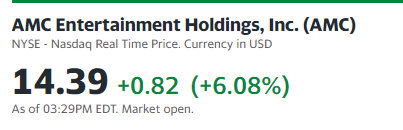
Well, the casual investors will do what they do… the professionals will dodge these bullets, won’t they? Or what? Or… oh, for fuck’s sake, not again.
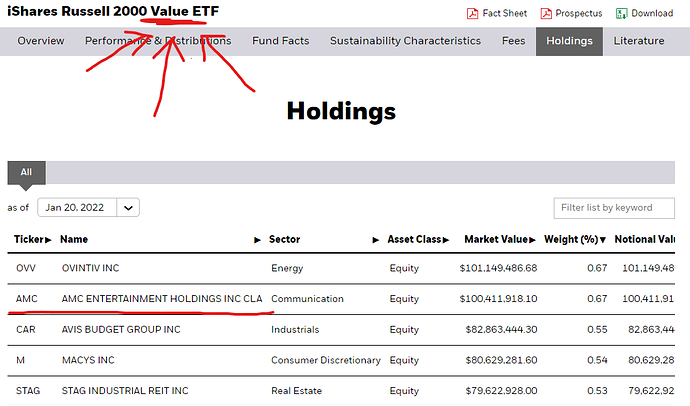
Everyone get out of there. Absolutely everyone.
46 Likes
Forum users, please go and answer
3 Likes
I’ve become interested in those defensive stocks… 
“INVESTOR LEGEND Warren Buffett’s investment company Berkshire Hathaway’s stock price has risen to $500,000 (approximately 457,000 euros).”
“Berkshire’s stock cost less than $20, according to Reuters, when Buffett took over the company in 1965.”
“BERKSHIRE’S stock is considered a so-called defensive stock. Such stocks generally suffer less from general market downturns and business cycle fluctuations.”
20 Likes
Oh, well! I, on the other hand, have considered such talk as thoughts stemming from the inexperience of the youth.
Otherwise, a really f…g good write-up 
1 Like
That would almost be interesting A true buy and forget, oh if only I could do that.
3 Likes
Moreover, taking over Berkshire was a big mistake. Buffett got angry when the buyer haggled over an already agreed-upon price.
5 Likes
Rough demeanor, and having followed their journey, I did wonder if they should probably put the vodka bottles away for a while - for many reasons. A couple of life-weathered, booze-reeking fighter candidates from Eastern Finland are unlikely to inspire much confidence.
At this stage of warfare, a fighter’s competence is emphasized. In the initial phase, it might be wise to arm anyone willing, from babies to grandfathers. Already at this point, the situation is very different; in a certain sense, poor fighters might cause more harm than good. A friend of mine is in those duties there and told me that now they are recruiting more for infrastructure maintenance and first-aid skilled personnel than actual soldiers - of course, them too, but with a very strict screening process.
A funny story about troop formation from my own military service - against my wishes/will, they transferred me to be a team leader in a unit of a different branch of service, and the impact was surprisingly significant on many things. On the first day, the Lieutenant Colonel asked what was the best way to achieve the best possible wartime situation with my new team?
Very mature and angry, I said, if we’re being honest, the first thing I’d probably do is shoot the five worst (based on the previous night) idiots from the team to the infirmary and proceed with the mission.
On Friday, the Lieutenant Colonel came to talk, and I thought that my career was probably over  instead, he came to say that amidst all the absurdity, it contained an important realization that perhaps everyone has their place - for some, that place just isn’t in critical areas
10 Likes

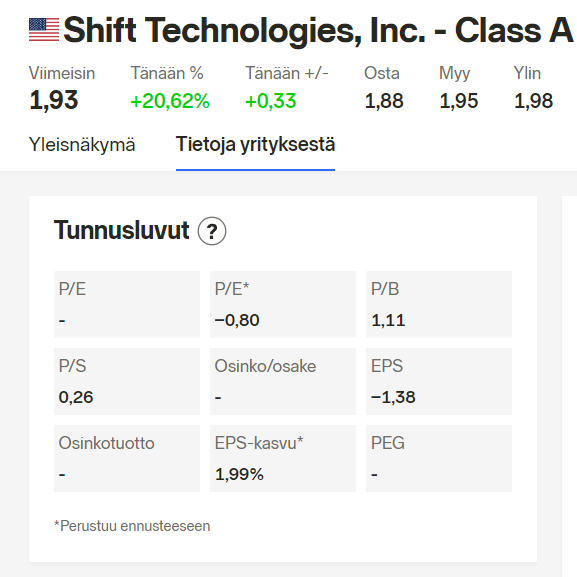
 . Even though it’s still unprofitable, there should be enough cash for at least 2-3 quarters.