No wonder I ended up in construction 
6 Likes
It’s good to remember that the turbo trainer market is for a different target group. I only brought it up because of the price. And with a turbo trainer, you already have a bike. The point was just that those devices are expensive no matter what the riding position is. I naturally haven’t tried a Peloton bike, but it has “adjustable geometry” which allows for a more competitive riding position. I don’t want to defend it too much, but I just wanted to challenge the idea of the price.
I also road cycle and dabbled in Zwift more last year. My own bike is always the number one option for these workouts.
3 Likes
Yeah, that’s true. It’s a significantly easier option than buying your own bike plus a trainer on top of that. However, quite a few manufacturers have already started making ready-made packages, like Wahoo’s Kickr Bike, for example. 
I’d say that Peloton is more of a substitute for those who’ve attended spinning classes during the coronavirus pandemic.
2 Likes
Netflix -20%:
EPS was $1.33, while the consensus expected $0.82. Revenue grew 16% YoY. Operating profit grew 35% YoY. In Q4, there were 8.28 million new subscribers, with the company guiding for 8.5 million. In Q1 2022, “only” 2.5 million new subscribers are expected, whereas a year ago, almost 4 million new subscribers were gained. Netflix itself stated this was due to seasonality, with new content appearing later in the current year.
5 Likes
Wasn’t there a Superapp company in Brazil too, what was it and how is it doing / could it be suitable for me as a companion to the Kazakhstan wonder?
Venture-backed technology companies like MercadoLibre, Rappi, and Nubank are using these tailwinds to become super apps, or digital platforms that provide consumers with a wide variety of services all-in-one, from online shopping to ride-hailing to payments.
Is anyone involved with these?
In the morning, I was bragging in the yield chain that thanks to good luck, the drop in my portfolio had been quite small. Well, the stock market just opened and the situation has been corrected 
44 Likes
No one will be offended if someone is in the green 
10 Likes
Yeah, and when losses start piling up, you just have to look at the longer-term performance graph
“It’s not that bad. Over 5 years, I’m still up 10%…”
21 Likes
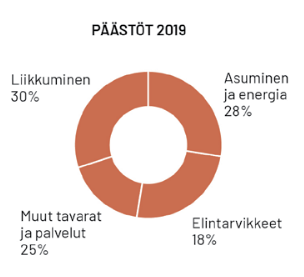
I don’t know what kind of mosquitoes you have in your area, but traffic causes about one-third of Finland’s carbon dioxide emissions:
8 Likes
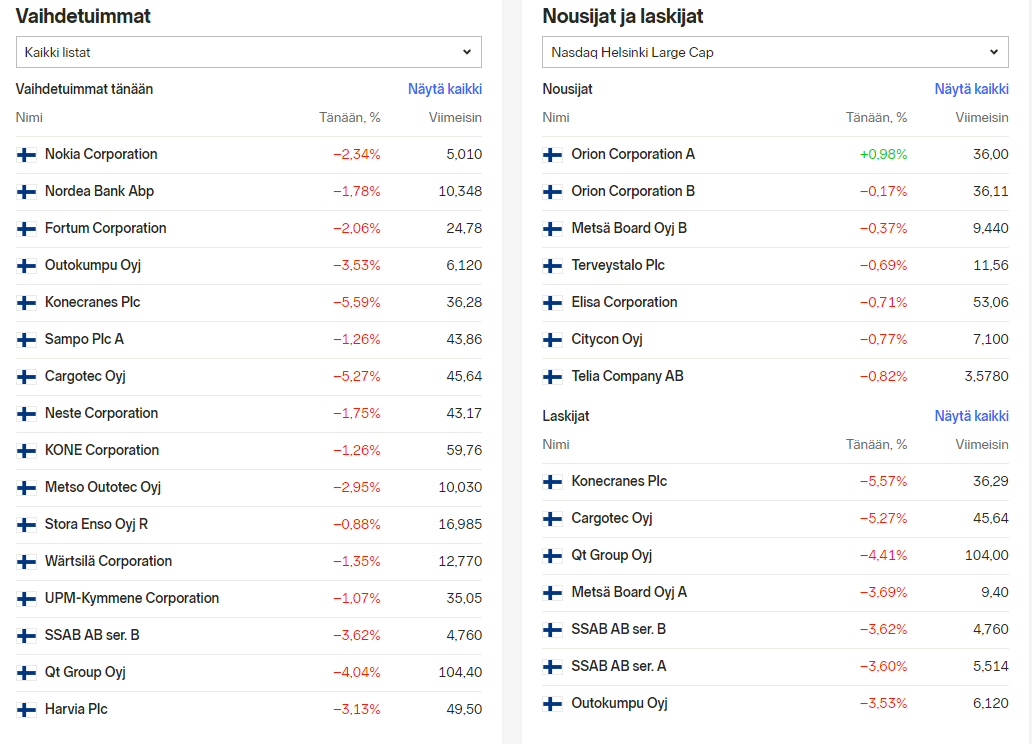
Now there’s a rotation where green turns red.
107 Likes
Alright, what color buying pants should we put on today?  Quality companies are starting to look appealing, I’m sure the model portfolio will soon either add more or a new line to the portfolio.
5 Likes
Doesn’t that “Risers & Fallers” align surprisingly well with Luke7’s business cycle clock (not exactly one-to-one, but still).
10 Likes
+@viljo
I’m not involved in Brazilian stocks, but I’ve seriously looked into StoneCo (STNE). In contrast to its impressive growth charts, there are minor issues, such as the fact that even after StoneCo’s IPO in 2018, about 40% of its dollar-denominated growth has disappeared due to currency exchange rates!
Inflation is also now almost certainly “double-digit,” which I suppose isn’t always ideal for lending businesses…
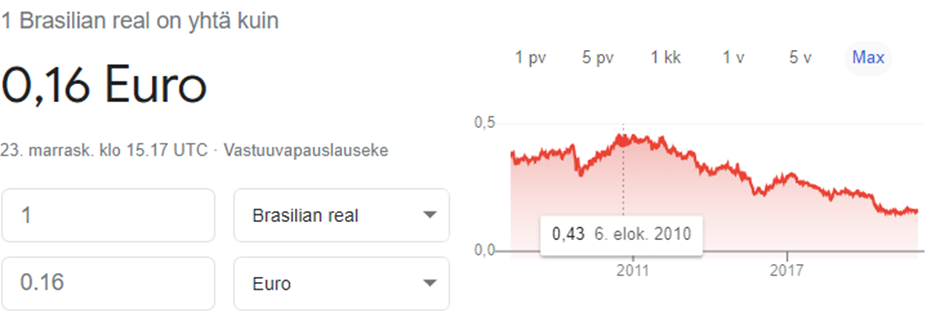
EDIT: STNE has been favored by the strong trio of Buffet, Wood, and Alhanko in its time
3 Likes
Now that it has been announced in church, and confirmed as an undeniable fact by several informed parties, that a multi-year bear market is ahead, I would hope for appropriate content from Inderes:
“Shorting School with a Shorting Rookie: How to Short Like a Pro”
“Shorting Quarter - The Benefits of Long-Term Shorting”
“Shorting Chitchat: Timing the Bear Market - How to Succeed Perfectly”
And for Premium subscribers, more intense, stock-specific “short-selling” material:
“Shorting Qt is the Beginning of Wisdom”
32 Likes
Fast fashion emissions are not visible there. Everything is manufactured outside of Finland.
2 Likes
Yeah, I was just messing around.
My own guess has been that in 2022, some air will be let out of prices, whether it’s growth, value, quality, or small-cap companies. In practice, this means wanting to move money to places where cash flows aren’t so far in the future.
Many seem to think that different company baskets somehow take turns in which one’s turn it is to generate excess returns. Many talking heads say that now it’s the turn of value stocks, but can’t explain why. That’s why I’m very skeptical of 90 percent of rotation talk.
I think that large capital flows are driven by sentiment. For example, at the end of 2019, people were horrified by interest rates and feared a collapse. Money moved heavily into safe businesses like Elisa, which offered bond-like dividend yields. In 2020, sentiment changed completely in the corona dip, and for example, Elisa’s stock did not return to its previous peaks, as the market began to crave growth at any cost instead of safe returns.
Simply put: sometimes the market moves further from fundamentals and sometimes closer to them.
12 Likes
What’s the source of the image?
So, is this at the individual level?
1 Like
Fast fashion alone causes greater global emissions than air and freight traffic combined. Not to mention the insane amount of fresh water and land area that cotton cultivation takes up. Furthermore, when examining those emissions, one should be able to distinguish between direct and indirect emissions. We have outsourced a significant portion of emissions abroad.
Then there’s the age-old question, which came first, the chicken or the egg? Is there a need for so much freight traffic if there were fewer people and/or they consumed less? It’s quite populist to attribute everything to traffic.
16 Likes