Loviisa 3 tuottaisi jo sähköä, jos kepu ei olisi vuonna 2010 Fortumin lupahakemusta kepuloinut. Laitos olisi rakennettu ilman tukihimmeleitä.
Sähkönkulutuksen kaksinkertaistuminen lähitulevaisuudessa epäilyttää vahvasti. Mihinköhän arvio perustuu? Data centereitä tulee kyllä, mutta ei ne sähkönkulutusta kaksinkertaista. Vetyprojektit eivät etene ja teollisuuden kulutus on enneminkin laskussa.
Sähkönkulutus lähestyy asymptoottisesti ääretöntä kun kaikki toimii sähköllä. Junat, autot, moottoripyörät, mopot ja polkupyörät nyt aluksi. Käsityökalut sahat ruuvarit jne toimivat nyt jo akkuvoimalla ja niitä ladataan vähän väliä. Hammasharjatkin on jo sähkökäyttöisiä jne…
Nyt rakentamaan sitä atomimiilua ennekuin se sähköpila yllättää.
Ei kaksinkertaista nykynäkymillä, mutta taidettu olla vain optimistisia… Tulevien Microsoftin salien kulutus pelkästään on jo kuitenkin aika suuri, yli 600 megawattia, joten yhdelle reaktorille olisi ainakin tarvetta. Fortumhan tuonne toimittanee sähkön.
Sähkönkulutus arvioiden kasvu tulevaisuuden konesaleissa perustuu vahvasti tekoälyn käyttöön, esim. Usassa on arvioitu, että sähkönkulutus lisääntyy saksan kulutuksen verran tulevaisuudessa, josta suhteellisen ison osan vie konesalit ja etenkin sähkösyöpöt AI-sirut.
Näitä sähkönkulutuksen räjähdysennustuksia on historia täynnä. Kryptovaluuttojen louhinta piti käyttää koko maailman sähkötuotanto jo vuonna 2020 - ennustajina Newsweek ja World Economic Forum vuonna 2017. Ennen pilvipalveluita ennustettiin, että On-prem datakeskukset syövät kaiken sähkön - nyt Power Usage Effectiveness (PUE) on tuplasti parantunut datakeskuksissa kymmenessä vuodessa. Hyvin on siis riittänyt vielä muuhunkin sähköä ennustuksista huolimatta. Suomessa sähkönkulutus ei ole juuri muuttunut 10 vuoden aikana ja itse olisin yllättynyt, jos tänne virtaisi yhtäkkiä miljardeja pääomaa uuteen sähkönkulutukseen. Google ja Microsoft on mukavia poikkeuksia sääntöön.
Datakeskukset ovat pääomavaltaista touhua - aika paljon muita rajoitteita tulee ennenkuin töpselistä loppuu virta. Lisäksi AI GPUn kyvykkyys paranee nopeammin kuin tehovaatimukset. Blackwell GPUt vievät 75% vähemmän tehoa saman mallin koulutukseen kuin aikaisempi Hopper-arkkitehtuuri, vaikka yksittäinen siru syö 70% enemmän watteja.
Liebreich kuvaa hyvin erilaisia skenaarioita omassa analyysissaan. Mielenkiintoista Fortumin ja muiden energiayhtiöiden kannalta on se, miten Exxon ja muut aikovat omissa datakeskuskonsepteissaan toteuttaa kaasuvoimaloilla CO2-talteenoton tehokkaasti.
Suomeen liittyen, aikanaan käyttöikänsä loppuun päätyville nykyreaktoreille tarvitaan korvaajat (tavalla tai toisella), eli jossain vaiheessa joka tapauksessa aktivoiduttava, mieluummin tietysti ennemmin kuin myöhemmin.
No ei tietenkään. Sähkön kulutus voi nousta tasaisesti kun sähköistyminen lisääntyy, mutta ei siitä mitään asymptoottista äärettömyyttä tule missään tilanteessa. Maksimikulutus on rajallinen ainakin Maapallon osalta. Mutta sitä kulutusta rajoittaa käytännössä myös hinta. Jos tuotantoa ei saada lisää, nousee hinta myös tasaisesti, mikä jatkuvasti vähentää sitä kulutusta, jotta saavutetaan joku tasapainotila - ei äärettömyyttä.
Suomeen tarvitaan sekä uutta tasaisesti toimivaa perusvoimaa että säätövoimaa. Aika näyttää, kuinka paljon.
Ps. Saksan valtio käy Uniperin myyntikeskusteluja ainakin 4 tahon kanssa. Sen varaan ei kannata laskea mitään, mutta myynnin käydessä mielenkiintoista katsoa, mitä Uniperin Ruotsin tuotannolle ja erityisesti yhteisvoimaloille Fortumin kanssa tehdään.
Nvidia tänään illalla tulossa oleva romahdus (nyt lähes -10 % futuureissa), Ruotsin AI-alihankkijoiden ja datahalliyritysten (Munters yms.) kaksinumeroinen syöksy Tukholman pörssissä tästä aamusta jne. Ja mitäs tällä on tekemistä Fortumin kanssa?
DeepSeekin tulo pusikoiden takaa disruptoimaan AI-alaa on Fortuminkin näkökulmasta siitä merkityksellinen, että samat AI-tuotokset saadaan aikaan vain murto-osalla laskentatehoista ja sähkökulutuksesta. Näin ainakin käsillä olevan tiedon perusteella näyttää olevan.
Fortumin tai muiden sähköntuottajayritysten näkökulmasta tilannetta ei silti välttämättä kannata ylidramatisoida. Vaikka AI datahalleineen yms. kasvava sähkösyöjä, niin sen osuus kokonaiskulutuksesta rajallinen. DeepSeek saattaa myös laajentaa ja yleistää mm. edullisuutensa takia AI:n käyttöä entisestään, mikä taas lisää sähkönkulutusta.
Fortumin omistajien on kyllä syytä seurata tarkkana kehitystä ja katselen illalla mm. AI-sähkösyönnillä ratsastaneen Brookfield Renewablen kurssia.
Enemmän olisin kyllä huolissaan, jos salkussa on megateknoja, SP500- tai maailmanindeksiä (jotka paljolti megateknoja). Saatamme olla ison teknodisruption äärellä - tai sitten emme:) Isoin vaikutus voi tulla sijoittajasentimenttiin.
Kriittistä on huomioida että tämä DeepSeek-disruptio pätee vain AI-mallien treenaukseen.
DeepSeekin keitos ei muuta tilannetta Inferencen (AI-mallien käyttö) osalta. Eli kun Microsoft ajelee vähän CoPilottia palvelimellaan asiakkailleen, vaikka malli olisi Kiinalaisten, laskentatehon kulutus ja sähkön kulutus on sama kuin nykyisien OpenAI-juttujen kanssa.
Luonnollisesti kun markkina on tällä hetkellä paniikissa, moni toimija ei tätä vielä tajua ja ennusteita rukataan vauhdilla. Ja luonnollisesti AI-mallien treenaus on myös merkittävä ajuri, mutta silläkin puolella on vielä hyvin epäselvää mikä on lopullinen efekti. Jos nykyisen tasoisen mallin saa treenattua murto-osalla sähkönkulutusta ja rautaa koska team Kiinalaiset keksi jotain hienoa, mitä tapahtuu jos samalla systeemillä treenataan mallia ison megacapin valtavalla rautapinolla? Oletettavasti homman pitäisi edelleen skaalata ja malli on vieläkin parempi. Vasta sitten jos on varmaa tietoa että temppu ei skaalaa, AI-trainingin raudan ja sähkönkulutusennusteista voidaan leikata.
Itse en ATK jutuista paljoa ymmärrä, mutta olen ollut havaitsevinani että ainakin sen jälkeen kun tietokoneissa siirryttiin elektroniputkista mikroprosessoreihin on tietokoneiden laskentatehot ja energiankulutus kasvanut.
Aina kun laskentateho on tullut lisää niin aina sille on löytynyt joko kokonaan uusia käyttötarkoituksia ja/tai mallinnusten/palveluiden laajuutta ja tarkkuutta on parannettu.
Uudet yksittäiset innovaatiot oli ne softa tai rautapuolella voivat toki vähintäänkin lykätä investointeja ja ehkä joku yhtiö jättää jonkun investoinnin tekemättä jos pystyy ostamaan tarvitsemansa uudella tavalla tuotetun palvelun kustannustehokkaasti.
Tuskinpa AI-firmojen sukellus nyt Fortumin näkymiin juurikaan vaikuttaa. Huvittavaa oikeastaan, että kurssi sulaa 4 % AI-firmojen vanavedessä. Ostopaikka jos painuu tästä vielä. AI-firmoissa ei senttiäkään kiinni, tiesin pysyä erossa kun vedätyksiä alkoi näkyä lähes jokaisessa Yahoo Financen ihan muita osakkeita käsittelevissä artikkeleissakin.
Fortum ja suomalainen vihreän vedyn edelläkävijä P2X Solutions Oy ovat solmineet viisivuotisen sähkönmyyntisopimuksen. Valtaosa vedystä tuotetaan Euroopassa edelleen fossiilisesta maakaasusta, mutta nyt solmittu sopimus mahdollistaa EU:n tiukkojen vaatimusten mukaisen vihreän vedyn valmistuksen P2X:n Harjavallan laitoksessa, joka on parhaillaan käynnistämässä tuotantoaan. Sähkö tuotetaan Fortumin uusiutuvan energian laitoksissa Suomessa, ja sopimus kattaa myös sähköntuotantoon liittyvät alkuperätakuut. Sopimuskausi kestää vuoden 2029 loppuun.
Uusiutuvaa vetyä koskevan EU:n asetuksen (RFNBO) mukaan vihreän vedyn ja uusiutuvan energian tuotanto on sovitettava yhteen kuukausittain vuoteen 2029 asti, minkä jälkeen tuotannon ja kulutuksen on voimassa olevan sääntelyn mukaan tapahduttava samanaikaisesti tunnin tarkkuudella. Nyt tehty sopimus kattaa P2X Solutionsin vihreän vedyn tuotantolaitoksen alkuvaiheessa tarvitseman uusiutuvan energian määrän. Tämän sopimuksen myötä RFNBO-mukainen vihreän vedyn tuotanto alkaa Suomessa.
Niin no, riippuu vähän miten vertaat. Totuus on, että laskentateho per energia on vain parantunut vuosien saatossa. Katso esim. Koomeyn laki: Koomey's law - Wikipedia
Huoneen kokoiset elektroniputkitietokoneet kuluttivat aivan käsittämättömän paljon energiaa ollen silti hämmentävän paljon tehottomampia kuin pienimmätkin modernit tietokoneet. Transistori tekee sen minkä elektroniputki mutta monta kertaluokkaa pienemmällä kulutuksella.
Kokonaiskulutus on kasvanut koska tietokoneita käytetään niin paljon ja koska digitalisaatio. Joka paikassa on tietokoneita ja niitä käytetään kaikessa. Mutta sinänsä energiatehokkuus on parantunut huimasti ja yhä edelleen paranttuu.
Tosin, tahti on hidastunut, eikä Mooren lakikaan enää toimi lineaarisesti kun fysiikan lait alkavat paukkua vastaan.
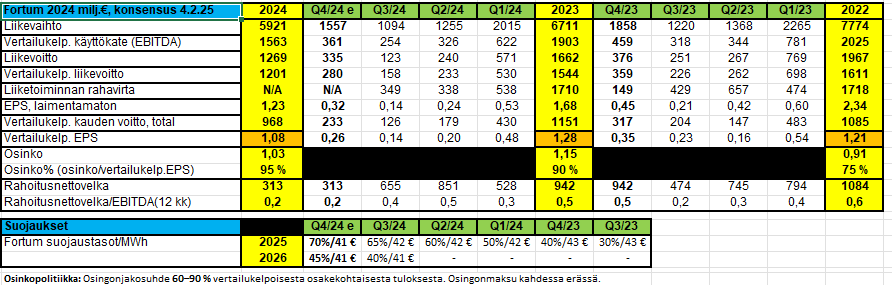
Tässä on Sotkamon miehen taiteilema Q4-ennakkoyhtiörapsa Fortum julkaisee tiedotteensa ensi viikon tiistaina.
Fortumin viimeinen neljännes on arviomme mukaan jäänyt operatiivisesti suhteellisen heikoksi, kun sähkön hinta jäi kausiluontoisesti vahvalla jaksolla maltilliseksi ja haasteita oli sekä ydinvoiman että vesivoiman saatavuudessa. Olemme tarkistaneet Q4-ennusteitamme alaspäin ja samalle laskeneet lähivuosien ennusteita sähköfutuurien laskettua edellisestä päivityksestä. Emme tee muutoksia näkemykseemme ennen 11.2. julkaistavaa tilinpäätöstiedotetta, mutta näemme tavoitehinnassamme lievää painetta alaspäin ennusteiden mukana. Toisaalta sähköfutuurit ovat heiluneet voimakkaasti ja nousseet viimeaikoina pohjalukemista.
Hiukan on taas negatiivista klangia ennakkorapsassa. Myös osingot jäytävät vaikka Inderes itse kasvuyhtiönä ehdottaa osingonmaksuksi 92 % tuloksestaan. Ehkä Indelläkin omistajat kaipaavat rahaa keittiöremontteihin
Totta on, että operatiivinen tulos jää laimeaksi. Silti on hyvää muistaa, että Fortum on nyt nettovelaton yhtiö ja seikkailut maailmanvalloittamisesta on vihdoinkin loppunut. Olen itse jo omilla lappusillani saanut puolet takaisin osinkoina maksamastani osakkeen keskihinnasta. Jos vertaillaan Fortumia Elisaan, niin osingot ovat huomattavasti muhkeammat ja Elisa on korviaan myöten veloissa.
Q4 on mielenkiintoinen kvartaali, koska siinä on kuluina jälkimmäinen osingonmaksu ja tulopuolina divestoinnit, joista suurimpana tuo 800 miljuunan paskalaitos. Osittain tämä laitoksen tuottamat tappiot jäävät pois ja myös Fortumin omat säästötoimet alkavat purra.
Toistamme osinkotavoitteemme 1,30 €, koska me pääomistajat tarvitsemme rahaa
Uusinta konsensusta ei olla vielä julkaistu Vara Researchillä. Pistän luvut heti, kun tulee ATK:lle.
Ruotsin Forsmark 3 -ydinreaktori suljetaan keskiviikkona venttiiliongelman vuoksi, ja sen odotetaan olevan jälleen käytössä perjantaina, sen pääomistaja Vattenfall kertoi tiistaina.
Nämä ilmestyivät eilen. Analyytikkomme @Juha_Kinnunen toi luvut tällaisessa kirjan muodossa olevassa ATK-tulosteessa. Kylässä sattui olemaan @Sijoittaja-alokas, joten käytimme tilaisuutta hyödyksi ja pyysimme Juhaa selittämään mitä tarkoittaa P/E.
Muut sijoittamiseen liittyvät termit me jo osaamme, mutta tämä on vaikein, vaikka olemme kovasti päntänneet sijoituskirjallisuutta. Emme sitä vielä ihan kahdeksassa tunnissa ymmärtäneet.


 Fortum julkaisee tiedotteensa ensi viikon tiistaina.