A company page has now been created for Fifax and Antti did an interview about it for inderesTV 
Interview: Fifax suunnittelee listautumista - Inderes
A company page has now been created for Fifax and Antti did an interview about it for inderesTV
Interview: Fifax suunnittelee listautumista - Inderes
From Kauppalehti’s article Jälleen uusi listautuja: Tällainen on kuivalla maalla kalaa kasvattava Fifax, joka aikoo synnyttää Suomeen uuden teollisuudenalan | Kauppalehti
The current facility’s full capacity is 3.2 million kilograms per year.
Ruohtula believes the company will reach this target in the first half of 2022.
The company aims to double production to over six million kilograms per year. The expansion process is scheduled to begin next year. Ruohtula estimates that the doubled capacity would be in full production in five years.
In an interview conducted by Antti, CEO Samppa Ruohtula outlines the goals:
Competitors:
Short article on recirculating aquaculture systems (RAS) from 2018 https://www.luke.fi/mt-kiertovesikasvatus-lapimurron-kynnyksella/
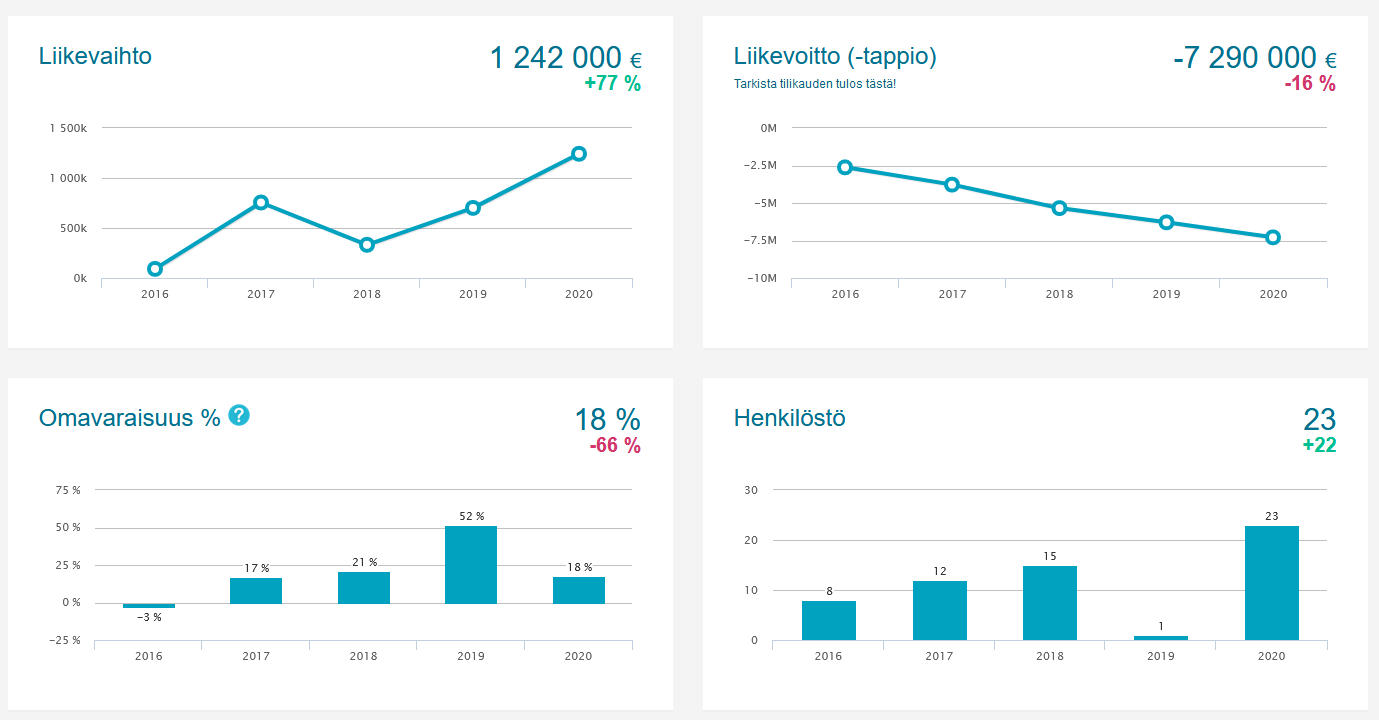
I took a look at some “old” figures from the company.
It would be interesting to hear what all the company’s money has been spent on. The current “production facility” seems to be around 15,000 m2.
Another question that arises is, where will the workforce for Åland come from? Åland already has a very high employment rate.
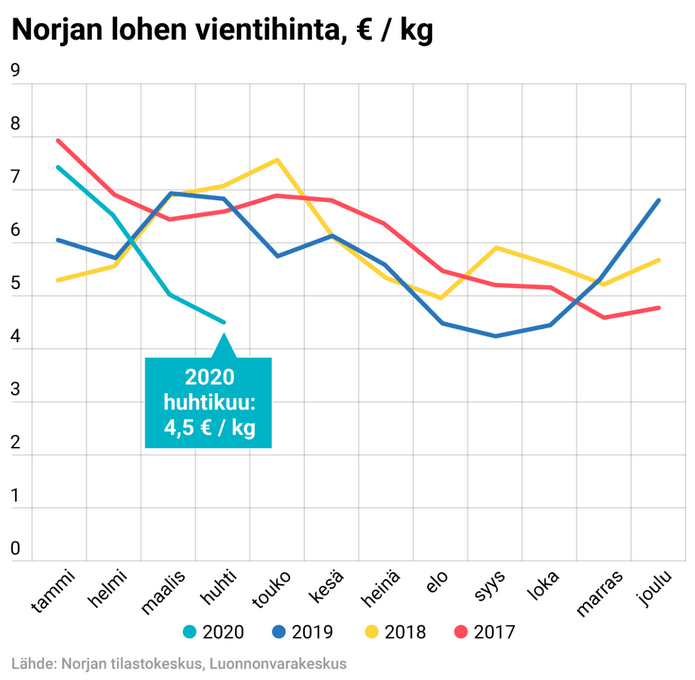
From a Yle article, I found the export price of Norwegian salmon: Kalamarkkinat ovat sekasorrossa – Lohta saa nyt huippuhalvalla ja kotimainen tuotanto on ajautumassa ongelmiin | Yle
Is it possible to get a “premium” for domestic salmon? Roughly calculated, Fifax could generate a turnover of 15M€ - 22M€/year with its current potential production capacity?
Regarding fish farming, Norway is indeed involved in productions of a slightly different caliber than Finland.
For example, AKVA, mentioned by @naata in the Nekkar ASA thread, but also Nekkar’s upcoming Starfish, address the ethics and efficiency of farming in a completely different way compared to the old farming model. These two, of course, only relate to marine farming.
And so, entrepreneurship and a new industry are welcome. The numbers just seem too challenging to my eye, even looking further ahead. Technology needs to be widely sold and significantly scaled to become profitable. The species is not easy.
I listened to that Inderes interview, and it left a good impression because they spoke honestly. The straightforward talk was very typical for an industry where pretty much everyone knows everyone and they don’t want to talk about others’ actions, as not to narrow opportunities for cooperation.
Pros
Cons
As shown in N.K.'s chart above, the price of Norwegian salmon is quite volatile. For domestic rainbow trout, price fluctuations are milder and somewhat more even.
@N.K The money has presumably been spent twice on development and ramping up production. There were major fish deaths a few years ago, and that affects the balance of the entire facility. The business is expensive, compare it to Finnforel’s financial data, for example. It’s the best comparison point, even though they only grow fish up to about 800g.
I don’t find the targeted 25% EBITDA margins credible. Of course, I’ll be thrilled if it materializes. However, the industry is primary production and in Finland, it’s strongly subject to central retail.
One possibility also touched upon in the video is an increase in the processing level. However, the closest comparison, Finnforel, has not succeeded in this so far.
In terms of volumes, competition is solely based on price. Additionally, the industry doesn’t only compete internally; the competition must also consider chicken and pork, and in the future, plant-based protein sources.
Let me preface this by saying that I genuinely know absolutely nothing about fish farming.
However, I did some digging around the internet regarding Nekkar and came across several articles that seemed quite legitimate about land-based aquaculture. I didn’t note the sources; I categorized the technology as a rather harmless competitor to my Nekkar investment thesis. All sources indicated that it’s pretty good and very good from an ecological standpoint when done well, but there’s a huge amount of work to be done regarding profitability.
A brief summary of what I read: It’s quite challenging to profitably do on land all that the sea does “for free.”
With the figures provided by Samppa Ruohtula, the selling price of fish would be 8.33 EUR/kg, assuming no waste (50 M€ / 6 million kg). With a 25% operating margin and a 6 million kg capacity at full production, the production cost would be 6.25 EUR/kg. Ruohtula must stand behind these figures.
That €6.25 is possible in the current market for part of the year.
This is indeed an excellent summary 
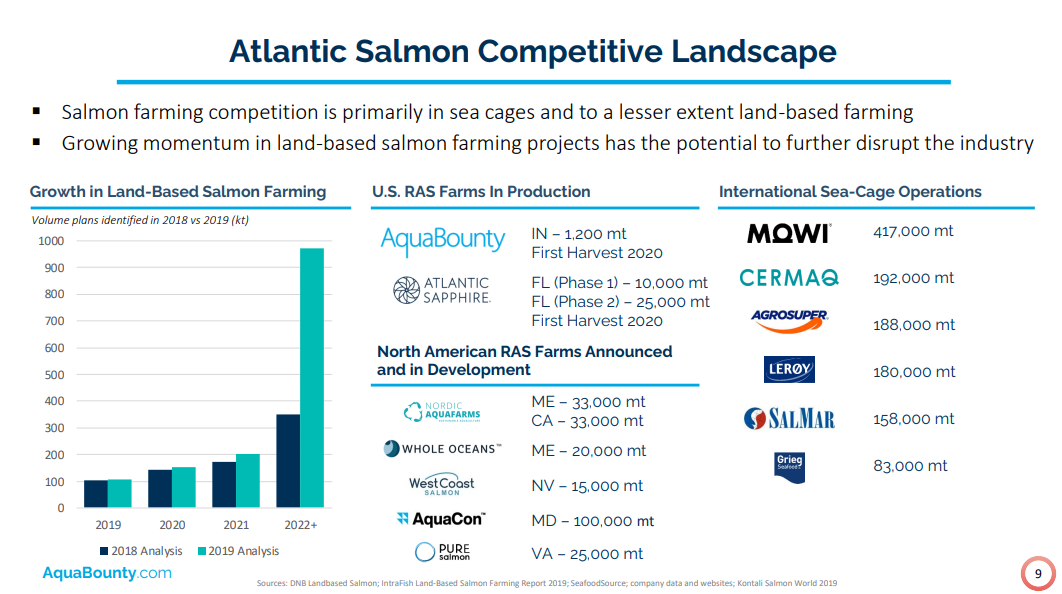
These Recirculating Aquaculture Systems (RAS) are being planned by several operators in North America. Below is an image from Aquabounty’s recent presentation https://investors.aquabounty.com/static-files/20dad07d-9b43-496a-af49-620451fc87ae
Aquabounty aims for the US market with genetically modified salmon. Its sale is currently prohibited in the EU, at least for now Maistuisiko geenimuunneltu lohi? Pian sitä myydään Yhdysvalloissa – kala-aktiivi Jasper Pääkkönen: "Kaikessa outoudessaan hiukan pelottavaa" | Yle. This would be a threat to Fifax, but perhaps also an opportunity.
Recirculating aquaculture systems (RAS) have been built in the Nordic countries for several years now, and to my understanding, only a few Danish facilities have managed to make production profitable. It’s an expensive process with quality issues in the product. It’s a rocky road, even though it’s highly commendable due to its low emissions. For inland waters, RAS facilities are now the only way to increase production, as permits for new, lake-polluting facilities are no longer granted.
What I’m pondering about this recirculating aquaculture system (RAS) is whether fish farming in enclosed spaces will be viewed in the same way as, for example, chicken farming in cages. Will consumers (in the future) weigh the same issue as they do now with free-range eggs versus cage-hen eggs? Consumers don’t yet consider this aspect in fish farming, but perhaps in the future? It’s a matter of so-called environmental impact versus production ethics. However, in marine facilities, fish live somewhat in their natural habitat. In the Baltic Sea, the impact of marine facilities can be managed, for example, by location control, feed selection, and feeding methods. In Finland, marine fish farming accounts for approximately 1% of the total load on the Baltic Sea, compared to agriculture’s share, which is about 60%.
First thought: as a business idea, it sounds great; I’d love to own a fish farming business like this in my stock portfolio. Then, looking closer, the financials are indeed dreadful right now. It makes me wonder if the offering is being arranged out of necessity, as at the current rate of losses, the company’s cash will dry up at some point. New money must come from existing or new owners. At the company presentation evening, interest will focus on the production cost per kilogram (if the production process works without problems).
In mainland Finland, at least Heinola has been granted an environmental permit for one Recirculating Aquaculture System (RAS) in the former Stora Enso factory:
In Finland, there are recirculating aquaculture systems (RAS) for fry production and a few that produce food fish.
Food fish producers:
Fifax: Rainbow trout
Finnforel: Rainbow trout
Savo Lax: Whitefish (Pike-perch on hold)
Sybimar: Whitefish, currently on hold, awaiting better times.
In addition to these, HTM-yhtiöt: Rainbow trout will be joining.
No other projects are known besides feasibility studies.
Sybimar fertilized plants with water from the recirculation system. There, the idea of a closed-loop system was taken a step further, and in the future, we will likely see more of these integrated (aqua- and hydroponics) systems when they become competitive.
Among the operational facilities, Savo Lax is the only one that has been able to achieve a positive result, but it too has had more unprofitable years.
In my opinion, focusing on rainbow trout production is a risk because the product is a commodity, like salmon, pork, and chicken. Its price image among consumers is affordable, and creating added value for it is very challenging. Finns are quite good at adopting new products for their dinner tables. On the farming side, African catfish could work well; there was a test farm for it a few years ago, and it sold well to consumers. The feed conversion ratio for rainbow trout is typically around 1-1.2, and for African catfish, it is estimated to be even better. Feed conversion ratio = amount of feed given relative to growth, i.e., a ratio of 1 = 1 kg of feed given and fish grew by 1 kg.
Fifax and other recirculating aquaculture systems will certainly have some significance for the industry. Therefore, it is important that they become productive and profitable.
Let’s hope so. I haven’t received reliable public information about the repeatable functionality of the recirculating aquaculture system (RAS) process. Is it still prone to disturbances? Is it? Let’s hope it’s not another “Talvivaara” for the fishing industry. I assume that the RAS process cannot be made 100% closed at a reasonable cost. The question also is, what kind of technology is primarily used in a closed loop: known membrane technology, evaporation, or something else? Or something simpler, more reliable, and cheaper?
What kind of ecosystem should a company like this have in the modern world to gain competitive advantages?
What does the company do with waste from, for example, cultivation ponds? Competitors seem to truly practice plant cultivation where plants are fertilized with fish waste. And what about slaughter waste? What is concretely done with it? Does it go into, for example, oil production and energy? Does the company get heating energy from some waste heat to save energy?
Regarding the product itself, one can indeed ponder which fish species makes sense to try, if salmon’s price has been driven down by competition, and alternatively, some Finns won’t eat rarer and more expensive tuna (as it’s not Finnish perch).
With these numbers, a valuation of 66 million euros is absolutely outrageous! The presented revenue growth figures are completely unrealistic, and on top of that, 2021 revenue has turned to decline from the previous year. Revenue has decreased by 1/3, and at the same time, losses have grown dramatically.
Financing costs have been 1.8 million euros in the early part of the year.
And to top it off, 1/3 of the anti-funds are intended to be used to pay off old debts. So, money is being raised through a share issue so that creditors can get their money back, and with the remaining 10 million euros, the company cannot be run for more than a year at these profitability levels.
Let’s just say it out loud, this is a pure rip-off. If someone wants to donate their money away, this is a good target. The most pathetic company to list that has ever been seen in Finland.
You’re taking a bit of a shortcut and apparently don’t know much about the industry/company. You can get that impression with numbers alone, but otherwise, you don’t really support your claims. It’s clear that the current owners and financiers have made their contribution and won’t pump in more, which is why money is being sought from other markets.
During the production ramp-up phase, and before reaching close to maximum capacity, it’s not really possible to make a profit.
They grow fish from roe to 2.4 kg, which takes an estimated 2.5-3 years. So, from the first fry to the first gutting, it takes just under three years. During this period, fry must be continuously hatched at a steady rate so that the same amount of fish can be gutted each week as its total mass grows. I would compare this to a pharmaceutical company waiting for marketing authorization, only the growth factor is smaller.
This is by no means an easy target and is definitely a long-term one. It’s unlikely to be a quick course rocket, but it has potential to be a good plodder, a value stock.
Cash flow is at least continuous, even though fish prices fluctuate quite a bit, but they are relatively stable on an annual basis. This is certainly not a hype stock.
The numbers estimate that they will get 3.2 million kg of gutted fish out per year, which translates to sales of 16-21 million euros, and profit is difficult to estimate, but we’ll guess 2-5 million euros. When the facility doubles in size, sales will double, and profit will likely be proportionally larger. This is the fish farming part of the company; they also intend to sell expertise (and the facility model). This is very important for the overall profitability. There is demand for expertise, especially if their own facility works and produces high-quality fish.
The figures are estimates of what fish could fetch on average and a production cost estimate based on my own experience. Also note that they only include production costs and sales price, and do not include other business expenses or revenues, only the estimated fish portion.
There are still many question marks and things to prove.
Edit: clarification on the interpretation of sales/profit figures.
Classic explanation: “The numbers are abysmal, but they’re supposed to be this way.” Fish farming is not a new business, even if it is in recirculating aquaculture systems. Still, the end product for the consumer is rainbow trout; the farming method is only slightly different, but the farming method alone is not relevant for making money here.
You write that the company has potential to be a value stock. Well, it has no preconditions to be a value stock for a long, long, long time. The best part, however, is when you write that the cash flow is continuous. Well, it has been continuous, though the cash flows have gone the wrong way. The cash flows, in particular, involve an absolutely enormous risk for this company. Salmon prices are quite volatile, and that alone creates risk. And on top of that, all the risks associated with this company, such as excessive financing costs, etc.
I’ll also bet my head that this company won’t make a 2-5 million euro profit on a 16-21 million euro turnover. A 10% profit level is completely unrealistic. Let’s see, time will tell which of us is right. My biggest criticism, however, concerned the valuation level, which is completely absurd.
If I were an analyst, I would write a recommendation to avoid it like the plague and recommend it only to your worst enemies. This establishment is being pushed onto the stock market as a last resort before bankruptcy. Clearly, debt financiers have already lost faith, because it is not normal for 1/3 of the issue’s funds to be used for debt payments in a growth company. This indicates that debt investors no longer trust the company enough to renew its loans. And when the company makes about 8-10 million euros in losses this year, the funds from the issue will indeed last for about a year, maximum two, in a normal scenario. They will not build any long-term growth. And on the other hand, why increase capacity when they haven’t even gotten the existing capacity close to full?