Nekkar ASA - Norwegian disruptor

I thought I’d open a thread for a company like Nekkar, if there’s interest on the forum. It is a global micro-cap company (market capitalization NOK 850m) listed on the Oslo Stock Exchange and operating from Norway. The company defines itself as follows: “Nekkar aims to develop disruptive technologies that offer high sustainability impact solutions for the Shipyard-, Drilling- and Aquaculture industries.” Nekkar has three business areas: Syncrolift (shipyards), Intellift (SaaS), and Starfish (aquaculture).

The current company was born from the remnants of Macgregor, after Cargotec acquired it in 2019. The funds received from the sale of the old business were distributed as a dividend to the then shareholders in 2019, which explains the interesting share price development. However, the deal cast a shadow over Nekkar, which continued the business, when Cargotec challenged the purchase price due to ambiguities and demanded a correction of NOK 240 million to the purchase price. In January this year, however, the companies reached an agreement, and Nekkar only had to pay NOK 94 million, to which the market reacted with a 20% share price increase.

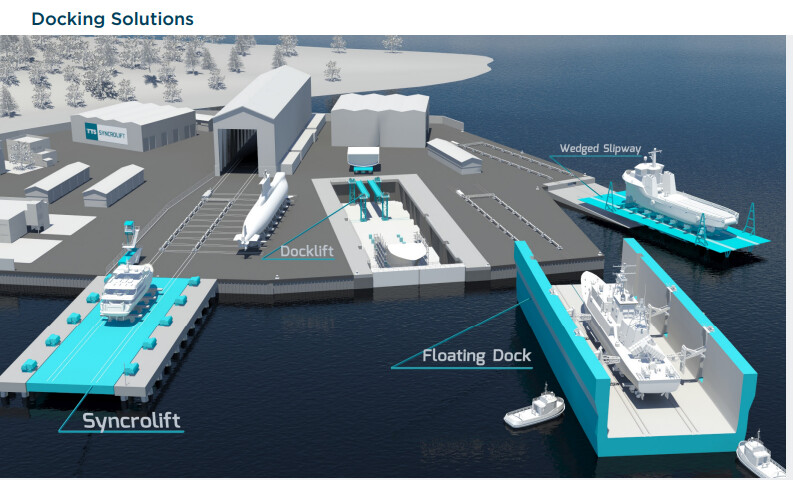
Syncrolift is the foundation of Nekkar and currently generates almost all of its revenue. It involves various crane solutions for shipyards, whose task is to improve the productivity and logistics of the shipyards. The company has at least 240 installations in 66 different countries. Customers include naval shipyards, repair shipyards, and construction shipyards. This is clearly a niche market, where Nekkar currently holds a pseudo-monopoly with at least an 80% share. In recent years, orders have increased significantly, and the order backlog is currently already one billion Norwegian kroner, so the company is somewhat forced to grow in the coming years to fulfill these orders.

In addition to increasing market share and new shipyards, Nekkar can also offer solutions for modernizing old shipyards. Furthermore, Nekkar has identified significant growth potential in the maintenance operations of its equipment, where it currently holds only a 15-20% share. Historically, the company probably didn’t invest much in maintenance operations, but nowadays, the company surely aims to sell maintenance contracts alongside its cranes, which generate cash flow for decades with excellent margins.
https://nekkar.com/wp-content/uploads/2019/10/Syncrolift-Shiplifting.pdf
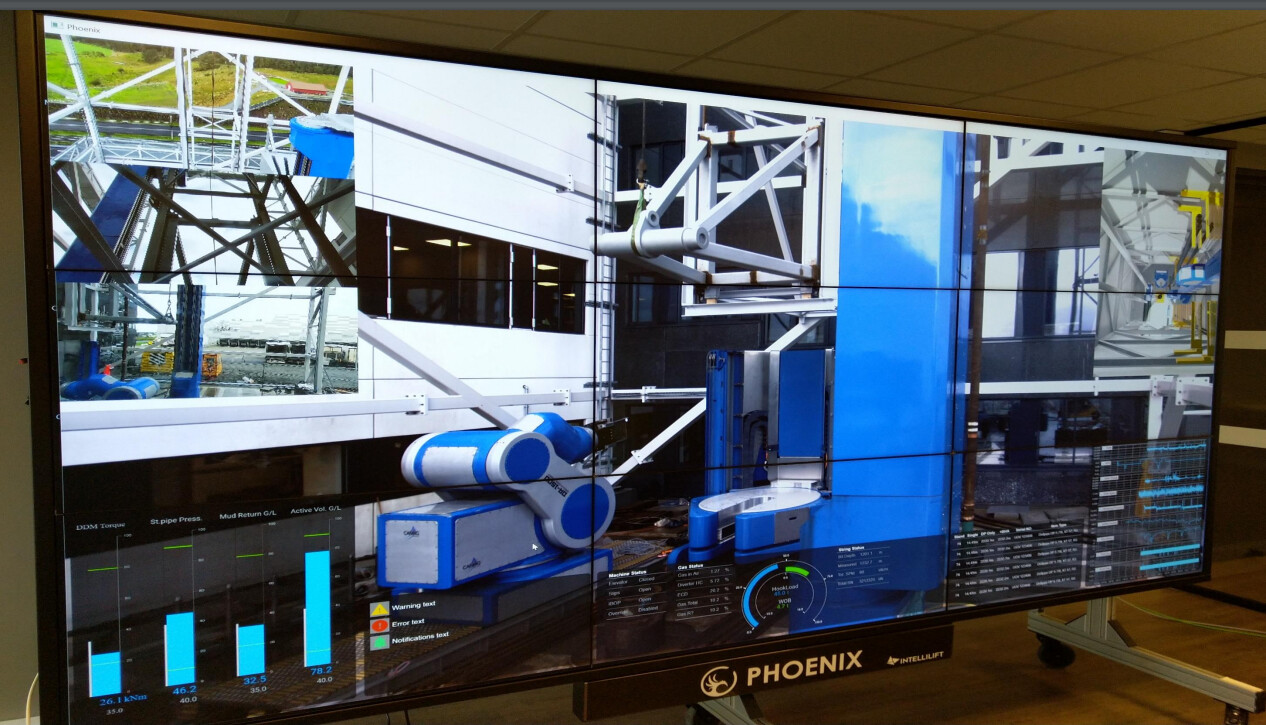
In 2019, Nekkar acquired 51% of Intellift, which forms the company’s digital solutions segment. The company’s goal is to create an open application platform that collects, monitors, and manages data streams for predominantly Norwegian industries (shipyards, oil, wind, aquaculture). The company has software called Phoenix. I don’t know what it does in practice, and the company hasn’t communicated much about it or detailed its revenue. However, according to the CEO, Intellift’s revenue and operating profit doubled during 2020. Because of Intellift, Nekkar sometimes appears in comparisons of Nordic SaaS companies, but even though it would be nice if Nekkar received SaaS multiples, Intellift currently forms a very small part of the revenue (4%). Of course, growth has been strong, and the TAM is likely significant.
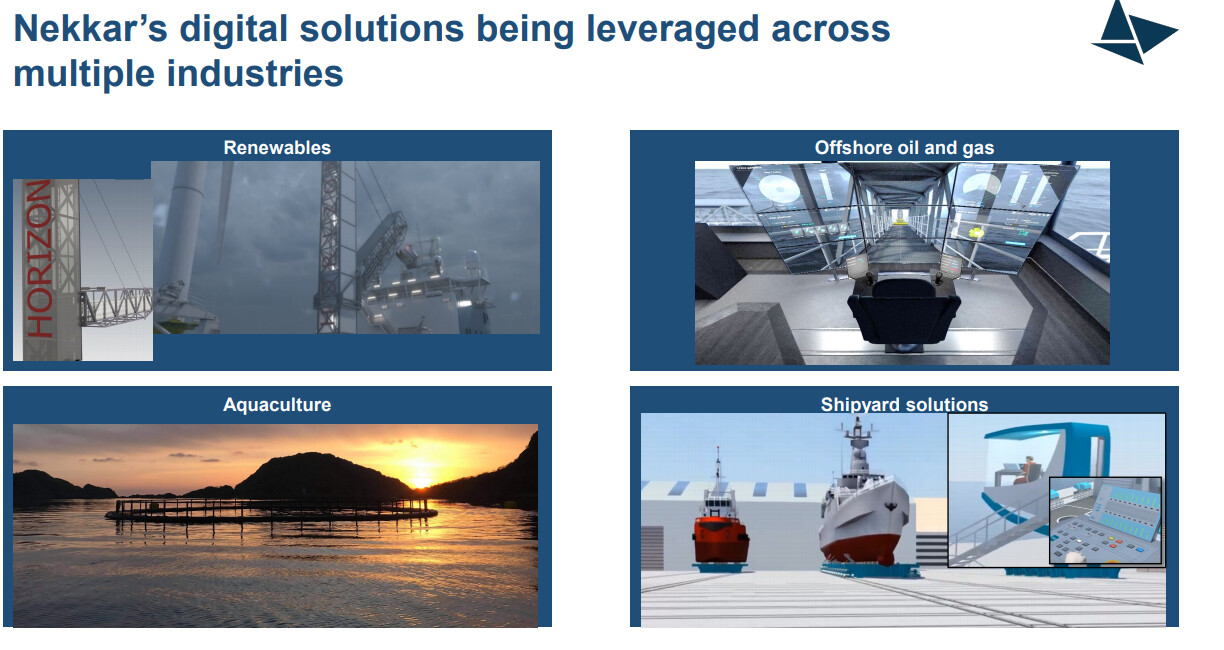
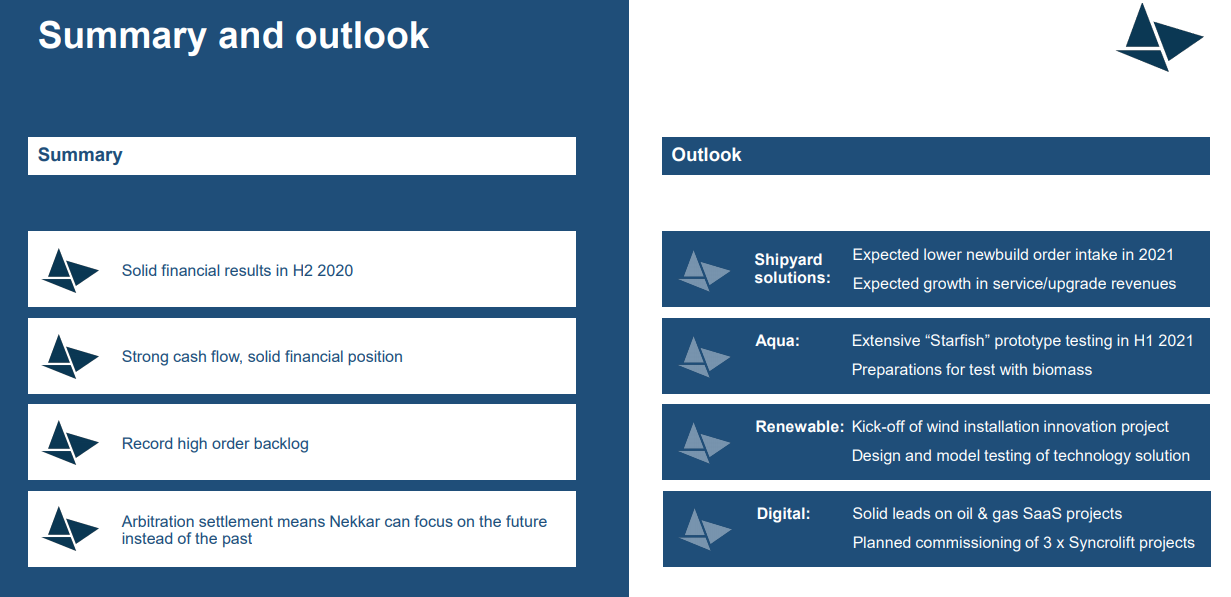
Additionally, the company is developing a fully automated closed fish farming cage called Starfish. There isn’t much information about the product yet; it’s in the design phase, but prototype tests at sea are underway, and fish trials are planned for the summer. Fish farming in the sea generates emissions and eutrophies water bodies, making it problematic. Furthermore, there are all kinds of parasites in the sea that fish don’t like. According to the company, Starfish is the solution to all of this. I’m not very familiar with the cost structures of fish farming, but cultivation has been moved from sea to land for the aforementioned reasons, and such cultivation is reportedly 20% more expensive. According to Nekkar, their product is disruptive because it would make sea-based farming even cheaper and, at the same time, sustainable. The fish farming cage would, of course, also be connected to Intellift’s systems. Tangible results and commercialization are still to be awaited.
https://nekkar.com/news/ocean-testing-of-starfish-closed-fish-cage-has-started/

Additionally, the company announced in its latest half-year report that it has piloted disruptive, fully automated, remotely controlled wind power installation technology with an international partner. A patent is pending. It remained unclear what this was related to. We await further information.
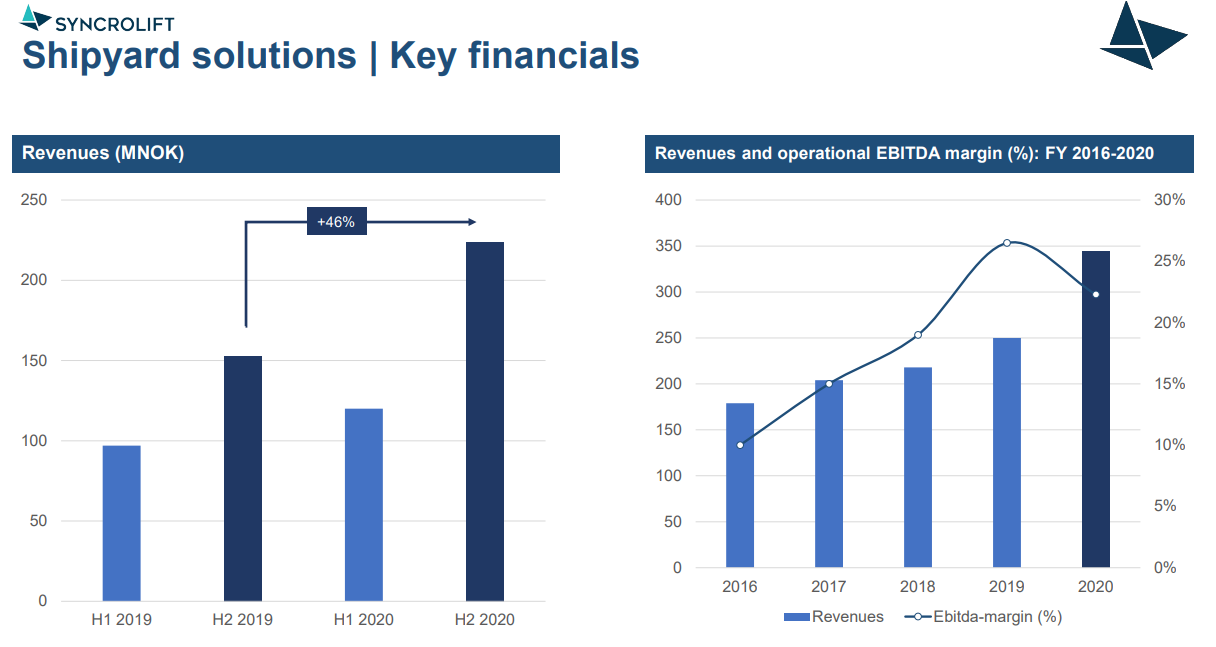
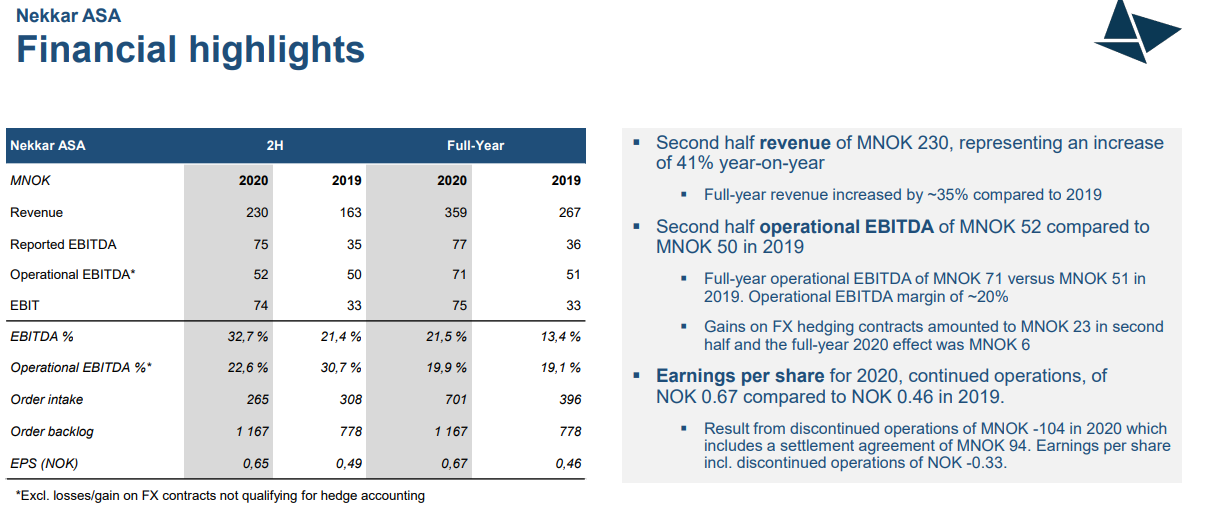
In the latest half-year period, revenue grew by 46% compared to the previous year. For the full year, growth was 35%. EPS grew by 45% from last year and was NOK 0.67. High margins indicate strong pricing power. Despite strong growth (in share price and revenue), the company is still not overvalued by multiples. For this year, the P/E would be 11, EV/EBITDA 3.1x, and EV/EBIT 4.6x. The company has no debt, but has NOK 370m in cash.

The Chairman of the Board owns >30 percent of the shares. For a small company, Nekkar has an impressive management team consisting of veterans from Norway’s oil, wind, and fish sectors.

The company thus has many directions in which it could and intends to grow: for Syncrolift, increasing market share, market growth, modernization of existing shipyards, securing maintenance contracts; expansion into the SaaS market through Intellift, and expansion into the aquaculture market through Starfish, plus renewables(?).
56 Likes

If you’re interested in the company, there’s also good discussion about it on the Norwegian investment forum dating back to 2019. https://tekinvestor.no/t/nekkar-asa-tidligere-tts-group

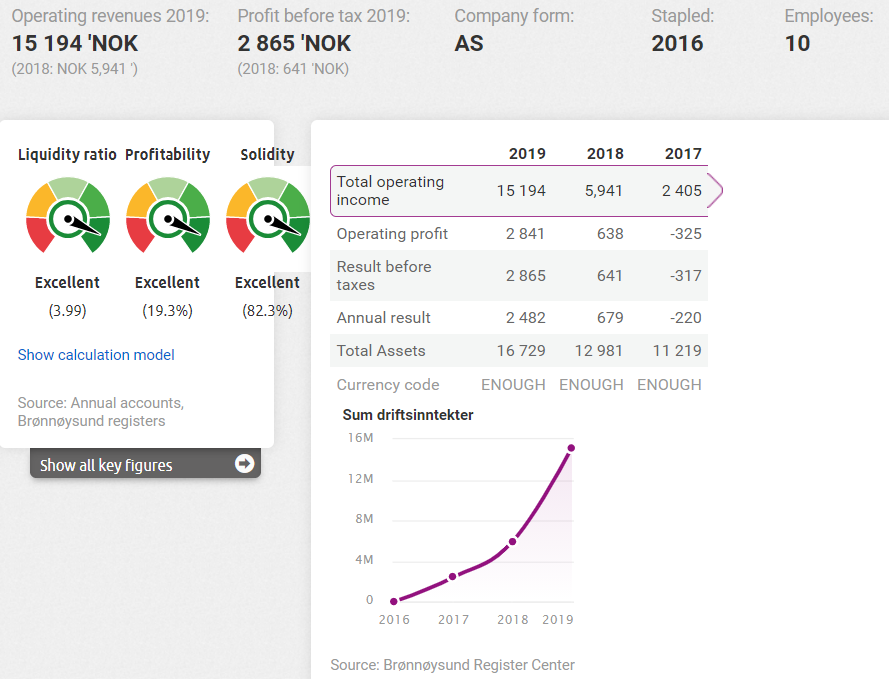
More on Intellilift. This shows the company’s development in recent years. Notice that the picture shows the hockey stick growth of a SaaS company, especially since revenue and profit also apparently doubled in 2020. You can view the numbers here. Intellilift AS - Org.nr. 918 335 722 - Kristiansand S - Se Regnskap, Roller og mer

Of course, the amounts are small, but the company is already cash flow positive with good margins and can thus finance its growth without investments from Nekkar. Half of Intellilift was bought in 2019 for MNOK 15.3. Nekkar should probably use its cash reserves and buy the rest of the company.

I also found a more detailed description from that year of what the company actually does:

Intellilift delivers open software platforms to collect, monitor and control data for different offshore energy industries. Intellilift has developed “Phoenix” which is a mixed reality system that combines different data sources and high resolution real time camera streams. The product has been sold both to oil-gas business and wind industry and enables remote operation of machinery and processes. Intellilift is continuously working on new product development alongside its already commercialized products. We also expect positive synergies to be realized by integrating the products and solutions of Intellilift with the Syncrolift business as well as the aquaculture business.

10 Likes

Thanks for the great opening, @Homeros! You’ve found a very interesting company, and I find it a bit unfortunate that there hasn’t been more discussion about it yet. One point in your message caught my particular attention, namely that legal case. When you write in the imperfect tense that Nekkar only had to pay 94 million kronor, are you absolutely sure that the money has already left the company’s cash to MacGregor? In other words, when you calculated those amazing EV/EBITDA and EB/EBIT ratios and the company’s cash, have you considered the possibility that over 80 MNOK might disappear from the cash during 21H1? This might not make the company a bad investment, but I think it should be taken into account if the money hasn’t moved yet.

15 Likes

Good point, Eka. I took those numbers directly from the Tikr terminal. I had to go look at the ledgers now to figure out how this actually works :face_with_monocle:. The announcement that the companies had reached an agreement on that 94 MNOK payment came on January 11, 2021, so it was likely known to the company’s management already in Q4. Thus, a loss of 103 MNOK from discontinued operations was recorded in the income statement for 2020. Similarly, exactly 100 MNOK appeared in the balance sheet for 2020 H1->H2 under other short-term liabilities. So, in answer to Eka’s question, I interpret that the money has not yet gone to MacGregor’s account, but since it was recorded as a liability in the 2020 accounting, the enterprise value calculated based on that, and thus the multiples, should not change in any way when the money is paid in 2021 H1, because goodwill = market value + debts - cash. Feel free to correct me if I understood something wrong.
Of course, the EBITDA and EBIT given by the Tikr terminal for this year are very bullish, meaning the model predicts strong growth for this year. Calculating with last year’s results, the EV/EBITDA would be 7x and EV/EBIT 7.2x.

11 Likes

Thanks @Homeros, this was a great opening! A solid-sounding economy and a low P/E (relative to profitability) pique my interest. Usually, among the numbers, one finds a hidden relative of a wolf, but in this case, I haven’t come across one yet. OK, the order intake pile for the shipyard side, which is their main business, looks thinner, and that will surely show on the bottom line, so does that explain the P/E ratio? How cyclical is the core business, and are we currently at its peak?

For a relatively small company, there are quite a few different pillars or stumps, and their mutual synergy doesn’t open up to me, at least. Wind power installations versus fish farming? What mainly concerns me - when I’m actively looking for threats - is the management of growth and the sufficiency of resources. Diversified companies usually don’t get “full” P/E ratios (the so-called conglomerate discount), and sprawling into many industries is not fundamentally a good thing even from an administrative perspective.

An interesting case overall.

Ed: corrected a wrong statement, backlog → order intake

2 Likes

What’s also interesting about Syncrolift is the competitive situation, or rather, the lack of competition. Apparently, there’s only one competitive company in the market, but it mainly focuses on milking old contracts.

Jörns Bullmarknad (@uadadauaau112) tweeted: $NKR – Nekkar. NOK 500m market cap. My research note on the company:

https://drive.google.com/file/d/1th-jtVbhosn707L4BFw9knYbwOcrpkyW/view?usp=sharing https://twitter.com/uadadauaau112/status/1310496894817308672?s=20

I originally spotted Nekkar on Twitter, and above is an older but good post pinned as a tweet.

Edit: I changed the profile to the tweet itself, I’m not really good at using this forum, especially on my phone.

4 Likes

You are certainly right that after the McGregor sale, the market has had difficulties understanding what Nekkar is as a company and, on the other hand, what it wants to be (even I sometimes have trouble). And the company is still finding its form. Hopefully, the annual report to be published next month will provide clarity on the company’s goals and allow us to look ahead, now that the McGregor issues have finally been put to rest.

It could probably be summarized that currently, the company’s strategy is that they have engineers who design things, and then those things are sold. This is, of course, not a very concrete plan. Growth is apparently the main thing now, which is why they have branched out into these “high-growth industry” sectors, as the company puts it. In the latest semi-annual report, digital businesses as value creators were clearly highlighted for the first time, but it’s good to remember that the company still gets its money from cranes. This is, of course, not entirely a bad thing. The current order backlog for cranes guarantees revenue and good cash flow at least until 2024, even if hubris doesn’t pay off and everything else fails. Boring is good.

Interpreting the company’s website gives the impression that they intend to make acquisitions and grow through them, using cash and potential debt, and investors should not expect dividends in the near future. This is quite sensible, and there has been no point in being completely debt-free and hoarding cash, but the MacGregor challenge naturally forced this and put expansion plans on hold. Next, Nekkar needs to put its balance sheet to work. By leveraging, they could acquire relatively large targets. It might be sensible to acquire their only competitor, the US-based Pearlson, and thus gain the entire Syncrolift market for themselves, including the missing service agreements, but I don’t know if there are any laws or entities that can prohibit such a monopoly :sunglasses:.

Furthermore, the company is quite capital-light. Syncrolift’s Capex is only 1% of its revenue. Last year, there were 11 MNOK in R&D investments; the annual report will probably clarify which segment they were directed to. Intellift is cash flow positive, but investments certainly should have been made, and probably have been made, in the company. At the end of 2019, the company had invested 3 MNOK in Starfish, so in practice, it is being developed mainly with taxpayers’ money (10 MNOK grant from the Norwegian Innovation Fund) and funds from partner Leroy Seafood, so if it collapses, the amount of write-offs will be limited.

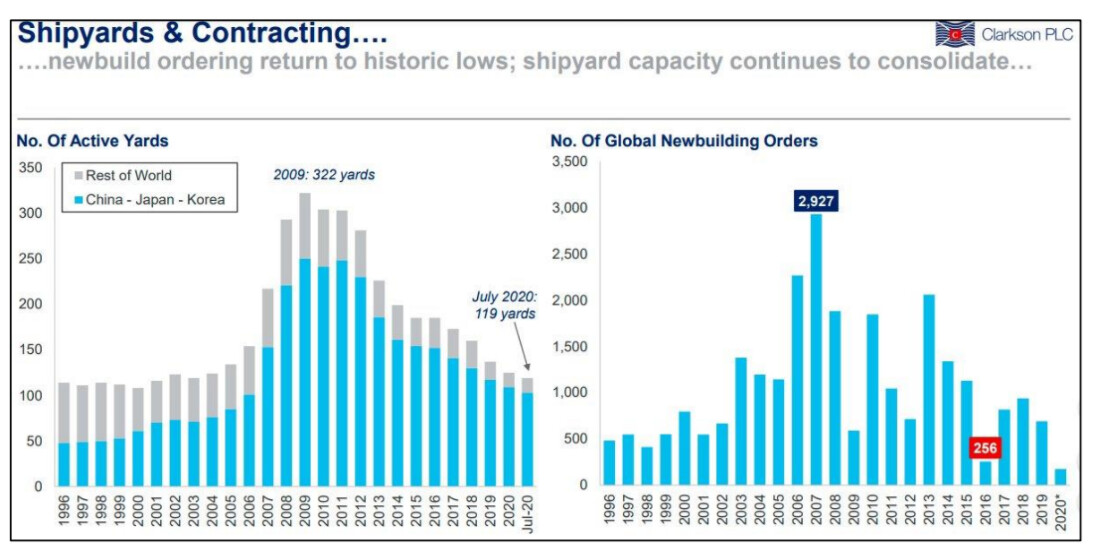
Regarding cyclicality. Shipping is, of course, a highly cyclical area and thus reflects on shipyards and, through them, on Nekkar. The income statement included 13 MNOK in credit loss provisions, so some customer went bankrupt last year. However, interpreting the charts provided by “Mr. Jörns Bullmarknadin” would suggest that we are currently at the very bottom of the cycle. It is, of course, difficult to say whether Syncrolift receives orders in advance or in arrears in relation to that shipyard and shipping cycle. However, it was stated in connection with the latest semi-annual report that 70% of orders come from national navies, whose budgets and thus orders should not be cyclical. This can also be observed in the pictures on the company’s website: submarines, patrol boats, frigates, and corvettes are being lifted there.

One risk, of course, is that I don’t know what has driven the large number of orders in recent years compared to previous years. Did everyone just decide to order simultaneously, and thus in the coming years, significantly fewer orders will come in, or is the order growth a result of investments in sales and product development that are now bearing fruit and are thus sustainable? The company did guide that fewer orders are expected this year. This has probably been discussed in some investor call, but I don’t speak Norwegian, so they have been a bit difficult to follow. Of course, this is a bit of a non-issue as orders are already in place for 2024, and according to the company’s strategy, the next growth for Syncrolift will be sought from service/maintenance/upgrade businesses.

About valuation still. Pricing errors are common in these microcap companies: no analyst follows them, and investors may not even pay attention. Of course, the challenge to the purchase price has weighed on the share price, and if you look, just a year ago, the market valued the company as completely worthless. This threat only receded a few months ago; have the slowest even noticed yet?

13 Likes

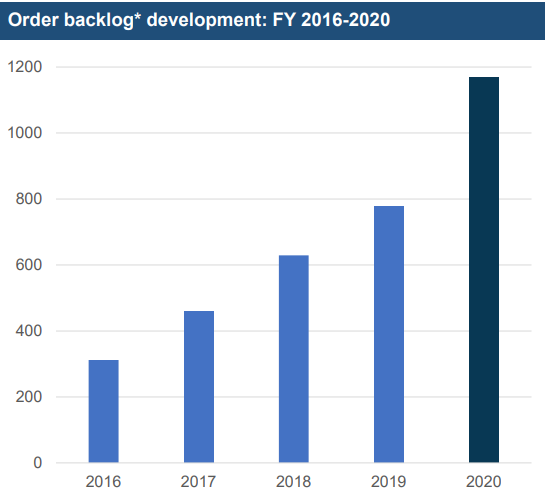
The backlog has indeed grown nicely in recent years. It feels strange if the cycle had been in such a beautiful and steady uptrend? 2021 will probably break the trend, though.

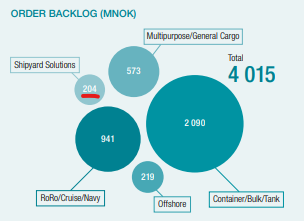
In 2015, the backlog was 204 MNOK, if I understand correctly.

3 Likes

The then TTS Group bought Syncrolift from Rolls-Royce Marine in 2015. I couldn’t believe it at first, but the purchase price was really only MNOK 10.7. So for a million euros, they got 250 installations, patents and the brand. It was a tiny acquisition then, getting only a few lines in the annual report.
image
Syncrolift was integrated into the then Shipyard-solutions segment, which also included a solution called Liftec. The 204 MNOK order backlog presented by @IsoMaki for 2015 also includes Liftec’s order backlog, so it may not be entirely comparable, but the point is clear: Syncrolift’s order backlog has increased six to tenfold in five years.
That 10 million kronor purchase has since generated over a billion kronor in revenue and hundreds of millions in operating profit over the years. Rolls-Royce practically sold it for free. The Norwegians, of course, certainly did new development, investments, and sales work under the Syncrolift brand. Presumably, the Shipyard segment of the then TTS Group also had expertise, resources, and synergies to develop the Syncrolift concept.
Then Liftec was sold in 2017, and at the beginning of 2018, Cargotec announced that it would acquire everything from the TTS Group except the parent company (administration) and the Shipyard-solutions segment, where only Syncrolift remained. The company changed its name to Nekkar and announced that operations would henceforth be built around Syncrolift, and it launched this growth strategy based on new business opportunities and acquisitions. The company’s market value has tripled since then, even though 90% of its businesses were sold. In retrospect, that deal was a pretty good move, as the company’s loss-making and worst-performing parts were sold to the Finns :sweat_smile:. The company’s management clearly saw Syncrolift’s potential and strong market and started developing it.

If one looks at the figures for continued operations, revenue has increased by about 75% since 2016, but there has been a huge margin expansion, and EBITDA and operating profit have multiplied. Who would have thought that ship cranes are a scalable business? But the company must have done a lot of things right, because in 2015, Rolls-Royce still saw the business as bad and unprofitable and sold it for free.

7 Likes

Thanks also to @Homeros for the excellent opening.

I got into this a bit late yesterday, as I only had time to go through the materials over the weekend. It seems others have also found Nekkar, and it’s good to take an additional position in a rising stock :sweat_smile:.

Syncrolift is, of course, a clear cornerstone, providing continuous cash flow, and the backlog supports it for a long time ahead. However, according to the company’s forecast, it appears that growth in this area will not be coming in the future, at least not during 2021. The ramp-up of maintenance and service operations, in turn, should provide support, provided they are well executed.
image

An interesting new venture, on the other hand, is Starfish, which is being developed with Leroy. Sea lice / fish lice (?) are a really big problem in fish farms. I had Mowi in my portfolio for a good while until the Norwegian tax authorities started taking a larger cut from dividends. At that time, I followed the industry somewhat, and the impact of pathogens seemed to be constantly present.

If Starfish can eliminate sea lice and implement a more cost-effective solution in addition to sea farming, then demand should be there. Globally, there are many fish farms, and the cost-effectiveness of operations is of great importance in the bulk industry.

Is there any idea how much revenue could be expected from this? There don’t seem to be exclusive contracts with Leroy, as it’s presented as a public product. I didn’t notice any specific information in the company’s forecasts. Of course, the concept is still in the testing phase, and functionality needs to be confirmed.

I agree that there doesn’t appear to be synergy on the surface. The common factor is expertise in operating at sea. In addition, large players seem to have confidence in Nekkar’s engineering expertise, as Orsted and Leroy are involved in the development work. New ventures are likely still to come; at least my assumption is that everything is not yet on display.

Edit:

A quote from Nekkar’s article regarding Starfish:
“The idea behind Starfish is to reduce opex level dramatically for the fish farming industry, while simultaneously improve fish welfare and focusing on circular economy. We look forward to verifying the technical and operational parameters of the solution before we start preparations for testing with biomass later this year,” says Mette Harv, executive vice president of Nekkar’s Aquaculture business area.

In both Norway and parts of Canada there is a political drive towards closed caged fish farming. Authorities view closed fish cages as a potential solution to solve major environmental and sustainability challenges such as sea lice, escapes and mortality rate.

“Today there are around 4,000 open cages in Norway. Closed cages will open up additional locations. This illustrates the market potential for Starfish,” adds Mette Harv.

4000 open fish farms in Norway alone

There are just “a few” more in Britain, Canada, and Brazil
The testing phase will still take some time, so actual production and revenue are probably coming from 2022-2023 onwards :man_shrugging:

2 Likes

Nekkar’s board actually includes Mowin’s former operational director of fish farming, so I would trust that they are quite well aware of the needs of the fish farming industry.

The problem is that copepods (parasites) living in seawater are parasitic to salmon, and their proliferation threatens the entire Norwegian salmon industry and causes huge financial losses. This scientific publication explains the matter well: https://www.sciencedirect.com/science/article/pii/S0044848616304537. By isolating salmon from seawater using a closed or semi-closed solution, where water is then circulated by pumps, this problem is practically solved.

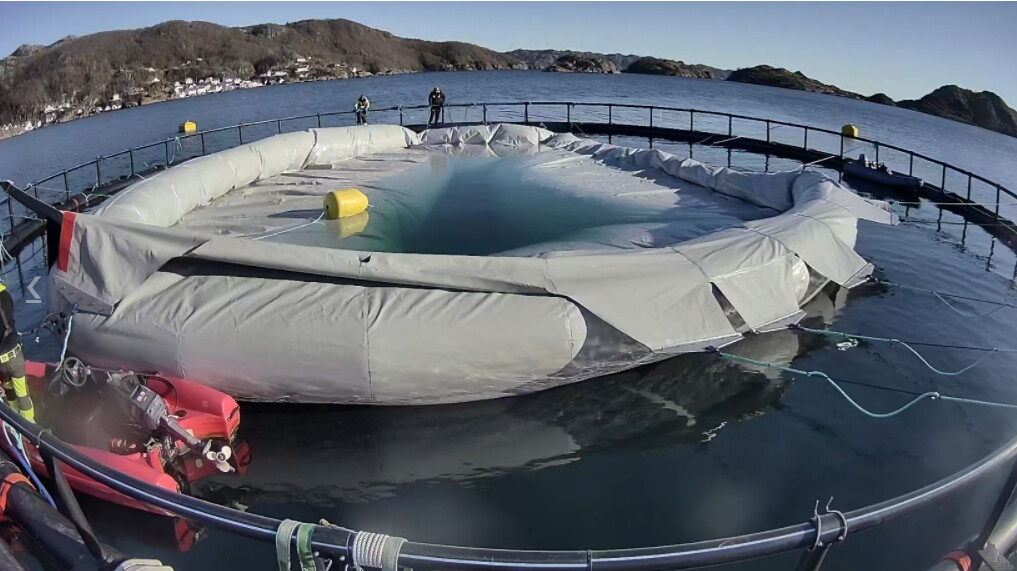
I even found a publication that presents these developing closed fish farming environments. Various operators have been developing these since at least 2014, and commercial solutions are already available. But for some reason, the technology has not quite broken through yet. I think the problem is that some of these solutions look so expensive and difficult that the price of fish becomes too high compared to fish grown in open nets, as one would have to invest in these expensive solutions. Nekkar’s developed product differs, as I understand it, in that it was developed with the idea that it should lower costs, not raise them, making the investment decision a no-brainer for farmers. At least one clear big advantage is that their closed bag can be fitted into existing frames that are already anchored in the fjords. In the picture on Nekkar’s website, the bag is being fitted into such a plastic ring, which I understand is the most popular and common model widely used by farmers in Norway.

This can be compared to the products of competing companies like https://aquafarm.no/, https://fiizk.com/en/product/semi-closed-cage/, whose solutions would require the farmer to buy the entire infrastructure and discard the old frames, which could lead to very high investment costs. Of course, Nekkar is behind and the product is still under development, while the competitors’ solutions have already proven to produce fish and have been commercialized.
One news article had more comments:

Harv said one of the benefits of the system was that fish farmers might have the option to use cages they already owned for the outside layer, although moorings would have to be enhanced and only the bigger pens - such as the 200-metre collars used in Norway – would be suitable. The company will know more about the feasibility of that option, and what distance is best between the outside and inside rings, after testing.
When it comes to automation, Starfish has a software platform for remote surveillance, data acquisition, bio analytics and production control. Nekkar already has competence and experience in its Intellilift division, which supplies control systems, flexible interfaces and advanced intelligent diagnostic systems for the oil and gas industry.
Dependent on testing, Harv hopes to have the Starfish commercially available by around Easter next year, first in Norway and then in other countries.
“There is a huge interest in it,” said Harv. “We certainly see the opportunities globally.”
Harv pointed out that in both Norway and western Canada there is a political drive towards closed caged fish farming.
“Today there are around 4,000 open cages in Norway. Closed cages will open up additional locations. This illustrates the market potential for Starfish,” concluded Harv.

In sales pitches, there is potential for millions in sales, but the success of commercialization is still a big “if”. There is no information on whether there are any patents for this and how easily the solution can be copied. There is also no information on the agreement between Leroy and Nekkar and how potential profits would then be shared. But Nekkar will certainly not start cultivating salmon itself, nor necessarily manufacturing/selling this technology, but it may be that they just license the solution forward. The technology could be sold/licensed to, for example, the leading provider of fish farming solutions, Akva Group, instead of competing with them as a small company. But all this is just speculation. Patience is needed to see the potential of Starfish and the management’s plans for its commercialization. It is not necessary to build the investment case solely on the success of Starfish.

4 Likes

Fortunately, Starfish is not yet significantly reflected in sales figures and forecasts, except as development costs. Everything to come is pure upside to the current situation. According to this, commercialization could potentially be underway in 2022.

2 Likes

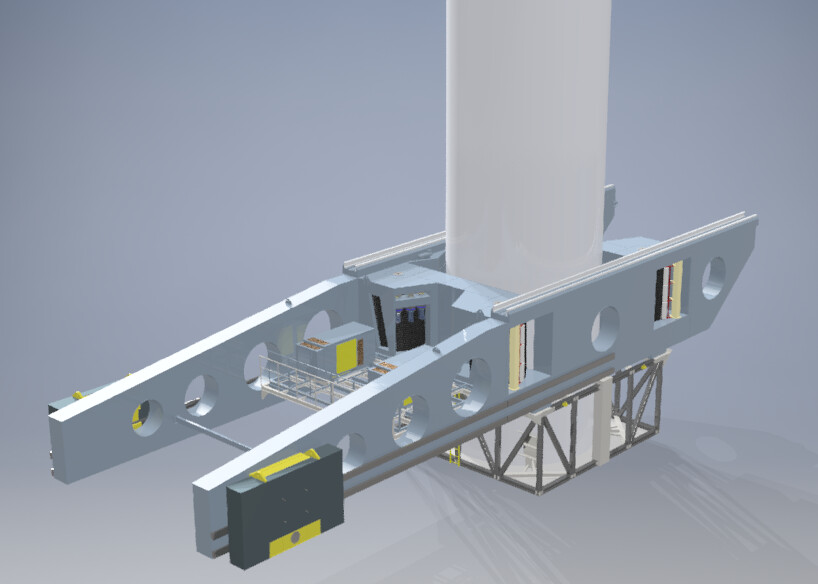
In connection with this, the company issued an announcement today. Nekkar secures funding for disruptive wind turbine installation solution. The company is receiving a 20 MNOK grant (non-repayable) from Innovation Norway for its new Skywalker wind turbine installation concept, which it is developing in cooperation with a major wind turbine OEM (Orsted?) and Fred Olsen Renewables.

Referring to the announcement: the product is, of course, disruptive; it enables the installation of heavier and larger turbines, reduces the time, costs, and environmental impact required, features stabilizers for rough seas, and, of course, the possibility of remote control via Intellift, making it possible to install turbines in locations where it was previously not possible or economically viable. The head of the renewables segment believes that the product has the potential to be a “game-changer” in the global wind power industry.

If there weren’t enough supporting arguments and fragments already, here’s another one. Of course, it’s great that these are being developed with other people’s money, not the shareholders’. Credibility is enhanced by cooperation with significant industry players and the ability to secure funding for these concepts. It also begins to form a picture that Intellift is what connects all of the company’s operations, or at least that the Intellift product can be integrated into all of the company’s current and developing solutions.

I also looked at Innovation Norway’s website for some of the grant awarding criteria.

Grants are used for projects where the socio-economic benefit of the project is considerable and technical risk is high. Grants are reserved for Norwegian companies that have ambitions to create value through innovation. - - We prioritize innovation projects that have great utility, high degree of innovation and likelihood of success.

7 Likes

The company published its annual report today.

The company confirms what I had already suspected: Intellift is the glue that connects all of the company’s sprawling verticals:

While Shipyard solutions, Aquaculture and Renewables are business areas that operate relatively independent of each other, the Digital solutions business area utilizes its unique competence to support the three other business areas. The purpose is to enable digital business models to capitalize on disruptive hard-tech design to unlock a revenue potential and drive business value from SaaS revenue

Regarding the outlook for Syncrolift, the market situation is highlighted as “promising,” but fewer large orders are expected this year, meaning new orders will not reach last year’s level. However, it is stated that: “The current order book will ensure high activity in 2021, - - which in turn will secure growth and healthy margins.”

Revenue from maintenance/service operations grew by approximately 30% last year, and there is still a lot of room for growth in this area, as it currently accounts for less than 10% of the company’s revenue. Under the outlook, it is mentioned that the company is implementing a five-year plan to increase after-sales revenue, and market share is planned to be regained in the coming years.

Intellift’s revenue grew by 100%, as the CEO had previously indicated, but half of the revenue was internal, so this was not as impressive. More information is provided under the outlook: it is stated that the first two Intellift/Phoenix systems have been sold and delivered, one alongside a new Syncrolift system and the other for an upgrade project of an old Syncrolift.

No new information regarding Starfish. Its testing is progressing on schedule. See previous post.

Regarding the wind turbine installation device, it is stated that it is still in an early stage. A “pre-study” was conducted last year, and the main development phase has begun this year. It is mentioned that it is being developed in close cooperation with end-users to ensure market demand for the product.

Some negative aspects are also mentioned. Due to Corona, some project delays have been observed. The overall risk related to potential future project delays and currency fluctuations is said to have increased.

R&D costs are guided to increase in 2021 related to investments in Starfish, Skywalker, and the development of digital businesses. The company intends to continue seeking public funding to cover these costs. Overall, the company’s management describes the outlook as positive and reiterates that the company is in a good financial and operational position.

12 Likes

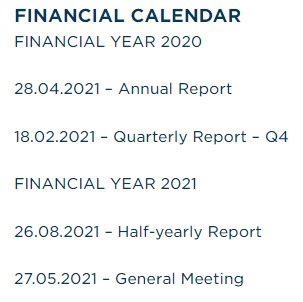
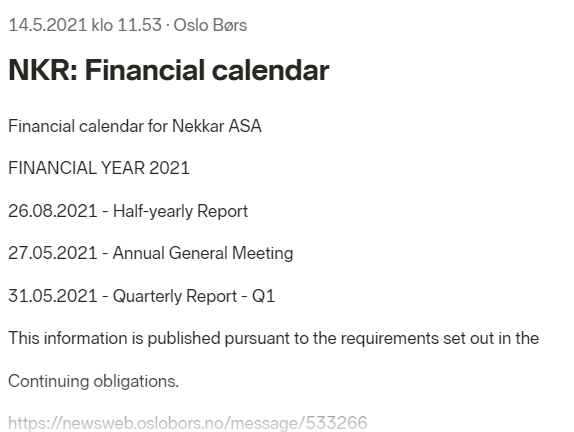
I was under the impression that the company would next report only in August, because Nekkar has only reported semi-annually after the TTS group transaction, and this was indeed marked in the previous confirmed calendar for this year. However, today the calendar was updated and Q1 results will apparently be published on May 31. Is this a sign of something? Hopefully, at least of a more active Nekkar in its new investor communications.

1 Like

Hmm… is there more information somewhere else? Nekkar’s IR pages only have the General Meeting on 27.5.2021 and the half-year report in August, as you mentioned.

https://nekkar.com/ir/

1 Like

It hadn’t been updated on the company’s website yet, but at least in Nordnet, under “news and press releases”, it showed:

The calendar still visible on the website was published in November.
I checked and it seems that Norwegian law and Oslo Børs (Oslo Stock Exchange) only require companies to submit semi-annual reports and an annual report, meaning that preparing Q1 and Q3 reports is voluntary in this regard.

3 Likes

It seems to be a press release, so no need to rely solely on Nordnet. There have been occasional discrepancies in dates there. Excellent news! It helps to stay better informed about progress and outlook.

I should check if I can still leverage some more purchases before the end of the month. The share price has slipped nicely again :thinking:

1 Like

The timing was perhaps a bit odd, as the earnings season is practically over, and they are announcing that they will still publish their report. One would think that if the Q1 result had been really bad, it would not be worth publishing anything when no one is expecting or demanding a report yet. However, on the other hand, it’s a small company, and the revenue streams are roughly known, and large orders have been communicated via stock exchange releases, so I don’t believe there will be any major changes in the earnings figures now.
Edit: Of course, not so much regarding the earnings, but a lot could have happened with the development of Starfish, Intellilift, and Skywalker in Q1, which could be reported.

1 Like

Blog analysis of Nekkar. Nothing much new for me personally, just confirmation that Nekkar has a lot of growth potential.

Regarding the balance sheet value, it’s worth mentioning the NOK 94 million payable to MacGregor, as @Pohjolan_Eka pointed out here as well. Despite that, the figures are quite reasonable with the current business operations. New ventures don’t seem to be significantly valued in the stock price yet, in my opinion.

6 Likes