A good point of wonder! I could elaborate a bit on the significance of this subscription price situation. The data presented in the accompanying graphs comes from the “operational & financial data” file published in connection with Elisa’s interim report.
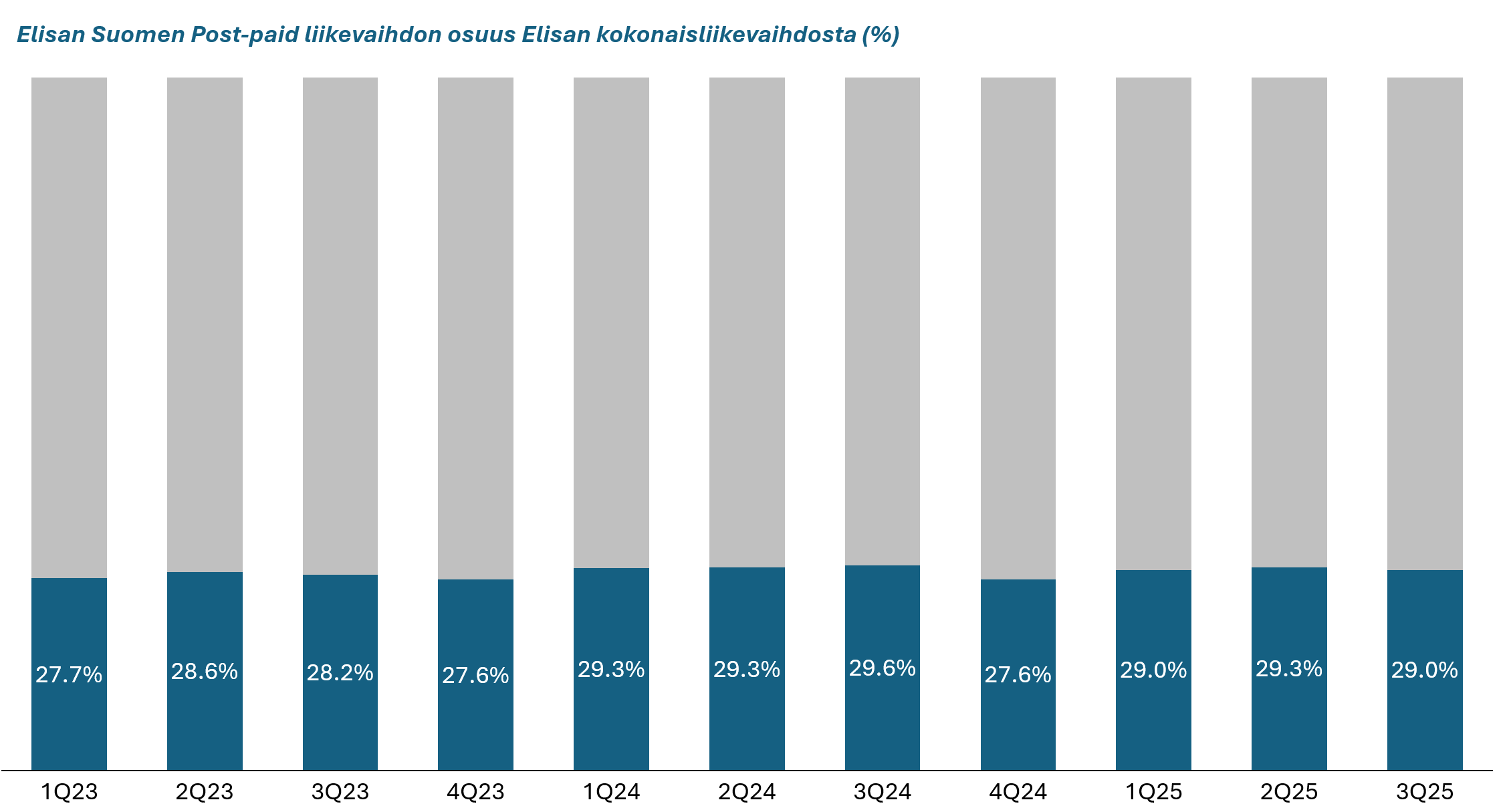
1. The problem concerns approximately 30% of Elisa’s business:
Finnish consumer postpaid mobile accounts for just under 30% of Elisa’s business.
So, not even half of Elisa’s total, but since the rest includes a lot of device business, lower-margin IT, and other non-scalable operations, this is a significant part of the overall margin. It should be noted, of course, that Elisa also has other significant mobile business – for example, in the corporate sector and Estonia, but their importance is small in relation to Finnish consumer mobile.
2. Revenue is over 160M per quarter
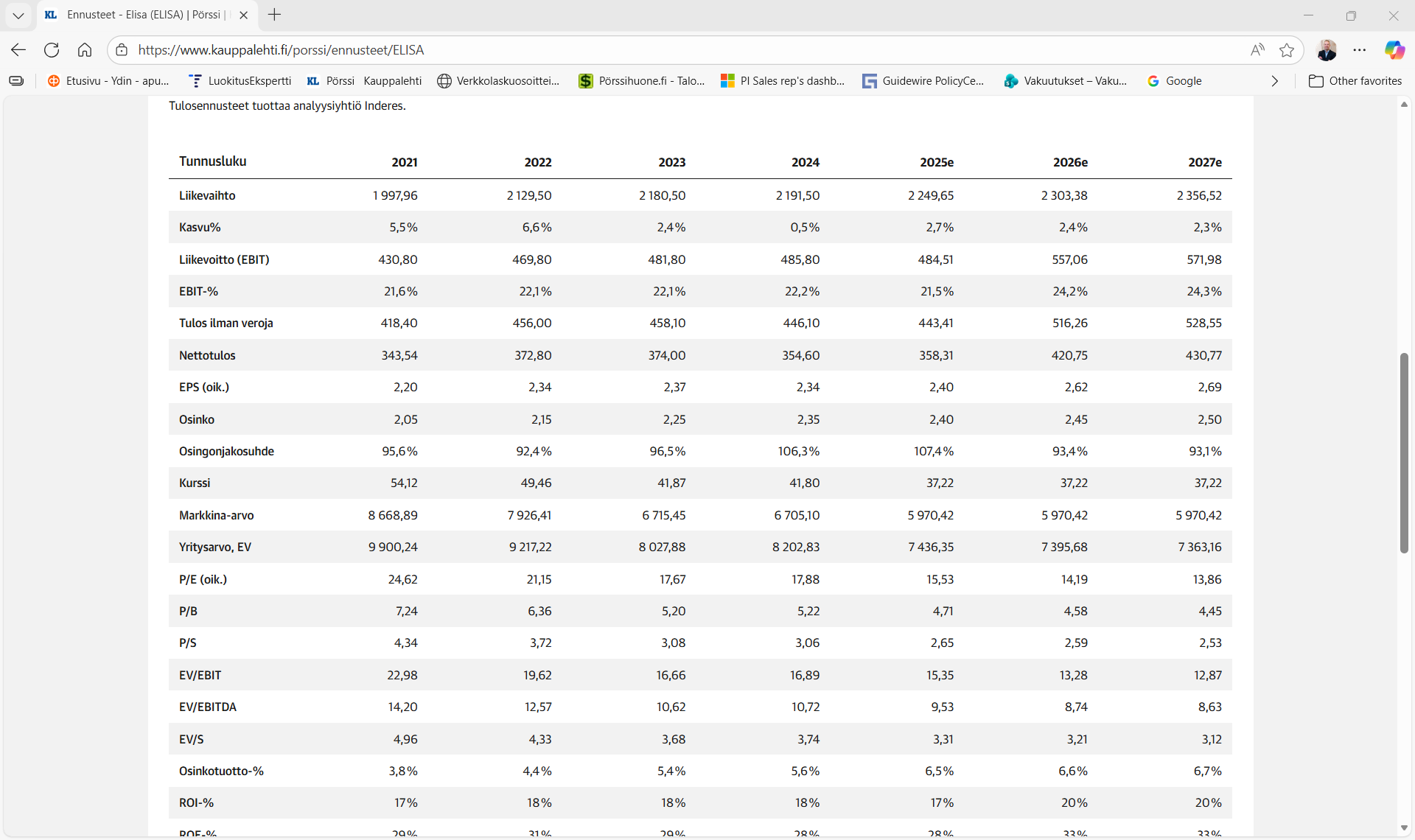
Elisa’s total revenue is over 2 billion, so that 30% is a significant sum.
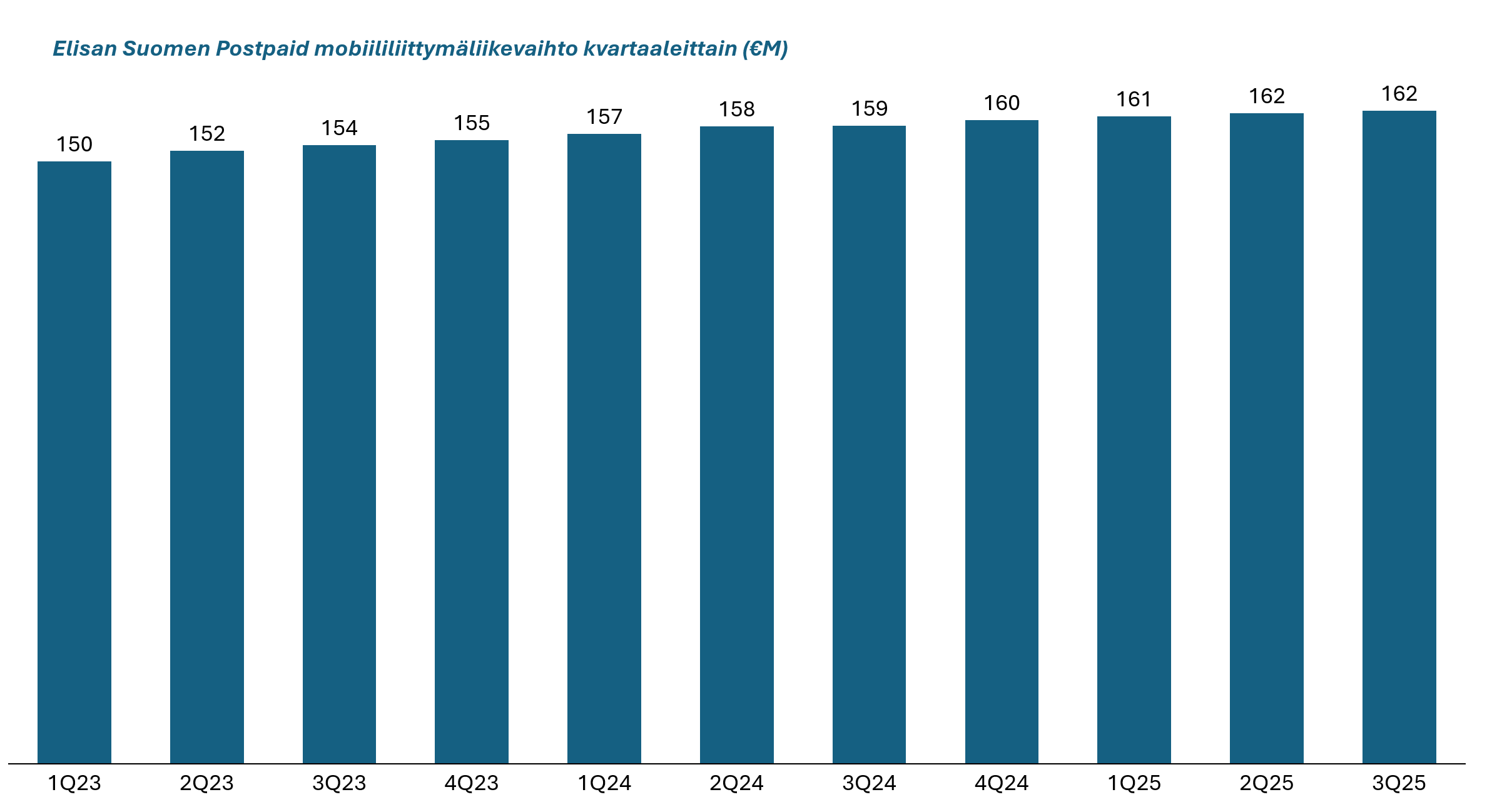
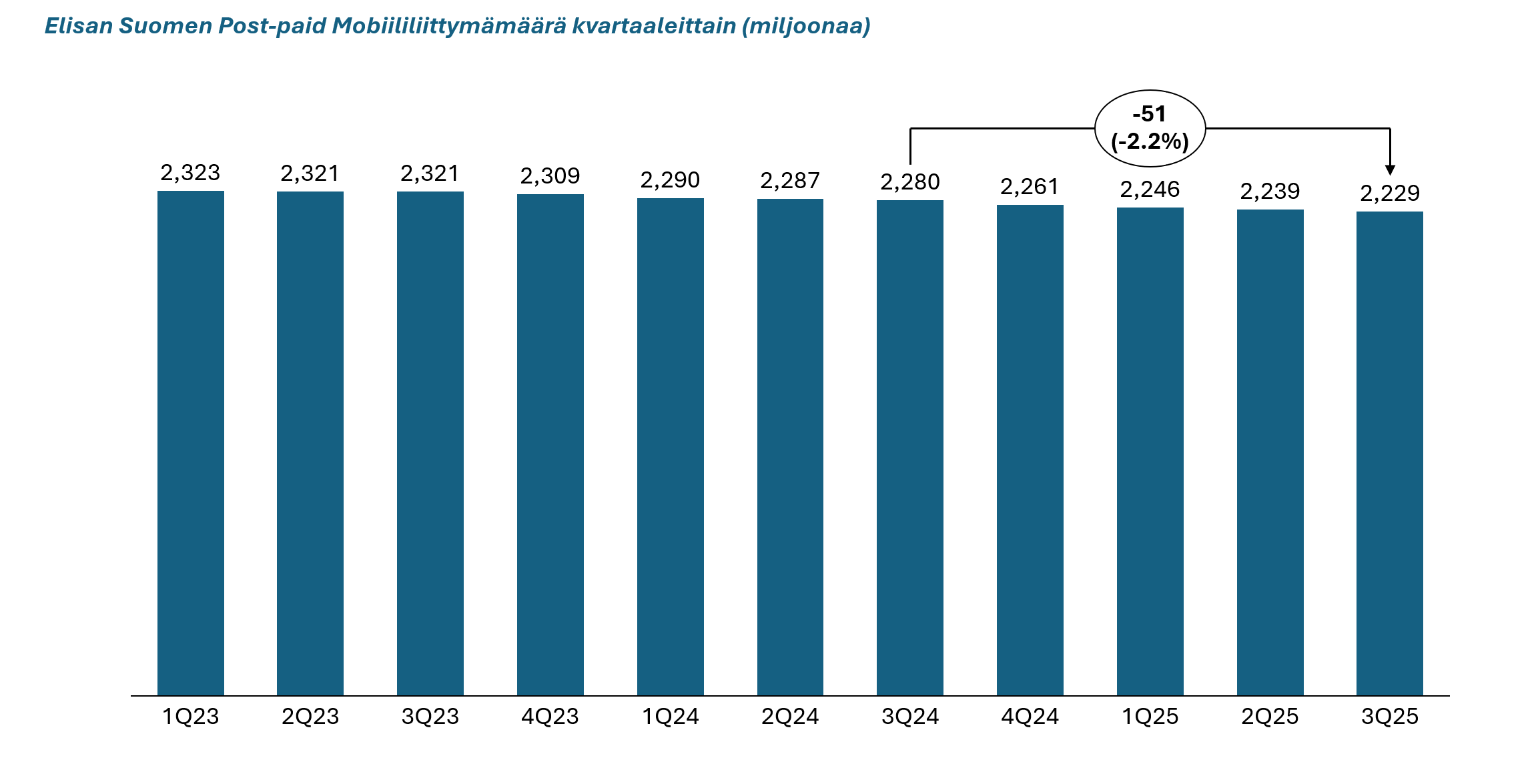
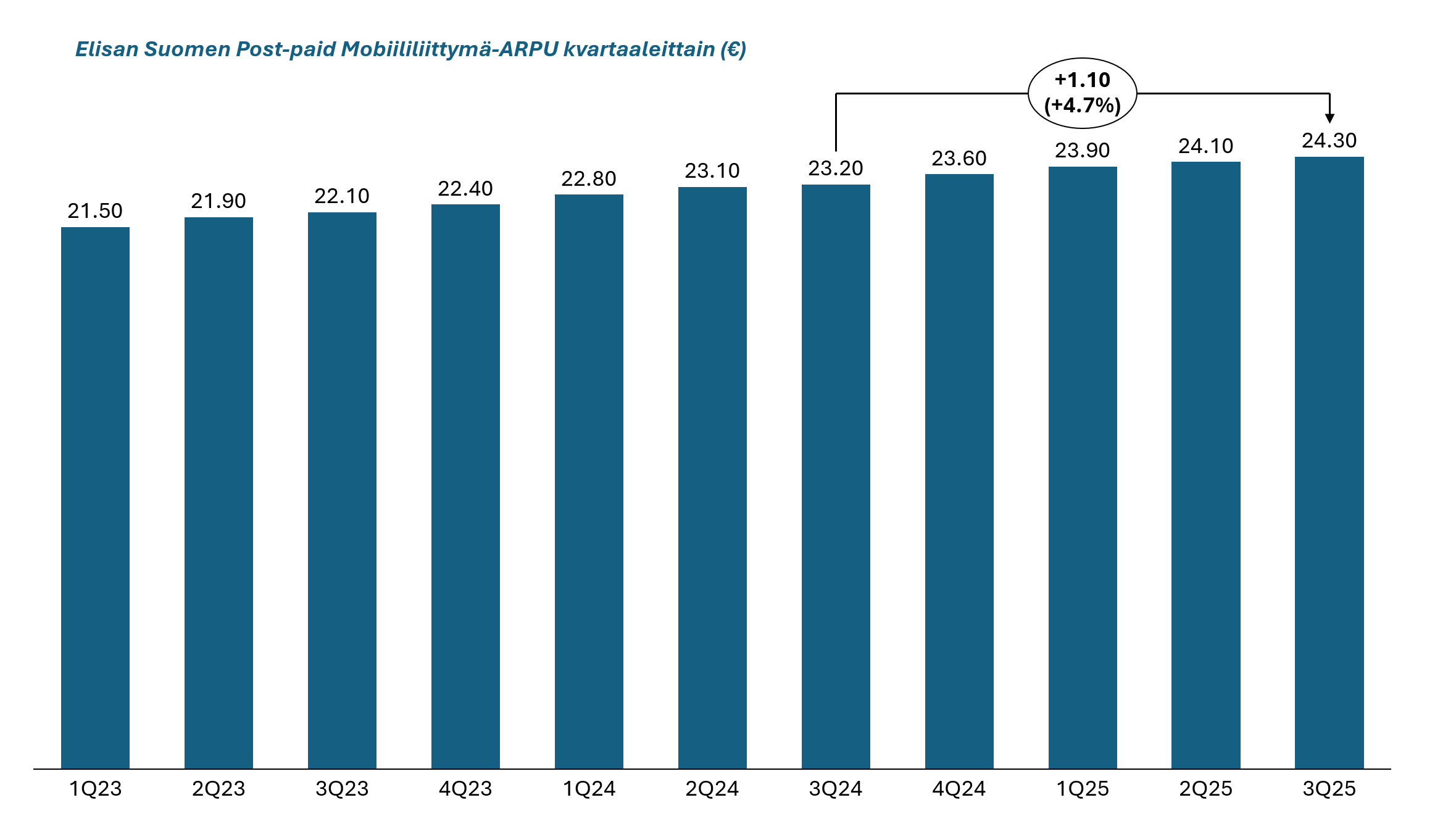
- Mobile revenue can be expressed as the product of ARPU (average revenue per user) and the number of subscriptions. Elisa’s ARPU has risen sharply in recent years, but the number of subscriptions is declining.
4. Recently, the competitive situation has intensified, which practically means that the churn rate of subscriptions has increased. Elisa saw approximately 124 thousand subscriptions terminated in Q3.
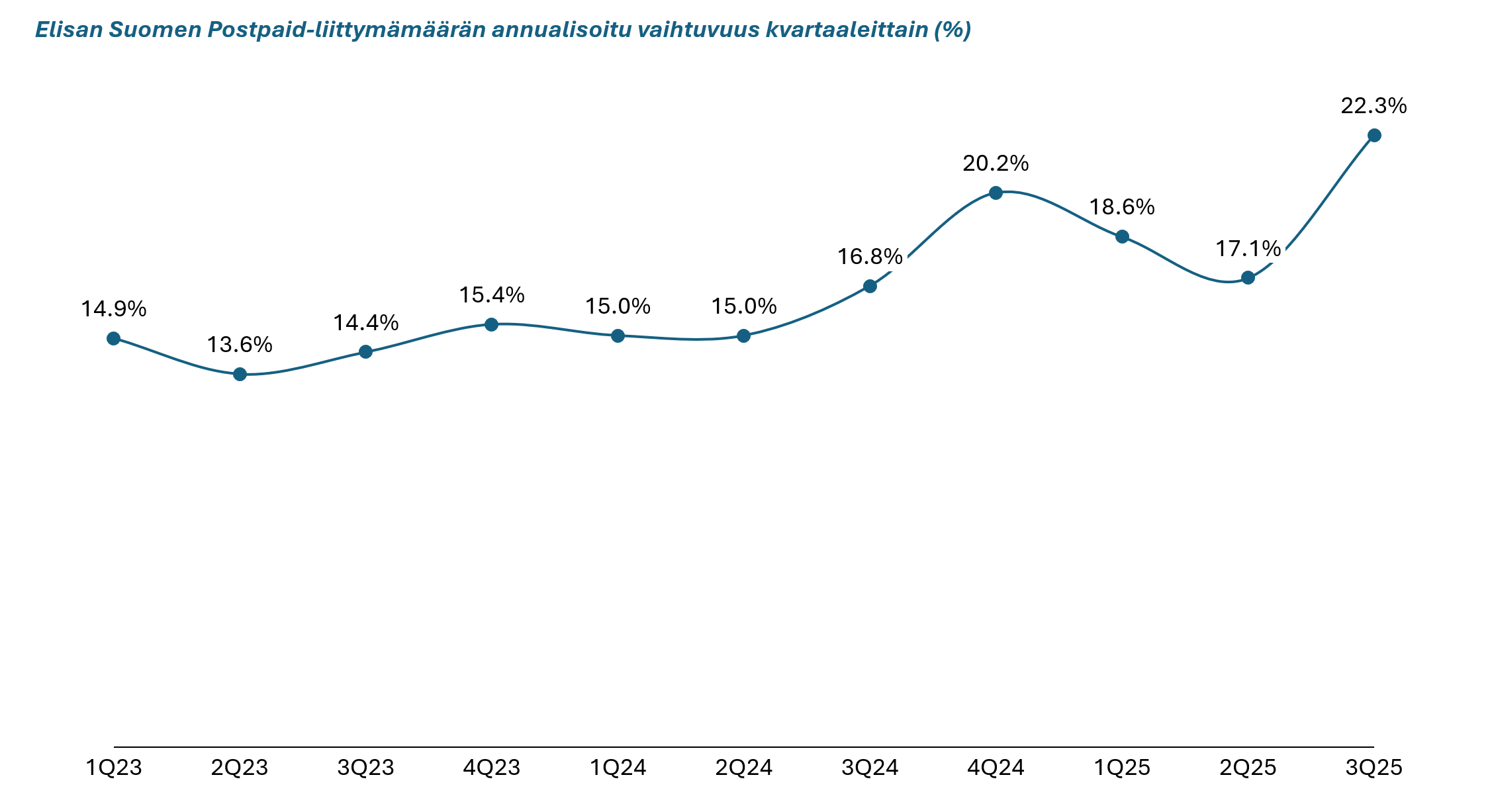
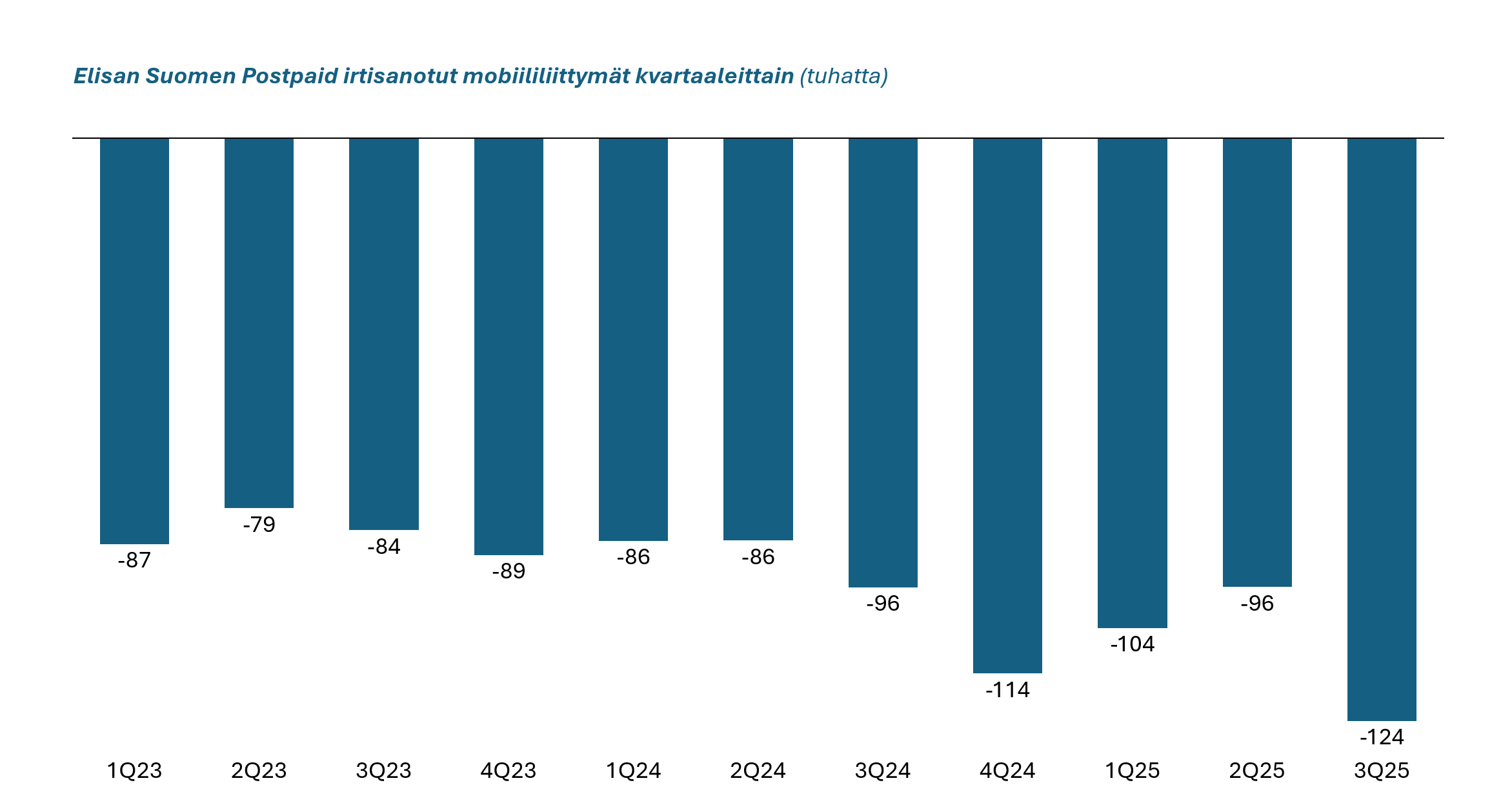
And now we get to why this subscription price situation is significant. To replace that churn, Elisa needs to ideally sell at least the same number of new subscriptions – or try to save more subscriptions.
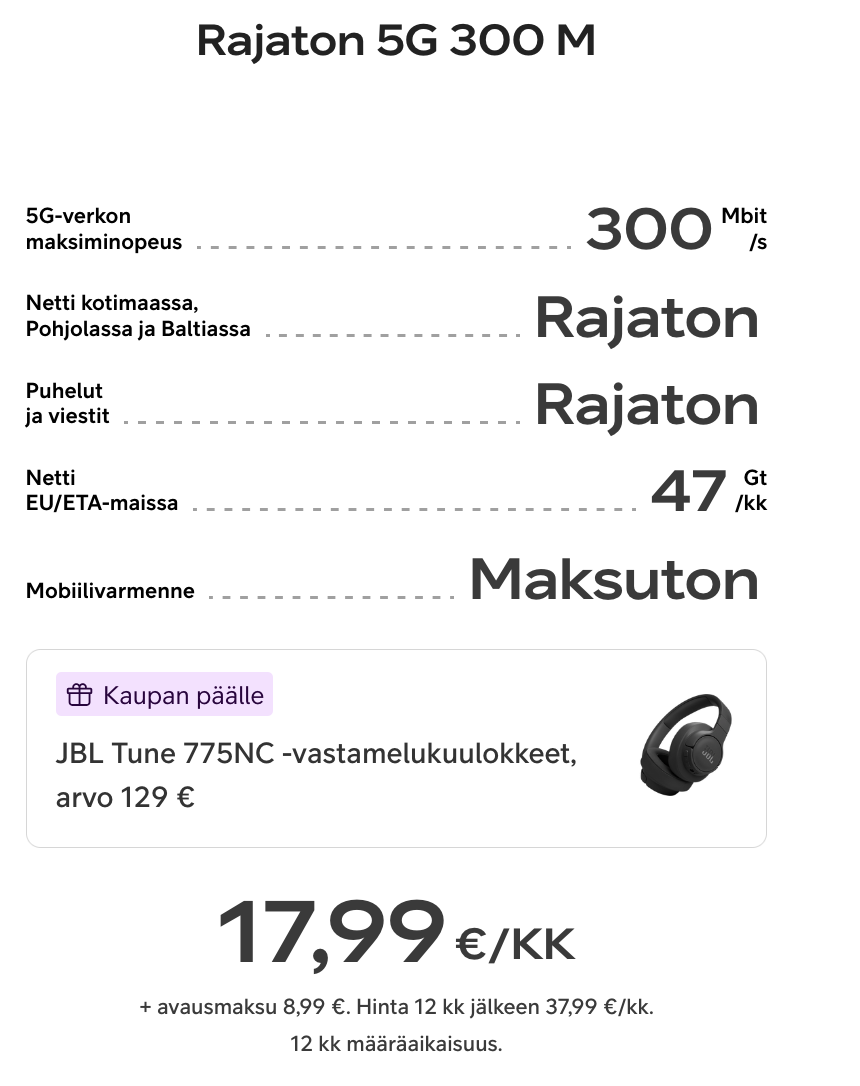
However, the situation now is such that if you want to sell a subscription, it must be offered at an average price of around 15 euros or less (VAT 0), and if you want to save it, then the price must be dropped to around 12 euros.
In addition, sales (sales commissions) and perks must be paid at the same per-transaction prices as before – perhaps even more if we are talking about perks.
Indeed, we are still talking about a 30% share of Elisa’s revenue, but if we now assume that the average price, which was 24.3 euros, would drop to 23 euros next year as competition continues, and Elisa continues to lose subscriptions, e.g., to 2.2 million subscriptions, then the total revenue impact of this component next year would be -40M, which would be reflected quite directly in cash flow or EBITDA, as this is scalable revenue. That seems to be precisely the savings effect of that co-determination negotiation (YT-urakan) effort.