Mulla on melkein 5:n vuoden streakki yhden kielen kanssa, ja oon pelannu koko (ilmais)hökötyksen läpi jo aika pitkän aikaa sitten. Silti teen sitä joka aamu sen 10min. Alussa ketutti samat asiat kuin edellisiä, mut kyl se siitä kun pääsee vähän edistyneemmille tasoille. Nyt ketuttaa kun ei tule enää mitään uutta, ja Temun mainokset myös ihan sanoinkuvaamattoman paljon.
Osaanko kieltä? Sanoisin kyllä jossain määrin, ymmärrän sujuvasti vaikka biisien sanoja, videoiden / sarjojen seuraamista helpottaa jos on tekstit apuna. Oma kielenkäyttö on semitankeroista kangertelua, kirjoittaminen on helpompaa kuin puhuminen, mutta kyllä sekin menettelee - pystyn keskustelutilanteessa ilmaisemaan itseäni muutenkin kuin pelkillä small talk-fraaseilla. Osaan käyttää kaikenlaisia taivutuksia, ja rakennella hienoja konditionaalilauseita jne jos hiukan mietin.
Ja sanoa että hyönteiset haluavat opiskella englantia duolingon avulla
Miksi vielä pelaan? En halua hukata sitä mitä olen oppinut, koska arkielämässä on vähänlaisesti tilaisuuksia käyttää ko. kieltä.
Ja oon ehkä sen verran autisti että tykkään tällaisista vähän oudoista rutiineista
Oma turhautuminen on tapahtunut nimenomaan maksullisella versiolla. Review mistakes on ihan ok kyllä. Enemmän kaipaisin sitä uusimpien sanojen opettelua.
Kielioppiahan tuo ei opeta. Minusta se on pääosin ihan ok. Kuitenkin aika rajua että esimerkiksi missään kohtaa venähän opintoja ei jaksettu edes kertoa että verbit taivutetaan maskuliinisen/femiinisen substantiivin mukaan. Naaman eteen vaan laitetaan vaihtoehdot joista pitäisi arvata. Jos ei aikoinaan olisi saanut 2 nopan kielioppikurssia, ei tuosta olisi tullut yhtään mitään.
Sovelluksessa on myös muita raivostuttavia ongelmia. Esimerkiksi tehtäviä joissa halutaan käyttäjän kirjoittavan kyrillisillä aakkosilla kirjoitettu venäläinen sana roomalaisittain translitteroituna. Translitteroinnissa käytetään kuitenkin ISO-standardista poikkeavaa merkistöä. Esimerkiksi й translitteroituu ĭ. Tämä merkki ei kuitenkaan ole melkein kenelläkään englanninkielisessä android- tai iphone-näppäimistössä i-kirjaimen erikoismerkeissä. Näppäimistöistä yleensä löytyy Ì, í, î, ī, į, ị, ï mutta kaikki tuottavat väärän vastauksen. Oppitunnista ei kuitenkaan pääse läpi, ellei syötä oikeaa vastausta. Ainoa mahdollisuus päästä eteenpäin ilman että lopettaa tunnin kesken ja menettää tehdyt työt, on etsiä verkosta mikä ihme on tuo merkin nimi ja copypasteta se sovellukseen. Tästäkin on laitettu ajat sitten palautetta mutta ei niitä kiinnosta korjailla.
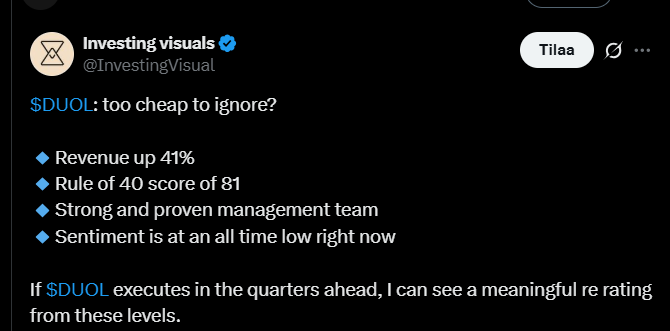
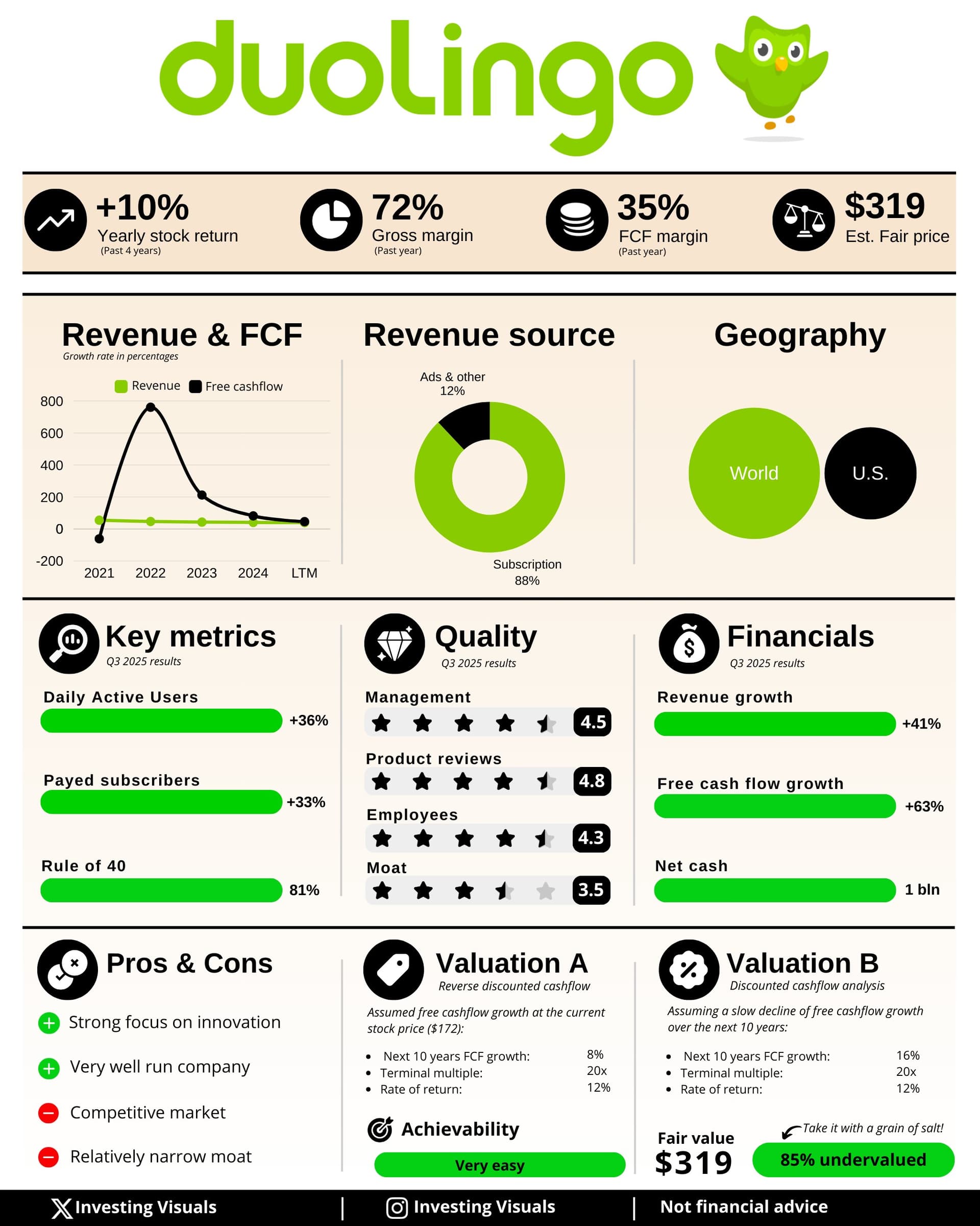
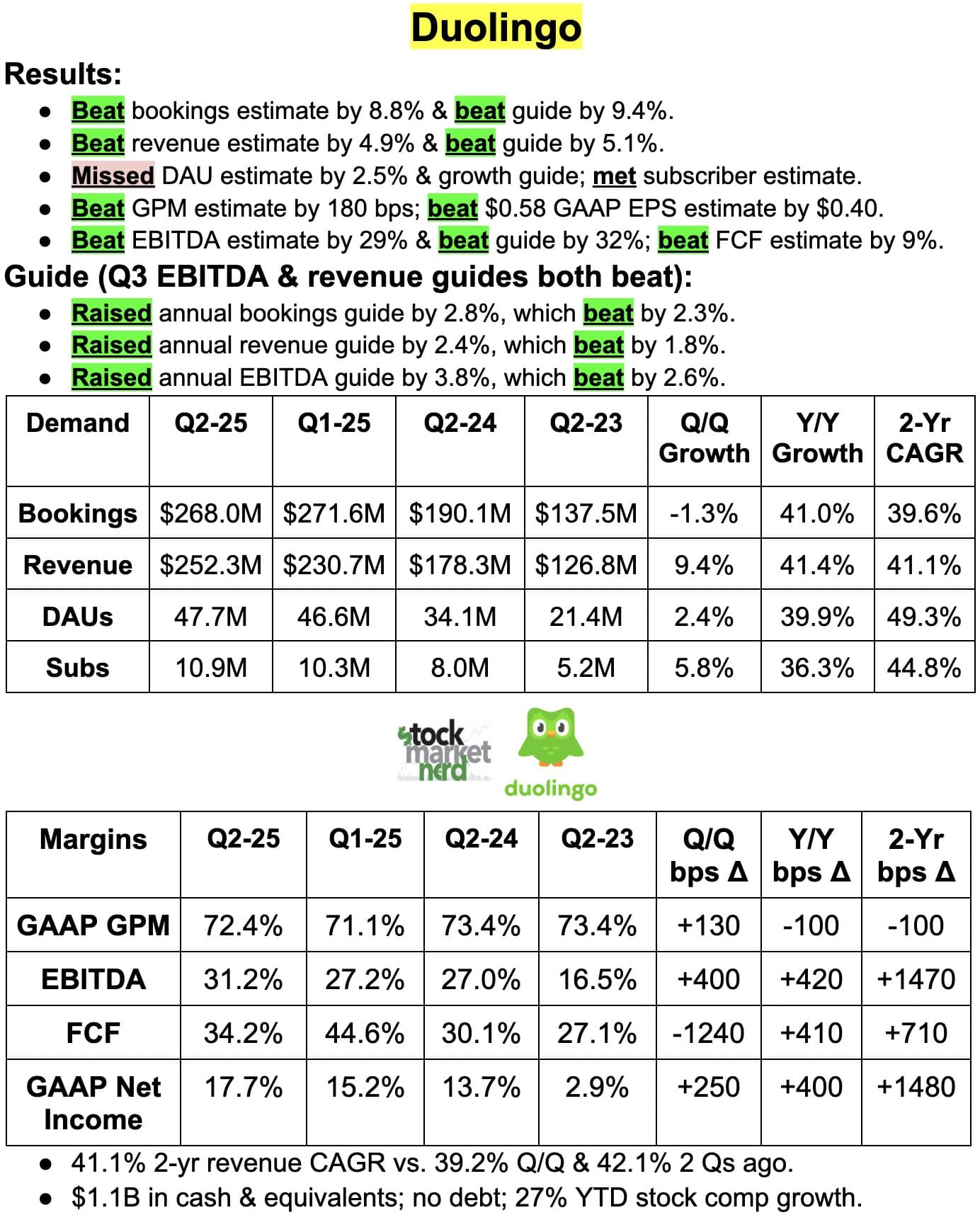
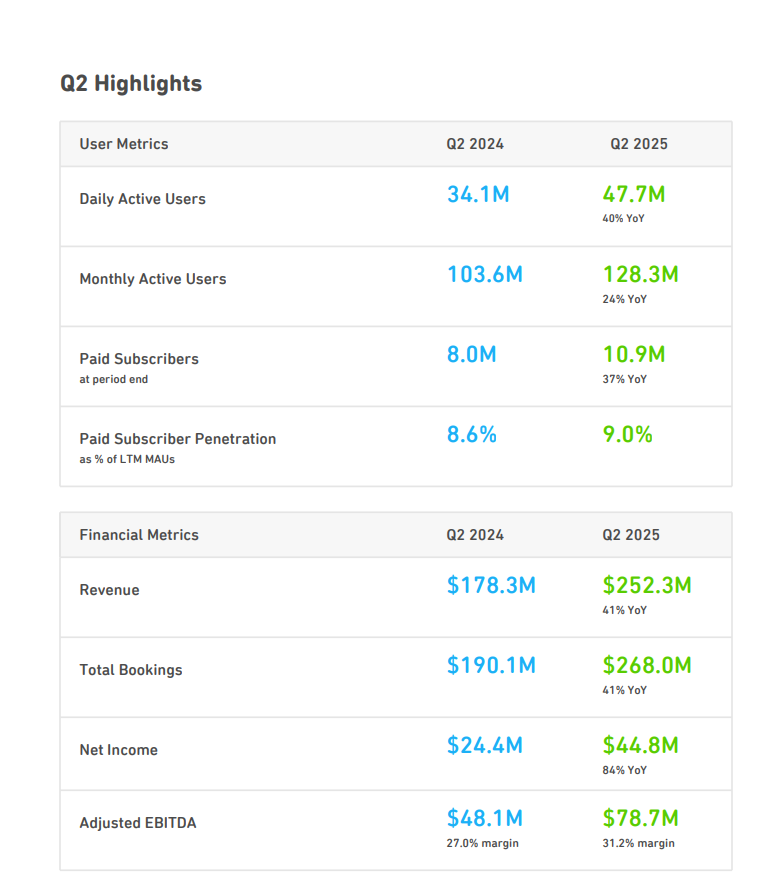
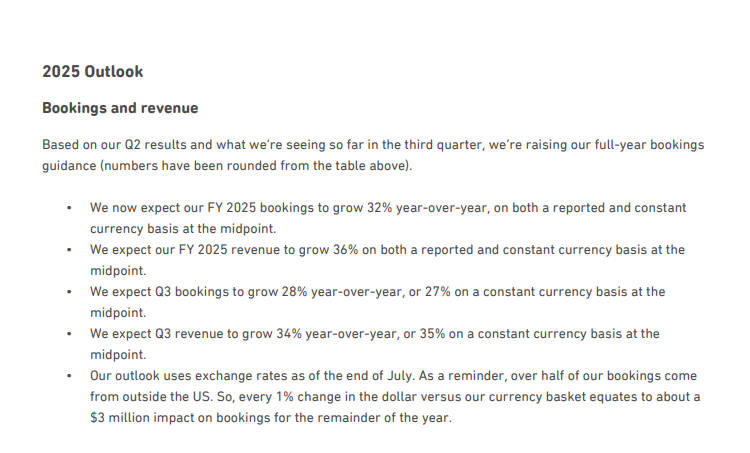
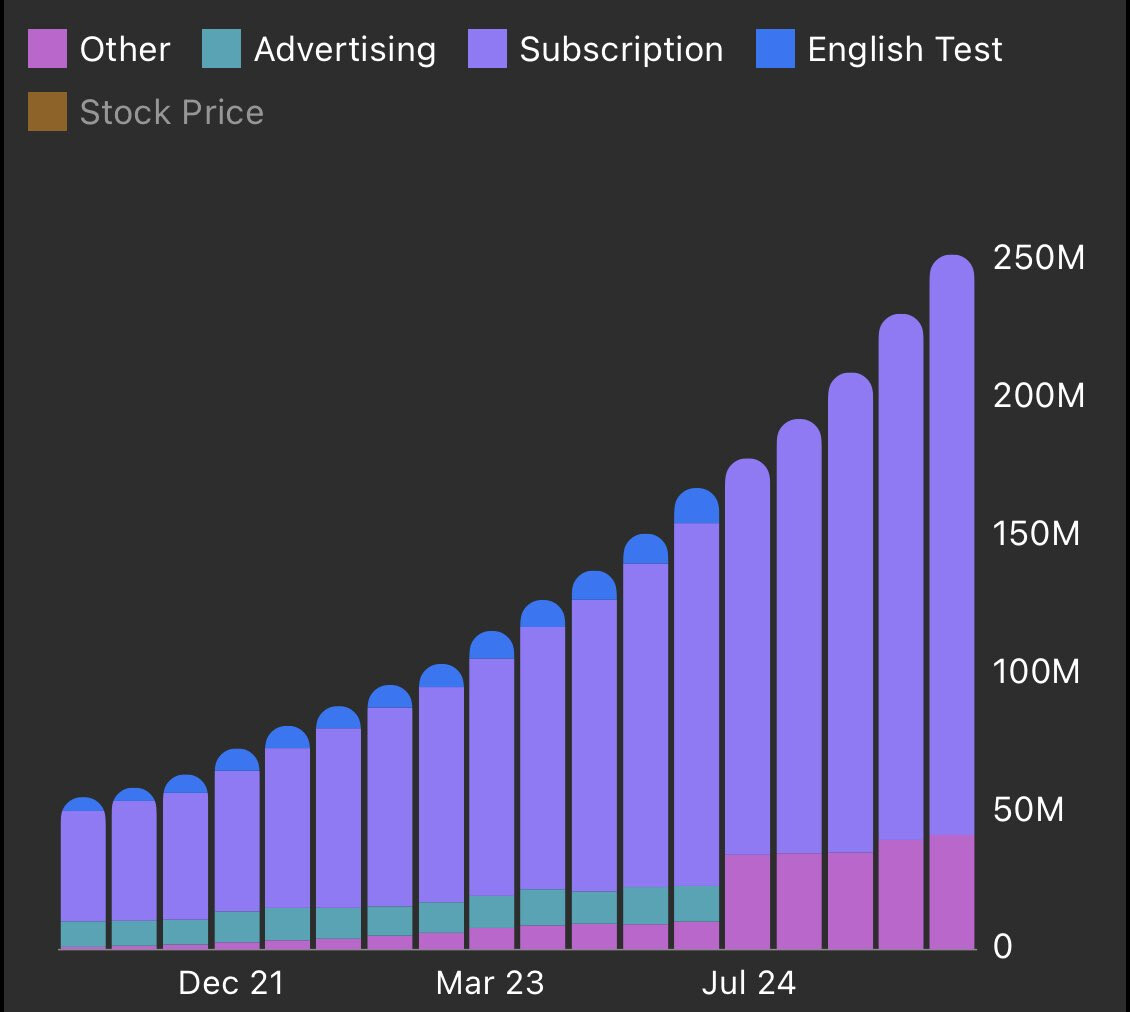
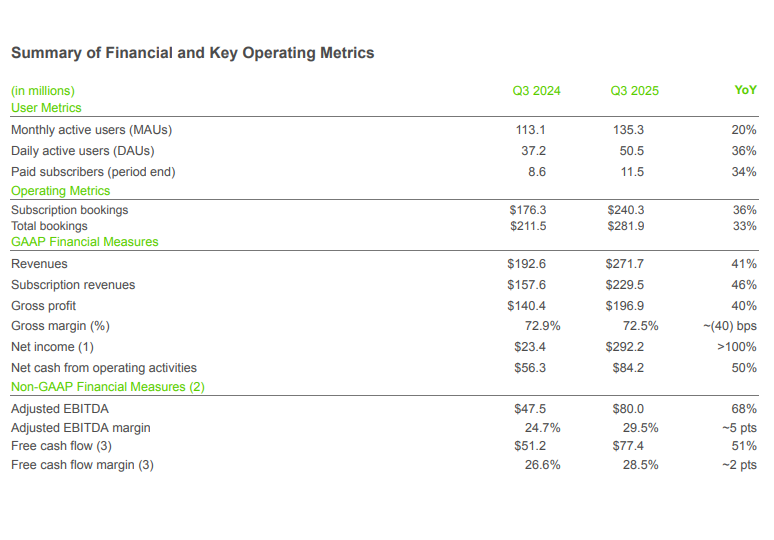
Duolingo ylitti odotukset tokal kvartaalil, liikevaihto kasvoi 41 pinnaa ja oli 252 miljoonaa dollaria. Käyttäjämäärät nousivat ja myös tilaustuotot kasvoivat 46 prosenttia.. Yhtiö saavutti ilmeisesti ennätyskannattavuuden ja yhtiö nostikin koko vuoden liikevaihtoennustettaan yli miljardiin dollariin.
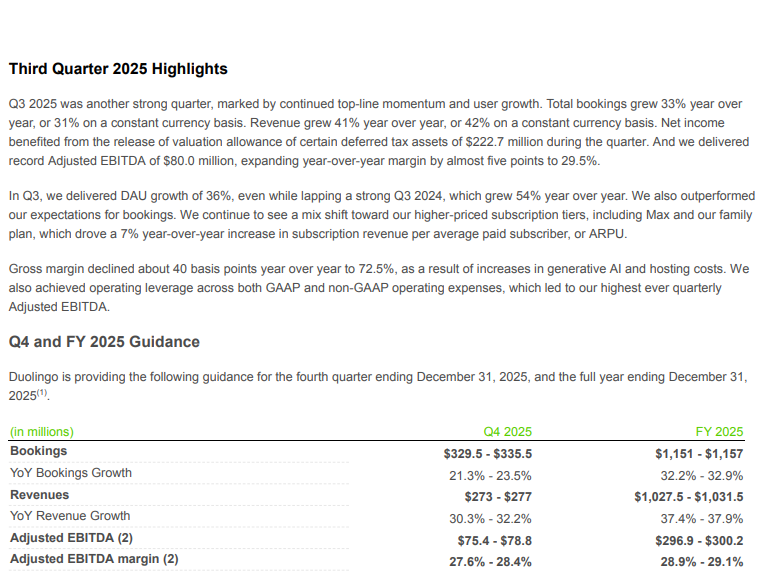
Toisella vuosipuoliskolla odotetaan lievää tulosheikkenemistä, niin kasvu jatkuu kuitenkin jatkuu. Uudet jutut ovat kuulemma otettu hyvin vastaan, lisäksi yhtiö vahvisti musiikkiosaamistaan NextBeatin yritysostolla.
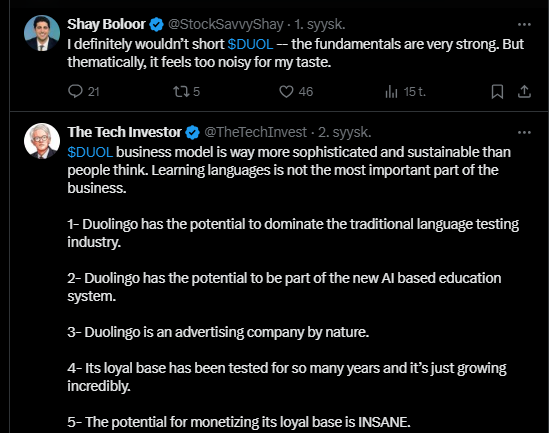
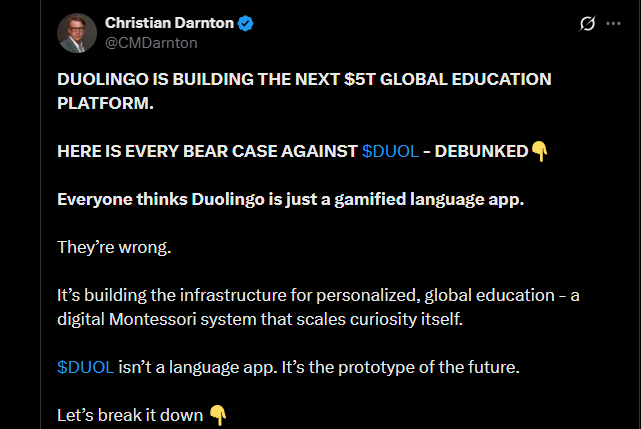
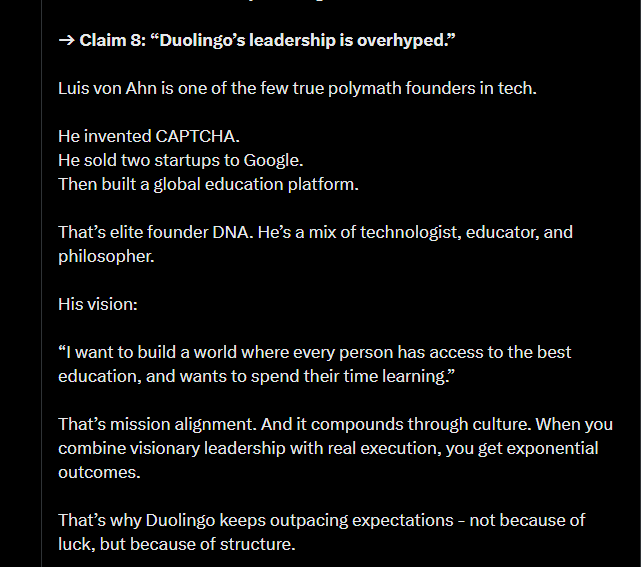
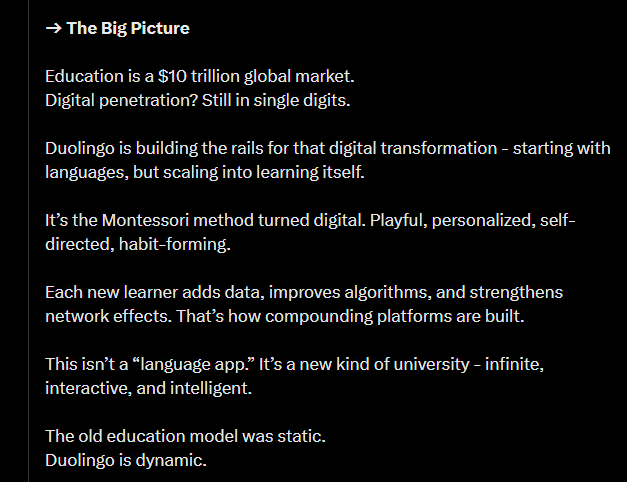
Alla olevassa tviitissä kerrotaan mm. ettei Duolingo ole pelkkä kielisovellus, vaan siitä on kehittymässä laaja oppimisalusta, joka tarjoaa paljon monipuolisia kursseja ja kasvaa jatkuvasti uusille alueille.
Tviitissä todetaan myös, että yhtiö hyödyntää vahvasti tekoälyä kehittäessään palveluaan ja parantaessaan oppimiskokemusta. Käyttäjämäärät ja liikevaihto kasvavat nopeasti, ja lisäksi brändi on erittäin vahva ja tunnistettava.
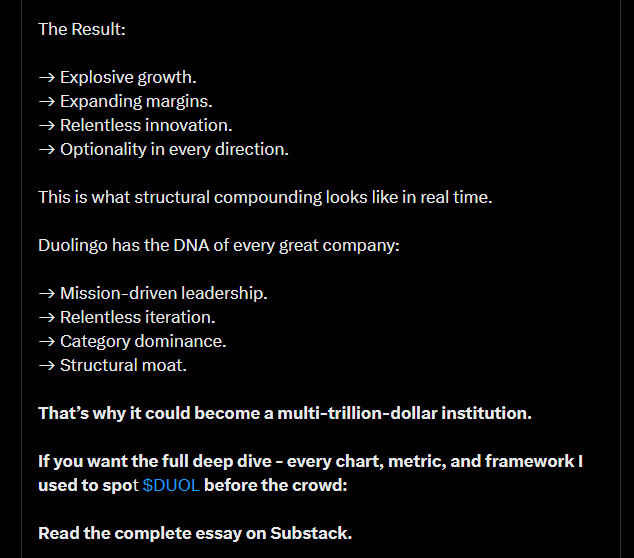
Tviittaja uskoo, että Duolingolla on mahdollisuus nousta johtavaksi itseopiskelun alustaksi maailmassa.
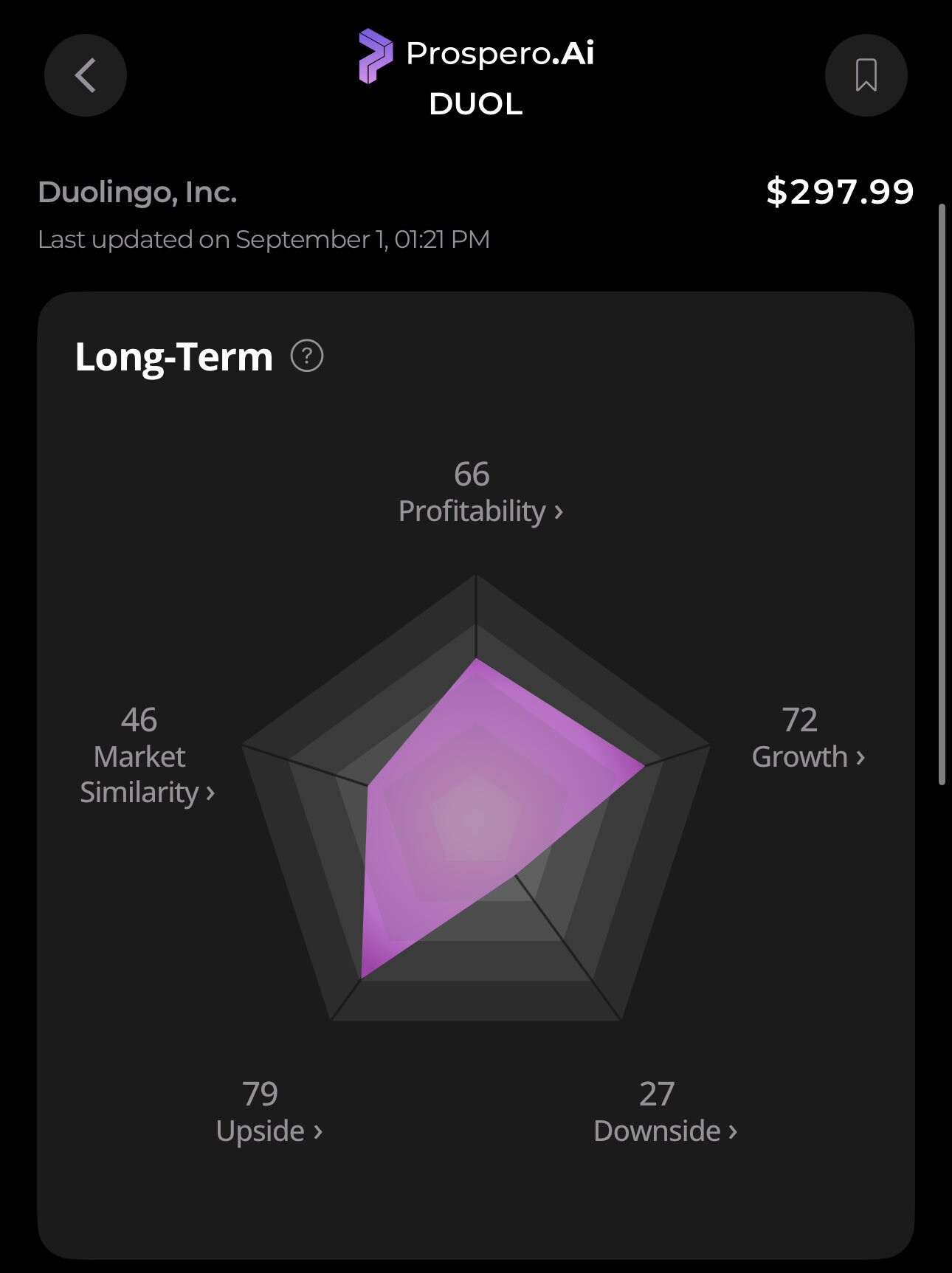
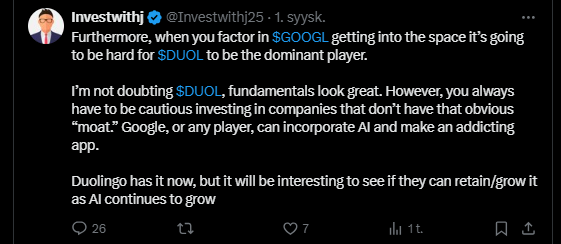
Tässä on mielenkiintoista viestienvaihtoa Duolingosta. Osa pitää bisnestä vahvana ja monipuolisena, kun osa taas kyseenalaistaa sen kestävyyden, koska iso osa perustuu streakeihin ja “älä katkaise putkea” -juttuihin yms. Mukana on myös pohdintaa kilpailusta, esim. Googlen suunnasta.
Duolingo on osakkeena mielenkiintoinen, koska se on saanut niskaansa saavillisen epävarmuutta. Yhtiön kasvu on kovaa ja euron liikevaihdosta jää pian 40+% viivan alle vapaana kassavirtana
Mielestäni sentimentti ampuu jo överiksi ja voi tarjota ostopaikan vastavirtaan menevälle.
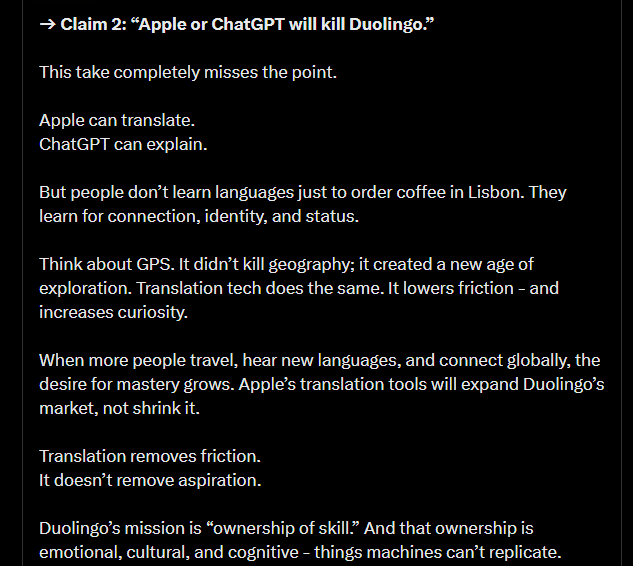
Ehkä Duolingon todellinen tappaja onkin se, että matkailijat jättävät kielten opiskelun, kun taskusta löytyy reaaliaikainen tulkki, joka taittuu reaaliajassa joka murteelle?
Tuli mieleeni, että esim. kurssiraketti Hims ja hers nousi alalta, jonka ennustettiin olevan suupala isoille jäteille jo 5 vuotta sitten
Jos laskua kertyy vielä, on varmaan pakko tarttua kiinni huhtikuun Alphabetin ostosten tapaan. Sielläkin AI-pelko otti hetkellisesti niskalenkin
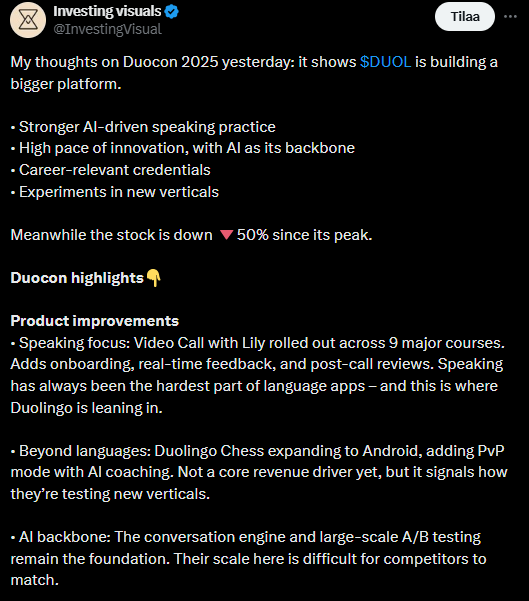
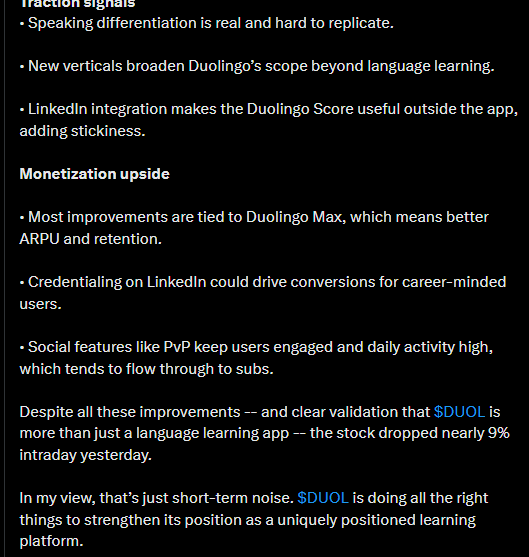
Tviittaja kertoo, että Duocon 2025 -tapahtumassa Duolingo esitteli uusia kehitysaskeleita, jotka vahvistavat sen asemaa edelleen oppimisalustana. Yhtiö panostaa erityisesti tekoälyyn, joka tukee mm. puheharjoittelua ja tekee oppimisesta entistä vuorovaikutteisempaa ja realistisempaa.
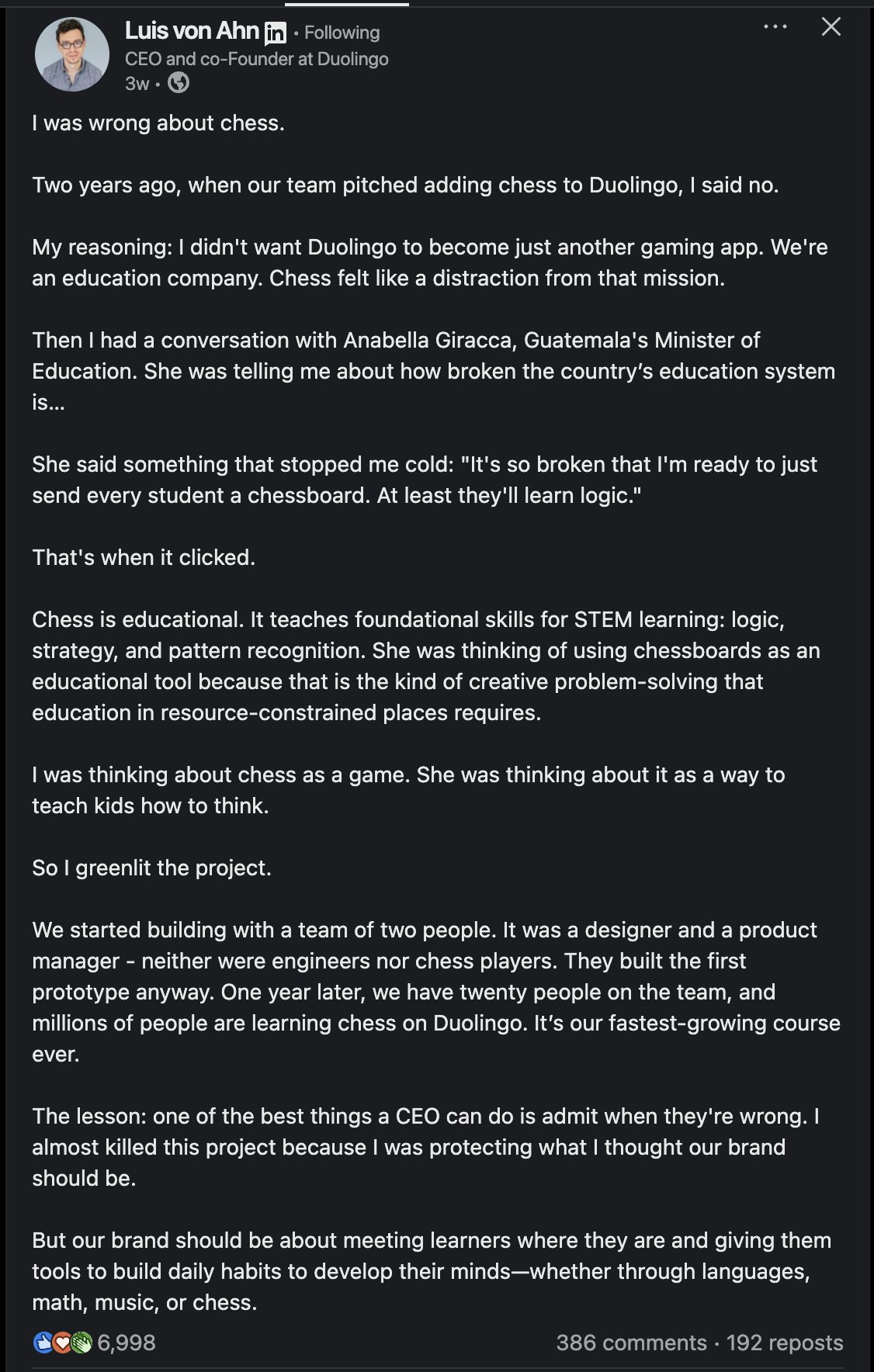
Samalla Duolingo laajentaa tarjontaansa kielten ulkopuolelle esimerkkinä vaikkapa Duolingo Chess. Tämä tviittajan mukaan kertoo, että yritys kokeilee uusia juttuja aidosti ja etsii kasvumahdollisuuksia laajemmasta oppimisen kentästä.
Monet uudistukset liittyvät maksullisiin palveluihin, mikä kasvattaa potentiaalista liikevaihtoa. Tviittaja myös sanoo, että vaikka osake on laskenut merkittävästi huipustaan niin kehityssuunta osoittaa yhtiön vahvistavan asemaansa pitkällä aikavälillä.
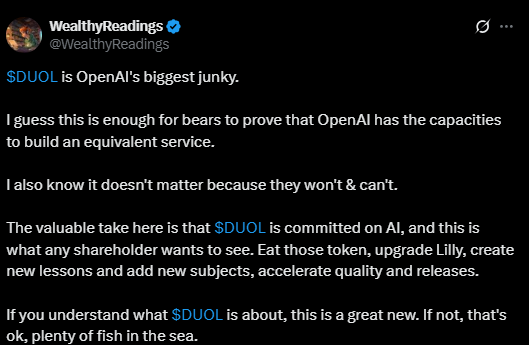
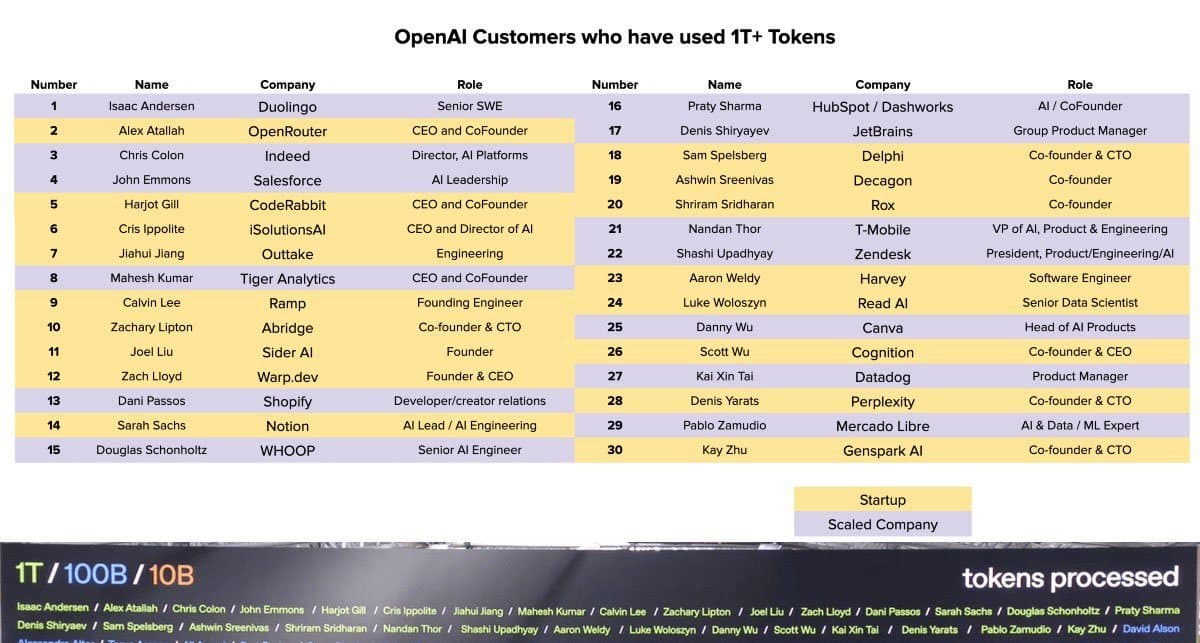
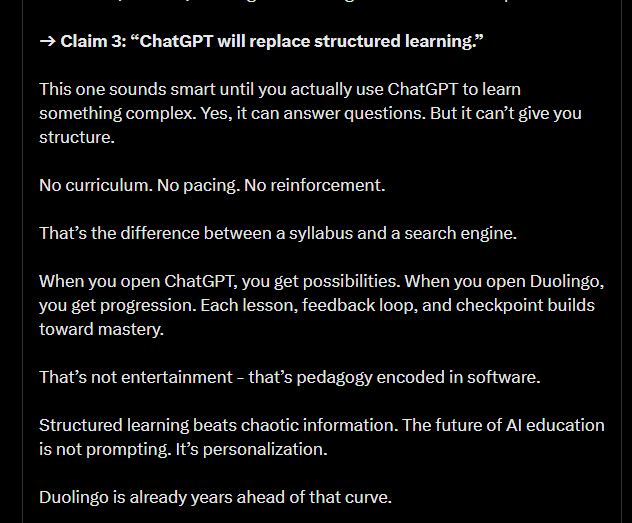
Alla olevassa tviitissä tuodaan esille, että Duolingo käyttää OpenAI:n tekoälyä enemmän kuin mikään muu firma. Jotkut pelkäävät, että OpenAI voisi tehdä vastaavan sovelluksen itse, mutta tviittajan mielestä se ei ole realistista.
Tärkeintä on hänen mukaansa se, että Duolingo panostaa täysillä tekoälyyn ja kehittää palveluaan nopeammin ja älykkäämmin, mikä sijoittajalle mukava juttu.
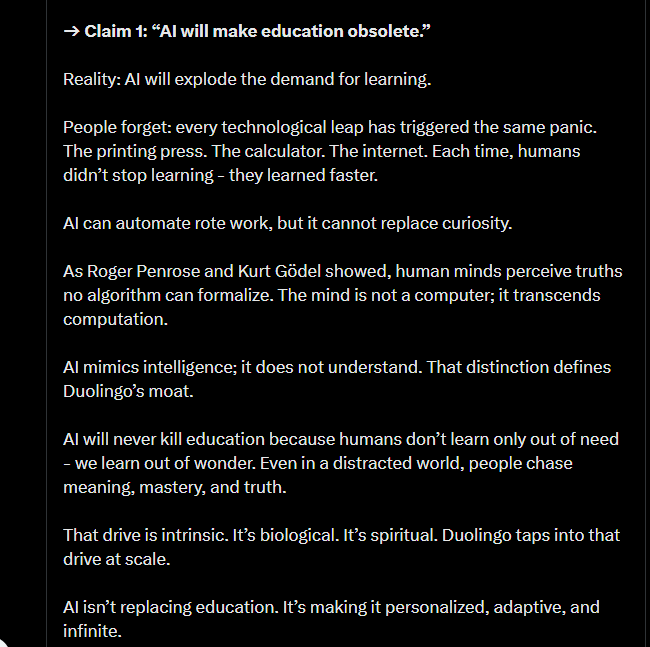
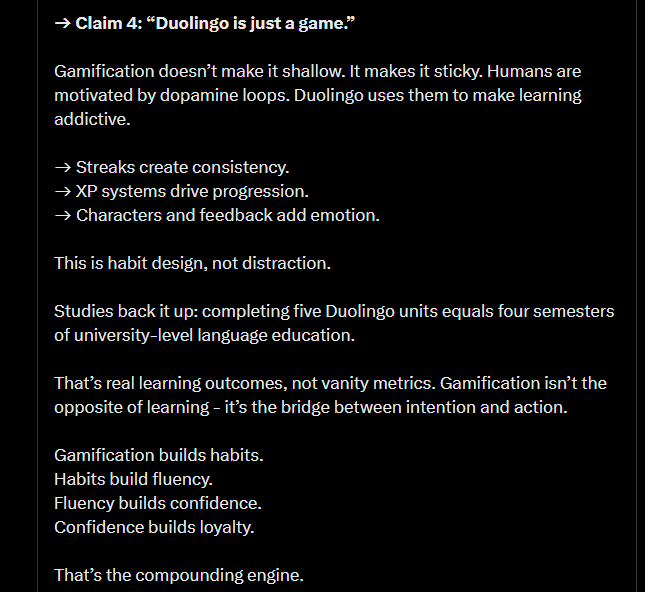
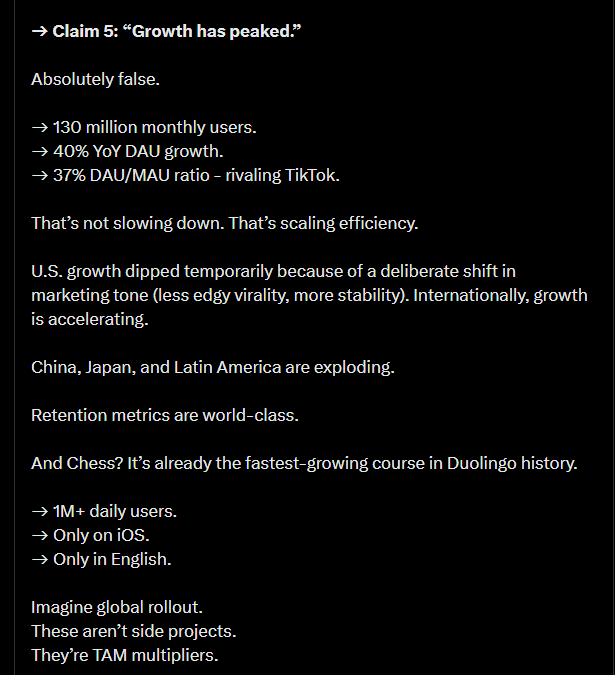
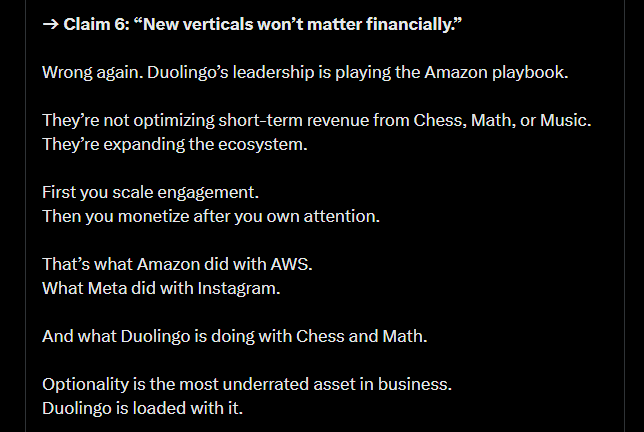
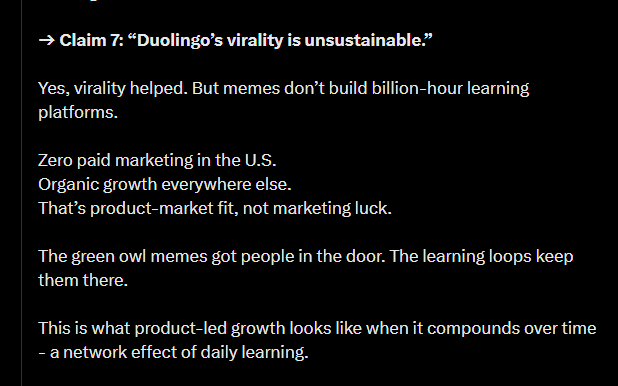
Alla on mielenkiintoinen tviitti siitä, miksi Duolingo ei ole vain kieltenopiskelusovellus, vaan ehkä seuraavan sukupolven oppimisalusta tai… näin ainakin tviittaaja ajattelee. Hän ns. purkaa yleisimmät kriittiset väittämät ja pyrkii näyttämään, miten hänestä Duolingo rakentaa globaalia, personoitua koulutusjärjestelmää tekoälyn rinnalla eikä sitä vastaan.
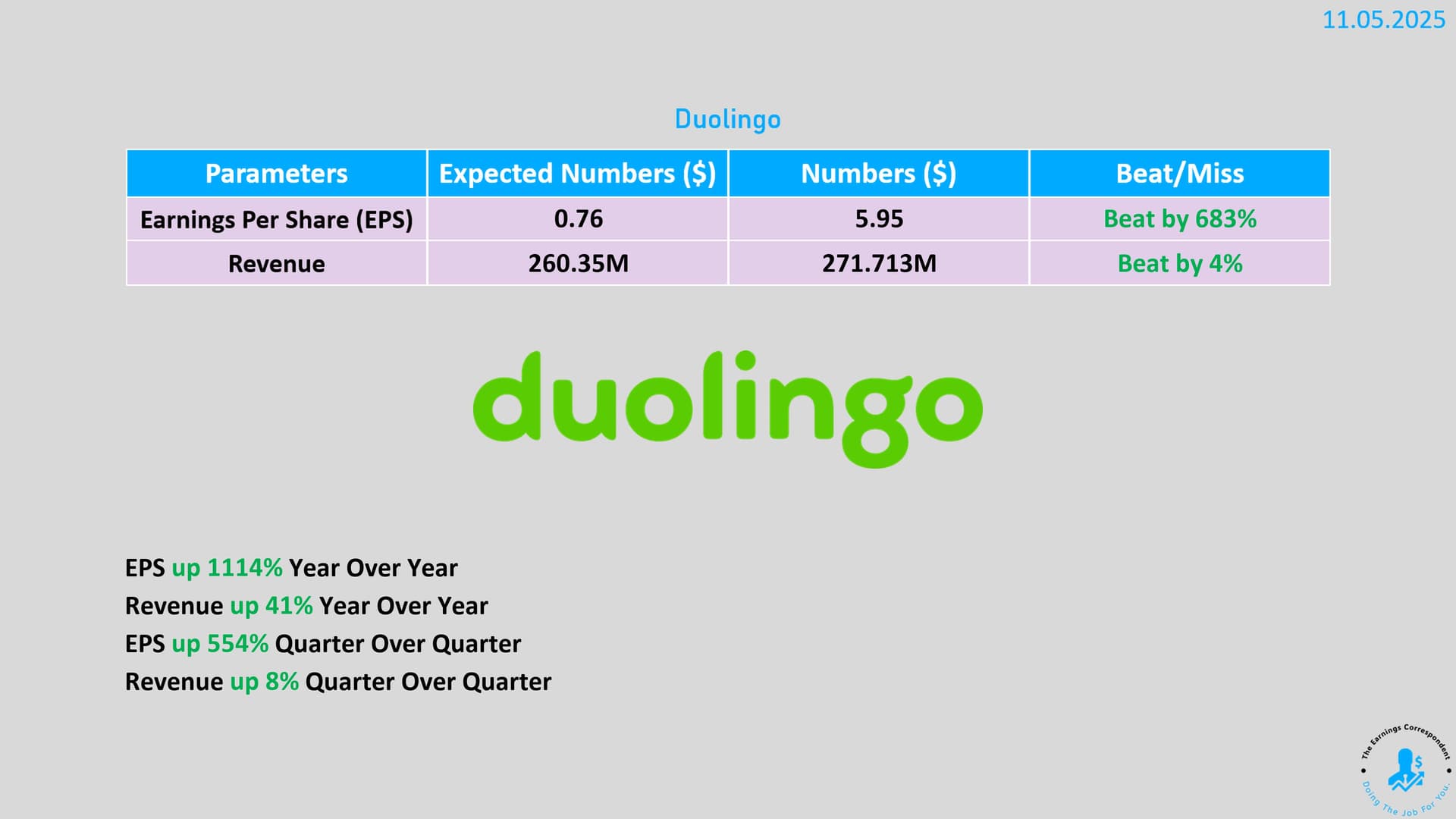
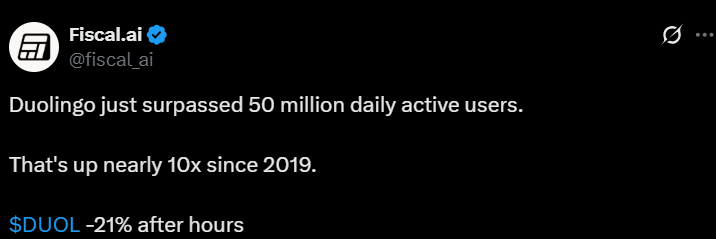
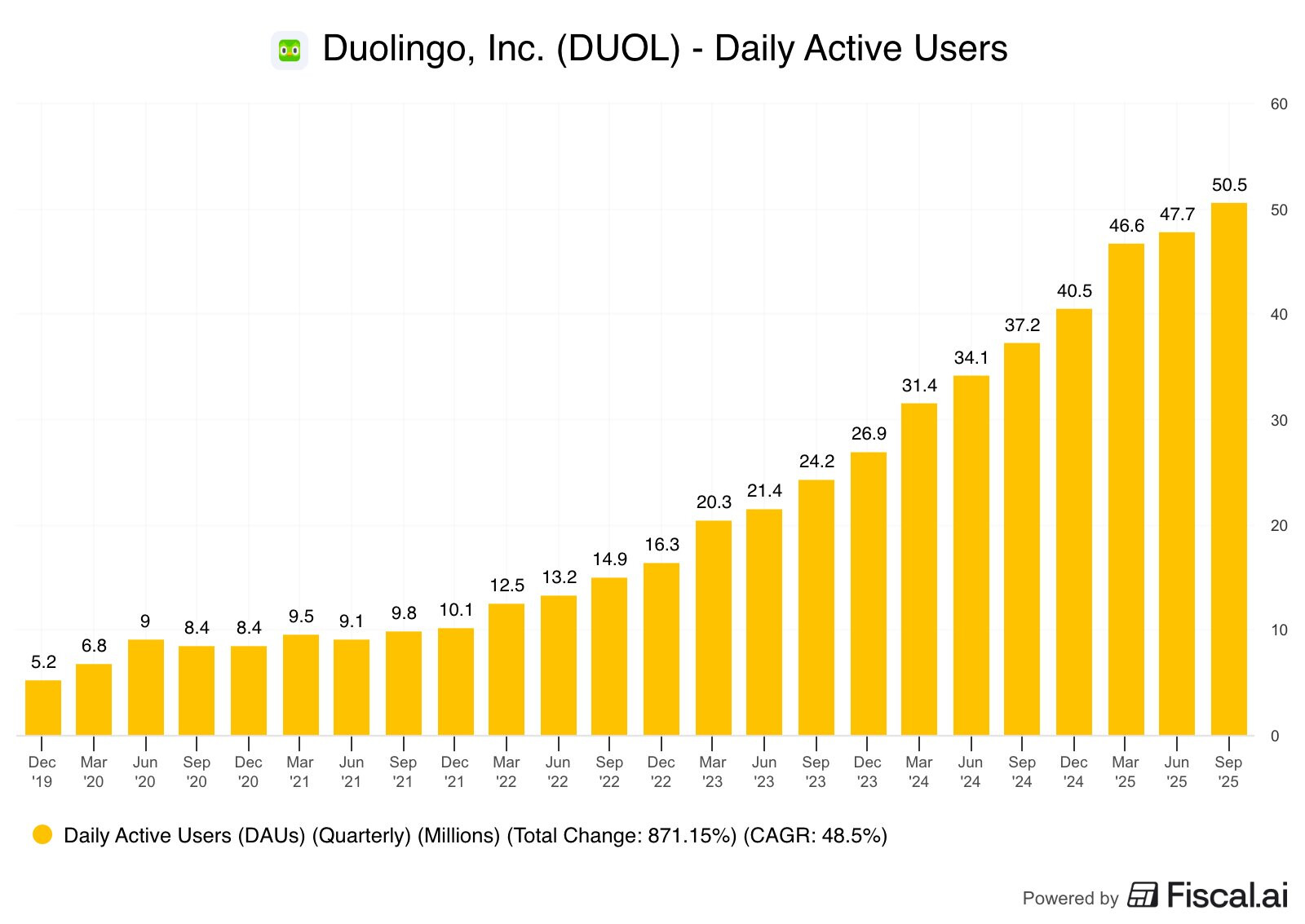
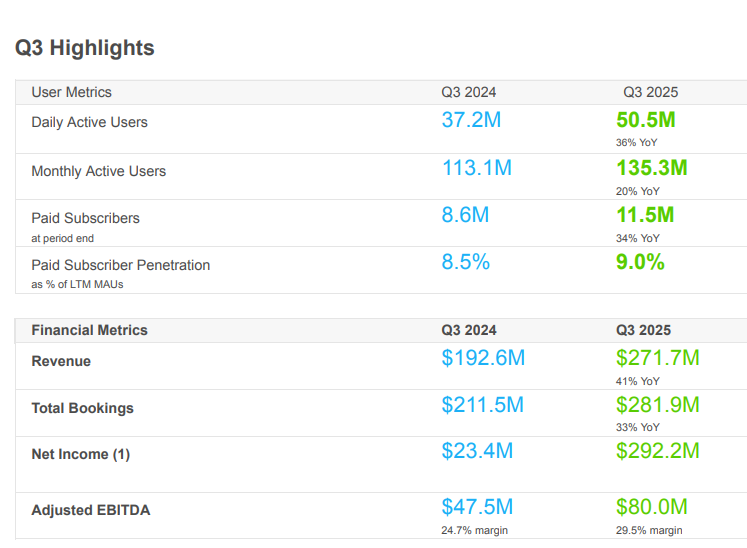
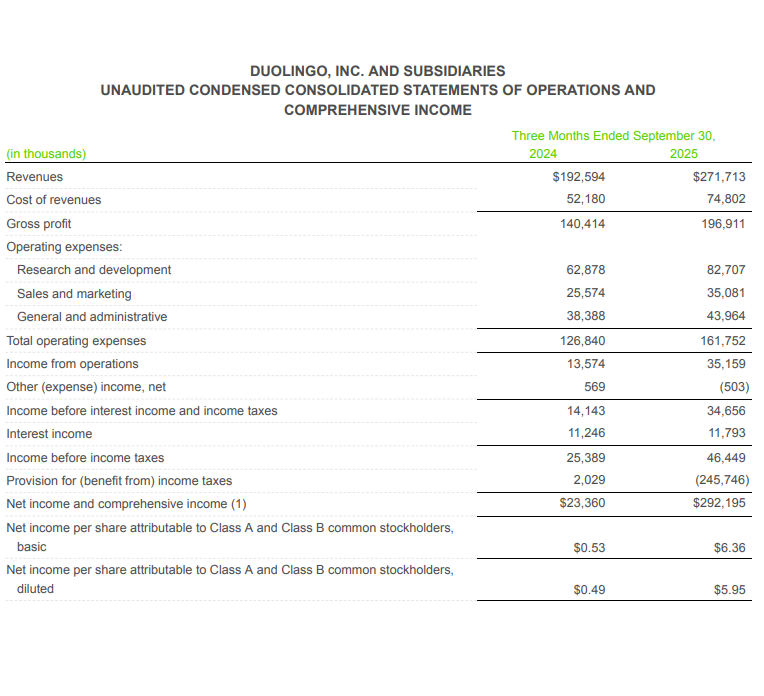
Duolingo jatkoi kasvumeininkejään, liikevaihto nousi selvästi, lisäksi myös maksavien käyttäjien määrä sekä varaukset kasvoivat hyvää tahtia. Päivittäiset ja kuukausittaiset käyttäjät lisääntyivät edelleen, muttamuttamutta… markkinoiden odotusten tasolle ei ylletty ja osake ei siitä tykännyt Tulos nousi poikkeuksellisen suureksi kertaluonteisen verohyödyn takia, mutta kannattavuus pysyi muutenkin aika vahvana.
Yhtiö painottaa edelleen käyttäjämäärän kasvattamista ennen sen kovempia rahastamisia, mikä näkyy tuotekehityksen ja A/B-testien painotuksissa.
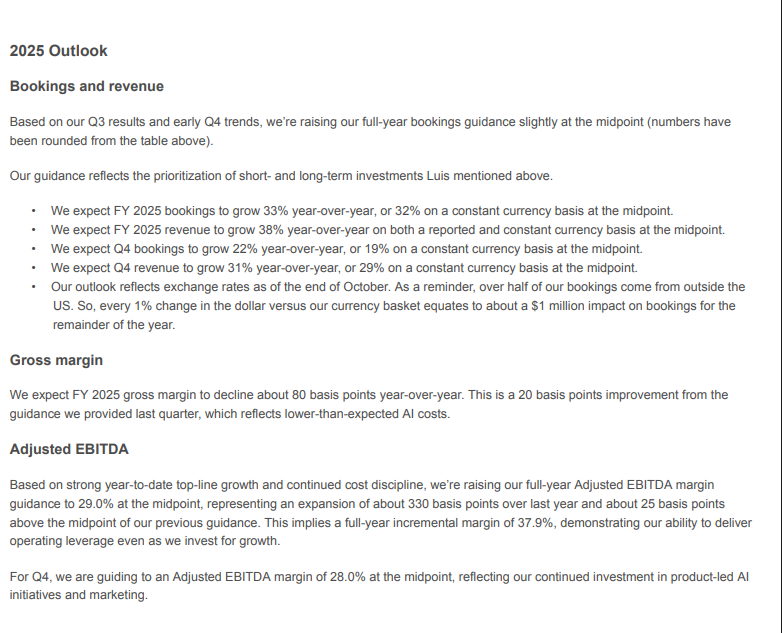
Loppuvuoden ohjeistus on varovaisen myönteinen – liikevaihto jatkaa kasvuaan, mutta kannattavuuteen otetaan hieman maltillisempi linja. Nämä varovaiset ja maltilliset kommentit tulevasta olivat varmaan pääsyitä, miksi aftereissa Duolingo niin vahvasti punastelee.
Toimarin perustelema “long view” ei kelpaa markkinalle. Itse kyllä allekirjoitan että käyttäjäkokemus täytyy nostaa tärkeimmäksi monetisaation sijaan. Jos tuote on huippu, monetisaatio seuraa perässä. Duolingon lasku on saanut vauhtia aina, kun OpenAI esittelee chatGPTn uusia ominaisuuksia, pelätään että disruptori joutuu itse disruptoiduksi . Erikoinen tilanne, kun toisaalla varoitellaan tekoälykuplasta ja AI-yhtiöiden arvostuksista ja toisaalla AI kuitenkin otetaan todella vakavana uhkana. Itse pelaan sen puolesta että Duolingo on voittaja kehityksessä jossa (kielten) perusopetusta täydentämään käytetään enenevissä määrin pelillistettyjä mobiilisovelluksia. Käyttäjät tykkäävät siitä, ja se säästää human-to-human opetukseen tarvittavia resursseja.
Minulla on maksutonta versiota nyt kasassa 450 päivän streak. Olen pelannut läpi kaks kieltä, ja kolmas on menossa. (Saksa, ruotsi, italia.) Olen ollut sangen pettynyt siihen, miten lyhyeen kieliopinnot loppuvat ja miten mitätöntä on kieliopin opetus. Kun tulee harrasteltua musaa, matikkaa ja shakkia, olen kokeillut niitäkin, eivät sytyttäneet.
Kieliopetuksen laatu ja kurssien pituus ovat niin alhaisia, että en usko ikinä maksavani sovelluksesta. Sillä saa käyttökelpoisen pintaraapaisun kielestä, mutta minusta ei sen enempää. Maksuton versio on muuttunut niin ärsyttäväksi, että alkaa tulla mitta täyteen, ja nykyinen italia on varmasti vika kieli, jonka pelaan, tai saatan jättää kesken. Olen alkanut käyttää oheasa Geminin tekoälyä kielioppiopettajanani, ja sen opetuksen laatu on hurjan paljon parempaa kuin duolingon.
Duolingon vahvuus on kannustaminen säännöllisyyteen pelillistämällä aika koukuttavasti.
Olen miettinyt firmaa sijoituksena useasti ja seurannut talouslukuja, mutta kun nyt jäsentelin tekstiksi ajatukseni sovelluksen käytöstä, tulin samalla päättäneeksi, että annan teidän muiden hoitaa sijoitukset tähän firmaan.
Kiitos hyvästä kirjoituksestasi, allekirjoitan täysin. Itsellä oli tasan 700 päivää streik, kun lopetin. Duolingon kielioppin opetus on surkeaa ja tosiaan lyhyitä kursseja ja ihmeellisiä lauseita ja sanoja opettava, olisiko Ai tehnyt? Olisiko suunnattu lapsille ja teineille?
Löysin Busuu:sta ilmaisen laadukaan opetuksen, ihan eri tasoista, suosittelen tutustumaan.
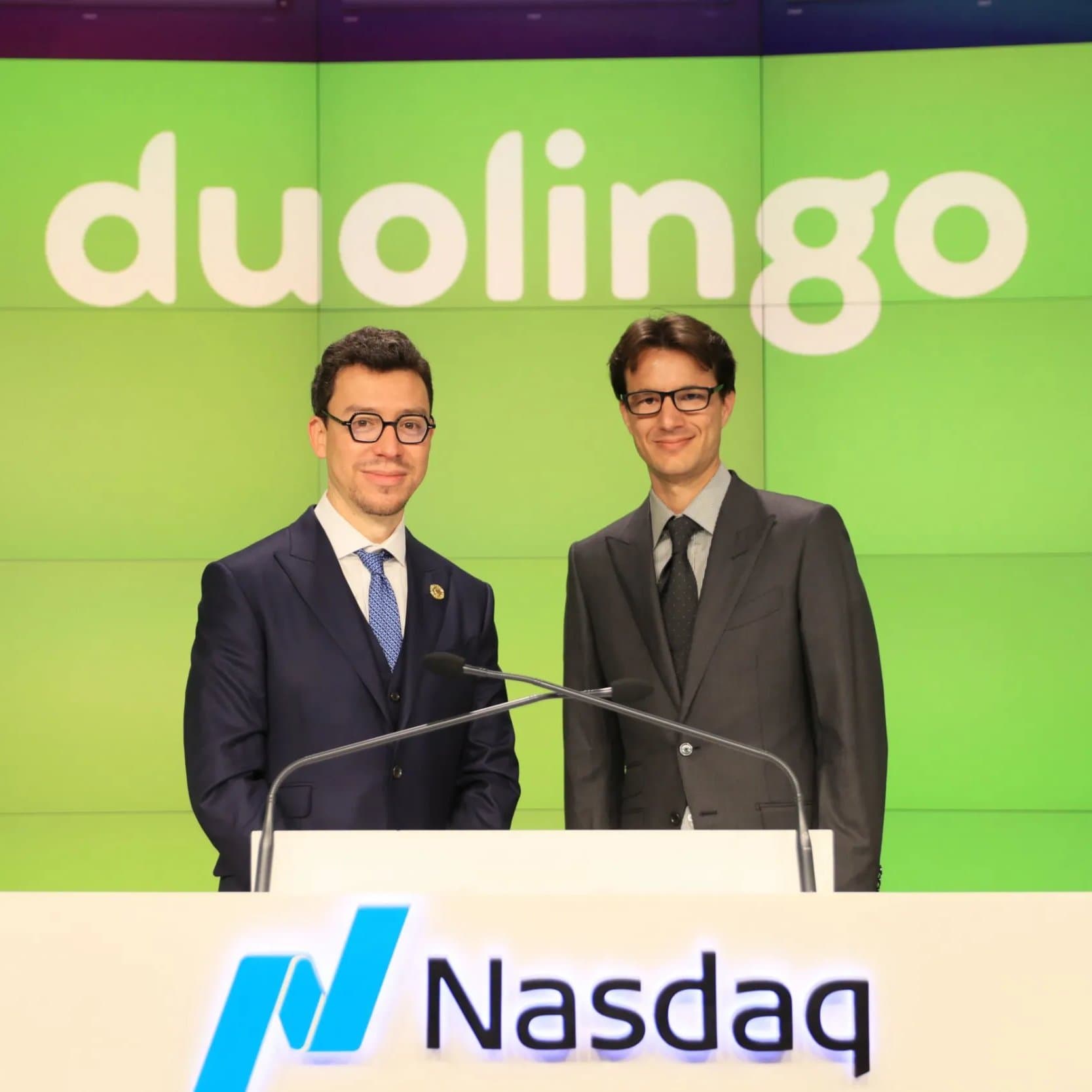
Kuvailin tällä viikolla videon Duolingosta. Ihan mielenkiintoinen yhtiö, joka on markkinajohtaja omalla alallaan. Tekoäly on iso mörkö tässä sijoitustarinassa.
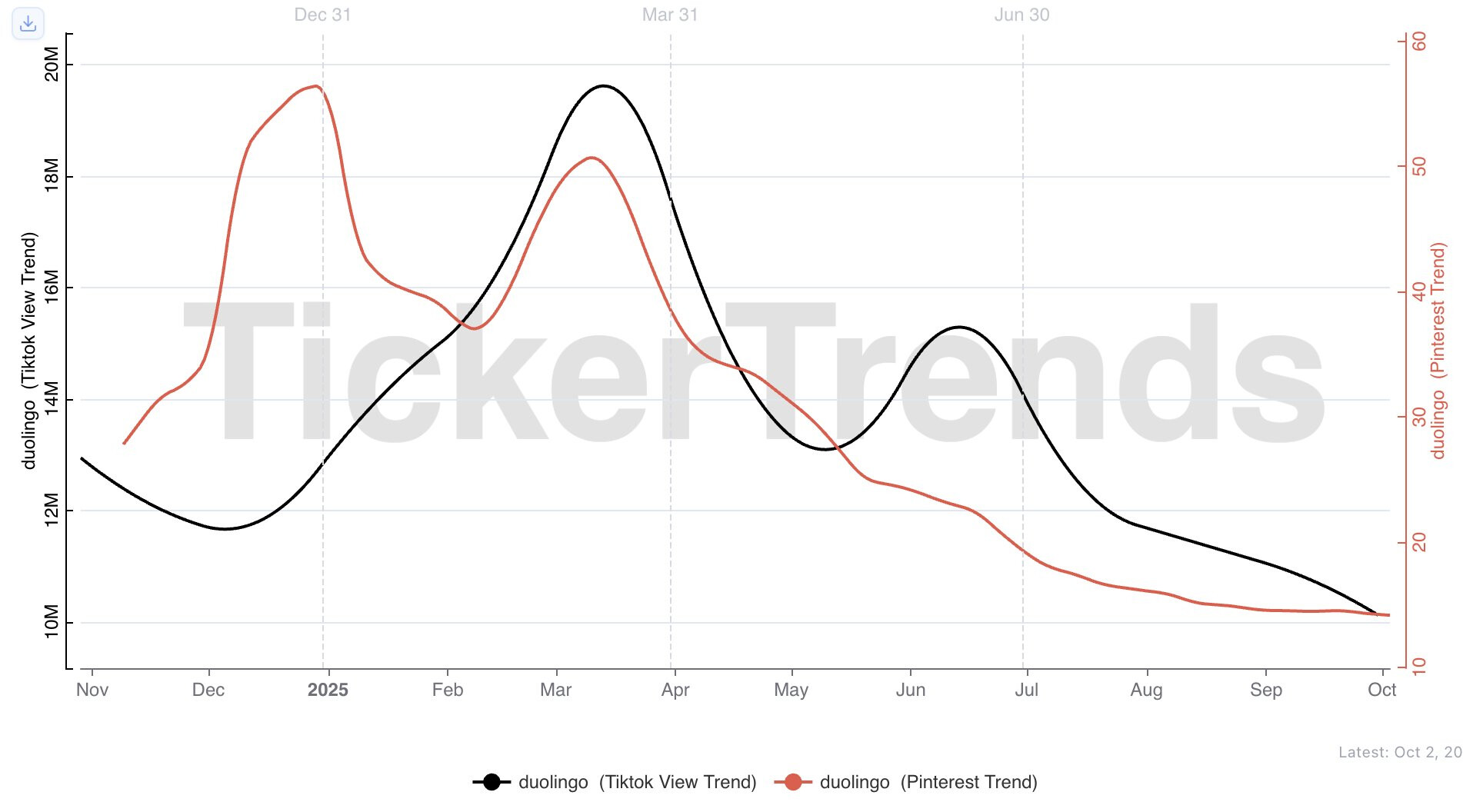
TikTokissa heillä on nykyään vähemmän katsojamääriä aikaisemman kohun myötä.
Itse olen ollut hyvin tyytyväinen Duolingon ilmaisversioon ja minua ei haittaa lainkaan se, että kielioppia ei käydä läpi, koska siihen voi tutustua taas tarvittaessa muuta kautta. Itse en ole suuri kielioppifani, vaan opin kieliä enemmän vain kuuntelemalla ja lukemalla. Laiskalle ihmiselle sopii hyvin, että Duolingo tunnollisesti muistuttaa opiskelemaan joka päivä. Suosittelen lämpimästi Duolingoa apuvälineeksi kielten opiskeluun. Ohessa kannattaa kuitenkin lukea jotain helppotajuista kirjaa.





 Osa pitää bisnestä vahvana ja monipuolisena, kun osa taas kyseenalaistaa sen kestävyyden, koska iso osa perustuu streakeihin ja “älä katkaise putkea” -juttuihin yms. Mukana on myös pohdintaa kilpailusta, esim. Googlen suunnasta.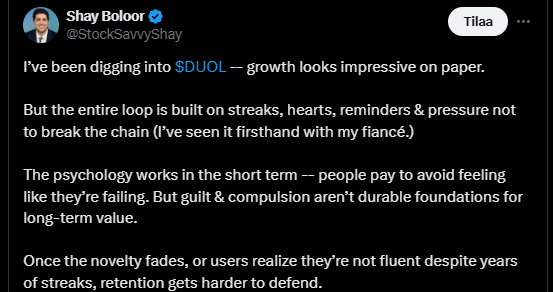






 . Erikoinen tilanne, kun toisaalla varoitellaan tekoälykuplasta ja AI-yhtiöiden arvostuksista ja toisaalla AI kuitenkin otetaan todella vakavana uhkana. Itse pelaan sen puolesta että Duolingo on voittaja kehityksessä jossa (kielten) perusopetusta täydentämään käytetään enenevissä määrin pelillistettyjä mobiilisovelluksia. Käyttäjät tykkäävät siitä, ja se säästää human-to-human opetukseen tarvittavia resursseja.