
General
ContextVision AB (CONTX) is a company specializing in medical image analysis solutions (algorithms), and the core of its business consists of image processing, artificial intelligence, and medical diagnostics, particularly related software solutions. According to the company itself, it is a “world-leading supplier” and partner to global manufacturers of medical imaging equipment (Ultrasound, X-Ray, MRI). The company’s software and technology are currently installed in over 400,000 imaging devices globally.
The company’s vision is to aid in the digital transformation of healthcare by improving the image quality produced by medical imaging devices, enabling faster and more reliable diagnoses for end-users. Thus, the company offers its own software solutions and technology to OEM manufacturers of medical imaging equipment. The technology helps end-users, i.e., doctors and medical staff, interpret medical images, which is essential for diagnosis and treatment.
The company is located in Sweden and has a local presence in Japan, China, South Korea, and the United States. The company has 39 employees, of whom about 30 percent (13 people) work in research and development and about 15 people in sales and marketing. Management, administration, and regulatory affairs employ 8 people. The market capitalization is currently around 50 million euros. The product development teams are the core of the operation, with two separate teams, one for ultrasound and one for X-ray.
The company just celebrated its 40th anniversary last September and was listed on the Oslo Stock Exchange in 1997. Until early 2022, the company also included Inify Laboratories AB, which focused on digital pathology (cancer diagnostics), but it was spun off as a separate entity. The spun-off part is also referred to in the company’s materials as “discontinued operations” and “digital pathology”.
Markets and Investment Theses
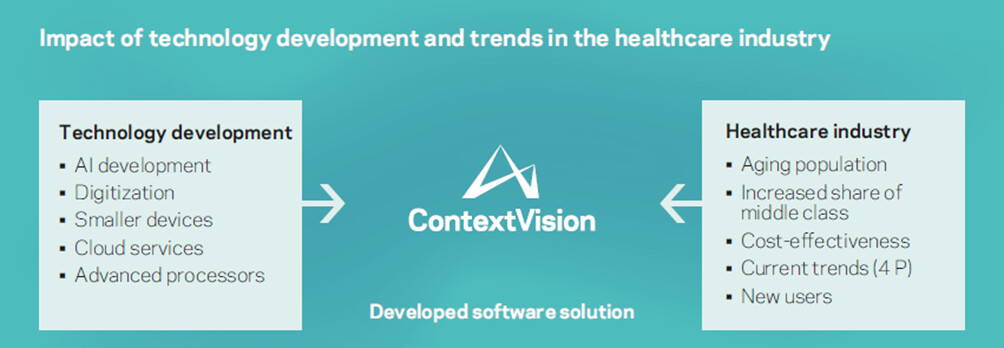
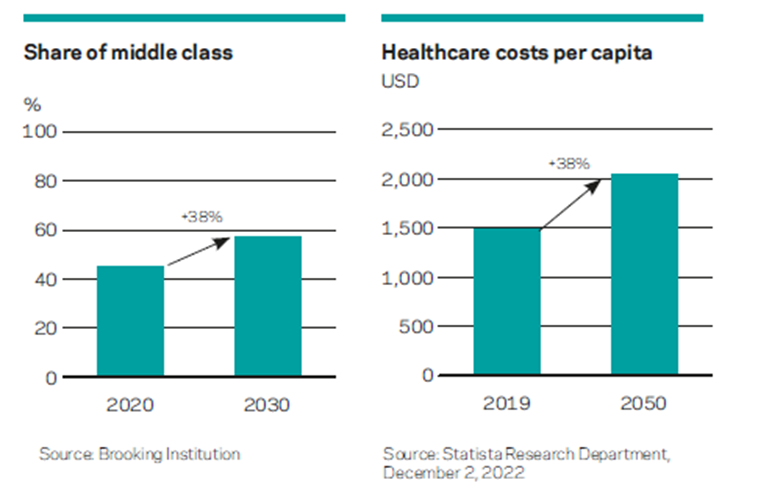
Thus, the company aims to improve the quality of medical imaging, which in turn helps reduce healthcare costs. In the longer term, the underlying trend is driven by the demand created by an aging population. The company sees that as technology develops, imaging can be performed with increasingly smaller and more mobile devices, utilizing the help of cloud services and AI. The company sees opportunities, for example, in the potential brought by technology to shift long care chains from hospitals towards remote consultations, mobile devices, etc. (front-loaded care chain).
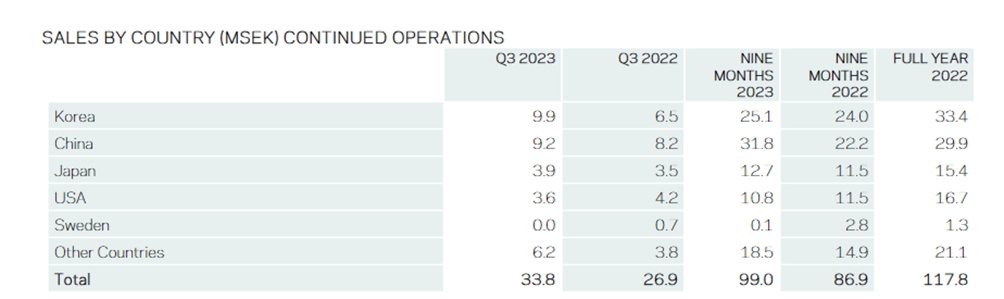
The company currently has about 60 customers globally. The eight largest of these generate an estimated 70% of revenue. Geographical distribution of revenue (the company reports based on the manufacturer’s country):
- Asia 70%
- Europe 15%
- North America 15%, this market holds the highest potential
The company believes that its technology allows equipment manufacturers to flexibly reduce their development costs and improve product quality. The company sees that there are still major equipment manufacturer partnerships to be won, in addition to which the company is targeting geographical expansion and involvement in new medical imaging application areas.
Current customers are primarily the world’s largest manufacturers of ultrasound and radiological imaging equipment. In its communications, the company emphasizes the importance of the Asian markets as rapidly growing ones, although a significant portion of imaging equipment is manufactured in the United States. However, the largest market potential is seen in the United States along with market growth.
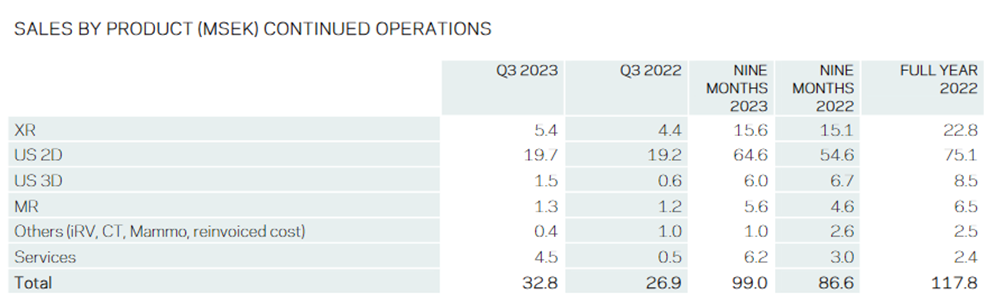
Over 70% of sales are related to 2D and 3D ultrasound imaging technology, and correspondingly, about 20% of revenue comes from the X-ray side. The rest of the revenue (less than 10%) comes from smaller volumes of equipment (e.g., MRI). According to the company, improving image quality is particularly useful in ultrasound and radiological imaging (static and dynamic X-rays).
Medical imaging equipment can be roughly divided into high-, mid-, and low-end platforms. The company states that in ultrasound, it focuses particularly on the high- and mid-end with major equipment manufacturers, and correspondingly on the mid-/low-end in the significantly more competitive X-ray equipment manufacturing.
The growth of the overall imaging equipment market is moderate:
- total ultrasound imaging equipment installed base 2.9% CAGR 2020-2026
- radiological imaging equipment 5.3% CAGR 2020-2026.
However, the expected market growth for handheld ultrasound devices is mouth-watering. The company defines its understanding of these handheld devices as follows:
A small ultrasound unit that can be held in the hand when performing the examination, e.g. smartphones and tablet-based systems.
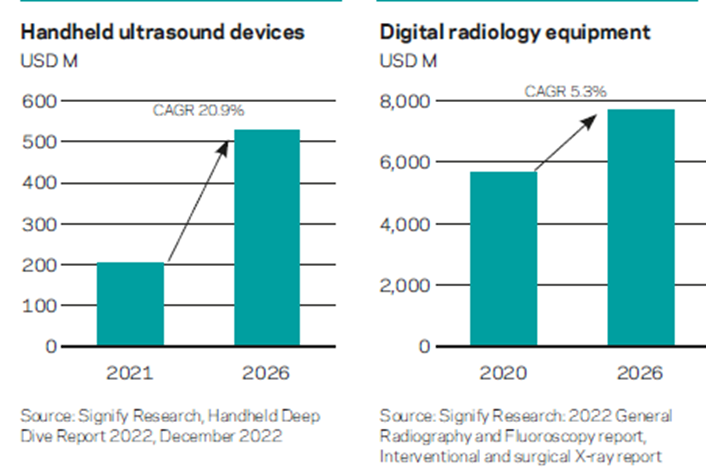
Author’s own note: NanoX Vision is developing a very mobile-like MRI imaging device. They aim to utilize cloud services so that remote doctors can view images regardless of location. In practice, mobile devices can be distributed to developing countries using a much lighter model than major hospitals (billing X USD per taken image). Perhaps a similar general technological trend in medicine (remote consultations, cloud services, AI, mobile imaging devices, etc.) could support this company as well in the big picture?As an interesting detail, the company reports having entered into a “valuable” cooperation with Linköping University through the Wallenberg Foundation’s WASP development program. (Personal note: This may be related to gaining access to a valuable and comprehensive database so that algorithms can be developed efficiently, see the risks section).
Management and Insiders
Since August 1, 2022, the CEO has been Gerald Pötzsch. Since January 2022, Markus Högerberg has served as the interim CFO, and starting in August 2022, Richard Hallström has been appointed to the role on a more permanent basis.
G. Pötzsch is a cheerful fellow:

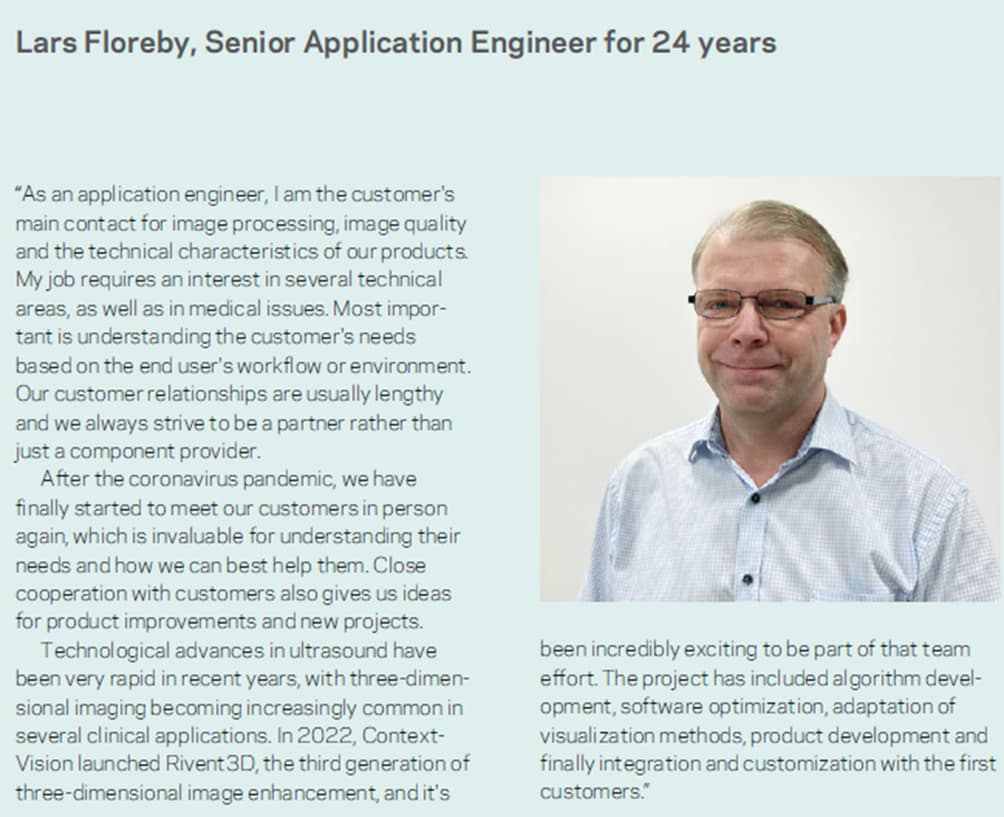
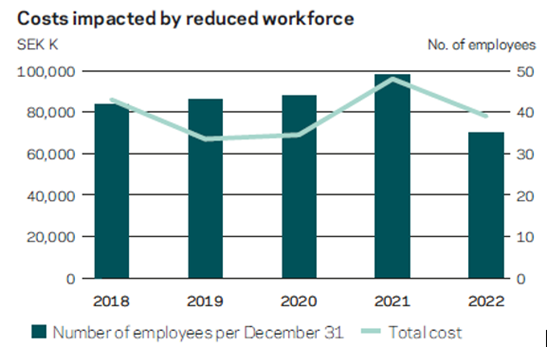
The company’s business obviously relies heavily on long-term experts. Personnel risks are therefore obvious. An example of the employee breakdown is below:
The founders have significant holdings in the company:
- Monsun (Board member Magne Jordanger with family)
- Martin Hedlund
- Sven Gunther
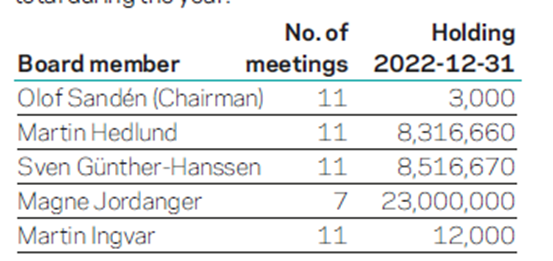
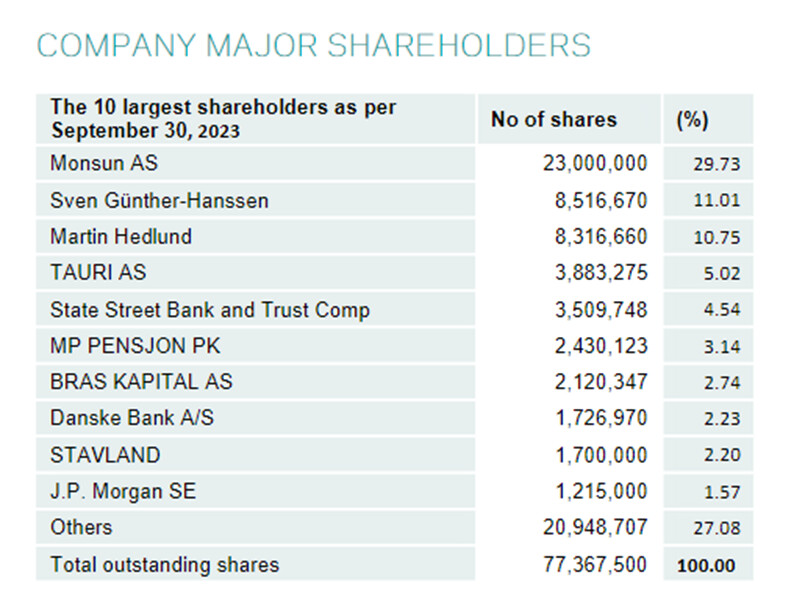
The CEO only has a small direct holding of 15k shares (though I naturally don’t know all the owners of the top-list companies). A more recent shareholder list from 2023:
Business Development
Between 2016–2022, revenue growth has been 6.3% CAGR. With the spin-off of Inify Labs, the company grew by about 20% in 2022, of which, however, 10% came as a result of currency effects.
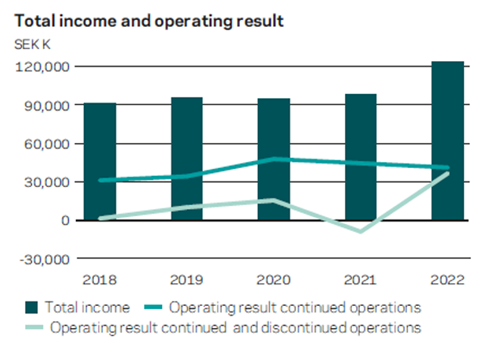
The company seeks a growth company profile in its communications and recent strategic choices, considering its 40 years of developed technological expertise as a competitive advantage.
About 60% of the company’s invoicing is in Euros, a solid 20% in US Dollars, and about 15% in Japanese Yen. The cost side is predominantly in SEK, which creates an extra benefit for the company as the Swedish Krona is at a very weak level compared to other currencies.
Spin-off of Inify Labs
Before the 2022 spin-off, costs were shared evenly between both companies (Medical Imaging & Digital Pathology), while revenue essentially came from this imaging side (ContextVision). From the middle of 2022 onward, CONTX’s revenue development and costs are already visible as a fully independent operator. Management justifies the spin-off with the following phrasing:
The decision to separate the companies is largely due to the differences between the businesses, which are best leveraged on their own.
With the spin-off, some expertise also transferred from the house to Inify, which has been partly compensated at CONTX by using external consultants. Because of this, costs have shifted somewhat from own personnel to “other external costs” in the income statement. According to the company, the need for its own personnel has been lower after the spin-off, but some key roles have been filled with internal talent since early 2022.
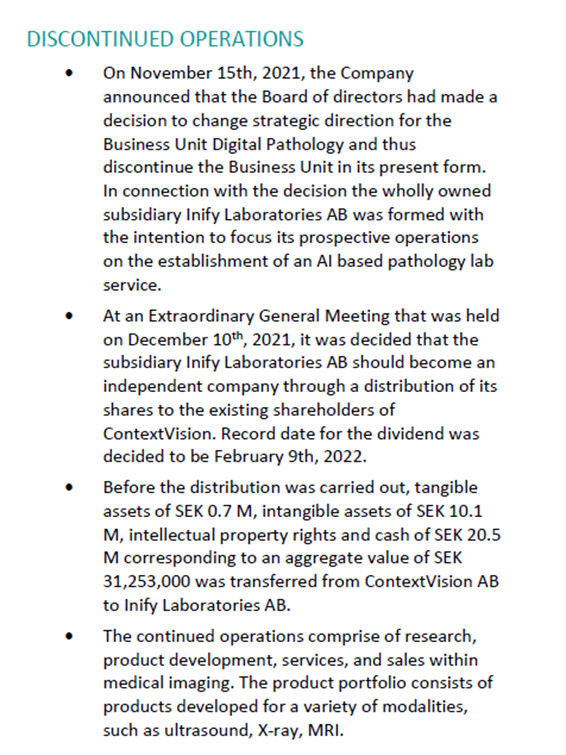
Here is a closer look at the sequence of events:
- In late November 2021, the decision to establish Inify Labs
- Assets of approximately 3 million euros were generously distributed to Inify Labs, of which approx. 2 million euros was in cash.
- In February 2022, the distribution of Inify Labs’ entire share capital to ContextVision shareholders
Events in 2023
- In Q1, new contracts in Asia; revenue from licenses is expected from late 2023 onwards. In Q1, revenue growth was 19%, where the positive impact of currencies was nevertheless 22%, meaning virtually no growth. However, not directly comparable due to Inify’s inclusion in 2022. (Personal note: For some reason, no webcast is available for this quarter)
- In Q2, revenue grew by 8.4% to 33.9M SEK, with a currency impact of +7%, meaning virtually no growth. New partnerships in Asia and increased interest, especially in China.
- In Q3, revenue grew by 28%, where organic growth in Asia was a key factor. Several projects were completed during the quarter. The positive currency impact was 6.5%, so organic growth rose above the 20% level. The X-Ray product (Altumira) has generated interest in North America and Europe, and several customer negotiations are expected to be resolved in the coming months.
The revenue received by the company consists mainly of license fees (license fee per device) and is thus volume-dependent and capital-light. I didn’t realize it at first, but licenses generate revenue distributed over time; the CEO has used the term “recurring revenue” in webcasts, and the annual report, for example, explains it as follows:
Revenue consists mainly of license revenue, one license for each system our customer delivers to its customers. Licensing revenue is volume dependent and is generated over the lifetime of our customers’ systems delivered to their respective customers.
In addition, revenue is generated from implementations, maintenance agreements, and software updates. This is also reflected in the margins (Q3/2023):
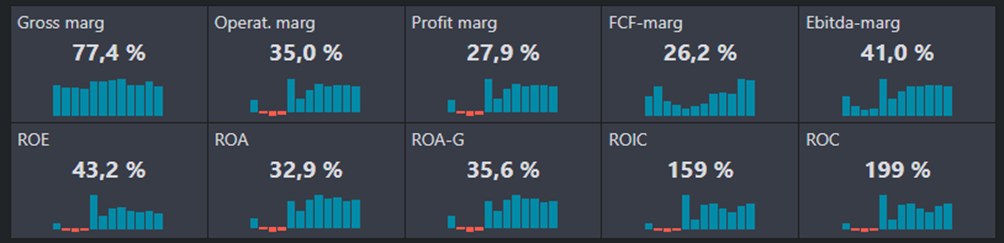
(Börsdata)
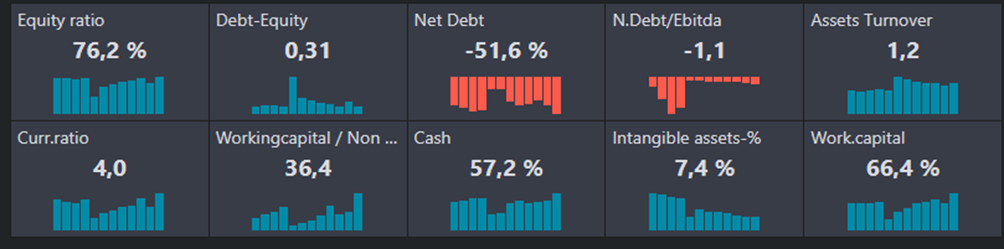
The company is net debt-free, cash flow positive, and cash is accumulating on the balance sheet
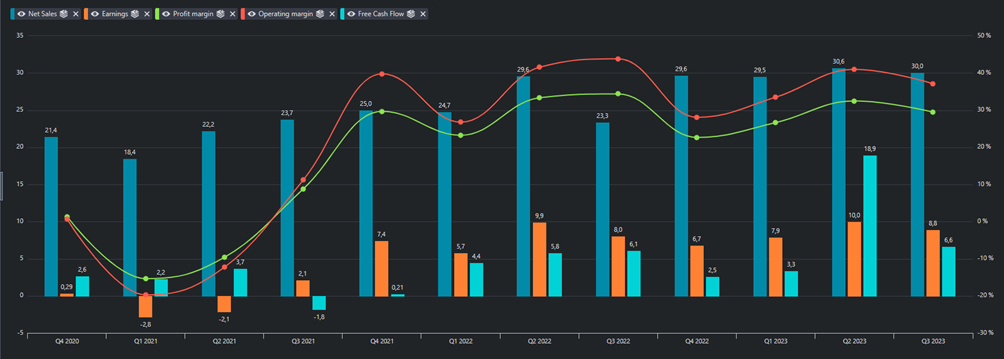
(Börsdata)Recent quarters visualized
- Q3 is usually the weakest seasonally
- Revenue growth has been sluggish, at least before the Inify spin-off. Naturally, the brakes applied by COVID-19 in 2020–2022 were likely significant.
- The key question is whether the organic growth of over 20% seen in Q3 will continue. There is no visibility into this yet, but if such growth were to be seen in the coming years, the stock could be considered cheap. For now, stronger growth remains to be seen.
Technology
According to the company, the software architecture used is flexible (practically platform-independent) and tailored to suit each hardware manufacturer. Key areas of expertise among the company’s employees include “image enhancement” and artificial intelligence. The company considers its long-standing development and cooperation with major Original Equipment Manufacturers (OEMs) to be a key competitive advantage.
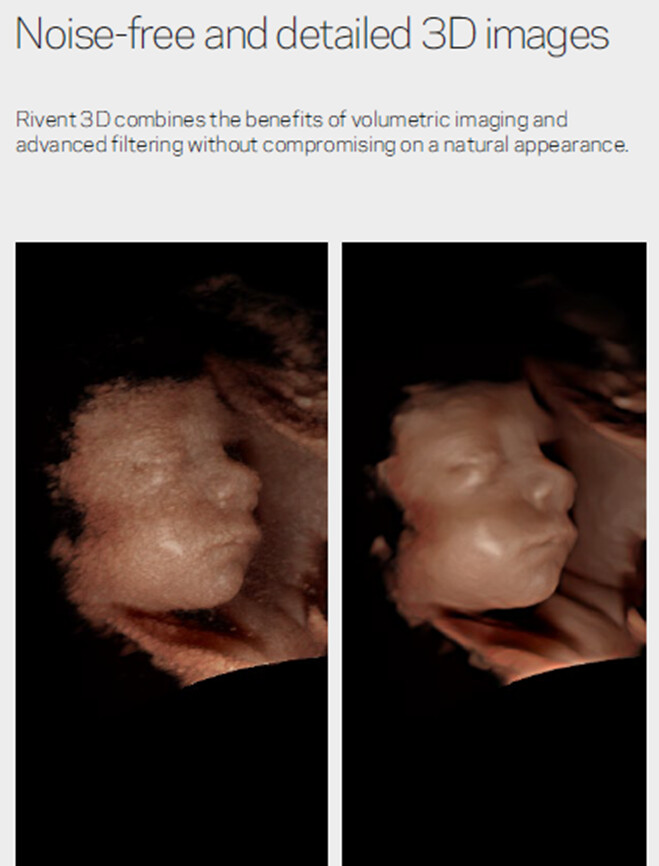
According to the 2022 annual report, recent growth has come particularly from ultrasound imaging applications (RiventPlus and Rivent 3D), new customer contracts, and the development of the business model.
The fastest-growing segment is mobile ultrasound imaging devices, as described above. Global production of ultrasound imaging devices (70% of the company’s revenue) is approximately 200,000+ units annually, though the majority of this consists of low-end hardware outside the company’s focus. The company’s offerings:
- Rivent platform (2D and 3D) – Ultrasound
- Rivent Mobile – Ultrasound
On the X-ray side, major hardware manufacturers have their own in-house development, especially for high-end devices, so ContextVision focuses more on mid- and low-end devices there. The company’s offerings:
- Altumira platform, X-Ray
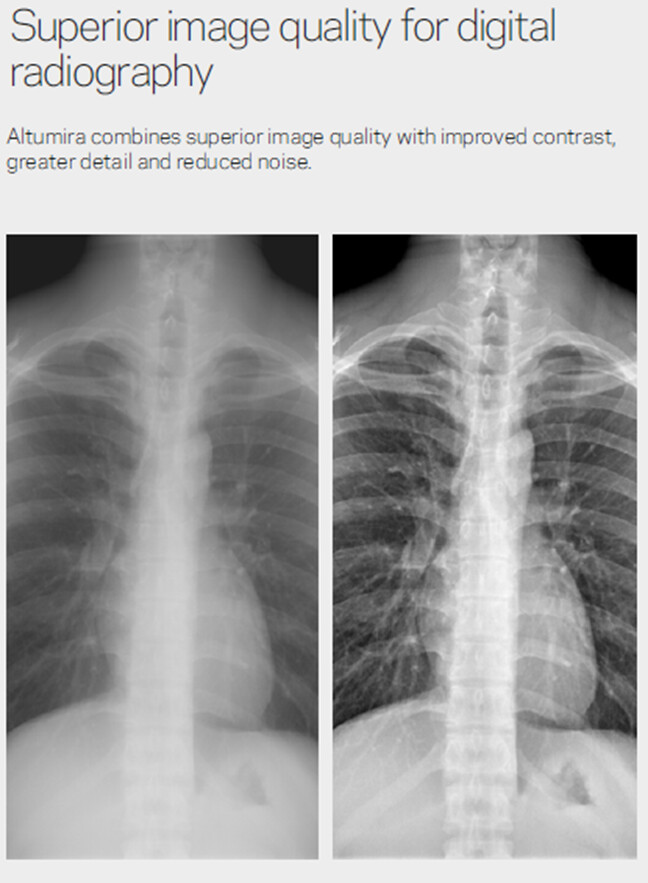
More examples of image enhancement can be found on the company’s product pages: https://www.contextvision.com/products/
Analyst Forecasts
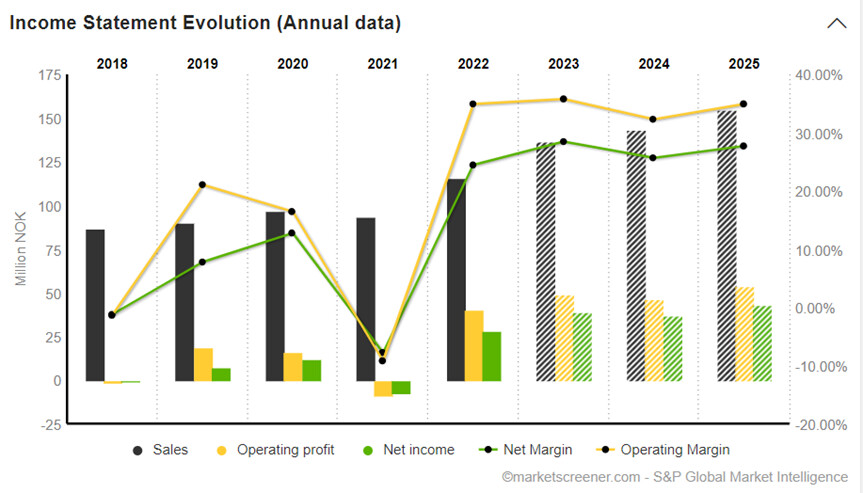
According to MarketScreener, the company is followed by one analyst. The forecasts point to around 10% CAGR revenue growth for the coming years (2023–2025), with EBIT expected to grow at the same pace.
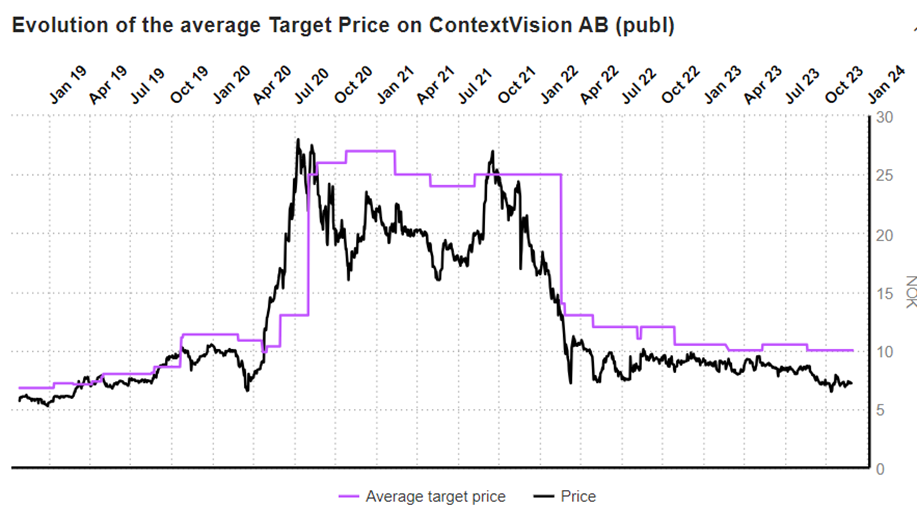
The Target Price is currently 10 NOK, and the price trend shows how the analyst’s target prices have followed the price movement relatively well.
Webcasts
Archived webcasts of the company can be found here.
https://www.contextvision.com/investors/webcast/
The Q&A from the latest interim report is available as a quick link here:

Risks
- Technological risk is certainly central as the company competes in the global market. This is challenging to assess from the outside, and therefore a stock buyer should factor this into the purchase price.
- In-house software development by major hardware manufacturers poses a direct competitive threat. Based on what the company has shared, major players have strong in-house expertise on the X-ray side, which is why ContextVision does not heavily compete there. On the ultrasound side, the company sees a niche in high- and mid-end devices.
- It is very difficult from the outside to tell what kind of technological advantage CONTX has compared to industry hardware manufacturers, but based on the existing installed base at least, the technology has historically been good. This is naturally helped by a dispersed customer base even among major clients, meaning it is unlikely all large customers would come up with a clearly better solution overnight.
- Increased use of external consultants.
- Likely significant key-person risks within the technology team.
- Sales cycles are quite long.
- Recruiting skilled talent. According to the CEO in the Q2/2023 webcast, finding the right expertise is not easy.
- Access to a data database. In the same webcast, the CEO mentioned that development work requires access to a good database. This may be closely related to, among other things, the cooperation with Linköping University.
- Familiarization with the company is still ongoing, but to my knowledge, the company has not published longer-term targets. A growth-oriented program has been launched and is being implemented, but it is challenging from the outside to assess what kind of growth could ultimately be achieved.
- At the current valuation (Trailing EV/EBIT 12x and P/E 16.7), one would think the downside is limited if good organic growth is achieved. On the other hand, it could always go even lower

Ps. I do not own any shares. I just came across this case and wanted to try, for the first time in a while, if starting a company thread still works out. There are probably people on the forum who work with or have a hobby in medical imaging, so we might get some more insight. If organic growth continues in the coming quarters, this could be an interesting candidate for a long-term portfolio. 