Amadeus IT Group SA - Spanish travel industry software company

Let’s open a thread for an interesting Spanish software company focused on the travel industry, which is particularly known for its namesake Amadeus booking system for airlines and travel agencies. The company was founded in 1987 and is a world leader in its niches. According to J.P. Morgan’s analysis, the company would have over 40% market share in both GDS (global distribution systems) and PSS (passenger service systems for airlines). Amadeus was a familiar name to me before, but I happened to spot the company in the portfolio of Fundsmith, led by Terry Smith (Smith’s investment philosophy was just discussed in a recent book club). This sparked my interest to take a closer look at the company.

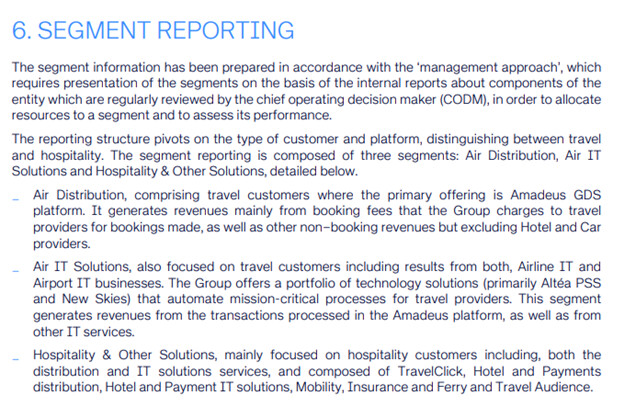
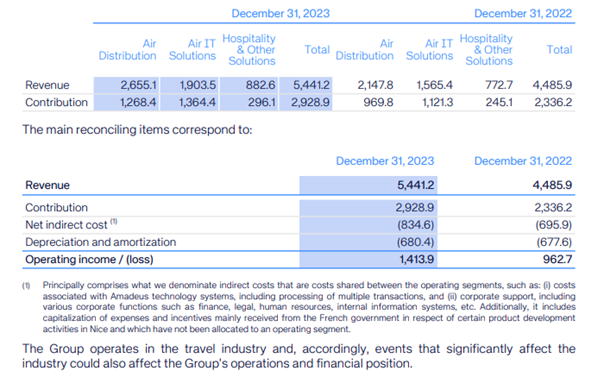
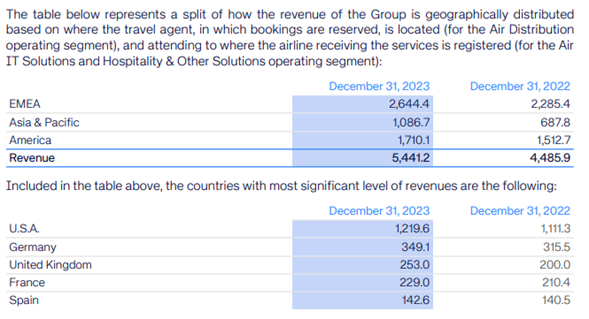
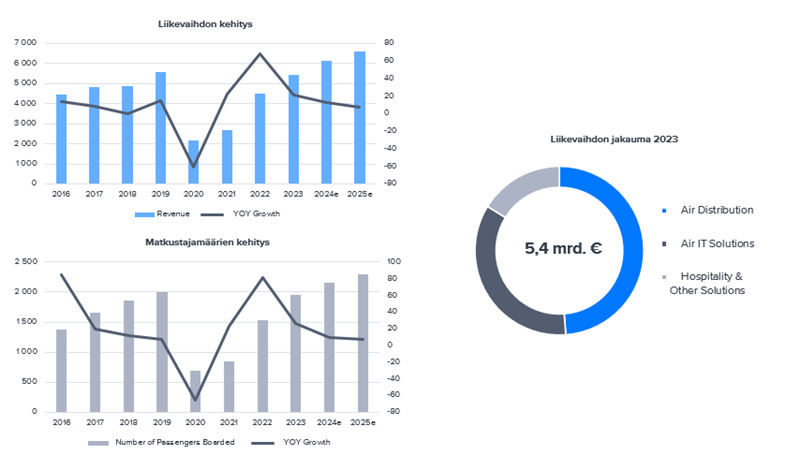
Below are the business segments and geographical distribution of revenue from the annual report. In 2023, revenue grew by 21% to 5.4 billion euros. Of this, 1.4 billion was adjusted operating profit (26% of revenue) and 1.15 billion was free cash flow (21% of revenue).

image

image

image

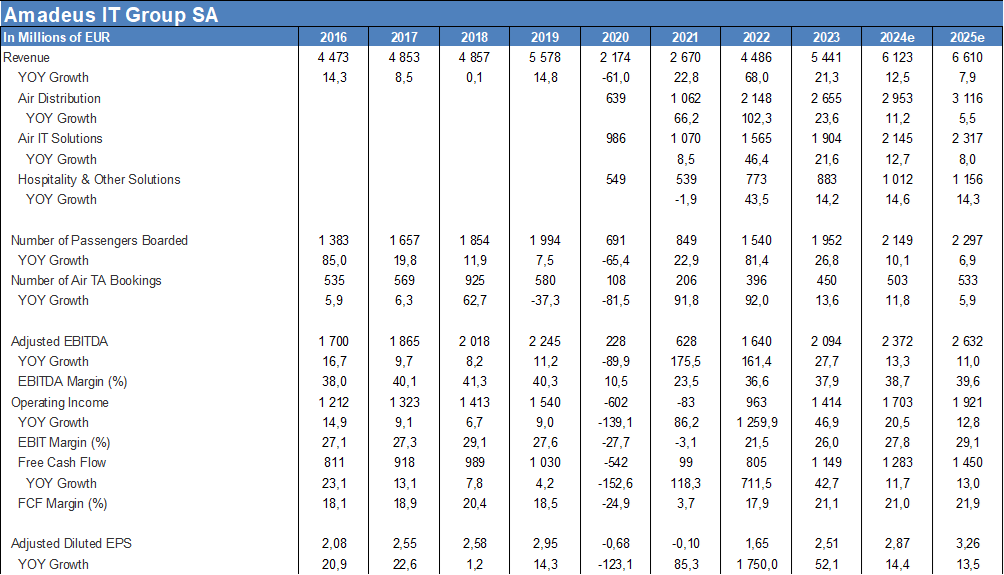
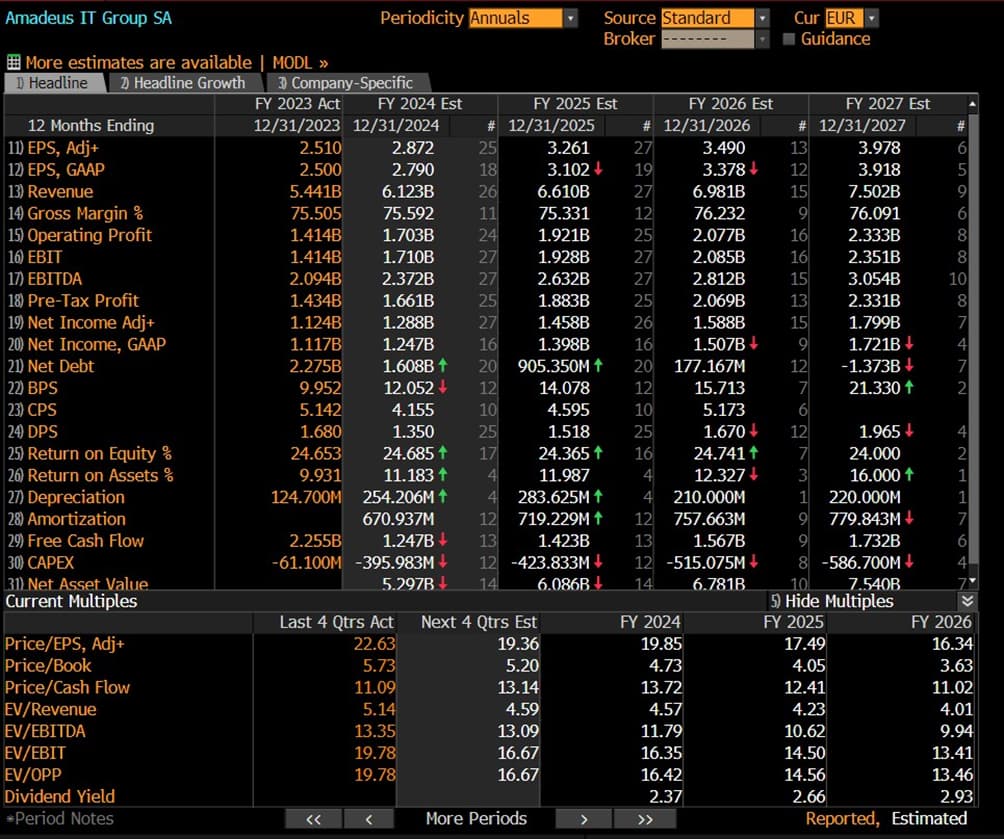
Here is a small summary table from Bloomberg on key figures and analysts’ forecasts for the coming years:

image

From the visualized figures, it is quite clear that the company’s revenue relies on the number of bookings made through its systems. The COVID-19 pandemic thus hit the company’s figures hard, and actually now in 2024, business, as well as passenger volumes, appear to be recovering to pre-pandemic levels.

image

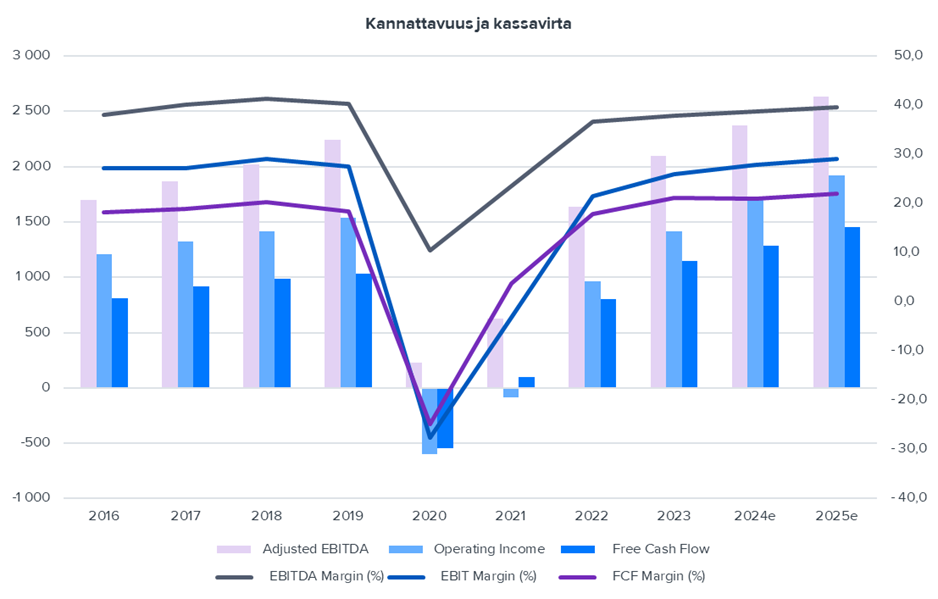
The same development is naturally visible in the evolution of profit and free cash flow. All in all, the company could currently be described as a profitably growing growth company, with margins and cash flow conversion (from operating profit) at a comfortable level.

image

So, what should one pay for such a company in terms of valuation? Below is a summary of consensus estimates and multiples from Bloomberg:

image

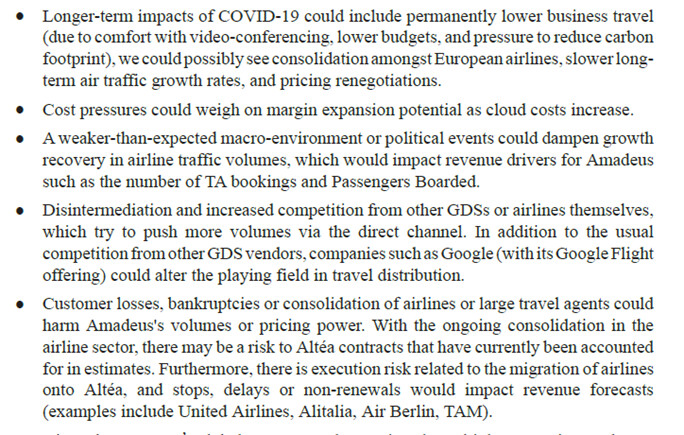
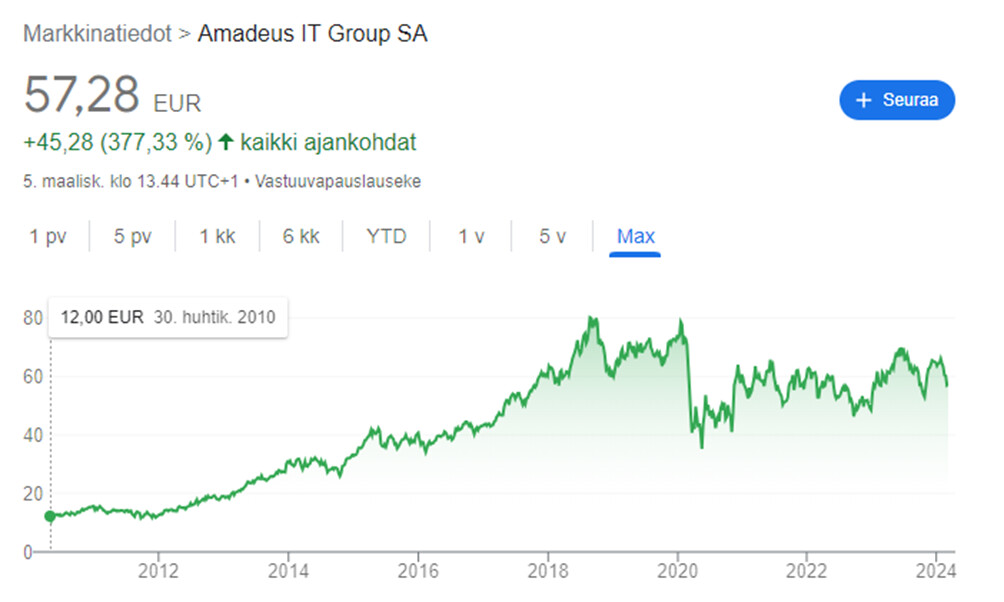
With the current market capitalization of approximately 25 billion euros (approx. 57e share price), the stock trades at a P/E of 20x for this year and a free cash flow yield (FCF-yield) of around 5%. This does not seem impossibly high compared to many other tech players, but based on J.P. Morgan’s analysis, a certain discount is justified. Reasons for this include slower long-term earnings growth prospects compared to many tech companies, and the cyclical element seen during the COVID-19 pandemic also creates its own risk factors. Debt on the balance sheet is very moderate, and according to the latest earnings report, net debt/EBITDA is around 1x.

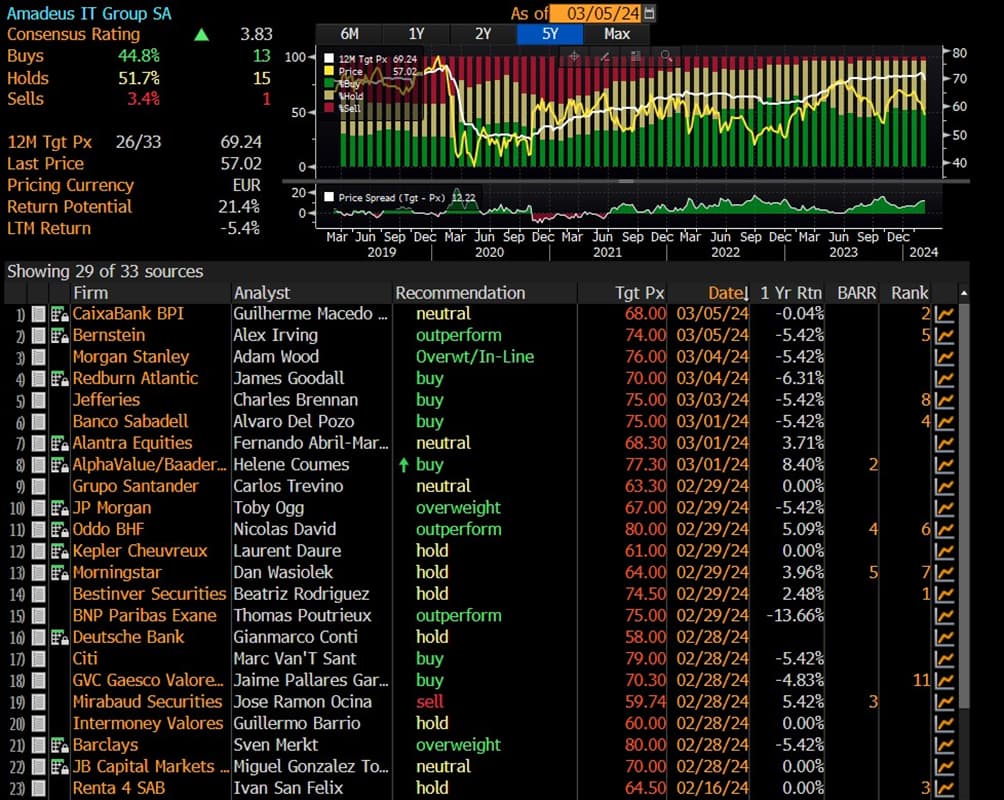
According to Bloomberg, the company is followed by as many as 33 analysts, and the recommendation distribution currently looks like this:

image

A quote from J.P. Morgan’s analysis regarding their view on the stock:

image

And key risks for the case:

image

The long-term share price curve reflects the rising curve typical of a value creator found in Smith’s portfolio, although the COVID-19 pandemic is particularly strongly visible here:

image

Overall, the current valuation does not seem bad to me for a player with a very strong market position. I grabbed a small monitoring slice, so I stay interested in checking the company’s news occasionally. If the valuation were to rise somewhat from this, I reserve the right to take profits quickly :smiley:

As a disclaimer, I don’t know the company or the industry well, so this is more of a “gut feeling” investment following Smith. For example, I cannot assess at all the competitive threat from new players raised in the risks, or airlines’ attempts to try to direct passenger volumes directly to their own channels/systems.

For those interested, a link to the company’s investor pages:

https://corporate.amadeus.com/en/investors/financial-information#solution-item-key_solution_contain-3

38 Likes

I wonder how well the company has revamped its platform? That is, is its architecture and features modern or from the 90s?

Are customers and end-users satisfied, or is the platform used through gritted teeth just because it’s so difficult to switch to a competitor? Does a new airline choose Amadeus or someone else?

The entire industry naturally changes very slowly due to, among other things, regulation and complex dependencies, so one could at least imagine it’s not the most attractive place to come and disrupt. :thinking:

4 Likes

A really interesting thread opening @Atte_Riikola. The company wasn’t familiar to me beforehand, but based on a quick look, it seems like a very potential case. I watched your book club episode, and the performance of Terry Smith’s Fundsmith fund is indeed impressive.

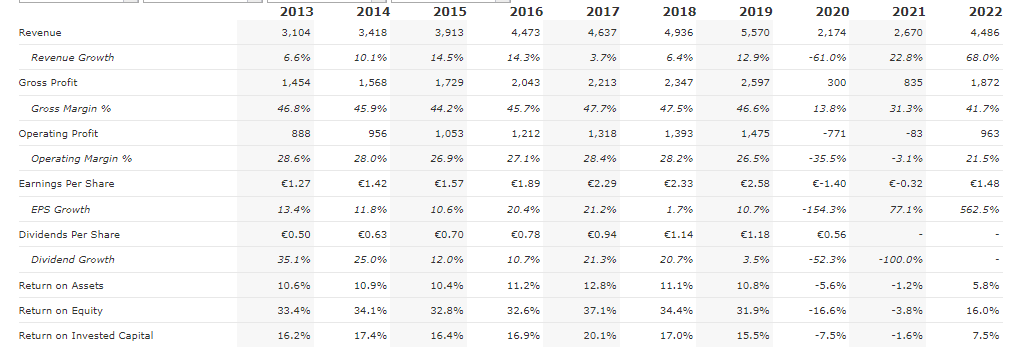
Looking at Amadeus’s returns on capital from 2013-2019, I can see why it fits Terry’s portfolio.
image.

According to my own calculations, the average P/E was 25.30 and the median 25.91 for the years 2013-2019. Amadeus has survived the COVID-19 travel slump and the crisis. They also changed their segment reporting during that period; I can’t say if this was related to managing through the crisis. It now looks like the crisis was overcome during 2020-2023. I wouldn’t call the stock cheap myself, but it seems fairly neutrally valued in light of the P/E.

The company seems high-quality, they have a good long track record, and they survived a genuine crisis for their business (COVID-19) excellently. I have no doubt that return on capital will return to previous levels once the business normalizes. However, in the Bloomberg forecasts shared by Atte, the ROE% seems to stay at the 24% level, but ROA% is rising strongly, even up to 16%. Net debt is also expected to turn negative in 2027.

Forecasts are just forecasts, but based on a quick look, it seems like a quality company. I ended up taking an opening position in this myself.

Has anyone had time to look into Amadeus’s competitors and how they have performed?

1 Like

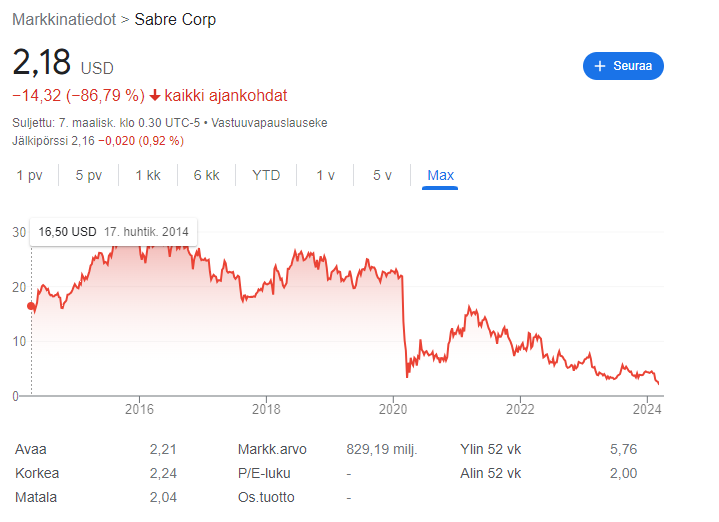
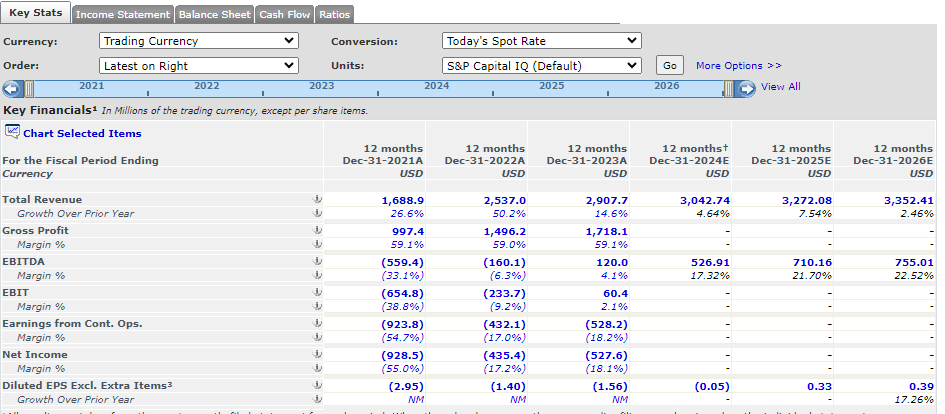
Here is at least one American peer called Sabre, whose share price performance suggests things haven’t exactly gone smoothly.

image

A quick glance at the numbers suggests they too have seen a significant recovery from COVID in recent years, and now they are keeping their head above water again.

image

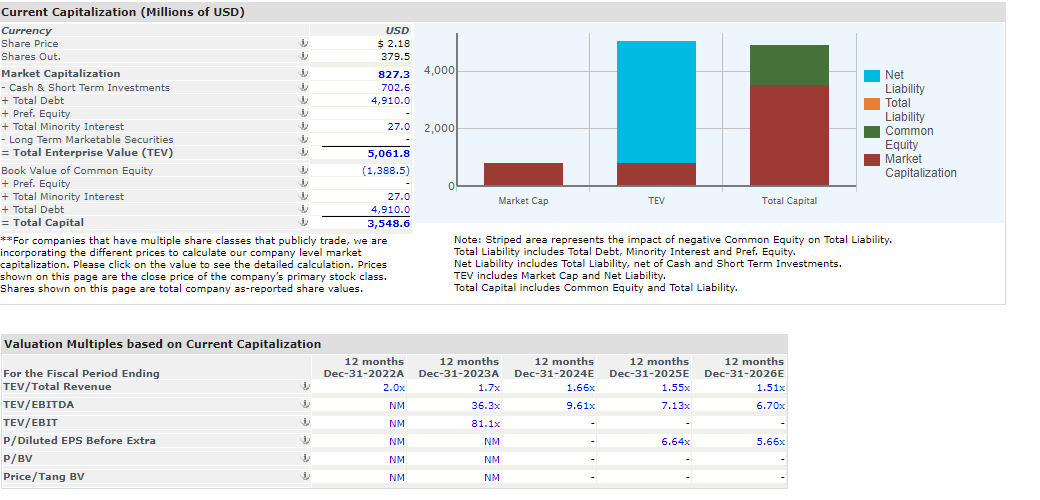
Based on Capital IQ’s figures, the balance sheet appears to have a pretty massive pile of debt, which is likely partly the reason for that weak share price performance in a rising interest rate environment. P/E ratios for the coming years look very low, but that debt load could still cause trouble.

image

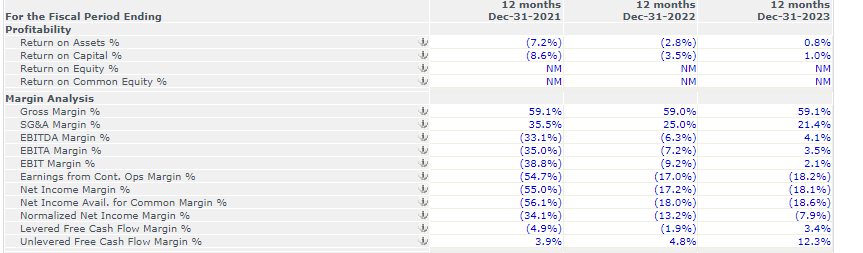
The figures from recent years don’t provide much support for the valuation, and at a quick glance, the company appears to be clearly lower quality than Amadeus.

image

In J.P. Morgan’s analysis, industry trends were gauged from the following companies in addition to Sabre: Expedia, TUI, Airbnb, and Trip.com. None of these are really peers for Amadeus anymore, as the businesses and business models are very different.

I can’t give a direct answer to Ilkka’s question yet, as my research has been quite superficial so far. It would be interesting to hear if there are any people from the travel industry with experience using Amadeus.

5 Likes

Amadeus published its report about a month ago. :slight_smile:

Revenue, profit, and free cash flow grew significantly, and the company continued to invest in technology, such as cloud-based solutions and artificial intelligence. Air travel distribution services and IT solutions performed well, but there were challenges in certain areas due to payment system delays and changes related to various customers.

In North America, local “bookings” decreased, and delays were observed in the Asian region’s payment business. The company expects the growth of revenue from “bookings” to slow down towards the end of the year. The recruitment process for the CFO was ongoing at least when this Q3 report was published.

Q3/2024-raportti

image image

image

2 Likes