Vivos Therapeutics - Improving Sleep Apnea

This is a small company in the medical sector, so there’s a big risk, but also potentially a big reward. Familiarize yourself thoroughly with the company before investing.

According to the company, Vivos Therapeutics offers the only curative treatment for sleep apnea, excluding treatments requiring surgery. The company’s main market is currently the United States and Canada, but the company also has small-scale sales worldwide.

To the layman’s eye, the company’s main product is an FDA-approved device resembling braces, whose purpose is to reshape the jaw and teeth area so that airflow in the throat can flow better.

The company’s business model is to get dentists to become providers of Vivos products, for which dentists have to pay an average of $28,000 in total (there are different levels of “memberships”). Dentists thus handle their sales work to patients, and Vivos gets a share of each dental device the dentist sells to their patient. In addition, Vivos has various billing fees and other accompanying charges, but the revenues generated from these are still small but growing.

Competitors are relatively few and focus either on curative treatments requiring surgery, or on various breathing devices that usually have to be used for the rest of one’s life, and which do not cure the patient’s condition but only treat it.

Revenue is still small and there are no 100% guarantees of growth, but the steps look good, and the company has secured capital to support growth.
The company was listed in December 2020, so its stock market journey has been short and very bearish, as can be seen from the share price development.

The company’s financial situation is good with 34.2 million USD at the end of Q2 and almost debt-free. The latest directed offering was made in May 2021, raising 27.6 million at a share price of 6 dollars, without warrants.

It’s worth checking out the company presentation available on the company’s website; it can only be accessed after entering your information. In addition, the Seeking Alpha article explains this investment case well.

Q3 report expectations:

  1. Sales of new products, potentially strong growth (Vivoscore, Myocorrect)
  2. Possible FDA approval of a new modified dental device (Will lead to more comprehensive insurance coverage)
  3. Attracting larger clients: “We have recently begun an active outreach to the DSO industry. DSOs, or Dental Support Organizations, own and operate thousands of dental practices throughout the U.S. and Canada. Very few DSOs have successfully implemented a dental sleep management program, although several have tried. Our management team’s extensive DSO experience gives us a huge advantage in penetrating this market. Not only do we personally know the key players, but we have also specifically designed our model to seamlessly integrate and thrive within the corporate DSO environment. The initial response from the DSO community has been extremely positive, and we are working very closely with a number of these companies to initiate pilot tests within certain target markets.”

There is a lot to tell about the company, and not all of it fit into this introduction. Happy reading to those interested!

Links:
Company website - https://vivoslife.com/
Q2 results - https://vivoslife.com/vivos-therapeutics-reports-second-quarter-2021-financial-results-and-operational-update/
Seeking Alpha article - Vivos Therapeutics: Reimagining Sleep (NASDAQ:VVOS) | Seeking Alpha
14 Likes

Vivosia was discussed in this podcast at some point. I have also been following the company’s development to some extent.

https://podcasts.apple.com/fi/podcast/industry-focus/id717428711?i=1000514282916

4 Likes

The market potential here is ridiculously huge in America alone. That is one of the most attractive aspects of this investment case.

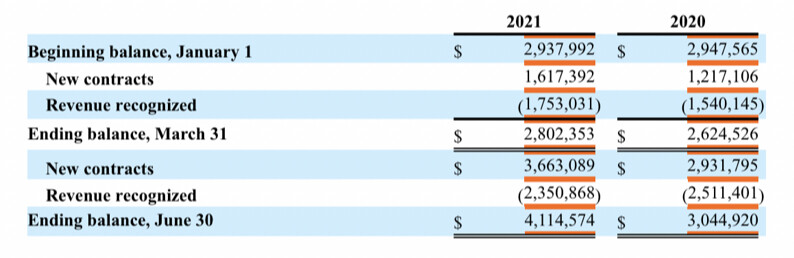
50% of the payments from new doctors, i.e., VIPs, are recorded as revenue in the month following their joining, and the remaining 50% are recorded on a pro-rata basis over the next 11 months. So a good quarter will also be reflected in the next quarter.

Here is the contract balance:

The VivoScore can be a big help in growing revenue. It’s a ring that can measure sleep apnea during the night. These are sent to VIP dentists, who give them to customers for free overnight use. Then, they review the data together and potentially seek a diagnosis with agreed-upon doctors for sleep apnea to get insurance coverage. In its own monitoring, the company found that sleep apneas detected with the ring led to a good percentage of sales.

“The Company recently conducted an informal pilot study with 12 independent Vivos-trained dentists who performed 938 sleep-tests over a three-month period using VivoScore. 56% of the patients in the pilot tested positive for OSA, and after receipt of a confirming diagnosis from a physician, 50% of all patients who tested positive entered into treatment for OSA with the Company’s core product—the Vivos System.”

1 Like

At first glance, I’ve only read/heard good things, perhaps too good. It’s going on my watchlist, but I need answers to a few questions before investing real money. Does the treatment have side effects, how many people recover after the treatment period, and is the effect truly permanent? There are probably some research results already available, but an increasing number of patients will provide more certainty about the treatment.

1 Like

I didn’t quite understand what the curative effect is based on. Nowadays, night splints are already in use, which relieve sleep apnea during the night by improving airway patency. However, it is not curative. Sleep apnea, however, would have a really great potential as one of our scourges as a lifestyle disease.

6 Likes

I started looking into that myself. I’m not a dentistry expert, but just an experienced patient (concerning obstructive sleep apnea). So, it’s a splint/mold in the mouth for 1-2 years, 16 hours a day, and numerous dentist visits. And even then, there’s no 100% certainty of recovery (I couldn’t find any precise data on the proportion of those who recovered). I, for one, am happy with my CPAP therapy if that’s the alternative.

My impression now is that this is a traditional splint treatment, which at least in Finland dentists perform. It hasn’t become very widespread in Finland because patients have to pay for the manufacturing of the device themselves, which costs several hundred euros. I don’t know about the situation in the United States. On the other hand, the company’s website mentioned that during the treatment, people are encouraged to eat healthily and improve other lifestyle factors, which in itself would suggest that it’s difficult to separate the benefit of the method itself. However, it’s good to note that when sleep apnea is severe, lifestyle changes are challenging because sleep doesn’t refresh.

1 Like

In the company’s own presentation material, the costs are marked as being covered by health insurance (yes - in most cases). However, the same seemed to apply to the competitors chosen for comparison, so the situation across the pond would be better than ours. That is, if one happens to belong to a group with health insurance…

The company appears to focus on mild to moderate cases:

'… the Vivos System opens airway space and may significantly reduce symptoms and conditions associated with mild-to-moderate OSA, such as lowering Apnea Hypopnea Index scores.

I don’t know what kind of curve patient numbers form when measured by the apnea index, but I would assume that mild and moderate cases cover a large part of the group.

According to the company’s study, a large proportion of respondents (n=123) felt the method had helped them achieve their goals (97%). As always, selected advertisements should be viewed with caution. I did not find the questionnaire nor can I see the respondents’ goals. A skeptic might think that the respondents set low goals and they were achieved?

I don’t know if splint therapy is used in America, and it may not be relevant. From an investment case perspective, what is relevant is how the treatment can be productized and sold into that market. Sales through dentists sound like a better channel than specialized sleep apnea clinics, where the experts’ interest is, of course, to sell the maximum number of treatments.

In Vivos’s case, neutrality is brought (at least in principle) by the ring, whereby interpretation based on data can lower the psychological threshold for starting treatment.

P.S. Vivos managed to spend over $11 million on G&A expenses in the first half of the year? At the same rate, the latest funding would have been used for G&A expenses alone within a year. Not good.

2 Likes

Here, those interested can investigate. I’d love to hear your thoughts on Vivo’s devices based on these studies:
https://vivoslife.com/better-sleep/research-2/

It’s important to remember that this is an FDA-approved device for treating mild to moderate sleep apnea. FDA approval is not the easiest task and requires research and data to back it up.

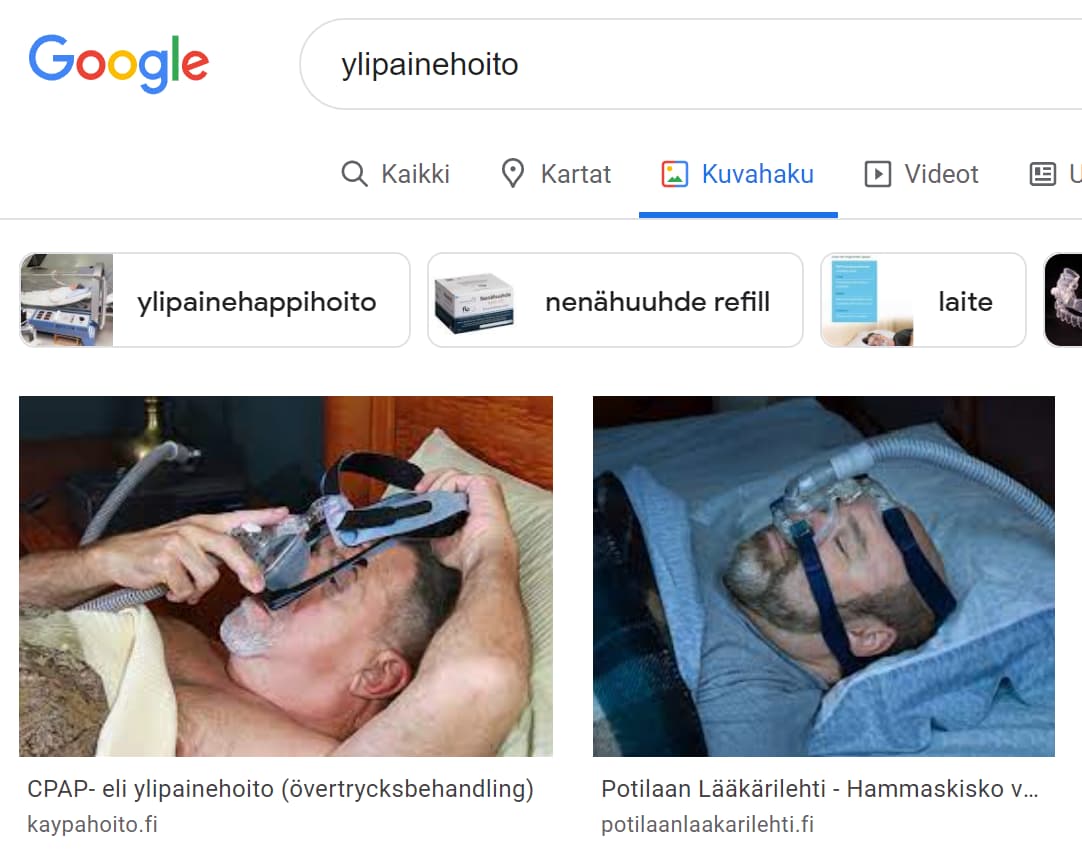
Out of curiosity, is that CPAP treatment the device in the picture that you wear every night for the rest of your life? I’m not aware of how often it’s used, but that’s what I’ve understood.

Just out of interest, if you lived in America and your condition could possibly be improved with that Vivos device, and insurance covered, say, half of it, leaving you to pay maybe 4000 euros, wouldn’t you try it? Or would the mask for the rest of your life be a better option?

I’m not good at commenting because I haven’t used that CPAP device or Vivos’s braces, but having worn dental braces for many years, it wasn’t that terrible, was it? Many people have their teeth straightened as children, and adult orthodontics has also become more common.

2 Likes

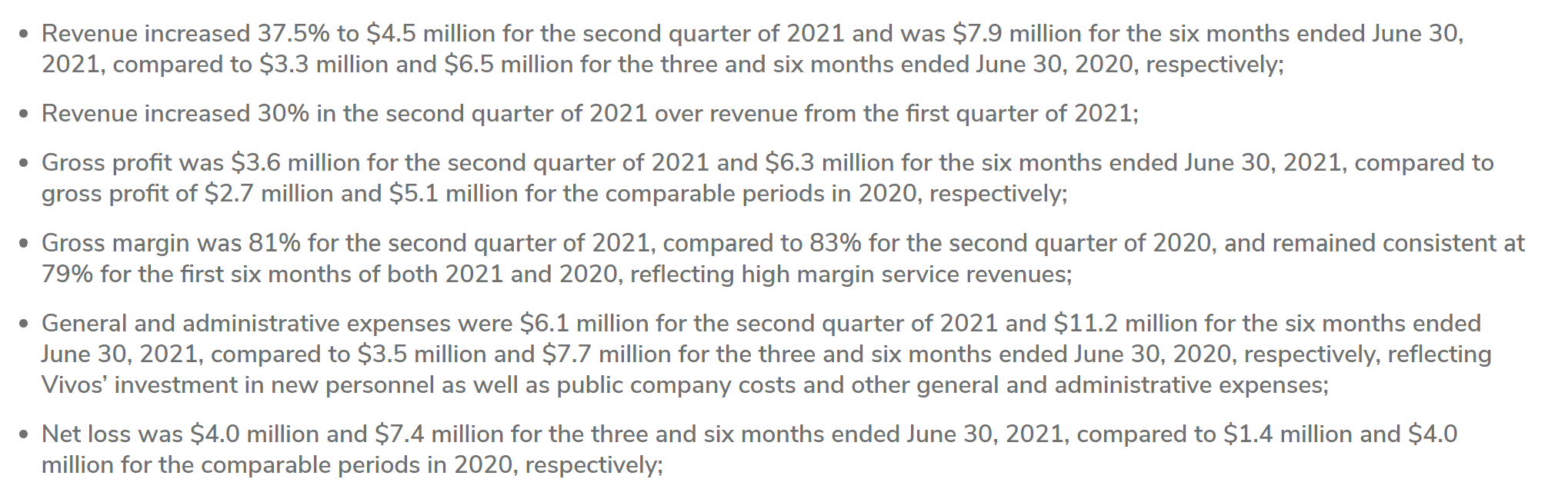
The best way to assess the sustainability of the cash flow is to look at the Net loss figure. Expenses have increased significantly due to the increase in headcount. Vivos is now vigorously investing in growth, and this is reflected in the expenses. However, if the revenue increases, I don’t see this as a bad thing. The costs will scale if sales perform well, and the margins are healthy.

If we continue at the current Net loss rate, the funds will last for a good two years, assuming the business doesn’t grow and, consequently, the Net loss doesn’t decrease over the quarters.

“Net loss was $4.0 million and $7.4 million for the three and six months ended June 30, 2021”

"General and Administrative Expenses

General and administrative expenses increased approximately $2.6 million, or approximately 76%, to approximately $6.1 million for the three months ended June 30, 2021 as compared to approximately $3.5 million for the three months ended June 30, 2020. The primary driver of this increase was an increase of approximately $1.4 million in compensation, including salaries, commissions, bonuses, paid time off, stock-based compensation, and other employee-related expenses, mainly as a result of increased headcount (from approximately 83 employees at June 30, 2020 to approximately 133 employees at June 30, 2021). Other drivers of the increase in general and administrative expenses included an increase of approximately $0.3 million to general corporate costs such as insurance, specifically directors and officers insurance, and professional fees, an increase of approximately $0.2 million for office rent and utilities, an increase of approximately $0.2 million for information and technology supplies and equipment, approximately $0.2 million increase of bad debt expense driven by the increase in sales, approximately $0.2 million increase in travel expense as COVID-19 restrictions began to lift and approximately $0.2 million in other corporate expenses such as filing fees, subscriptions, and office expenses. These increases were due to the growth of the company combined with higher headcount and expenses associated with being a public company."

2 Likes

That’s exactly what I meant. I have a slightly lighter model, though.

I assume that to a layman, it must seem dreadfully awful to spend the rest of one’s nights with such a device. It took me about a year to get used to it, but nowadays I actually like the device.

As for the question of whether I would try Vivo, the answer is no, because

  • 12-24 months feels like a long time to have a device in my mouth for 16 hours a day.
  • even after that, the outcome is not certain.

However, I will follow this case with interest, both from an investment perspective and from the perspective of Finnish healthcare policy. Currently, for example, I burden public healthcare staff only about once every 3-5 years (control visit), and the same device (estimated price approx. 500€) has worked for the entire 10 years.

Edit: (this thought remained incomplete)
It will be interesting to see if this proves to be an effective CURE, would public health change this to a viable treatment, or would it stick to the much cheaper current practice, which is only TREATMENT.

As an investment case, the demand side is particularly concerning. My skeptical argument against this is that since currently only a maximum of 10-20% of those suffering from sleep apnea seek a diagnosis, perhaps not many find it so bothersome that they would spend 2 years of their free time with junk in their mouth.

But don’t let my guesses affect your buying decisions; I’m going to follow this whole thing myself.

3 Likes

Thanks for the reply! I’m particularly interested in the cost side of CPAP therapy, as I’ve been thinking about this in relation to Vivo, even though it’s from a Finnish perspective. The device isn’t more expensive than that, and it doesn’t have any replaceable parts?

This is a good point, and this is what the Vivoscore ring aims to address. You get a free ring from the dentist for one night, and then when you come for a follow-up visit, your data is reviewed, and you’re told that it looks like you had some degree of sleep apnea. Few people probably go looking for a sleep apnea diagnosis alone, but if it can be easily diagnosed during a dentist visit, it could be a very functional concept. And the Vivoscore has just been introduced and is expanding; I believe 4000 rings were distributed during the summer to 1250 VIP doctors. A total of 19000 patients have been treated with Vivo’s devices.

1 Like

Thanks for the clarification. I’m just allergic to such rapid growth in the G&A column. This is where management’s abilities are weighed: a) to keep costs under control during strong growth and b) to make them as variable as possible, rather than growing fixed expenses.

The share-based payments mentioned in G&A are, of course, (in principle) one-time and do not burden the cash flow, even if they can appear as large G&A growth, startling penny-pinchers like me.

2 Likes

Here, of course, it’s a difficult comparison year when looking at the growth of those costs, because 1. Last year it wasn’t yet a listed company, which brings its own costs 2. Corona was raging quite fiercely, causing many companies to retreat into a turtle defense, and here too, travel costs probably came to 0.2 million 3. The number of employees indeed grew from 83 people to 133 people; at least the number of sales teams had grown from one team to three teams.

Considering these, I don’t see the growth as large, but you are right that the growth must not continue as much in the coming quarters, or at least significantly slower than revenue grows. The company listed and sought more money in a directed issue in the spring precisely because the money is to be used for growth, and that’s how it should be done, as long as it succeeds.

1 Like

To be precise, it does have consumable parts; the post brings new masks and tubes once a year. It’s hard to estimate what their cost is to university hospitals, I’d guess €50-100/year.

Consumer prices for those spare parts are ridiculously high, but for comparison, you could use the price of a plaster. Buy 10 yourself from the pharmacy and pay €4. Hospitals probably don’t pay 40 cents per plaster.

As you have noted, overpressure therapy (CPAP therapy) and this splint therapy are for different stages of sleep apnea and only partially overlap. Thus, they are not entirely competing products, and I would say there is more than enough market and growth for both. So, I first latched onto the claim that Vivos’ product would be a curative treatment, even though it seems more like something achieved through lifestyle therapy. However, that does not mean the treatment cannot be profitable.

From an investment perspective, I would now consider why Vivos would beat competitors and how it manages to expand its distribution among dentists. The concept sounds business-wise potent.

Did you read those studies, or what made you conclude that it’s mainly something achieved through lifestyle treatment? Yes, this has a strong scientific background and research, otherwise, it wouldn’t have FDA approval. Of course, at the same time, people are encouraged to eat better and exercise, but the biggest impact comes from the device itself, and then this lifestyle treatment on top of that further improves the results.

Vivos doesn’t really have competitors in this field, as far as I know, and the company doesn’t mention any. Are there other dental devices that are approved for treating sleep apnea? If so, then Vivos has admirably overlooked that fact in its announcements.

I went through the studies you linked here. They stated that using an “oral appliance” possibly expanded the oral cavity due to the bones. The clinical significance of this is unclear. In addition, very small sample sizes showed improvement in obstructive sleep apnea. A definitive conclusion cannot be drawn from this due to the small sample sizes and lack of long-term follow-up. I also wondered if, based on those studies, it’s impossible to say whether the “oral appliance” was unequivocally the reason why continuous treatment wasn’t needed. Furthermore, there were case studies there, from which no further conclusions can be drawn.

In any case, FDA approval has been obtained from somewhere, and I don’t deny that Vivos’s device could completely cure obstructive sleep apnea. However, this cannot be confirmed with certainty from those studies. It’s possible that not all material is available there. It would be a huge step forward if a cure occurs. Vivos itself also promotes lifestyle therapy as part of the treatment, which is why I’ve latched onto that.

There are several similar splint treatments on the market, which can be found by googling. I can’t say for sure, but it’s possible that Vivos has a better patent or something similar in this area, and thus is at the forefront of technology. In any case, competition will be tough in the future, so growth and establishing a foothold are important now.

Edit: I want to reiterate regarding lifestyle therapy. Often, when suffering from sleep apnea, improving lifestyle is very challenging because fatigue is great due to the disease, and it affects endurance and, for example, mood. Thus, starting treatment for the disease with an effective method increases the possibility of lifestyle changes. This is likely a big reason why Vivos also promotes these.

2 Likes

Hmm, those sample sizes are small. I tried a quick search to find more comprehensive ones, but couldn’t immediately. I do believe that the criteria are met here since the FDA has approved it. I can’t draw conclusions about the significance of those studies myself; I trust the professionals here, and at least the company can market it for the treatment of mild to moderate sleep apnea.

I also found splints, but no other products that “promise” to potentially cure sleep apnea. In my opinion, those splints and other devices available are for lifelong treatment, versus the Vivos device, which is meant to be used for less than 2 years, and the sleep apnea should improve.

There is a moat here, in a sense, due to the FDA approval; it’s not a small/short process to get it. It’s possible that there are 10 similar applications in the queue right now.

Increasing the number of dentists is especially important at this stage. Vivos’ sales teams have grown from one to three, a new training center was just established, and many new partnerships have been formed. You should listen to the Q2 earnings call questions at the end; there was some good information there.

The transcript can be found here:

https://seekingalpha.com/article/4448937-vivos-therapeutics-inc-vvos-ceo-kirk-huntsman-on-q2-2021-results-earnings-call-transcript

Marketing has clearly ramped up as a larger number of doctors become available:

"So we – our initial thrust here has been with the professional community. We are beginning to move our emphasis and our spend – our marketing spend over into a broader more consumer-oriented type of spend. You’ll see – in the months ahead, you’ll start to see – actually in the next few weeks, you’ll start to see a greater emphasis on social media. You’ll see things that are – there’ll be more consumer-oriented type offerings in terms of media spend. And so we’re actually beginning to transition to where we’re not we continuing to spend money to attract additional providers, but we’re also beginning to generate some brand awareness amongst consumers.

So you’re seeing us go through a little bit of an evolution here as we sort of find that we’ve filled out the network to the point where when we do make a market spend on social media, there are doctors available to treat patients who needs to come in. So that’s really the way that we’re spending our money. That’s how we see the go-forward strategy."

I also like the approach to DSO sales, dropping a hook in the water and waiting for the big fish to bite at the end:

“Then later, if the DSO wants to incorporate and add their own specialists to capture further economics out of the program, then they have the upgrade path to be able to easily do that. And so, everything is facilitated by the introduction of our VivoScore program into the DSOs. That’s the way that we get there. That’s the way we make the program successful. And that’s the way we went their appetite with all things Vivos because, these doctors will see their patients getting better under this program and the word will spread very quickly.”

1 Like

https://vivoslife.com/fda-grants-510k-market-clearance-to-vivos-therapeutics-mmrna-oral-appliance-for-treating-mild-to-moderate-sleep-apnea/

FDA approval was granted.

1 Like