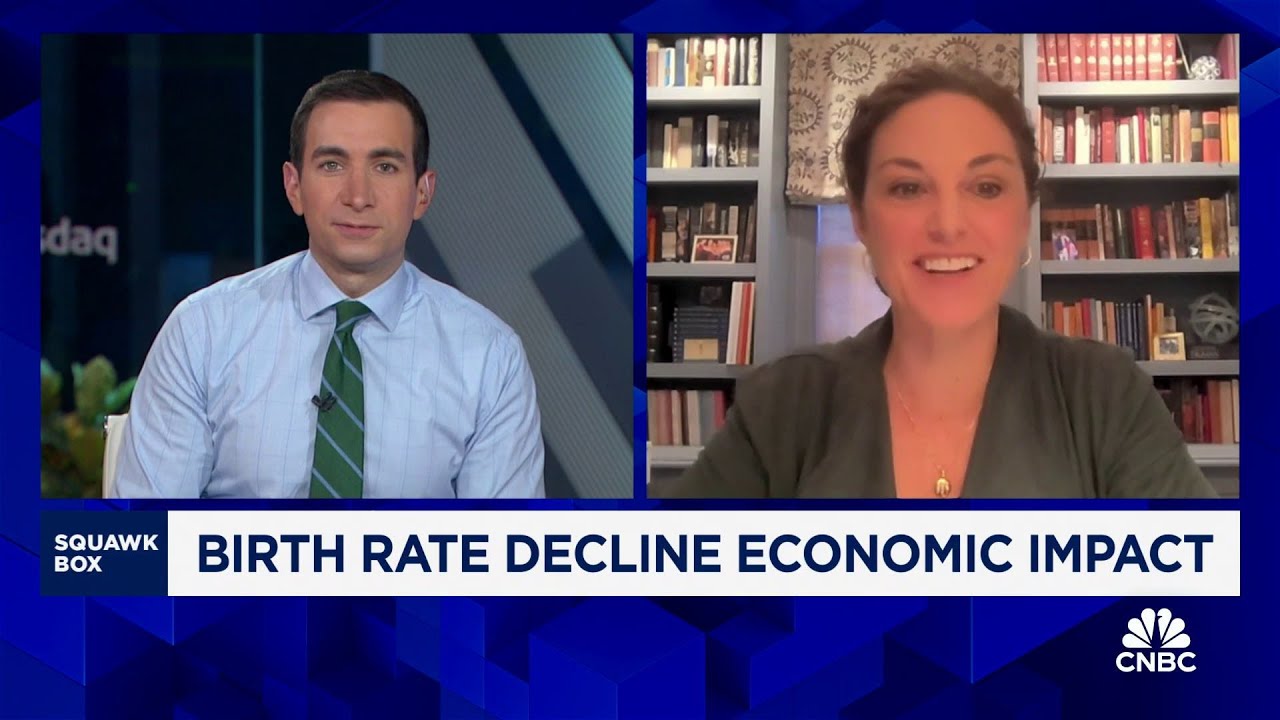
It even makes the news in the U.S. financial media from time to time. Here is CNBC.
It even makes the news in the U.S. financial media from time to time. Here is CNBC.
Here are examples of fertility rates. The fertility rate should be 2.1 per woman for the population size to remain stable.
Nigeria 5.24
Tanzania 4.73
Kenya 3.34
Saudi Arabia 2.43
South Africa 2.37
India 2.03
France 1.83
Australia 1.70
Iran 1.69
USA 1.66
Brazil 1.64
Germany 1.58
Switzerland 1.52
Russia 1.49
Finland 1.46
Canada 1.43
Thailand 1.33
Poland 1.33
Japan 1.30
Taiwan 1.27
Italy 1.25
Spain 1.19
China 1.16
South Korea 0.81
For example, South Korea’s fertility rate was still around 6 in 1960, and now it is only about 0.8. A horrific collapse is coming there. The population of many countries will halve during this century. For instance China, where the fertility rate was also over 6 back in the 1960s. Population growth is still rapid in some African countries, but what is the benefit of so many people being born in a poor country like Nigeria?
So how to invest in such a world? In the value factor??
In South Korea, the birth rate has dropped even further very recently:
Sugar. It worked during the COVID crisis, and it works now. When gloom, economic recession, and population decline ruin the sentiment, a queue starts forming at neighbor Keijo’s door, as he sells the sugar needed for making refreshing summer drinks at a good price and makes a tidy profit.
The sugar stash in the sauna couldn’t care less about central bank interest rate moves or the shadow of an approaching major war.
Jeremy Siegel has researched the matter over a 200-year period and states that the return is 6.5-7%. The population pyramid has shifted quite significantly over 200 years, for example due to wars. Siegel has explained that returns are accounted for by, among other things, the P/E ratio and growth, and the current high valuation suggests a 5.5-6.5% return for the future. This doesn’t mean that FIRE practitioners will get that return because we don’t know where the price will be, for example, in a year or two, and what the valuation will be then. There is still “return to the mean” in the stock market, meaning high valuations, returns, and growth will eventually correct to normal levels.
Further examples of debt cycle research have been conducted by Ray Dalio and, for instance, Kondratiev. Kondratiev conducted a very distinguished study of cycles lasting approximately 50-60 years. In it, interest rates are low and interest rates are high. It consists of two weak 15-year periods in terms of returns and two good 15-year periods. One weak period is spring when interest rates peak, and the other is spring where interest rates hit bottom. I would be of the opinion that we are now more in that spring, and interest rates are on their way to their peak. Well, inflation will subside a bit and the economy will slow down, and central banks may lower interest rates a little, but during the cut, inflation will start to rear its head again. Spring is also marked by wars. There are wars in the Kondratiev cycles during spring and winter.
The Kondratiev cycle is in a way depressing; generations make the same mistakes time and time again. Kondratiev said back then that the economy would emerge from these stronger than ever, and that sealed his fate during the 1929 crash.
Well, now as an example, the war in Ukraine will end in time, and an unprecedented reconstruction will begin. Ukraine’s population has shrunk, but in time, when confidence is restored, growth will begin there and the economy will flourish. This will bring future returns for someone, be they a FIRE practitioner or another investor.
Siegel has studied the anomaly, i.e., the US stock market. It has performed exceptionally well. And for the last 200 years, we have had a massive population explosion:
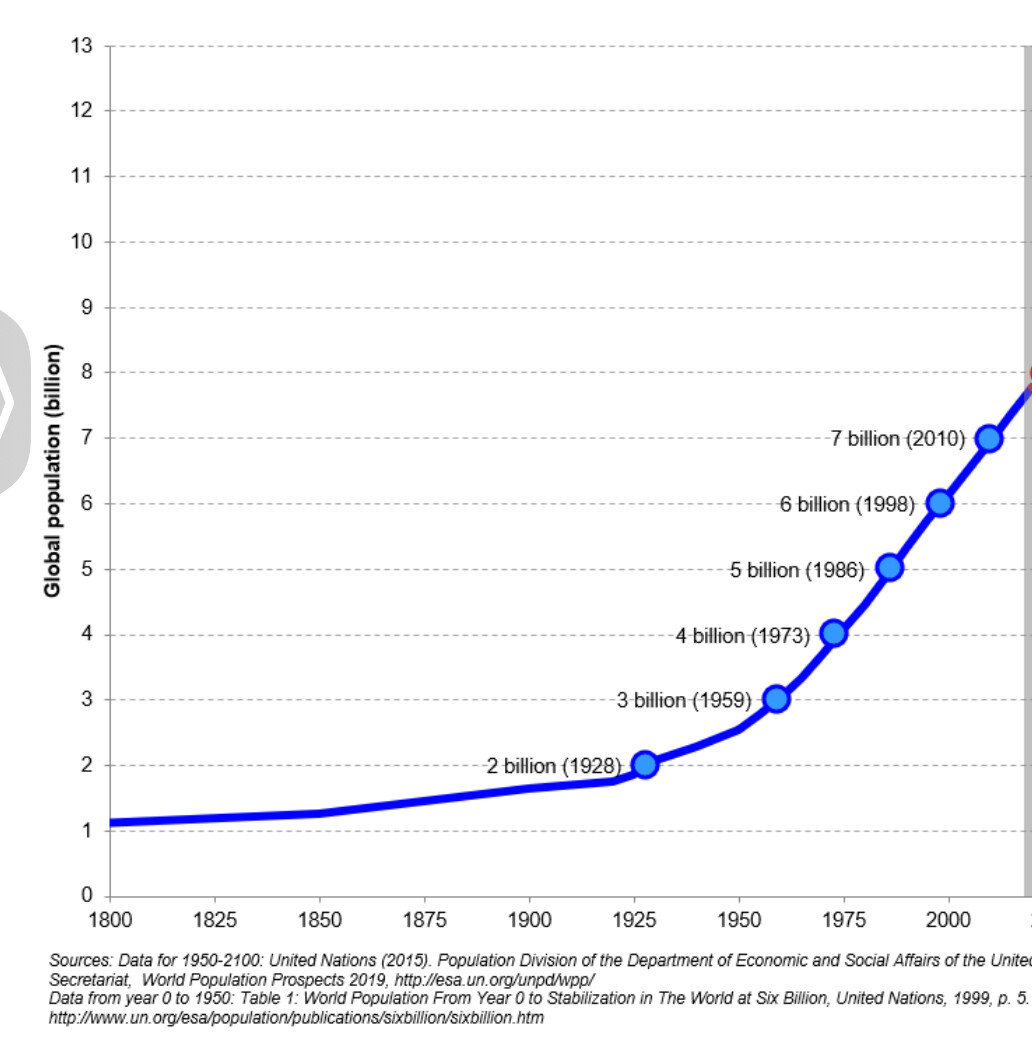
And wars may have temporarily slowed population growth slightly, but not in any significant way. And this is a very long-term trend. There is no end in sight for the population collapse.
Some good charts here:
https://www.visualcapitalist.com/when-will-the-global-population-reach-its-peak/
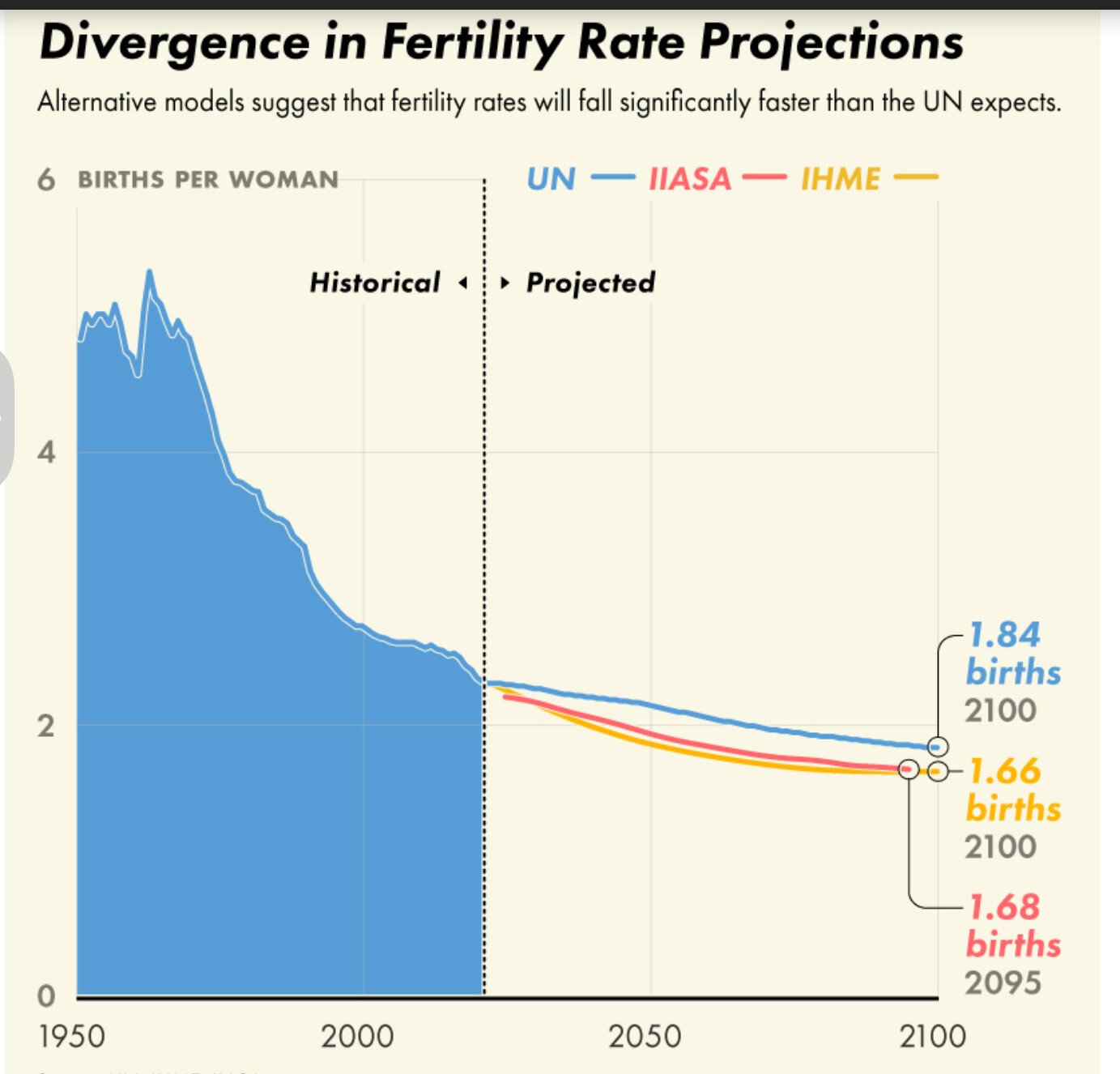
Why haven’t stock returns tripled when the population has tripled over the last 100 years?
As I recall, the impact of population growth on GDP growth is in the range of 40-50%. And indeed, stock market returns have been excellent for the last 40-50 years.
And globally, the population has never yet entered a long-term decline during the time that stock markets have existed.
The following statement was also found at that link:
Because of this economic transformation, some researchers believe that Africa will undergo a fast demographic transition similar to East Asia, in which population growth falls off sharply. For instance, a UNICEF survey from 2021 found that fertility rates in Nigeria had fallen from 5.8 to 4.6 (a 17% decrease) in just five years time.
Well, 40-50 years ago, there was a lot of talk that we were running out of oil, which would prevent the “normal return” on stocks. I also remember from my childhood claims that food wouldn’t be enough for everyone. If we go back 200 years to Siegel’s time, hydropower was used in the USA and steam power was the latest thing in England. But the ultimate investment should have been food, given how the population has grown, yet it has been a poor investment for the last 100 years. Why? Low margins and a lack of specialized expertise. Of course, there are stocks in the sector that have yielded excellent returns, such as Deere.
You are probably right that population growth explains a large part of GDP growth. The Oracle of Omaha might have said that the economy grows roughly at the pace of GDP, but that doesn’t explain it entirely. The economy and the stock market have a wonderful ability to adapt to the prevailing situation. I myself have been of the opinion for almost the entire 2000s that the stock market cannot yield average returns. My own view is that some markets yield a bit more and some a bit less. This is largely a matter of certain markets doing exactly as Kondratieff expressed—making the same mistakes over and over again. As an example, Russia/the Soviet Union starts wars according to those Kondratieff 15-year cycles and its economy collapses time and time again; despite the country having great natural resources, it cannot make its economy flourish or achieve long-term stock market returns and wealth. But when it comes to ETF investing, broad ETFs pick up whatever the economic engine of the time happens to be. Returning to the start, after the “running out of oil” era mentioned at the beginning of my post, oil companies were the giants of the index. If one were to draw a conclusion from your prediction, then fertility clinics or baby-making facilities will be the giants of the index in ten years.
We have never before seen what happens when the population continues to decline decade after decade. Walking through the city, you see few children, but far more elderly people. Year after year, consumption continues to fall, and the working-age population must shoulder an increasingly heavy burden in the form of the elderly. Children are the future. If no children are born, there is no future.
Here is a new Wall Street Journal article:
https://www.wsj.com/world/birthrates-global-decline-cause-ddaf8be2
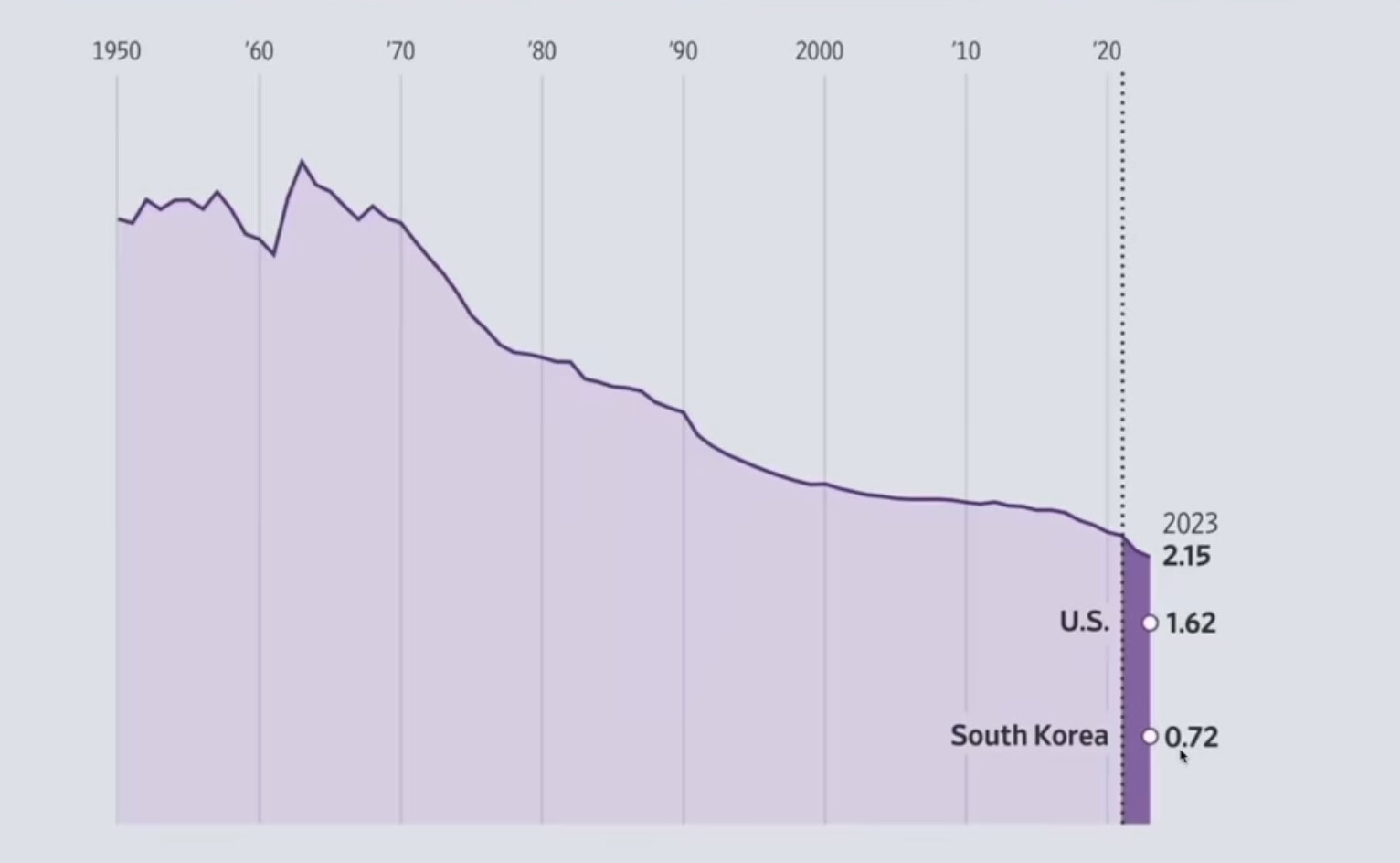
”The world is at a startling demographic milestone. Sometime soon, the global fertility rate will drop below the point needed to keep population constant. It may have already happened.”
And here is a discussion about that news:
So apparently the global fertility rate is now around 2.15. Soon we’ll already be heading below the replacement level.
Billionaire Elon Musk tweeted, not for the first time, that ”population collapse due to low birth rates is a much bigger risk to civilization than global warming .”
Ukraine’s population was among the fastest-shrinking in the world even before the war, and now there was an estimate somewhere that nearly half of Ukrainian children are living outside of Ukraine. They are at the start of their lives in their new home countries.
It’s hard to see how it would suddenly turn to growth from these starting points. Will the inhabitants be brought there from Africa?
People nowadays don’t want many children. Since the invention of the contraceptive pill, accidental pregnancies have also decreased. By the time women have their education and a suitable career rise behind them, they can no longer even have many children due to their age. It is also difficult for educated women to find a suitable father candidate, as they will only accept an equally educated/successful man. Additionally, mortgages, student loans, etc., mean that it is not worth having many children.