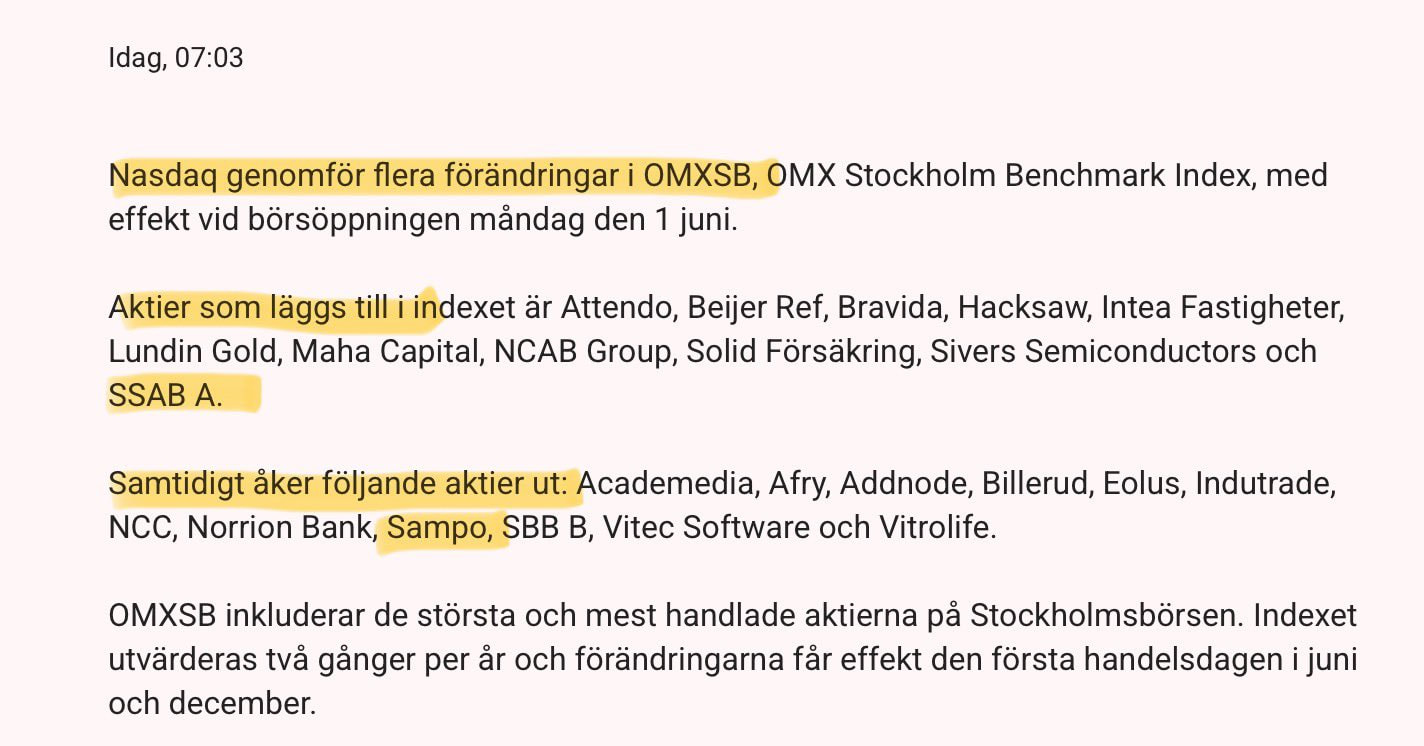
Teräsyhtiö SSAB :n tytäryhtiön Tibnorin joulukuussa 2025 Ovakon kanssa allekirjoittama sopimus Ovako Metals Oy:n, Suomen jakeluyksikön, hankinnasta on saanut kilpailuviranomaisten hyväksynnän, SSAB tiedottaa.
Ovako Metals varastoi, jalostaa ja jakelee terästä ja metalleja konepaja-, prosessi- ja rakennusteollisuudelle pääasiassa Suomessa. Yhtiöllä on noin 40 työntekijää ja sen liikevaihto oli 40 miljoonaa euroa vuonna 2024.
Hankinnan myötä Tibnor ottaa haltuunsa Ovako Metalsin jakelutoiminnot Suomessa, mukaan lukien tuotevalikoiman, logistiikka- ja varastointipalvelut, jalostuspalvelut sekä paikalliset myyntiorganisaatiot.
Olen yllättynyt jos kurssi droppaa. Menee miten tahansa tänään, niin vakaata tekemistä, jota toki odotettiin (kurssi ja ennusteet).
Isossa kuvassa vakuuttavaa tekemistä SSABlta jo vuosikausia. Seuraava tasonnosto kurssissa tullee muutaman vuoden päästä, jos sek 23mrd ebitda-tavoite/-ohjeistus alkaa näyttämään realistiselta. Tälle vuotta käyttökatetta odotetaan noin sek 13mrd. Itse uskon tavoitteeseen, eiköhän se markkinakin ala uskomaan jossain kohtaa, jos näytöt pysyvät tällä tasolla.
Tässä on SalkunRakentajan juttu SSAB:sta, jonka lukee muutamissa minuuteissa.
Yhdysvaltain teräsmarkkina on kiristynyt nopeasti. Donald Trumpin hallinnon tullit ovat painaneet tuontivolyymit alas, ja jakelijoiden varastot ehtyvät. Toimitusajat venyvät, ja paikalliset valssaajat ovat saaneet hinnoitteluunsa pelivaraa.
Teräksen hinta on toipunut viime syksyn notkahduksesta, ja tarjonnan niukkuus pitää nousupainetta yllä.
Yli 1,5 kk kului, ja todettiin että on ollut samaan aikaan pölyistä, kuivaa ja kröhäaikaa.
=> työmaan portit voi jälleen avata
Yksityiskohtainen analyysi viittaa siihen, että oireet johtuivat pääasiassa altistumisesta hienojakoisille pölyhiukkasille, ja vaikutuksia pahensivat alhainen ilmankosteus sekä kausiluonteisten hengitystievirusten esiintyminen.
Oireet ovat syntyneet useiden tekijöiden yhteisvaikutuksesta, jossa myös sääolosuhteet, kuten kylmyys ja tuuli, ovat edistäneet pölyn leviämistä ja lisänneet hengitysteiden herkkyyttä. Pölypitoisuudet ovat olleet tällaiselle työpaikalle tyypillisellä tasolla, eivät kohonneita tai myrkyllisiä.
Q2-raportti ulkona: aika odotettu, perusvarma, hyvä suoritus.
Nyt on epsiä kasassa 3,69, mutta samanlaisena ei meno jatku (Q3 ja Q4 huollot). Oma arvaus on, että jonnekin 7:n pintaan päädytään. Siitä tasaluku 3 sek osinko ensi keväänä.
Vaikuttaa puksuttavan edelleen raiteillaan, ja taustalla palaan aina 2030 käyttökateohjeistukseen: 23mrd SEK. Se on karkeasti tuplat siihen, mitä tänä vuonna tullee.
Tuolla tasolla EPS voisi olla n. 13SEK, mutta hyväksyttäviä kertoimia on vaikeampi arvailla. Tuossa oma karkea odotus. Riskejä molempiin suuntiin toki on.
Outokummun tavoitehintaa nosti tänään JP Morgan; nyt vähän vastaavaa SSAB:lle Bank of America. Klo 14.41 Finwire uutisoi (hieman tarkistamani AI-käännös ruotsinkielisestä uutisesta):
BofA nostaa ennustetta Euroopan teräksen hinnoista - nostaa SSAB:n tavoitehintaa
Bank of America nostaa ennustettaan kuumavalssatun levymetallin (HRC) Euroopan hintakehityksestä ja odottaa nyt keskimäärin 775 euroa tonnilta vuonna 2027 aiemman 730 euron sijaan. Hinnan odotetaan nousevan noin 750 euroon tonnilta vuoden 2026 loppuun mennessä. Tämä perustuu BofA:n analyysiin.
Pankki arvioi, että noin 730 euroa tonnilta muodostaa uuden hintapohjan eurooppalaiselle teräkselle, kun taas 800–850 euroa pidetään kattona, jossa tuonnista tulee jälleen kilpailukykyisempää. Korkeammat hintaennusteet johtavat useiden eurooppalaisten teräsyhtiöiden voittoennusteiden kasvuun.
SSAB:n oikaistun käyttökatteen ennustetta vuodelle 2027 nostetaan 4 prosenttia 18,2 miljardiin Ruotsin kruunuun, mikä on 6 prosenttia konsensusennustetta korkeampi. Vuoden 2028 ennustetta nostetaan 6 prosenttia 18,1 miljardiin Ruotsin kruunuun. BofA nostaa tavoitehinnan 120:een (107) kruunuun [120 SEK = n. 10,94 eur], mutta pitää edelleen neutraalin arvion. Pankki näkee tukea Euroopan teräksen hintojen noususta ja Yhdysvaltojen levyteollisuuden elpymisestä, mutta uskoo, että arvostus on suhteellisen täysi ja viittaa SSAB:n uudelleenjärjestelyinvestointeihin liittyviin riskeihin ja jatkuvaan kassavirtapaineeseen.