Smart Wires Technology Ltd – electricity grid optimization solutions

I came across this promising company, listed in Sweden in May, when a few people were following Nomad Invest (recommended reading) with it. I decided to quickly familiarize myself with the company and, at the same time, open a thread for those interested. Below is a brief introduction to the company after a couple of hours of research.

Company Business

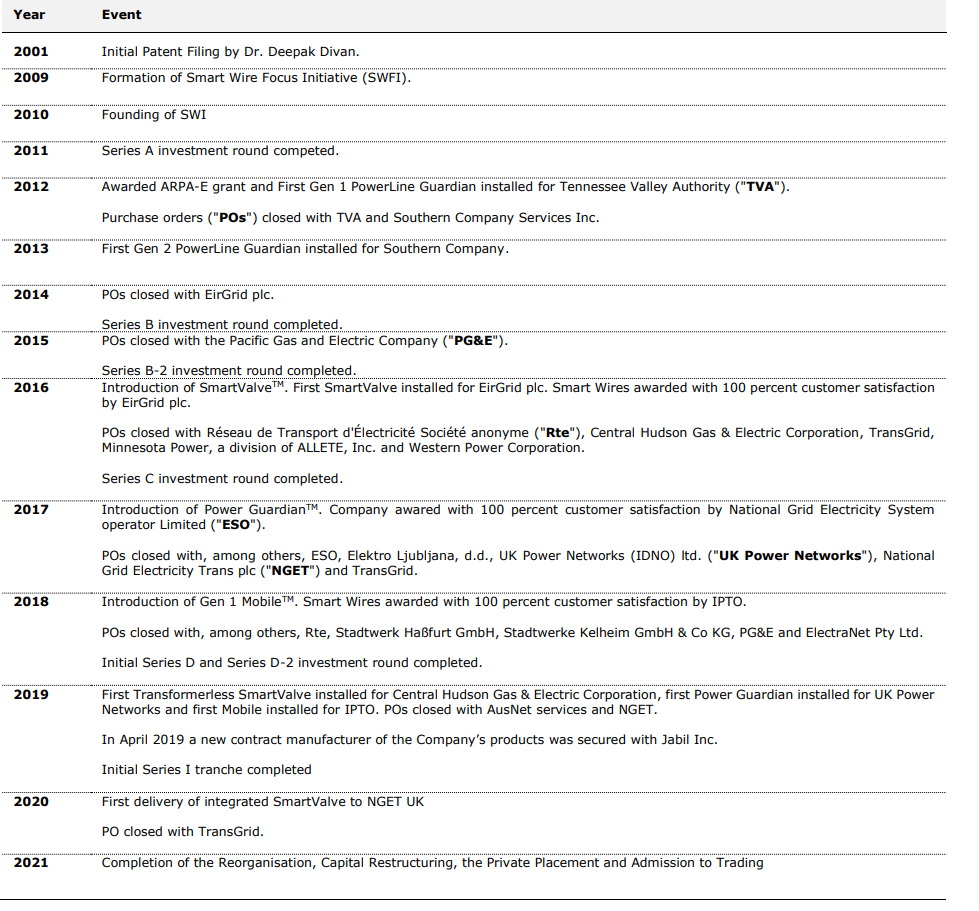
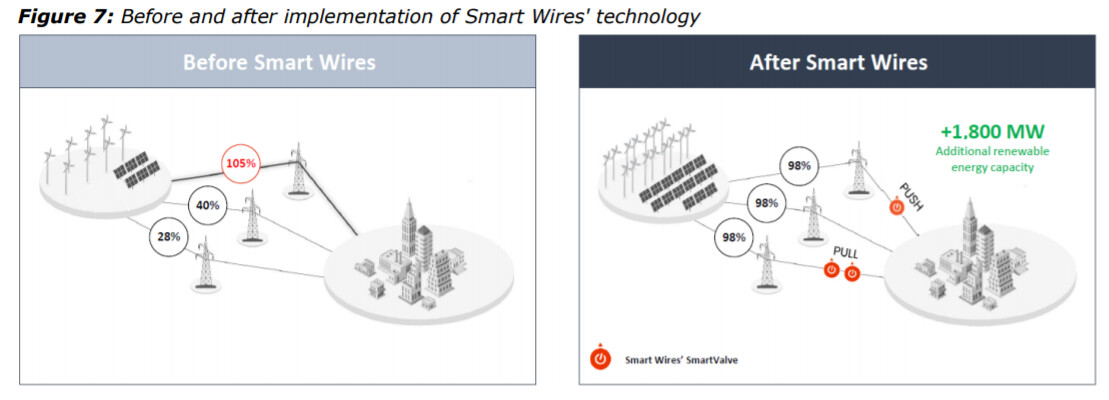
Smart Wires was founded a little over ten years ago, initially operating mainly in the US, but in recent years, it has expanded to include Europe, Australia, and South America. Smart Wires specializes in electricity grid optimization solutions, as stated in the title, and its main product is a current management module called SmartValve (“MPFC,” modular power flow control), which it primarily offers to power utilities. The goal of these modules is to better utilize current electricity grids by directing electricity from areas of oversupply to areas of undersupply. The modules are installed directly into the existing electricity grid and are quite rapidly movable. The image below illustrates the logic of the modules well.
The company’s business includes the sale of these modules and installation services. Historically, equipment sales have accounted for 90% of revenue, and installation/consulting, etc., has been approximately 10% of revenue. In the future, according to the company, the revenue mix will change, and the share of installation/maintenance/licensing, etc., will increase. To date, the largest single contract has been signed with the British National Grid, and the estimated size of the contract is $36M. This covers the equipping of five National Grid substations with SmartValve products.

Markets and Competition

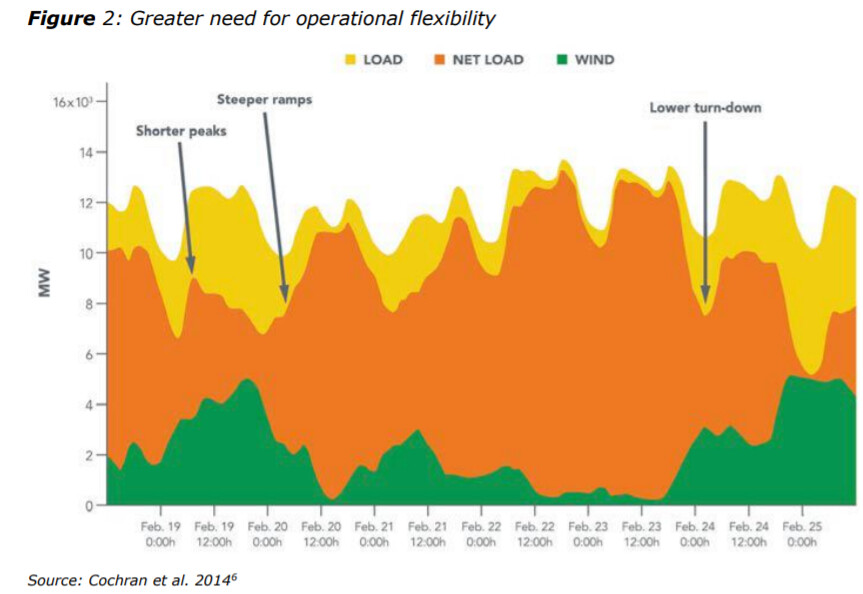
The electricity market is currently undergoing a major transformation, as renewable energy sources are rapidly replacing old fossil forms, while the total demand for electricity is also growing. However, old electricity grids are not efficient or adaptable enough for future needs, and the International Energy Agency (IEA) estimates that by 2030, 47% of sector investments will be directed precisely at modernizing electricity grids. Electricity produced from renewable energy adds more problems to this equation because, in addition to the large differences in electricity demand throughout the day and year, renewable energy production itself fluctuates seasonally. This requires even greater adaptability of the electricity grid to different demand situations.
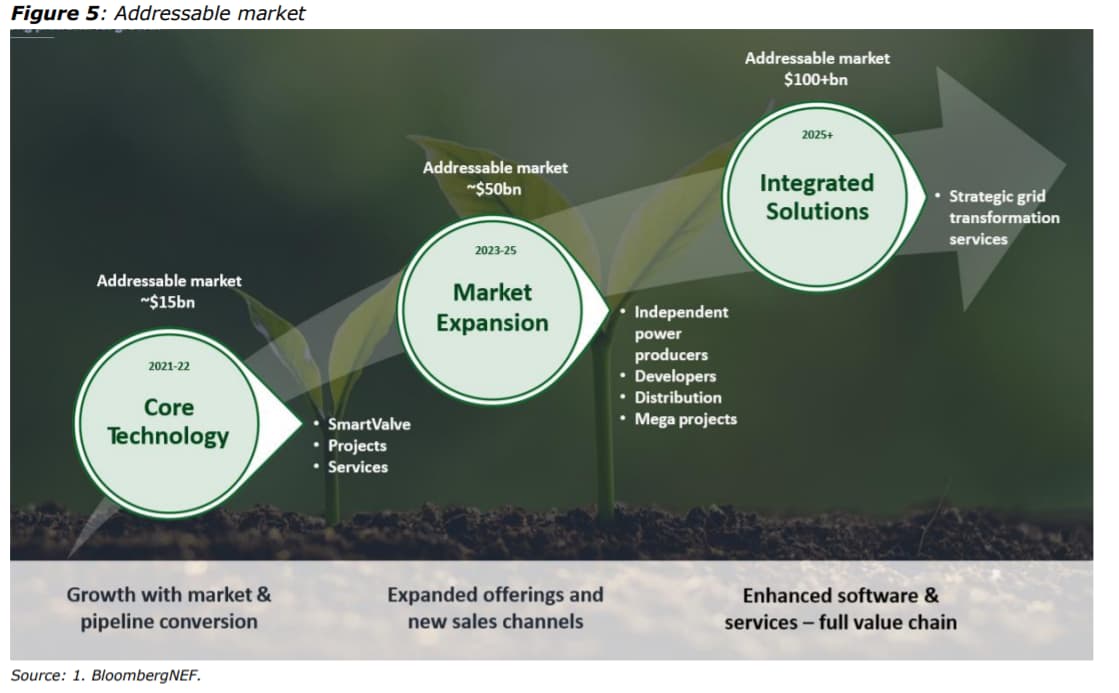
According to Bloomberg, the size of the electricity grid market is expected to grow from $250B in 2020 to approximately $360B in 2030. In the long term (2050), the market size is predicted to exceed $600B. Of this market, Smart Wires’ TAM is currently approximately $15B. The image below shows their own forecasts for TAM growth in the future.
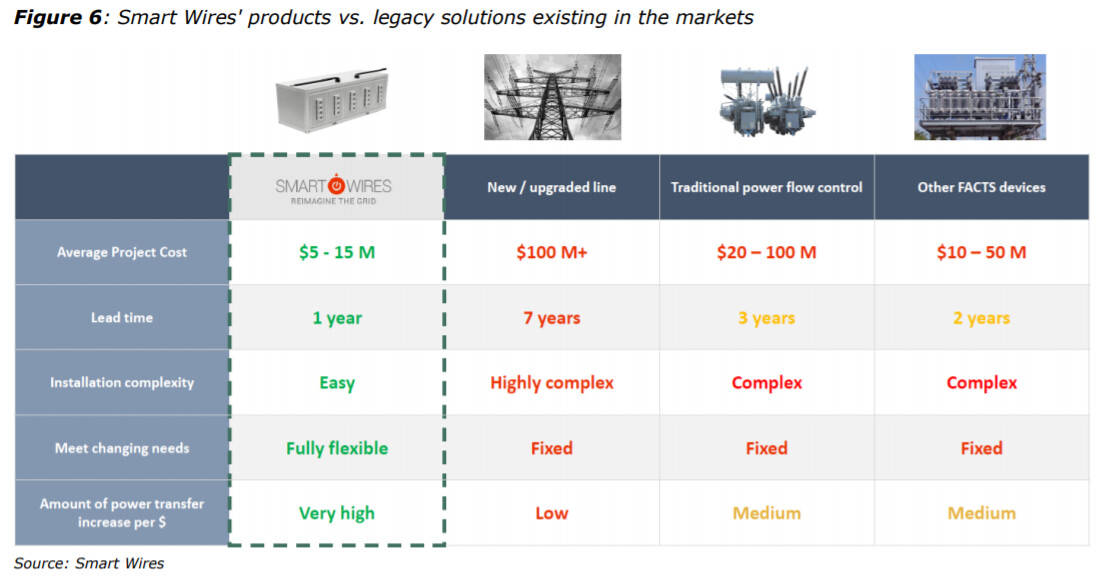
According to Smart Wires itself, they have a unique product that is, for example, more efficient, cheaper, and uses more modern technology than its competitors. Below is a brief comparison between Smart Wires and other existing products, which suggests Smart Wires would have a significant competitive advantage:
Financial Figures and Targets

The company is still in its early stages and only accelerating its sales, so there is probably not much to wonder about in the figures from previous years; everything depends on the future. However, in 2021, the company is already targeting $50M in revenue (2020: $15.4M), of which $12.2M (2020: $1.8M) was achieved in the first quarter. At the end of Q1/2021, Smart Wires had a $44M backlog and the entire “pipeline” was valued at two billion. Nomad’s blog mentioned that Smart Wires is targeting a pipeline of up to 12 billion for 2025, but I myself was unable to find a source for this (clearly a bad googler).

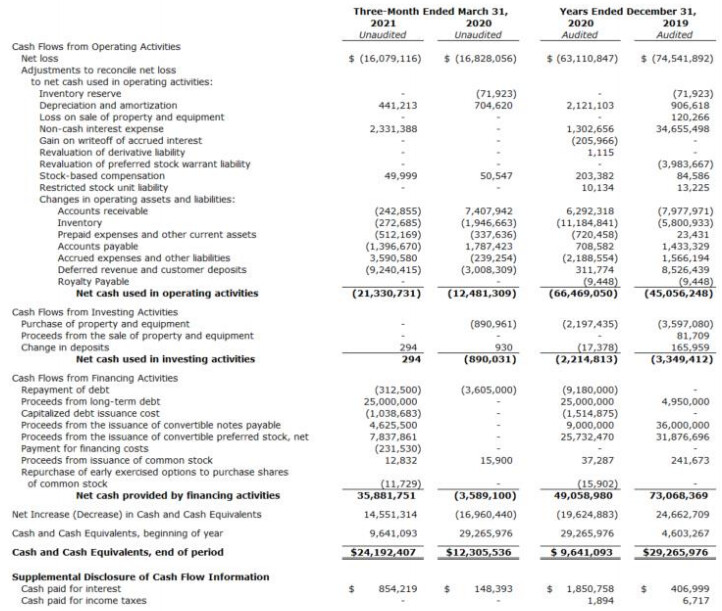
At the end of the first quarter, Smart Wires’ cash reserves were approximately $24M, and the company’s debts were approximately $49M. However, after this, a directed issue of over $100M was carried out in connection with the IPO (issue price 41.5SEK, current share price 40SEK). On August 19, the first quarterly review after the listing will be released, which will provide a better picture of the company’s current financial situation and sales development. The company is currently burning quite a lot of cash, but those funds should be sufficient for at least a couple of years now. And the company certainly aims to turn profitable in the meantime.

The company has classified the following as medium-term financial targets:

  • Approximately $700M in revenue
  • Gross margin over 50%
  • EBITDA over 20%

To get a better understanding of the current valuation, the company’s market capitalization is currently approximately $450M. For 2023, one analyst has predicted $220M in sales and approximately 13% EBITDA. The 2023 P/E would be around 22 with these forecasts.

Summary

SmartWires is an attractive early-stage player in an industry where the transition to renewable energy creates significant business opportunities. The company’s product appears to be competitive, and it has already won several contracts. Of course, such early-stage companies are not without risks, but if everything goes well, there is enormous potential.

I do not own shares in the company myself but may take a position in the near future.

Annual Report 2020
Prospectus (119 pages)

As a small side note, the publicly listed company is a holding company registered in the British Virgin Islands. Therefore (unless I am mistaken), any dividends distributed in the future would be treated as earned income. However, in the case of this company, it will certainly take years, so it probably doesn’t matter that much now.

80 Likes
10 Likes

Kappas, additional sales to an existing customer :+1: How are revenues generally recognized in the industry? “will be delivered to NGET in 2022” - so will it be recognized in next year’s revenue or this year’s?
“There are no stupid questions, there’s just stupid people who ask questions.” - M. Garrison

2 Likes

Why is the stock price falling after the trade?

It looks like the selling side is the handiwork of the two larger owners. Even though the sales are targeted precisely at the time of this announcement, I personally don’t find anything negative about it at first glance :slight_smile:

5 Likes

This company could also be put on light watch. I haven’t had time to read about the company’s technology yet, but…

I really need to look into presentations if there are any, but the quoted part sounds strange at first glance. Apparently, the main product is some kind of equipment/component that would enable the optimization of transmission capacity? This doesn’t really bring to mind any other possibilities than various compensation methods (series and parallel compensators), of which SSSC-type or STATCOM-type would probably be current, but there is certainly plenty of competition on this front from big players (Siemens, ABB…).

In practice, this would involve adjusting the reactance of the transmission link (e.g., in the case of SSSC, a series-connected compensating voltage with phase shift) to be smaller or larger, which affects, among other things, voltage stability and enables the reduction of reactive power transfer. This theoretically results in a “wider bandwidth” for the connection, allowing more active power to be transmitted.

Another option would be parallel compensation, which aims for the same goal in this case, but the compensators would be in parallel with the grid and practically generate or consume reactive power, meaning they also participate in voltage stability and affect the total transmission capacity through the reactive power transferred.

Roughly speaking, it comes to mind that one should be able to calculate the profitability of investments and estimate the future price development for the equipment. There are already many types of equipment, from which grid companies (apparently “power utilities” in the quoted message referred to these?) choose the most cost-effective ones. This is also influenced by whether other benefits brought by “fancy” equipment are needed, e.g., from the perspective of power quality management.

These are probably aimed at large grid operators anyway, as the impact on reactance generally becomes emphasized only at higher voltage levels, and not, for example, in urban distribution networks, let alone low-voltage networks. This leads back to the point that distributed generation is quite, well, distributed throughout the networks, and not just in HV networks, even if individual plants are larger there. In this case, the development or improvement of transmission links is also dispersed among different operators, and for example in Finland, operators may not have the willingness or even the need for such solutions.

In Finland, these issues have been considered in the main grid for northern transmission solutions, but perhaps more as temporary solutions for actual transmission links. Currently, transmission is enabled by four 400 kV power lines, in addition to which one new line is under construction. The transmission capacity of existing lines is currently being improved specifically by means of parallel compensation. This solution has been chosen precisely for cost-effectiveness, i.e., by selecting the use of inexpensive components. Have more expensive SSSC solutions been considered here? Certainly. But why have they not been chosen? Money.

It would be good and necessary to know the different market areas, through which one can try to reflect the potential of the technology in question, and in addition, the other market offerings, i.e., competition. Renewable energy certainly adds spice to this sector.

I will try to familiarize myself with the company’s technology and solutions at some point and see if there is anything new and competitive there. If someone has already looked into it, please comment.

Fingrid stated in its report:

“The study concluded with mechanically switchable parallel compensation, which is based on simpler technology and more efficient use of existing equipment. The solution is even 20 times cheaper than modern power electronics-based parallel compensation”

15 Likes

My expertise isn’t sufficient to comment on precisely how “unprecedented” Smart Wires’ technology is, but here’s a quote from the Prospectus: “Smart Wires’ Smart Valve products are modular (non-fixed) SSSC devices installed at line voltage in series with line/cable.”

So, in response to your thoughts, the Smart Valve would be a mobile series compensator (?).

Yes, I quickly looked into it, and it is indeed an SSSC, a static synchronous series compensator. These are already on the market, and there’s nothing new about them (they’ve probably been around since the early 2000s, at least by the end of it). They’ve been available for a long time, but different companies have naturally developed them further as power electronics prices and development have leaped far from the early days. In other words, prices have reached reasonable levels, even as the technology improves and addresses various applications more significantly.

SmartValve’s apparent focus now is modularity and scalability. They have developed equipment that is available in various scalable size categories (even in terms of electrical parameters). I would be interested in knowing more about the cost aspect; otherwise, it’s just “nice new technology in a new size class, etc.,” which makes it hard to reflect on the current market situation. The assumption is that equipment prices will continue to fall, and there’s more than enough competition. How much of their revenue currently remains as profit, and what are the near-future prospects? I’m not immediately overly excited about applications in that field, as it seems there are plenty of players. Being acquired by another company could be a nice outcome in such a case.

edit: Here’s a nutshell of the company’s progress.

Net losses of $74M in 2019 and $63M in 2020.
Cash on hand was $29M in 2019, which was $9M after 2020.
Between those, anti-dilution arrangements were made, and after Q1 2021, it would have been $23M.

They desperately need new money, or they won’t even cover development costs. Only a few products have actually been installed and sold, so they are quite expensive, as equipment revenue was around $8M in 2019 and $6.5M in 2020.

8 Likes

It’s worth reading the original post. A large share issue was made in connection with the listing, which is not yet reflected in the Q1 figures (text added at the end). In addition, there is an image showing the FACTS project cost to be $5-15M. I recall calculating that the revenue obtained so far would have been slightly less. I can’t quickly remember what I based that on. However, you can certainly better assess the expensiveness of the device compared to competitors… the same image claims other FACTS device project costs to be $10-50M.

Well, if the IPO funds weren’t reflected in the figures yet, then the cash situation might be better. However, where did they get the money after Q4 2020, as there was a significant increase by the Q1 2021 report, and it didn’t come from operations because they’ve only burned cash until now. I can’t look at the numbers more closely right now, but it might be found in those screenshots where the numbers are visible; I haven’t had time to read the detailed explanations, and I might not get to it very soon.

“In February 2021, the Company entered into a new loan agreement with an existing lender
for an additional credit facility of $25,000,000 in gross proceeds and with maturity date of
January 2023.”

That explains the money that increased the cash balance. It also appears in the cash flow statement under “Proceeds from long-term debt”.

1 Like

Strong growth continues
• First trading day on the Nasdaq First North Growth Market on 18 May 2021• Qualified pipeline increased to $2.3 billion
• Revenue of $10.2 million, +445%
• Gross loss of $0.5 million, +85% improvement; negative margin of 5%, +162% improvement
• EBITDA loss of $15.3 million; negative margin of 150%, + 567% improvement
• Fully diluted loss per share of $0.16, +50% improvement
• Orders between $15 million to $17 million received in August 2021 for projects with an existing customer
• Three patents approved and four new patent applications filed
• Completed delivery and commissioning of SmartValveTM projects across seven customer sites in H1 2021
• Added 17 new positions and strengthened Leadership team with 5 new appointments
• Announced 2022 HQ move to Research Triangle Park in North Carolina with State and County incentives (August)

5 Likes

Nothing special in the report, flat compared to the previous quarter (except for slightly increased expenses). All debts were paid off, and there’s now about $110M in cash. At this burn rate, it’ll probably last a couple of years, but hopefully, new contracts will be signed so the business can actually generate something someday. The pipeline has been raised to $2.3B (was $2.025B at the end of Q1) and targets three billion by year-end. I don’t know what their “pipeline of qualified high probability deals” is like. The current total backlog wasn’t mentioned, but it’s probably around $50M.

2 Likes

Yeah, the backlog is in the 50 million USD range. From my perspective, the question isn’t whether the product is competitive or if there’s a huge demand for it, but rather how quickly a very conservative industry (power grid companies), which doesn’t always have incentives to be as efficient as possible, adopts these solutions. If slowly, owning the stock won’t be nearly as enjoyable as if things pick up speed.

I somewhat disagree with previous comments that there is direct competition for the product in exactly what it does in this price and size category. Competition is more in the category of new transmission capacity and electricity storage solutions. I’ve asked employees of competing companies for their views on this. Finland is not one of the best markets; instead, the interesting ones are power grids with dozens of bottlenecks.

However, orders should reach 20-30 million USD per quarter fairly quickly and then rise even higher next year. There’s probably a ketchup bottle effect at play here. But the biggest risk is how quickly orders come in, because costs are already quite high. I don’t think anyone knows the pace at which we will progress.

21 Likes

SMART WIRES RECEIVES ORDER OF $23 - 20 MILLION DOLLARS FROM ISA TRANSELCA FOR PROJECT IN COLOMBIA

FRI, SEP 10, 2021 22:20 CET

Smart Wires Technology Ltd (“Smart Wires”) has received a Purchase Order from ISA Transelca for a grid expansion project in the Guajira – Cesar – Magdalena (GCM) region: FACTS devices to be installed in the Guajira – Santa Marta and Termocol (Bonda) – Santa Marta 220 kV circuits referenced in the Plan de Expansión de Referencia de Generación Transmisión 2020 – 2034 issued by the national planning agency (Unidad de Planeación Minero Energética) of the Energy and Mines Ministry in Colombia. The order will have a net revenue of approximately $23.3 – 20.0 million dollars and with energization date on Q3 2022.


Great to see new contracts being announced! :partying_face:

10 Likes

TRANSFORMATIONAL POWER FLOW CONTROL TECHNOLOGY UNLOCKS CROSS-BORDER ELECTRICITY CAPACITY IN SOUTHEASTERN EUROPE

https://news.cision.com/smart-wires/r/transformational-power-flow-control-technology-unlocks-cross-border-electricity-capacity-in-southeas,c3437013

The product should be fine. The question is how tight the ketchup bottle is regarding the order backlog :thinking:

6 Likes

Smart Wires Q3 out:

The Company’s Key Business Events and Metrics for Q3 2021 include:

  • Qualified pipeline increased to $5B, new opportunities identified in existing markets

  • Revenue of $5.9M, +68%

  • Gross margin of 12%, +83 ppt improvement

  • EBITDA loss of $15.1M, $1.9M incremental loss driven by business investments

  • Fully diluted loss per share of $0.14, +54% improvement

  • 2021 full year revenue guidance of $38M - $42M

  • Backlog of $72M to be delivered Q4 2021 - Q4 2022

  • Orders between $36M to $42M received for projects in Colombia and the UK

  • Five patents issued, total of 59 patents granted for high value inventions

  • Completed delivery and commissioning of SmartValve™ projects across nine customer sites as of Q3 2021

Quarterly revenue was a disappointment; Marketscreener’s one analyst estimate (Pareto?) was $12M, meaning they only reached halfway. EBITDA was slightly below the -$14M estimate. Previously, the revenue target for this year was $50M, but it was lowered to $38-$42M due to the weak quarter. For the last quarter, revenue of approximately $10-$14M is expected, which should be in line with expectations. Currently, the backlog for next year seems to be around $60M. Oh, and the pipeline almost doubled to $5 billion. The pipeline indeed includes all possible projects where Smart’s products could fit and where some preliminary negotiations have taken place.

So, as is often the case with these growth promise companies, the goalpost is gradually being moved further away. However, a couple of orders have now come in, and hopefully, more orders will come in later this year.

11 Likes

Here is the Q3 presentation:

A few points after listening to it:

  • Slide six provides a good breakdown of SW’s reported pipeline. Most of the pipeline addition came from the “Identified opportunity” section, which was added to the pipeline. These are only identified opportunities where SW’s products could be suitable, but no preliminary discussions have taken place yet. However, according to the CEO, they wanted to add this because they believe it better reflects the Total Addressable Market (TAM). If realized, most of these (75%) would materialize by 2027. The US accounts for 59%, Europe for 38%. Opportunities exist in Asia, but they haven’t properly focused there yet (excluding Australia), so it accounts for the remaining 3-4%.

  • Approximately 4% of this pipeline, or $200M, is in the “Advantaged” stage, which has a relatively high probability of converting into an order backlog. The “Advantaged” portion includes situations where SW has not (yet) won a bid but has received feedback that they are in a strong position, if not already the primary choice.

  • One project (value >$10M) shifted to next year, which primarily led to this reduction in the FY2021 guidance. It’s also possible that some Q4 deliveries might shift to next year. The CEO mentioned that this would have been taken into account in the forecast, but immediately in the next sentence, states that revenue might be below $35M? What? Why then guide for 38-42…?

  • In the Q&A, it was asked if the 2022 revenue equals the backlog, i.e., approximately $60M. The response was that they believe they will secure new contracts before the end of Q1, which could realize additional revenue for 2022. Generally, a rule of thumb of about 12 months can be used for revenue realization from an order, but there are shorter and longer cases.

  • Based on current modeling, break-even would occur in about two years. They need approximately $200M in revenue for this break-even, according to current information.

  • They are also in discussions with National Grid for additional contracts, which would materialize over a 2-3 year timeframe.

  • They aim for a gross margin of over 50% within the next 3-5 years. Probably closer to five years. As volume increases, capacity is available, so costs decrease relatively well. However, visibility is still uncertain, and currently, pricing power is low at the beginning, but they hope it improves as the product gains better awareness.

9 Likes

The discussion activity has waned with the stock’s performance. Has it come down with other growth companies, or has the belief in product adoption also dwindled?

1 Like

Yes, SW (Smart Eye) has also become part of this declining sentiment for growth companies. This spiral is naturally exacerbated by the lack of information regarding new contracts, which, if realized, would create more confidence in the company’s long-term potential. The company has a pretty high burn rate, if I remember correctly, so it would be important to secure more orders quickly. Currently, revenue is expected to grow by approximately $60M next year, which is a little over 50% growth. However, this is still quite far from the required break-even revenue ($200M). Currently, the market sentiment is one of anticipation, and hopefully, SW can better demonstrate its potential with contracts in the future. I personally sold my tracking stake around 33SEK and 25SEK. However, I am still following from the sidelines and truly hope for Smart Eye’s success.

2 Likes