Well. I think about this somewhat indirectly; if you look at what the ‘big boys’ are doing, for example, Google seems to have become somewhat interested in neutral atoms lately. They have, of course, been exploring superconducting qubits for a long time, so they’ve accumulated some insight there.
Google decides to study calculation based on cold atoms
They had already invested in QuEra in 2025. It’s still very intriguing. Does this mean that they encounter difficulties with superconducting qubits? To get into cold atoms, they have recruited a Colorado-based associate professor of quantum physics at JILA, Adam M. Kaufman. He collaborated with the cold atoms teams in Innsbruck including Hannes Pichler, whom I met there in July 2025.
source:
Apparently, Google is also switching from transmon qubits to fluxonium qubits:
There is a pattern here with three manufacturers abandoning a qubit sub-stream to buy a competitor from another sub-stream:
- IonQ/Oxford Ionics: we move from laser qubit control to microwave control.
- Google/Atlantic Quantum => from transmon to fluxonium, but this transition will take time.
- D-Wave/QCI: fluxonium to dual rail.
source:
IQM has also been busy with transmon qubits so far:
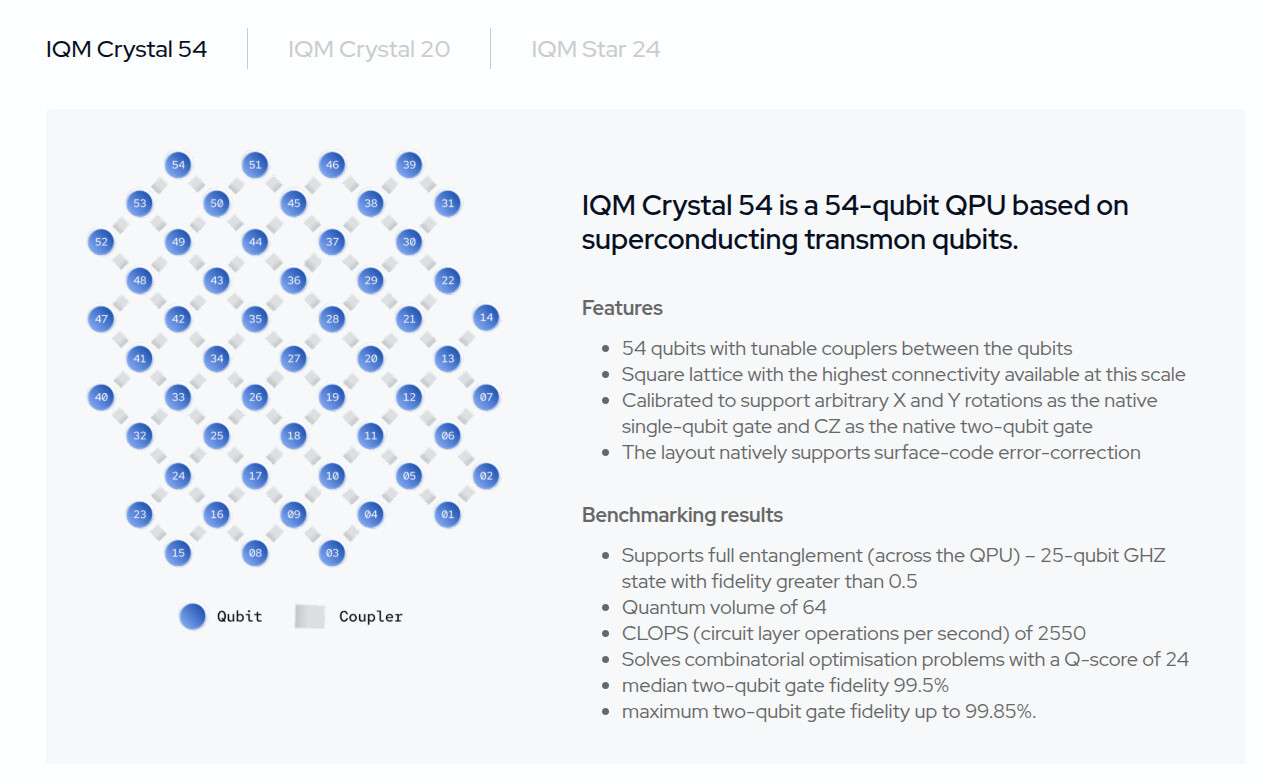
What does this mean in practice? Don’t ask me, I haven’t the foggiest idea. However, what I do know is that the fundamental problem with superconducting qubits will be in scaling up the number of qubits. They are fast, granted…
The ‘chandeliers’ will get muuuuch more complex and expensive in the future, which increases error sensitivity.
My own guess is that the winning technology won’t be found in superconducting qubits… (hardware price level, scalability, upgradability, size, etc.)