Many have probably been refueling around 38€… question: is it likely that Sampo’s earnings forecasts will come down in a weakening market situation where interest rate hikes have not been seen? Nordea, as a banking and wealth management player, is at least cyclical…
3 Likes
Sammon’s effective dividend yield has not been this high since the early 2000s, when the company was unwinding its overcapitalized balance sheet:
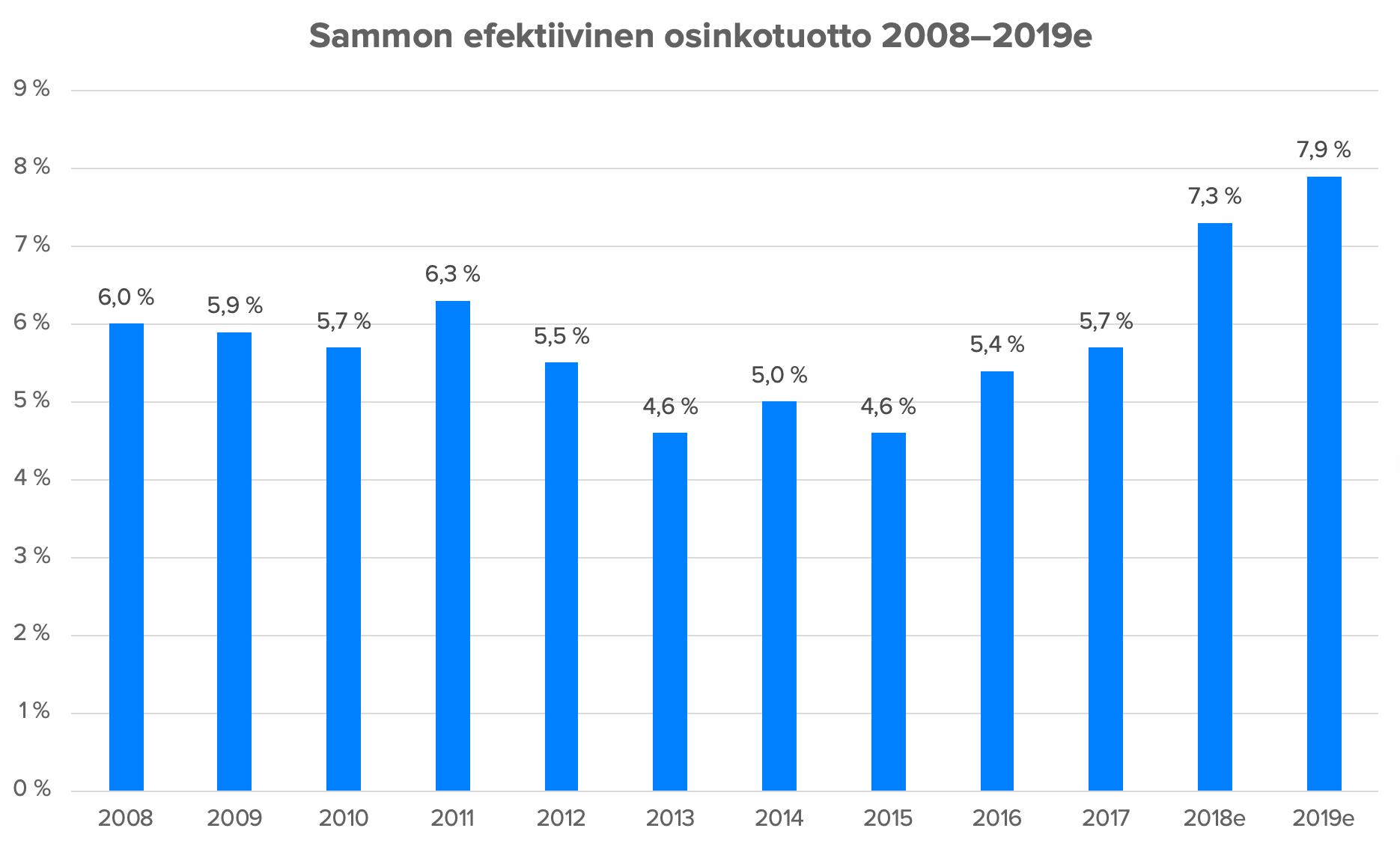
We’re already approaching the 8% mark if the forecasts hold true.
3 Likes
7.3% response. Close to eight in a year.
Same here. I think it was 38.04 to be exact. I’ve never owned Sampo before. I owned Nordea after the Brexit vote and sold it for just under 10 euros then.
I noticed Sampo has come down quite nicely and the dividend looks good for my goals and is hopefully quite stable.
Apparently, Sampo has pretty good cash reserves? It also sounded good that they seem to be waiting to buy something cheaper when the courses just drop.
This is a bit of dividend populism, as you honorably suspected yourself.
The stock price goes down but the dividend forecast doesn’t, so that’s a handsome percentage…
Of course, in spring -19, we’re looking at plump percentages compared to stock prices, but for many, the invested capital is more than the stock price.
2 Likes
Below is a direct quote from my own comment in the Facebook Stock Investing group, where we have a good Nordea thread going (worth checking out!).
“A few words about Cevian’s/Gardell’s involvement. 1) For Nordea owners, it’s a good thing that a guy of that caliber/track record sees value in Nordea. 2) Sampo, with a +20% ownership stake, is firmly in the driver’s seat, and Cevian cannot (and probably doesn’t want to) change this setup. 3) Cevian’s influence is based on cooperation with the main owner Sampo. 4) With Cevian, the owners’ toolkit doesn’t change; management change, strategy renewal, and structural arrangements are still options. 5) Cevian will certainly increase pressure for faster/larger measures. Sampo also hinted in this direction in Q3, with Stadigh stating his dissatisfaction/disappointment in a remarkably direct manner. All in all, it’s a good thing, but one shouldn’t expect Cevian to have a “silver bullet” that magically fixes things. However, it’s even more certain that something will happen.”
9 Likes
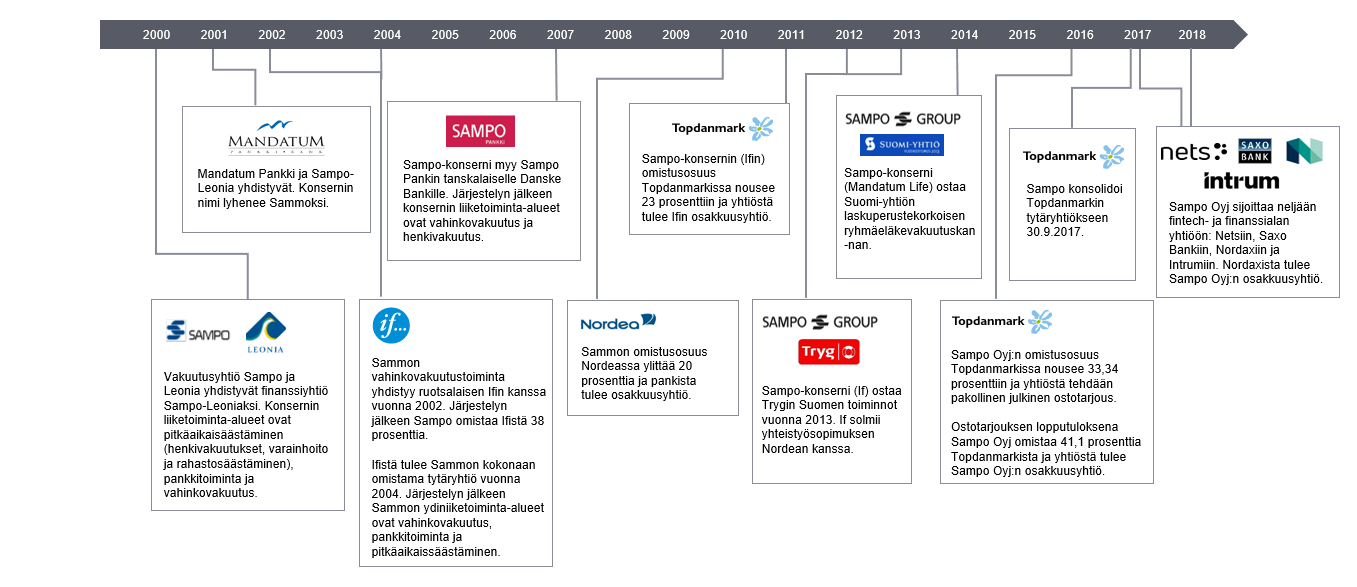
Now that the paper is at purchase prices, it’s good to add a short summary of Sampo’s arrangements in the 2000s:
Copyright Sampo Group
4 Likes
I linked this to the Nordea thread as well, but I’ll put it here too.
OP’s negative outlook for corporate banking:
OP Corporate Bank plc, acting as the second issuer of bonds for OP Group, is revising its outlook, estimating that the Group’s 2018 consolidated result will be significantly lower than anticipated, particularly due to the significantly weaker-than-expected performance of its subsidiary OP Insurance Ltd’s investment activities.
This reflects a difficult end to 2018 for all financial companies due to weak investment returns.
6 Likes
According to Nalle’s view, we’re currently experiencing a dead cat bounce in the market:
5 Likes
I’d say the majority did. However, an individual naturally doesn’t report results or “pay dividends” from their investment returns, unlike financial service companies.
Very difficult to say: share prices have indeed fallen sharply/more for companies more sensitive to market movements (Taaleri, Evli, Sampo) than for those less exposed (eQ, Titanium, Capman). Sauli certainly has a view on what’s priced in and what isn’t.  We’ll ultimately see when the results come out and the share prices react. I believe we noted in the last video that there’s still room for decline if the weak market situation continues and earnings start to erode.
3 Likes
Hi everyone, I have a question for @Sauli_Vilen about the sum of Sampo’s parts. In the extensive report, you’ve only provided the total sum of Sampo’s parts, but you haven’t itemized the valuations of the different parts concretely (other than at the MEUR level). I’m curious (if it’s possible to determine) what the concrete value of, for example, If, Mandatum, and Nordea is in your latest sum-of-parts calculation. I’m wondering if this can be broken down, or if there’s a reason why it hasn’t been itemized in more detail? Otherwise, as a long-term Sampo owner, your analyses are invaluable, so thank you for them!
2 Likes
Topdanmark’s Results
Proposed dividend 15 DKK / last year I think it was 19 DKK?
Results were okay, guidance was slightly below guidance. However, Topdanmark is a conservative guide, so no drama there. The dividend was fully expected; last year’s was exceptionally high. This clearly reflects Sampo’s desire to distribute maximum dividends from Topdanmark.
6 Likes
Sum of Sampo’s parts:
Nordea ~7bn (according to stock price)
Topdanmark ~1.8bn (according to stock price)
Mandatum 2.3bn (normalized earnings ~230m * 10x).
Investments from Sampo’s own balance sheet 2bn (includes e.g. Saxo, Nordax, Nets, Intrum & Asiakastieto)
If 10-13bn (depending on acceptable valuation, lower end conservative, upper end challenging valuation)
Q3 net debt -2.8bn
Total: 20-23bn or 36-41 euros per share.
If is naturally where investors/analysts have the most leeway, as shown by the rather large valuation range. However, If’s value within that range is starting to be at its “peak” and there is no room for expansion in the multiples. Earnings growth is also scarce in the coming years, and thus Nordea is the component whose share price development will also determine the development of Sampo’s sum of parts in the near future. Of course, M&A are always possible and these may change the situation.
As I have said in my analyses on several occasions, I consider it justified that Sampo is priced at a slight premium in relation to its sum of parts. This is due to the fact that the company’s parts balance each other’s risks, and together the earnings volatility of Sampo’s parts is exceptionally low. This exceptionally low earnings volatility and strong balance sheet enable a very predictable profit distribution => a higher acceptable valuation multiple.
14 Likes
Wasn’t Sauli supposed to be the main organist?
2 Likes
Thanks @Sauli_Vilen for this opening! I was mainly looking for that “(according to the stock price)” note specifically in Nordea and Topdanmark, and otherwise, very well explained!
2 Likes
When moving from the middle of a normal distribution towards the edges, deviations are also found.
2018 was probably my best investment year ever, both relatively and absolutely.
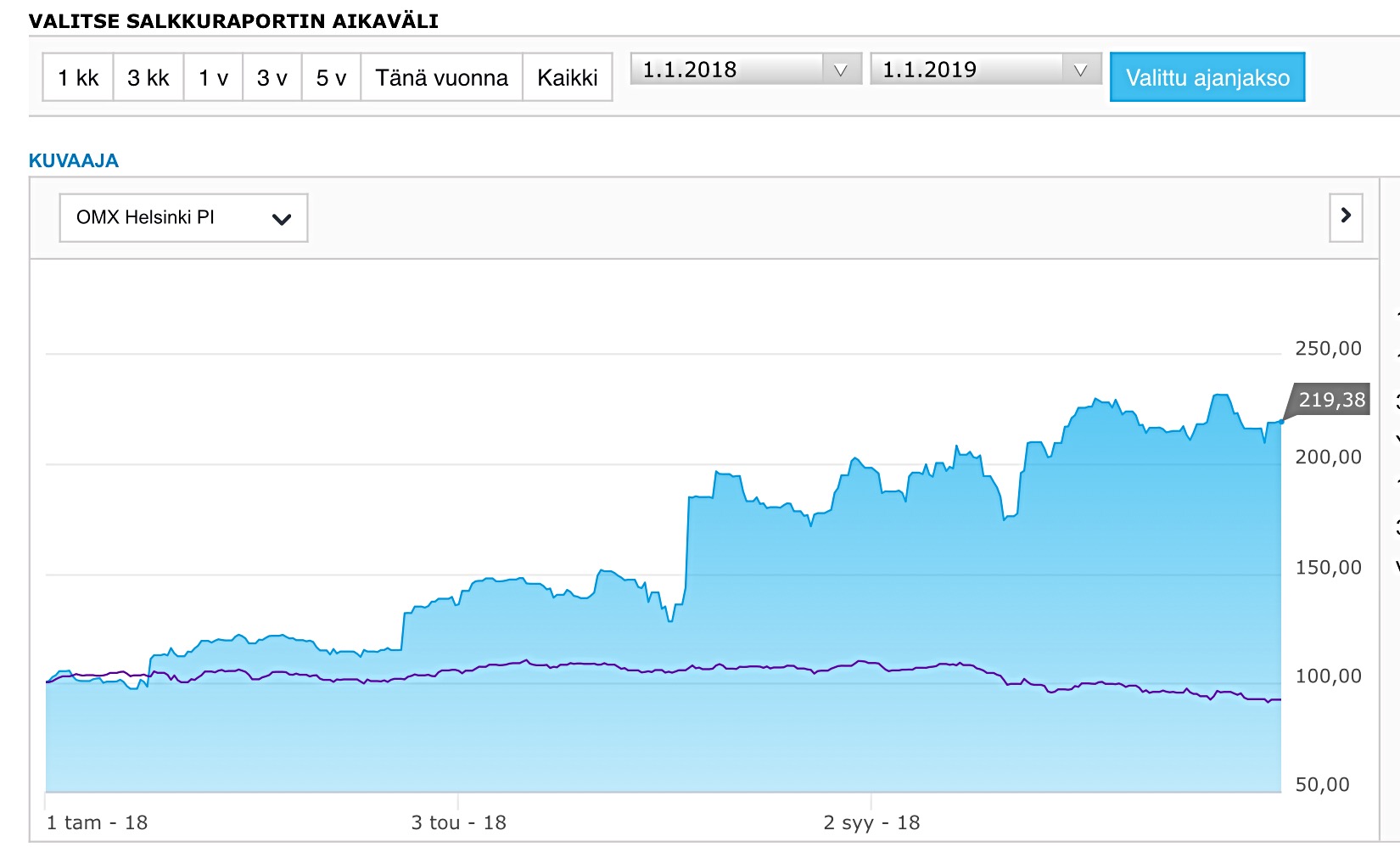
Edit:
Oh, this was the Sampo thread.
Let’s bring Sampo into the discussion by mentioning Pikasissi’s Sampo fishing lure is waiting for its catch below 36 euros, in deeper waters.
5 Likes
Heh heh.
The way this portfolio has been “managed” is not permissible at Taaleri, nor at Solidium.
The risk-return ratio, measured by the Sharpe ratio, is indeed very high, but nevertheless, the absolute risk that had to be borne to achieve those returns is far too much for institutional rulebooks.
It has required aggressive swinging and timing with technical analysis.
Despite this, Nokias have remained untouched as the foundation of the portfolio throughout.
2 Likes
Sampo is well positioned for rising interest rates, which won’t happen for years:
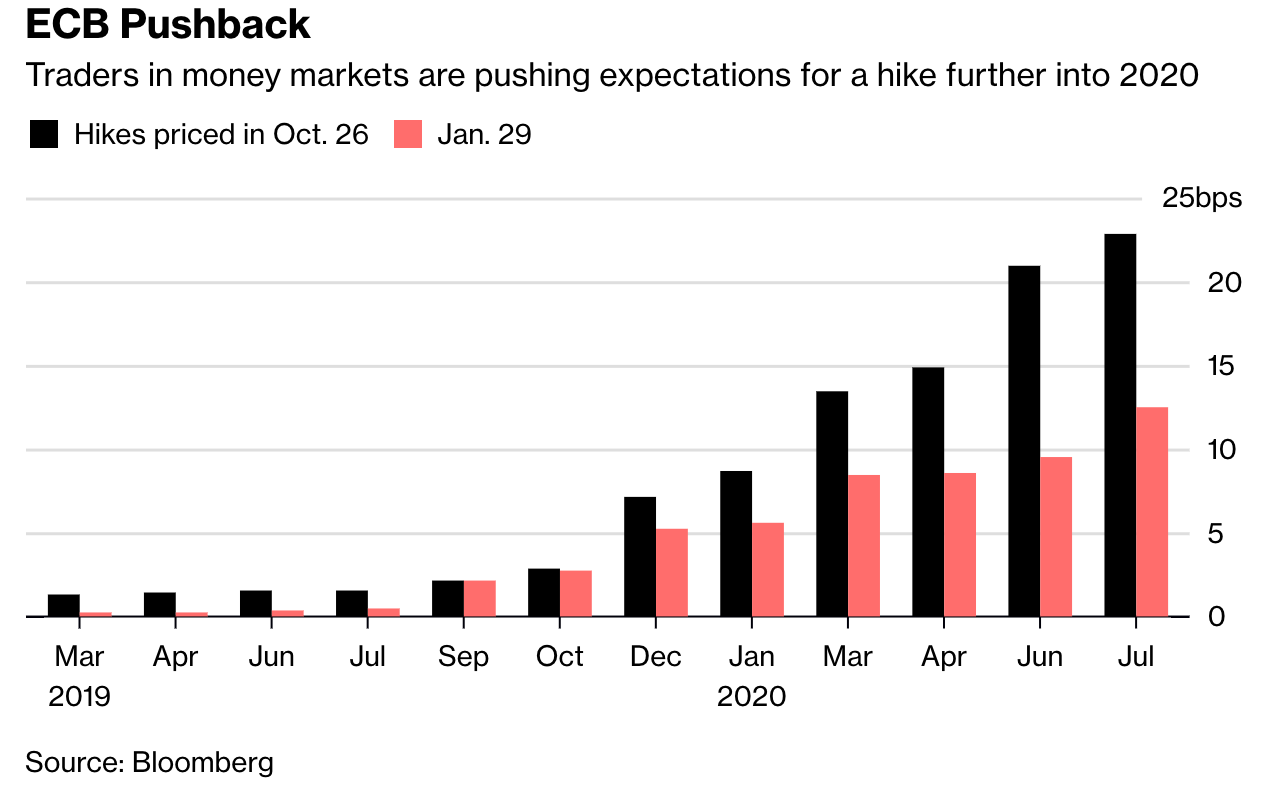
In the US, the market also no longer expects rate hikes; some even predict a cut at some point. In addition to bonds not paying interest, the zero interest rate environment continues to pour acid on Nordea’s results. As Sauli has argued here, Nordea is key to Sampo’s appreciation.
3 Likes
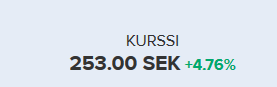
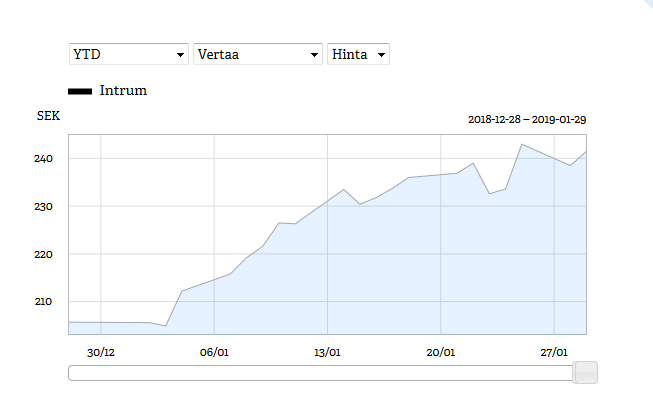
Strong result from Intrum, and a dividend proposal of SEK 9.5 → Sampo receives approx. SEK 65.2M in dividends.
Intrum’s stock has also risen nicely since the beginning of the year (Sampo’s average price seems to be around SEK 228)
Intrum seems to have an EPS target of SEK 35 for 2020.
4 Likes