Technological Disruption and Investment Opportunities in the Food Sector

Has anyone looked into this more closely?

MeaTech 3D - $MITC
https://meatech3d.com/

3D printed steak.

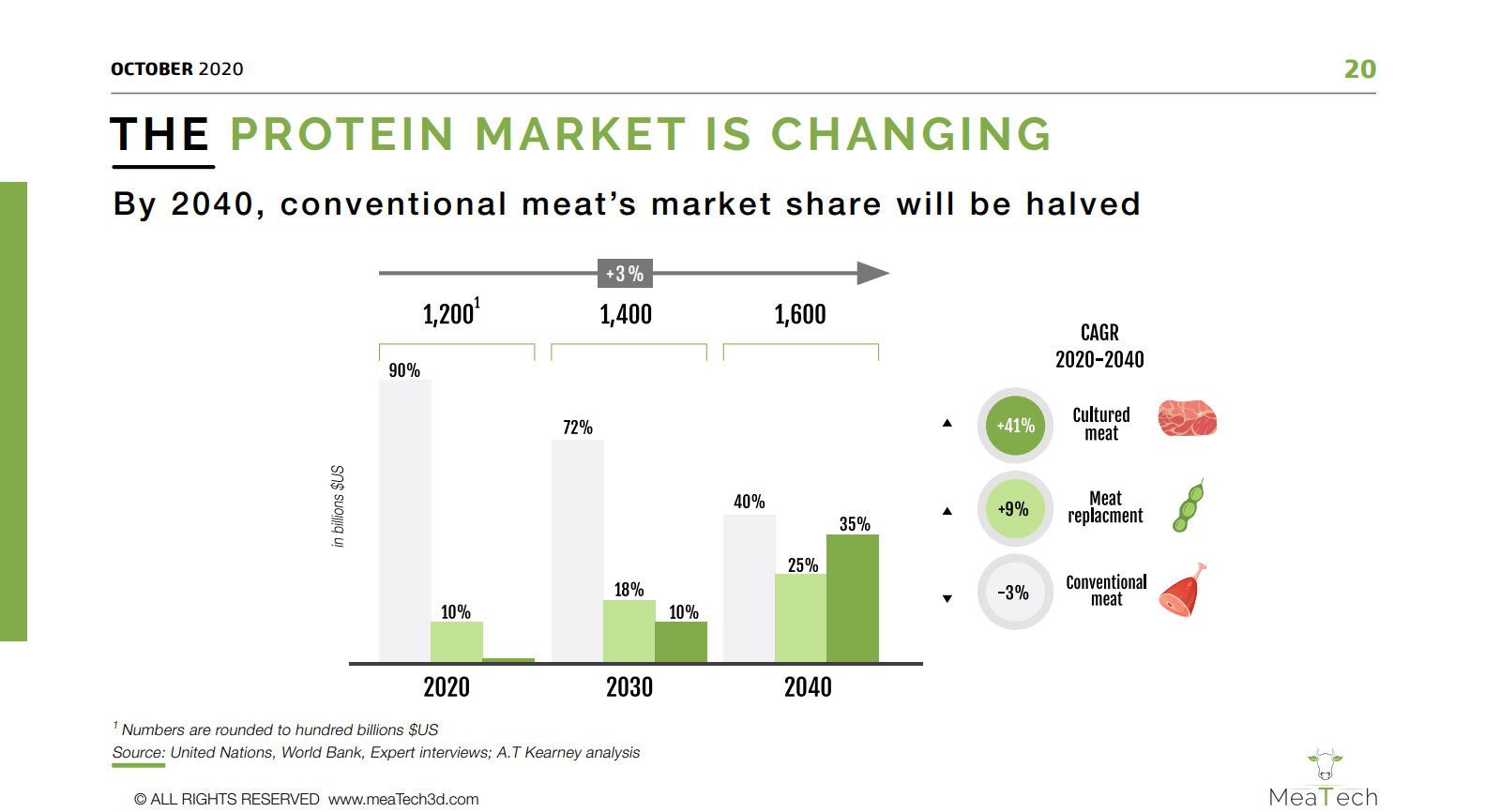
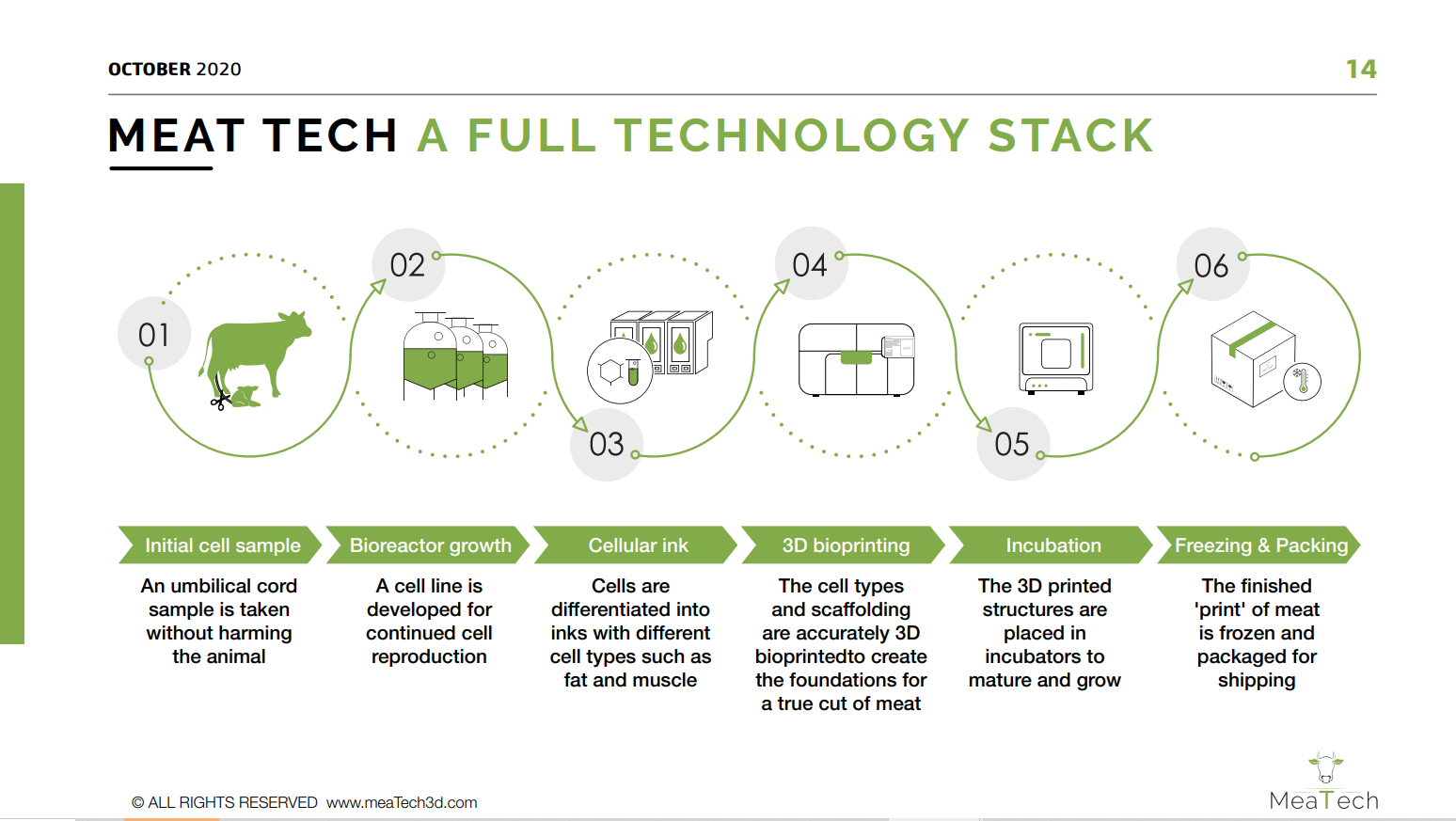
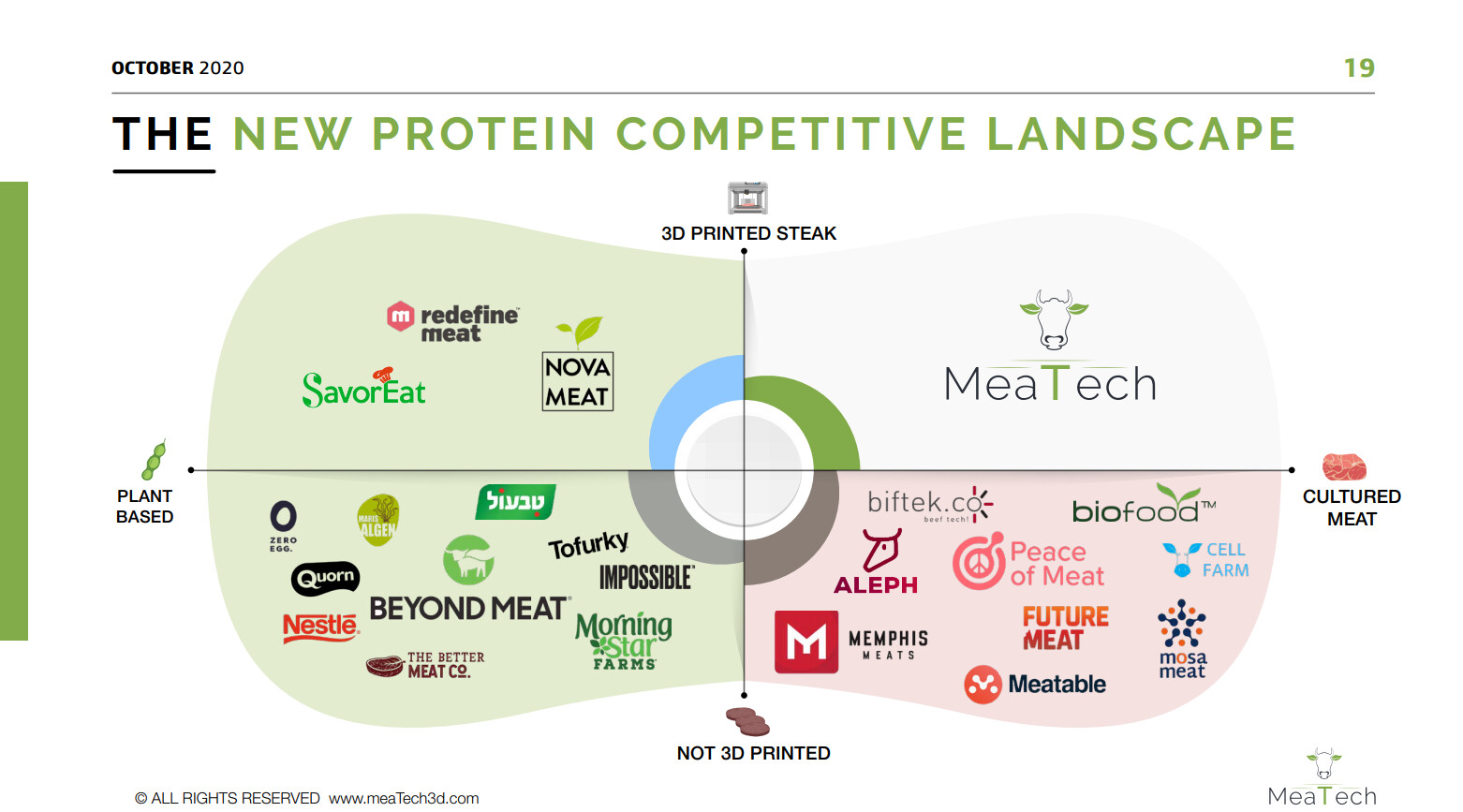
MeaTech was founded in 2018 with the aim of developing proprietary three-dimensional printing technology, biotechnology processes and customizable manufacturing processes to food processing and food retail companies seeking to manufacture proteins without the need for animal slaughter. MeaTech is developing a novel, proprietary three-dimensional bioprinter to deposit layers of differentiated stem cells, scaffolding, and cell nutrients in a three-dimensional form of structured cultured meat, often called “clean meat” or “cultured meat.”

An Israeli company, backed by, among others, Sharon Fima, former CTO and founder of Nano Dimension.
Other key personnel also have a background from Nano Dimension. It seems like some kind of spin-off, at least spiritually. The companies are also located only 500 m apart.


Company presentation:
https://meatech3d.com/wp-content/uploads/2020/11/MeaTech-presentation_October.pdf
IPO’d on Nasdaq on 12 March 2021:

5 Likes

https://twitter.com/TuureParviainen/status/1379727742971871232

4 Likes

I’ve added Agronomics (ANIC), listed on the London Stock Exchange, to my portfolio.

They have an interesting portfolio, including Solar Foods, BlueNalu…:

Of course, the companies and technology are in the early stages, and valuing the stock is difficult. So far, the ride up has been incredible.

1 Like

Here’s some general writing on the topic and perspectives: https://www.bcg.com/publications/2021/the-benefits-of-plant-based-meats

May I ask through which stockbroker this can be bought in Finland? This is on the AIM market (Alternative Investment Market - Wikipedia) in London, and Nordea, at least, doesn’t broker these.

1 Like

So tell me how :)!

I myself have bought through Degiro, precisely for the reason you mentioned.

1 Like

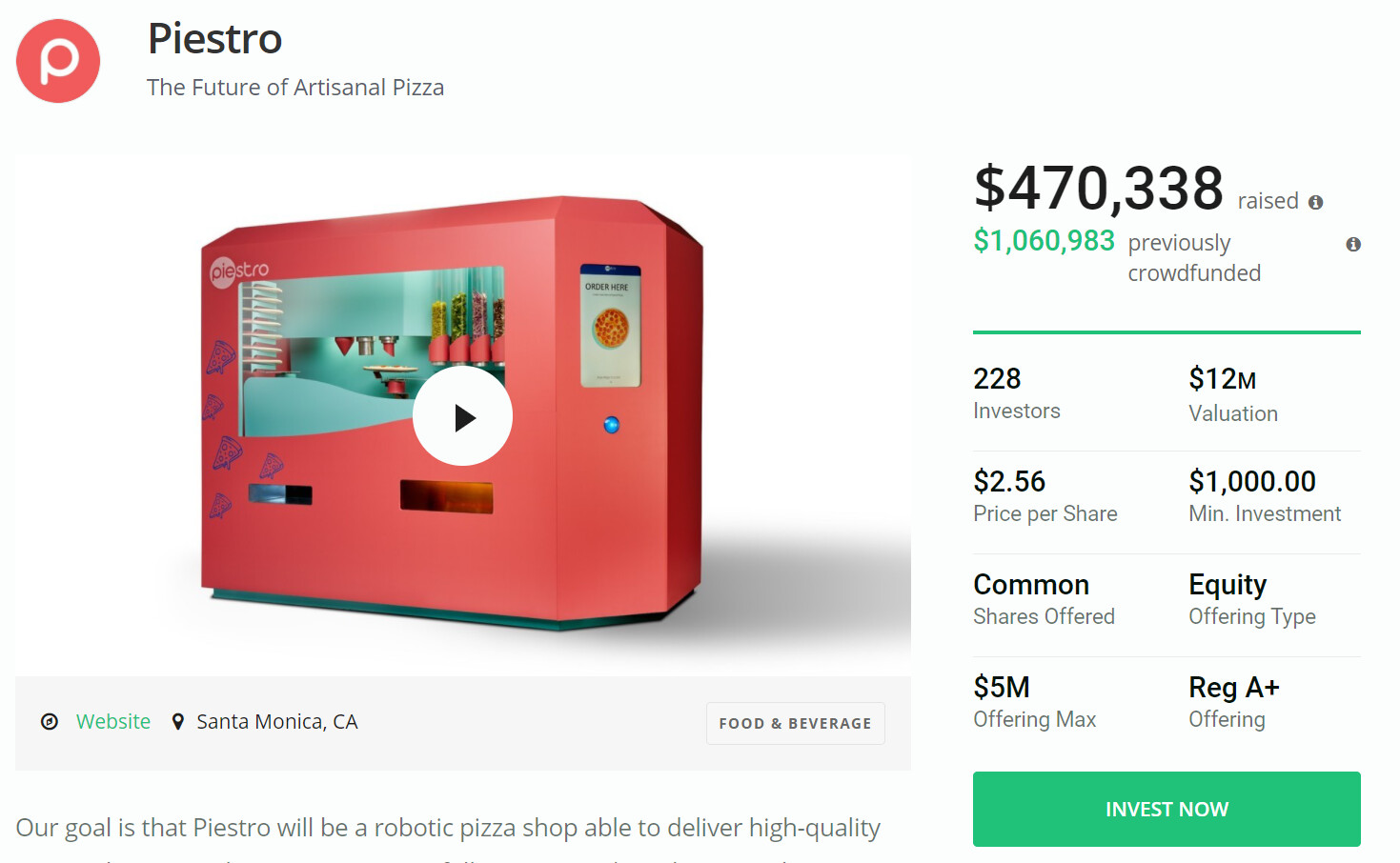
https://www.startengine.com/piestro

Are pizza restaurants about to lose market share?

Pizza vending machine by Piestro.

4 Likes
2 Likes

The machine in Kauniainen only heats pizza that is handmade elsewhere.

2 Likes

I spotted HelloFresh in the same video I shared in the Tattooed Chef thread. Has anyone invested in it/looked into it? The valuation seems moderate compared to its growth, with a P/E of around 27 and P/forward sales of 2. Its growth rate has been quite impressive:

6 Likes

https://keskustelut.inderes.fi/t/keinolihaan-cultured-meat-sijoittaminen/18647?u=jaska1

We could continue here

1 Like

Great thoughts on this thread! One trend that interests me is the use of insects as food. Compared to other animal-based proteins, insects don’t put much strain on the environment, and their nutritional values are really good. Of course, eating insects feels like a really strange concept and, to my understanding, hasn’t gained much traction in Western countries, at least.

There was an interesting article in Talouselämä about Alvar Pet, which is bringing to market a complete dog food that uses insects as a protein source to minimize the carbon paw print. They aim to utilize a dog food as a service business model.

“A 20-kilogram dog eats as much animal protein from animal sources daily as an average adult human. If insect food breaks into the dog market, it will have a really big positive climate impact.”

I don’t have a dog, so I can’t assess the product’s attractiveness. However, it’s hard for me to see my dog-owning friends rushing to buy black soldier fly larvae for their dogs.

(The article is behind a paywall)

9 Likes

I’m posting this here as I couldn’t think of a better place.

Finnish company Eevia Health is listing on the Stockholm Spotlight market in June.

What is it about?

“Eevia Health addresses significant health problems with bioactive substances extracted from the plant kingdom. From berries, mushrooms, and bark from the Nordic forests near the Arctic Circle, Eevia extracts its extracts, which are then sold B2B as ingredients for dietary supplements and food brands globally. The global market for plant extracts, estimated to be worth around 35 billion dollars this year, is expected to grow by 16.5% annually from 2019 to 2025 (E). The growth can be attributed to several macro-trends, including an increased interest in health foods, organic and natural raw materials, and an increased demand for value-added food (“functional food”). These trends have become even more relevant due to the ongoing pandemic, and demand for certain types of dietary supplements is reported to have more than doubled.”

If Swedish isn’t your strong suit, here’s what the company says on its English website:

"This is Eevia

Eevia Health Plc addresses global health challenges with bioactive extracts from natural, plant‐based raw materials, that have clinically documented health benefits. Standardized plant extracts, with well-researched positive effects for human health, are sold B2B as branded ingredients for dietary or food supplements, and cosmetic brands globally. Founded in 2017, Eevia’s sales have grown with an average Q‐on‐Q growth of 35 percent to EUR 2.8m in total for the full year of 2020. Eevia Health operates a distributor business model in three continents and with indirect customers in 16 countries.

Eevia’s product line includes branded ingredients based on extracts of organic bilberries, lingonberries, elderberries, Chaga mushrooms, and pine bark, carefully manufactured in Eevia’s green chemistry extraction facility in Finland."

Materials:

https://investor.eeviahealth.com/ipo/

Goals for 2024:

Growth: Eevia shall generate at least EUR 25 million in revenue.

Gross margin: The gross margin shall exceed 40%.

Profitability: Eevia shall achieve an EBITDA margin exceeding 15%.

Brochure:

https://investor.eeviahealth.com/media/206436/im_eevia-health.pdf

I have not familiarized myself with the company’s product offerings or the research underlying the efficacy of the products.
3 Likes
6 Likes

A couple of years ago, if I recall correctly, there was an attempt to bring insect-based food to the market on a larger scale, but it seems to have failed, as the cricket products that were available then have since disappeared from store shelves. At that time, I remember seeing a product in grocery stores that mainly contained plant protein with 4% cricket included. The idea was probably to slowly introduce insect food into more familiar protein sources, but my impression was that the product was just another plant protein among others and didn’t stand out in any way. Additionally, at least in Ruohonjuuri (a health food store), plain crickets with spices were sold, but the price was outrageous – did 50g of crickets really cost 10 euros? The price difference was far too large compared to familiar protein sources in stores.

In my opinion, there’s nothing wrong with insect food itself; that first attempt to mainstream it just failed. If an entrepreneur finds a way to highlight the best aspects of insects and perhaps discovers a “spearhead species” of insect that would be pleasing in taste and texture for the mainstream population, then I believe these have just as much potential as the current plant protein boom.

Here’s one Finnish company that sells products containing cricket.

4 Likes

Yes. Fazer launched the world’s first insect bread a few years ago, but I understand that product has also been removed from their selection. I completely agree. I believe the biggest resistance comes precisely from the fact that they are insects, rather than their taste. In the “Can You Eat This?” (Voiko tätä syödä) program with Lauri Reuter and Henri Aleen, linked in the thread, the tasters didn’t dislike the taste of the insect patties, but some were scared when they heard what they had eaten.

It’s just hard for me to see the mainstream even giving these a chance if products require a clear premium compared to other protein sources. I believe a new wave of insect products will come at some point, but we’ll see which product category it starts from. Entisstore’s products seem interesting, but at those per-kilogram prices, consumers can buy all sorts of delicacies.

7 Likes

As someone who invested in Agronomics last year and continued to follow the company, I was going to create a new thread on the topic, but it’s better to reuse the old one. Disruption in the food industry is slow, but progress is gradually happening. The FDA is now asking for public opinion on what to call meat produced without slaughtering an animal (cell-based meat, cultured meat, clean meat, lab-grown meat, etc.), and this could be seen as laying the groundwork for future legislation and the creation of approval processes for various products as food. Undoubtedly, we will have the same discussion in the Nordics sooner or later, just as there has been discussion about the “milkiness” of non-dairy products and calling them milk.

Agronomics has clearly gained new momentum from the rekindled discussion, and the stock, which had been very low, has again turned northeast. The company’s share price is negatively affected by very sparse communication, which, combined with a share issue carried out earlier in the spring, caused the price to drop sharply. Nothing has changed in the fundamentals; new companies are rapidly emerging in the food sector, and Agronomics is almost the only way to invest in these in a diversified manner, and in some cases (like Solar Foods), to be involved in the disruption early at all. BlueNalu, one of Agronomics’ largest investments, is going public in the near future, and this will likely be followed by something else.

Should Lab-Grown Meat Be Labeled as Meat? USDA Seeks Public Input

8 Likes

It’s nice to see that there are other investors in Agronomics (ANIC). I doubled my position now that the stock has gained new momentum, it already went over 40 gpx when rumors of Blue Nalu’s listing and over 400m€ market cap became public.

Determining the stock price is challenging and it reacts strongly even to small advancements, but the potential in Agronomics’ portfolio and the disruption in the food sector is so great that you simply cannot stay out of this. First purchases at 10 gpx, now refueling at 22 gpx.

The collapse of fish stocks, the insane environmental emissions from animal production and the limited area of arable land, a growing population, rising living standards in developing countries, climate change - all these accelerate biotechnological food production.

5 Likes

Agronomics seems to have gained new momentum again. A robust +38% since the beginning of September, and the rise continues, fueled by the latest news. Over the past few days, Agro has announced an investment in Formo Bio (formerly LegenDairy Foods) in a €50 million Series A round, with approximately 6% ownership.

In addition, BlueNalu, one of the portfolio’s gems, announced a collaboration agreement with Europe’s largest frozen food supplier, Nomad Foods, to explore bringing cell-cultured seafood to the European market. This is a significant piece of news, as Europe is the world’s largest importer of seafood, with imports tripling exports.

Among the companies in Agro’s portfolio, Finnish Solar Foods received a €10 million investment from the Climate Fund earlier this year, and the Factory plan should be ready this year, with partners for it identified. The pace will accelerate; next year, a demo plant will be operational, followed by a global commercial launch and the capacity to produce 40 million servings per year. Any guesses when Solar Foods will list on First North? :wink:

Edit: added “seafood”

6 Likes