In the Foreign Stocks thread, there was a lot of discussion about REITs, and based on that, there is a need for a separate thread.
REITs enable passive and generally good dividend yields and diversification for a stock portfolio, which is why they are an essential part of my investment plan.
It’s not worth wondering about price movements separately, and this thread is not for daily amazement at them  . REITs often move as an entire sector, and daily changes can sometimes be surprisingly large. Let’s keep the discussion more at the fundamental, operational principle, and other general levels of REITs. Good discoveries and valuations are, of course, welcome to be brought up, so everyone can benefit.
Real Estate Investment Trust (REIT)
REITs were created in the 1960s to allow every citizen to invest in real estate and earn a return from it. REITs enable the purchase of real estate through the stock exchange, similar to stocks. The most significant reason to invest is the passive rental income, which the REIT distributes as dividends to shareholders (How do REITs Work? | Nareit). This discussion will mainly focus on US/Canada REITs because they have their own special characteristics. Real estate funds or similar companies also operate elsewhere in the world (e.g., Cibus Nordic Real Estate AB, Ovaro Oyj).
REITs invest diversely in real estate with the aim of generating profit from rental income or by trading properties. With a REIT, you can easily invest diversely in multiple properties, reducing the risk associated with a single property. Additionally, by investing this way, you avoid the potential responsibilities of a landlord, such as finding tenants. REITs also offer the opportunity to invest in real estate markets in different countries. REITs are not limited to just residential properties; there are also REIT companies that invest in commercial properties or, for example, care facilities. There are many possibilities. (sijoittaja.fi)
Legislation varies slightly between countries, but in the United States, for example, it is strictly regulated what kind of firms can call themselves a REIT. A REIT operating in the United States must invest at least 75 percent of its assets in real estate and at least 75 percent of the company’s gross income must come from real estate, such as rental income, property sales, or interest income from real estate loans… …A REIT must pay out at least 90% of its taxable income as dividends to shareholders. (sijoittaja.fi). By operating according to the rules, a REIT fund is exempt from or pays significantly less tax than normal. REIT rules and more information: Search Results | Nareit
Different Types of REITs:
-
Equity REIT (REIT or eREIT): real estate funds that own properties and lease them out using various operating models.
-
Mortgage REITs (mREIT) invest in residential and mortgage loans, generating income from interest on loans and resale of loans.
-
Hybrid REIT combines the above, leveraging with loans and more complex structures.
-
ETF: specific ETF funds have also been created for REITs, which invest in the entire sector with different weightings.
-
Preferred Stocks: special listings of stocks, including REITs, that have priority or higher dividends, but also restrictions (Preferred Stocks Sorted Alphabetically - DividendInvestor.com)
REIT sectors:
REITs are divided into several different sectors according to their industry, e.g., offices, industrial, hotels, healthcare, etc. Newer ones, such as telecom towers and data centers, are also available.
Sectors: Learn about Investing and Market REIT Sectors Today
Risks:
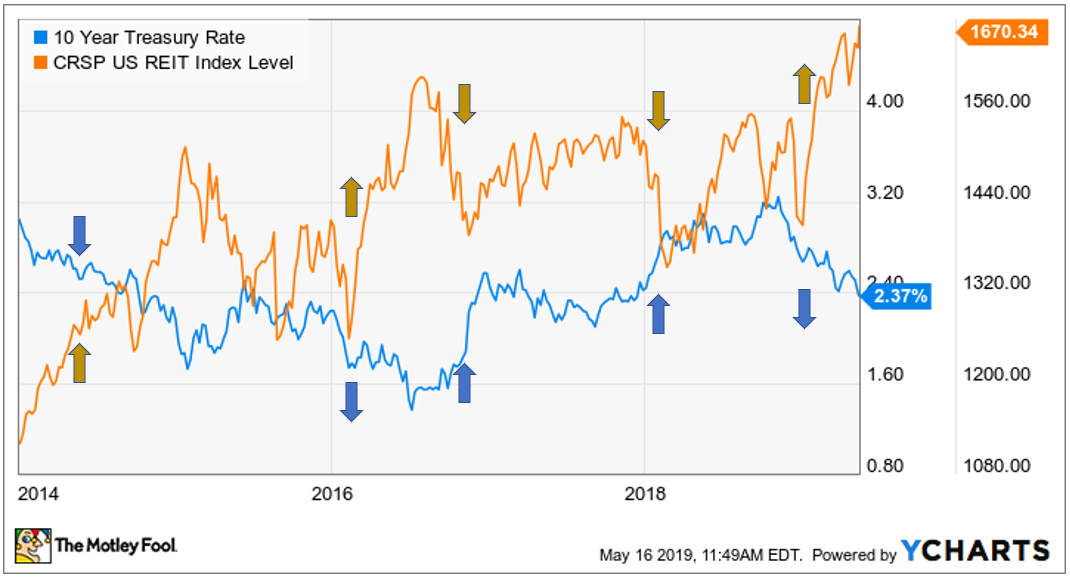
- REITs are heavily leveraged due to their capital-intensive nature. Interest rate markets significantly affect REIT valuations. During low interest rates, valuation increases because investors seek alternative returns to interest. At the same time, the operating conditions for funds improve when interest expenses are low. As interest rates rise, REIT valuations come down for similar reasons.
There is also a different view on this, i.e., by arranging financing or in a rising market, the value of REITs also increases, along with other assets. - The liquidity of funds in the form of real estate is weak. That is, if for some reason the fund needs to convert assets into cash, properties may have to be sold on unfavorable terms.
- Value depreciation can occur according to market conditions, but bankruptcies of REITs (specifically Equity REITs!) happen very rarely: https://seekingalpha.com/article/4359863-first-reit-bankruptcy-since-2009-new-institutional-data-source-and-updated-sector-outlook
REIT advocates and good articles:
https://seekingalpha.com/author/jussi-askola
https://seekingalpha.com/author/brad-thomas
 .
.