New Avantis ETFs listed on Xetra today. Doesn’t look like they are available for purchase on Nordnet yet.
Avantis America 0.20%
Avantis Europe 0.25%
Avantis Pacific 0.25%
10 Likes
So-called defensive sectors have dominated the stock market during the early part of the year.
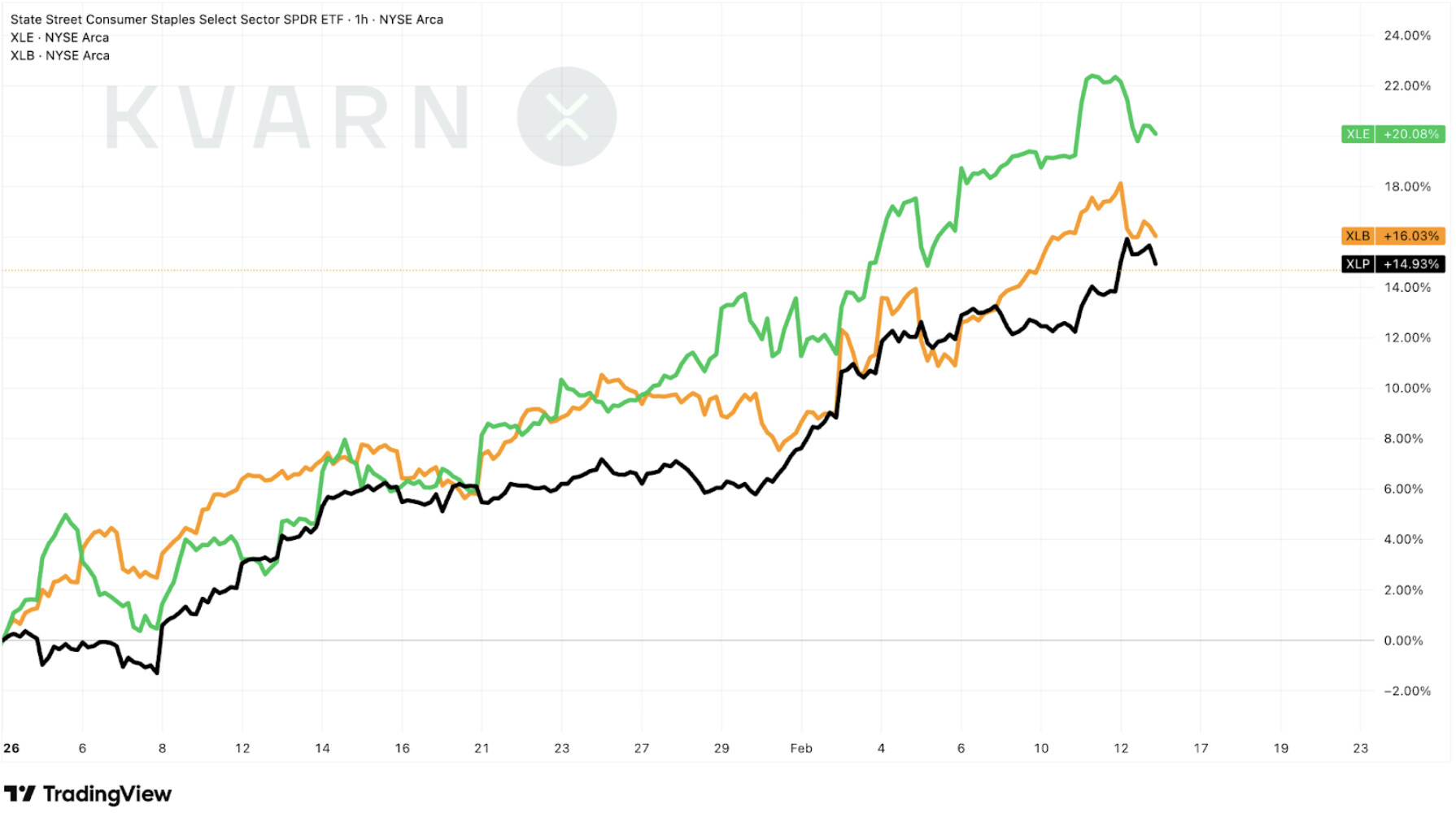
Consumer Staples (XLP), the Materials sector (XLB), and the Energy sector (XLE) have all seen sharp rallies in recent months.
So sharp, in fact, that these sectors are starting to look overbought.
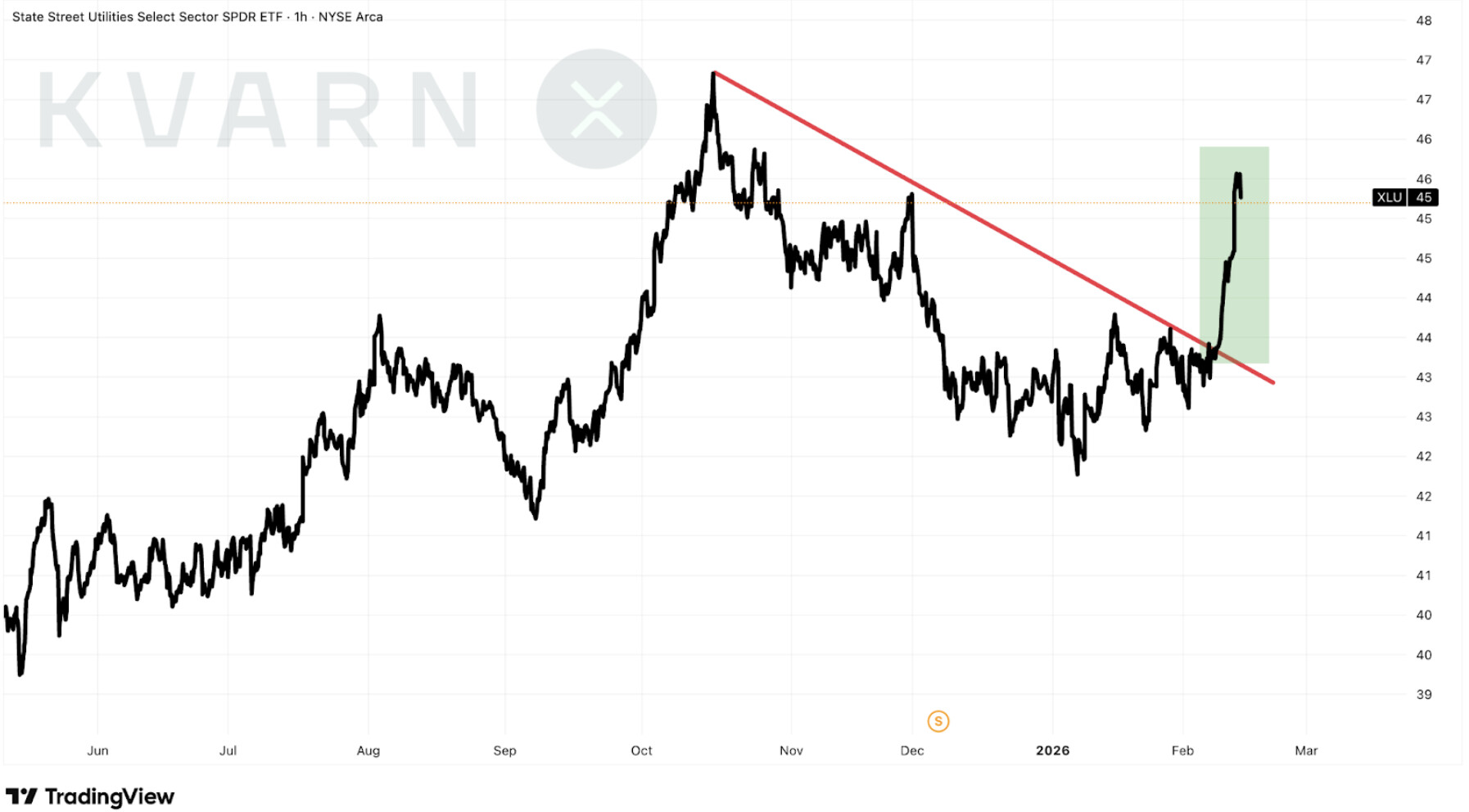
Part of the defensive sectors, the so-called utilities sector, which includes electricity and water distribution, has performed somewhat more modestly so far.
However, over the last week, we have also seen this sector turn upward.
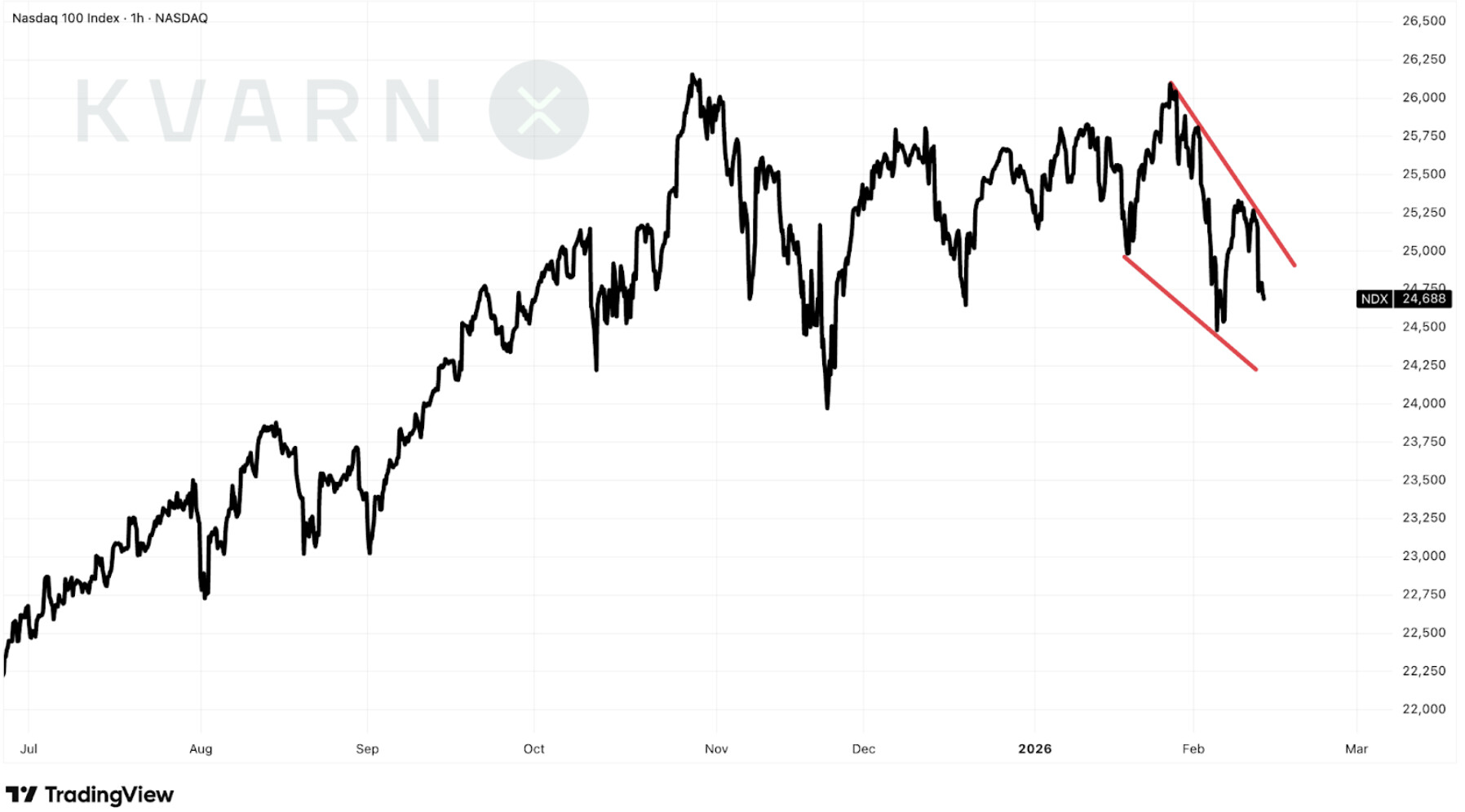
The utilities sector often performs best in conditions where the rally in growth sectors falters.
The weak performance of the Nasdaq 100 index in February suggests that we might be entering such a phase.
Will utilities be the stock market’s next surprise?
Have a great Friday!
7 Likes
Amundi is launching a GDP-weighted all world ETF. The weightings are a bit different  USA 16.3%, China 22.3%, India 10.2%
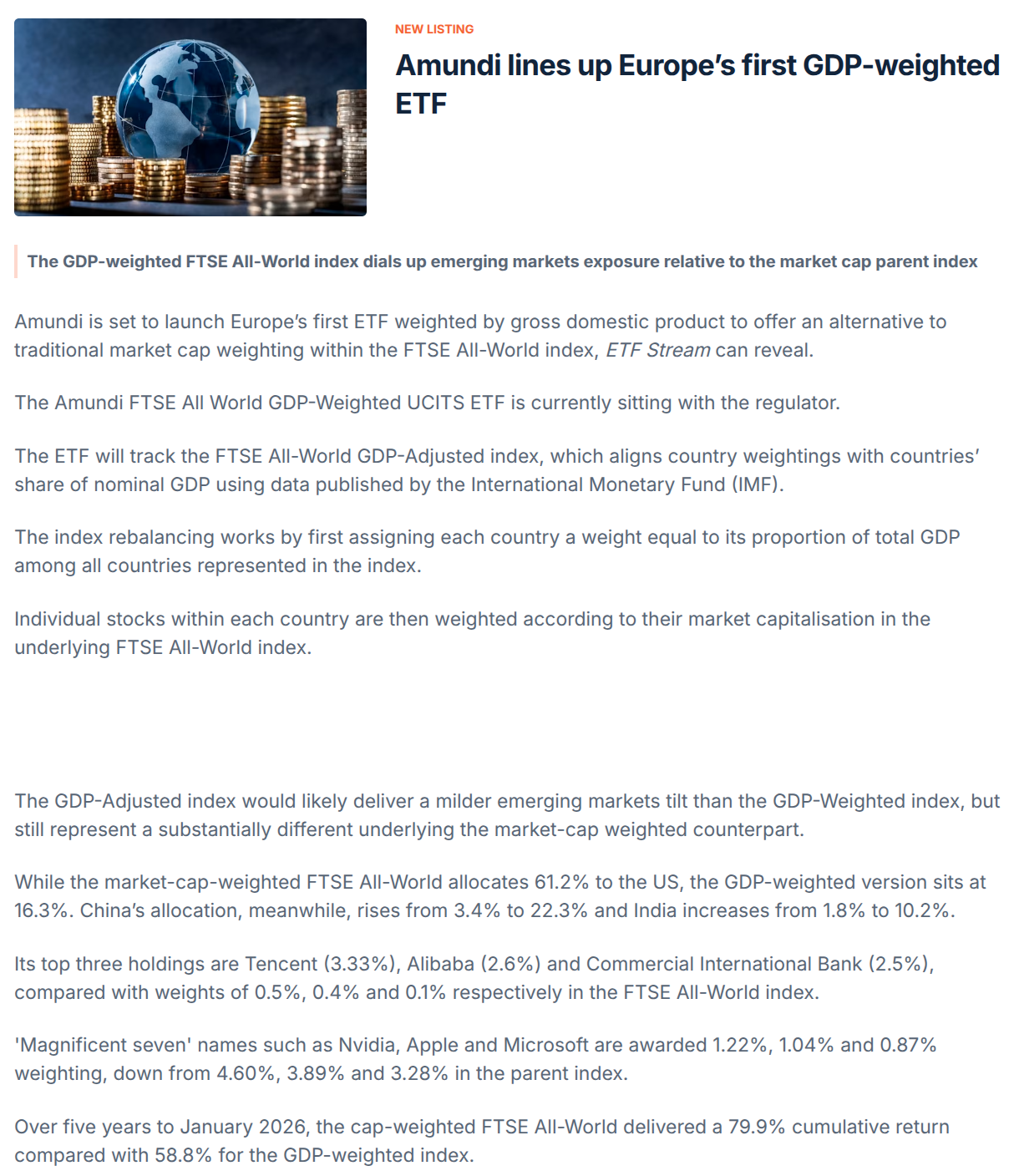
https://www.etfstream.com/articles/amundi-lines-up-europe-s-first-gdp-weighted-etf
12 Likes
In one of Ben Felix’s recent videos, it was noted that there are already over 3,000 different ETFs, and the overwhelming majority of these and new funds are actively managed. So it’s unlikely that market efficiency is somehow suffering because of index funds. On the contrary, the market only becomes more efficient decade after decade with increasingly sophisticated algorithms.
3 Likes
I personally have invested in emerging markets using the following instruments:
There is a cheaper ETF for India (from Franklin), but it can’t be bought at my bank. I don’t invest in China (nor in any other communist/dictatorship countries), as the political risks are too high. China’s economic star is on the decline anyway, and the best years are already over.
2 Likes
In those ex-China EM indices, it’s worth being aware that you don’t completely get rid of China risk. In those, Taiwan’s share is actually almost 30%.
2 Likes
This is true, but there’s no way to completely get rid of the China-Taiwan risk. A Chinese invasion of Taiwan and its consequences would cause a global crisis that would also be reflected in the US and European stock markets.
7 Likes
Yeah, that’s exactly it. I would also much rather invest in an ex-China EM fund than a pure EM fund, and I actually hold a few shares in an ETF like that. In the EM index, you already get to “enjoy” a combined China + Taiwan weighting of nearly 50%. It’s mainly just an observation that you still end up carrying quite a bit of China-related risk in those as well, even if the name might suggest otherwise.
Taiwan without the threat of China would be an extremely interesting market, in my opinion.
5 Likes
I kind of understand this, but I still wouldn’t leave China or anything else out entirely. Risk and return still go hand in hand quite nicely. And if the expected risk doesn’t materialize, the returns can be substantial. After all, there are risks in everything else too. Now even in the US, in a completely different way than just a moment ago…
1 Like
In my opinion, the risk of confiscation in China’s case is so significant that I, for one, no longer want to invest there. The expected returns aren’t so exceptional that it would be worth taking that risk. A billion Chinese people are able to keep their own stock market priced high enough that there isn’t sufficient compensation for Westerners in the form of higher expected returns.
9 Likes
Still, that risk is significantly lower than 100%. Based on this, you can still adjust your own risk vs. investing in China, which could be something greater than 0%. But of course, don’t force it if you aren’t prepared to lose anything at all. On the other hand, this risk is always present at some level in investing.
Regardless of the risk, the loss can be 100% when it comes to China. Additionally, China has performed abysmally over the last 30 years. If I remember correctly, the real return is around zero.
The return of the MSCI China IMI has been 2.45% annualized in dollar terms since May 1994. During the same period, the return of the ACWI IMI has been 8.04% annualized. Once inflation and dividend withholding taxes are deducted, China has perhaps even provided negative real returns over the last approximately 32 years.
3 Likes
I’m rarely interested in past returns.
But still. Every country and region has its own risks and potential. Nothing is certain. That’s why you can adjust your risk level to suit you. For me, for example, x (> 0) money in China doesn’t represent much of a risk.
Aren’t index funds an efficient and reliable choice in the long run? Of course, I could leave out the World fund, for example, or reduce its weighting a bit, since the same stocks are already in the US and technology indices. How should I go about approaching this?
Yes, index funds are fundamentally a good choice. However, guessing winning countries or sectors is essentially taking a view, and the odds are not in your favor. Broadly diversified, low-cost, and global index investing is theoretically the correct and most recommended way to invest, and SPYI offers a good way to do this with a single product.
Additionally, its expenses are lower than your funds combined, its lifecycle is likely longer, and it can be transferred from one broker to another if needed.
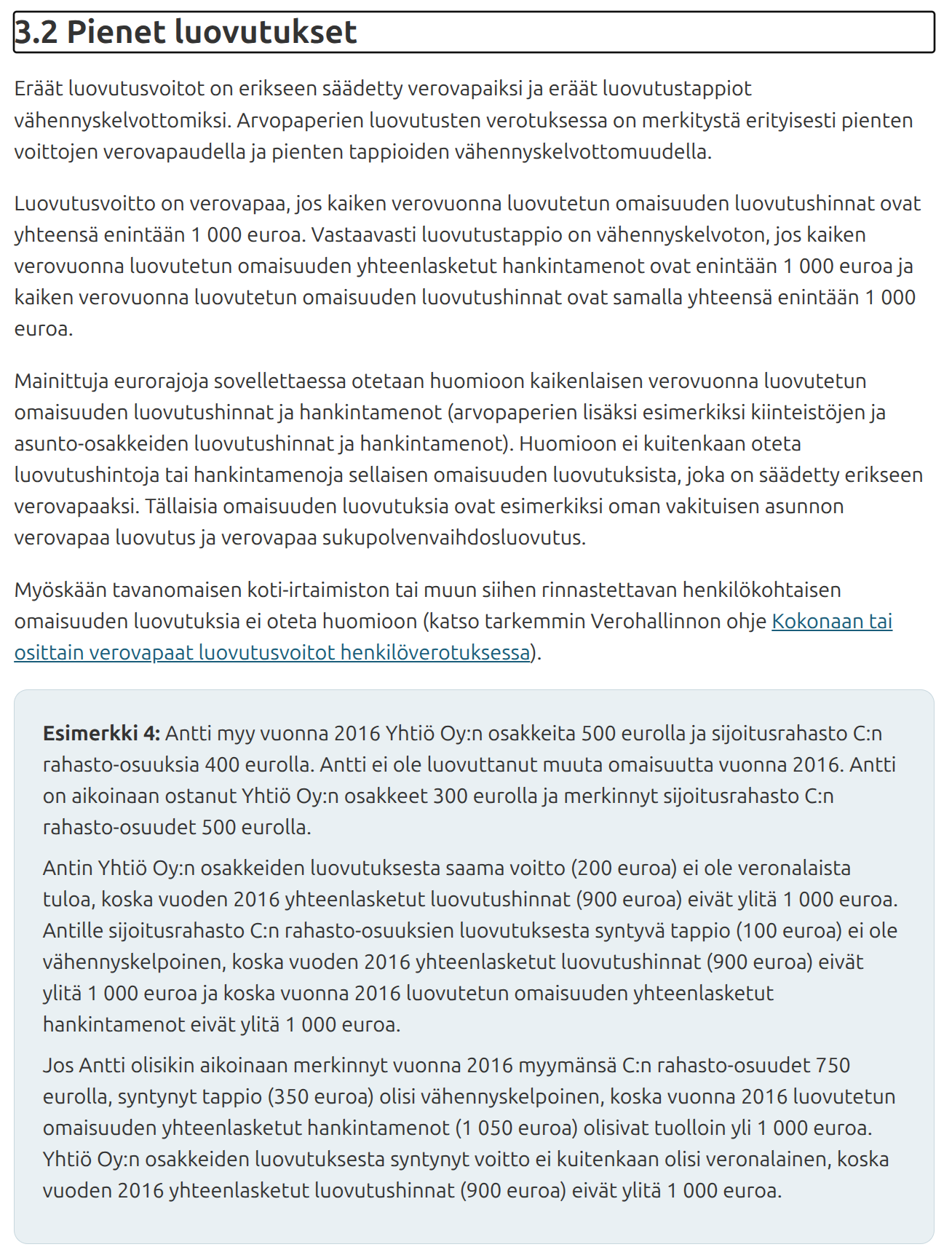
So, I reiterate my previous recommendation and also remind you about the tax exemption for sales under 1,000 euros, which you should utilize for the funds you hold.
I would leave the Finland index alone, as it is a cost-free and very tax-efficient investment. Research also supports a small home bias due to currency risk.
6 Likes
I’ll still do my own thinking on the matter, but are you ”recommending” that I switch that Nordnet World Index to that one, and then invest the remaining €250 across the 4 other funds I already own?
I meant that you should stop all monthly savings into funds and put your monthly savings into SPYI through an ETF savings plan from now on. It already offers maximum diversification, and any additional ones only cause overweighting of a certain region or sector.
3 Likes
Was there some kind of split coming for SPYI where the value of the asset would change from around €250 to the €10 range in the near future?