I’ve invested in Storebrand Global All Countries myself, and that’s the conclusion I came to from memory when I read through the prospectus in the second national language.
2 Likes
500€ is already such a large amount that I would switch to monthly savings in ETFs and stop monthly savings into funds, e.g., just SPYI instead.
3 Likes
Was the difference between Amundi’s world index ETF (MWRE) and iShares (IUSQ and EUNL) and Vanguard (VWCE) that Amundi is at least partially synthetic, while iShares and Vanguard invest in actual stocks? Amundi has the lowest costs of all, 0.12%, and I couldn’t find any other reason for the difference in fees. Of course, there are also slight differences in market weightings, for example, how much Asia is included.
1 Like
Are you looking for an all-world ETF or just developed markets? From Nordnet’s monthly savings plan or in general?
MWRE is physical.
2 Likes
MWRE and EUNL are developed only. IUSQ and VWCE also include emerging markets. All are physical.
2 Likes
An All-World ETF for Nordnet’s monthly savings plan; I forgot to check if one is available. In general, I was just wondering about Amundi’s lower fees compared to others.
All of those are available for monthly savings, except for VWCE. If you are looking for global exposure, IUSQ is at least a good choice.
SPYI is also a good alternative. The difference compared to IUSQ is that it also includes small-cap companies. This is also physical.
2 Likes
I googled this and at least on Reddit there were comments that Amundi has a habit of merging its ETFs, unexpectedly raising fees, or changing indices. It doesn’t really inspire confidence; I think I’ll choose one of these bigger and slightly more expensive ones.
1 Like
Currently, my monthly investments consist of 3 different index funds (Handelsbanken USA, Finland index, and Sweden index). I wonder if it’s worth diversifying further into a fourth fund, or if I should rather increase the amount I’m putting into the current ones? 
Personally, I think the latter might be wiser since three funds probably offer enough diversification already (?)
You won’t get good global diversification with those at all. You’re completely missing out on the rest of Europe, Canada, Australia, Japan, China, India, South Korea, Taiwan, emerging markets, etc. Perhaps that’s intentional? However, if you want to easily get the whole world into your portfolio, take a look at the Storebrand Global All Countries fund. There are also good ETFs for this purpose, some of which were mentioned a few posts ago.
2 Likes
Looking at those Storebrand holdings, you can find many of the same ones as in Handelsbanken USA (NVIDIA, Microsoft, etc…).
I’ve tried to look into ETFs, but I’ve gotten the impression that they’re not really worth it for something like a 20-euro monthly investment  .
.
I’ll also add that it’s not very sensible to start picking several funds that contain many of the same stocks… 
Looks familiar. On the other hand, I recall seeing it only recently. It’s as if I’ve also seen a range of 20-35% or similar mentioned regarding home bias.
This is actually based on a previously unheard-of index.
It really is worth investing in ETF funds only in larger sums at a time.
All your current funds are excellent products and you can keep them in your portfolio with peace of mind. However, you asked about diversifying into a fourth fund. Although a single-fund strategy would likely be the best solution, it is completely understandable if you want to take your own view. Many of us do that, even if it isn’t always rational.
While investment advice isn’t given here, it’s worth considering whether a one-fund model would be a better fit. Alternatively, you could invest, for example, 80% in a global fund and use the remaining 20% to weight your own views. If, on the other hand, you want broader diversification without a single global fund, you could consider emerging markets or the rest of Europe through the Storebrand Emerging Markets and Storebrand Europa funds. However, if you only want to invest in the US, Finland, and Sweden, then the funds you have chosen are excellent choices for that.
Fund overlap is not an issue as long as you are aware of it and the portfolio diversification matches your goals. Sometimes overlap is even a conscious choice. For example, regarding Nordnet’s Superluotto (Super Loan), having multiple ETF funds helps achieve the most favorable interest rate and the best collateral value. In such cases, there is no actual harm from the overlap.
5 Likes
Yeah, well, I don’t really have a specific style where I want to invest in a certain country or anything like that. I’ve just used these to get diversification both geographically and across different companies. I remember reading somewhere that there’s no point in owning funds (or at least stocks) that are already included in your other holdings, and regarding diversification, that even just one fund is “enough” diversification.
So I’m wondering whether to add a fourth fund with a couple of tenners a month, or if it makes more sense to just add those extra few tenners (or whatever amount I put in) to my existing funds. Since with my monthly investments, we’re not talking about 3- or 4-digit sums.
It’s not quite that straightforward, nor is diversification the only be-all and end-all unless your investment plan is along the lines of one world index ETF and nothing else. For example, Google (and others) can be found in many US, global, and technology ETFs, but you can’t say it’s been a bad direct investment even if you also owned the aforementioned ETFs. It is true, however, that purchasing multiple ETFs based on the same index and currency (or otherwise having largely the same content) doesn’t really add much in the way of diversification.
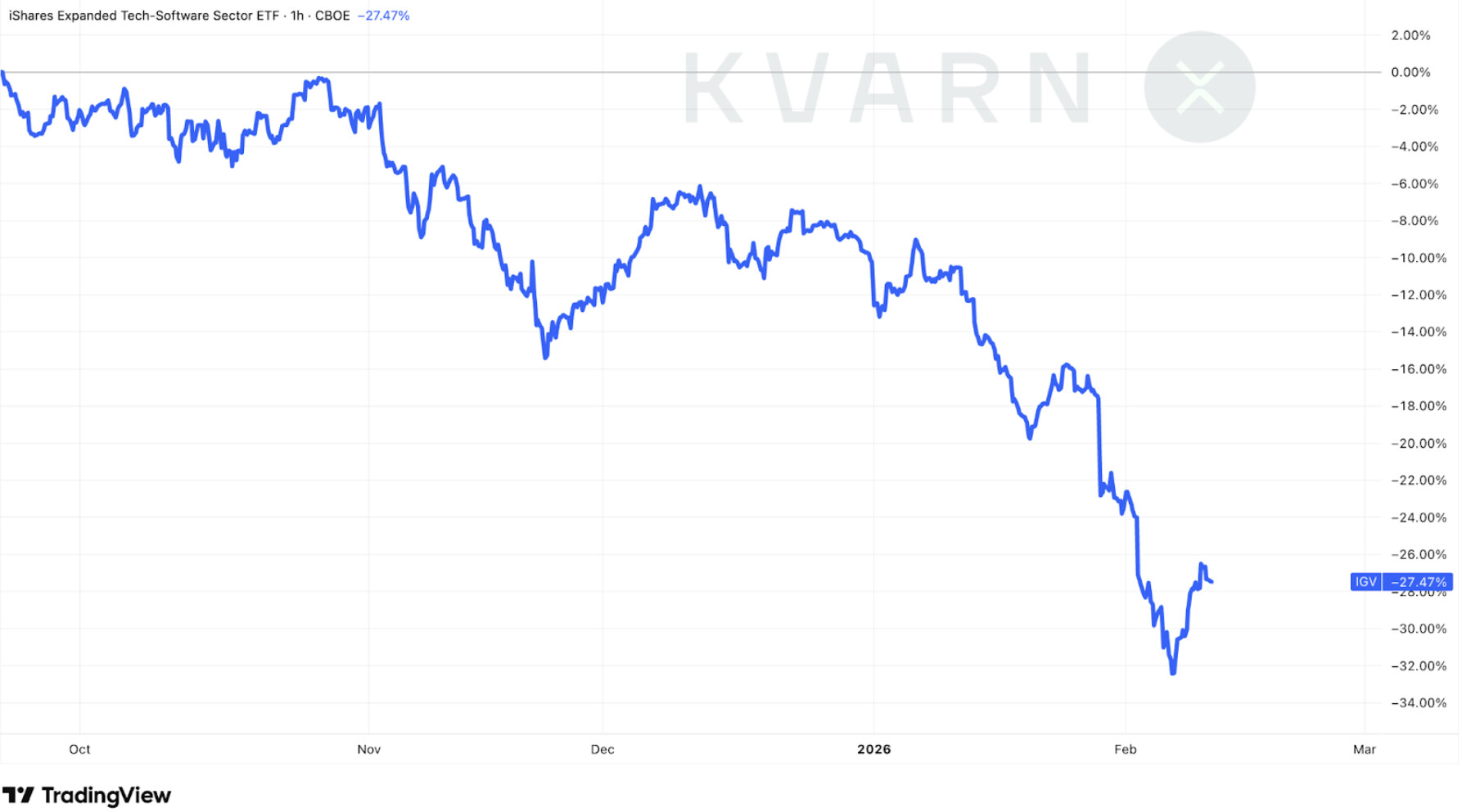
The software sector has been in a steep decline in recent weeks.
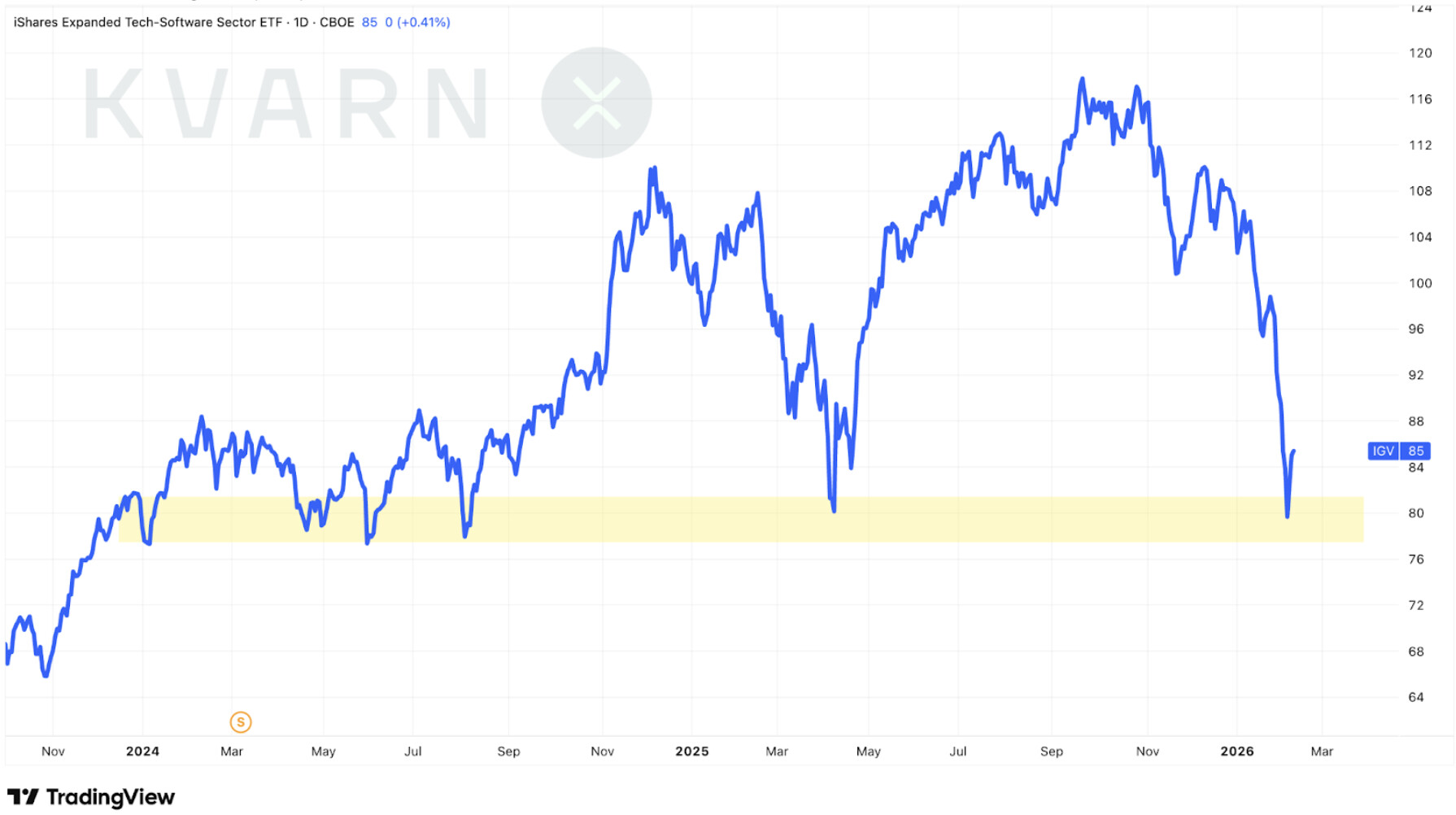
The share price of the iShares Expanded Tech-Software Sector ETF (IGV) has dropped 30 percent in just a few months.
The software industry has been weighed down particularly by concerns over the impact of AI on Software-as-a-Service (SaaS) companies’ business.
In recent days, however, we have seen this decline come to a halt.
The IGV price has found support levels around the same $80 mark where its decline ended during the “tariff panic” of spring 2025.
Is the fate of the software sector sealed?
Or is this decline providing the best buying opportunity in a long time?
Have a great Wednesday!
3 Likes
XDWD/Xtrackers MSCI World UCITS ETF
Fees are also 0.12% here
1 Like
SPYI is, in my opinion, the best one available in NN monthly savings. If you want to squeeze out every last bit of savings in costs and are prepared for some extra tinkering, then I500, EXUS, and IS3N in suitable proportions will be cheaper due to avoiding US WHT (Withholding Tax).
It’s starting to be difficult to justify using ETFs that follow only the developed world index, as the difference to all-world ETFs is so small.
These are indeed the kind of questions that have been answered countless times in this thread. Please use the search function. Didn’t it just get some update, so who knows, it might even work; and Google search at least works if you put site:forum.inderes.com/t/rahastot-ja-etf-t-sijoituskohteina/ at the beginning followed by the search terms.
13 Likes
I phrased my question poorly, as Amundi’s expense ratio compared to others was my main source of confusion, and I couldn’t find an answer to that using the search function. Some kind of FAQ on global ETFs and funds would definitely be useful; I don’t think a complete novice even knows how to search using the right keywords.
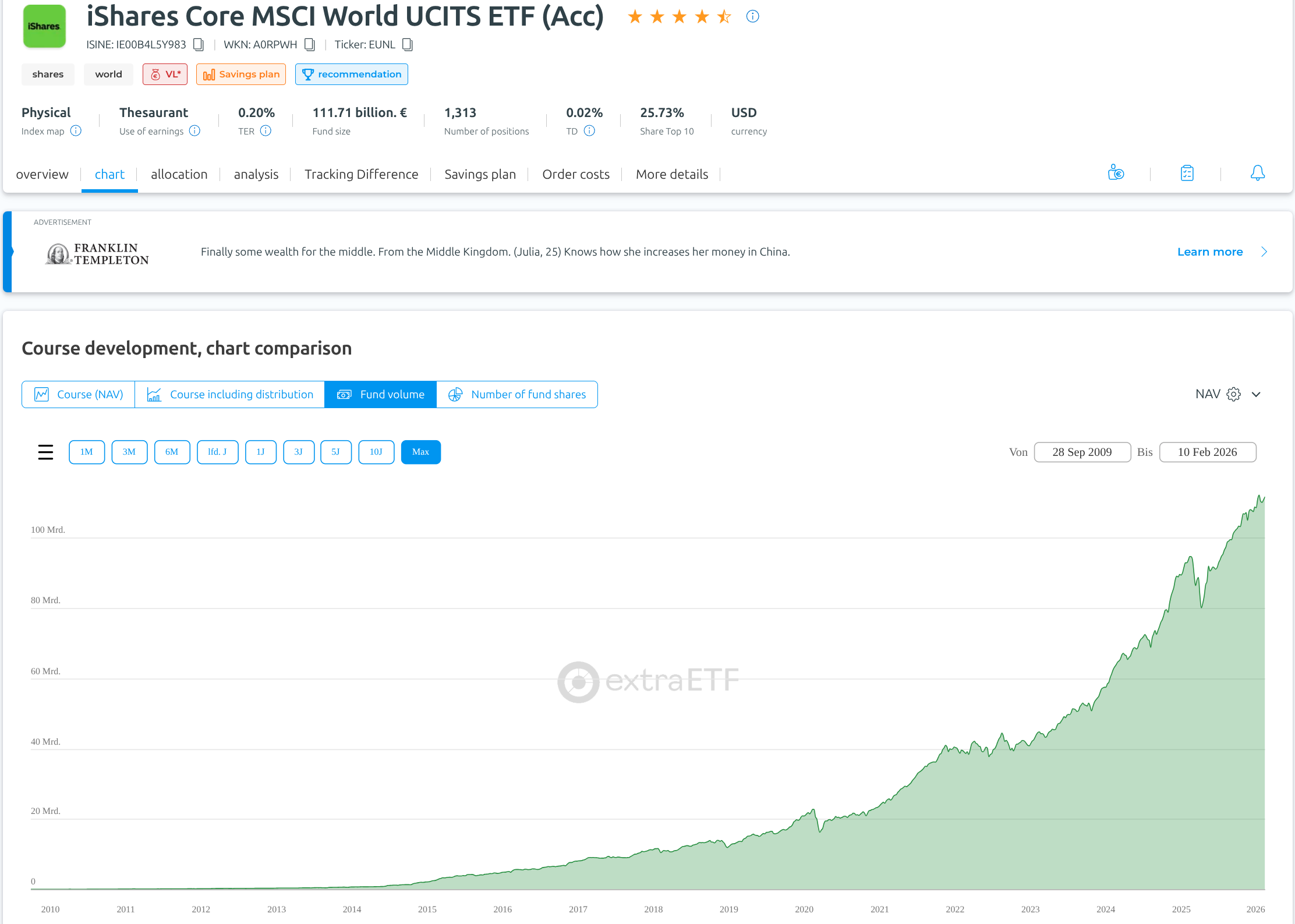
There probably isn’t any other reason for it than the fact that Blackrock and Vanguard have enough loyal customers that they don’t need to lower prices. People keep saving into that EUNL ETF out of old habit or for the sheer joy of being a fan, just as they have for 10+ years, so why bother participating in a price war with smaller asset managers?
10 Likes