Oil is in a strong uptrend now that the US summer driving season has begun, economic growth is stronger than expected, and OPEC continues its aggressive production cuts:
4 Likes
Regarding Exxon, during the last supercycle from 2003-2014, Exxon’s stock price behaved like this (I chose Exxon because including Aramco wouldn’t be very sensible, as that company is like a state on the stock market):
2003 +17%
2004 +25%
2005 +9%
2006 +36%
2007 +22%
2008 -15%
2009 -15%
2010 +7%
2011 +16%
2012 +2%
2013 +16%
After the cycle, the stock has performed “slightly” weaker:
2014 -9%
2015 -16%
2016 +16%
2017 -7%
2018 -18%
2019 +2%
2020 -41%
Of course, the stock price is a rather foolish metric to look at the matter, but on the other hand, the company’s results have developed pretty much in the same way as the stock price.
Was Exxon the best-managed company in the world from 2003-2013 when its stock price skyrocketed almost every year? Or was the company’s tremendous success then due to favorable conditions? And is the company now merely destroying its value when conditions have been weaker for years? What about the future again? The ESG (Environmental, Social, and Governance) crowd dominates the media space, but oil is in its strongest trend in years.
5 Likes
Long hot summer! Brent just broke $70, but are we already on our way to the next tens?
https://www.cnbc.com/2021/06/02/it-could-be-a-hot-summer-ahead-for-oil-prices.html
At the same time, Biden is trying to kill shale oil production in the United States:
5 Likes
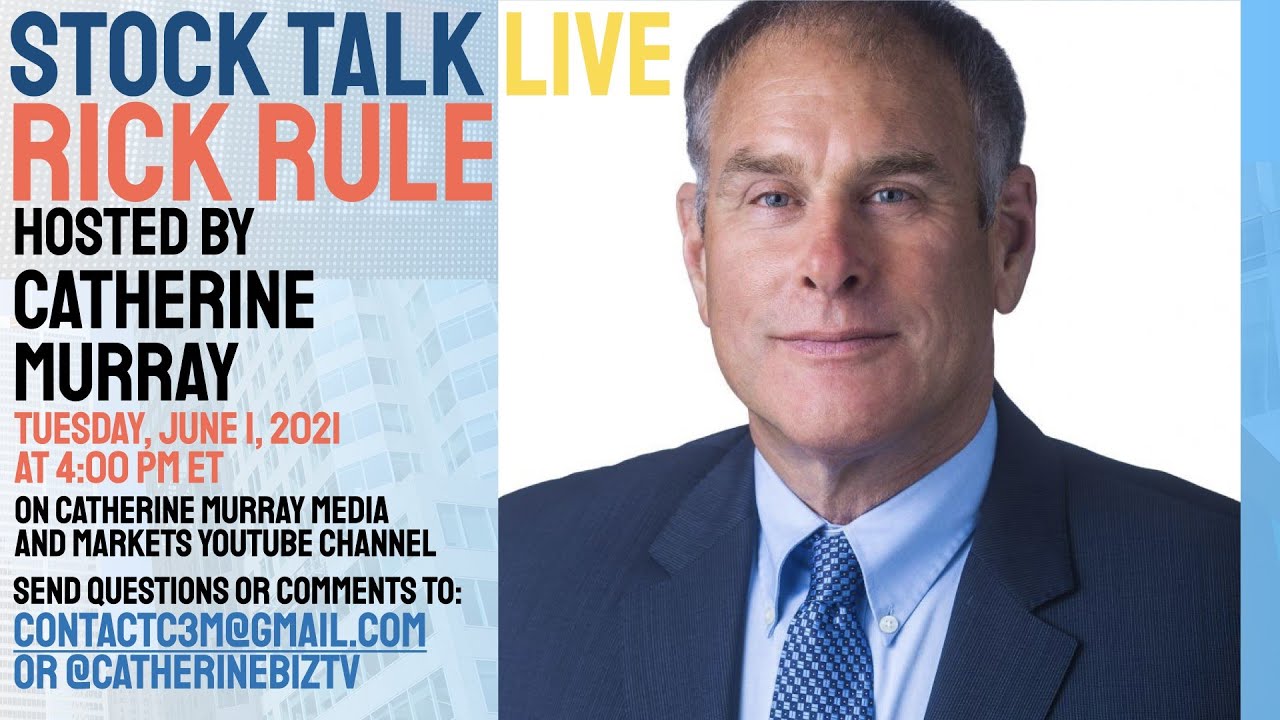
It’s worth listening to Rick Rulen’s stuff, IMO.
4 Likes
Oil speculators have started betting that the $100 barrel price will still be broken. Is this the last chance to jump on the oil train? 

https://www.wsj.com/articles/options-traders-bet-on-return-of-100-oil-11623061227
4 Likes
Marxist Pedro Castillo appears to be winning the Peruvian elections. Since Peru is one of the most important copper producers and Castillo talks about nationalizing mines, it is possible that his election victory could have a significant negative impact on copper supply in the coming years. At the very least, investments in Peru’s mining industry would most likely clearly decrease.
5 Likes
4 Likes
Copper and oil have already been discussed in this thread, but what about steel? This is a newbie question, but since I haven’t followed raw materials before, I have no idea where to even look. I stumbled upon this thread purely because I bought Outokumpu from a technical analysis (TA) perspective and thought it would help with timing a sale someday if I could also track the development of steel prices from somewhere.
2 Likes
If an investor is worried about the emergence of high inflation, adding a dash of commodity companies to their portfolio now provides good protection at a reduced price.
Now, inflation and interest rate fears have mysteriously dissipated from the markets for a while, but they will surely rise again sometime…
2 Likes
Is steel even truly a raw material or a metal alloy processed by a factory  ? Although steel certainly plays a significant role in economic activity.
Steel prices can be followed, for example, on this page:
https://tradingeconomics.com/commodity/steel
News flow related to steel companies is a bit more challenging to follow because many news services are paid. Top-level news on the steel industry can be followed, for example, from the news site below:
On a general level, raw material prices and news can be followed, for example, from investing.com
2 Likes
The logic behind oil and other commodities is, in many respects, very simple: to have production, you need to invest! If production isn’t increased and demand remains the same, then prices must rise!
“If nothing is done and this trend continues, guys, we should be ready for a $200 per barrel of oil. The reason is simple, if you stop investing in the oil and gas sector, you can only produce what you have today.”
“So, if there’s no fresh capital for either brownfield or greenfield investment, we cannot grow production; if we don’t grow the production, the consequence is that we’re building a short supply for tomorrow. In basic economics, short supply means a higher price. So this is the world. This is the world that we see today and this has presented some very emergent trends.”
7 Likes
Now you can read about the lack of investment in mining companies even in mainstream newspapers:
“Some supply bottlenecks have already emerged for metals such as copper, which are critical to the energy transition. There is very little new supply to address the shortfalls,” says Stephen Pearce, CFO of Anglo American mining company.
“Filling the resource gap requires continuous investment, and new mines take years to implement,” he adds.
6 Likes
Well, all sorts of things are being tried in the sector. The scale here is probably not very large on a global scale.
In recent years, thousands of miners linked to organized crime have encroached on the reserve, engaging in illegal mining. At times, clashes between indigenous peoples and miners have been violent.
Illegal mines destroy the rainforest, and the mercury used in mining pollutes water systems.
An interesting cycle is underway, if it goes like this: no investments in the raw materials sector → price of metals and fossil fuels rises → RES (Renewable Energy Sources) demand grows → raw materials run out for construction, because no investments in the raw materials sector → RES does not grow as desired → price of fossil fuels does not drop as demand decreases, etc. Does this mean that we should start looking “seriously” at the mining sector (not forgetting, or especially, logging and shovels)? 
1 Like
What is depressing the price of copper, even though it should be the most important metal in the upcoming energy transition? The Oroco thread touched upon this, mentioning that the price drop is partly artificial due to Chinese actions.
1 Like
It was hyped so much that one would think it’s normal to pull back sometimes. Nothing is likely to change the fact that the need for copper will be great long into the future. China is trying to slow things down for its own benefit, but that doesn’t change the facts.
4 Likes
This is probably the most direct explanation:
https://www.mining.com/copper-prices-at-7-week-low-on-chinese-crackdown-fears/
Of course, even China’s reserves are not endless 
2 Likes
Picking up from one of Werner’s morning videos, the rise in commodity prices so far has mainly been due to speculation about price increases. This kind of speculation can change direction very quickly, even if the underlying driver for price development remains completely unchanged.
3 Likes
By chance, I found this Canadian company that is looking for gold and other minerals in Finland, Gold Line Resources.
The Oijärvi project is underway north of Oulu, which includes the Kylmäkangas deposit.
I don’t know much more about it than what is said in the video, but it’s interesting.

1 Like
Thoughts on Investing / Bloomberg commodity price trends.
Will the Fed’s interest rate hike plans for 2023 and China’s state-backed focus on commodity markets derail price development?
So far, Trafigura & Invesco are keeping the possibility of a “super-cycle” open, meaning good commodity demand with good price development would be a longer phenomenon than a temporary spike from the coronavirus rebound. This includes China’s recent interventions.
The cool-down in many raw materials comes after the Bloomberg commodity gauge reached multiyear highs. Analysts including those at Trafigura Group have said tight supplies and rampant demand point to the possibility of another supercycle – an extended period during which prices are well above their long-term trend.
The slump in many resource prices deepened this week after Fed officials sped up their expected pace of policy tightening, fueling worries that the U.S. central bank would soon pare stimulus that’s helped spur stellar gains in metals, agriculture and energy.
“We believe we are in the early innings of a decade long strong cycle in commodities, similar to the cycle that took place from the late 90’s through 2008,” said Jason Bloom, global market strategist for Invesco, which oversees $1.4 trillion assets for clients. “The supply constraints are relatively insulated from the language of the Fed in a given meeting. China can push around prices in the short-term by releasing reserves, but they don’t control markets.”
2 Likes
Iran’s new president is on the US sanctions list for executing political prisoners. The Iran deal has been the bears’ primary and perhaps even last credible argument against rising oil prices, so now it seems the sky’s the limit 
2 Likes