PYN Elite Fund

I was there, and I didn’t have to sit alone; the hall was packed to capacity. A few general observations in no particular order:

- Regarding audience questions, when asked if Petri has a so-called “war chest” if the USA dips and Vietnam dips with it, he said absolutely not, because at these valuation levels, he doesn’t dare to be anything other than “all in” in Vietnam.

- Over the past year, the number of unitholders has grown by about a thousand (5,000 —> 6,000). Considering the fund has operated for almost 30 years, the growth in the number of investors over the last year has been extremely strong.

- Banks previously represented up to about 50% of PYN; now, profits have been significantly realized there, and they have moved, for example, into the steel industry, which they believe in heavily because of large construction projects in Vietnam in the coming years. They still believe in banks, but more attractive opportunities arose, so funds were allocated to them. Banks have provided excellent returns in recent years.

- Generally speaking, everything was overly positive in Petri’s traditional “eternal optimist style,” and Petri found hardly anything negative about Vietnam or the near future. When asked about the biggest risk to the fund, Petri mentioned that if other countries try to replace Vietnam’s one-party system with democracy, this could be a risk for the fund. And, of course, he also mentioned wars in general.

What bothered me was that, once again, many figures and results were presented as is, but also in a way that excluded Vingroup. If the fund had invested in Vingroup, the return would have been significantly better. However, Petri saw skipping Vingroup as a success and a good thing.

In my opinion, Petri often isolates individual successful stocks from the index and explains how “if XXXX is not taken into account in the index,” they would have outperformed the index. It’s a bit like saying we performed quite well against the S&P 500 if we don’t count Tesla and Nvidia over the last 10 years :sweat_smile:

Well, all in all, it was a very nice event, and as “physical dividends,” a baseball cap and some macarons were also picked up. Although I always view heavy hype with some reservation (especially nowadays after following the fund’s activities for several years), I would say regarding the investment: a strong HOLD. If I had to buy or sell, I might cautiously add, but at least I’m not selling my own holdings.

57 Likes

Thanks Sinappikissa.

I agree with you regarding that Vingroup adjustment. In the interest of fairness, one could also strip out the returns of the index’s best performer from the historical figures. But all in all, basic Petaa—it was a very bullish evening based on the recording.

Petri mentioned that he took out a 6 million euro bullet loan from the bank and invested it in the PYN Elite fund during the late November subscription. According to him, the investment is currently down by maybe a couple of percent. He stated that his three previous similar loans have performed well, if I recall correctly, over a two-year investment horizon. Personally, I might follow Petri’s lead. I won’t make it for this month’s subscription, but I’ll join next month’s instead.

5 Likes

Since Petri is a so-called insider, his own investments in the PYN fund should always be published immediately after a subscription or redemption occurs. Otherwise, the reliability of the reports cannot be verified from any source.

19 Likes

I had the opportunity to interview Maggie Yi from the PYN Elite portfolio management team, and this time in person (face 2 face), as she was visiting Finland! :smiling_face:

10 Likes

Quote from Pyn’s April review

The majority of listed companies reported a strong Q1, with aggregate earnings growth of 36% y/y. The key companies in PYN Elite’s portfolio performed even better: earnings growth was 41% y/y, led by HPG, MWG, and KDH. However, these results do not currently seem to be affecting the companies’ share prices in the market.

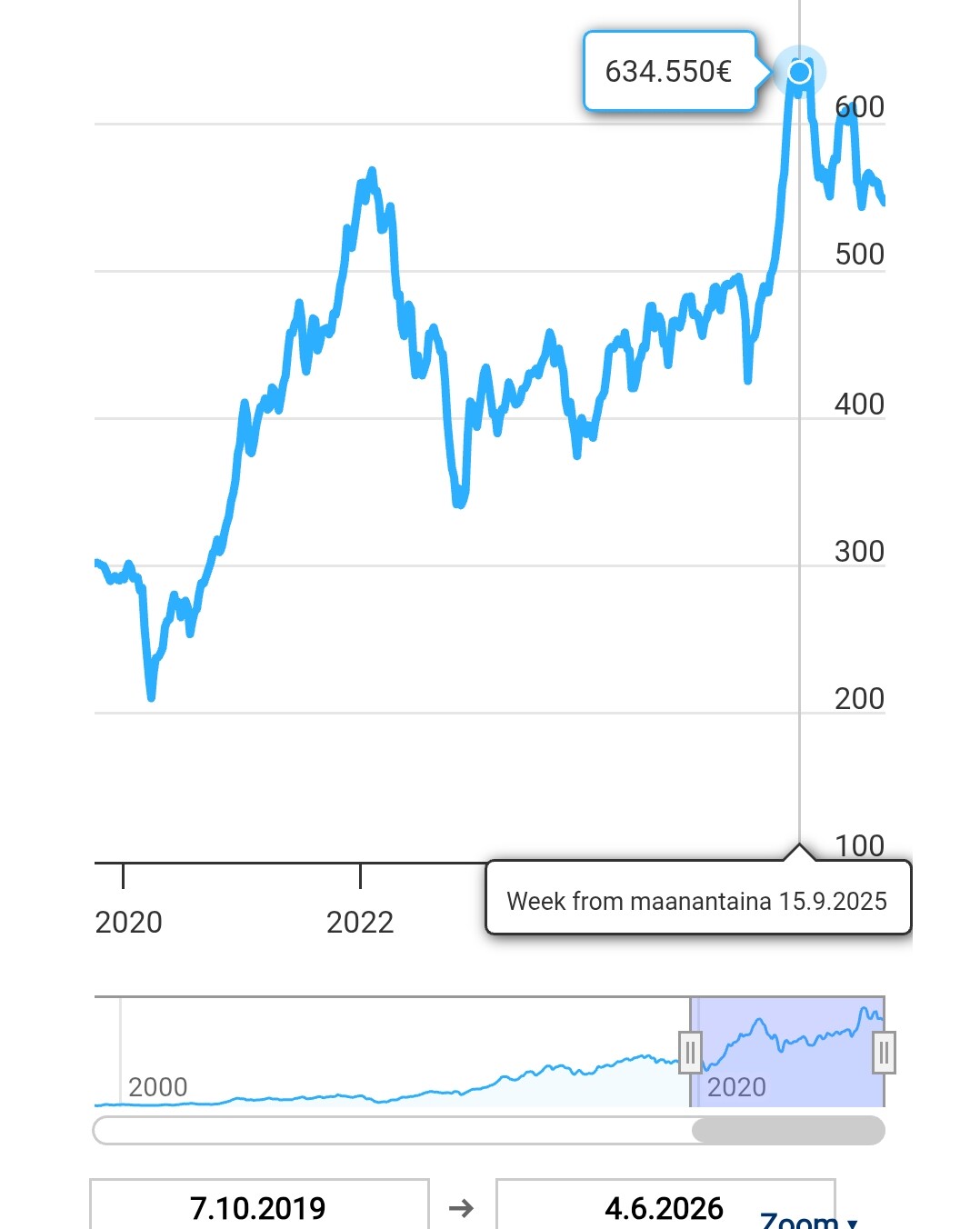
I’ve been following and owning Pyn for a few years now. They are always hyping up the strong earnings growth of the portfolio companies. From memory, it’s usually around 25-40% per year. A few years ago, the portfolio’s P/E ratio was somewhere around 7-8. However, Pyn’s value has been “mörning” (stagnating) horizontally for several years now, and as I understand it, the current portfolio’s P/E is higher than it was back then, since the banking sector weight has been reduced.

In my opinion, things don’t quite add up in this equation. Strong earnings growth in companies that originally had low valuations has not materialized as fund returns. If the earnings growth figures in the marketing material are accurate, then something in Pyn’s operations must have gone quite badly south in recent years. Either in stock picking or in the timing of buys and sells.

17 Likes

Edit: Adding the text as well.

Hardly sideways, I’d say. “A few” is a relative term—3 to 99 by some definitions. I’ve been involved since October 2022 myself, adding a couple of tranches along the way. Granted, I’ve done some selling too. I’ve been satisfied, and if my position were smaller, I’d be adding more.

There seems to be confidence in Vietnam’s development, and why wouldn’t there be.

7 Likes

The nominal return over the last five years or so is approximately 0%. In other words, it’s been flatlining.

2 Likes

The fund review for May is available here :sun:

3 Likes

aiming We are still waiting for a clarification from the PYN Elite fund regarding the investments and divestments made by Petri Deryng in the fund. Transparency should be crystal clear when it comes to the fund’s portfolio manager. What is the authorities’ stance on this?

3 Likes

Hi, Petri was asked about his allocation in PYN Elite during the investor evening in May. Petri replied as follows: “My own share of the fund has grown because our management company (PYN Fund Management) has achieved good results during strong years and distributed dividends, which I have then invested into the fund. I am now likely among the three largest clients.”

This segment can be found in the recording of the investor evening at the 1:49 mark: Sijoittajailta 2026

Best regards, Kari Räisänen / PYN Elite

15 Likes

The management of a listed company often possesses insider information regarding the company’s business operations. This information affects the company’s stock price, and using it for buying or selling puts current owners or prospective investors at a disadvantage, as these trades impact the share price.

In the case of a fund, its value is influenced by the stock prices of the companies it owns, and the fund management company does not have insider information regarding the future development of those stock prices. Market prices are driven by investors considering buying or selling, and no one has access to their private thoughts.

6 Likes

The article below explains that Vietnam aims to attract more long-term and “higher quality” foreign investment, particularly in technology, AI, and the green economy.

The goal is to increase research and development, technology transfer, and the integration of Vietnamese companies into international production chains, as well as to establish Vietnam as a significant production and innovation hub.

Sixth, improving mechanisms and policies related to foreign indirect investment. Developing medium- and long-term capital markets in a transparent, modern, safe, and sustainable manner, reducing dependence on short-term credit markets; urgently building and putting into operation international financial centers.

4 Likes

The article below explains that over the past three decades, Vietnam has emerged as an economic superpower in Southeast Asia. Its trade with ASEAN countries has exploded, and the country is already one of the region’s most important hubs for manufacturing, logistics, and digital commerce.

According to the piece, future growth will be driven particularly by the digital economy, green energy, and electric vehicles. However, continued success requires companies to invest in technology and sustainable development.

To make better use of regional FTAs, Vietnamese enterprises need to enhance competitiveness, strengthen brands, increase technological content in exports, and meet higher standards in green transition, digitalisation and sustainable development.

At the 27th ASEAN Economic Community Council Meeting, Deputy Minister of Industry and Trade Phan Thi Thang affirmed Vietnam’s readiness to work closely with other ASEAN members to enhance the resilience of the regional economy.-

https://vietnamlawmagazine.vn/vietnam-affirms-position-in-asean-creating-new-growth-space-79797.html

8 Likes

Here is a long 10-page “pdf summer letter” from Petri :slight_smile:

I am writing this investor letter in the Sipoo archipelago. The little ones of the bird families have hatched and are hopping around in their nests under the protection of their mothers. Even Trump’s tweets are being forgotten.

Things are happening around the world, but there is also good news, as peace negotiations between the United States and Iran have progressed. As a result, inflation expectations have moderated and the probability of interest rate hikes has decreased.

In the Vietnam stock market, all attention is still focused on the stocks of the Vingroup cluster. At the same time, many other companies are as if in hibernation, even though they have published good results and excellent earnings outlooks.

In this investor letter, I go through the buys and sells of the PYN Elite portfolio over the past year. The weight of banks in the portfolio has decreased significantly as we have taken profits from them for new investment ideas.

Now, a couple of hours of tennis, then the sauna and the sea.

9 Likes

Vietnam is striving to make its industry lower-emission than before to maintain its competitiveness in export markets.

The country’s goal is to improve energy efficiency, reduce emissions, and increase circular economy solutions, especially in energy-intensive sectors; thus, the UN industrial organization is supporting this transition by providing technology, expertise, and financing solutions.

The main objective is therefore to combine economic growth, better + more stable energy security, and climate goals so that Vietnam strengthens its position in the international competition.

Access to international markets, investment, and global value chains is increasingly shaped by countries’ ability to reduce emissions, improve resource efficiency, and build resilient, low-carbon industries.

For an export-oriented economy deeply integrated into new-generation free trade agreements such as the EVFTA, CPTPP, and RCEP, green growth is no longer a parallel agenda to industrial development; it is becoming a prerequisite for sustaining it.

6 Likes