PYN Elite Fund

Here is an article about how Vietnam rose in January to become the country with the largest trade surplus with the United States, surpassing the likes of Mexico and China.

Export growth to the United States was strong, while direct shipments from China decreased. This development was accelerated by the tariffs imposed on China, but at the same time, the U.S. suspects Vietnam of acting as a transit country for Chinese products.

7 Likes

Here is PYN Elite’s latest investor letter :slight_smile:

The situation in the Persian Gulf is particularly serious for Asian economies, as they import most of the crude oil they need from the Middle East. We believe political pressure will ensure that a US and Israeli attack against Iran will not last for several months.

Vietnam’s economic outlook is good, and accordingly, we expect strong earnings growth from PYN Elite’s portfolio companies. We have aimed to take advantage of stock price fluctuations during the war, and through buy and sell orders, we have been able to adjust portfolio weightings.

We see the Vietnamese market as attractive in the short, medium, and long term.

5 Likes

Petri Deryng was interviewed by @Juha_Kinnunen last Friday! :movie_camera:

14 Likes

According to Citi, Vietnam’s economic growth will remain stable this year thanks to strong domestic demand and investment. The biggest risk is seen to be the rise in energy prices caused by geopolitics, which will accelerate inflation and, of course, also increase production costs, especially in industry.

Expensive imported energy and a strong dollar are weighing on the local currency, but the dong’s value is nevertheless expected to decline only moderately. Citi intends to strengthen its position in Vietnam by helping companies protect themselves from these familiar global market risks and uncertainties.

Higher fuel costs can increase input prices across multiple sectors, including mining, chemicals, fertilizers, plastics, and construction materials. In some industries, fuel accounts for a significant share of intermediate inputs, making them particularly sensitive to price changes.

As a result, inflation could rise in the near term. Citi expects Vietnam’s inflation, which stood at around 3.4% year-on-year in February, to approach 4% in the coming months if global energy prices remain elevated.

5 Likes

Vietnam’s economic growth slowed in the first quarter of this year as the Middle East conflict raised energy prices and inflation.

Gross domestic product grew by 7.83 percent, but the government’s ten percent target is at risk. Rising fuel prices turned the trade balance into a deficit, but then again, large foreign investments and the government’s support measures bring faith in future growth.

Vietnam’s struggle highlights the vulnerability of “frontier” manufacturing hubs to energy-driven supply chain disruptions. Investors are closely monitoring whether Hanoi’s efforts to subsidize energy and diversify oil sources can stabilize margins for the country’s massive electronics and textile export sectors before the high-demand second half of the year.

https://www.investing.com/news/economy-news/vietnams-q1-growth-cools-as-middle-east-energy-shock-drives-36b-trade-deficit-4597510

4 Likes

Strong GDP growth doesn’t automatically mean strong stock market returns

In communist or strongly state-controlled economies, strong growth can be maintained for a long time by directing credit, construction, infrastructure, exports, and foreign investments to desired sectors. This is reflected in production, employment, and GDP, but not necessarily in the results of listed companies or the returns of minority shareholders.

In Vietnam, a large part of the growth relies on foreign investments and the production of foreign companies. The country benefits from this at the macro level, but not all value creation remains within Vietnamese listed companies. In addition, the stock market index is not the same as the entire economy. If the index is weighted towards banks, real estate, and politically important conglomerates, the market can lag even if exports are booming.

Then, on top of that, there are the basic problems of frontier markets: weaker governance, political steering, restrictions on foreign investors, market narrowness, and corruption. It is precisely corruption and “good old boy” networks that erode trust, because capital is not necessarily directed to the most efficient players, but to those with the right connections. In such cases, investors demand a higher risk premium, and the market does not receive the same valuations as in more open and transparent economies.

The same phenomenon was observed in China for a long time. The economy grew at a furious pace, but the stock market was not a pure mirror of this growth, because the system optimizes more than just shareholder returns: stability, employment, strategic industries, and state’s own objectives.

So, in short: Vietnam can grow rapidly without the Vietnamese stock market automatically being a great investment. Economic growth can be more beneficial for the system than for the shareholder.

And perhaps the biggest question is this: which works better in the long run: an open market economy, strong owner protection, and transparent rules of the game, or a state-led model that can achieve rapid growth but where power, connections, and political goals often take precedence over the market?

27 Likes

According to the article below, Vietnam’s stock market rose because FTSE Russell confirmed that the country will move to the emerging markets category later this year.

The decision could bring in billions of investor funds and strengthen the market’s position. Naturally, the two-week ceasefire between the United States and Iran also supported the upward sentiment.

“This marks a major milestone for the market after nearly a decade on the watchlist, supported by key structural improvements such as the global broker mechanism, 2024 non-prefunding mechanism and the formalization of failed-trade handling,” said Tyler Manh Dung Nguyen, chief market strategist at Ho Chi Minh City Securities.

8 Likes

The March fund review has been published! :blush:

8 Likes

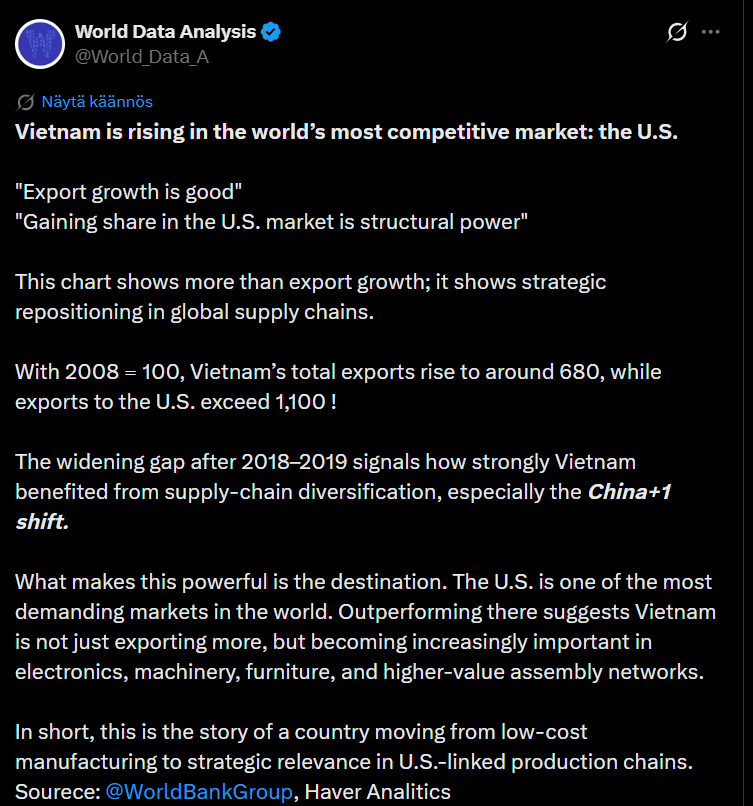
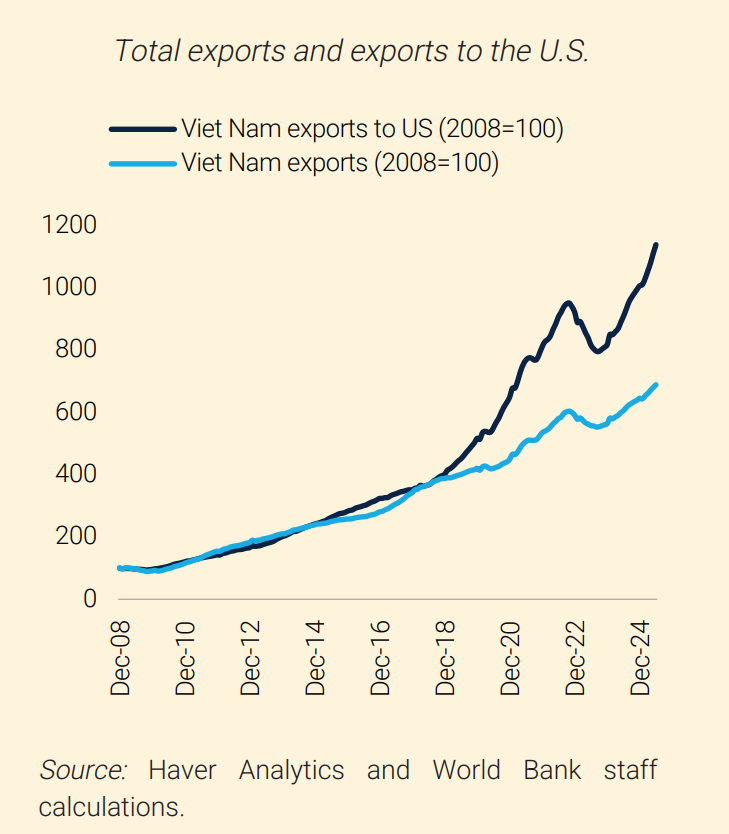
The tweet below highlights that Vietnam has significantly increased its exports to the United States.

Vietnam has benefited from the United States’ efforts to reduce its dependence on China and has emerged as a strategic electronics exporter to the US. This has helped transform Vietnam from just a low-cost factory into a strategically important player in the manufacturing of electronics and machinery, for example. It also seems that the current disagreements between China and the US have contributed to this.

The tweet provides more details and a graph on the matter.

https://x.com/World_Data_A/status/2042867640993992944


5 Likes

I haven’t read the entire discussion thread, but I haven’t found any discussion regarding Non-Market Economy (NME) over the last 6 months.

How high do you estimate the risk to be that the US targets Vietnam with super-tariffs and military threats right at the end of the year, after first dealing with more urgent matters—like slipping out of the Strait of Hormuz with its tail between its legs and leaving the cleanup to others, conquering Greenland, and bombing Cuba back to the Stone Age?

The Yanks have a list of 14 non-market economy countries, and Vietnam is one of them. The company it keeps isn’t very flattering: Angola, Armenia, Azerbaijan, Belarus, China, Georgia, Kyrgyzstan, Laos, Moldova, and the main devil itself, Russia (status was reverted to NME in 2022), as well as Tajikistan.

Google’s AI says that:

"The United States still classifies Vietnam as a non-market economy (Non-Market Economy, NME). As of April 2026, the situation remains unchanged, even though Vietnam has implemented extensive reforms and is a strategically important partner for the United States. - -

The US Department of Commerce confirmed in August 2024 that it would not grant Vietnam market economy status. The decision was based on six statutory factors in which the Department still saw significant deficiencies:

  • State control: The government is considered to interfere too much in prices, costs, and resource allocation.
  • Labor rights: Lack of independent trade unions and restrictions on free wage bargaining.
  • Currency and banks: Restrictions on the convertibility of the Vietnamese dong and the central bank’s dependence on the state.
  • China connection: Fear that Vietnam is being used as a ‘backdoor’ for bringing Chinese products into the US to avoid anti-dumping duties. - -

Maintaining this status means that Vietnamese products are still subject to potentially higher customs duties:

  • Anti-dumping duties: The US uses prices from ‘surrogate countries’ (such as Indonesia or the Philippines) to calculate Vietnam’s production costs, which often leads to higher tariffs.
  • Example: In April 2026, a final anti-dumping duty of 186.84 percent was imposed on chassis imported from Vietnam. - -

The Vietnamese government has expressed its disappointment and considers the decision unfair, citing that 72 other countries (including Japan and Canada) already recognize it as a market economy. The country intends to continue working to change the status as part of the comprehensive strategic partnership between the nations."

So, there’s that.

7 Likes

The risk of military intervention from the United States is pretty much zero. What would be the objective of such an intervention? There’s no influential “Israel” or “domestic Cuban community” lobbying/manipulating for intervention in Vietnam. And Vietnam is not in Trump’s backyard.

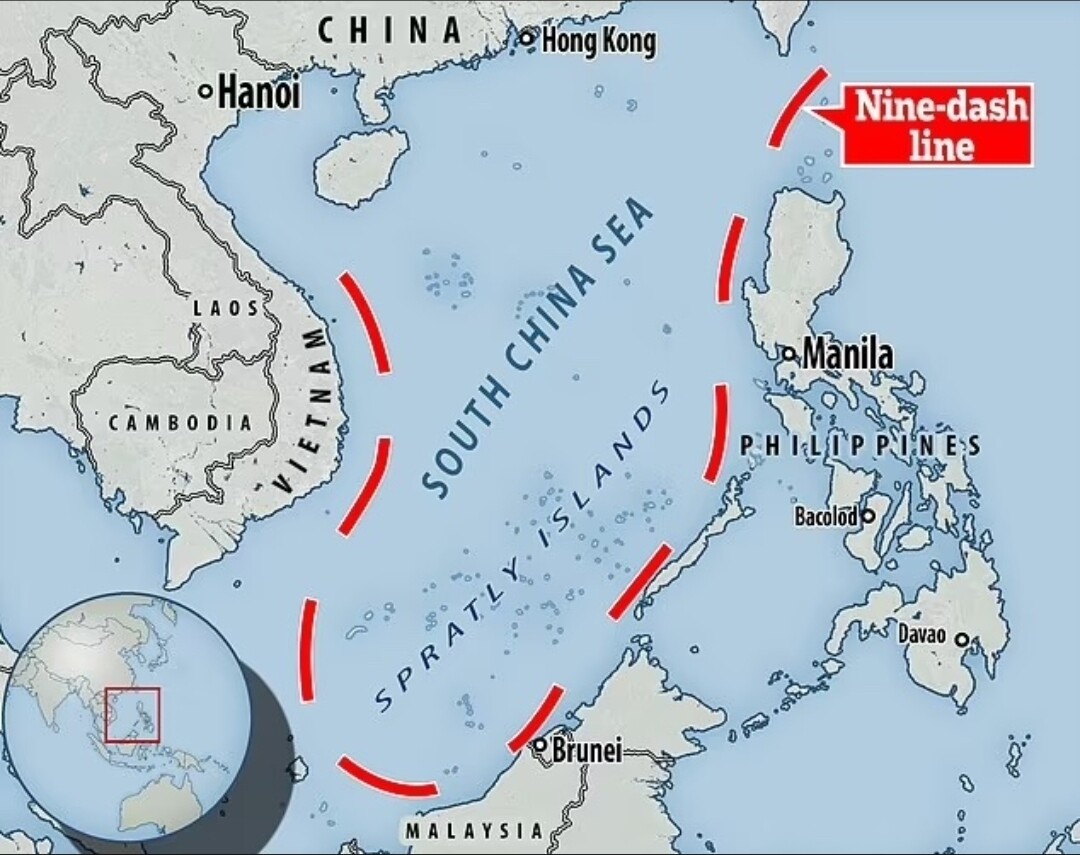
Instead, Vietnam, like for example the Philippines, has the seeds of conflict with China due to, among other things, China’s extensive territorial claims in the maritime areas off Vietnam’s coast.

Regarding tariffs, Vietnam could indeed face new problems with the US due to its massive trade surplus.

5 Likes

There still seem to be some gray islands for Trumpland’s needs. :roll_eyes:

I couldn’t find a map of China’s actual claims. However, I found a funny story while looking for it. Vietnam banned the 2023 Barbie movie because of this map:

Source: Map of the Week: The Film Industry's Nine Dash Line Problem

This Barbie map is a bit difficult for sailing. Source: same.

P.S. It’s actually a surprisingly good movie, representing that old good American cinema based on goodness and honesty. That America is no more, at least not in the USA.

1 Like

That Barbie map does indeed more or less depict China’s claim, which extends right off the coast of Borneo—specifically, the Malaysian territories and Brunei located there.

1 Like

Japanese Prime Minister Sanae Takaichi is in Hanoi meeting with Vietnam’s leadership, with the goal of boosting economic and security cooperation between the two countries, according to reports.

The agenda includes energy, technology, critical minerals, and regional stability, among other topics. A key factor in the background is the sharp decline in new Japanese investment in Vietnam, even though trade between the two nations has continued to grow.

Takaichi is also expected to raise concerns from Japanese companies, such as payment delays and bureaucracy surrounding projects.

https://www.investing.com/news/economy-news/japanese-pm-takaichi-arrives-in-hanoi-to-address-sharp-investment-decline-4654734

6 Likes

It’s good to notice that the article refers to the “Free and Open Indo-Pacific” program established by Japan and Vietnam back in 2023, which aims for regional stability. AI mentioned that the participants include “Japan, USA, India, Australia and with ASEAN, European, and Pacific Island nations”.

"Beyond economic negotiations, Takaichi’s itinerary includes meetings with Vietnamese counterpart Le Minh Hung and a scheduled address at Vietnam National University.

The speech is expected to focus on the evolution of Japan’s “Free and Open Indo-Pacific” strategy, emphasizing regional stability".

Yle also reported on the matter, citing Reuters as the source.

A comment from the Japanese Prime Minister is circulating on social media, stating that after recently being a guest of Trump’s, he will never again set foot on US soil to be insulted. That’s quite a strong statement from a high-level global diplomatic player, especially considering that in Japanese culture, politeness is a value in itself.

2 Likes

By the way, was that comment regarding the banter during the US visit just an AI-generated deepfake? I seem to recall it being debunked as one somewhere, and I have a feeling it would have gained more coverage in the mainstream media if it were authentic.
The Japanese Prime Minister has, after all, consistently chosen a very Trumpian approach so far.

But anyway, it’s excellent that cooperation with Vietnam is going well for him regardless.

1 Like

That’s exactly why it’s important to state the source, as I did. Everyone then evaluates how reliable the source is. Social media is generally not considered a very reliable source.

Juurikki hasn’t been particularly interested in matters regarding Japan or Vietnam, so, for example, the evidentiary value of the video in question is something worth discussing.

The most unfortunate part of the AI era is that the evidentiary value of even authentic videos is so easy to question. Just like Trump questions all media with his “fake news” slogan.

For your information, the biggest camera and video equipment companies have already launched a counterstrike and created a recording format that reveals all edits. There was an article about it in Digi Kuva magazine. Look it up yourself.

1 Like

April fund review has been published! :smiling_face:

6 Likes

The article below states that the Vietnamese economy is doing quite well; growth continues briskly, trade is active, retail sales are strong, and in addition, foreign investment is increasing.

Imports are growing faster than exports because the country is purchasing, among other things, machinery and production supplies. Of course, energy is nevertheless increasing inflationary pressure.

Vietnam’s economy recorded GDP growth of 7.83% in the first quarter of 2026. Trade activity showed exports rising 19.7% and imports increasing 28.7% year-on-year over the first four months of 2026, resulting in a trade deficit driven by machinery and intermediate goods imports.

https://za.investing.com/news/stock-market-news/vietnam-posts-783-gdp-growth-in-q1-2026-93CH-4298645

7 Likes

Was anyone at the Pyn investor evening yesterday? It would be nice to hear about the atmosphere and especially the listeners’ own observations. I believe a recording of the event will be published as well.

5 Likes