Itselleni Prolight on no-no koska se on yksi hallituksen pj Masoud Khayyamin firmoista. Spectracuressa CEOna aiemmin, vuosikausia ei mitään edistystä, kovia lupauksia vaan. Pr-tiedotteita. Osakeanteja. Joku faasi 2 piti alkaa jo 2019 mutta mitään valmista ei tullut… Tuotekin on ihan käsittämätön viritys…
1 tykkäys
Miten sitten validaation jälkeen pystyttäisiin aloittamaan jo kaupallistaminen H1? Sehän valmistuisi vasta H1 2026, jonka jälkeen lupien saamisessa menee vielä jotakuinkin vuosi?
Ei Spectracureltakaan ihmeitä odoteta, kun markkina-arvo alle 10MEUR antihinnalla, josta yli puolet käteistä. Osaketta ei seuraa kukaan ja lappu vaihtaa omistajaa 5x merkintähinnalla, vaikka osakkeita kyllä riittäisi kaikille, kun osakekanta kymmenkertaistetaan, jos warrantitkin huomioidaan.
Oletko tarkemmin firmaa seurannut? Ilmeisesti tänä vuonna olisi jotain tutkimuksia valmistumassa. Jos tulosten jälkeen projektien arvoksi voi laskea edes muutaman miljoonan euron, niin rahoituskin olisi taas turvattu warranteilla pitkäksi aikaa.
Tällä kaverilla ei taida olla hirveästi osaa eikä arpaa firman varsinaisessa toiminnassa. Se ei ole ollut juurikaan esillä edes esittelemässä firmaa tai hoitamassa sijoittajasuhteita julkisesti vaan hommat on hoitanut aina pitkälti toimari.
Lisäksi hyvänä uutisena: Masoud on kieltäytynyt PJ ehdokkuudesta tulevassa yhtiökokouksessa

Miten sitten validaation jälkeen pystyttäisiin aloittamaan jo kaupallistaminen H1? Sehän valmistuisi vasta H1 2026, jonka jälkeen lupien saamisessa menee vielä jotakuinkin vuosi?
Niin, aikataulun realistisuutta olen itsekin miettinyt. Pinnallisesti tutkimusten ja arviointien tyypillisiä kestoja peilaten tuon pitäisi olla melkein mahdotonta. Tai kyseessä on firman strategista viestintää antien kuumotellessa niskaan, ja H1 2026 viittaa vasta hakemuksen lähettämiseen.
Jos ottaa optimistisen näkemyksen: Nuo ohjeelliset lupaprosessin kestot eivät välttämättä pidä paikkaansa ja Prolight on valmistellut hakua jo pitkään. Luulen että byrokratian osalta moni vaihe on jo meneillään tai alkaa pre-validaation päätteestä, mutta tuo validointitutkimuksen kesto mietityttää eniten. On aika puristus saada riittävä määrä käyttäjiä tuossa ajassa.
Vastaavissa POC validoinneissa otantakoko on ollut 500-1500 potilasta. Tuntuu kuitenkin siltä että käytännössä nämä isot validoinnit ovat olleet puoliksi ennakkomarkkinointia. Isot firmat joskus kutsuukin validointia markkinointitermein “early adopter program” ja markkinoilletulo onkin vähän väljempi prosessi. IVDR ei aseta selkeää määrää otannan koolle, mutta käytännössä 95% luottamusvälit siinä tulisi saavuttaa, ja siihen pitäisi riittää huomattavasti pienempikin otanta. Voihan se olla että myös Prolight menee tätä tietä. Tutkimuksen aikana laitteet pitää merkitä “vain tutkimuskäyttöön” ja niistä saa veloittaa nollakatteen, mutta sitä kautta tuotannon ja näkyvyyden voi saada vauhtiin ennen CE-merkintää. Toivon mukaan tuossa vaiheessa mukana olisi kuitenkin jo markkinointikumppani.
Prolightilla on jo 2023 marraskuusta ISO-13485-standardi. Tämäkin vaihe voisi viedä 6-18kk. Tämän lisäksi se on jo myös sopimusvalmistajalla. Mdx CRO nimitettiin validoinnin kumppaniksi jo yli vuosi sitten. Vaikka sen tähän asti nimetty funktio on validointitutkimuksen toteutus, sen ydinliiketoimintaa on myös regulatoriset hakuprosessit ja tekniset dokumentaatiot. Jos Prolight on tehnyt hommat fiksusti, se myös on valmistellut hakemusta jo pitkään kumppaninnkanssa ja toivon mukaan tutkimukseen osallistuvat klinikatkin on jo sovittu.
Lopullisen hakemuksen vauhdittaminen saattaa olla myös suurena osasyynä sille miksi erillinen pre-validaatio suoritettiin ja miksi se tehtiin niin kattavana kolmannen osapuolen suorittamana tutkimuksena. Jos laitteeseen ei tarvitse tehdä olennaisia muutoksia, pre-validaation pohjalta saattaa olla mahdollista viimeistellä suurin osa hakemuksen dokumentaatiosta, ja niitä voi lähettää hakemusta arvioivalle taholle (“notified body”) jo ennalta. Lopulliseen IVDR lupaan se ei riitä, koska näyttö suorituskyvystä pitää suorittaa hajautetusti useilla klinikoilla, ja tämä tehdään vain St Thomasin sairaalassa. Hyvässä tapauksessa validoinnin ollessa valmis, kaikki muu on jo dokumentoitua ja auditoitua, ja haku prosessista jäljelle jää lopullisen validoinnin kvalitatiivinen ja kvantitatiivinen arviointi. Kun arvio on kokonaisuuudessa suoritettu, luvassa kestää enää 1-2kk.
Prolight ei kuitenkaan tietääkseni ole nimennyt ennalta tahoa (“notified body”) joka suorittaa hakemuksen arvioinnin. Jotta markkinoille voitaisin päästä 2026 kesästä, olisi arvioinnista oltava jo sovittu. Tätä tietoa ei kuitenkaan julkaista muutenkaan aina ollenkaan, liekö syynä sitten sopimusten klausuulit vai se että näitä tahoja ei haluta nähdä “kumppanina”. Pienen googlailun perusteella moni firma ilmoittaa tästä vasta kun se tiedottaa toimittaneensa esimerkiksi tekniset dokumentaatiot arviointiin tai vasta kun CE-merkki on myönnetty.
Kokonaisuudessa kuitenkin aika paljon jossittelua ja loppukädessä todettava että Prolight on kertonut äärimmäisen kunnianhimoisesta aikataulusta, mutta se ei itse ole kertonut kovin hyviä perusteita sen saavutettavudesta. Tämä voisi olla hyvä kärki yhtiökokouksen kysymyksiin.
2 tykkäystä
Pahoittelut spämmistä Prolight-ketjuun. Prostatasyöpä on hankala kun on niin yleinen, että kilpailu on kovaa. Pitäisi olla urologi että pysyy kartalla skenestä. Orioninkin lääkettä epäilin - olin väärässä.
Mutta paikallisessa tarvitaan uusia hoitomuotoja koska koko prostatan poisto on liiallinen hoito monelle ja aiheuttaa haittoja. Ulkoinen sädehoito on toinen vaihtoehto ja sisältää eri haittoja.
Tämä spectracuren tekele menee kategoriaan fokaaliset ablatiiviset hoidot. Siinä annetaan käsittääkseni verteporfiinia laskimoon ja prostataan viedään valokuitu jonka avulla lääke aktivoidaan. Paikallisiin ablatiivisiin hoitoihin on ollut HIFU ultraääneen perustuva menetelmä jo 2015 lähtien. HIFU meni de novo hyväksyntäreittiä. Sitten on fokaalinen laser, kryo, radiotaajuusablaatio ja pari muuta. Nämä kilpailijat pääsivät 510k reittiä. Eli kaikki on medical deviceja ja käyttö syövän hoidossa on off label.
Poikkeus on Tookad joka on verteporfiinia vastaava lääkeaine yhdessä käytettäväksi PDT kanssa ei saanut FDA hyväksyntää, mutta se yrittikin drug approval reittiä. EMA taas hyväksyi. Eli euroopassa on jo hyväksytty fokaalinen PDT eli täsmälleen spectran hoitoa vastaava.
Spectralla ei varmasti olisi muskeleita drug approval tutkimuksiin vaan 510k. Tällöin ei tule olemaan mitään varsinaista vahvaa näyttöä hyödystä. En tiedä mikä spectran niche olisi kun kilpailua on noin paljon.
-matala valuaatio, mutta itselle liian monimutkainen pitkään holdiin. Myös liian binäärinen case omaan makuun (diamyd poikkeus  ) Jos anti menee läpi ja biotech sentimentti elpyy, eiköhän tämäkin tuplaa helposti… mutta siis edelleen uusia hoitoja tähän tarvitaan ja markkina on ISO. Itse betsaan epäsuorasti isotooppihoitojen kautta (Telix ja Curasight)
Tulipa vielä luettua Spectran antiesitettä. Kovasti puhetta faaseista eikä sanaakaam medical device regulaatiosta. Yrittävät ensin uusiutuneeseen paikalliseen prostatasyöpään. Tähän tulee vielä palamaan tuohta paljon.
2 tykkäystä
Kiitos, kivinen tie edessä siis. Tällaisilla firmoilla pitäisi olla joku rahakas pääomistaja, joka takaisi annit ilman korvausta. Nyt käytännössä kuka tahansa jolla on vähän enemmän rahaa saa takausdiilin ja piensijoittajat nauttii diluutiosta. Sitten takaajat dumppaa osakkeet markkinoille ja puolen vuoden päästä hankitaan taas takaajat warranteille ja sama meno jatkuu.
Ja annit toteutetaan aina viime hetkellä, jolloin joutuu ottamaan aina kalliita siltalainoja. Sitten uutta antia, josta 25% menee erilaisiin kuluihin. Nyt näyttää kuitenkin, että johto ei itsekään usko, että edes puolet annista merkittäisiin, joten warrantit pitää laittaa erääntymään jo puolen vuoden päästä. Jos merkintäaste jää 50% kieppeille, niin kulut on lähemmäs puolet bruttovaroista.
Alennus TERPiin ja nykyinen markkinahinta kyllä houkuttelee, mutta saa nähdä mitä tapahtuu, kun markkinoille tulee kymmenkertainen määrä osakkeita entiseen verrattuna ja takaajat alkavat myydä niitä pois.
Ja mistä on kyse siinä, kun osaketta pumpataan 5x merkintähinnan yli juuri, kun merkintäaika alkaa? Varoitusmerkkejä riittää, eikä myöskään lisää luottoa Prolightiinkaan se, että johdossa samoja henkilöitä. Masoudilla on myös tapana julkaista molempien firmojen kohdalla pumppaus-“analyysejä” noname “analyytikoilta” lehdistötiedotteina. Voi vaan pohtia kuinka paljon firma käyttää niitä vähiä rahojaan noiden “analyysien” maksamiseen.
“Base skenaariossa” kaikki menee putkeen ja markkina-arvo on luonnollisesti jotain 400MEUR. Bull skenaariossa taas firma myydään kohta 2,5 miljardilla ja luvassa on 13 678% tuotto, kunhan vain osallistuu antiin.
1 tykkäys
Tänään tuli ensimmäiset tulokset (25/120) tuoreen veren tutkimuksista. Kurssi pomppasi aluksi tarjoten hyvän myyntipaikan. Kaikkiin tutkimusuutisiin liittyviin pomppuihin kannattaa myydä niin paljon kuin likviditeettiä riittää, koska tuloksien odotetaan olevan hyviä, jolloin tutkimuksen riskien pieneneminen voi nostaa rNPV arvoa maksimissaan muutaman prosentin. Uutiset, joilla on vaikutusta arvoon, liittyy aikatauluun ja rahoitukseen.
Antiesitteestä sai sen käsityksen, että Q2 loppuun mennessä tutkimustulokset olisivat valmistuneet kokonaisuudessaan:
Nyt kuitenkin vasta osa on valmista, vaikka tutkimus aloitettiin jo aikaa sitten. Näyttää siis siltä, että hyvä jos tulokset on kasassa vuoden loppuun menessä, jolloin varsinainen myyntilupaan tähtäävä tutkimus pääsisi alkamaan vasta H1 2026.
Tässä vielä Q2 2024 raportin yhteydessä kerrotusta aikataulusta:
Eli vuodessa aikataulu on siirtynyt käytännössä vuodella eteenpäin.
Jos siis varsinainen kliininen tutkimus valmistuu 2026 lopussa tai 2027 alussa, niin kaupallistaminen voisi alkaa joskus 2028, kun ensimmäiset luvat on saatu.
Ja silloin herää kysymys, että kuinka realistista kaupallinen edistys seuraavien 12kk aikana olisi? “Early 2026” on ainakin utopiaa kaupallistamisen suhteen tässä kohtaa. Miksi jakelukumppani edes sitoutuisi sopimukseen jo tässä kohtaa, kun mitään näkyvyyttä ei ole? Siitä syystä myös kaikki etumaksut, joita Prolight kipeästi tarvitsisi, kävisivät uskomattoman kalliiksi.
Arvioni mukaan 100% merkintäasteellakin, rahat riittäisivät juuri ja juuri 2026 loppuun. Eli ennen kuin kaupallistamista ja sopimuksia aletaan edes miettimään niin edessä voi olla parikin antia.
Likviditeetti sen verran pientä, että ei kannata lyhyelläkään tähtäimellä paljoa merkata, vaikka osakkeista todennäköisesti pääseekiin eroon kalliimmalla. Annissa ei ole käytännössä mitään merkittävää isompaa ankkurisijoittajaa mukana, niin suuri osa uusista lapuista lentää laitaan aika nopeasti.
2 tykkäystä
Arvioni mukaan 100% merkintäasteellakin, rahat riittäisivät juuri ja juuri 2026 loppuun
No se 100% merkintäaste on nyt saavutettu. Osake pysyi sen verran hyvin merkintähinnan päällä että merkintä täytettiin 30% ilman merkintäoikeuksia.

Pidän itse hyvin todennäköisenä että kaupallistamisdiili sovitaan seuraavan vuoden aikana pre-validoinnin datan tukemana. Jos sitä ylipäänsä ollaan solmimassa. En itse huolehdi mahdollisista tulevista anneista, jotka ovat pitkällä 2026 puolella.
Loistava tulos.
H1 2026 on ainakin kokonaan aikaa yrittää hakea diiliä. Sen ei tarvitsisi edes täyttää koko rahoitustarvetta, koska sen jälkeen rahaa saisi sisään taas hyvällä arvostuksella ja pienellä diluutiolla.
1 tykkäys
Todennäköisestihän pian tulee päätös ylimääräisestä lisäannista, koska anti todnäk ylimerkattiin. Merkintojä taisi tulla enemmän kuin 100%, mutta ylimääräiset toistaiseksi joutuivat vaan leikkuriin?

Pääsikö kukaan yhtiökokoukseen tai kuun lopussa pidettyyn sijoittajaesittelyyn? Kiinnostaisi kovasti tietää mitä johto kertoi tulevaisuuden aikataulutavoitteista.
Pidän melko kummallisena yhtiön viestintää aikatauluista.
- Pre-validaation tulosten piti tulla Q42024 ja varsinaisen validaation piti alkaa 2025 alussa
- Pre-validaation tulosten kerrottiin tulevan Q12025
- Pre-validaation tulokset tuli Q1 lopussa mutta ne olivatkin osittaisia ja hyvin pintapuolisia. Kokoveren tulosten kerrottiin olevan vasta tulossa H12025
- Kokoveren tulokset tuli 16.6 (kuva alla) mutta nekin ovat vasta alustavia ja tuloksia kerätään vielä.
- Varsinaisen validaation piti alkaa 2025 alussa, mutta yhtiö ei ole viestinyt mitään myöhästymisestä tai kertonut mikä on ollut hidasteena

Samassa pörssitiedotteessa implikoidaan että kyseessä on “ensimmäinen tutkimuksen vaihe”, mikä jättää epäselväksi onko ennen lopullista kliinistä tutkimusta tapahtumassa jotain uusia vaiheita.
Successful completion of the first phase of this study marks another milestone as we prepare for our pivotal clinical study.
2 tykkäystä
Tuliko lopulta sittenkin tasan 100%? Voiko olla mahdollista? Millä todennäköisyydellä?
Harmillisesti en päässyt paikalle.
Aikatauluun ei ole mitään näkyvyyttä.
Ei voi olla, että virallisessa antiesitteessä kerrotaan, että tulokset tulee kesäkuun loppuun menessä, jos se todellisuudessa tarkoittaa sitä, että tuloksia tulee 25/120 ja loput tulee sitten, kun on valmista.
Annin yhteydessä kerrottiin sen alkavan H2 2025:
A positive outcome will be essential to advance toward a strategic partnership and enable completion of the full regulatory clinical performance study, which is expected to begin in the second half of 2025.
Olen saanut sen käsityksen, että aiempi tutkimus pitää olla valmis, ennen seuraavaa tutkimusta. Joten saa nähdä ehtiikö aiempi tutkimus edes valmistua H2 aikana ja jos ehtii niin ehtiikö sitten lopullinen tutkimus alkamaan heti sen perään vielä tämän vuoden aikana? Ja, jos ehtii niin ehditäänkö siitä saada tuloksia ennen kuin rahat taas loppuu H2 2026 alkupuolella?
Ylipäätään tästä:
The results from the ongoing whole blood study using patient samples from St. Thomas’ Hospital are expected to be published before the end of Q2 2025 and represent a highly important milestone, as they could confirm the system’s performance on whole blood. Data confirming Psyros performance on whole blood has been requested by both the market and potential strategic partners. A positive outcome will be essential to advance toward a strategic partnership and enable completion of the full regulatory clinical performance study, which is expected to begin in the second half of 2025.
saa sen käsityksen, että St. Thomas -tutkimus oli valmistunut Q2 loppuun menessä ja seuraava tutkimus oltaisiin oltu valmiina aloittamaan heti perään, ehkä jo Q3 aikana. Ei varmaan menisi päälistalla läpi tällainen menettely.
Ei varmaan menisi päälistalla joo.
Tässä on viime kuun lopussa 24.6 pidetyn sijoittajapresiksen sisältämä aikataulu:

Pre-clinical validation studies on merkattu 2025 h1:seen. Vaikka näyttäisi siltä että st thomasin tutkimukset jatkuvat vielä tovin. Kliininen validointi arvioidaan 9kk mittaiseksi ja IVDR hyväksyntää toivotaan 2026 H2:lla. Näyttäisi aikalailla ennätysnopealta muutaman kuukauden ivdr-hyväksynnältä, sisältäen hakemuksen ulkoisen arvioinnin. Herättäähän tämä vähän kysymyksiä. Vähän haiskahtaa siltä että piti pistää vähän kevyellä kädellä optimistisia lukuja että anti ei mene perseelleen.
Noh, positiivisena uutisena: osake on tullut mukavat 50% ylös merkinnästä.
1 tykkäys
Tuliko lopulta sittenkin tasan 100%? Voiko olla mahdollista? Millä todennäköisyydellä?
En tiedä. Tulkitsin aluksi että hakemuksia saatiin yli 100% ja se vaan rajattiin annin ehtojen mukaan 100%, mutta kirjoitusasu antaa ymmärtää että merkintäoikeudettomia merkintöjä tuli tasan puuttuva määrä.
In addition, applications have been received to subscribe for 149 686 965 shares without subscription rights, corresponding to approximately 29.8 percent of the Rights Issue.
Tuo saa tilanteen kuulostamaan siltä, että merkinnät oli tulossa melkein täyteen ja joku joka tiesi vapaiden merkintöjen määrän, päätti merkitä loput osakkeet viime hetkellä osakkeen ollessa selvästi merkintähintaa korkeammalla.
Jos tilanne olisi ollut selvä ylimerkintä, olisi hallitus varmaan jo päättänyt jakaa lisää osakkeita yhtiökokouksen sille antamalla luvalla, tai saamme siitä tiedotteen maanantaina.
NOTE: tämä postaus on jäänyt draft-tilaan Elokuulta, ja huomasin sen vasta nyt. Aikaa on vierähtänyt joten tiedot saattaa olla vanhenneita. Joulukuussa tämä patentti myös lopulta myönnettiin.
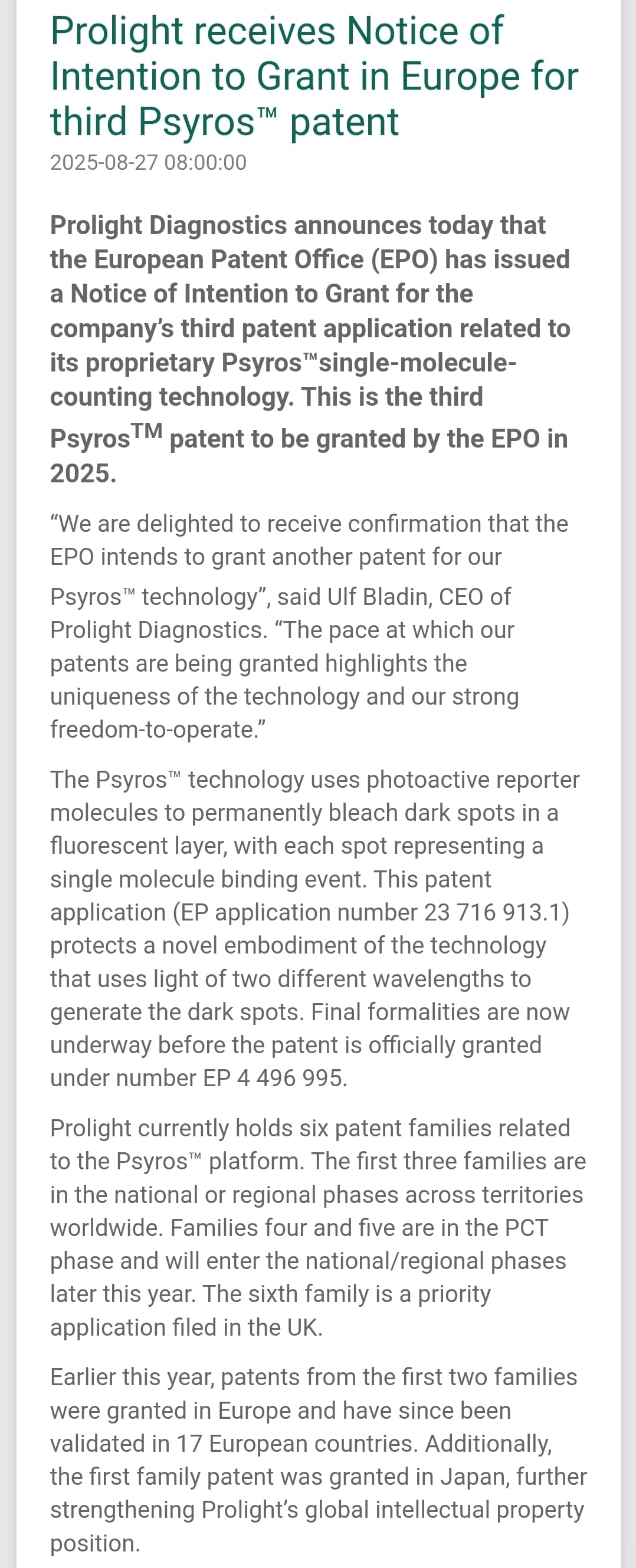
Psyros on saamassa uuden Euroopanlaajuisen patentin. Näkisin että tämä patentti on varsin merkittävä, ylipäänsä Euroopan patenttiviranomainen on varsin tarkka ja vaativa, ja patentin kuvaus kahden eri aallonpituuden käytöstä kuulostaa sellaiselta joka on koko teknologian fysikaalisen toimintamekanismin ytimessä. Se että tämän “fysikaalisen tason” patentti on saatu eteenpäin, on aikalailla suora osoitus siitä että psyroksen teknologia on tosiaan uniikkia.
Nopeasti patenttihakemuksen perusteella Psyroksen teknologia alkaa avautua itsellekin tarkemmin. Olenkin pitkään pohtinut mikä Psyroksessa loppujenlopuksi on niin erilaista, jos kerran se loppujen lopuksi käyttää bioluminesenssia. No nyt se alkaa avautua:
Psyroksen kohdalla tämä kahden valon käyttö perustuu siihen että reaktiota kontrolloidaan tarkasti. Ensimmäisellä valolla viritetään oikein sitoutuneet reagenssimolekyylit erityiseen, väliaikaiseen ja herkkään “viritettyyn tilaan”. Kyse on siis siitä, että luodaan äärimmäisen spesifinen tapahtuma ja eliminoidaan kaikki mahdolliset väärät signaalit. Tämä toimii spesifisiteetin suodattimena. Seuraavaksi toisella valolla, johon ainoastaan oikein sitoutuneet ja aktivoituneet reagenssimolekyylit reagoivat, käynnistetään pysyvän fotokemiallinen reaktio jonka myötä alustalle syntyy mitattava piste, ja tämä toimii toisena spesifisiteetin suodattimena.
Nyt siis Prolight on saamassa patentin nimenomaan siihen että valolla luodaan tälläinen vaiheittainen prosessi. Tämä ylipäänsä tekee patentin kiertämisen hyvin hankalaksi.
Tämän lisäksi sain myös tietää että Psyroksen aiemmat patentit toisesta patenttiperheestä ( * WO2022123000A1 tai EP4012423A1) suojaavat näitä erityisiä kemikaaleja. Ei pelkästään niitä kyseisiä molekyylejä joita Psyros käyttää, vaan myös vastaavia molekyylirakenteita jotka toimivat samalla tavalla, eli jossa kyse on yhdistelmämolekyyleistä, joissa valoaktiivinen ilmiantajamolekyyli on konjugoitu vasta-aineeseen tai muuhun tunnistinmolekyyliin. Eli Prolight on teknologian lisäksi kehittänyt täysin omat kemialliset prosessit, ja kilpailijoiden pitäisi keksiä hyvin uudenlainen tai erilainen molekyylirakenne jotta voisivat valmistaa samalla tavalla toimivia reagensseja.
Lisäksi Prolightin patenttiperheeseen kuuluu näiden molekyylien valmistusmenetelmä, testikitit, itse tekniikka (optiikka ja mittauslaitteet) ja mittausprosessi.
Jos kyseessä on suorituskyvyltään paras teknologia biomarkkereiden mittaamiseen, niin tässä on aika kattava rahanarvoinen kasa patentteja. Ja patentit estävät tehokkaasti myös sen että kolmannen osapuolen valmistajat alkaisivat tehdä testipakkauksia Prolightin laitteisiin. Alkaakin vaikuttaa siltä että laitteet myydään hyvin edullisesti, ja raha tehdään testikiteillä ja suurella volyymillä. Kuulostaa jo printteribisnekseltä?
Pörssireaktio on hyvin maltillinen, mutta tämän uuden ymmärryksen valossa laitan lisää arpoja salkkuun.
1 tykkäys
Ja sitten hiukan ajantasaisempaa tilanneanalyysiä: yhtiö on osoittautunut omalla kohdalla pettymykseksi. Aikataulut paukkuu ja vieläkään kliinisestä tutkimuksesta ei ole tietoa. Arvioisin että viimeistään toukokuussa ennen kesälomia järjestellään uusia anteja. Ellei sitten lisenssisopimus yllätä ennen sitä.
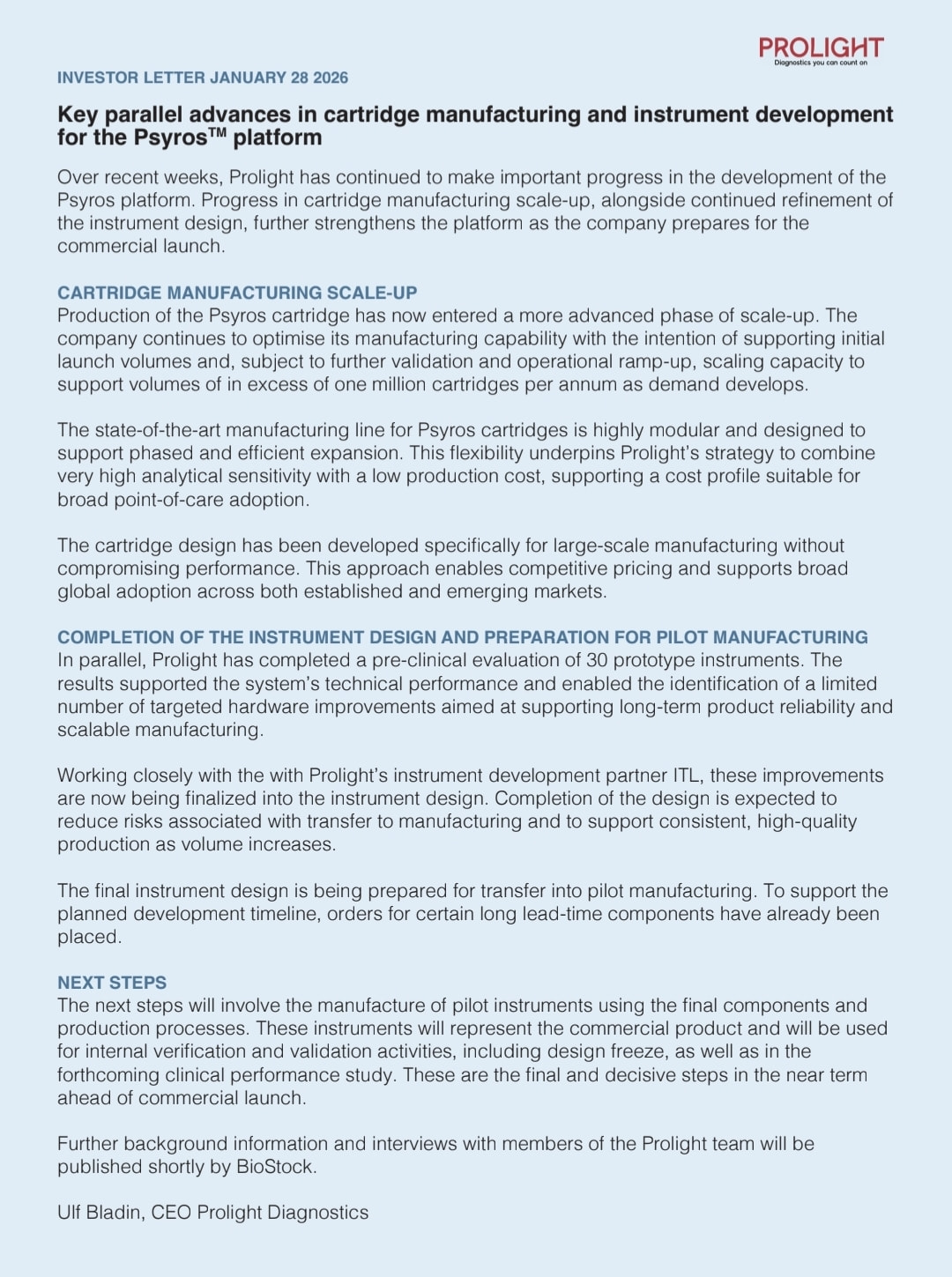
Eilen julkistetun sijoittajakirjeen mukaan laitteen “design freeze” on vieläkin tekemättä ja parannusten kanssa työskennellään. Itse näyteyksikön ja sen reagenssiaineiden kohdalla tämä kuitenkin saavutettiin joulukuussa.
2 tykkäystä
Eilen tuli artikkeli jossa otsikkona “Prolight finalises instrument design and prepare for pilot manufacturing“. Juttu kuitenkin pikemminkin kuvaa sitä, että instumenttia vielä viimeistellään, vastaten aiempia pressitiedotteita.