Tuota kun katsoo koko vuoden ajalta, niin minä en ainakaan näe mitään kasvua, vaan pelkästään ylös-alas sahaamista. Tietysti kun sopivasti zoomaa, niin ylöspäin kipuavia pylväitä toki näkyy
1 tykkäys
Painaako nyt kuitenkin kauppasotahuolet muiden huolien puutteessa vai ollaanko vaan aloittamassa sitä “long due” korjausta?
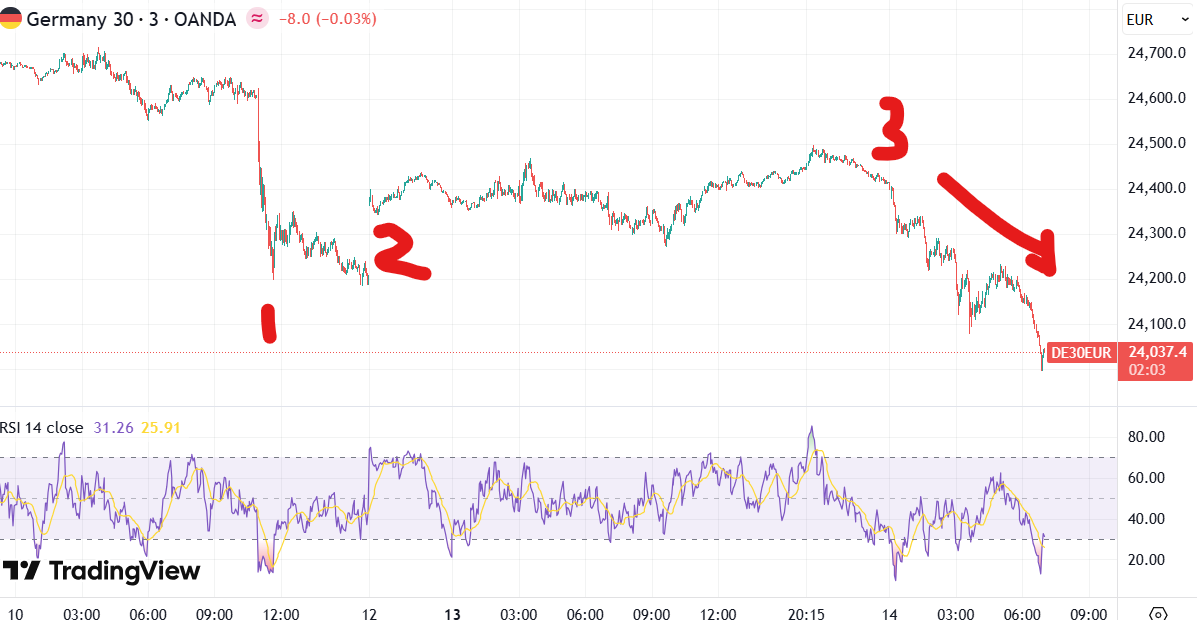
Kohdassa 1 pe Trump twiitti ärhäkkä, 2 ma aamu Trump twiitti sovitteleva kohta 3 tänään, kiihtyvää laskua, mutta mahdollinen tuki DAX 24000 pitää vielä.
Nyt ollaan kuitenkin reilusti jo alle pe illan, jolloin paperikädet myivät. (lainaus timanttikäsiltä)
Itse näkisin että voi hyvin mennä hyvinkin matalalla osakepainolla ja katsoa rauhassa. Oma teoria on että Trump sai nyt yhden sulan hattuun Israelista ja lähtee tarmokkaasti ratkomaan joko Kiinan tekemiä vääryksiä kaupparintamalla tai sitten Ukrainan sotaa. Kummassakin voi lopulta tulla tyydyttävä tulos, mutta sapelit voi kalista aika rajustikin vielä ennen sitä.
12 tykkäystä
Sekä yrityksille että kotitalouksille ovat alkaneet lainat maistumaan euroalueella. Yritysten lainakorot laskevat ja kotitalouksien velanhoitomenot suhteessa tuloihin ovat laskeneet 20 vuoden takaiselle jaksolle.
Vihreitä versoja! 
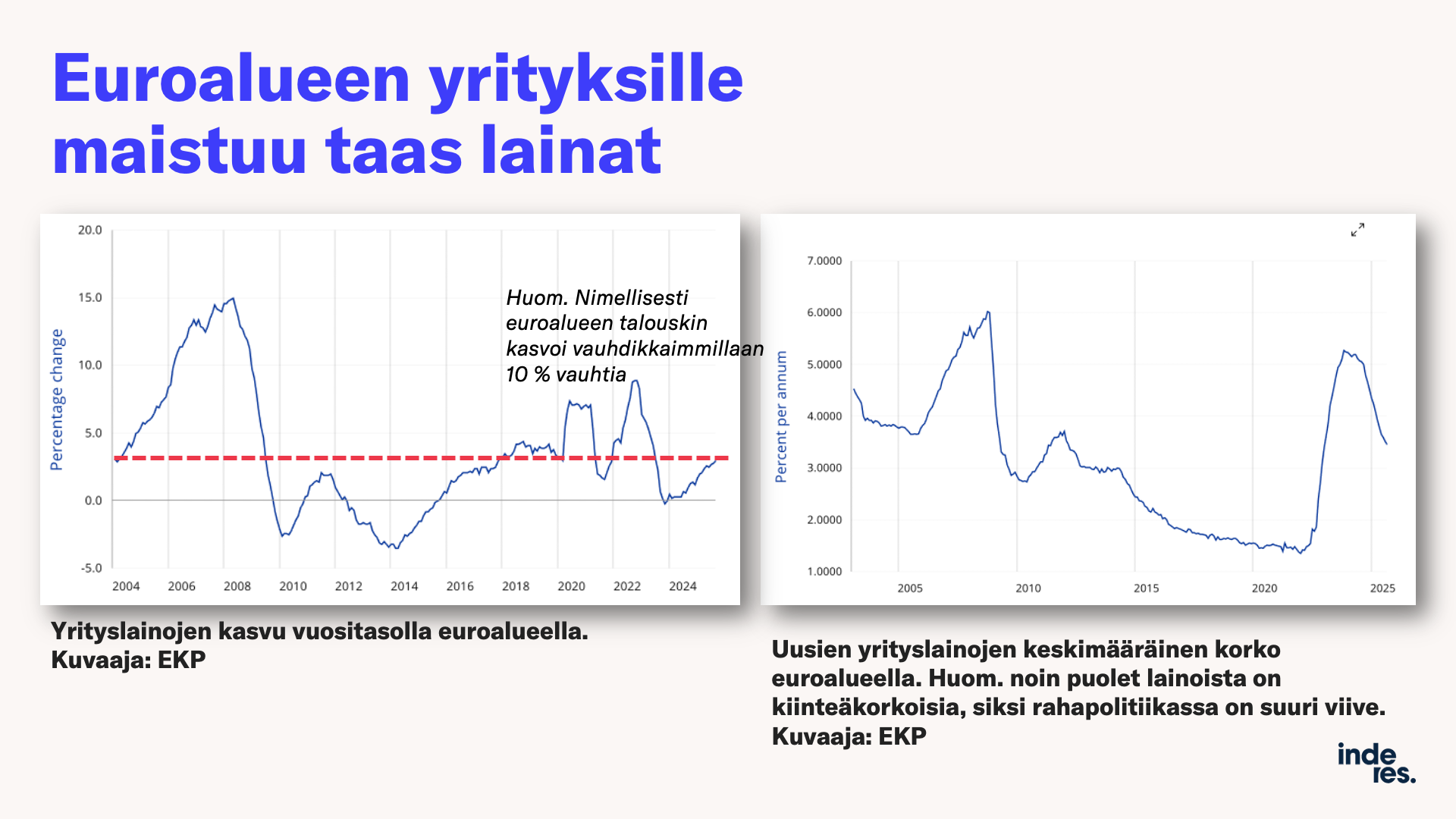
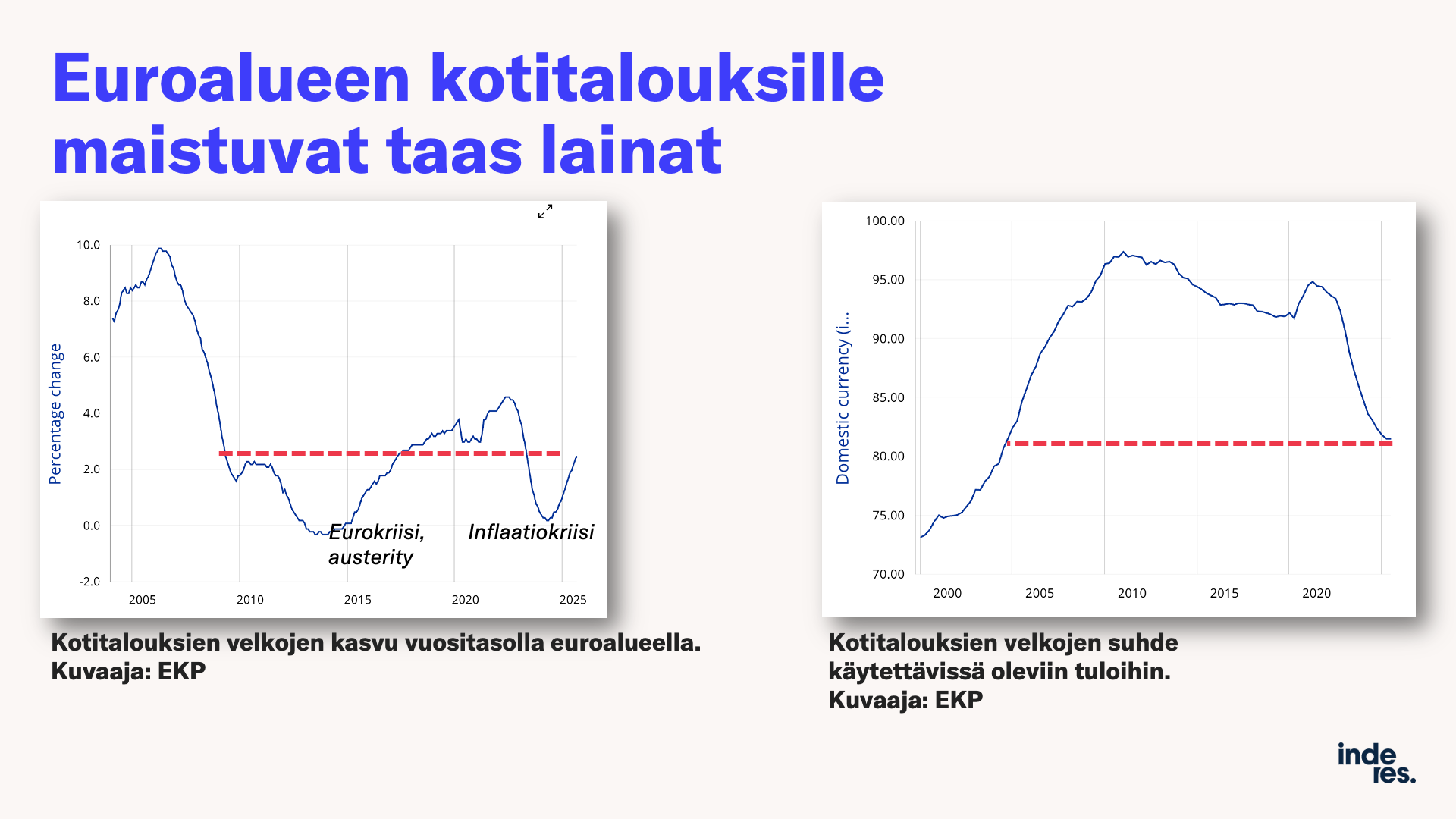
Lisää aiheesta Vartissa.  Ja monesta muustakin aiheesta!
47 tykkäystä
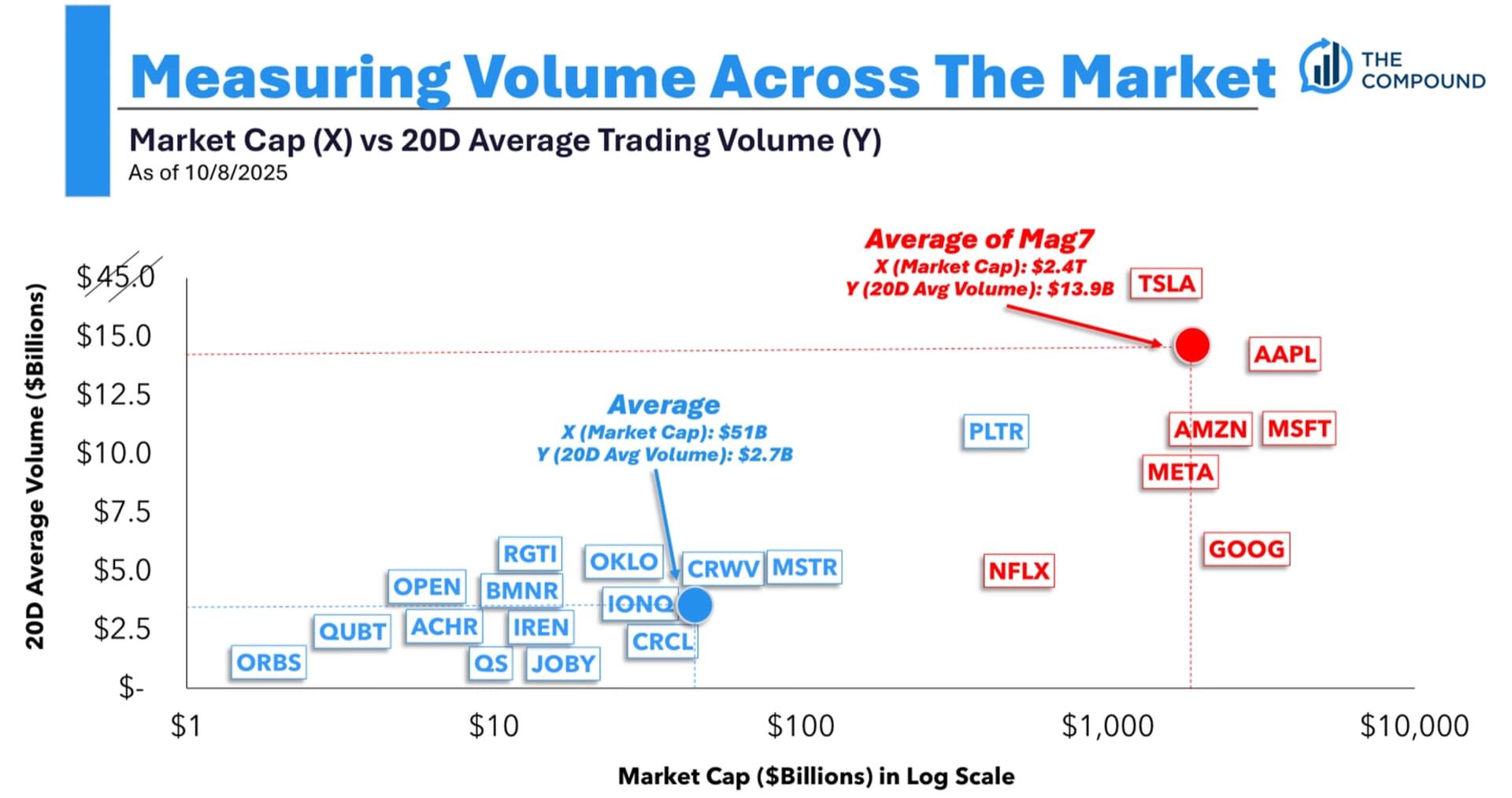
Laitetaas nämä tännekin. Ovat peräisin TCAF podcastista, joka löytyy podcast ketjusta.
Muutaman miljardin hype osakkeet treidaa jo yhtä paljon kuin Alphabet ja Netflix.
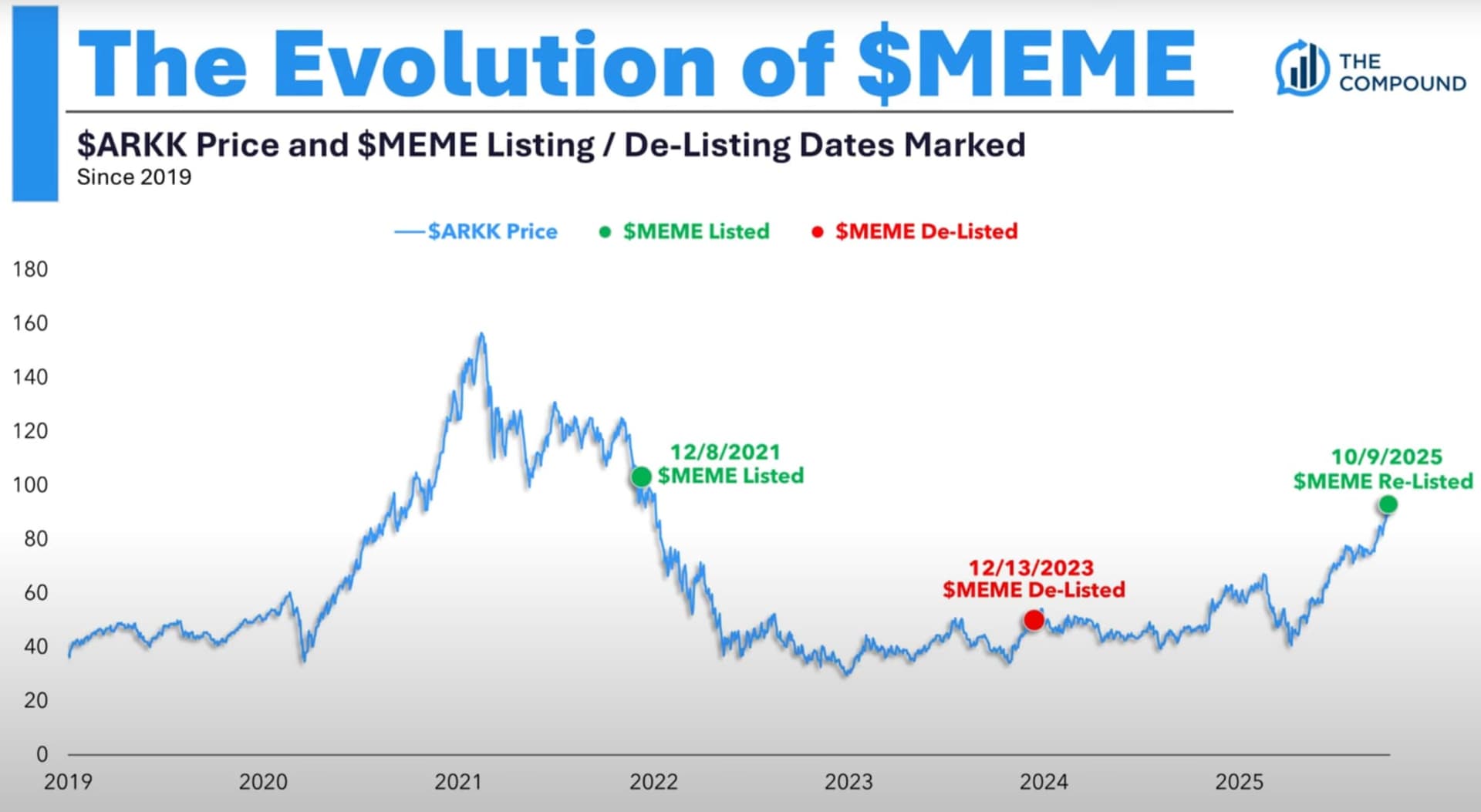
MEME etf otettiin uudelleen listoille. MEMEn alkuperäinen listaus ja delistaus ajankohta sovitettuna tekno bulleroiden suosikki etf:n(ARKK) kurssikäyrälle. Saa nähdä toimiiko yhtä hyvänä contrasignaalina kuin aiemmin.
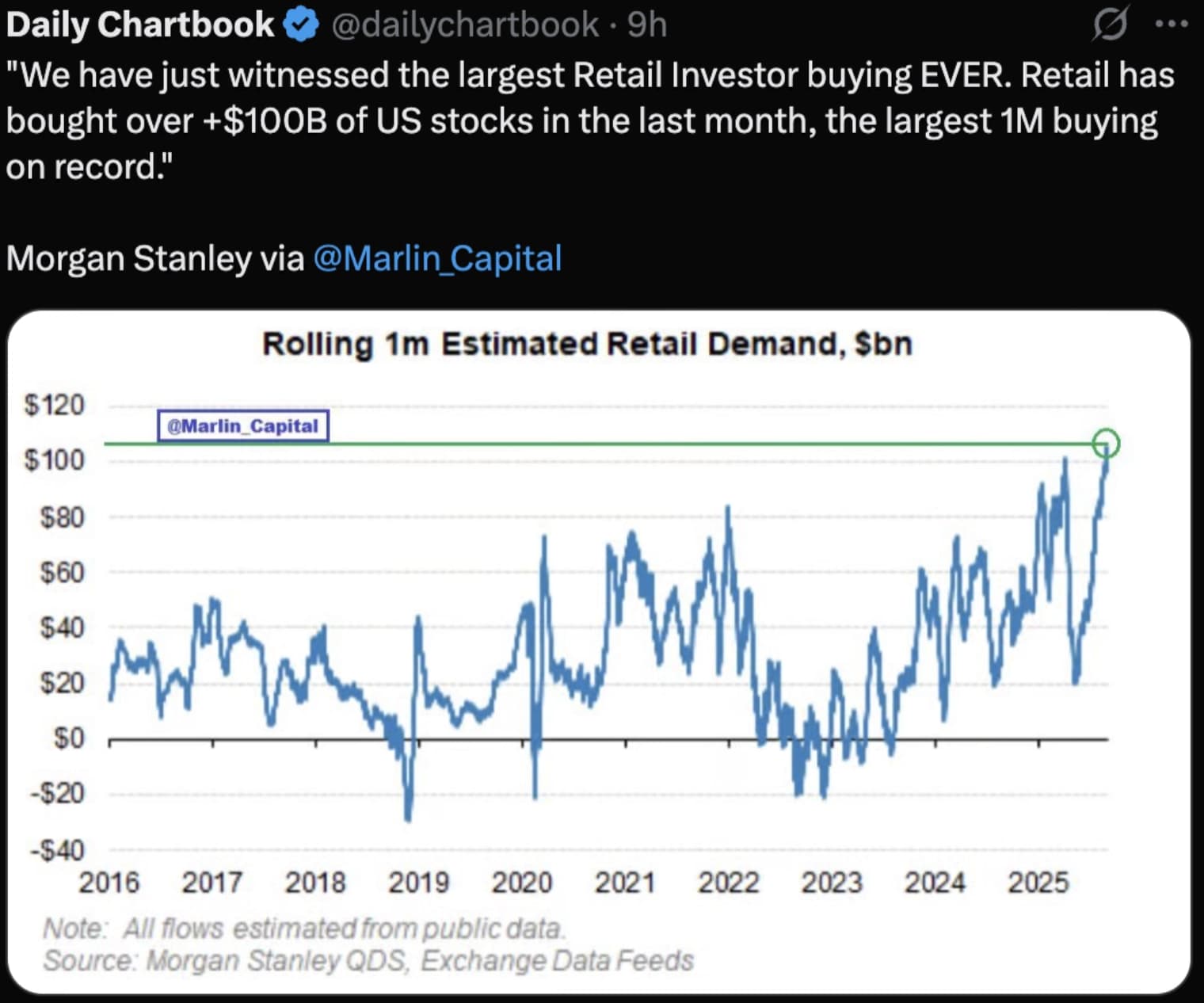
Retail ostaa jenkkilappuja enemmän kuin koskaan aiemmin.
22 tykkäystä
Uusi FED Pj:n valinta lähestyy, ja Trumpin suusta tuli ulos kolme nimeä.
Warsh vaikuttanut FED:ssä finanssikriisin ympärissä, Waller nykyäänkin.
Hassett kuitenkin suhdetasolla #1. Palvelee Trumpin taloudellisessa neuvonantajaroolissa niin nykyhallinnossa kuin aiemmassa.
Eli ihme jos Hassett ei tulisi valituksi, korkotasojen puolustelua vähemmän ja kurssit ylös?
Trump named Kevin Hassett, Kevin Warsh, and Christopher Waller as top contenders to replace Jerome Powell in 2026. Treasury Secretary Scott Bessent later added Michelle Bowman and Rick Rieder.
Hassett, a close Trump ally, is seen as the frontrunner for his pro-growth, low-rate stance, though some question his independence.
https://x.com/DeItaone/status/1978120495619846185?t=UDCH4BMndYK-9sF-ZckDVQ&s=19
Kevin Hassett - Wikipedia Kevin Hassett - Wikipedia
Kevin Warsh - Wikipedia Kevin Warsh - Wikipedia
Christopher Waller - Wikipedia Christopher Waller - Wikipedia
11 tykkäystä
Tuli metrossa mieleen HS Visio podcastia kuunnellessa, että useasta tuutista tulee nyt viestiä kuluttajien massiivisista säästöistä ja kuluttamattomuudesta. Vuosina 2023-2024 inflaation jyrkän laskun yhteydessä oli x:ssä ja muualla inflaation second wave mahdollisuudesta. Purkautuuko nuo kertyneet säästöt maltillisesti markkinoille sen enempää inflaatiota kiihdyttämättä vai onko second wave edelleen mahdollinen skenaario? Vai onko ne säästöt vain suomalaisilla ja muu Eurooppa kuluttaa normaalisti?
3 tykkäystä
Ihminen on usein laumaeläin käyttäytymiseltään. Uskoisin, että kun jossain vaiheessa ensimmäiset ”rohkeat” alkavat lisätä kulutusta, niin muut alkavat seurata perässä. Kun naapuri ostaa uuden auton, remppaa terassia ja lähtee etelän lomalle sekä somessa alkaa tulla vastaavaa kontenttia enemmän, niin alkavat muutkin innostua. Siis jos on rahaa tilillä. Uskoisin, että nämä ”ennätys säästöt” keskittyvät pääasiassa keskituloisille ja siitä yköspäin oleville tuloluokille. Pienituloisilla ja työttömillä menee vielä suhteellisen ankeasti inflaation jäljiltä.
kunhan esin saadaan tulppa irti, niin kuluttajatuoteyhtiöille, palveluille ja raksalle tulee todennäköisesti lisää kysyntää, mutta tuskin kuitenkaan niin nopeaan tahtiin, että alkaisi oleellisesti inflaatiota kiihdyttää.
15 tykkäystä
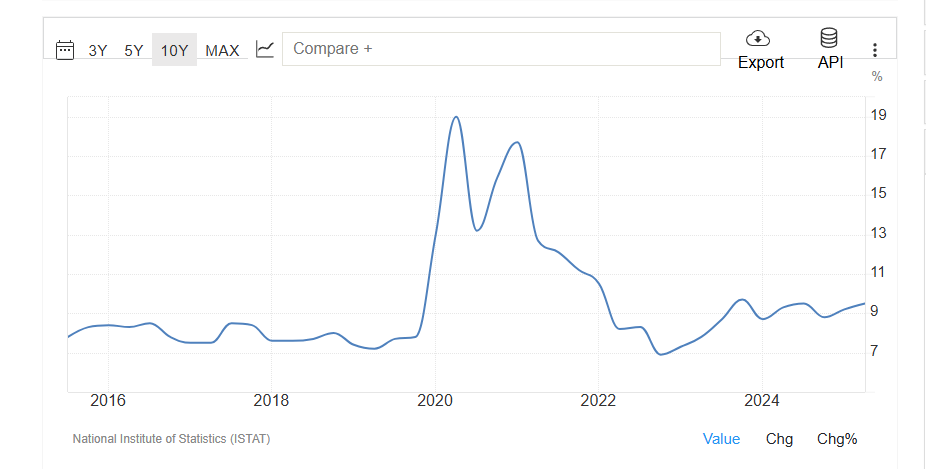
Ei ketään muu säästä kuin suomalaiset ja se haittaa vain suomalaisia pienyrityksiä… Inflaation kannalta tuolla ei ole mitään merkitystä. Ja suomalaisten säästöt eivät ole massiivisia 
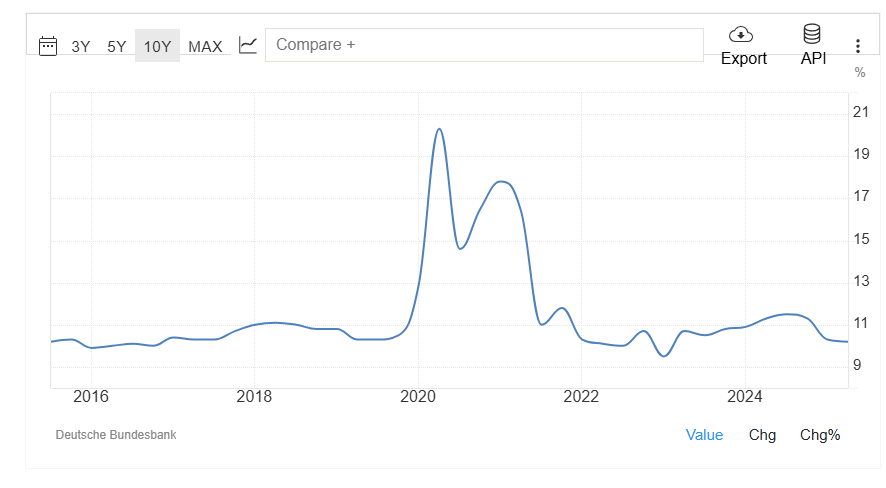
Saksan säästöaste:
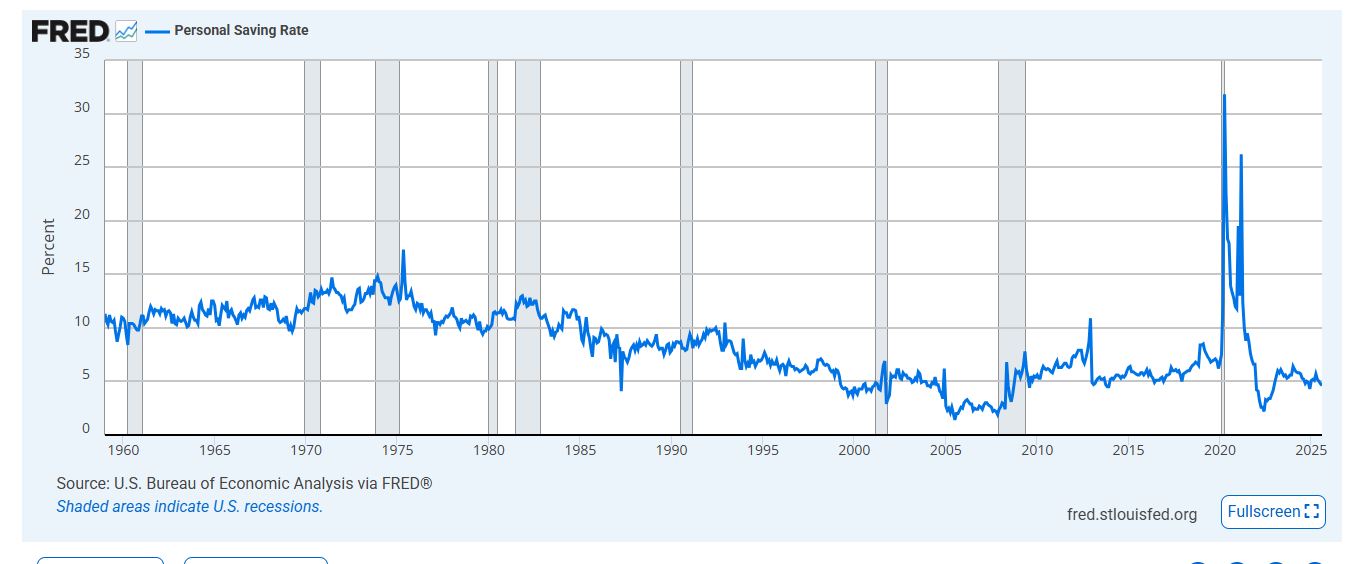
Ja Yhdysvalloissa:
Ja Italia:
13 tykkäystä
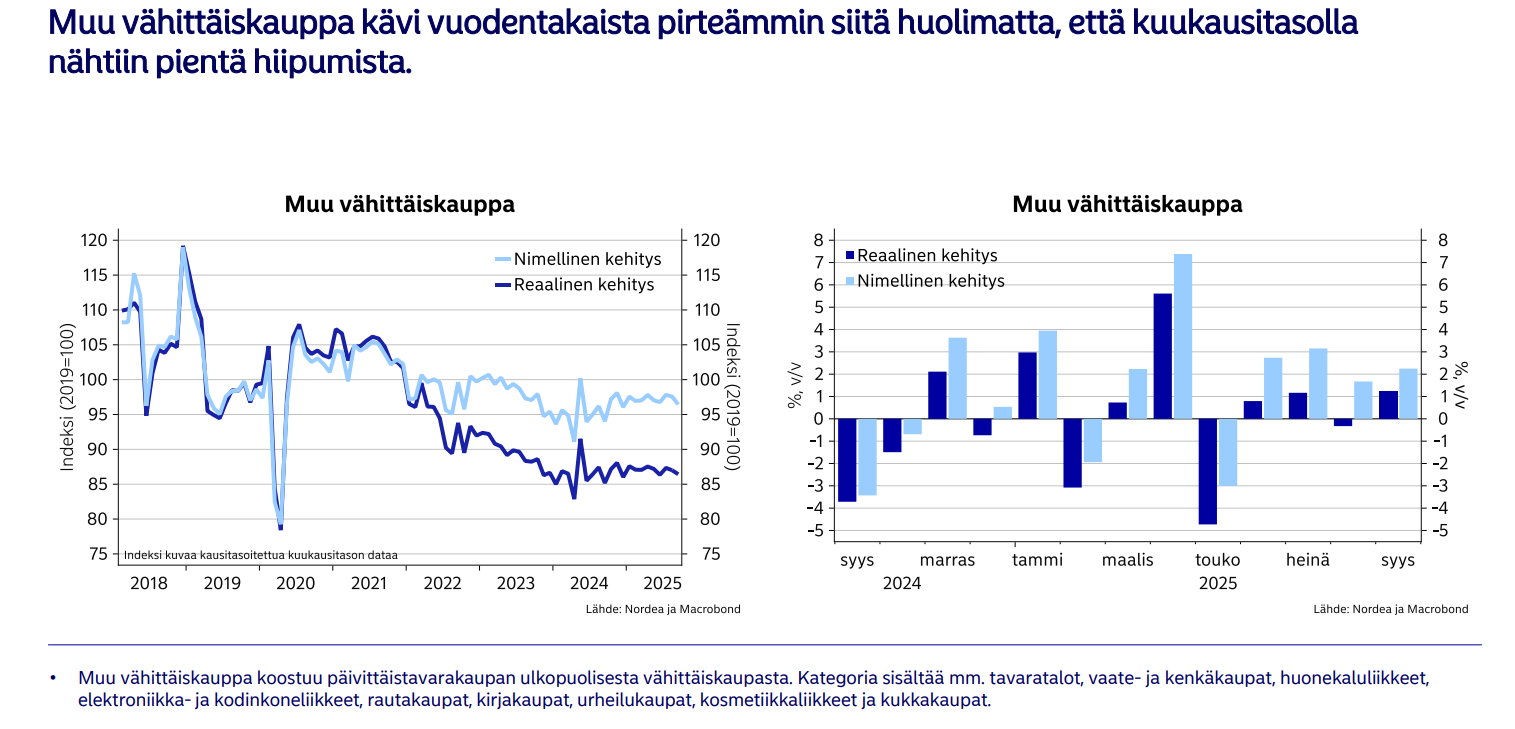
Varovainen kuluttaja Suomessa syyskuussa Nordean korttidatan perusteella:
Muu vähittäiskauppa sentään pirteämpää:
15 tykkäystä
Ja viimeisin tilanne Suomessa:
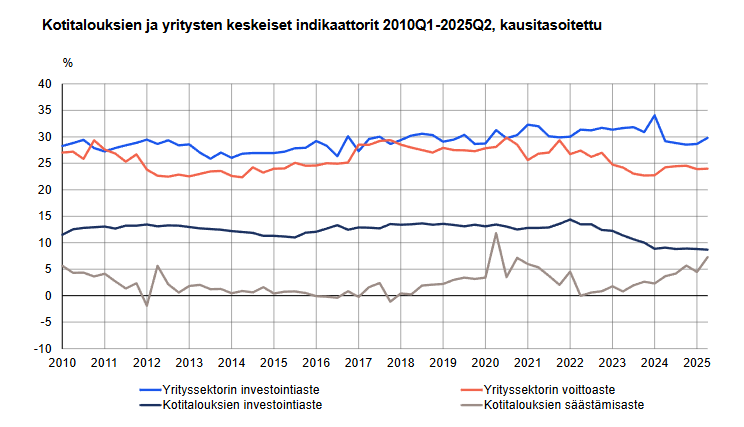
Tuo säästämisasteen nousu on vaan taas yksi näistä syistä, joita tilanteelle keksitään. Rakenteissa ei tietenkään ole mitään vikaa. Helppo sysätä syy suomalaisille Ja kummaa, että “matalasuhdanne” on kestänyt jo 15 vuotta sille vaan keksitään joku uusi syy.
Suurin osa kotitalouksien investoinneista muodostuu asuntoinvestoinneista. Ei tässä nyt Einsteinia tarvita selittämään tuota korrelaatiota kotitalouksien säästämisasteen ja investointiasteen välillä. Ihan omilla toimilla (asumistuki yms.) puhallettiin kupla asuntomarkkinoille ja sitä nyt sulatellaan pitkän aikaa.
39 tykkäystä
Jep.
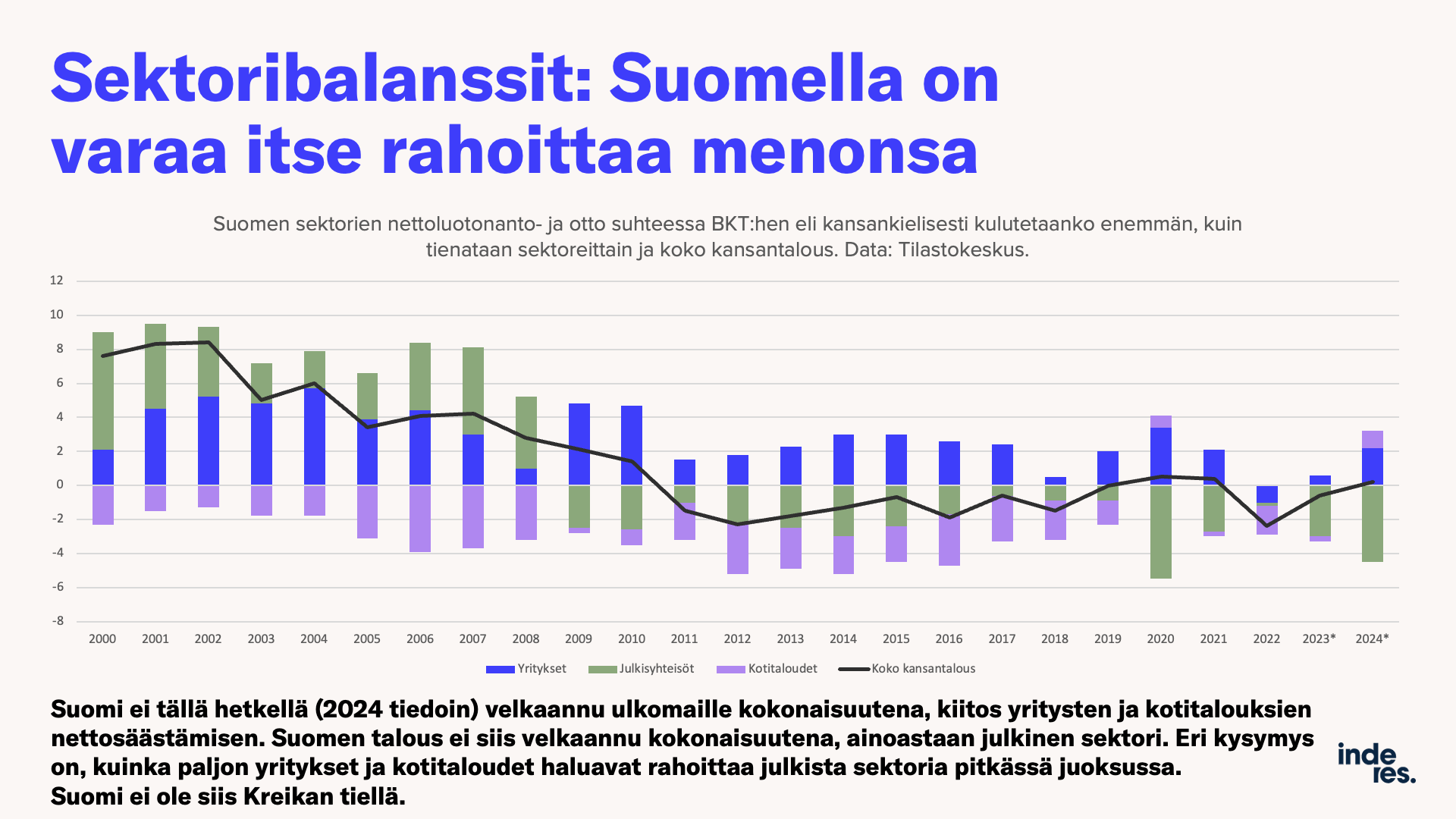
Voisin jakaa uudelleen tähän ketjuun aiemmassa Vartissa esitetyn pitkän aikavälin kuvajaan Suomen julkisen sektorin ja kotitalouksien pitkän aikavälin velkasyklistä.
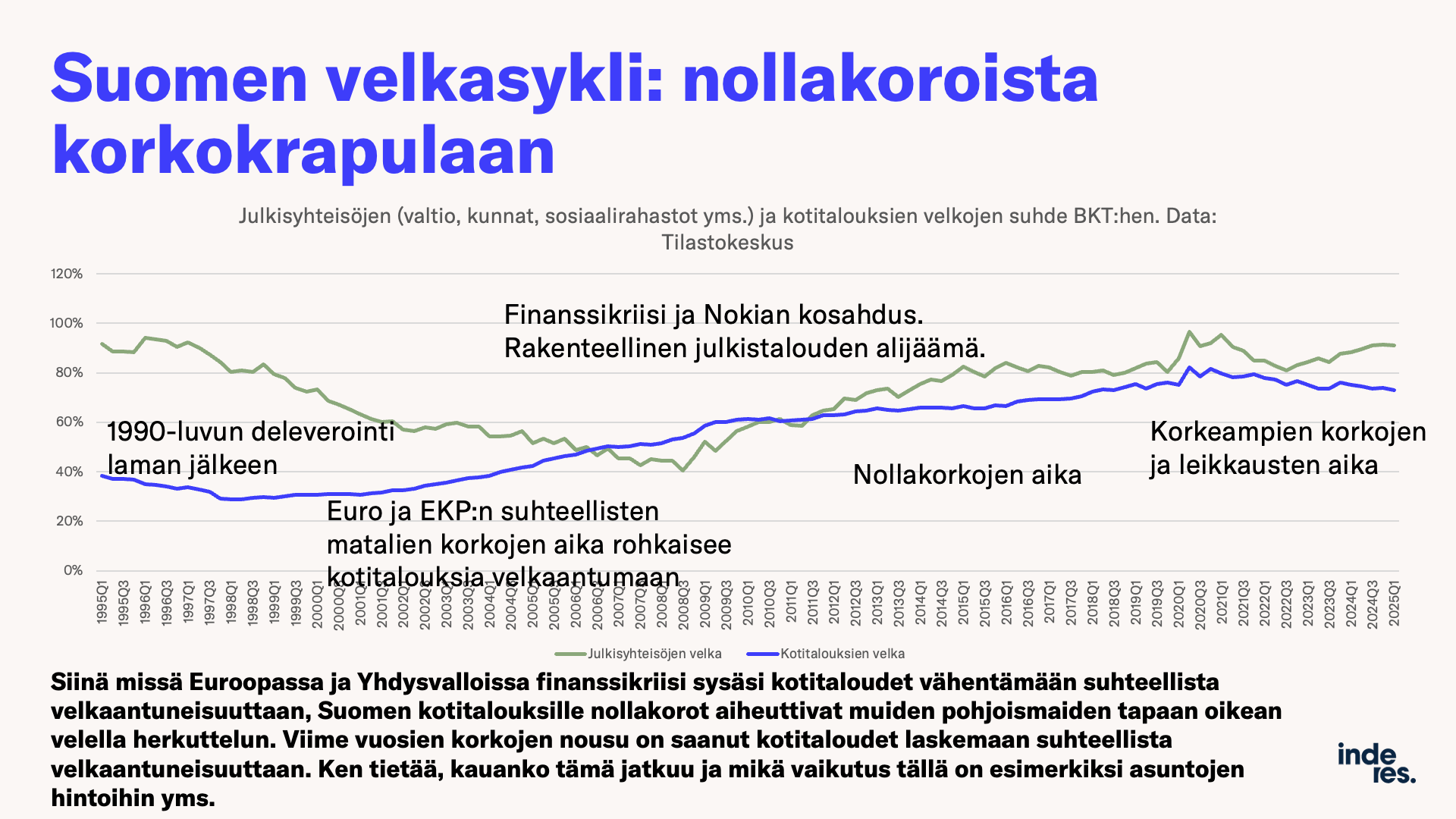
Tässä vielä velkaantuminen sektoreittain:
32 tykkäystä
Ei se ole ihme jos suomalainen ei uskalla kuluttaa kun hallitus ensin sotkee kaiken ja tuo lehdistön ja median jokapäiväinen rummutus “tänne Venäjä hyökkää seuraksi” jne.. alkaa todella tympiä tuo “Venäjä hyökkää” narratiivi, ei se hyökkää yhtään minnekään kun ei pärjää edes Ukrainassa.
37 tykkäystä
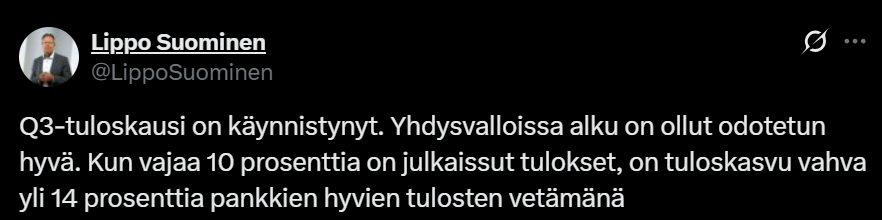
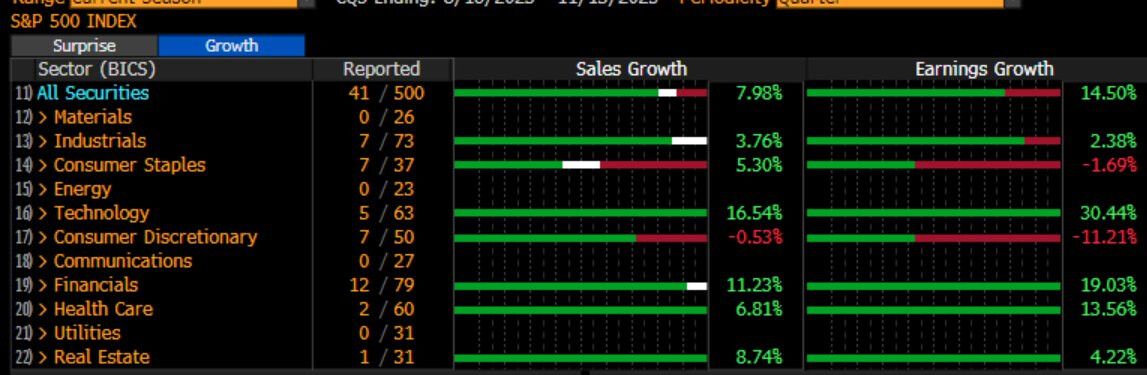
Tässä on OP:n Lippo Suomisen tviitti Yhdysvaltojen Q3:n “startista” 
https://x.com/LippoSuominen/status/1978704751853236364
17 tykkäystä
Olen vähän huumorilla ennustellut, että Suomi ei ehtinyt mukaan tähän talouden kasvuun, mutta pääsee taas muiden mukana laskusuhdanteeseen. Tätä se on, kun ollaan täällä perällä ja naapuri päätti laittaa paletin uusiksi.
Ei suomalaisten säästöasteessa mistään sen ihmeellisemmästä ole kyse kuin hyvin epävarmoista ajoista ja ostovoiman selvästä heikkenemisestä. Ei sitä poliitikkojen tai pankkien mainospuheet muuta. Vasta sitten kun asia näkyy lompakossa aletaan miettimään asiaa uudelleen.
24 tykkäystä
SalkunRakentaja on tehnyt jutun, jossa vertaillaan IT-kuplaa ja näitä nykyisiä aikoja.
Arvostushuolista huolimatta nykyinen markkinasykli eroaa monella tapaa vuodesta 2000.
Teknojätit kuten mahtiseitsikko takovat nyt huomattavaa tulosta ja kassavirtaa, toisin kuin monet it-kuplan yritykset, joilla ei ollut toimivaa liiketoimintamallia.
Esimerkiksi nämä seitsemän jättiyhtiötä kasvattivat tulostaan toisella vuosineljänneksellä noin 26 prosenttia vuotta aiempaan verrattuna, mikä ylitti analyytikko-odotukset selvästi.
Alaotsikot:
- Markkinakeskittyminen historiallisissa ääripisteissä
- Keskeiset erot it-kulpan aikaan verrattuna
10 tykkäystä
Bank loan worries make it easier for Fed to cut interest rates
Torstaina ameriikoissa murehdittiin enemmän pankkeja ja ongelmaluottoja.
Worries about lending practices — especially in the private credit market — ramped up recently after two auto industry related outfits, Tricolor and First Brands, filed for bankruptcy. Zions Bancorporation disclosed a $50 million loss on two commercial loans Wednesday evening, and then on Thursday, Western Alliance alleged that a borrower had committed fraud.
2008 pankkikriisin haamut nousee peloittelemaan halloweenin kunniaksi, mutta ei niin pahaa ettei jotakin hyvääkin:
“Today got real ugly, but at least we finally have something that can make the Federal Reserve itchy to cut interest rates sooner rather than later,” Cramer said.
14 tykkäystä
Tricolorista sen verran, että kyseessä on autojen luototusta myöntävä firma, joka on keskittynyt myöntämään luottoja siirtotyöläisille papereja kyselemättä. Kun ottaa huomioon Trumpin kovan maahanmuuttopolitiikan niin ongelmat ei vaikuta yllättäviltä. Eli en tiedä voiko ainakaan tästä tapauksesta vetää laajempia johtopäätöksiä USA:n velka markkinoiden tilasta.
15 tykkäystä
Nuo autolainakioskit ovat eräällä tavalla kuumemittari, ts. persaukisille heppoisin perustein myönnetyt korkeakorkoiset lainat ovat hyvä bisnes hyvinä aikoina, mutta sitten kun kuluttajien maksuvalmius heikkenee, ketään ei varmasti yllätä että persaukiset laittomasti maassa oleskelevat ovat ensimmäisenä jättämässä lainanlyhennykset maksamatta. Osa kenties sen takia että on poistettu maasta, osa koska on jäänyt ilman duunia kun työnantajat eivät uskalla enää palkata kun riski on todellinen että ICE käy tekemässä tarkastuksia.
Markkina luonnollisesti jälleen kerran (kuten aina) piirtää trendiviivoja ja ennustaa nyt että kuluttajakysyntä kyykkää yleisellä tasolla ja tämä vain sattuu olemaan se ensimmäinen merkki siitä.
Onko tämä realismia, vai ovatko nämä konkat todellakin vain yksittäistapauksia ja sivuvaikutus lepsujen aikojen päättymisestä maahanmuuttolakien suhteen jää sitten vielä avoimeksi. Mr. markkina varmasti seuraa nyt tarkkana onko lisää vastaavia kupruja kun tuloskausi etenee joka levittäisi tämän “tulipalon” muualle kuluttajaluottosektorilla.
7 tykkäystä
Jatkoa ketjulle Pörssien suunta (Osa 2):
Tilanne vuonna 2025:
Qt Group: Market Cap (intraday) 990.257M
Konecranes: Market Cap (intraday) 5.43B
Tarpeeksi pitkällä aikavälillä kassavirta ratkaisee ja pelkästä liikevaihdosta ei kannata ihan mitä tahansa maksaa, vaikka kuinka olisi tarjolla teknologiavetoinen voittajafirma ja laatukompounderi. Tylsä teollisuuden siltanosturifirmakin voi joskus olla voittava sijoitus pörssin kuumimpaan kasvuhirviöön nähden, mikäli hinta on oikea 
116 tykkäystä
Mitäs ensi viikolla tapahtuu?
https://x.com/eWhispers/status/1979148966353588575
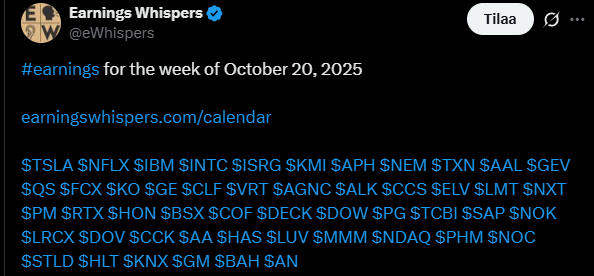

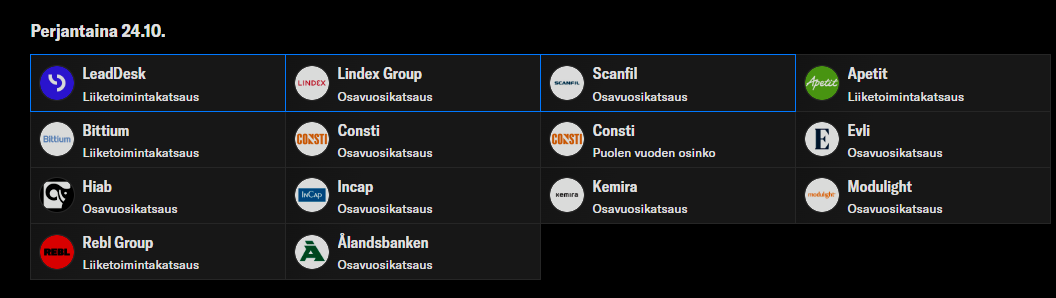
Suomen yhtiötapahtumat, onko torstaina kvartaalituloksensa julkistavat aavistelleet jo kauan sitten "huh, onpa tulossa huono tulos, laitanpa nyt tuohon todennäköisesti ruuhkaisimman viikon ruuhkaisimmalle viikonpäivälle julkkarit, niin ei turskatulostamme ei huomata .


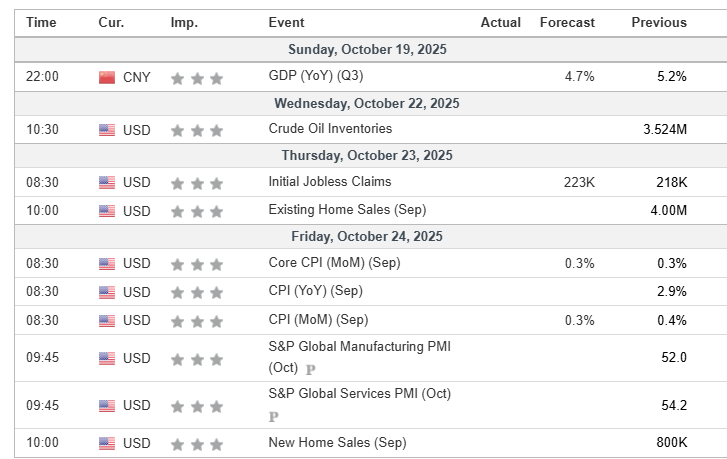
Ensi viikon makroilut
20 tykkäystä