We can get inflation from rising costs, not just rising demand. For example, after wage increases, inflation in Germany has reached around 2 percent. Based on my own magical macroeconomic knowledge, cost inflation is the most important form of inflation today, not consumption inflation. We’ll look at consumption inflation again when developing countries start consuming like developed ones.
As I understand it, stimulus also means more that the state pumps money into the economy by investing in things like infrastructure, rather than low interest rates and bond purchases, which were meant to save the project called the euro and its member states, because now no state is practically independent, since according to tradition, an independent state has its own money. There are different schools of thought on this stimulus business, but the most important thing, in my opinion, is to first get people working on those road construction sites, for example, so that they first have the opportunity to take out those loans, and it doesn’t happen like in the 1930s, when there were insane numbers of unemployed people.
Debt discussions quickly become complex, so let’s try to keep it simple. See the comment to Juip above regarding inflation; you should challenge the Central Statistical Office directly on inflation measurement.
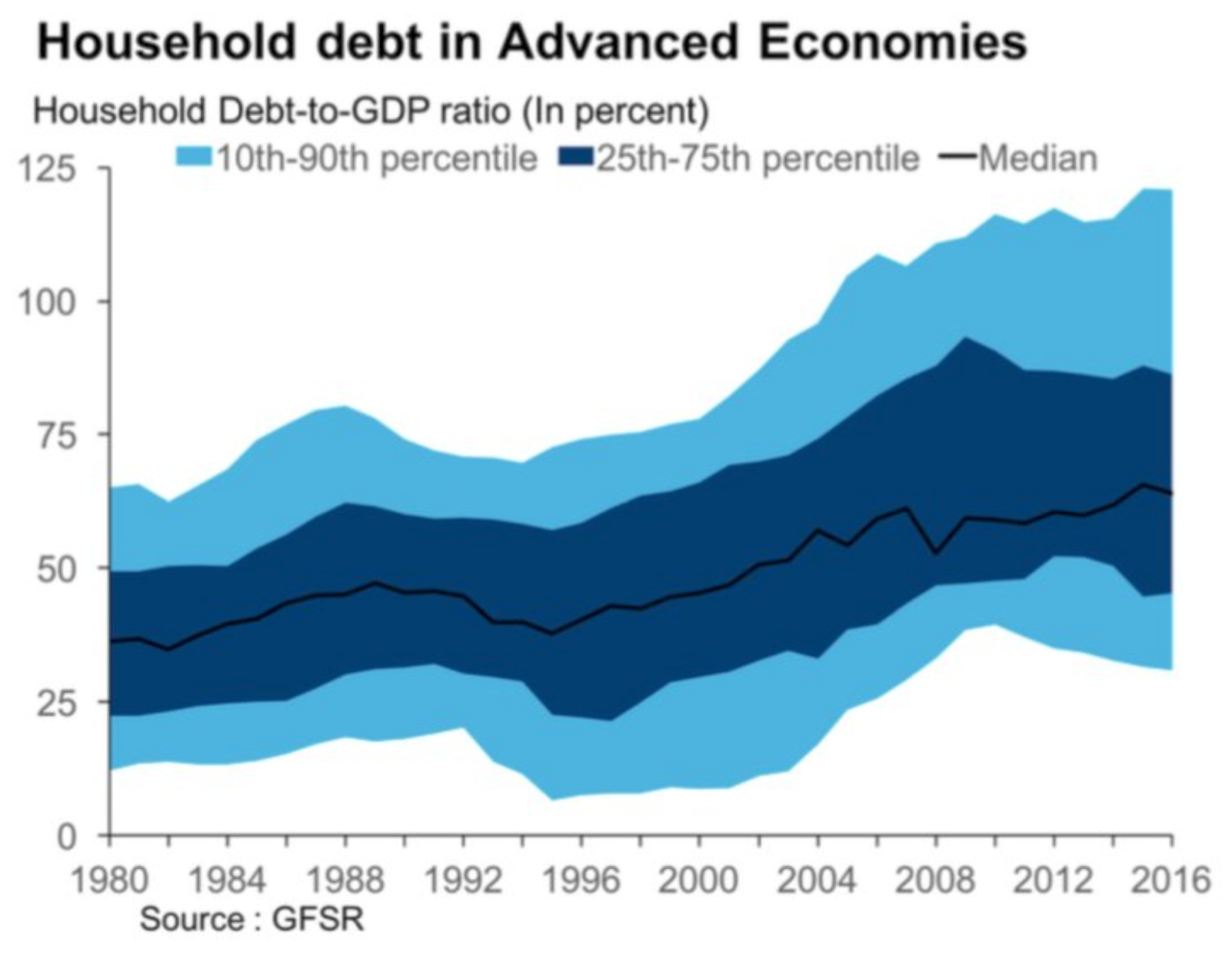
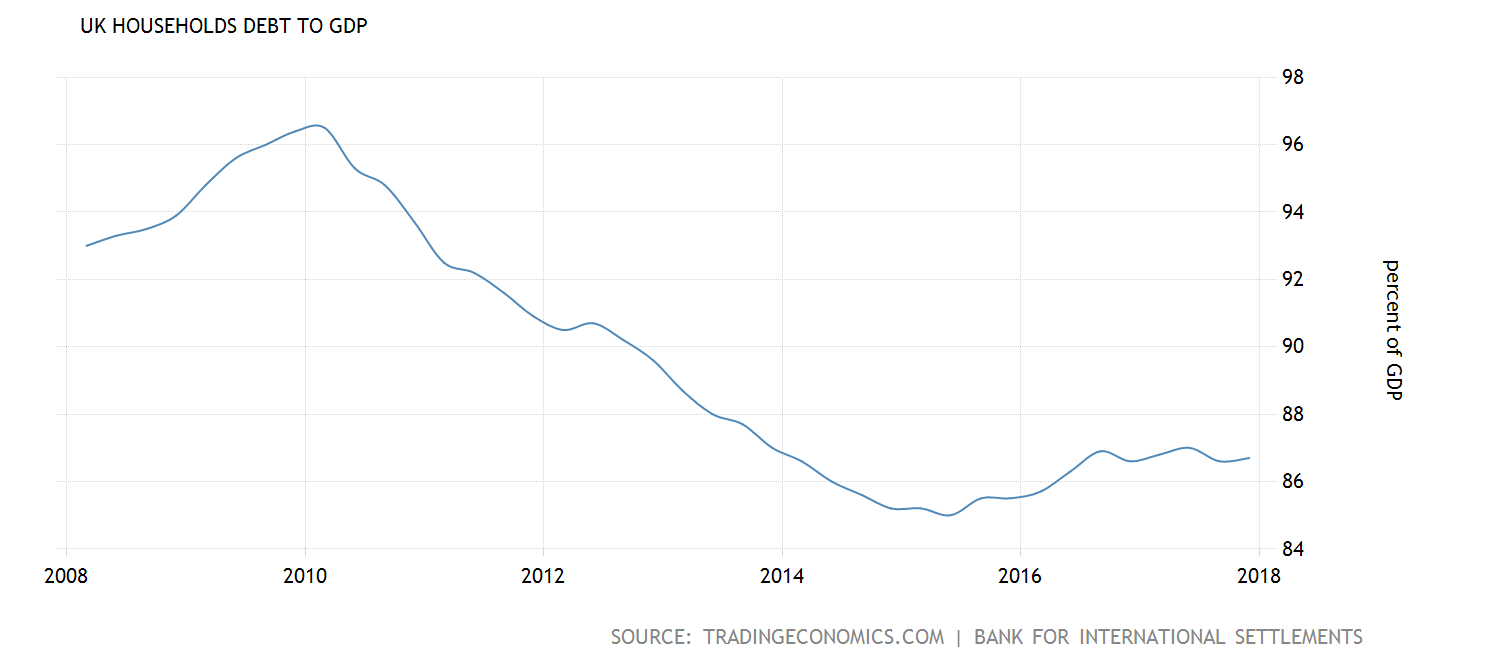
But, to debt: the situation varies depending on where you look in the world. In developed economies, (in aggregate) significant indebtedness hasn’t actually occurred for many years, except for the public sector in the USA and Japan.
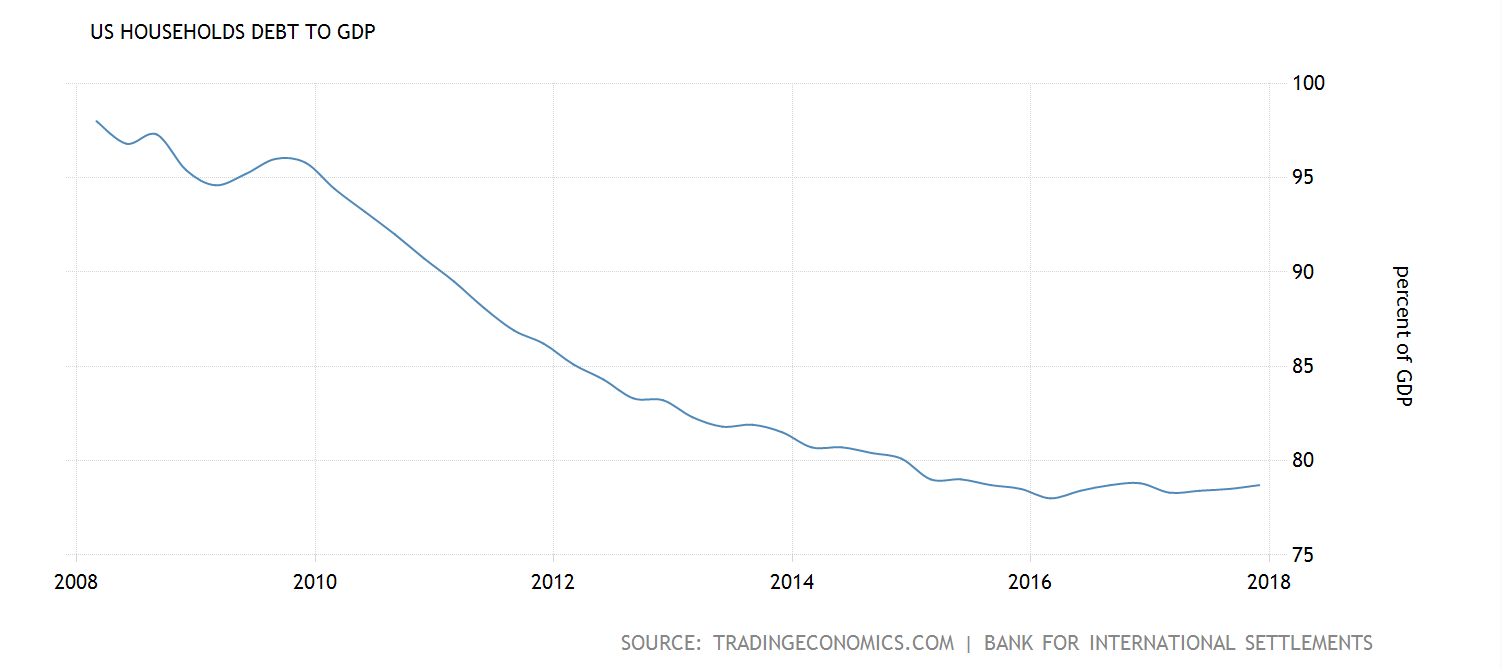
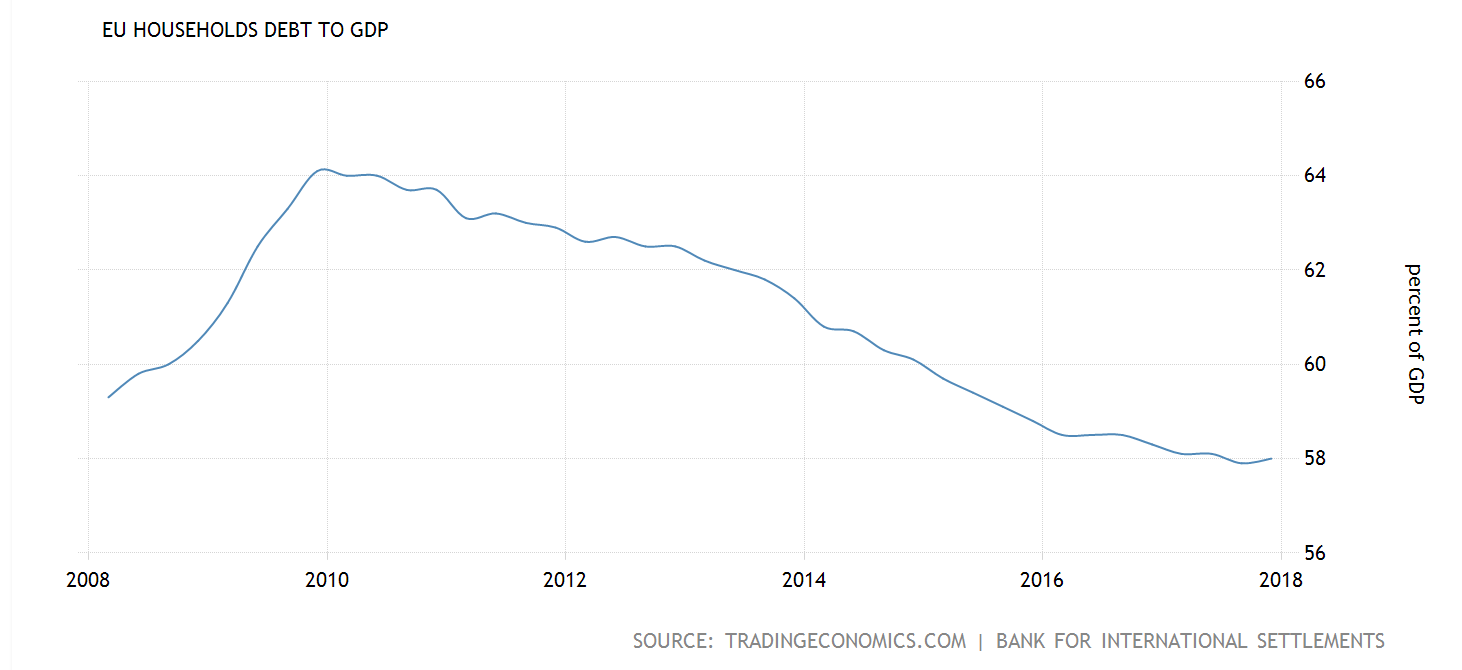
For example, in the USA, household debt relative to GDP has decreased from 100% to 80% since the financial crisis. At the same time, the state has become indebted to compensate, although it has stabilized at over 100% relative to GDP in recent years (Trump’s stimulating policies will likely change this). In Japan, household debt (relative to GDP) has decreased in recent years. In the Eurozone, public debt relative to GDP has also decreased in recent years (hurrah!). In the Eurozone, household debt has actually also decreased relative to GDP. Here in Finland and the Nordic countries, households have become indebted, but I’m looking at the bigger picture here. Generally, in developed economies, debt levels have decreased or risen only slightly, while in developing economies they have risen significantly.
So the answer to the question, should we consume more: not necessarily, but increased consumption might alleviate the position of those who have fared worst since the financial crisis (Europe’s millions of unemployed). Do we need more inflation? Not necessarily, stable prices are a good thing, but the debt burden can certainly be lightened nicely through it if needed, and unfortunately, public finances have often been balanced through this in the end.
In developing economies, on the other hand, there has been indebtedness, especially in China, but let’s exclude these from this review for simplicity. Together, these, along with the public sectors of Japan and the USA, have pushed the global debt-to-GDP ratio upwards. Of course, asset values have also increased significantly (assets are easily forgotten in debt discussions), but they are not as set in stone as debts…
53% presented here, I don’t know your source, but that’s not relevant here.
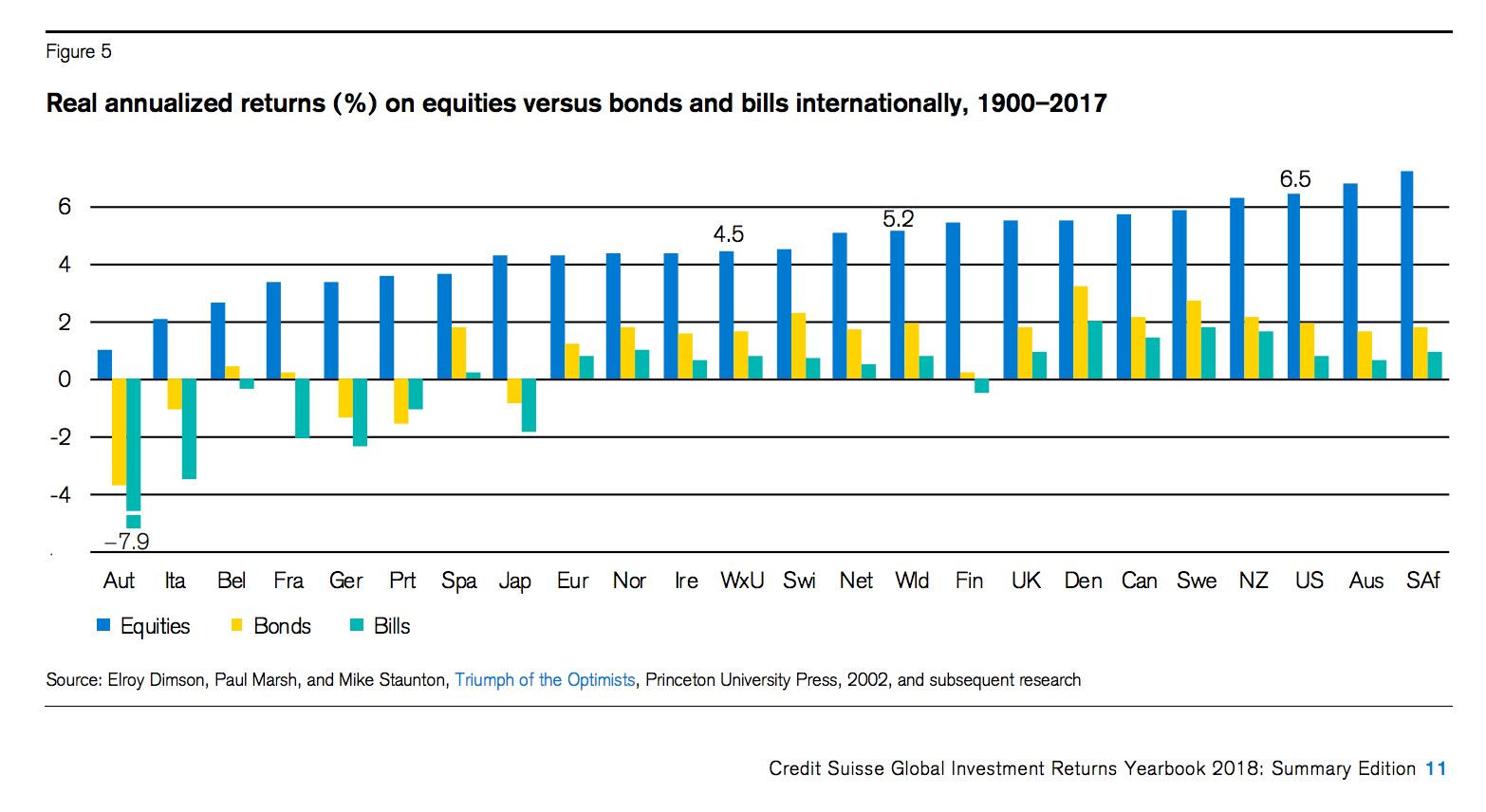
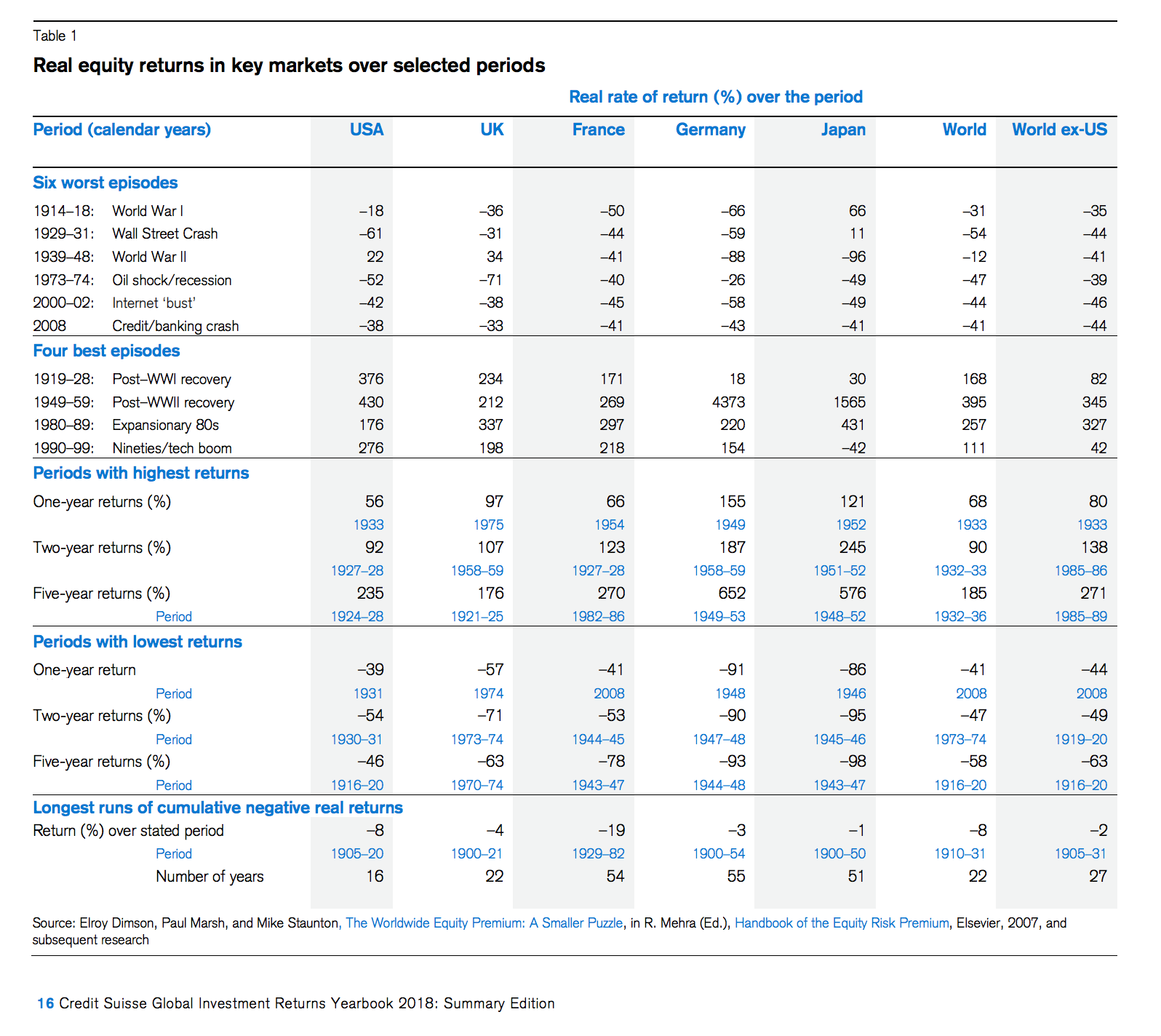
If we consider the last ten years, the stimulation is certainly reflected in the rise of stock markets, although it’s difficult to quantify what is reflected where and how much. Over the last 10 years, we have avoided the worst crises, to which stock markets reacted sharply in 2008 and 2011, and more mildly in 2015 (China’s cooling). At the same time, earnings growth, especially across the pond, has been strong. Zero interest rates have sometimes been blamed for everything, but stock market valuation ratios have generally remained within reasonable limits. It will be interesting to see when we truly return to a non-stimulative economy, or if this “stimulative normal” will continue indefinitely. In that scenario, it is admittedly difficult to see a stock market decline without some absolutely shattering shock, returning to the roots of this discussion.
Most of this is explained by GDP growth, which should fuel inflation.
Overall, however, we have become significantly indebted and GDPs have risen, so consumption should not be the reason for low inflation.
One should not draw direct conclusions about the expensiveness of the stock market directly from valuation multiples. For example, the S&P 500 was at its most expensive by P/E ratio in May 2009. P/B was of course low then. Now the situation is that P/E is expensive and P/B is expensive.
Outokumpu’s multiples were also very cheap in 2007, but what happened then? A couple of years later they were expensive, even though most of the share price had melted away.
Stocks are expensive, but they will definitely go up more
This difference between wage and demand inflation is fluid, as income growth is directly linked to consumption, and therefore central banks monitor both. On the supply side, the price of oil has certainly played a significant role in fueling inflation recently.
I have previously written only about monetary easing, and fiscal easing is a separate matter (e.g., infrastructure projects). How to stimulate the economy through fiscal policy (tax cuts versus spending increases) is a perennial topic in economists’ debates.
An article from Ankara painting devils on the wall about the “inevitable bursting” of China’s debt bubble as the dollar strengthens and the trade war intensifies:
The article is from July, but has good bearish points to enjoy in a bull market.
“The truth is that China has followed a mercantilist trading policy since Mao Zedong. Most significantly, the investment splurge in the reform years helped political elites rake billions off the forced savings of the Chinese people. That was enabled by incoming capital, and there is no indication that will change.”
boom.
“That the massive burden of debt will drag the economy into recession is as obvious as the empty towers that rise on every landscape. Precise estimates are difficult, since the government’s dedication to the optics of invincibility induces financial institutions to push debt into alternate, opaque channels. But on any metric, the amount of new lending each year grows faster than the economy, and the interest newly owed exceeds the incremental rise in GDP. In other words, the whole economy is a Ponzi scheme.”
Ugh.
So far, China has kept skeptics at bay and has, at least according to official figures, continued to show robust economic growth. However, debt cannot grow indefinitely faster than GDP; each additional renminbi of debt yields less than the previous one.
China is the world’s largest exporter and second-largest importer, as well as the second-largest economy.
What is the actual problem for China with a strengthening dollar? It only means improved competitiveness for Chinese products. China can compensate for tariffs by driving down the value of its currency. China’s debt can be managed with inflation if necessary, as it is internal.
Problems arise if the trade war genuinely starts to hinder businesses’ operations. Other issues can, of course, cause crises, but China’s debt itself is not a problem if they can otherwise keep their economic system together.
Capital starts flowing out of China: if you are a wealthier Chinese person and want your assets to be in a stable currency, this currency is the dollar, within the limits of what opportunities allow. China can certainly ease its trade war hangover by weakening its currency, but in addition to this capital flight, it weakens the purchasing power of the Chinese middle class when buying Western goods.
Indebtedness is never a problem in itself. But debt makes the economic system more fragile: the more indebted an economy, the worse it tolerates shocks or slowdowns, and the less room it has to maneuver, for example, to stimulate.
This is true, of course, but I believe that a large part of the capital in China is tied up in the country. The Chinese government certainly has significantly more power over capital movements in and out of the state than many other countries. In addition, China has rather significant currency reserves, which they can use to do all sorts of interesting things if they wish. The concern about capital flight is not nearly as significant as it would be for many other countries in a similar situation.
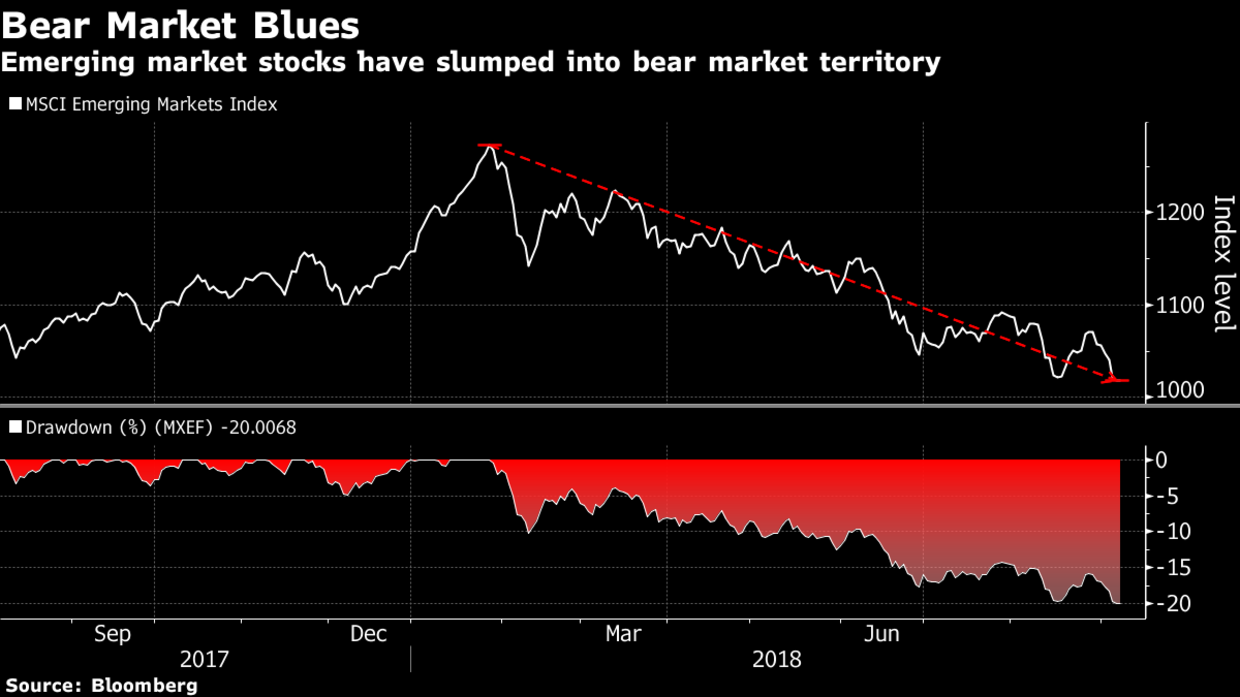
An interesting question at this point from the perspective of our “developed markets” investors is whether the fear will spread here. Usually, money flees from frontier markets first when things start to get smoky.
As soon as we get a few down days, almost every channel starts broadcasting warnings that a collapse could be imminent. This has been going on for quite a while. Several years.
At the same time, for example, the tabloids have a story almost every day about someone getting rich as an investor.
Normally, this would already be the beginning of the end, but I’m afraid central banks will ruin a proper crash again I’d be surprised if we still see widespread declines early next week.
Even that decline seems quite even, so it’s unlikely to cause fear in the markets itself. Confidence in the bull market is so strong that a small dip won’t dampen it. So, we’re currently at levels from about a year ago on the chart, so no panic
A slightly more comforting assessment, although not a guarantee of the outcome:
The possibility of a trade war resulting from the import tariffs imposed by the United States and the retaliatory tariffs threatens export growth, PT believes. However, the research institute estimates that an actual trade war will not occur; instead, the tariffs will only lead to a slowdown in trade for individual product categories, and the tariffs will only slightly slow down the growth of foreign trade.
Analysts Juha, Erkki, and Petri recalled the financial crisis. At the beginning of the video, Juha’s point really struck a chord with me: because the crisis and collapse happened quite early in his investment career, he places much greater emphasis on considering risks, unlike “bull market children” (a group I also belong to) who most often focus only on returns… I should probably do a reality check. ;D
The video also has a few comments on whether there are similarities to today. Not directly, but when everyone is making top profits and having a good time at the punch bowl, a more conservative investor might shift more towards a “waterline” (conservative) approach.
Which stocks reacted the least in previous crashes? If you want to keep your investments in stocks but still somewhat protect their value in a potential new crash.
Edit: I understand that my question is a bit difficult to answer directly. It naturally depends on where the crash starts which ones react the most. But you can also answer a bit more vaguely, which industries, for example, might be more stable than others. Industry, trade, construction, finance, being cyclical, of course react negatively. Is any sector a so-called safe haven?
It’s worth considering what kind of business doesn’t take hits even when the general economic situation slows down. The fundamentals do support it enough even in a downturn that if a company’s earnings don’t come down, neither will its stock price as strongly as those where the entire business (and earnings) takes a hit. Then there are special cases like cybersecurity, which is probably quite resilient to business cycles, but current valuation multiples are incredibly high, and thus, the stocks do have a heavy downside leverage in terms of that valuation level component if the market decides so. I can’t say anything for sure about how these will actually behave when the bears come out of their dens.
What then are these “safe havens”? At least all necessities. Healthcare, pharmaceuticals, basic food retail, and generally everything people have to buy regardless of the economic situation. You can think about this through your own life. Of course, you always have to consider the multiples at which companies are priced. Even a defensive business is not protected from a stock price decline, and especially not if a lot of air has been blown into its valuation multiples, as Verneri noted immediately after, with Orion as an example.
What scares me the most right now are the “heavy caps” in basic industry, which obey Newton’s law of gravity quite well. Even though only the future matters, I do look at companies’ earnings even on a 5-year backward-looking horizon, because I don’t believe that after such a long economic upturn, current earnings are at a sustainable level. And they feel quite expensive.
Aappapa: We should separate two things here: the collapse of stock prices and the collapse of company earnings.
You cannot influence other investors: for example, during the financial crisis, many good companies also declined because some large investors had to dump shares to get cash elsewhere. So all stocks can collapse, at least temporarily, no matter how good the underlying business.
Or take Orion as an example: it has come down -50% from its peak without any major news, simply because the stock surged into a severe bubble at 60 euros.
Many of today’s stable industries might be on the brink of disruption: for example, I wouldn’t be so sure about the continuation of telecom operators in the long run; they face a major transformation in the next 10 years.


 Of course, you always have to consider the multiples at which companies are priced. Even a defensive business is not protected from a stock price decline, and especially not if a lot of air has been blown into its valuation multiples, as Verneri noted immediately after, with Orion as an example.