North American electric, gas and water utilities (utilities sector)

The stock market’s utilities sector includes companies providing power generation and distribution, gas distribution, and water supply. (To clarify, waste management belongs to the industrials sector and natural gas producers to the energy sector along with oil companies.)

North American companies in this field don’t have a thread yet, so let’s start one here. This first post focuses on US electric companies, but Canadian and why not Mexican companies in the field, as well as gas and water companies, are also suitable for the thread.

Who wouldn’t want to own beauties like these?? :heart_eyes: :factory:


(Photo by Jakub Hałun / Wikimedia Commons)

There are currently 31 sector companies in the S&P 500 index, in addition to smaller companies in the field on the stock exchange. The entire industry accounts for ~5% of US GDP.

In power generation, the trend in the United States has also been towards reducing CO2, especially by reducing the use of coal.
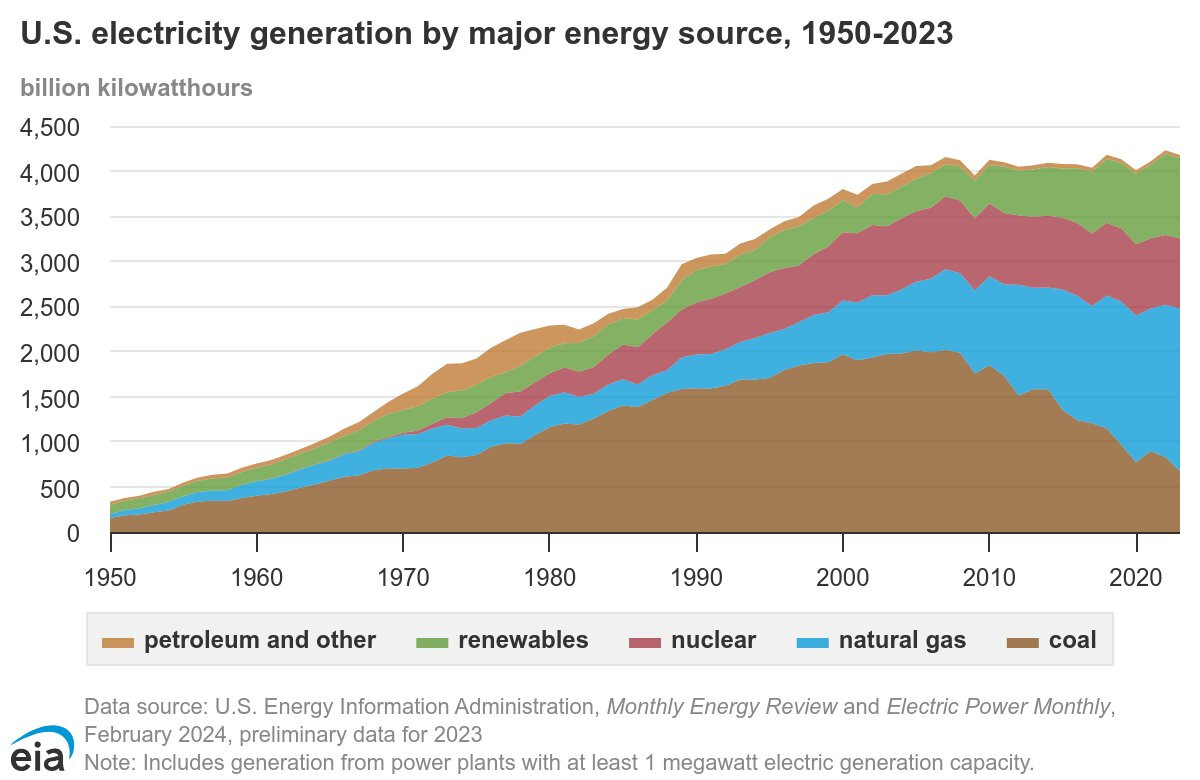
Some companies focus only on electricity or gas, and some have both in their portfolio. Gas is used much more there than in Finland; for example, 47% of residential heating is done with gas.

In terms of distribution, the companies are local monopolies, so they are also regulated; they cannot charge whatever they want. In the wholesale power generation markets, where customers are industrial, regulation is looser. The market includes pure regulated monopolies (e.g., Consolidated Edison, Eversource Energy, and Exelon), electricity wholesalers (e.g., Constellation Energy and Vistra), and companies whose business is a combination of both (e.g., NextEra Energy and Duke Energy).

Investment Profile of the Sector:

In principle, the companies are regulated, capital-intensive defensive companies and stable dividend payers, often being long-term dividend growers. Companies with greater exposure to the wholesale market are more growth-oriented or, on the other hand, more cyclical.

Industry Trends:

The electrification of the economy (heat pumps, electric vehicles) and especially the growing energy demand of data centers are the prevailing trends driving growth in electricity demand. Renewables such as solar and wind, as well as battery storage, are also on the rise. There are major investment needs in power grids and production.

Specific Risks:

Natural disasters, especially wildfires, are a significant risk for many companies; for example, California-based PG&E has nearly gone bankrupt twice this millennium because it was ordered to pay compensation for damages caused by various wildfires. Similarly, Hawaii-based Hawaiian Electric had to pay $2 billion in compensation for the fire that destroyed the town of Lahaina – nearly half of the company’s pre-fire market value. Edison International, the parent company of Southern California Edison operating in the Los Angeles area, seems to have survived LA’s latest wildfires with just a scare regarding liability, but it also carries risk.

Graphics to Understand the Big Picture:

US Energy Flows:
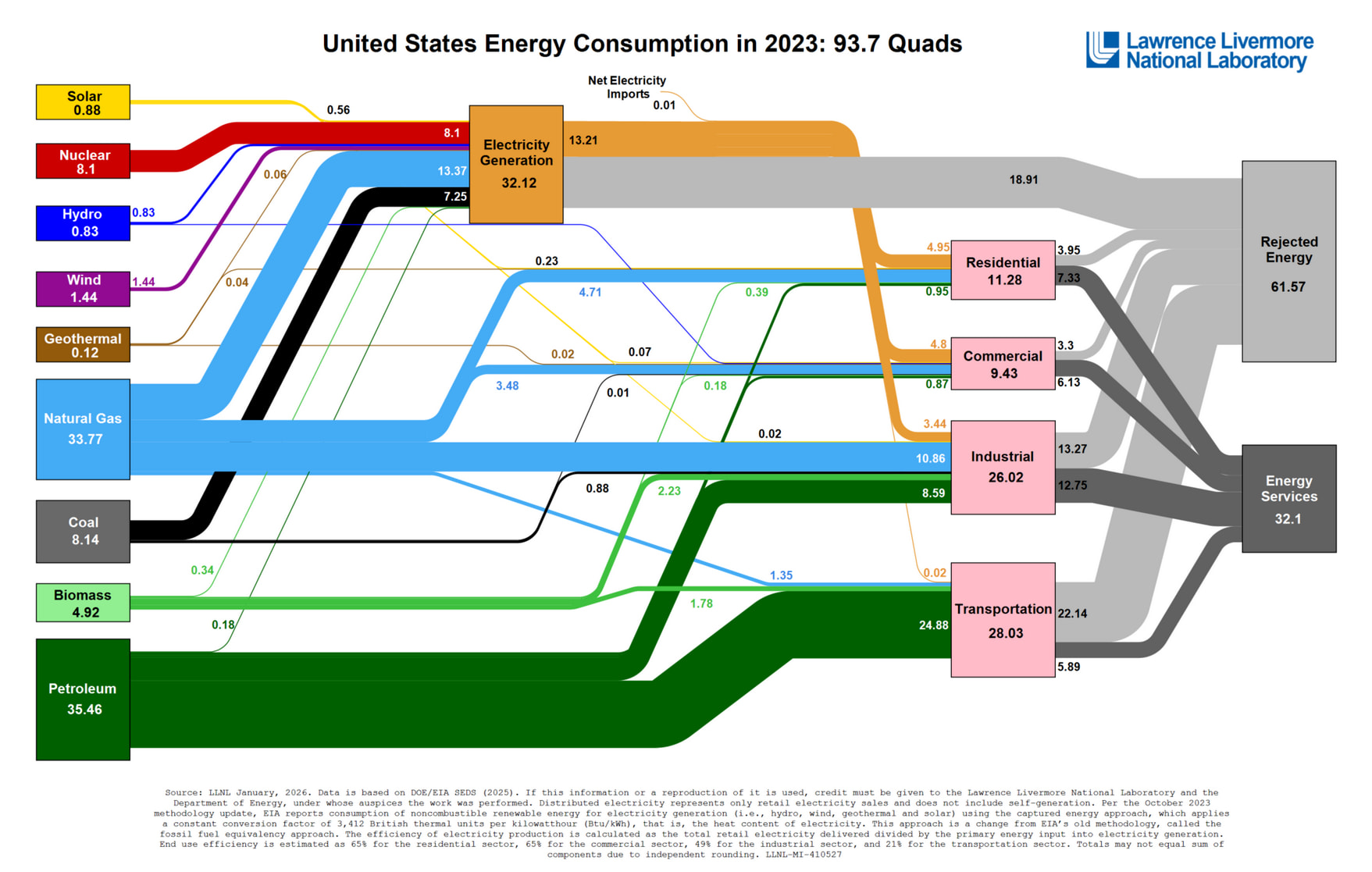
State-specific charts can be found here: Energy Flow Charts | Flowcharts

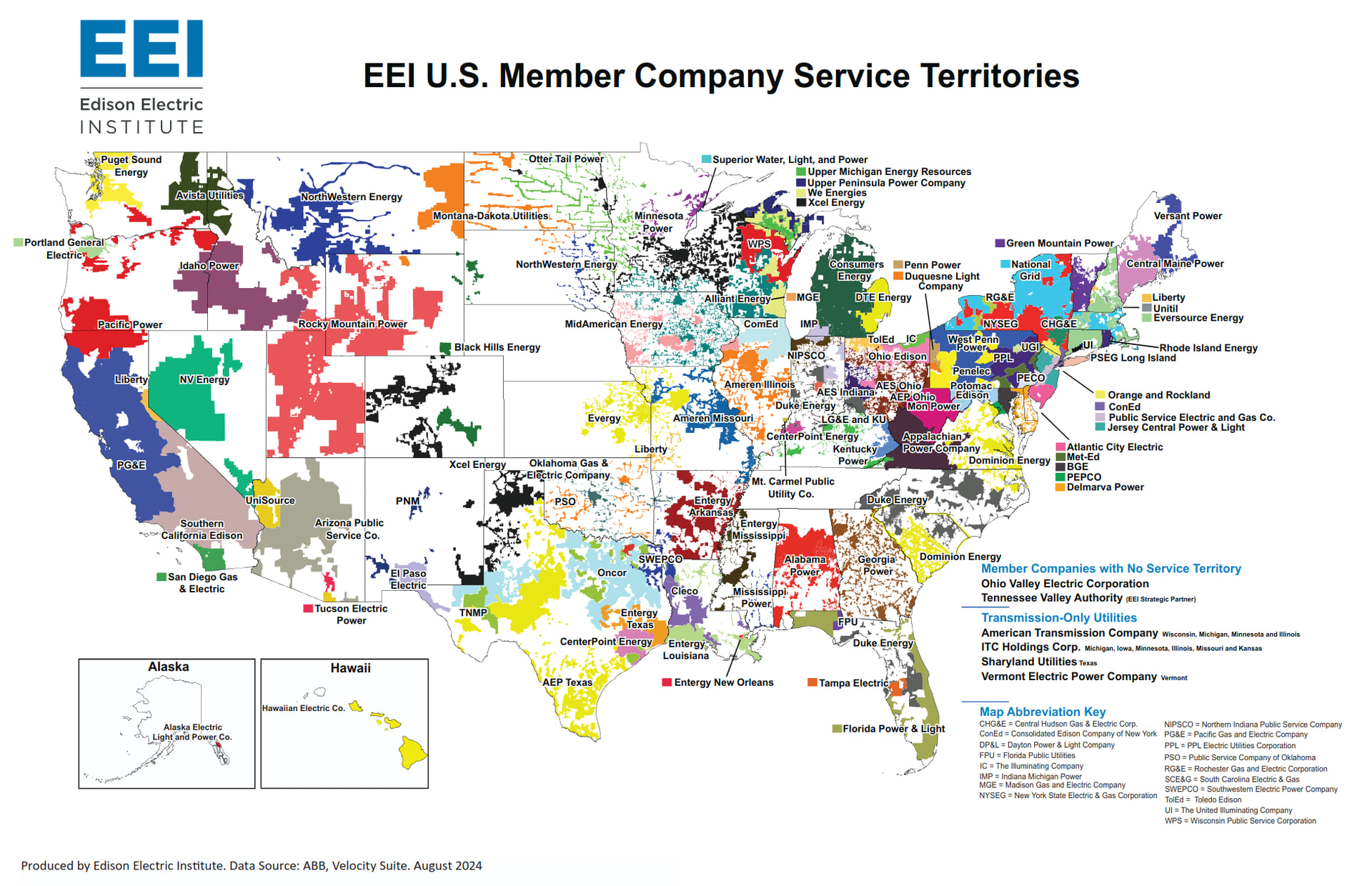
A map where you can see the operating areas of many different companies in the sector (not all are publicly traded, but many that are not directly listed are subsidiaries owned by a listed company):
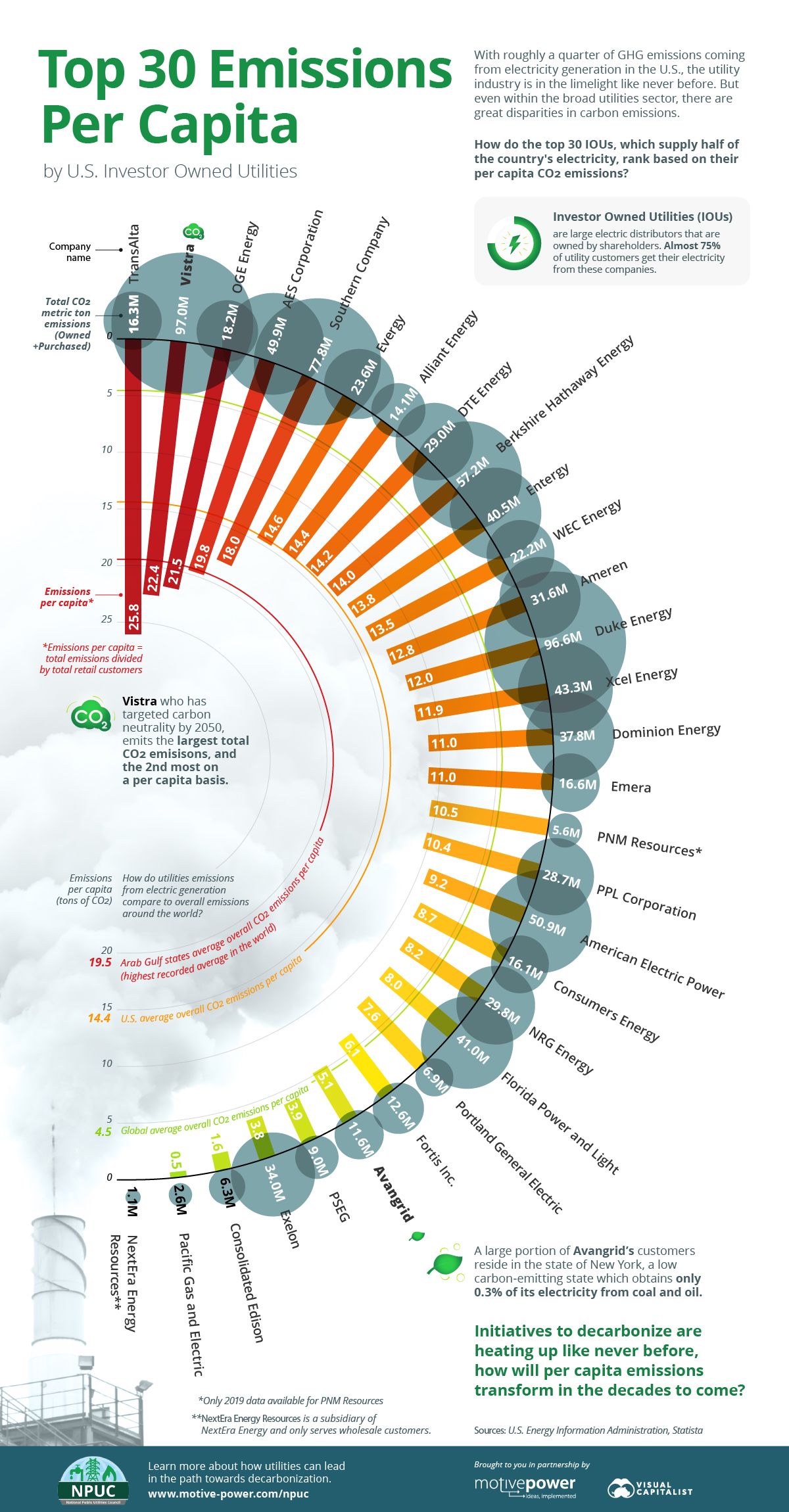
A graph of CO2 emissions from different electric companies both in total and per customer – there are large differences between companies in terms of climate impact:
The easiest way to invest in the entire sector is through ETFs or other sector funds; e.g., with the iShares S&P 500 Utilities Sector UCITS ETF, but of course, a seasoned stock picker will take a view and select individual companies. My own portfolio currently includes Consolidated Edison and NextEra Energy.

I will post company-specific posts and industry news when I have time, but hopefully others will too!

30 Likes

Several large acquisitions have been made in the industry over the past year or so:

  1. Constellation Energy acquired Calpine for approximately $26.6 billion (EV) Constellation Completes Calpine Transaction, Powering America's Clean Energy Future
  2. Blackstone is acquiring TXNM Energy for $11.5 billion (EV) TXNM Energy Enters Agreement to be Acquired by Blackstone Infrastructure - Blackstone
  3. A consortium led by BlackRock and EQT is acquiring AES Corporation for $33.4 billion (EV) Consortium Led by Global Infrastructure Partners and | EQT

All of the companies acquired or being acquired have been publicly listed.

8 Likes

And a big one is coming at the beginning of next year. American Water Works and Essential Utilities are merging in a $40 billion stock swap.

8 Likes

Brookfield Renewable (BEPC):

-About half of the energy production is in North America, and long-term customer contracts are typical.
-Otherwise a global company.
-Originally hydropower and since then other renewables and battery storage.
-Also operates in Finland through Neoen, which it owns: wind power and battery storage.
-The company gained widespread recognition when it signed a gigawatt-scale power purchase agreement with Microsoft in 2024.
-Brookfield Renewable’s share price was elevated around the turn of the decade in the wake of renewables and ESG, only to drop to about a third by 2024. The AI craze has again roughly doubled the price, but it has not returned to the levels of years past.
-Part of the large Brookfield conglomerate.

I was monitoring BEPC with the intention of buying in 2024 and saw it as being deep in the bargain bin relative to its energy assets. I still didn’t buy for the following reasons:

-The entire Brookfield family is quite a complex web that is hard to make sense of. For example, the FT has written about this complexity.
-BEPC has plenty of debt and its ability to pay dividends has been questioned, even though they have been paid out year after year. Due to the complex structure, it was difficult to get a full picture of the company’s status.

In hindsight, it would have certainly been worth buying from the 2024 dip (about half the current price), but buying at the current price?

7 Likes

Good timing, listen to Verner’s 15-minute update from today about acquisitions!

1 Like

Consolidated Edison (also known by the abbreviation ConEd, ticker symbol NYSE:ED) is a New York City :statue_of_liberty: energy monopoly and dividend king, founded in 1823 as the New York Gas Light Company.

Business:

The company provides electricity, gas, and steam (district heating) to customers in New York City and several adjacent counties. The population of the company’s service area is over 10 million, which is about half of the metropolitan area (there are also other operators with their own areas on Long Island and in New Jersey). If you live in the company’s service area—meaning anywhere in NYC—you are its customer.

In its electrical grid, the company has over 200,000 km of mostly underground cable and high-voltage connections through which it imports electricity from outside the region, e.g., from Hydro-Québec in Canada. There are 12,000 km of gas pipelines, and on the steam side, the Manhattan steam system and 4 production facilities. The company does not own other power plants but instead purchases electricity from the NYISO wholesale market.

The company is a regulated monopoly (“regulated utility”). Typical for the industry, the company always has quite a lot of debt and consistently large investment needs.

The company is not expected to be a major beneficiary of the data center boom, and such expectations have not been priced in.

The company’s revenue last year was approx. $17 billion and profit was $2 billion. Market capitalization is currently approx. $40 billion. P/E 20, P/B 1.6.

Dividend King:

The company has increased its dividend every year for 52 consecutive years. Currently, the dividend yield is just over 3% and the payout ratio is approx. 60%. In addition to the dividend, the company’s share price has also risen fairly steadily over time.

For whom?

For an investor seeking defensive and stable, albeit modest, returns and who wants to sleep well at night. :sleeping_face:

Links:

5 Likes

Here is an interactive map featuring nearly all power plants in the United States (though the data is from 2023, so new ones have come online since then). The color of the dots represents the type of power plant and the size indicates the capacity class. Clicking provides more information about each plant.

2 Likes

Development chart of total electricity production, including the largest producing countries + the EU as a whole:

2 Likes

Berkshire Hathaway CEO Greg Abel shares updates on Berkshire Hathaway Energy at 1:11:56 - 1:21:11 in the annual meeting video (it should start directly from that point below).

Topics include the impact of data centers on electricity demand and prices, as well as regulation and wildfires.

BHE is a large electric and gas utility operating in the U.S. Midwest, the Rocky Mountain region, and the West Coast, as well as in the United Kingdom.

2 Likes

M&A activity in the sector continues: NextEra Energy has announced it will acquire Dominion Energy in a $67 billion all-stock deal: https://www.cnbc.com/2026/05/18/nextera-nee-dominion-energy-d-data-center-ai.html

Dominion is the utility responsible for powering the world’s largest data center market in northern Virginia. It has a market cap of more than $50 billion.

NextEra is the biggest renewable energy developer in the U.S. with a portfolio of natural gas and nuclear generation as well. The Florida-headquartered power company is also the largest utility in the S&P 500 at a market cap of more than $190 billion.

2 Likes

Solar power surpassed coal power in US electricity generation on a monthly basis for the first time last month, reports news agency AP. In May, solar accounted for 12.8% and coal for 12.2% of electricity—coal’s share being the lowest in history. (Natural gas and nuclear power remain the largest sources.)

Solar has held the top spot in the construction of new power generation capacity in the US for the last 5 years. :sun_with_face:

2 Likes

California utilities suffered a setback when state bill AB 492 failed to gain enough support in its original form. Pushed by Governor Newsom, the original version of the bill would have protected utilities from wildfire-related liability.

“His administration sought to reduce utilities’ exposure to wildfire claims, including by limiting or ending insurers’ ability to sue utilities to recover money they paid to policyholders after fires. The governor argued the changes were necessary to protect the state’s utilities from potentially crippling liabilities and help stabilize electricity rates.”

Southern California-based Edison International’s (EIX) stock price plummeted by about -23% yesterday, and Northern California-based PG&E’s (PCG) stock price by about -20%.

1 Like

The fate of old coal power plants is being contested. Michigan-based utility company CMS Energy planned to close the 1,420 MW J.H. Campbell coal power plant, built in the early 1960s, as early as last year, but the Trump administration, a supporter of coal and an opponent of renewables, has blocked the closure. Now an appeals court has overturned the decision blocking the closure.

https://www.politico.com/news/2026/09/11/court-deals-first-blow-to-trumps-coal-rescue-campaign-01072134

2 Likes