Paragon Ag – Automotive subcontractor that hit the COVID wall

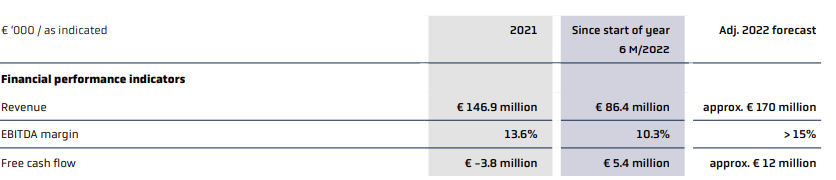
Revenue: 145 mEUR (2021E)
EBITDA %: 12-15 (2021E)
Free Cash Flow: 10-12 m€ (2021E)
Market Cap: approx. 50 m€

Website: https://ir.paragon.ag/websites/paragon/English/0/investor-relations.html
Latest presentation (in English): https://ir.paragon.ag/download/companies/paragon/Presentations/20201116-18_PGN_Eigenkapitalforum_WEB.PDF

Some key figures (current year, based on company guidance):
EV/EBITDA: approx. 3
EV/SALES: 0.35

A Preamble

Once upon a time in Germany, there was an automotive supplier, a family business, that listed a large portion of its promising battery technology company on the stock exchange. With the funding received, the supplier implemented an ambitious growth program, making acquisitions and investing in manufacturing capacity and technology development.

The company proudly stated that one in seven cars sold worldwide contained technology it manufactured. In 2019, investments amounted to nearly 30 m€. In its hunger for growth, it also took out a franc bond from Switzerland. Big expectations were set for 2020.

But alas, the growth promises in the battery technology sector of its subsidiary did not materialize on time as an important customer delayed large purchases. Write-downs had to be made, and these were consolidated on the parent company’s side, marring the figures.

Then the terrible corona hit. Our main supplier to the German automotive industry (especially the VAG Group) found its cash flow under severe pressure. Costs ran high, but car factories were closed for several weeks. The previous year’s annual report included a note about the risk of liquidation if the difficult corona situation prolonged.

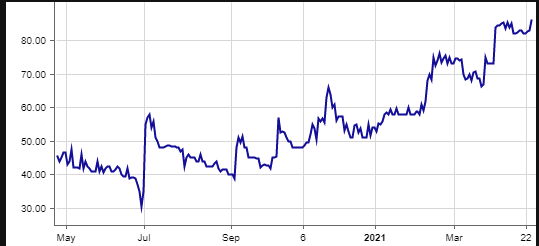
The equity ratio in Q3/2020 was only 6%, while the company’s target was 30%. An analyst’s target price of approximately 90€ was now a distant dream, and the share price plummeted below 10 euros. Just ten years earlier, the company had had to renegotiate its debts for the last time. Now, large write-downs were made, extended payment terms for purchase invoices were negotiated, and bond covenants were relaxed…

A gruesome true story, especially if Paragon Ag has been in your portfolio for several years! My condolences to the holders. Asbestos gloves have come in handy.

Yes, why don’t you recommend Argentine government bonds? Tell me more anyway.

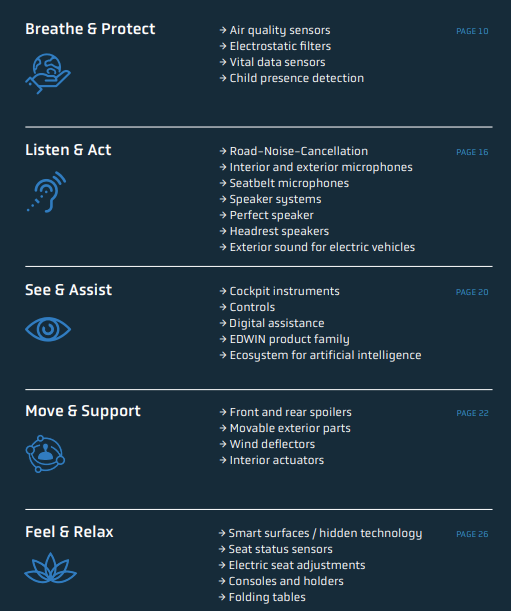
Paragon Ag is thus a supplier to the (mainly) German automotive industry. Below is a list of its offerings, which can be considered quite extensive.

In 2020, over 20% of the company’s employees were involved in product development. The focus on product development suggests that the company is seeking a first-mover advantage, thereby avoiding competitive pressure and price erosion in more established products.
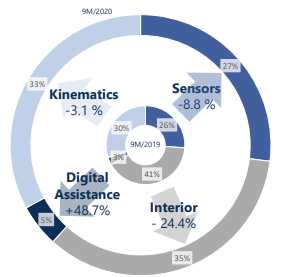
The core business is healthy, and for a long-term investor who accepts risks (see separate section), the target is therefore attractive. The second image shows the revenue distribution for 9 months/2020 by region. There are three equally strong pillars, and Digital Assistance is the most recent investment in software and AI. As can be seen, the share of software is rising steeply (48.7% y-o-y).
From good things to bad. The most significant reason for the low valuation is the extremely weak balance sheet structure and indebtedness. The balance sheet cannot withstand – without a share issue or other forced solution – a new shock like the corona pandemic.

Addressing the balance sheet problem is a key driver for a significant rise in share price and creation of shareholder value. Therefore, this post focuses more on opening up risks than on the business. Perhaps more on the business will follow later.

So how are these messes cleaned up?

In bullet points:

  • Cost-cutting program: Operations in Germany are being centralized as overlapping functions from acquisitions are eliminated and locations merged. This work has already begun. Sale of surplus corporate properties.

  • Business growth: As the corona risk subsides, the benefits from investments made will finally be realized. Demand for software, sensor, and cabin air purification technology has been stronger than anticipated. In software, voice control is a rapidly growing area. The free cash flow forecasted for this year is strong. In software, Paragon sells a license-based platform solution that generates continuous revenue.

  • Voltabox sale: The company has stated its intention to sell its publicly listed battery technology subsidiary, Voltabox, entirely. The market value of its stake (54.5%) is approximately 40 m€ at the time of writing.

Nice, but why should I invest my money in this?

If you deduct the Voltabox ownership from Paragon’s market capitalization, simple math would suggest the company’s value corresponds to less than one year’s free cash flow. Not bad, as a certain Dancing with the Stars judge would say. The 2019 annual report mentioned an order backlog of approximately 800 mEUR for the next 60 months. A basic workload for the coming years exists.

The EV/EBITDA and EV/SALES figures mentioned in the initial info box for this year scream cheapness. Larger competitors/peers have EV/EBITDA multiples hovering between 5-6, so a 50% increase in share price would leave the multiple at approximately 4.5, which could be an acceptable level if and when the company gets its debt situation even slightly more in order.

(Note! I have not calculated pro forma figures for if and when a partial Voltabox divestment occurs, so these key figures come with that caveat.)

The company appears to be unpopular, which greatly pleases a hunter of even somewhat cooled cigarette butts like me. The general corona bubble has not managed to inflate the stock’s valuation.

So what are the monsters then?

As one might expect, reality is more complex. The sale of Voltabox ownership is intended to be made to an industrial player in larger blocks. The sale was supposed to happen last year, but negotiations with a Swiss buyer candidate have continued. The extended timeline for the sale could mean good things (not a forced sale situation, seeking better terms) or bad things (the target to be acquired is unsatisfactory).

I lean towards the positive side. As the cash situation improves, Paragon does not need to give away assets to pay off debts. The company’s situation is comparable to NoHo, which ran into corona and only recently sold its Eezy ownership. (Unlike NoHo, Paragon is already generating positive cash flow.)

A block sale of Voltabox ownership may fetch a price lower than the market price, even if it is done in several parts. If the sale is not finalized during the current quarter, it is unlikely to materialize with the current Swiss buyer candidate at all. Voltabox’s cash situation has also been tight, so in a bad scenario (battery sales do not recover), Voltabox ownership will be diluted, and Paragon’s creditors will become nervous. This risk must definitely be considered, as the deal has been negotiated for almost a year now.

If the sale does not happen, there is a risk of a share issue and/or the sale of a company division. Both actions would destroy shareholder value and be reflected in the share price. Therefore, the Voltabox sale is the primary way to reduce the debt-to-equity ratio, either through a block trade or by selling to the market in small increments.

image

Paragon is largely dependent on the success of the VAG Group. Although the market has opened up to China (e.g., Geely), the company is still a captive of the German automotive industry’s success. This dependence is mitigated by a broad product repertoire and a focus on more niche areas and software where growth prospects remain good.

Problems with chip orders plaguing car manufacturers may slow customer sales, at least in the short term. Germany, however, has boosted its domestic market for new cars, maintaining demand for Paragon’s offerings.

Finally, I will address management. Family entrepreneurship is often mentioned in a positive light, but founder Klaus Frers, who holds power with a 50%+1 voting share, is in a significant position to decide the company’s direction.

OK, is this a buy or a sell?

I will outline an optimistic scenario below, but not, in my opinion, with overly bullish glasses. This can, of course, be freely challenged, as it contains a big V-shaped assumption:- The Voltabox sale will go through. Paragon will remain a minority owner, committing to sell its stake (~10-15%) later. The money will be used to pay off debts and redeem below-par bonds. Equity ratio will significantly improve, and risk level will decrease.

  • Sales will grow by 10-15% over the next couple of years, but no dividends will be paid for a couple of years, as debt – mainly bonds – repayment will continue. This is fine with me.

The actions taken should be reflected in the share price. Unless otherwise agreed in connection with the Voltabox sale, there is also an option to benefit from Voltabox’s improved performance.

Q4/2020 will be published tomorrow, and we will get more information on how the sale of Voltabox ownership is progressing.

Disclaimer: I own Paragon shares.

Fun fact: Taalerin Mikro Rein fund has owned a couple of percent slice of Paragon, apparently still does.
Fun fact 2: I started with an analysis of Voltabox, but ended up as an owner of Paragon. Some like the mother and some like the daughter. So far, I got both.

Ed: typo corrected in the heading

40 Likes

One of the best opening posts in the history of the forum, considering both substance and humor in appropriate proportions. Standing ovation :clap:

7 Likes

How will the ongoing (worsening?) semiconductor shortage affect this? In the worst case, car manufacturing could stop for an extended period, hitting subcontractors in the same way as the coronavirus.

5 Likes

In Paragon’s “hidden message” at the end of March, the matter was formulated as follows:

The Management assumes that any supply shortages for components will have a low impact, if any.

The Q4 report is also out, including preliminary information for Q1. A quick look shows it’s okay (I don’t have time to dig deeper), but the scarcity mentioned in the release regarding Voltabox’s (Voltabox) sales is concerning, and the prolonged duration of Voltabox’s audit is not a good sign. Usually, the things that raise eyebrows are buried at the end of the release.

Q4:
https://ir.paragon.ag/websites/paragon/English/4250/news-detail.html?newsID=2083546

The company does not expect material shortages to have a major impact on performance; currently known shortages fall below the planned tolerance levels.

Above is the latest update regarding the component situation. The situation may still worsen, “no two words about it,” to use Sauli Vilen’s favorite phrase.

The stock price liked the news. I find this surprising, as the company had already communicated the essential Q1 information at the end of March. According to my papers, the new information for Q2 is that a record turnover will be achieved, which is, of course, positive news. So, things are looking good for the whole year, as the preliminary information for EBITDA and cash flow was also confirmed.

Based on the good development in customer orders, the Management also expects the second quarter to significantly surpass the reference period from 2019.
The Management also reaffirms its expectations of an EBITDA margin of 12-15% and free cash flow of around € 12 million for 2021 as a whole.

I am still waiting for the balance sheet data and cash flow movements to be published.

Voltabox had also simultaneously released some information on its full-year (2020) results and current year guidance. Demand for batteries has not recovered among Voltabox’s customers, and the current year’s revenue forecast remains low compared to previous years. A recovery is expected from mid-year onwards.

The audit of Voltabox’s figures is still ongoing, and news of Paragon’s Voltabox sale is unlikely before the 2020 figures for both have been audited.

Instead of admiring Paragon’s stock price, I am more pleased with this curve – it is the price quotation of Paragon’s bond. There is still a way to go to par valuation, but the direction is right.

Thank you very humbly! I hope someone managed to read my ramblings to the end :slight_smile:

3 Likes

Q1’s earnings report was released belatedly at the end of July, and yesterday we returned to the normal cycle with the Q2 report. Key components for Q2:

  • FY 2021 guidance remains at EUR 145 million, free cash flow ~EUR 12 million, and EBITDA 12-15%
  • Delayed sale of Voltabox stake has moved forward, at least in discussions
  • New software segment (Digital Assistance) has grown significantly, 128% year-over-year
  • First sales for the Power segment (licensed from Voltabox), a few thousand euros
  • First CHF 5.25 million repayment of the Swiss franc bond has been made; the next CHF 8 million repayment is due in April 2022

Automotive’s revenue for the half-year was approximately EUR 76 million, and the second half of the year has traditionally been stronger. Therefore, without extensive impacts from corona or chip problems, a positive earnings warning is quite certain. The company itself states it has already stocked up well in advance on chips, so problems should not arise. Although the end customers are mainly premium brands in the automotive sector, and thus prioritized in the pecking order for high-margin products, even their production might be put on hold due to problems with other subcontractors. Of course, it’s damn good that it’s not Paragon selling out of stock.

The Power segment sells compact battery solutions based on technology licensed from Voltabox, such as batteries used in starter motors. This is an interesting piece that originated from in-house development, with a sales estimate of EUR 5-10 million for next year. This is also a growth segment.

On Paragon’s operational side, I have no complaints. Of course, everything looks better compared to the corona year. However, the sale of Voltabox has been delayed like the completion of Olkiluoto 3, and the market, judging by the stock reaction, is very skeptical about keeping to schedules. Many words, little wool.

My assessment is that once Voltabox divests its loss-making American branch, the company, focusing on the euro area, will be easier to sell off. Voltabox’s business has been on life support due to corona for a long time, and Paragon’s weak balance sheet leaves no room for group contributions except for mandatory support money (loans). However, financing must continue, and it seems there has been a poker game with the potential buyer to see who blinks first. Now it appears that as Voltabox’s business slowly starts up again, negotiations will also move forward. Let’s see.

If and when the VB deal goes through – naturally depending on the price and terms – the company’s ability to generate free cash flow will become more apparent. The share of licensed software is growing rapidly, and even though it accounts for less than 10% of revenue, as a fast-growing area, it would balance the dependence on automotive industry cycles.

This will not be a dividend machine for at least 3-4 years, but as the debt level is expected to decrease rapidly along with a diminishing interest burden, the risk level will fall and support the share price. An announcement of the sale of the Voltabox stake would be the next big milestone towards a share price correction. Furthermore, the market is interested in how the large bond (EUR 50 million) due in 2022 will be refinanced.

2 Likes

That’s exactly what happened: the sale of the Voltabox stake is about to be sealed. According to the announcement, Paragon will finalize the deal in October. One step forward in strengthening the balance sheet.

The business update promises that both sales and the EBITDA target will hold despite the chip shortage. Towards the end of the year, the chip shortage even seems to be worsening, so any faint hopes for a revenue positive surprise can be forgotten.

Meanwhile, the direct supplier to international car manufacturers is satisfied with the business performance in the automotive business. Despite the chip shortage, sales are on target and the forecast of € 145 million in sales and an EBITDA margin of 12% to 15% can be maintained.

1 Like

Well, my own investment case hasn’t been the most successful either. The stock price has fallen by approximately 40% since the time of writing, and the main reason, in my opinion, is the refinancing of the company’s euro bond (50 MEUR) due for redemption next summer. The full year’s revenue and profit, despite the well-known problems in the automotive industry, were exactly as expected.

Preliminary information on FY2021 results:
https://ir.paragon.ag/websites/paragon/English/4250/news-detail.html?newsID=2187674

Despite the savings made, the reduction in debt levels, and the generated free cash flow, the redemption of the 50 MEUR bond has long been known to be utopian. That’s why I wonder why the market is only reacting to the situation now. Paragon recently announced an offer to extend the euro bond until 2027, but the extension naturally requires the approval of the bondholders. So, we are at a “thrilling moment,” so to speak. If the offer does not go through, another option will be needed, which will not be as favorable to the company. A fire sale divestment of some segment.

One of the most peculiar cases in my investment career, because the debt situation and the sentiment in the automotive industry overshadow an otherwise good overall picture. Paragon Ag’s product repertoire is strong, and the demand lag caused by the chip shortage is being tackled by growth in software sales and new product categories (such as the attention-grabbing virus filters). If (a big if) the bond is extended by five years, the investment case will get a really good foundation for a quick rise, and the black cloud of immediate default risk will be removed. For 2026, revenue is projected to grow by approximately 70% (225-250 MEUR), and for this year, the estimate is +10-15% despite the chip shortage, and EBITDA will rise above 15%, with a medium-term target of over 20%.

The stock price of 6 euros reflects a high level of risk, but in my opinion, it overstates the slowdown caused by the chip shortage for the company. A bolder investor would take the lead and buy the stock now, but the high-risk pricing is likely to continue for a good while, even if the bondholders agree to the bond extension.

6 Likes

In case this interim update went unnoticed by anyone:

https://ir.paragon.ag/websites/paragon/English/4250/news-detail.html?newsID=2194486

So, the first negotiation with the creditors did not yet bring the desired result.

"Delbrück, 9 February 2022 - At the first creditors’ meeting of paragon GmbH & Co. KGaA, a clear majority approved the company’s proposed term extension of the EUR 50,000,000.00 4.5% bearer bond of paragon GmbH & Co. KGaA due on 5 July 2022 (ISIN: DE000A2GSB86 / WKN: A2GSB8). Nevertheless, the necessary quorum for the resolution was not reached by creditors participating in the vote.

The company will shortly give notice of a date for a second creditors’ meeting to be held. Based on the feedback from the bondholders to date, paragon is confident that the resolution will be approved at this meeting.

The company has published answers to the bondholders’ questions from the webcast on 31 January on the paragon website"

Waiting… I’m considering opening a position if the immediate default risk is removed.

4 Likes

Yep, no rush to react. My assessment is that Paragon Ag will have to either tie a dividend distribution restriction to the bond terms and/or raise the coupon rate by 1-1.5 percentage points to achieve the required majority decision. I still consider a five-year extension of the bond to be the likely outcome.

P.S. I misquoted the 2026 revenue targets in my previous message; here’s the correct one:

Revenue target for 2026 of € 250 to 300 million

I adjusted the figures downwards in my own calculations. The debtor has an incentive to present the future of the business in a bright light, and while I don’t doubt the figures, I prefer to be positively surprised rather than negatively.

2 Likes

And so it happened. The interest rate ended up being 6.75%, which is higher than my own estimates. On the other hand, the interest rate is tied to the debt level and will decrease gradually. These details are not clear from the press release; the more precise information has been read from German sources.

https://ir.paragon.ag/websites/paragon/English/4250/news-detail.html?newsID=2212595

This is positive news, but the automotive industry is overshadowed by the war in Ukraine and inflation. Ukraine apparently has a lot of cable manufacturing, and car manufacturers, in addition to the familiar chip shortage, have faced inflation from various directions. It may therefore be difficult for Paragon to achieve its targeted revenue this year if end-customers’ production lines falter in the familiar way.

1 Like

Defining the “correct” valuation level certainly doesn’t get any easier with the new record order (largest order in history). Air purification filters worth EUR 45 million were supplied to an unnamed Chinese car manufacturer. As is customary in automotive design wins, deliveries will only begin in 2025.

At the same time, the 2026 revenue estimate (EUR 250-300 million) was estimated to be closer to the upper limit. In the longer term, the backlog looks very good, but the familiar problems plaguing the automotive industry overshadow the short-term outlook. A crystal ball would be useful, as easing component shortages would be a major driver of earnings improvement and debt reduction. The share price would recover through the earnings component and an acceptable valuation multiple.

The 2021 annual report and final figures will be published during the current month, and at the same time, a revenue and EBITDA estimate for the current year will likely be provided. The first quarter of the year will then already be almost behind us.

https://ir.paragon.ag/websites/paragon/English/4250/news-detail.html?newsID=2229495

Ed: removed typos

3 Likes

High Risk, High Rewards. The beauty of this forum is that you can find such tips for a long-term portfolio, even if they’re only 0.001% of the portfolio’s weight. What’s there to wait for in the coming years?

1 Like

Thank you. In hindsight, now is a better entry point than a year ago. But who among us has a crystal ball…?

Yesterday, preliminary information on Q1/22 revenue was released, +5% ahead of the comparison period. As recently as February, +15% revenue growth was communicated, so the problems caused to car manufacturers by Ukraine and China quickly reflected in Paragon’s figures.

FY2021 figures, Q1/22 preliminary estimate, and CFO appointment news:
https://ir.paragon.ag/websites/paragon/English/4250/news-detail.html?newsID=2247713

Regarding cables, it’s discussed as an operation more easily replaced than chips, and even though normal component availability is still a ways off, the losses from the beginning of the year might be recovered by the end of the year. Thus, Paragon’s revenue forecast of +15% compared to last year is still achievable. But we’ll see what new crises time brings.

The sale of the Voltabox block has been quiet, and the price was approximately €8.6 million. Contrary to my assessment a year ago, Voltabox was in worse shape than was visible at the time, and its value was lower than the stock market implied. The cash flow impact was weaker because Paragon licensed the starter batteries into its own product family. The sale of Voltabox did not significantly help reduce Paragon’s debt level, and that was once a factor favoring the purchase of the stock. Hands up, I trusted the market’s judgment too much.

The intention is to further reduce the debt level, but within a year, bonds totaling €25 million should be paid back. This cannot be achieved with free cash flow. The annual report mentions the means, and it is likely that some part of the group will be divested. I am not a bond investor myself, but a eurobond trading at half its par value could offer a good return expectation for a risk-tolerant investor, both in terms of bond appreciation and interest paid.

For the first time in a while, an equity analysis of Paragon was published last week (link below, see Baader’s output). The target was set sharply around 15 euros with a “buy” rating, meaning a significant increase compared to the share price at the time of writing.

One should not expect Inderes-level work, but the analysis does provide a point of comparison for the coming years, at least on the numerical side for one’s own calculations. I would critically evaluate the analysis and especially the price target.

In the current economic situation, there are several changing factors, but a key one for Paragon is how the repayment/servicing of two bonds will be financed. In April -23, the remaining franc bond (approx. 20 MEUR) should be settled, and the euro bond should be reduced by a few million. It is clear that free cash flow alone (estimated 10-15 MEUR) will not cover both.

Paragon has evaluated several alternative ways to manage the franc bond. Refinancing with a new bond/loan, sale of a part of the company, and/or a share issue. The analysis estimated that bond payments would be covered by a large share issue. The best thing is the number of alternatives and the fact that it’s not a firesale situation, as the euro bond was rolled over earlier this year. We’ll wait and see.

Although the economic situation in Europe is concerning for the automotive industry, classic pent-up demand is waiting to be released. Demand for new (read: electric) vehicles is strong, and with the chip shortage easing even this year, the end of the year could see strong “catch up” in car manufacturing.

If the struggling pelican of the economy doesn’t go bust, I expect Paragon to give a revenue positive surprise as year-end order books fill up. The guidance given is quite conservative. However, the cost side may surprise, and free cash flow is within the guided range.

https://ir.paragon.ag/websites/paragon/English/1400/analyst-recommendations.html

Edit: Descriptions of bond payment scenarios and revenue outlooks, among other things, can be found in the presentations linked below:
https://ir.paragon.ag/websites/paragon/English/4310/analyst-_investor-presentations.html

1 Like

There is still a strong possibility for this, as two significant customers, Daimler and Volkswagen, anticipate H2 delivery volumes to exceed H1 delivery volumes. (Situation after Q2 reports.) Premium cars important to Paragon, such as the most important individual brand Porsche, continue to sell well.

The question mark this year is in the shape of a gas pipeline. Although Daimler’s and Volkswagen’s production is not entirely in Germany/Central Europe, they are not immune to the energy crisis. Paragon’s energy bill seems to be ~1MEUR per year, and as I understand it, the use of properties has been made more efficient, so rising energy costs will not directly show up in the expense lines, but will come as a curveball from the end customers.

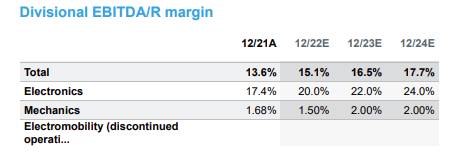
I scrutinized the numbers and the clearest error was in the assumption of EBITDA margins for the Mechanics segment. From the annual figures (2020, 2021), the EBITDA% is indeed 1-2% as stated in the analysis (image below), but the figures are misleading without background. 2020 was a corona year and the 2021 EBITDA was lowered by a one-time write-down in Q4/2021. Q1-Q3/2021 and Q1/2022 show the margin hovering between 9-10%.

An understandable mistake if one takes the numbers directly from the annual level - and if one doesn’t stop to think whether operating an activity that yields 1%-2% EBITDA year after year is even sensible in the first place!

Mechanics accounts for approximately one third of Paragon’s revenue. According to the annual report, the company is progressing from a component supplier (e.g. actuators) to broader product deliveries - in the future, air guides will be used not only for spoilers familiar from sports cars, but also for the front masks of electric cars.

2 Likes

This time, Edison has analyzed Paragon. Paragon is Edison’s client, so it’s good to be aware of the connection when reading the report.

If you read the previous report, Edison’s work is commendable. Opportunities and threats have been well discussed, and you can also see from the DCF calculation table how the fair value would change with different assumptions. More background work has been done than just throwing report numbers into the wringer and filling in report placeholders.

No specific recommendation is given, but even the lowest figure presented in the report is 100% higher than the current share price.

Why is the stock price dragging like a brontosaurus’s tail? The essential points can be summarized in these two quotes:

We believe the strong growth outlook merits a higher FY23e P/E rating than the current 3.6x, which we feel reflects concern over the refinancing of the outstanding CHF21m bond due in April 2023.

The implication of the current share price is that the assumed cost of equity should be closer to 20%, which we feel primarily reflects the continued risk from the refinancing process.

There is risk, but in just over a week, we will get an update on Q2 numbers and especially the debt level. The outlook for the rest of the year is also of interest. It is unlikely that we will get more information about the arrangements related to the franc bond yet.

https://ir.paragon.ag/websites/paragon/English/1400/analyst-recommendations.html

2 Likes

It’s rare for a forecast to be this accurate. The revenue forecast was adjusted up one notch (€165 million → €170 million), but the EBITDA% remained unchanged at just over 15%. Autumn and winter cost levels could still surprise, so the static EBITDA% was not a surprise. More information on arrangements related to the repayment of the franc bond will be available in the autumn.

Revenue growth year-on-year was 14.1%, but the growth in other operating expenses practically ate up the early-year profits. This includes one-off accounting expenses (strengthening of the franc, write-downs of assets), so the earnings per share look harsher than the situation viewed through free cash flow.

Net debt is approximately €100 million, a drop of over €10 million in half a year. A good achievement, as the business is growing and ties up working capital. The amount of trade payables rose more than inventory levels in relation, so I assume Paragon has received better purchasing terms. The increase in inventory levels is logical as the business grows.

The EBITDA fluctuation in the Mechanics segment (now 1.3%, 9.4% a year ago) is a mystery. Revenue grew by 27% in the same period, so the machines are not idle. Does this go to one-off write-offs?

In summary: the right direction, but the debt level was probably lower as Europe travels towards a cold winter. The non-core assets for sale have now been sold, so it remains to be seen what kind of solution Paragon proposes for paying off the franc bond.

Review:

2 Likes

Q3 is behind us, and the announcement for financing the franc bond (~21 MEUR) is still pending. Judging from the CC call, it should happen within the next couple of weeks, but I’m not holding my breath.

The most likely option is to sell a business unit entirely or partially. Alternatively, a share issue corresponding to the market value would have to be carried out, which does not seem like a feasible option. Whatever the case, cash flow and loans will provide 5-10 MEUR, and the rest must be obtained through other measures.

For the full year, there are no surprises regarding revenue and EBITDA. The guidance of 170 MEUR and an EBITDA% of ~15% are still in sight. To reach the EBITDA target, the figures need to be adjusted due to currency expenses and the write-down from asset sales. As for the business operations, things are moving in the right direction.

The debt level decreased by a few million during the quarter to around 100 MEUR, even though the company’s receivables and inventory levels (raw materials) increased this quarter. Revenue will grow in the coming quarters, so an increase in inventory levels and receivables is inevitable. No drama there.

However, the actions of the company’s main owner and CEO are Hollywood-level material. On November 9th, he announced that he would lose control of his share majority due to debts related to his other businesses. Apparently, this involves problems with a small car manufacturer called Artega, which CEO Frers has also been involved in running. ElectroBrands AG, Artega’s current owner, now holds CEO Frers’ shareholding.

However, due to Paragon’s corporate structure, Frers will not lose his leadership position, even if he no longer has a share majority. The collection of debts will apparently be disputed, and the outcome could be very messy. As if Paragon needed more drama alongside its business operations. CEO Frers may be an excellent visionary, but he is quite careless in managing financial matters.

Apparently, ElectroBrands will not sell its shareholding on the open market, but it remains to be seen what kind of show will emerge from the corner and what kind of power struggle will begin.

Q3 review:

1 Like

Paragon Semvox, an AI company that Paragon acquired about five years ago, was put up for sale. The company develops speech control systems, which are part of the new generation operating system being built for the VAG Group.

The acquisition cost was approximately €20 million at the time, and now the sale is expected to bring in roughly €40 million. The buyer is Volkswagen’s subsidiary, CARIAD SE. VW wanted to ensure that the know-how remained within its own group.

Considering the market situation, the price can be considered reasonable. With this transaction, the redemption of the CHF bond in 04/23 (€21 million) and the repayment of the Eurobond (€5 million) can be financed without problems. With a quick calculation, over €10 million will remain, which can partly be used to reduce other debts or left in cash for buffer to increase the equity ratio.

The company’s risk level will significantly decrease with the acquisition. The debt level will be cut by approximately 30-40%, and in accordance with the loan terms, the interest rate on the Eurobond will decrease by one or two notches. Free cash flow and likely also earnings per share will improve as the debt level decreases. (Semvox’s revenue accounts for 10-15% of total revenue.)

In summary: this strategic move cuts potential future super-profits but removes the company’s immediate liquidity threats. A good move.

https://ir.paragon.ag/websites/paragon/English/4250/news-detail.html?newsID=2395659

2 Likes