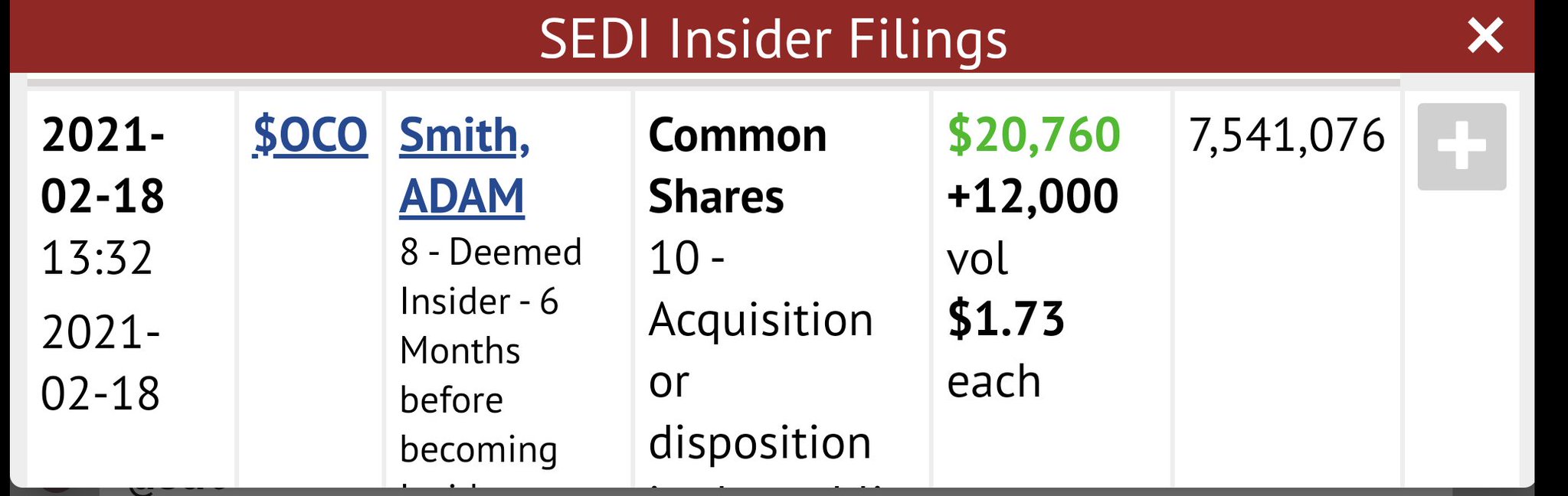
The guy already has 7.5m worth of tickets, but he still keeps buying more
3 Likes
A little pondering on copper and oroco
The link is to a YouTube video by Mariusz Skorniecki
4 Likes
How significant a factor is the current price of copper in determining the value of a discovery? Is it “automatically” calculated at the current price, from which some kind of estimate of what it will be in 10 years, when the mine yields something, is discounted?
4 Likes
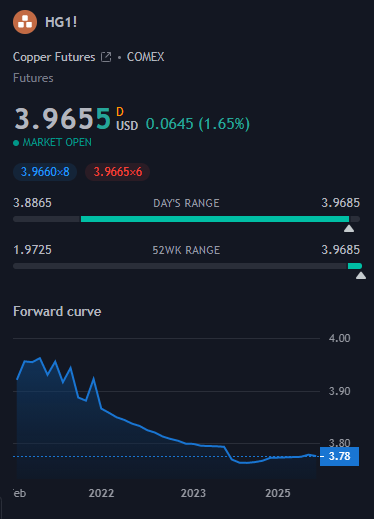
Maybe it’s not directly advisable to take that spot price, but the futures market gives a slightly better picture (forward curve). However, those [futures and spot] usually move quite hand in hand, but with common sense, the spot market might experience more short-term supply and demand peaks (?):
In the Sotkamo Silver thread, analyst Antti Viljakainen has explained the valuation methods he uses for SoS. This also applies to mining companies in general:
3 Likes
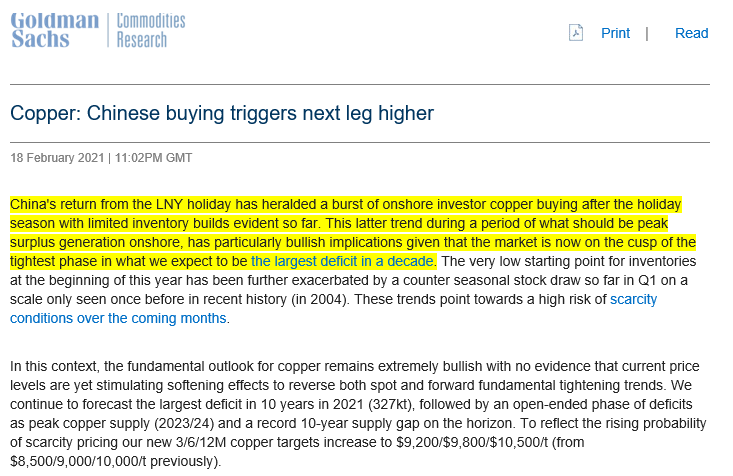
Normally, copper prices have a significant impact, but now the situation is slightly different. Peak copper supply is already happening in 2023/24, and after that, old mines will start to dry up at an accelerating rate. From the majors’ perspective, the situation is that new reserves must be found, or operations will cease completely.
Oroco is one of an estimated five large copper sites that are not yet in production, and Santo Tomas has the advantage of having no political or environmental obstacles. All other non-producing copper sites are problematic for various reasons: some are located high on glaciers (environmental & logistics), some are politically difficult (local opposition), some are located in very remote areas (all infrastructure needs to be built = capex swells), or some other reason.
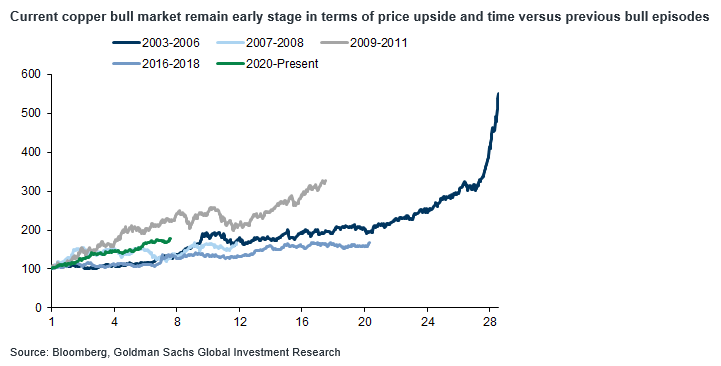
But to answer the question, when we know with a high degree of certainty that 1) copper production will start to decline within 2-3 years and 2) copper demand will grow at an estimated annual rate of 3-5% thanks to electrification & digitalization, it’s quite difficult to start predicting declining prices in the future.
What I fear most is that a major will come along and offer 5 CAD before we can show the world certified reserves, because once Santo Tomas is properly drilled, there is a very good chance that the NPV will increase many times over from 1.6B USD (2019 estimate with old surveys & copper price of 3.25).
8 Likes
Thanks for the interesting thread!
I myself became convinced of copper over a year ago and jumped into Freeport, 1st Quantum, and Lundin. Only now does it seem that the market is waking up to the situation. Some American analyst (Eric Frey, I think) was already flashing a $60 price for Freeport.
I lean towards the view that copper demand will grow even faster than officially predicted right now. The basis for this is the accelerating investments in renewables and electrification. Michaux calculated that copper isn’t even enough for road transport batteries, and that’s just one branch of the growing demand stream. The demand for stationary batteries is also exploding, not to mention the electrification of all mobility, meaning billions of electric motors will be wound for cars, trains, ships, airplanes, and smaller devices. This is about replacing the internal combustion engine. Electrical devices will be charged with billions of chargers. Wind power projects worth tens if not hundreds of GW have been launched; each mill needs tons of copper, plus cabling, inverters, transformers. Solar power also needs copper. The expansion and strengthening of electricity grids, as well as electrolyzers when transitioning to a hydrogen economy, will also consume enormous amounts of this brown metal, so it will indeed be very interesting to follow how the market develops when industry starts acquiring the copper it needs in the coming years.
So I still strongly believe in these larger players, but I did take a small tracking position in Oroco. It looks like it will easily be next year before the FS is out, as drilling permits are not even in hand yet. Other environmental permits may also take surprisingly long, but I suppose this is a relatively safe target, as no decrease in copper prices is really expected.
13 Likes
The drilling permit application has already been submitted, it’s an “administrative process” meaning it doesn’t require actual deliberation, as long as the necessary paperwork is filled out. The area has already been drilled before, so there are no obstacles.
The schedule is such that the remaining 3DIP tests should be completed by the end of March/beginning of April, and the drilling permit should be issued around the same time at the latest.
And once the drilling permit comes through, the drills will start turning almost immediately, and then results will start coming in regularly throughout spring/summer.
9 Likes
I’m a complete amateur when it comes to assessing risks related to mining companies, especially juniors, but this looks pretty good. The electrification trend is such a strong driver for copper prices, assuming it’s true that current and future mines (base scenario) won’t lead to overproduction or (bull scenario) won’t be able to produce enough to meet market demand. I’ll have to add a bit more.
3 Likes
Electrification will undoubtedly be a big thing, and it can’t really be implemented without raw materials.
I think there would be room on this forum to discuss raw materials (copper, lithium, cobalt, REEs, etc.) more broadly than just individual companies or commodities.
There are threads for oil and coal, and one for silver was recently set up admirably, but would there be interest in a more general raw materials thread? I’m still such a newbie at this stage that I don’t dare take on the hero’s cape…
7 Likes
{“content”:“This seems like such an interesting case that I decided to join in with a reasonable stake. There isn’t really a sensible substitute for copper in electrical engineering; aluminum cable’s electrical conductivity is significantly weaker.”,“target_locale”:“en”}
1 Like
I’ve been led to understand that aluminum could somehow replace copper in low-voltage, short runs, but many problems are associated with its workability and durability. Technically, silver could very well replace copper, but it’s so much more expensive that it’s not a viable solution.
1 Like

1 Like
Off topic:
I was wondering if there could be any developments in copper recycling in the coming years? Nowadays, copper is apparently already recycled efficiently (at least in industry), but I only know the processes superficially.
Does it make any sense to imagine that a new source of raw materials could be “found” from old electronics or demolition waste, for example? Or that some circular economy process would become more efficient and ease price pressure?
1 Like
Update on valuations.
Based on the 2019 NPV estimate, with the current copper price of $4, we’re talking about a $3.75B NPV. Conservatively, at a 40% purchase price, this means a share price of 3750/250x0.4x0.81 = 4.86 USD per share, or about 6.10 CAD per share.
This is based on the 2019 estimate, which only included the North zone.
This whole thing is starting to smell like a ten-bagger.
3 Likes
I also have a question related to the topic. How do you see the cyclicality of raw material prices correlating with the company’s operational capability/results? Is the price of copper completely tied to how the company is doing? I personally work in an industry where I deal with copper, and my own feeling is that the price of copper (too) has only risen and risen throughout my 15-year career at the company.
1 Like
Copper is already recycled very efficiently; the problem is that it’s tied up in very long-lasting structures and isn’t being released in large quantities relative to demand. From cars and wires, it’s already recycled at a high percentage.
3 Likes
Here’s the trick – all signs now indicate that this is not a cyclical but a structural change. Whereas before energy went through pipes or in ships, in the future it will increasingly go through wires. Or cars, internal combustion engines use about 20kg of copper per car, an electric car uses about 80kg.
1 Like
Yeah, that’s a good thing for the environment, “unnecessary” mining is truly disgusting even conceptually. We have about 30% copper waste and it all goes to recycling at a good price; there’s also tough competition in the recycling industry as prices vary quite wildly among buyers… This company is interesting, but it always stings a bit to look at the 12-month share price development historically, just a light +400% 
3 Likes
There’s no point looking at the price curve; it’s better to think about how much one wants to pay for a company that owns 81% of an ore body conservatively estimated to be worth 4 billion dollars. Currently, the company’s value is just over 360 million USD.
3 Likes