This Ubetec pattern has gone completely under my radar. What is the actual purpose of this subsidiary, which is completely outside Optomed’s core business? It doesn’t seem to be some passive side project. Ubetec has its own products and operational management, and now also its first significant commercial proof point. And then there’s the governance. The Chairman of the Board of Ubetec is Petri Salonen, Chairman of Optomed’s Board of Directors; a member is Laura Piila, a member of Optomed’s management team, head of the Devices segment, and head of the Chinese company; and the deputy member is Juho Himberg, CEO of Optomed. So Ubetec is quite directly under the guidance of Optomed’s top management.
At this point, I think it’s quite appropriate to ask about focus. Optomed’s history unfortunately includes a lot of raising new money from owners. At the same time, the company should now get Aurora AEYE flying commercially, utilize opportunities in China, and turn cash flow sustainably positive. Are management’s time and the company’s limited resources really in the best possible use while building a gambling industry technology company alongside them?
Ubetec may well turn out to be a good investment. The investor’s problem is that it cannot be evaluated with current information. We don’t know its revenue, earnings, capital invested in it, or what Optomed is ultimately aiming for with it.
I wouldn’t dismiss Ubetec, but I would like a pretty clear answer from management. What is the strategic purpose of Ubetec, how much money and management time is spent on it, and above all, how does this fit into Optomed’s focus and the creation of shareholder value?
As I understand it, this Ubetec came about after Optomed acquired Commit Oy in 2018, which is the current software branch. And Ubetec has now been spun off from that. It would certainly be sold if a buyer offering enough comes along.
This gambling market is nothing new for Optomed. In my opinion, they’ve had a contract with Veikkaus before as well, no one just ever told you about it. Revenue has apparently come through software. Those who know better can correct me if I’m wrong. Now the situation is even better, as dozens of companies are applying for the Finnish gambling market and Ubutec is the only one that has done so in Finland, as far as I know.
The spin-off was done precisely because Optomed’s core business remains fundus cameras. Ubetec focuses on the gaming market with its own personnel and strategy. Ubetec’s packaging is downright ingenious (cooperating with Nordic Legal Hero) where they consult and implement the technical platform at the same time.
If there have been around 51 license applicants for the Finnish market, and say half of them get a license, and half of those (?) need Ubetec as their technical partner, then in the coming years that could generate about 10 x €0.9M (I used Veikkaus’s contract as a baseline) in revenue, which is significant operational growth for the scale of the Optomed group.
But from an investment perspective, let’s just focus on how the cash is running out next week and a profit warning (negari) is coming any second now.
Spinning off the gambling supervision into its own company is completely normal, logical, and sensible. The reasons include industry differences, reporting, and different business growth prospects. In this particular business, the near-term growth outlook is indeed remarkable, and operations are sure to be very profitable. According to the article in the link, the processing time for licenses is six months, so if a new operator wants to start right when the market opens on July 1, 2026, a business like Ubetec has busy times ahead.
Could this be the implementation of Optomed’s “playbook”. It still bothers me why Optomed changed its reporting method some time ago, and could this be the reason for it?
Ubetec: Balance sheet protection and cash flow buffer
Recurring SaaS revenue: Ubetec’s contracts (such as Veikkaus’s 0.9 million euro two-year contract and the market’s 64 potential license applicants) are recognized over time. Continuous data vaulting and regulatory reporting will bring predictable, high-margin cash flow starting from 2027.
Non-dilutive financing: The RegTech business will act as an efficient internal funding source in the near future, reducing the need for share issues that erode shareholder value. It covers the group’s fixed costs and provides peace of mind for the commercialization of health technology.
Business Area
Role in Portfolio
Nature of Revenue
Market Target
Ubetec (RegTech)
Cash flow machine & balance sheet support
Recurring SaaS / ARR (pro-rated)
Finland 2026–2028 (64 operators)
Aurora AEYE (MedTech)
Valuation multiple scaler
Hardware + recurring AI service
United States & global markets
The market has long priced high risk into Optomed due to slowly progressing device sales and cash adequacy. In my view, if successful, Ubetec removes the immediate balance sheet/cash risk by bringing predictable and high-margin revenue. That upcoming deal with Veikkaus announced on Friday was a fantastic opening move, and a large portion of those 64 license applicants will likely seek out a player that has even been involved in drafting future regulation and operates in a very strong alliance.
In addition, for an international operator unfamiliar with Finnish regulatory practices, choosing Ubetec is the safest route to avoid violating license conditions. The company’s background as a provider of regulatory statements and Optomed Software’s regulatory expertise remove regulatory risk from the operators.
Since I don’t have the expertise to assess the financial impact/leverage, a quick brainstorming session with AI produced this table. Does anyone have the expertise/ability to assess whether it’s at all in line?
In the software-based RegTech business, the operating leverage is exceptionally steep because the development costs for the regulatory platform (Ubetec Vault, DQ-Engine, and regulatory interfaces) are largely fixed and have already been incurred. Onboarding a new operator to the ready-made cloud infrastructure costs Ubetec only a fraction of the license fee received.
Nature of the Cost Structure in the RegTech Model
Fixed Costs (estimated at €1.0–1.5M / year): Maintenance of the core architecture, regulatory updates, audits/cybersecurity certifications, and a 6–10 person technical and legal core team. These costs run regardless of whether there are 2 or 25 customers.
Variable Costs per Customer (10–15% of revenue): Cloud capacity (AWS/Azure storage and computing in the data vault), deployment expert support, and customer-specific interface testing.
Incremental EBITDA (EBITDA Leverage): Once the fixed cost base is covered, an estimated 70 to 85 cents of every new euro of revenue flows straight to EBITDA.
Profitability and Earnings Leverage in Various Scenarios
Assuming Ubetec’s fixed costs are €1.2M per year and variable costs are 15% of revenue:
Scenario
Number of Customers & Average Billing
Annual Revenue
Costs (Fixed + Variable)
Ubetec EBITDA
EBITDA-%
Zero Level
Veikkaus only (€450k)
€0.45M
€1.27M
-€0.82M
Loss-making
Break-even
Veikkaus + 5 small operators (~€160k)
€1.45M
€1.42M
+€0.03M
~2%
Base Case Outcome
Veikkaus + 12 operators (total 20% of market)
€2.85M
€1.63M
+€1.22M
43%
Strong Success
Veikkaus + 20 operators (~30% of market)
€4.45M
€1.87M
+€2.58M
58%
Bull Scenario
Veikkaus + 30 operators (~50% of market)
€6.45M
€2.17M
+€4.28M
66%
What Does This Mean for the Entire Optomed Group?
Group-wide Earnings Turnaround: Optomed Group’s revenue has hovered around the €15M level, and the result has been loss-making or close to break-even due to clinical trials on the device side and building international sales. Ubetec’s contribution of €2.5–4.0 million in EBITDA would permanently turn the entire listed company’s net profit positive.
Cash Flow Profile Change: In SaaS agreements, billing typically happens in advance (annual or quarterly invoicing). This brings front-loaded working capital and minimizes the group’s financing risk.
Valuation Multiples: A loss-making device manufacturer is priced at low EV/Sales multiples, but a high-margin (over 50% EBITDA) recurring-revenue B2B software company commands a high earnings-based multiple in the market (e.g., EV/EBITDA 15–25x). Ubetec’s operating profit alone could then justify Optomed’s entire current market capitalization.
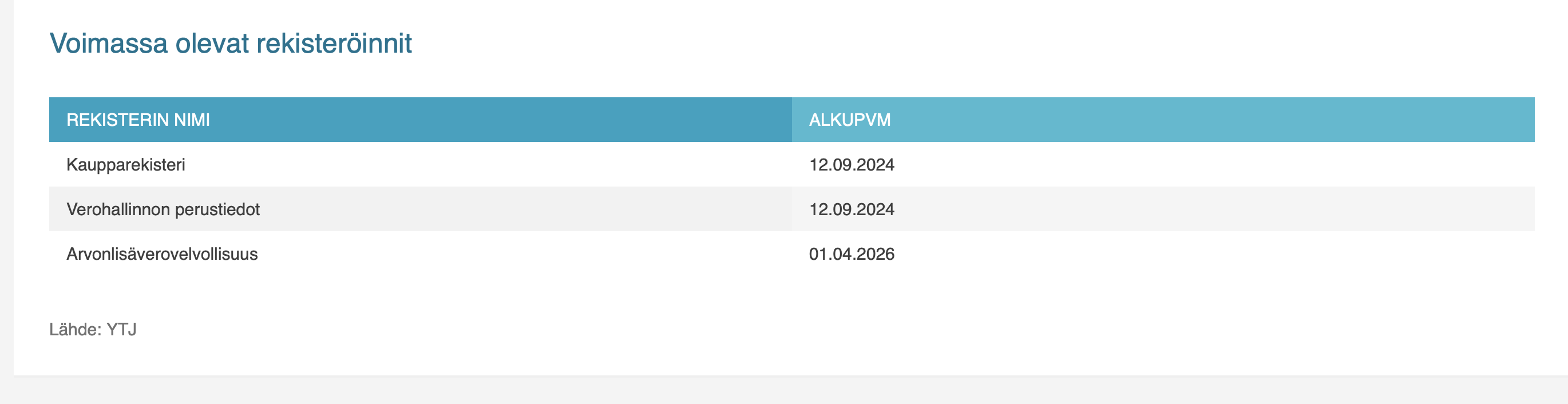
[quote="Mr_Stock, post:6736, topic:2389"]\ninvestment in the Ubetec business, which produced its first contract 9 months later.\n[/quote]\n\nUbetec, which was founded in 9/2024, of course already had prior business before this Veikkaus contract. Coincidentally, in that same month of 9/2024, a multi-year €10M contract related to gambling supervision was signed with the National Police Board (Poliisihallitus), which is undoubtedly now part of Ubetec’s financial statements. Ubetec could very well be the cash flow savior for Optomed over the next couple of years, after which health technology will stand on its own feet, and Ubetec will be sold. After all, Ubetec fits in with Optomed’s health tech image about as well as military-grade rubber boats once fit in with Revenio.\n\nhttps://forum.inderes.com/t/optomed-terveysteknologiayhtio/2389/2712\n\nhttps://tietopalvelu.ytj.fi/yritys/3473198-7
Now that’s mixing apples and oranges if the same company provides both the regulatory software and the software that complies with it. Isn’t the Police Board deal an Optomed Software case (different Business ID [y-tunnus] too)? Plus, that VAT liability has only been “on”, so to speak, for a short time.
If the market opens at the turn of the year, hardly any operator will be able to start operations without its compliance infrastructure (such as the Ubetec Vault data collection vault and responsible gaming reporting APIs) being not only coded, but also tested and audited in accordance with the requirements of the new Finnish supervisory authority. Such an IT integration is not done in weeks. The decision on a partner must be made in the autumn so that the systems are ready for testing in December.
License processing bottleneck: the authority will likely demand during the license process, or as a condition for starting operations, proof of how the operator intends to technically implement the required supervision. Foreign giants (e.g., Betsson, Kindred, Bet365) are in a hurry to lock in the name of a local partner (such as Ubetec or Nordic Legal) with which they will prove their technical capability to the authority.
The Veikkaus deal might be a “ketchup bottle effect”. When Veikkaus announced on Friday, September 4, 2026, that it had chosen Ubetec, it actually, in my opinion, made the company the de facto standard of the market. When a foreign listed company’s compliance director weighs the risks of entering the new Finnish market, the safest choice is to pick the same operator that has been deemed acceptable by the Finnish state-owned company and has also been involved in drafting the law.
The next 1–3 months (September–November 2026) are therefore likely the moment of truth for Ubetec. If Ubetec is the “one-stop shop” in the market that it promises to be, it should start announcing (or Optomed should report in its interim reports) new operator agreements very soon. If nothing else is heard by the end of the year besides Veikkaus, then it went down the drain, so to speak…
Q2 2026 Inderes interview and starting from 7:30 => “we have several competitive bidding processes ongoing that we are participating in, and with a high probability, we will win some of them. That means during the H2 half, there will be major delivery projects and through that also larger invoicing in addition to daily invoicing.” What could they be talking about here?