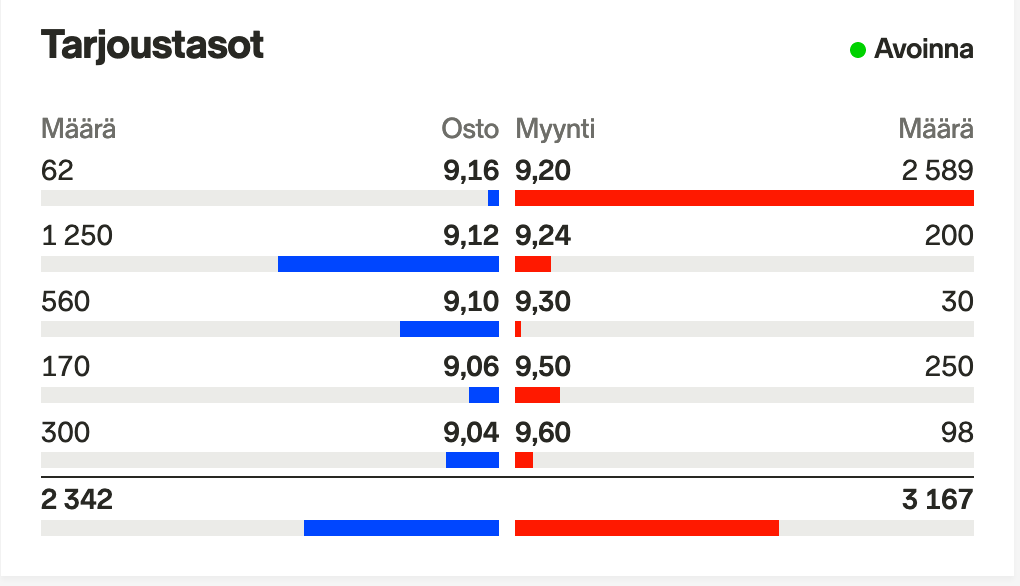
Tällä hetkellä tarjouskirjassa pieni jäävuori 9,20 kohdassa, jonka jälkeen latu aika lailla auki:
1 tykkäys
Mä oon tuosta tankkaillu.
Nyt on sen verran paljon jo kyydissä että pitää jättää jäänmurto muiden huviksi! 
1 tykkäys
7.50 kh:lla nyt holdaillaan. Tällä hintaa en lisää. On jo sopiva possa
Mikäs on kun kurssikäyrä on viimeisen viikon ollut kuin kuolleen miehen sydänkäyrä. 
Nousee kyllä kun Dansken kautta tulevat myynnit loppuvat. Näitä jäljellä omien laskelmieni mukaan alle 10k kpl. Tämän jälkeen varmaan ollaan lähellä kymppiä.
1 tykkäys
Mistä/miten saat tämän laskettua?
1 tykkäys
Aamuhuutarissa klo 9.45-10.00 kun seuraa 9.20 myyntitasoa niin toissapäivänä bongasin ~30k ja eilen muistaakseni ~23k lappua. Tämä vilahtaa vain hetkellisesti, (jos ollenkaan) joten vaatii tarkkaavaisuutta ja nopeaa F5-sormea. Johtuu siitä, että jäävuori-ehto muutetaan vasta toimeksiannon syöttämisen jälkeen. Eilen dansken kautta myytiin ~10k, joten jäljellä se ~10k vielä.
5 tykkäystä
Nokkelaa! Hyvä tietää  .
.
Loppuhuutarissa oli näytöllä 8,4k lappua, joista 1k toteutui muun kuin dansken kautta. Tämä täsmää aikaisempien havaintojeni kanssa. Eli tämä setup jättäisi vielä ~7-8k ensi viikolle. Ei siis paljoa enää.
1 tykkäys
Miten tälläinen suuren konttorin valmistuminen (Seinäjoki) vaikuttaa yleensä yrityksen tulokseen? Onko mitään vaikusta?
Alkuun kulut kasvavat ja ajan myötä pitäisi sitten alkaa tuottamaan.
"# Mediatiedote
17.1.2020
Oma Säästöpankki on palvellut asiakkaita Seinäjoen Keskustan uudessa konttorissa jo kuukauden ajan Keskustorin laidalla osoitteessa Keskustori 3." Tiedote
Rakennus on otettu käyttöön joulukuun aikana, joten siitä ei välttämättä tehdä viellä poistoja. Jos tehdäään niin se on sitten 1kk ajalta. Uutta tilaa on 1400 neliötä ja jos hinta olisi ollut 4 000€ per nelliö niin hinta olis 5,6 miljoonaa. (ei kyllä mitään hajua mitä tommonen maksaa)
“Rakennusten ja muiden kuluvien aineellisten ja aineettomien
hyödykkeiden hankintamenot poistetaan taloudellisen
pitoajan perusteella ennalta laaditun poistosuunnitelman
mukaan tasapoistoin. Poistoajat ovat rakennusten ja
rakennelmien osalta 10–40 vuotta ja koneiden ja kaluston
osalta 5–8 vuotta. Maa-alueista ei tehdä poistoja.” Vuosikertomus
Poistoja tuosta voidaan tehdä poistosuunnitelman mukaan 140-560kEur vuodessa.
"Verovuoden poiston suuruus saa olla enintään:
- 7 prosenttia poistamattomasta hankintamenosta, jos rakennus on myymälä-, varasto-, tehdas-, työpaja-, talous-, voima-asema- tai muu niihin verrattava rakennus," EVL
Verottajan hyväksymä maksimi poistomäärä on 7% 390kEur josta verovaikutus 20% 78,4kEur. Eli jos poistoja ei tehdä viime vuodelta niin voi olla 78,4kEur suuruinen positiivinen vaikutus tulokseen. Vaikutus tulokseen tänä vuonna on kuitenkin aika pieni vaikka rakennus poistettaisiin tuossa 10 vuodessa. Taitaa kuitenkin toi 7% rajoittaa maksimipoistoksi 390kEur.
Minkä takia muuten OmaSP:n piti rakentaa Seinäjoen konttori itse omaan taseeseensa? En millään ymmärrä, miten pankki edistää tuolla tavalla omistaja-arvon kasvatusta. Parempi olisi olla vuokralla.
Näytti olevan toi kauppahintakin tuolla vuosikertomuksessa.
“Oma Säästöpankki allekirjoitti syyskuussa 2018
sopimukset koskien uusien Seinäjoelle vuonna 2019 valmistuvien
toimitilojen hankintaa. Sopimusten kauppahinta oli yhteensä 2,3 milj. euroa.”
1 tykkäys
No jos torin laidasta 1.400neliöä 2,3Me niin nyt on todella edullinen. Toki ovat myyneet samasta talosta kymmeniä asuntoja hyvällä hinnalla niin olisiko oma tila tosiaan puoli-ilmainen. Kuvien perusteella todella hieno ja moderni toimitila.
Edit. Niin tuossa tilassa on tullut kasa yhtiölainaa messissä nykytyyliin ja asunnot on myynyt rakennusliike Rajala. Tonttihan on ollut OmaSp:n et vähä vaikeampi juttu, mutta komeat tilat ja toivottavasti tuo uutta asiakasta!
Toki en Seinäjoen kiinteistömarkkinoista mitään tiedä, mutta yleisesti ottaen pääkonttorikiinteistön pitäminen taseessa ei ole kovin järkevää. Esim Helsingissä Marimekko on myynyt ja OP suunnittelee myyntiä. Pankki kun tuskin on ammattiomistajia parempi kiinteistönomistaja. Lisäksi turha rasite taseessa ja ROE saattaa kärsiä.
Nykyään vuokratilatkin rasittaa tasetta niin ei taida olla kovin suurta vaikutusta taseeseen. Varmaan joku ammattitaitoinen kiinteistöfirma alkaa mielellään hoitamaan tota. Omissa tiloissa on kuitenkin aika helppo toimia, jos tarvii vaikka jotain muutoksia tehdä. Rahoituksen hankinta taitaa olla ihan kohtuu helppoa hoitaa. Noissa Covered Bondeissa on muuten vähän kivempi korko kuin vanhoissa joukkovelkakirjoissa.

1 tykkäys
Kyllä nykykorkotasolla oman toimitilan omistamisessa on järkeä.
Nythän pankit ja vakuutusyhtiöt ovat muuttaneet joko kerroksiin tai etäämmälle ydinkeskustoista kun vuokraisännän ahneus ahdistaa.
Sattumoisin tiedän että moni pankki on päässyt toimitiloissaan eroon vain tekemällä itse niihin epäedullinen vuokrasopimus.
Ja Nalle meni aikanaan myymään Sammon talot Aleksanterinkadun ja Mikonkadun kulmista… Eikös Handelsbanken ostanut toisen tms.
Saattaisi olla nyt talot tuplassa tai triplassa+hyvä vuokratuotot , tiedä sitten mikä on pidemmällä ajanjaksolla fiksua.
Seinäjoelle on juuri auennut Ideapark, joka on aiheuttanut keskustan hiljentymistä. Tässäkin valossa omien tilojen rakentaminen keskustaan on outoa.
On vähän eri asia omistaa kiinteistö Helsingin ydinkeskustasta kuin Seinäjoelta.
Eikai korkotasolla ole merkitystä, ostaako vaiko vuokrata toimitilat. Tässähän tulee katsoa yieldiä ja sehän on jokseenkin verrannollinen korkotasoon. Veikkaan, että Seinäjoki 1 -alueen yieldi voisi olla jotain 4-5%, joka on matalampi kuin pankin tavoite omalle pääomalle. Täten vuokraaminen voisi olla kannattavampaa.