Hellepäivän ratoksi voisi kirjoitella pätkän OmaSp-stadionin omistavasta SeinäjokiStadion Oy:stä ja SJK-konsernista, nyt kun kaikkien yritysten viime tilikauden tilinpäätökset ovat saatavilla.
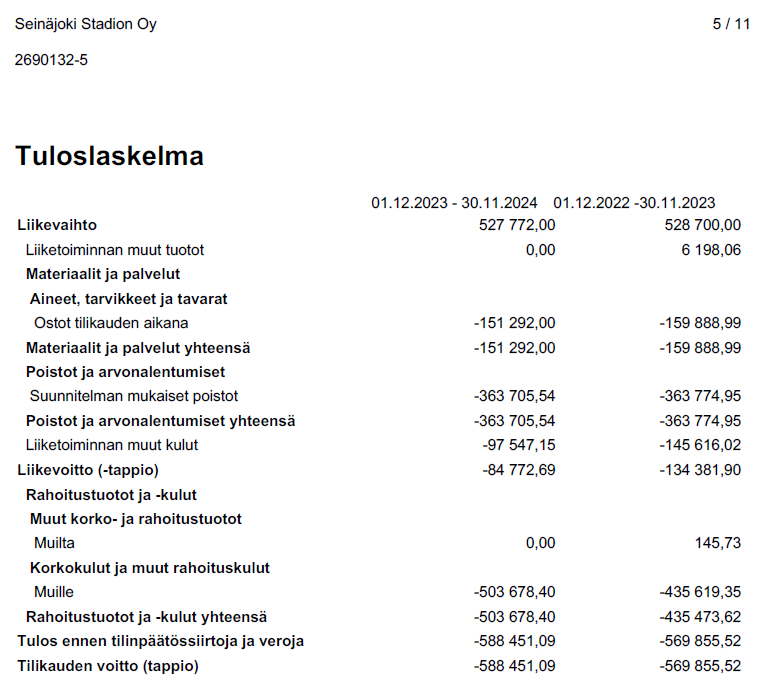
Sarajärvi kertoi ylle jo monesti linkatussa Urheilulehden haastattelussa, että Stadionin tapahtumista tulevilla tuotoilla katetaan kaikki stadionin kulut. Tilinpäätöksestä tätä on vaikea havaita, sillä tilinpäätöksen mukaan yhtiö teki 528 tuhannen euron liikevaihdolla 588 tuhatta euroa tappiota:
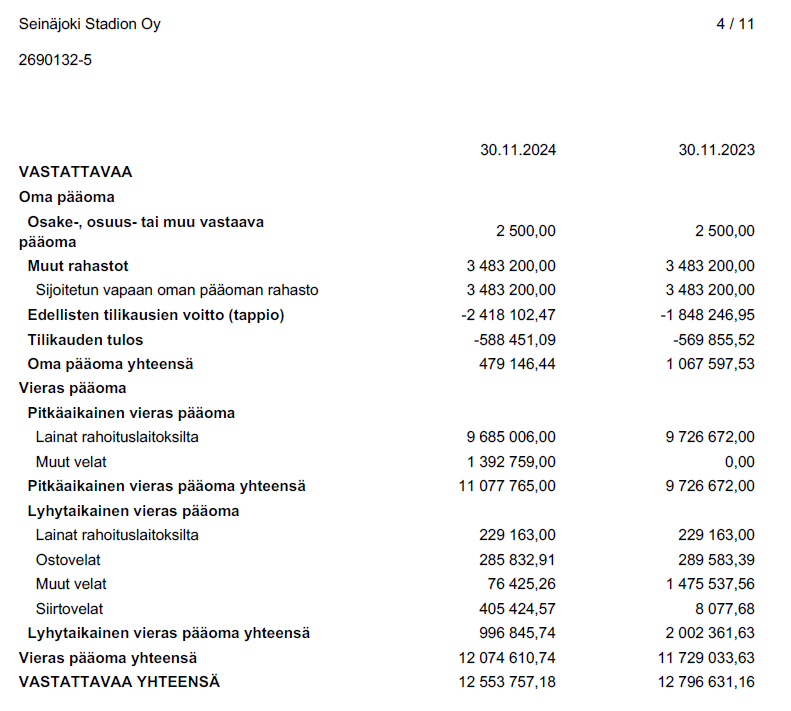
Tilinpäätöksen perusteella yhtiö ei ole pystynyt myöskään lyhentämään pankkilainojaan maksusuunnitelman mukaisesti ja siirtovelkojen lähes 400 tuhannen euron kasvu viittaa myös lainojen korkomenoista valtaosan jääneen maksamatta:
Tilinpäätöksen liitetietojen mukaan tilanne on kuitenkin hallinnassa, eikä pelkoa oman pääoman menettämisestä ole, koska stadionin arvo ylittää kirjanpitoarvon. Vuonna 2023 laaditun arviokirjan lienee kirjoittanut Fincapin arviointijohtaja, joka siirtyi sieltä OmaSp:n pääarvioitsijaksi? Velkojen uudelleenjärjestelystä käydään myös neuvotteluja rahoittajan kanssa:
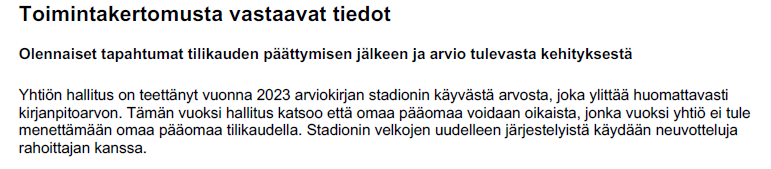
Tuo viittaus velkojen uudelleenjärjestelyistä viitannee akordiin, sillä nykyisellä maksuohjelmalla velka tulisi kuitattua n. 44 vuoden kuluessa.
Alkuvuodesta kirjoittelin tämän himmelin rahoitustarpeista, näin:
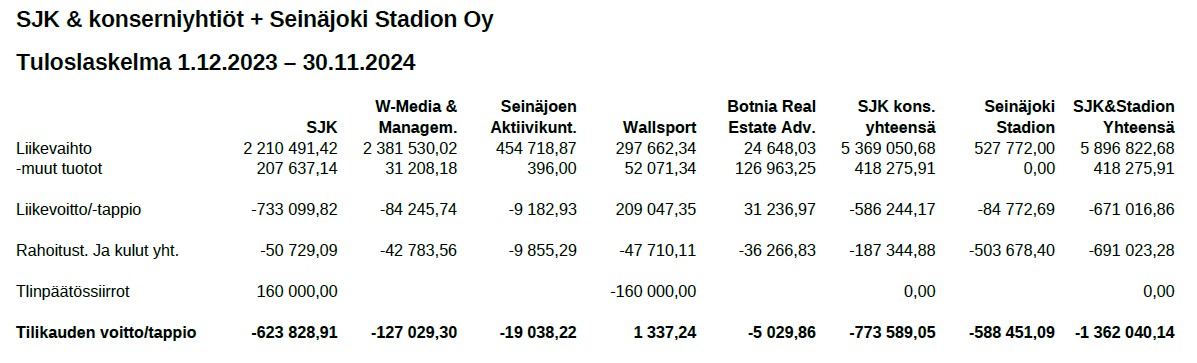
Tässä on puolestaan tiivistetty kooste 30.11.2024 päättyneen tilikauden tuloksista:
SJK ei laadi konsernitilinpäätöstä, mutta tein tilinpäätöksistä koosteen konsernin selkeästi lähipiirin ulkopuolisista varoista ja veloista:
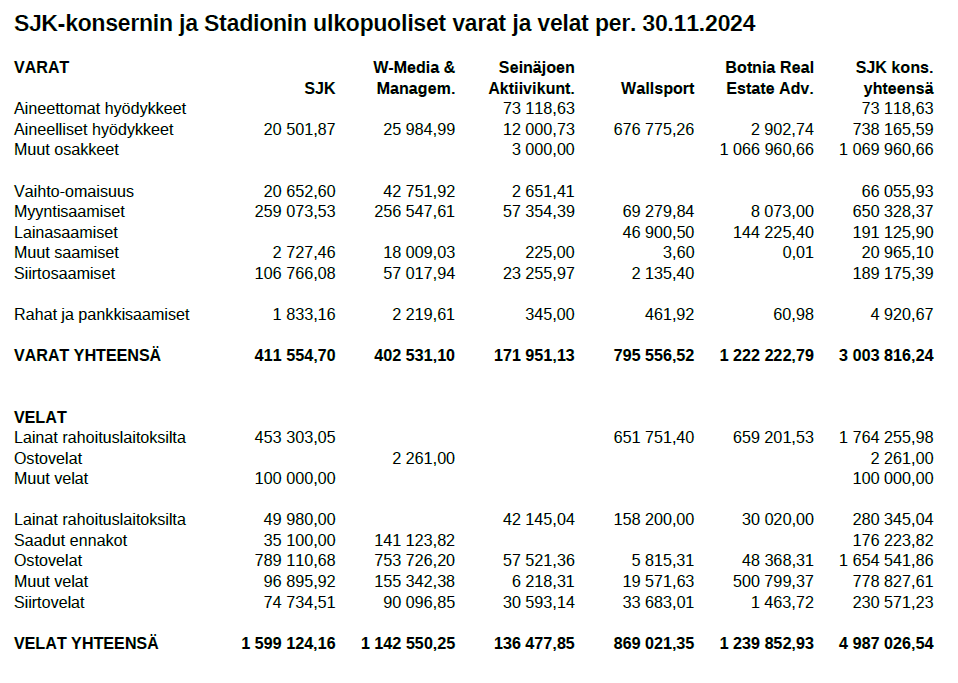
Taulukon ostoveloissa ja myyntisaamisissa on todennäköisesti osin konserniyhtiöiden ja stadionin keskinäisiä velkoja. Yli 1,6 miljoonan euron ostovelat ja yhteensä yli 3 miljoonan euron lyhytaikaiset velat kertoo mielestäni varsin selkeästi rahoitustilanteen heikkoudesta.
SJK-emon taseen pysyvät vastaavat koostuvat pääosin tytäyhtiöiden ja stadionin osakkeista ja vaihtuvat vastaavat konsernin sisäisistä saamisista, sekä Akatemia-joukkueiden taseeseen aktivoiduista kuluista. Näillä kuluaktivoinneilla on kaunisteltu tulosta jo useampi vuosi, mutta niistä kerrottiin vasta viimeisimmässä tilinpäätöksessä. Tilintarkastaja ei antanut SJK:lle puhdasta kertomusta, vaan kiinnitti asiaan myös huomiota:
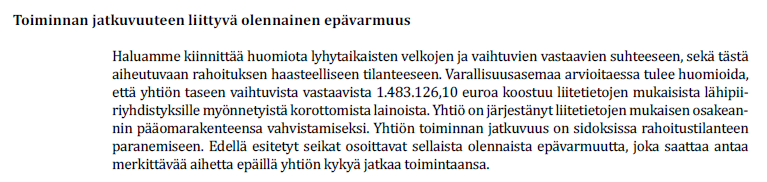
Tilintarkastuskertomusta ei oltu luonnollisestikaan sisällytetty seuran verkkosivuilla julkistettuun tilinpäätökseen. Tilinpäätöksen julkaisu 30.4 mennessä on yksi liigalisenssin vaatimuksista.
Ymmärrän ettei tätä vuosien aikana rakennettua himmeliä ole millään tavalla yksinkertaista purkaa, mutta onko pankin siltikään millään aikajänteellä järkevää jatkaa tämän tappiollisen liiketoiminnan pönkittämistä? Nuo stadionin 10 miljoonan euron velat ei tule jalkapallojoukkueen toimesta koskaan maksetuksi, kun ensimmäinen haaste on saada seura tulemaan omillaan toimeen.
PS. Tässä kokonaisuudessa on viety kassanhallinnan optimointi ihan huikealle tasolle, 21 miljoonan euron yhteenlasketulla taseella operoivien yritysten kassassa oli tilikauden päättyessä lähes 5000 euroa rahaa.