Pill sales have gotten off to a nice start. Eli Lilly’s pill sales launched much more sluggishly.
20 Likes
Here is an article from SalkunRakentaja about Novo, a concise piece on Novo Nordisk that can be read in a few minutes. It shouldn’t contain major new information for those following the company closely, but it’s a good overview nonetheless.
The market reaction has been twofold. In mid-June, Berenberg Bank analyst Kerry Holford raised Novo’s price target to 325 DKK from the previous 300 and maintained a buy rating on the stock. The justification was a deepening R&D pipeline and new delivery forms, which should cushion the impact of patent expirations in the coming years.
Berenberg believes the momentum of the Wegovy pill is sufficient to push Novo to the upper end of its guidance and estimates the company will return to a growth trajectory in 2027. Support is sought from the pipeline: the obesity drug CagriSema and the hemophilia drug mim-8 are expected to receive US marketing authorizations in the second half of this year.
Subheadings:
- February’s price shock still weighs on the share price
- Analysts are already looking at the pipeline and the year 2027
11 Likes
Boostia Wegovylle uuden myyntiluvan muodossa.
- First GLP-1 pill approved in the European Union for the treatment of obesity and overweight
30 Likes
Well, look at that. I wrote about this earlier: Lilly is doing a great job of swaying consumers with their marketing, precisely for the reasons Novo is now complaining about.
24 Likes
I wonder if this is what triggered today’s drop… this stock is really annoying to own; the slightest crack in some minor product/study for the company, and suddenly it’s down 10% on the board.
https://www.cnbc.com/2026/07/31/novo-nordisk-trial-results.html
16 Likes
I’m in with quite a large position myself, and there are really nervous moves here time and time again. Even good news doesn’t seem to give the stock much momentum, but even the slightest bit of bad news leads to -10% drops. Is the market generally like this when it comes to reacting to news?
I understand that news indicates the direction for the day or the longer term, but sentiment is what likely dictates the actual magnitude of the rise or fall.
Today’s news certainly doesn’t justify a 5–10% drop in the company’s market value, but it shows the nervousness surrounding the stock. Perhaps the answer is an overvaluation from 24 months ago?
8 Likes
Jumped in with Novo earlier this summer.
Seems like a somewhat superficial reaction to this news. The ZEUS trial failed, but the company simultaneously announced that it is not changing its 2026 earnings guidance.
Prescription volumes for the Wegovy pill have reached a new record, at approximately 171,700 weekly prescriptions, which indicates that demand remains strong.
17 Likes
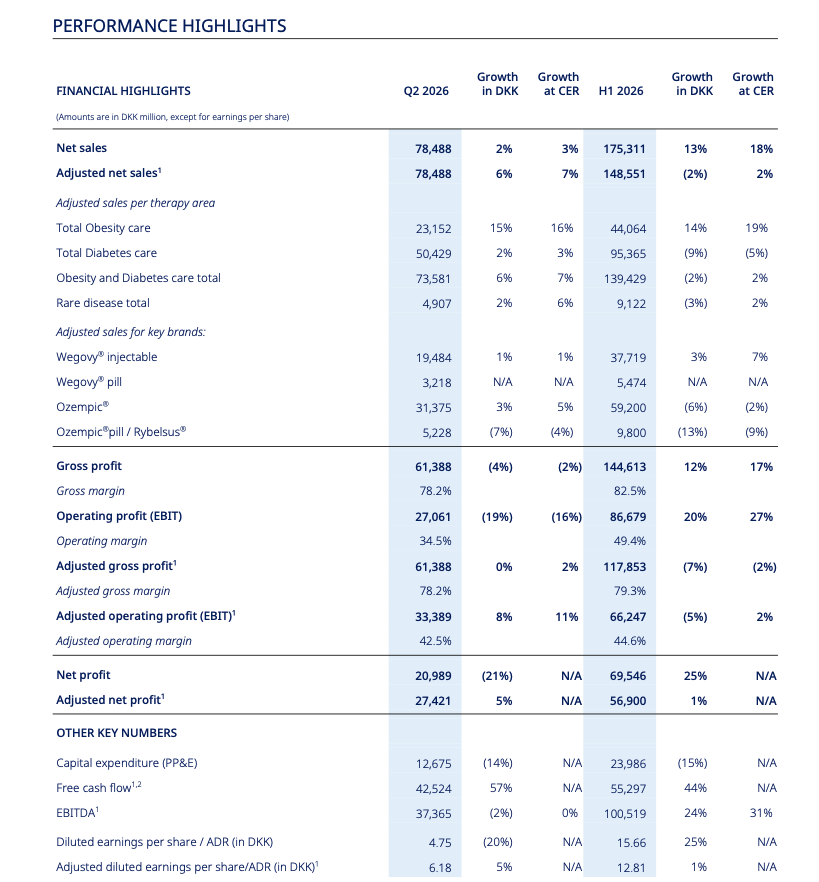
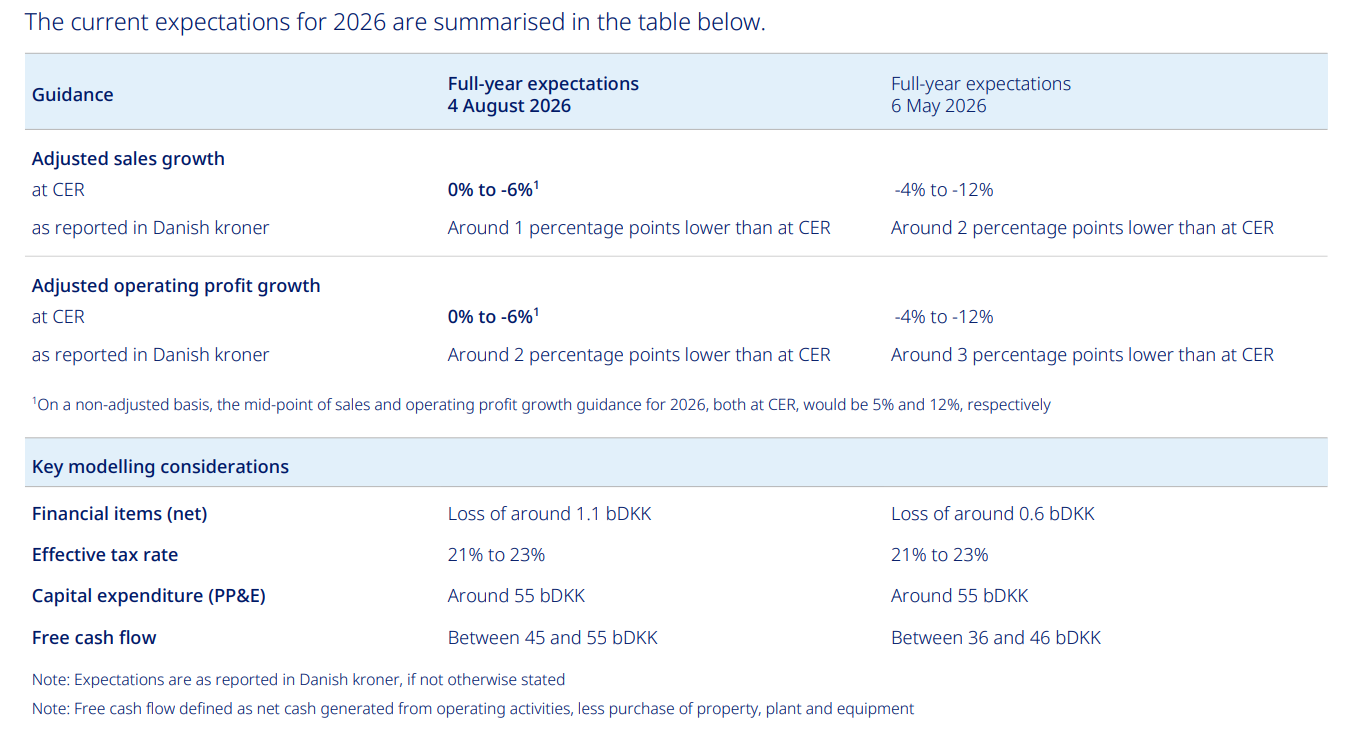
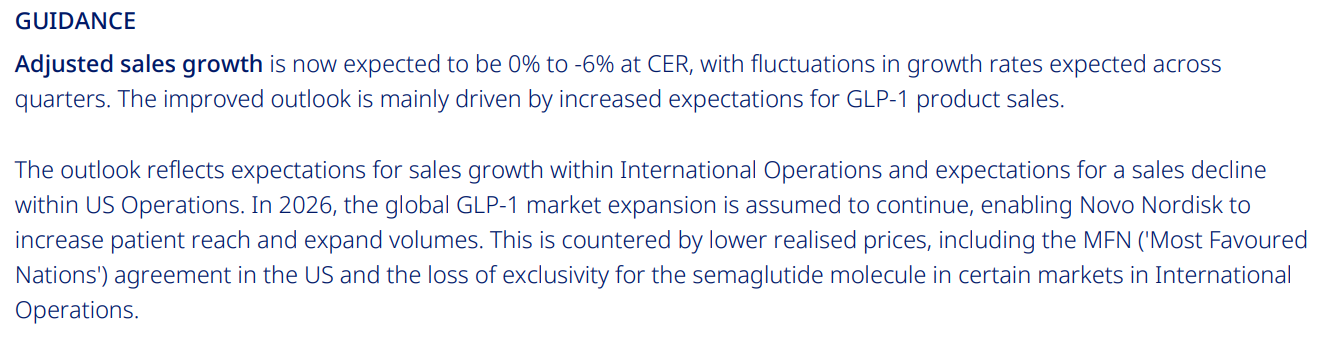
At least the outlook improved, if previously the expectation was -4% to -12% and now it is 0% to -6%
16 Likes
The guidance was indeed raised, but it remains weak; adjusted sales and earnings are expected to be at last year’s level or slightly below. Based on that, Q3 and Q4 should generate roughly the same amount of sales and margins as Q2, meaning we would be looking at flat performance. WeGovy pill prescriptions increased from 200k in April to 265k in July, which is about 30%, but a quick Google search suggests that NoVo makes about 250 USD/month on these, so that would correspond to about 200M USD in sales per quarter, which would still only be a couple of percent of NoVo’s total sales. If growth were to remain at 30%/quarter, then in a little over a year, this share would start to reach double-digit percentages of total sales, and by then, weekly prescriptions would be in the magnitude of a million, which would correspond to around 1% of the estimated potential in the United States.
It doesn’t sound impossible, but we shouldn’t expect any miracles in the coming quarters either. In other words, the growth in pill users and price levels should continue to be the biggest contributors. Based on the market reaction, it shouldn’t fall below +30%/quarter; in fact, it should accelerate from this. I really can’t estimate how realistic that is, though.
8 Likes
GLP-1 is balancing between strong growth and price erosion. Falling prices are rapidly increasing demand and sales, but at the same time, the product’s gross margin is naturally decreasing.
Ultimately, this is a long game. Through a strong increase in production volumes, unit costs can be brought down, even if gross margins have to be compromised. However, this provides a head start against future competitors, as entering the market becomes more difficult due to the price erosion.
6 Likes
Great to see that profitability and revenue will be better than previously expected. Sales of the new pill are going well. The ADR price reaction is a bit strange.
But how do these profit warnings come so close to the actual report date? One would think a company of this size would have better processes and reporting systems. This part does not inspire confidence in me.
4 Likes
They published the earnings report ahead of schedule yesterday evening, so it wasn’t a…
They published the report ahead of schedule yesterday evening, so it was not a separate profit warning.
2 Likes
To my eyes at least, that is a pure profit warning.
2 Likes
In practice, they released it at the same time as the actual Q2 report, so it seems a bit redundant as a separate item. Could this be an action related to reporting regulations, aimed at avoiding the grounds for potential legal lawsuits?
It was already known that Lilly is a red flag for the company. The competition is tough, but without competition, there is no development, right? I wouldn’t be too worried; there might be some turbulence in the short term.
5 Likes
Novo is certainly in for quite a struggle. The report was absolutely dire, even though the guidance for this year was raised. Investors, however, are looking ahead to the 2031-2032 period, when the patents for semaglutide expire. At the moment, it looks really bad.
Ziltivekimab was the investors’ greatest hope to bridge that gap. It was on track to reach $3–5 billion in sales just in time for 2032-2035. It was Novo’s most important asset independent of semaglutide. Well, the ZEUS study completely flopped, and the stock price drop last week reflected that. The result wasn’t even down to the study design (i.e., fixable); the entire hypothesis simply didn’t work. There are still the ATREMIS and HERMES studies coming up for Ziltivekimab (H1 2027), but it would take a miracle to hear anything positive from them. This asset has likely gone 100% into the trash bin.
Then there’s CagriSema. Once again, Novo shot itself in the foot by proving that its own drug is inferior to a competitor’s. In other words, CagriSema turned out to be comparable to Eli Lilly’s tirzepatide in terms of weight loss, but worse at blood sugar control. Lilly will be grateful that Novo is paying for these studies out of its own pocket. Revenue targets for CagriSema can be cut once again.
Speaking of semaglutide, this was the first time the report mentioned that generic manufacturers have gone on the warpath. Cipla is trying to get a generic drug to the US market through the courts, and Sandoz is trying to invalidate Novo’s semaglutide patent in Europe. The war over patents and marketing authorizations has begun, and legal costs are set to rise.
Oral Wegovy was hyped up on the call, with sales growing 28% in three months, and underlying demand growing even faster. That, in itself, is excellent. But it looks like oral Wegovy sales are cannibalizing the sales of injectable Wegovy. A quick calculation shows that Novo seems to get about $170 in revenue per prescription from oral Wegovy, while injectable Wegovy brings in $370. So, it’s not a very good trade for Novo to replace injectables with an oral version. Injectable sales in the US fell by 22% this quarter. Management insists that no cannibalization is happening, but independent sources seem to indicate otherwise. It’s impossible to calculate accurately from publicly available data, so investors have to choose who to believe.
All told, Wegovy sales (oral + injectable) grew 4% year-over-year in the US. In the same period, Eli Lilly’s Mounjaro sales grew by almost 50%! Have they lost market share?
And if that wasn’t enough, the report also stated that Novo has agreed with US authorities to lower the prices of Wegovy and Ozempic by 35–50% starting in 2027. I believe this was also mentioned for the first time now. The comment in the report was: “This is expected to impact Novo Nordisk’s cash flow in 2027.” No shit.
On a positive note, the start of the Zenagamtide study should be highlighted. This partly helps fill the gap left by Ziltivekimab. It is an ambitious study that, if successful, could bring some relief, albeit later than Ziltivekimab would have.
The semaglutide patent cliff is indeed approaching in 2031-2032, and Novo doesn’t really have any assets independent of semaglutide to cover it. Even the price of CagriSema will drop when it has to compete with generic semaglutide once the patent expires. This gap will not be filled from within the company, and eyes are now turning to what assets Novo can buy from the outside. There is still room in the balance sheet, and the remaining years of Wegovy cash flow must now be used wisely. We shall see.
52 Likes
This post is so negative that it made me take a look at the author’s previous posts. The writing seems to be in line with posts from several years ago, which explains why the author interprets even positive drivers as negative forecasts in the text.
Criticism is always a good thing and it’s good to bring it up so that one doesn’t read these company reports through rose-colored glasses.
Companies always face the threat of future competition and product obsolescence. There are very few products or services that don’t need to innovate to sell, especially on the consumer side. If you are too afraid of that, then it’s better to invest in things like electricity production or Coca-Cola.
New products also cannibalize old products, so I wouldn’t recommend fearing that either, at least in cases where the company you invest in is capable of creating these cannibalizing products.
19 Likes
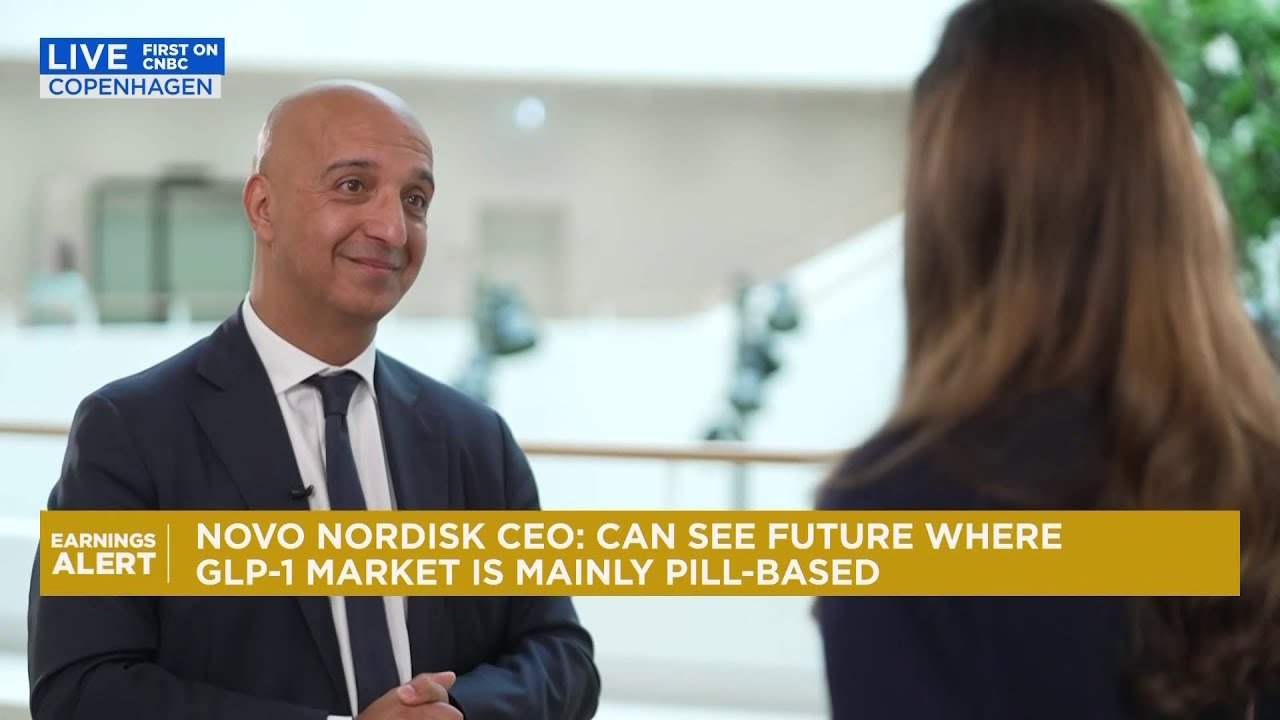
Picked up a recent CNBC interview from Nordnet where CEO Mike Doustdar breaks down the current situation and the optimistic outlook in plain language.
13 Likes
Novo has launched its new Awiqli insulin in the United States for type 2 diabetes.
Its greatest advantage is that the insulin only needs to be injected once a week instead of the current daily injection. According to studies, it worked just as well in blood sugar management as daily injected insulin.
“Awiqli reduces the frequency of daily basal injections from seven to one per week,” said Tom Scales, Senior Vice President of Market Access & Public Affairs and Patient Support Solutions at Novo Nordisk.
34 Likes