Before filing a lawsuit, it would likely be advisable to request the Financial Supervisory Authority’s (FIN-FSA) stance on the matter. A specific problem in the lawsuit is whether Nokian Tyres, Euroclear, or perhaps some other party is liable; it is unlikely that all would be jointly and severally liable. Since the legal costs of the winning party are paid by the loser, one might end up losing the case against certain parties despite a general victory.
6 Likes
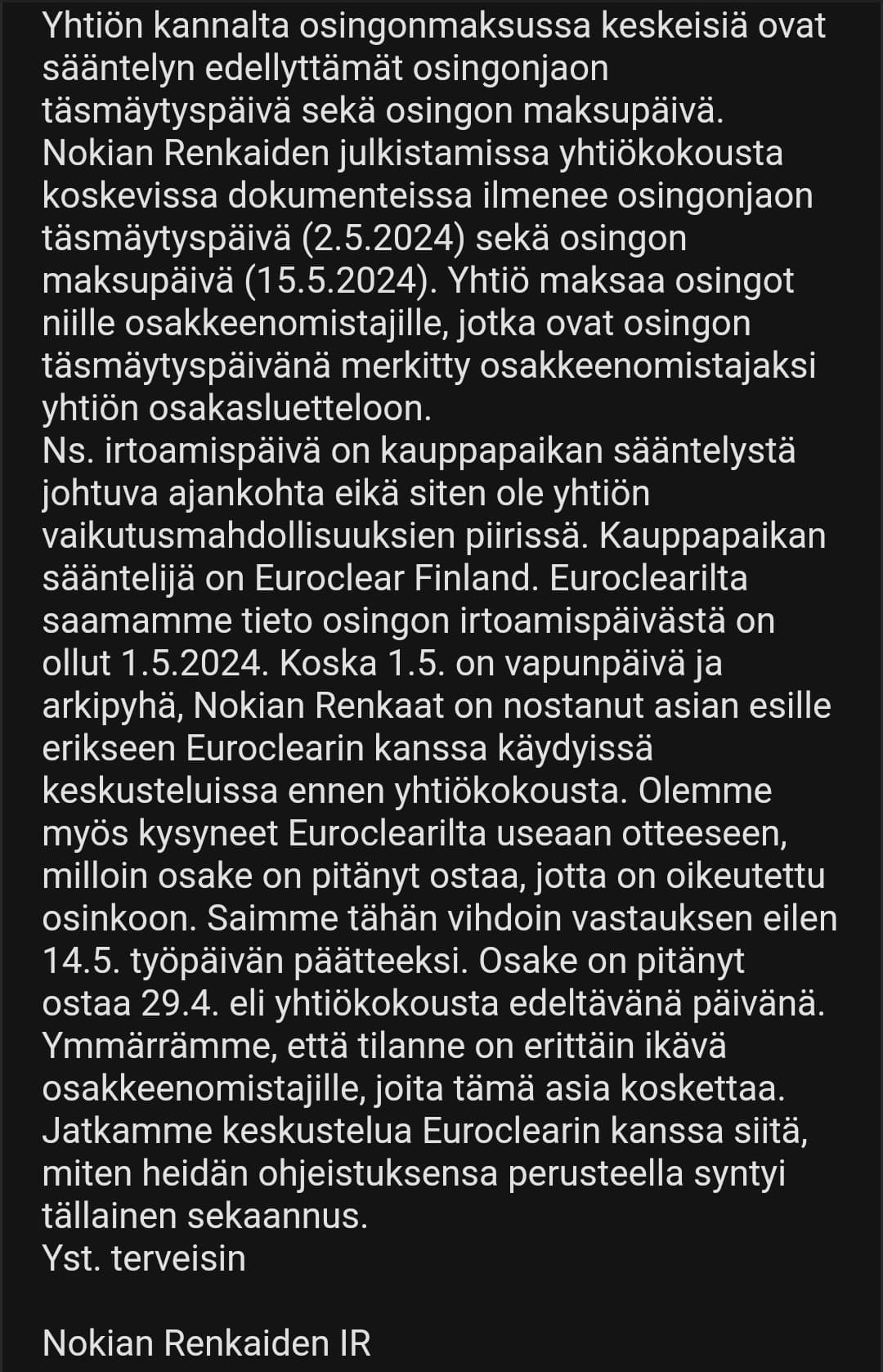
This is the response I received to my email where I asked about dividends.
65 Likes
5 messages were merged into the thread: Q&A thread about investing
Nokian Tyres starts change negotiations – Affecting approximately 160 employees | Arvopaperi
YTs, I mean change negotiations: " Tire company Nokian Tyres announces it is initiating change negotiations, which will last two weeks. The negotiations concern a total of approximately 160 people at the Nokia factory of the group’s subsidiary Nokian Heavy Tyres Ltd."
21 Likes
The measures are estimated to be carried out during late 2024 and the first quarter of 2025.
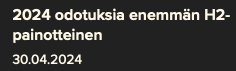
Should I be worried? 
33 Likes
It depends on what you intend to be worried about.
Personally, I am not worried about the 2025–2027 situation, which the investment decision is based on.
This year involves expenses, a major investment, and other adjustments, but those are more or less known.
The improvement in returns will start to show more significantly in the reported figures a year from now. The market is aware of this too, so the trend will likely be supported by that knowledge as we approach that time.
During 2024, the company’s market value may fluctuate along with investor sentiment, but I still stand by the idea that over a 2–3 year period, this will beat index investment returns hands down. A one-third increase in capacity is a big deal, and it will increase the earnings with leverage, as the relative share of low-margin contract-manufactured tires will inevitably decrease significantly.
28 Likes
Isn’t there also a mitigating factor in that it only seemed to concern heavy tires, whose more cyclical demand is already known? Furthermore, increasing capacity in passenger car tires is the actual core, which this wouldn’t then affect?
3 Likes
These layoffs indeed concern Heavy Tyres, so there’s probably no need to be very worried about this. Regarding Heavy Tyres, our expectations for this year as a whole in terms of revenue are at the same level as H2/23, although better in the latter half of the year than the weak Q1/24. A year ago, similar layoffs were negotiated for Heavy Tyres, so this mostly indicates that demand is not yet recovering. CEO Moisio did speak in a positive tone about the rest of the year in the Q1 call, and we also expect growth for Heavy Tyres next year, so I’ll try to ask the company if any change has occurred here.
EDIT: The company replied just as I was writing, meaning the positive expectation for the rest of the year has not changed, but inventories have grown to the point where production needs to be adjusted. I understood that production volumes are not intended to be significantly reduced, however.
For the sake of clarity, it should be mentioned that the report’s title regarding the H2 weighting refers to the earnings distribution brought by the seasonality of passenger car tyres, not to an improvement in market demand as such in the latter half of the year. Of course, @Pika-Sissi’s comments also align with what I have said myself: the upcoming quarters, or even years, do not yet say much about the company’s potential on a 3-4 year horizon.
89 Likes
14 Likes
Anders’ short thought on tires if anyone is interested. I’ll copy it here because it’s quite short:
I also presented Nokian Tyres about six months ago in our review 3/2023, and nothing very essential has happened since then. Jukka Moisio, of course, announced he is going back into retirement, which is a shame, but I suppose he was hired out of retirement mainly to clean up the previous CEO’s messes. We’ll see who takes his place.
Cartel suspicions are also a new development, and they will quite likely cost the company a little in some 4-5 years. Personally, I see EU and US cartel sanctions mainly as a political game to collect some money for the federal coffers, i.e., in a way, as an “extra tax.” In my opinion, for example, the cartel fines received by Kone, Scania, or the paper companies had little basis – at least if you look at the companies’ profitability before and after the fines – but sometimes it’s easier to pay an extra tax than to pick a fight.
Otherwise, I don’t see much new. Regarding the company’s strategy, the most essential thing perhaps is to understand that the global tire market is about 1.6 billion units per year, of which about 1.2 billion are replacement tires, and Nokian Tyres’ share is about 1%. So, the Chinese are not competitors; rather, it’s about how Nokian Tyres compares to other premium manufacturers, mainly Pirelli, Continental, Michelin, and Bridgestone. Perhaps specifically to Continental in winter tires, which represent 70-80% of Nokian Tyres’ sales.
Electric vehicles wear out tires more, and premium producers will certainly come up with solutions specifically aimed at electric vehicles (as Nokian Tyres has already tried to do). Mass producers will then follow in a few years, as always happens in a market economy. So I don’t see it having any major significance in the long run, but of course, higher tire consumption is a good thing.
So my thinking now is actually exactly the same as it was six months ago in review 3/2023. It remains to be seen later whether the company’s targets of approximately 2 billion euros in revenue and an operating margin of approximately 15% are fact or fiction? If they are true, the stock is currently very cheap in my opinion.
69 Likes
Almanakka has written a good piece about Nokian Tyres on the Sijoitustieto website. 
Currently, Nokian Tyres is priced at an EBIT multiple of just under 15, based on this year’s forecasts. The highest quality and best peer, Pirelli, is trading around 9. Nokian Tyres certainly has the potential for a good growth story, but considering the uncertainties, I don’t think it’s exceptionally cheap by any means. If they succeed perfectly, they will likely exceed expectations, but the success in Dayton was anything but perfect, and now a good CEO is leaving. Growth and improved profitability may be on the horizon, but is a 60% premium compared to the best peer still justified? Nokian could, of course, be an acquisition target at its current valuation and because of its market position.
19 Likes
It would have been nice to read a bit more detailed insight into that failure of the Dayton factory ramp-up
Now it was just stated that it failed 
13 Likes
Dayton is indeed running according to target at its full capacity of 4 million tires.
In '21, the following was written:
“The company has nearly doubled the workforce of its US factory during the first half of 2021. About 300 people now work in Dayton. When the facility reaches full capacity in the coming years, it will be able to produce up to four million tires annually and employ approximately 400 workers.”
10 Likes
I highly value Almanakka’s thorough analyses and writings.
As I understand it, this was a commentary—he didn’t want to provide an analysis.
It was mentioned several times that Rinkulat (Nokian Tyres) had failed to meet his expectations.
Many have these “disliked companies” that completely failed to meet expectations, leading to a “won’t touch those again” attitude—like Nokia and, more recently, likely Neste.
Good writing—it seems like that personal “dislike effect” I mentioned was also involved.
14 Likes
The most essential point probably came here. If the current trend continues, Nokian Tyres is really expensive.
There is hardly a soul who would have invested in Nokian Tyres this year or last based on current earnings performance.
19 Likes
I think that was calculated with sufficient accuracy, and at the same time, it was noted that the expected return is not at a sufficient level in the author’s opinion:
"
Defining valuation is by no means simple for a growth company that is simultaneously attempting some kind of turnaround. Below is a very rough model to outline the potential. Before the war, it was possible to get 20-25 million tires out and the operating profit was roughly 20 euros per tire, i.e., an operating profit of 400-500m euros per year. Now capacity could be brought to somewhere around 15 million tires in 2027-28. If an operating profit of, say, 15 euros per tire could be achieved, the new operating result level would hover around 225m euros. If the current peer group average of 8.3x is paid for the earnings at that time, it leaves an upside for the enterprise value of about 5% p.a. by the end of '28, with dividends on top.
Currently, Nokian Tyres is priced at an operating profit multiple of just under 15, looking at this year’s forecasts. The highest quality and best peer, Pirelli, trades at around 9. Nokian Tyres certainly has the potential for a good growth story, but considering the uncertainties, I don’t think this is exceptionally cheap in any way.
"
My own view is somewhat similar, but for numerical forecasts, I trust Inderes, and for market changes, my own gut feeling. Returns on capital in the coming years and, according to forecasts, even in the future, are actually the biggest stone in the shoe regarding my own ownership. I have owned Nokian Tyres on several occasions since the early 2000s (Roadsnoop never forget). I last bought this about 10 years ago and sold the rest 5 years ago. Since then, my view has been that it is difficult to reach the margin levels of the golden years, because in my opinion, the quality differences in tires have narrowed throughout the 2000s, even in winter tires. Of course, electric vehicles and wear-and-tear may bring some changes here, but time will tell. The mess in Russia was certainly a surprise to me too, but I see a certain risk regarding whether the Romanian factory can be made even close to as profitable. Hopefully it will be. I still follow the company with interest because the products are good, and I would gladly own this company again at some point.
Usually, opposing opinions get a fairly negative reception, especially if it’s against the forum’s consensus. In my opinion, Almanakka justified their view with sufficient detail there.
23 Likes
Nokian Tyres is running at full capacity, which is by far the biggest factor limiting revenue growth in the current market environment. This issue will see a major improvement at the turn of 2024–2025 when the new factory is completed. The new factory will increase passenger car tire production capacity by approximately 50% compared to current levels.
In the current situation, Nokian Tyres is a growth company, and it cannot be valued using the multiples of a company with plateaued growth. The last time Nokian Tyres was a growth company during the post-financial crisis expansion, the P/E ratio hovered around 20.
33 Likes
This is what I was trying to write. Investors don’t invest in Tyres based on current multiples, but on future ones.
34 Likes
Interesting article.
Personally, I have been cautiously optimistic about Nokian Tyres; there are risks in the company and this investment case requires time, but there is return potential. I don’t dare trust that the ramp-up of the Romanian factory will go as smoothly as in the movies and that the company will hit its targets just like that. I am also slightly annoyed and puzzled by the company’s own actions: 1. In capital allocation, they are taking on debt for investments while paying out money generously to owners… 2. Operational activities, such as the repeated restructuring talks (muutosneuvottelut) in heavy tires and the fumbling at the end of 2023 when they failed to anticipate demand.
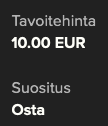
Almanakka’s analysis is decent enough in the sense that he also values Nokian Tyres based on 2027 EBIT, and it’s the same forecast as Inderes. Conclusion: 2027 EBIT = 225 MEUR, Almanakka: Avoid, Inderes: Buy
It’s great that content is being created about the company and negative aspects are being highlighted! That piece just seems somehow fundamentally written with a very negative attitude. In my opinion, those are good points, for example, that NRE’s reputation in Central Europe or the USA might not justify any premium pricing for its products. But this leads to a semi-opposite point. That analysis also calculates production volumes and profit per sold tire. Unfortunately, not all tires are created equal! Margins are clearly better for some tires and in some markets than others. As I understand it, the Nordic Hakkapeliittas are NRE’s bread and butter, meaning a large part of the profit is made here. By selling Chinese contract-manufactured tires to Central Europe, they likely earn about 0 euros per tire, so from a profit perspective, it doesn’t matter if they sell 0 or 3 million units; the goal is simply to keep the brand alive.
“If the new investment succeeds as planned, Nokian Tyres will still remain far from its pre-war glory, and presumably, the profitability of the Romanian factory will be significantly lower than St. Petersburg’s.”
The Russian factory was cost-effective and produced massive volumes. Presumably, Romania’s cost-effectiveness will be lower, but the phrasing is a bit biased. Was it “glamorous” to make cheap tires in a relatively old factory in Russia, a large portion of which were sold in Russia, versus a state-of-the-art factory in an EU country—the world’s first CO2-free tire factory, right next to the Central European target market, in a factory optimized from the start where logistics etc. are considered from day one, and the factory is designed from the start for the right capacity and for new tires (EVs, SUVs, renewable raw materials)?
“To finish with a light-hearted but rather weak jab at sustainability indices and Nokian Tyres’ communication: One can get into the index despite having acted exceptionally irresponsibly in the past.”
The article has one link to a scam that happened 8 years ago. Is the author really calling Nokian Tyres an “exceptionally irresponsible” company based on a scam that happened 8 years ago, or what does this even refer to?
11 Likes
That is actually very much the same level I have arrived at. Earnings per share around 1.5-1.6 euros, which means a price tag of about 17-20 euros for the share in 2027 with a P/E ratio of 12.
At the current price, that is about 130% growth plus dividends = 150% return in about 3 years.
For me, it has meant a “buy” command in front of the mirror, and I’m seeing this through to the finish line.
39 Likes