The part attached to the head, used for instance in therapy treatments, has been made reusable based on customer feedback. Apparently license-based pricing.
9 Likes
Nexstim had indeed received some criticism for that disposable version in that one TMS device comparison. Maybe this will help attract more customers.
4 Likes
That is a good improvement; even though the new model might be worse business for Nexstim, it still feels stupid to throw away a plastic gadget of that size after every use. Here is also a link to a page where negative feedback was given on the subject.
“Sadly, they don’t have a clear business model for selling their system to doctors. They say it is not a pay-per-use model, but you have to buy the disposable head trackers from them for every TMS session you do. That is technically a pay-per-use model!”
6 Likes
There seems to be a lot of selling interest  someone clearly knows something ahead of the financial statements
1 Like
Spotted on Kauppalehti’s website that there’s one guy looking to get rid of his shares. Since the trading volume is low and he has a lot of shares, the price inevitably drops. Add to this other panicking retail investors who sell just because the price is sliding. I don’t believe that someone knows something and is selling for that reason.
15 Likes
Now that AI is disrupting almost all industries across the board, the question arises as to how this will affect Nexstim’s business.
I’ve been mulling over various scenarios, but I can’t easily come up with any dramatic angle where AI would reduce the need for Nexstim’s devices.
On the contrary, one could imagine that more advanced algorithms will improve the utility factor of the devices.
I asked an AI about AI itself and got the following thoughts:
Positive opportunities:
-
Improved precision and personalization: AI algorithms can analyze brain images in real-time, optimize stimulation points, and predict treatment outcomes using ML (Machine Learning) models, increasing the efficiency of NBS/NBT systems by 20–50%. For example, AI-integrated nTMS could automate patient-specific protocols, expanding use to the treatment of Alzheimer’s or Parkinson’s.
-
New applications and markets: AI enables data mining from large patient datasets, developing hybrid solutions (e.g., AI-guided virtual therapy + nTMS). Creative thinking: AI simulations of brain neuroplasticity could create “virtual brain models,” testing stimulation without a patient, speeding up R&D and reducing costs.
-
Partnerships and growth: Partnerships with AI giants (such as OpenAI or Google) to integrate artificial intelligence into Nexstim’s devices, e.g., automated diagnosis + stimulation. This could double market share in neuromodulation, where AI is already disrupting traditional methods.
Negative risks and disruption:
-
Competition from AI alternatives: AI-based non-invasive treatments (e.g., neurofeedback apps or AI-assisted drugs) could replace nTMS, especially in depression treatments where digital therapies are growing. If AI develops “virtual neuromodulation” (e.g., VR-based brain stimulation), Nexstim’s devices could become obsolete.
-
Cost pressures: AI automates diagnostics, reducing the need for expensive equipment. Analysis: If AI predicts brain diseases proactively (e.g., wearables + ML), prevention eats into the market for reactive treatments, potentially shrinking Nexstim’s therapy business by 30%.
-
Regulatory and ethical challenges: AI integration increases the complexity of FDA/CE approvals, slowing down launches.
Potential impacts of AGI (Artificial General Intelligence)
-
Transformative boost: AGI could simulate whole-brain function, creating hyper-personalized nTMS protocols in real-time—e.g., an AGI-controlled device would adjust stimulation based on the patient’s real-time brain data, improving results dramatically and opening new areas such as cognitive enhancement.
-
Existential threat: AGI might solve the root causes of brain diseases (e.g., genetic editing + AGI design), making neuromodulation unnecessary. Creative thinking: AGI could develop “mind uploads” or digital brains, disrupting the entire pharmaceutical and medical device industry, including Nexstim, leading to potential business contraction or pivoting to AI services.
-
Strategic advice: Nexstim should invest in AI R&D now (e.g., ML integration into NBS 6), forming alliances with AGI developers to avoid obsolescence and exploit growth potential.
8 Likes
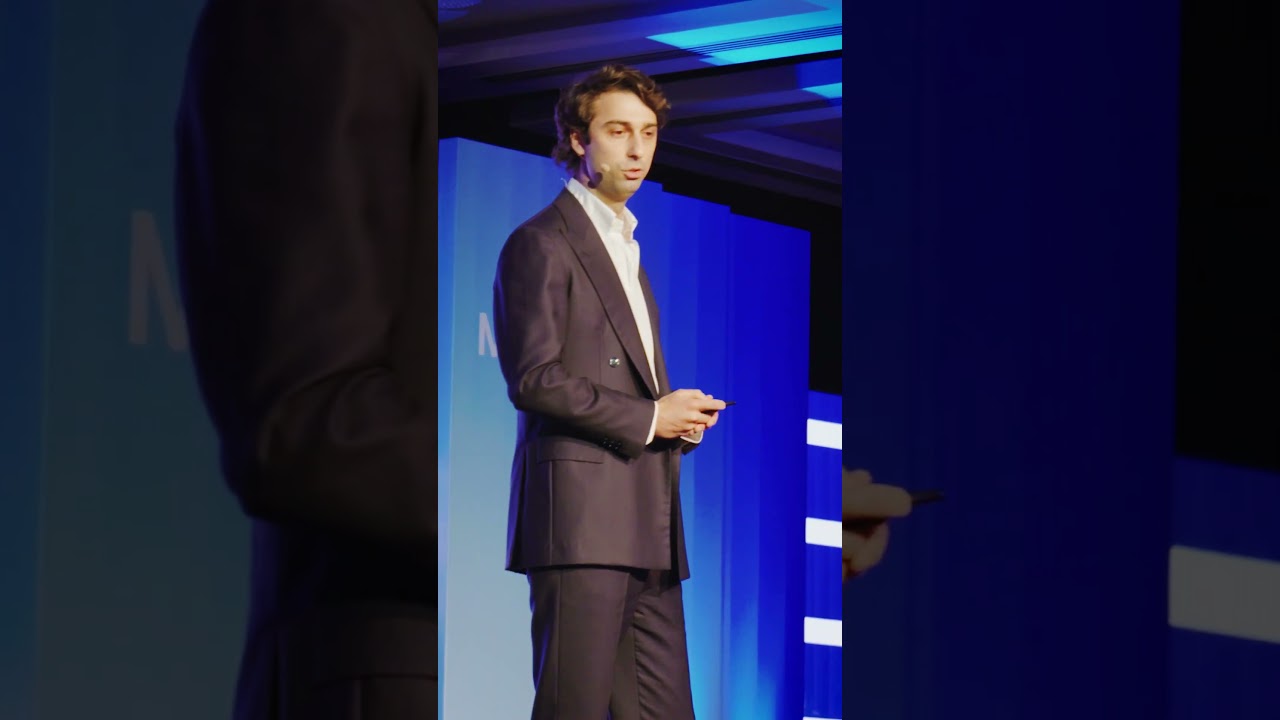
Sinaptica’s Mariashi accepting the MedTech award.
4 Likes