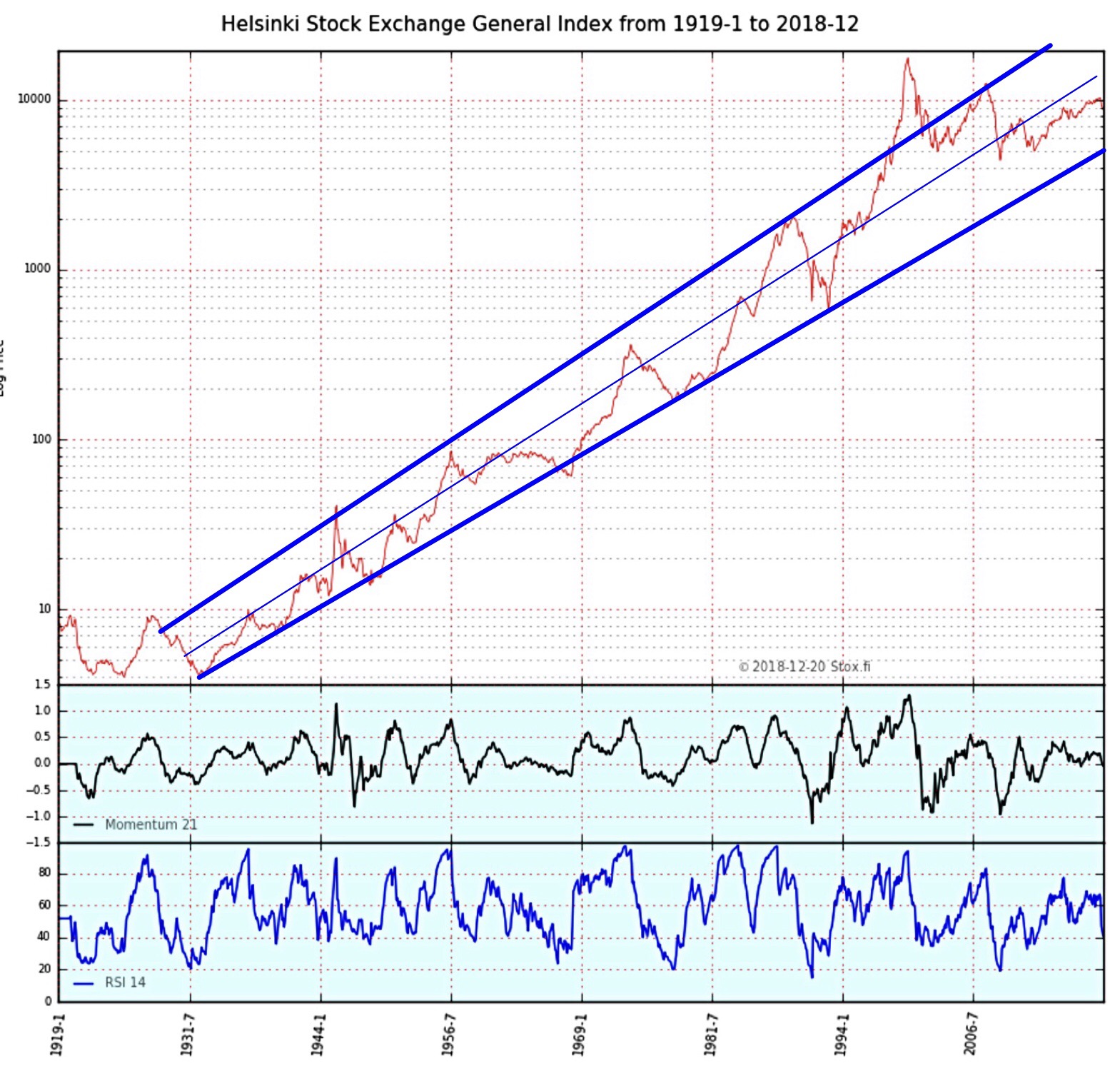
As the question in the title asks, when do you believe OMXH, i.e., the Helsinki Stock Exchange price index, will break 20,000 points?
Since the question is undoubtedly a bit naive, I’ll elaborate on it a bit. I came across a poll in the Sijoituskerho (Investment Club) on Facebook, which asked if people believed OMXH would break 20K points in the next 20 years. An overwhelming majority had answered “No” to the poll. Isn’t it a bit contradictory to invest in the Helsinki Stock Exchange if you believe it will perform so poorly? The index is now at 9,000 points; even if it doubled in 20 years to 18,000 points, the annual return would still only be at the 3.5% level, which is a very modest annual return compared to the past and certainly won’t satisfy risk-averse investors. Reaching 20,000 points, or generally doubling any Helsinki Stock Exchange index (cap would be better due to the overweighting of Nokia and Nordea), should not be Utopia within a 20-year span, if our stock market’s largest companies perform well in the future and new growth companies emerge alongside them. If this doesn’t happen, the stock market will have been stagnant for 40 years (which would be quite unique; the stock market couldn’t properly get over previous peaks from 1937–1967, which is the longest period I know of without new real peaks).
{“content”:“In short, no, because:\n- High starting point as a result of a long boom, in the short term (\u003c5y) the direction is more likely down than up in my opinion\n- Structural problems in the Eurozone, the house of cards could collapse badly in a crisis situation\n- High dividend payout ratio of companies”}
20,000 points will be exceeded between 2026-2030, in the eyes of an optimist.
It’s located at the top of the accompanying graph window, it’s not any further than that.
It’s hard to predict the future, but I would at least hope for myself that it would exceed expectations It could be helped by the popularization of investing (e.g., equity savings accounts), if it became some kind of ‘trend’ hobby.
On the other hand, if the Chinese come and buy out big stock exchange companies (e.g., Amer) from our stock exchange, won’t some smaller company always come in its place → What is the effect of such a thing?@Verneri_Pulkkinen
Could there be a table/link showing the weight % of the largest companies in the index?
First, one needs to know how the OMXH index is formed. If new companies enter the stock exchange, will the index score increase with the listing of new companies?
A company’s market value can grow as a sum of three reasons:
The company’s revenue grows
The company’s profit margins grow
The company’s valuation multiples grow
In 2000, indices were in a bubble because the third factor, valuation multiples, was unreasonable. It is certainly possible that similar irrational enthusiasm will take over the markets and 20,000 points will be broken.
I listened to InderesPod episode 35, which discussed potential acquisition targets. It was mentioned that acquisitions are often (despite synergies) poor investments, and investors are usually pleased if their company is bought off the stock market. In other words, these companies are poor. Someone hoping for a rise in share prices wants to sell, meaning they have a negative view of the stock. Conversely, someone hoping for a fall wants to buy, meaning they have a positive view of ownership.
The title asks if the stock market can double, but I’m interested in whether the real economy can double. There would be twice the number of factories, people, demand, and supply in the world. Finland’s GDP recently reached its pre-financial crisis level. So, as a nation, we haven’t grown at all in ten years. However, company profits have grown. Is this merely due to increasing debt? Can indebtedness truly continue indefinitely?
The general index already includes all companies on the stock exchange (excluding, of course, First North companies). Indices measure returns, so Amer’s departure doesn’t really change anything: the index will rise marginally with Amer’s rise, and then it will exit. Of course, after that, the dominance of large companies will be even more pronounced, although with its market capitalization of 4.5 billion, Amer’s movements haven’t really shaken the stock market anyway.
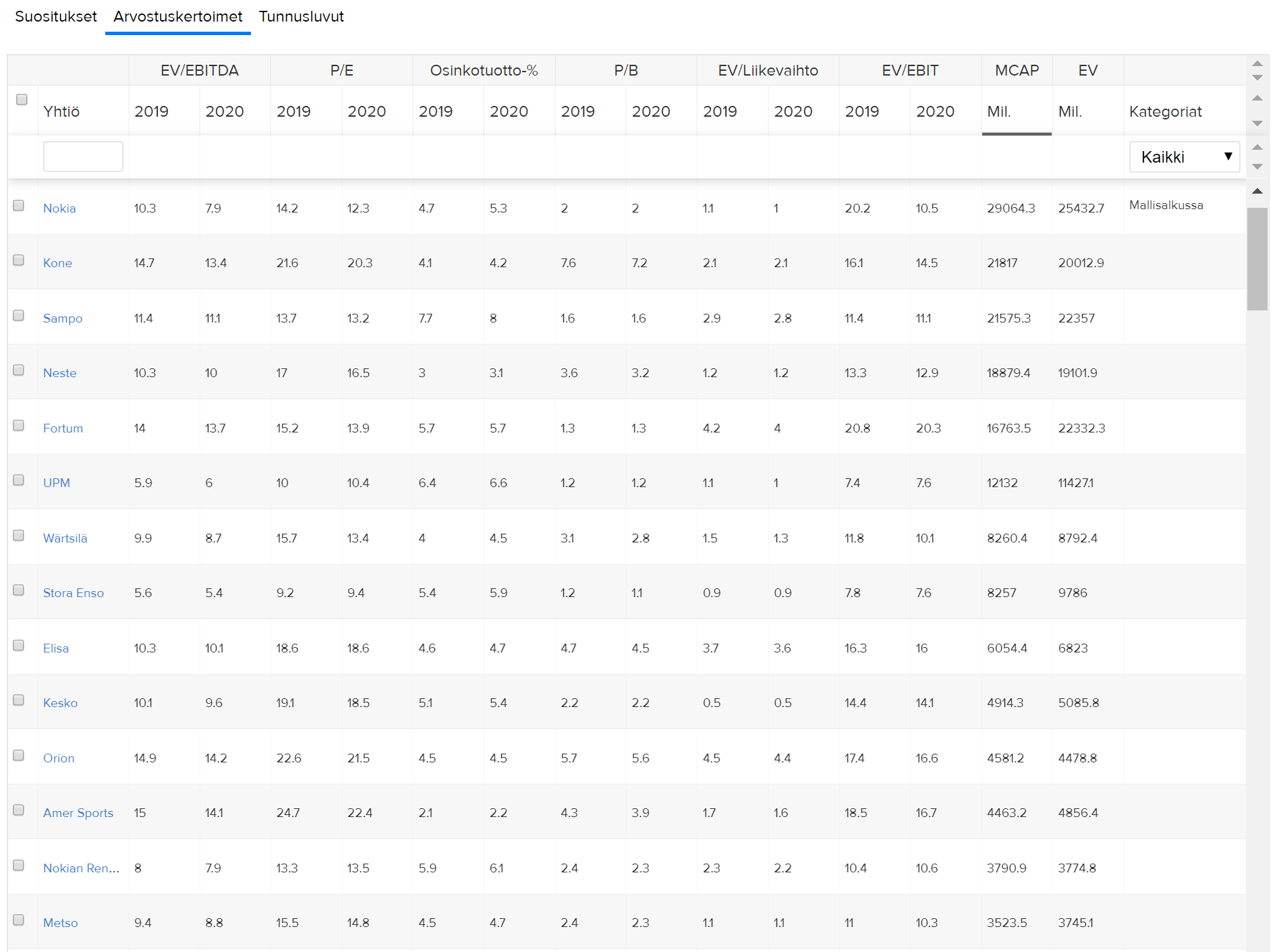
I don’t immediately know of one, but if you add these together and then Nordea (value approx. 30 billion), you’re getting close: the total market value of the stock exchange is approximately 220 billion euros.
Haha, it would initially grow by the amount of the premiums, and then a long decline would begin, assuming that all companies creating shareholder value would leave and those destroying it would remain.
Roughly 60% of the revenue of Helsinki Stock Exchange companies comes from Europe: the development of the European and global economy is more crucial to the fate of our stock market than the Finnish economy (excluding domestic market companies, such as Kesko or NoHo Partners). Finland’s GDP will probably double again over some time horizon, but with the current 1-2% growth potential, it will take a while. In the big picture, of course, it is worth looking at global economic growth and its growth trajectory: since we have many investment-driven companies, the stock market moves strongly in one direction or another with global growth.
Just 2% inflation will increase indices by 1.5 times in 20 years. If we achieve growth that exceeds inflation in the coming years, then not much real growth will be required in the later years to reach 20,000 points in OMXH within 20 years.
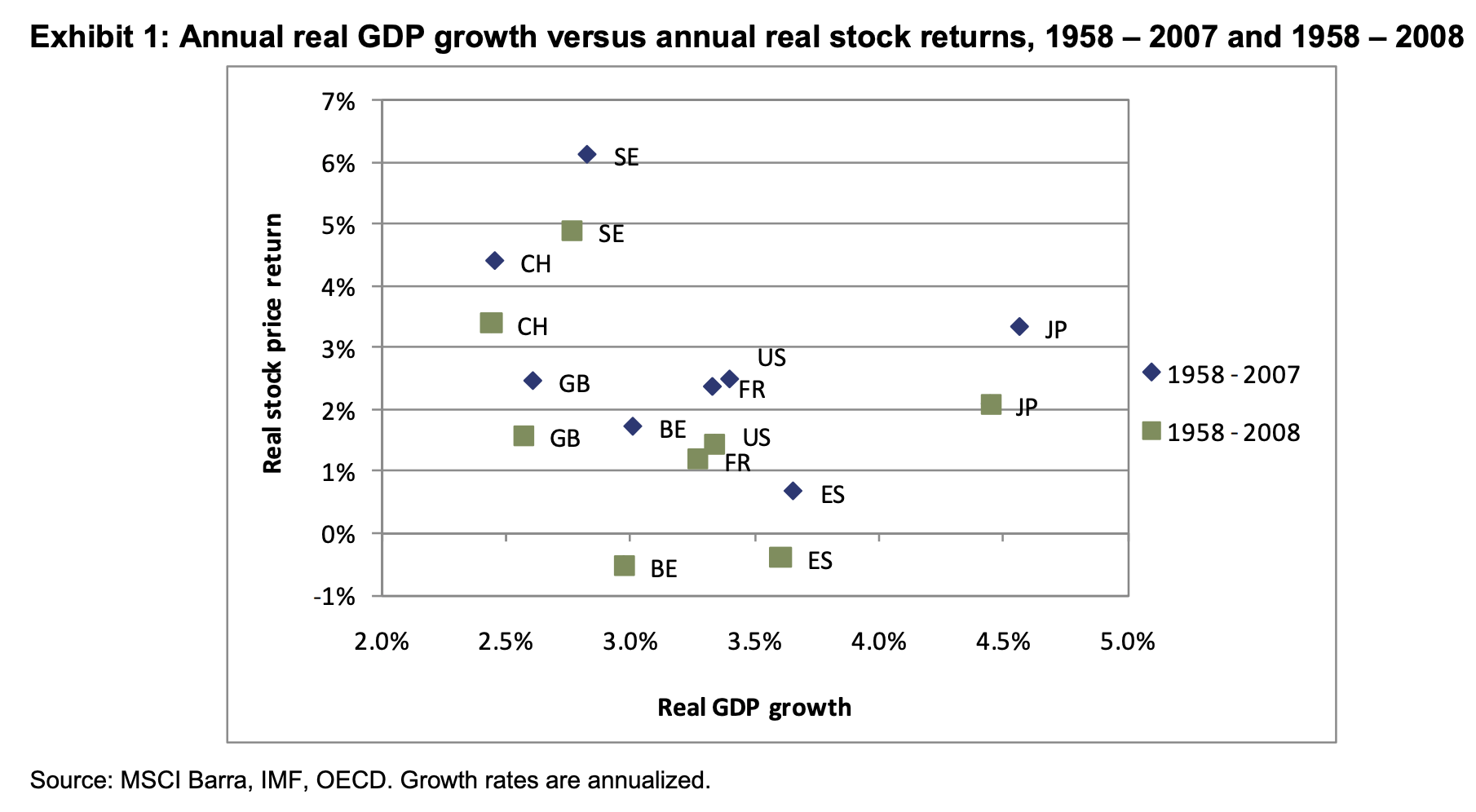
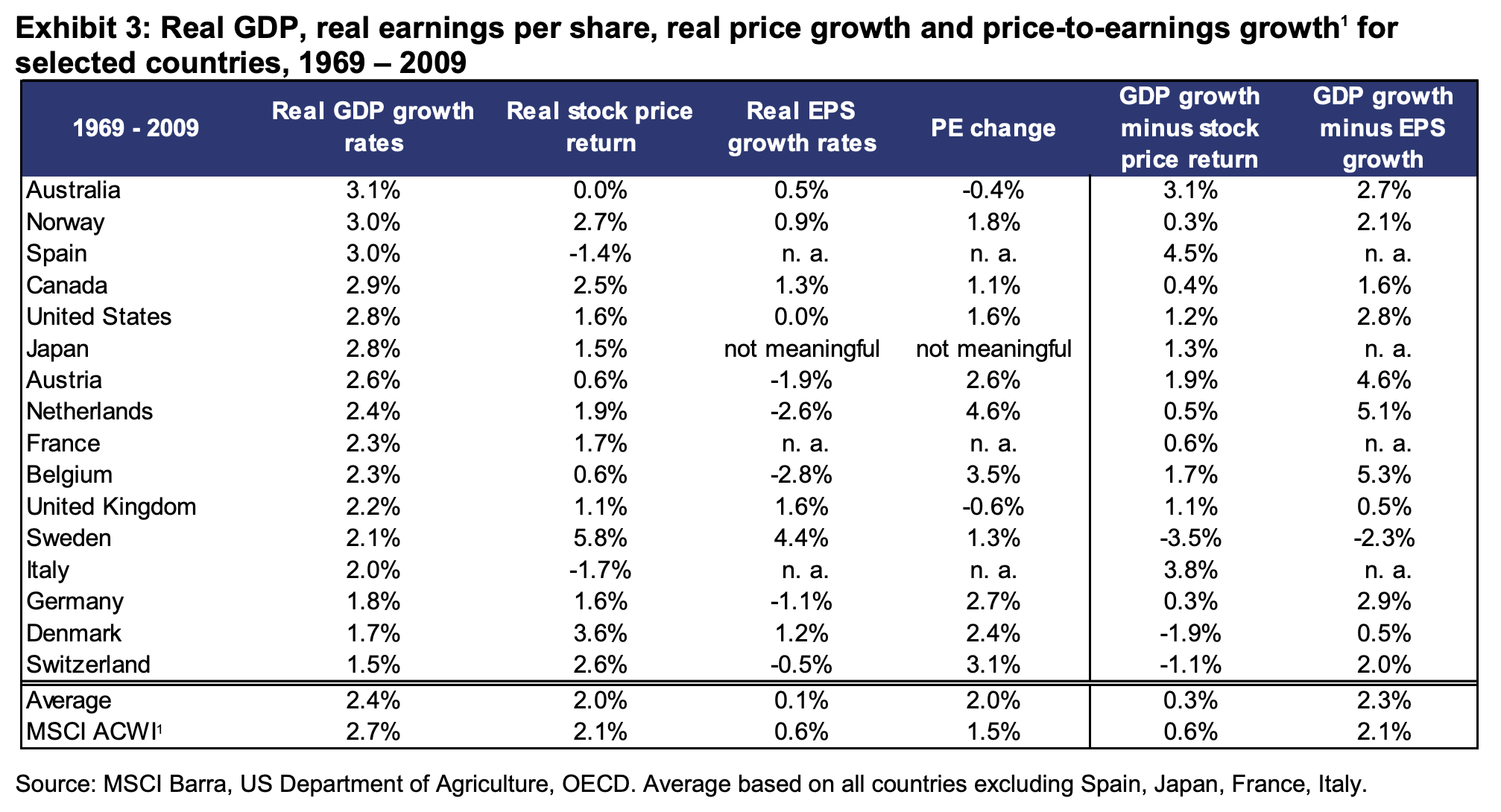
Before you get too surprised by how low the real returns of stock markets can be, these figures do not include dividends, which in the long run account for the lion’s share of returns, plus the ending year 2009 was quite unfavorable . The S&P 500 yielded a real return of only 1.6% per year from 1958–2008, with dividends not reinvested, after inflation if you want to calculate it yourself (with dividends it was 4.9%).
Nonetheless, in the long run, stock markets tend to move in line with or below GDP: companies’ earnings cannot grow faster than GDP in the long run; otherwise, such a large share of the national economy would eventually be absorbed by the owners of publicly listed companies that the other half of the population would be on the barricades.
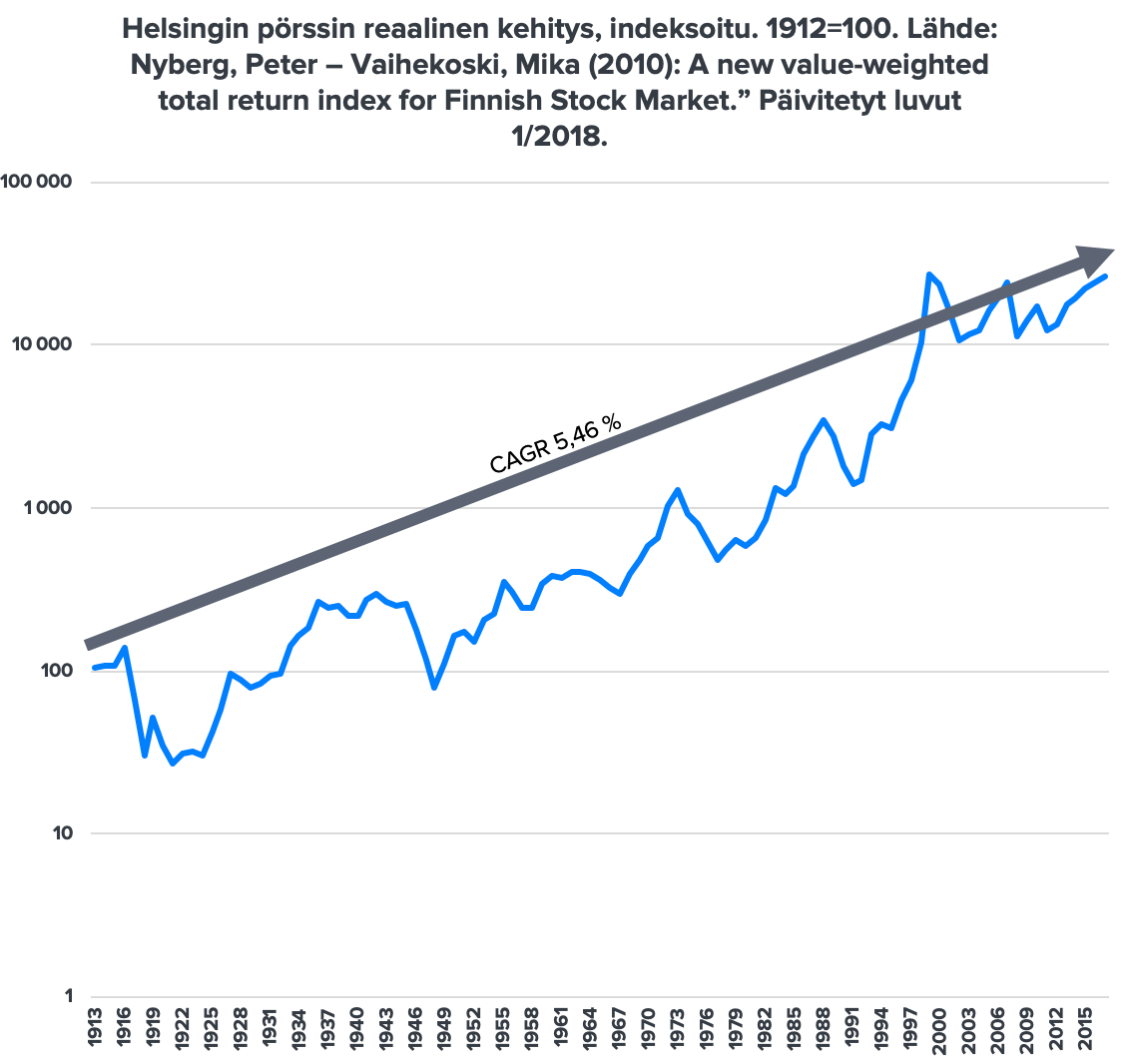
Thus, if we assume that global GDP growth (the Helsinki stock exchange thrives on global growth) slows to a Western level of 2-3%, or even permanently below three, and at the same time the dividend yield on the Helsinki stock exchange is 3.5%, the current expected return, ceteris paribus (assuming valuation multiples do not change), would be between 5.5-6.5% including dividends (minus dividend taxes…). This actually corresponds quite well to the stock market’s historical return over its existence from 1912–2017. Adjust your long-term assumptions
Edit: perhaps it’s more realistic to emphasize Europe’s growth rate in the assumptions, meaning GDP growth could even be in the 1-2% range if you are pessimistic/realistic..
Another assumption: the share of corporate profits in GDP does not change..
All you Inderes members who haven’t graduated from higher education, take a lesson from this sentence! It takes a final degree to be capable of such fluent narration No wonder VP is an Evangelist and Uncle Masse is the Forum’s Noble… There’s plenty to preach to this hard-headed Finnish nation.
This is why I like dividends and what they do to a portfolio in the long run when they are reinvested.
Currently, the gross dividend yield of my portfolio is about 5%. There has to be a very good reason for me to buy a company that does not pay dividends. This good reason is usually rapid growth.
Apple’s biggest gains were seen in years when it did not pay dividends. Dividends are a good option only if the company cannot intelligently reinvest its cash. Share buybacks should become more common in Finland as well.
In a tax-neutral environment, dividends are even a better option when one can better regulate where the reinvestment occurs. With the advent of the share savings account, I naturally hope for dividends.
I classify Apple into the second group, meaning growth stocks. I don’t believe that share buybacks would explain the rise in stock price; surely, it has been a result of revenue and profitability growth. If I owned the stock, I would be very happy with just the rising stock price. Unfortunately, in the early 2000s, when I started using an iPod, I thought Apple would be a good partner/acquisition target for Nokia. At that time, I should have bought Apple stock instead of just thinking about it. It’s easy to be wise after the event, of course.
Most companies distribute only a portion of their profits to owners. If owners know how to reinvest these funds, it’s a pretty good option. Even after taxes. At least it seems to work
The dividend discussion is often quite black and white. Boring companies that pay 50-70% of their earnings as dividends are unnecessarily criticized. If there are no high-growth investment opportunities, then there aren’t any. A large cash reserve easily leads salaried executives to loose spending.
The point was more about investing in the company rather than distributing dividends, assuming there are sensible investment opportunities. What’s the point of paying dividends to small investors, from which taxes are deducted, only for them to put the money back into the company’s shares? There isn’t one. That’s why investments and share buybacks are more sensible from the perspective of small investors.
A large cash pile isn’t a problem either if the stock is valued neutrally or affordably. In that case, the cash can very well be used for share buybacks. If it’s distributed as dividends, you would have to find much better investment opportunities than the companies you already own for that dividend to be more sensible for you than share buybacks.
Of course, there are risks here too. Share buybacks should certainly not be done if the stock is overvalued. But overall, and when implemented smartly, share buybacks are a much better solution than dividends.
Perhaps listed companies should hire their own in-house analyst to tell them whether or not it’s time to buy back their own shares. The problem, of course, is that large shareholders receive tax-free dividends, while those of us with smaller positions have to pay immediately (while waiting for the share savings account…).
Yeah. And usually I do. I definitely don’t always buy the same stock with dividends. But rather, I buy what I consider sensible at that moment. When I make a top-10 list, the top spots change relatively frequently.
Companies that buy back their own shares often do so quite randomly. The decision is made at the annual general meeting, and then they go and press the buy button. Nokia also invested a lot of money in these at the beginning of the 2000s. The timing wasn’t quite right.
 It could be helped by the popularization of investing (e.g., equity savings accounts), if it became some kind of ‘trend’ hobby.