Meta released the first two open versions of its Llama 4 AI model, which can be tested on WhatsApp, Messenger, Instagram Direct, and the Meta AI website.
The largest and most powerful Llama 4 model has not yet been released, as it is still under development. It is said to be the best in its class and to act as a “teacher” for other models. Meta intends to make its AI open and widely available; additionally, the company will also host its first LlamaCon event at the end of April.
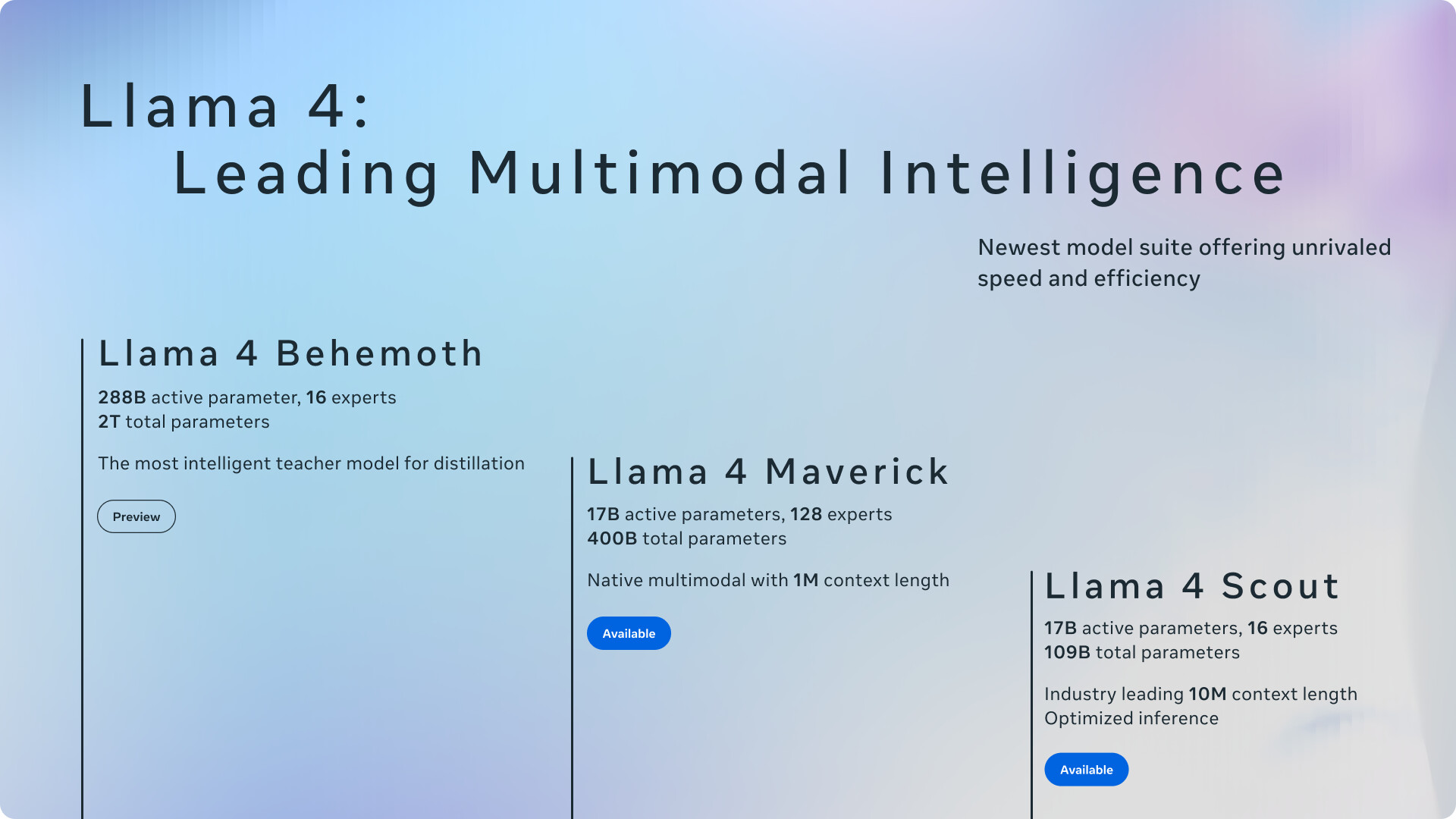
Meta released new and long-awaited Llama 4 models:
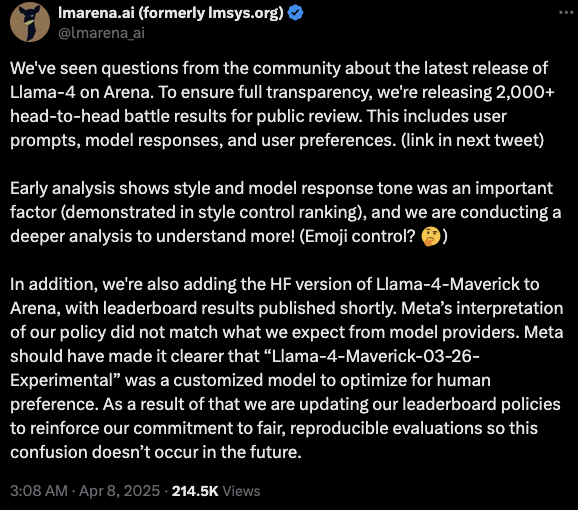
A minor disappointment for the open-source model community, as the release is clearly aimed at data centers and not for those of us who run models at home. Scout is bad, Maverick is quite decent if you’re using CPU/Mac hardware instead of a GPU, and Behemoth will probably win the model crown just because of its insane size.
Meta rushed because Alibaba’s Gwen3 is coming next week, and fundamentally, at least the Scout model will become useless, except for its 10 million context length, but even its functionality seems to exist largely only on paper.
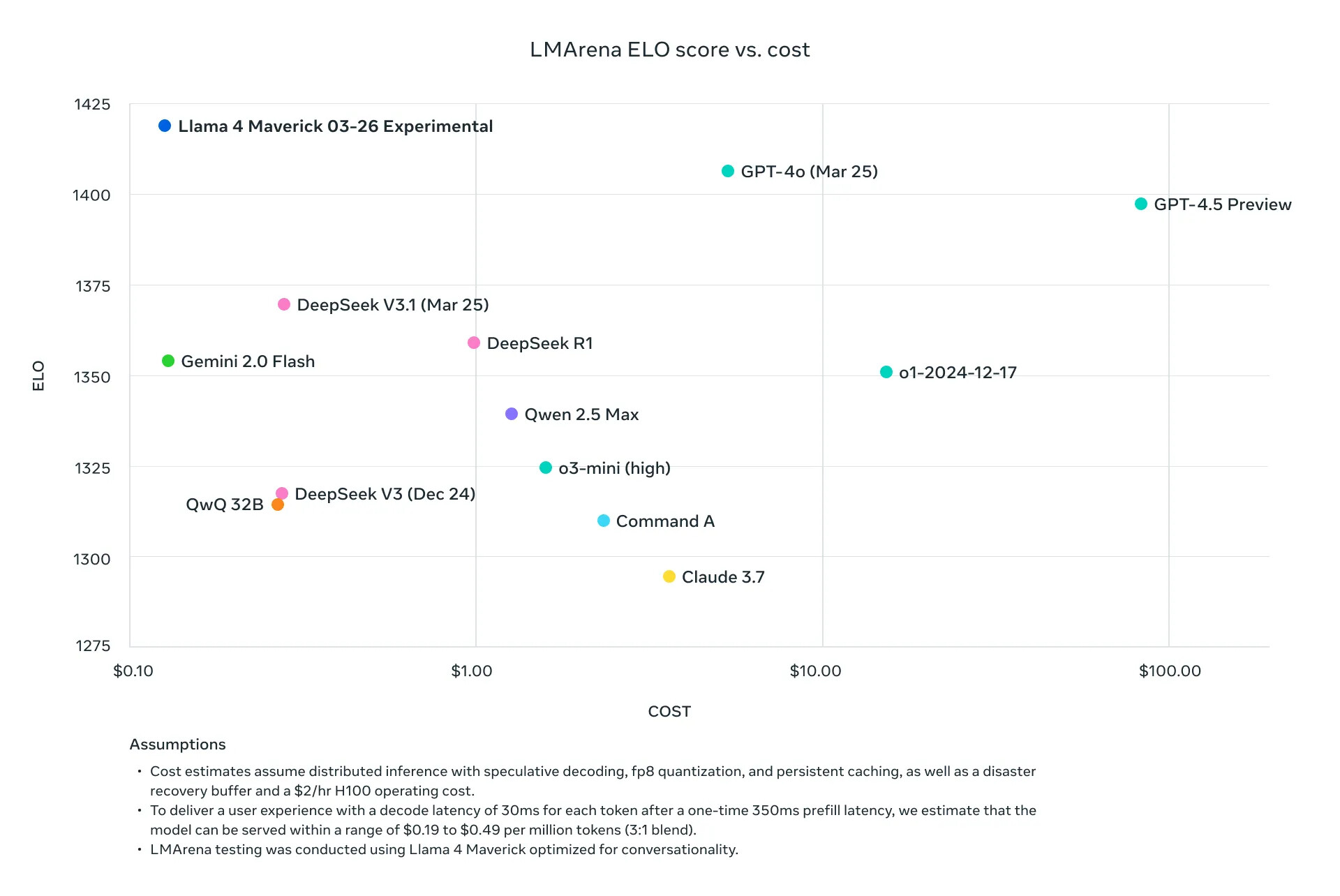
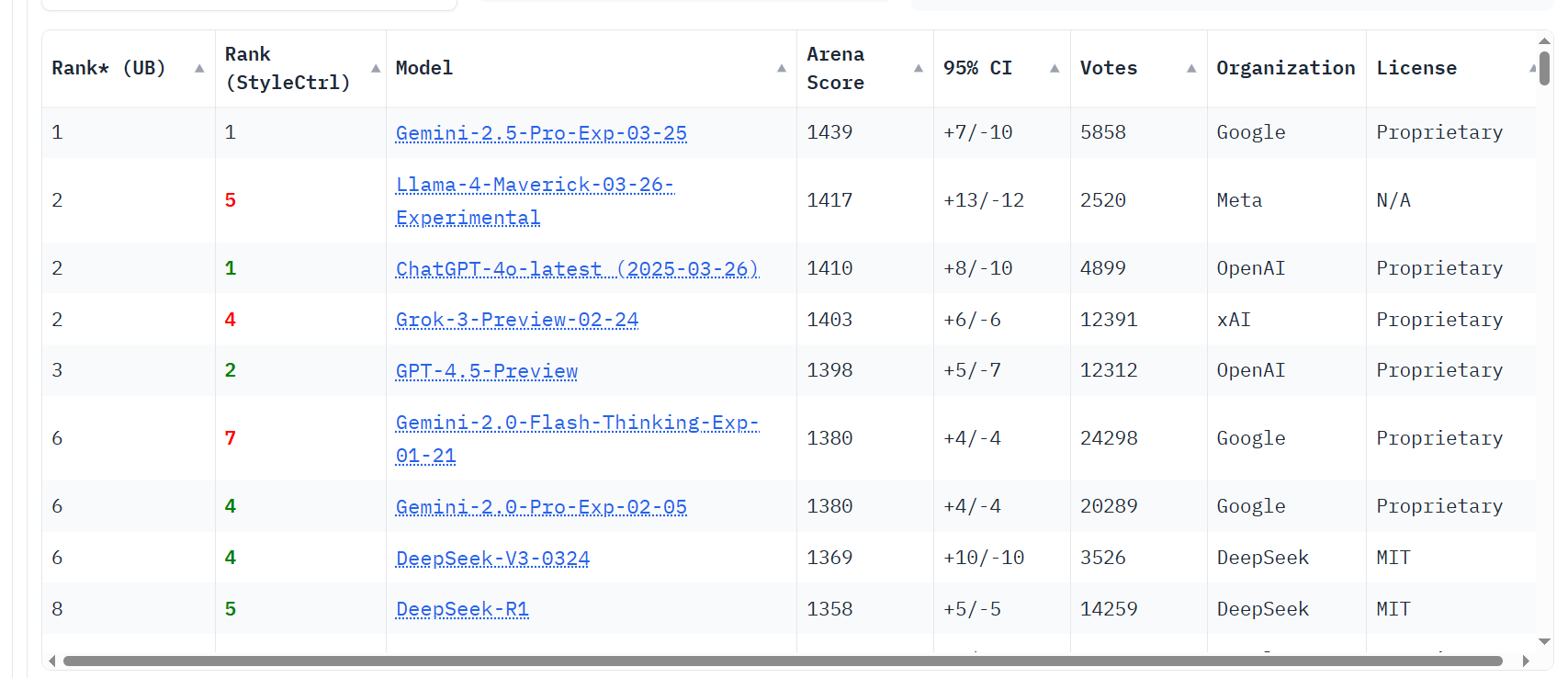
Perhaps a bit of a belly flop, as the language model is not the most efficient:
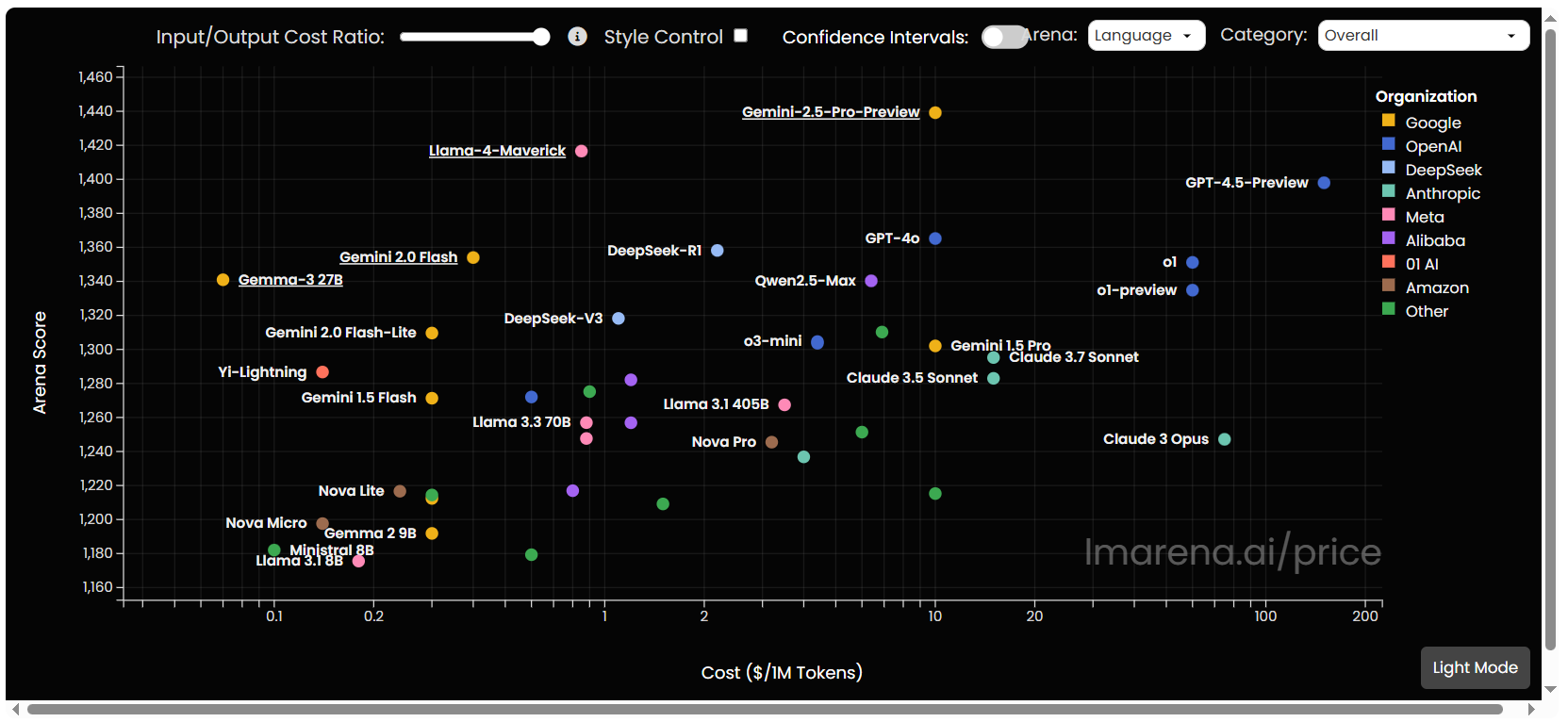
Or even the cheapest:
Will Meta succeed in attracting top talent in the field to develop its models, or has Google already gained favor with the best developers in the open-source realm?
They would have rather released that cheating version used in benchmarks instead of the crap they fed us. Meta completely fell out of the race, and now all focus is shifting to Google’s Gemma and Alibaba’s Qwen3 model, to be released this week, which is expected to almost completely take over the open-source model market.
Google has indeed released really strong models in recent months, and people are somewhat sleeping on Google. The versions of Gemini released this year are absolutely incredibly good
Meta AI chatbot also appeared in my Whatsapp yesterday. I don’t think I’ll be using it.
It is also currently based on older Llama models, at least for now.
“This launch follows almost a year of intensive engagement with various European regulators and for now, we are only offering a text-only model in the region which wasn’t trained on first-party data from users in the EU”
Meta on nimittänyt hallitukseensa kaksi uutta jäsentä: Dina Powell McCormickin, joka toimi Donald Trumpin neuvonantajana ja Stripe-maksuyhtiön toimitusjohtajan Patrick Collisonin. Powell McCormickin nimitys heijastaa yhtiön lähentymistä republikaanipiireihin. Molemmat aloittavat tehtävässään ensi viikolla.
"Key Points
Meta’s newest Trump-friendly board member is Dina Powell McCormick, who served as an advisor to the president from 2017 until 2018.
Last month, she and her husband, the Republican Sen. Dave McCormick, were seen at a wrestling match with Trump and Tesla CEO Elon Musk.
Meta is also adding Stripe’s co-founder and CEO Patrick Collison to the board."
In 2018, Mark Zuckerberg considered spinning off Instagram from Facebook as a kind of solution to growing antitrust pressure. An email that emerged in the FTC trial shows concern about a possible forced breakup in the future.
The trial itself concerns Meta’s market dominance.
Key Points
Meta CEO Mark Zuckerberg considered spinning out Instagram in 2018, according to an email presented Tuesday in the FTC’s antitrust trial against the company.
The email was presented to the court during Zuckerberg’s second day of testimony.
According to the article below, Trump’s China tariffs could cause Meta a hit of up to $7 billion this year, as Chinese e-commerce companies like Temu and Shein are likely to reduce their advertising budgets.
China generated $18.35 billion for Meta in 2024, which was over 11 percent of its total sales. Analysts believe Temu has already reduced its US advertising spending.
Every ad slot is an auction item. If the Chinese don’t buy, the next one on the list will. It naturally has some effect, and prices can, of course, decrease if the demand for ad slots falls. Some mistakenly believe that lv decreases directly by the amount an individual advertiser reduces their budget.
Big story in WSJ about Meta’s AI bots, which are capable of quite explicit romantic conversations – even with minors. This doesn’t surprise me at all, having followed Meta’s actions for years.
Inside Meta, however, staffers across multiple departments have raised concerns that the company’s rush to popularize these bots may have crossed ethical lines, including by quietly endowing AI personas with the capacity for fantasy sex, according to people who worked on them. The staffers also warned that the company wasn’t protecting underage users from such sexually explicit discussions."
The article below discusses how Meta plans to invest up to $65 billion this year in developing AI infrastructure, even though Trump’s tariff policies create uncertainty.
Investors are following Tuesday’s LlamaCon event and Wednesday’s earnings release to see if tariffs will affect the company’s future plans. Meta aims to strengthen its position in the AI market with the help of Llama models and the new Meta AI assistant.
Analysts expect investments to continue, even though cost pressures may increase.
"Key Points
Mark Zuckerberg’s plan is to make Meta the market leader in artificial intelligence. Investors will want to know how President Donald Trump’s tariffs-heavy trade policies will impact that strategy.
Investors will be monitoring Meta’s LlamaCon Tuesday event for any signs the company could change its plans to spend as much as $65 billion this year to expand its AI infrastructure.
Wall Street will also be monitoring for any signs that Meta’s AI investments are having an immediate business impact."
Microsoft’s Windows Edge browser and Apple’s macOS Safari browser also display pornography to underage users, unless this possibility is specifically blocked. Where is the outcry against these companies?
Moral panic is being built around AI chatbots because they are not established technology and are therefore scrutinized much more strictly. Now there’s a flood of articles about how AI is dangerous for children, freely gives bomb instructions to terrorists, and all sorts of other things. For centuries, similar arguments were used to try to prevent the printing and free distribution of books, and strong prior censorship of content was demanded.
In my opinion, Meta’s decision to leave the matter to parents and let them set boundaries for their children regarding the use of these explicit tools is the right one, instead of trying to put the genie back in the bottle. If you censor Meta’s AI, users will simply switch to another free service, of which the internet is full.
Of course, it’s not easy for parents, because children are curious and often creatively find ways around things. I remember when we were minors, we used to look for Jallu magazines in the bushes, and at some point, you could even watch porn for free on linear television
Here’s more about Meta and AI. The company launched its own AI application to directly compete with ChatGPT and other players, such as Google Gemini and xAI Grok.
The application utilizes Meta AI’s Llama model and also offers users a Discover feed. Zuckerberg believes that Meta AI will soon reach the one billion user mark and become a leading AI assistant.
"Key Points
Meta Platforms is launching a stand-alone artificial intelligence app and taking on ChatGPT maker OpenAI as the AI race intensifies.
The news confirms previous CNBC reporting from February, citing sources familiar with the matter.
Meta’s debut of a stand-alone Meta AI app follows similar efforts by Google and Elon Musk’s xAI."
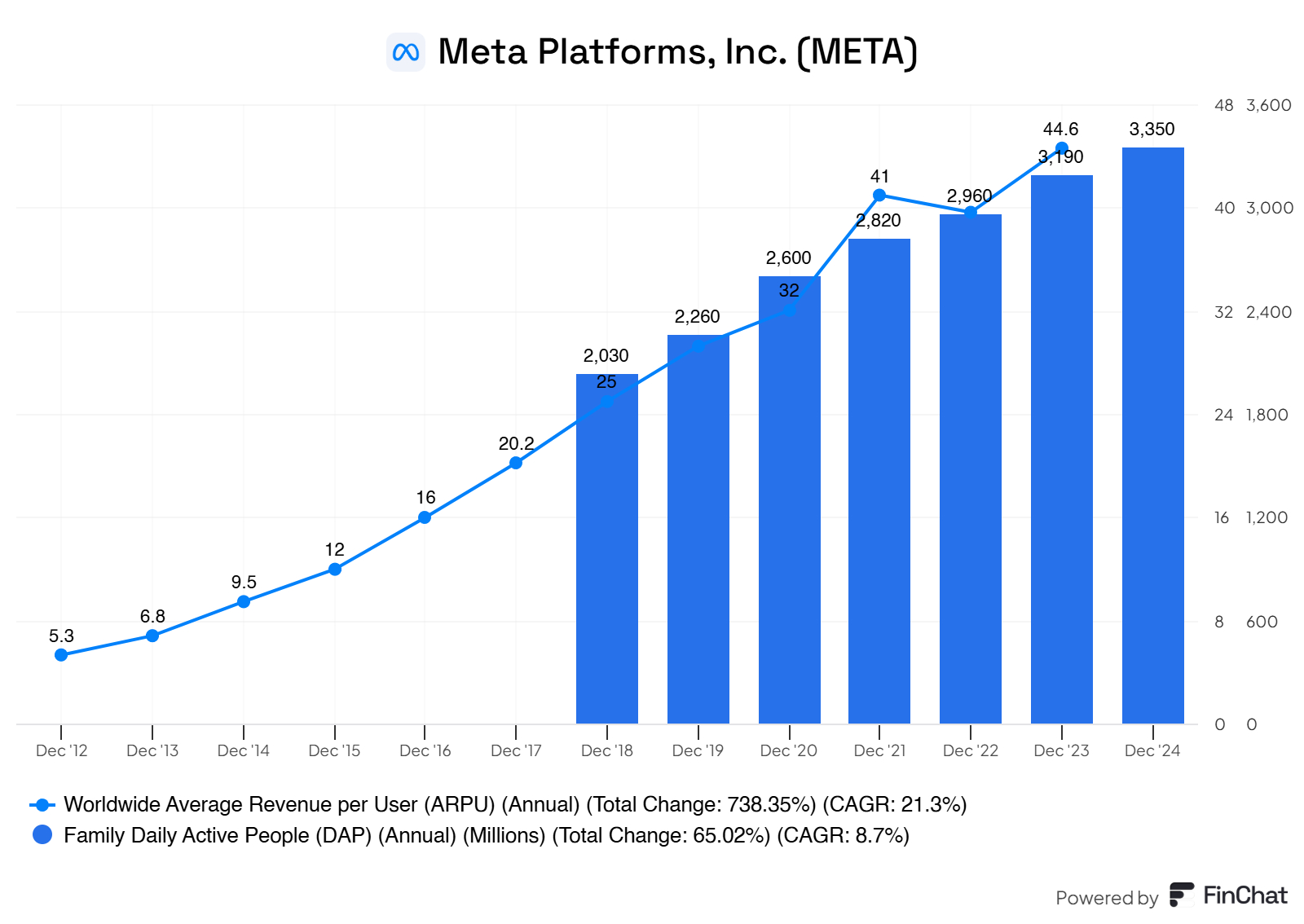
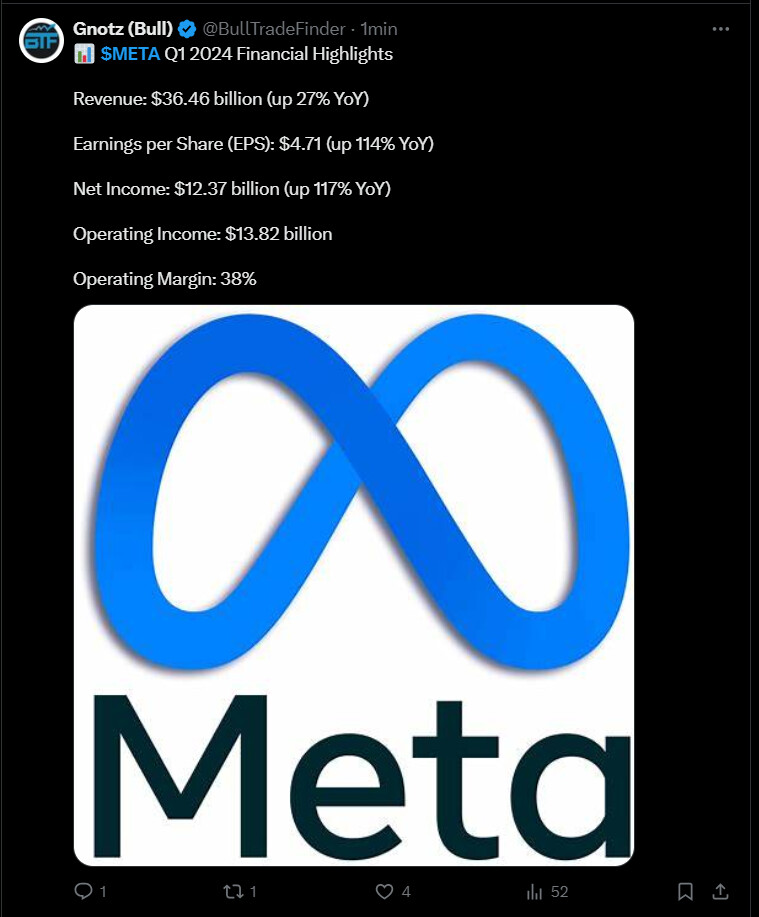
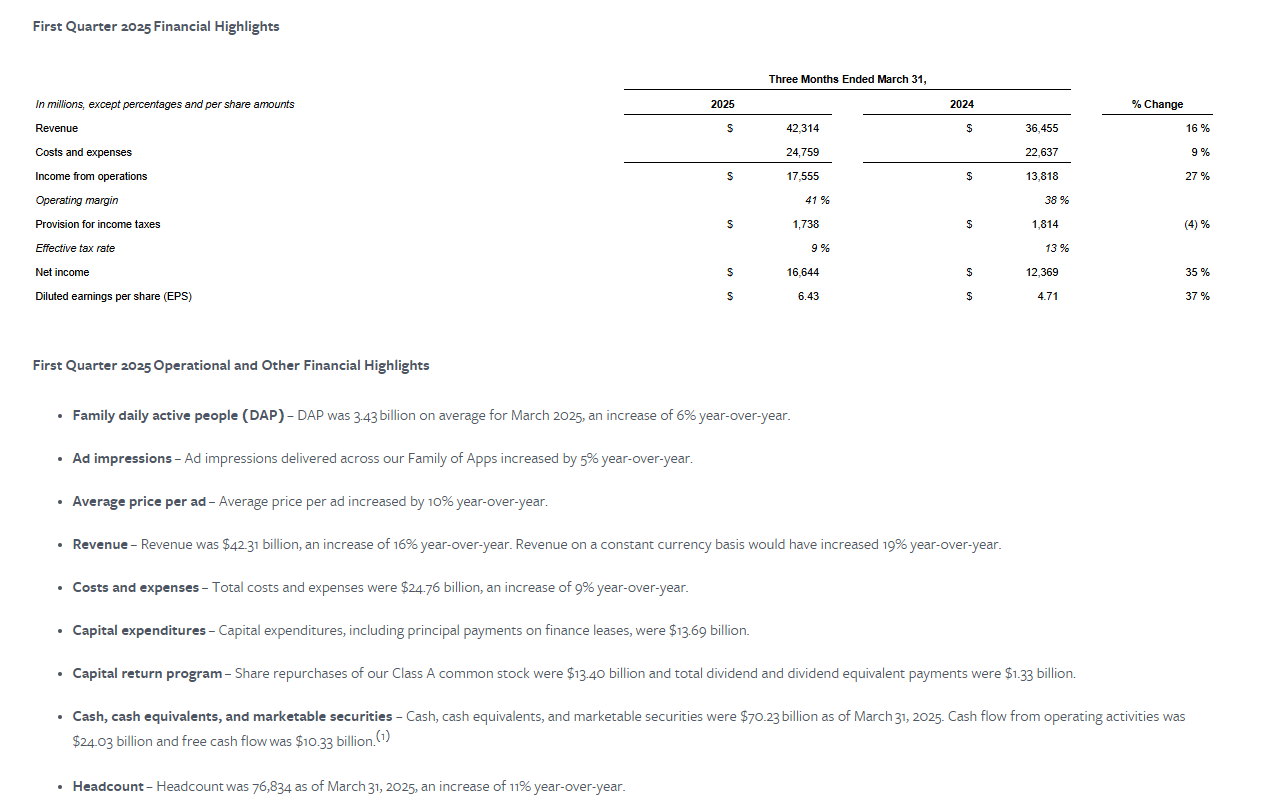
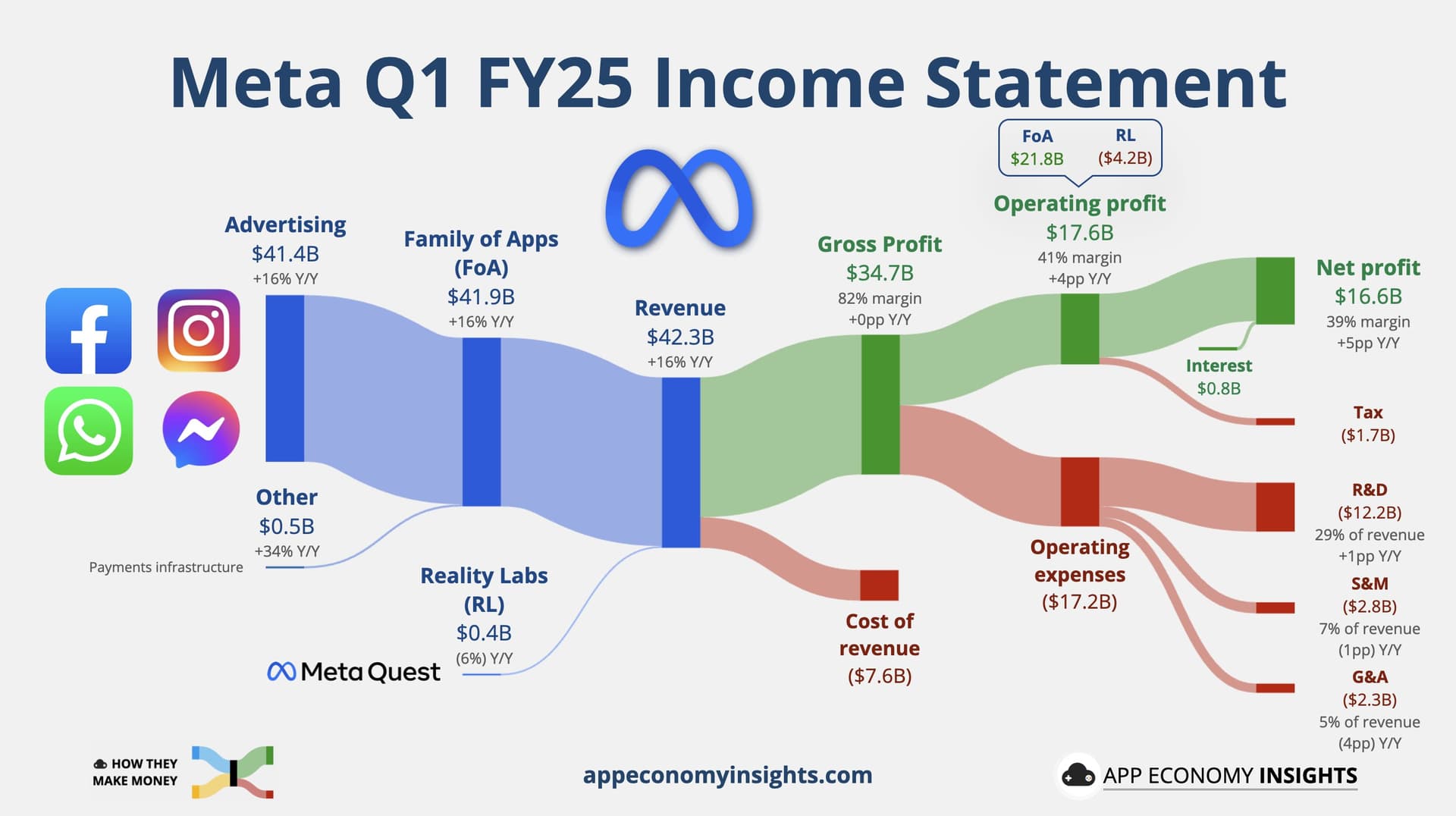
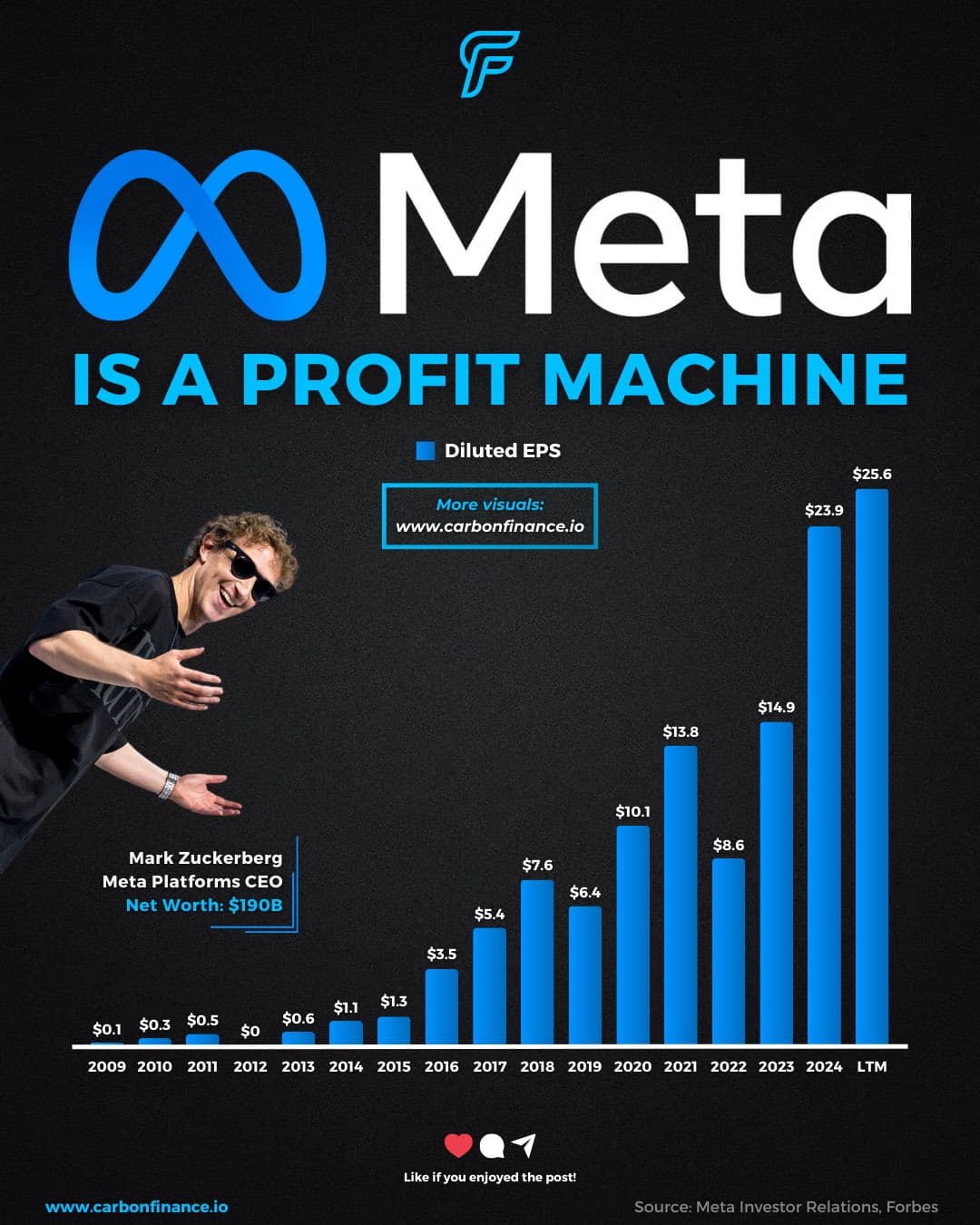
Business generally and user numbers grew briskly. The volume and price of advertising increased, and the community continues to grow steadily. According to Mark Zuckerberg, the company is making good progress, especially in the development of AI glasses and Meta AI.
Costs and investments are growing, especially related to AI and hardware. In the future, however, Meta may face regulatory challenges in Europe, where the paid advertising option has received negative feedback from authorities. This could weaken Meta’s services and revenues.
CEO Mark Zuckerberg believes that AI can fulfill the need for friendships, but according to psychologists, nothing replaces genuine human relationships.
AI can offer momentary benefits, but not emotional connection, touch, or genuine interaction. (editor’s note: maybe not yet this year)
Back when Facebook bought Instagram, Zuckerberg wrote in an email used in the lawsuit: preferring to buy rather than compete. A pretty strong argument against Meta in the case.
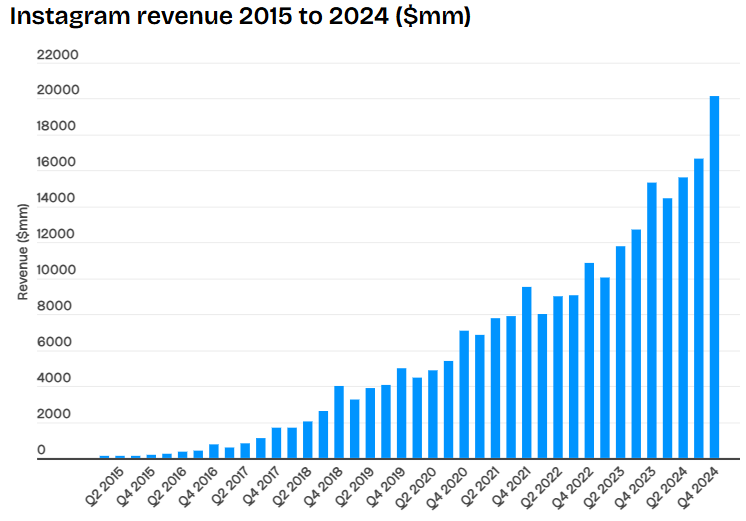
Instagram is Meta’s real growing powerhouse. It will soon overtake Facebook and is growing robustly. It would only be good for shareholders if it were spun off.
The image in the tweet shows that large institutions are buying options related to Meta’s stock in large sums.
This likely indicates strong confidence in the stock’s rise; additionally, some buy signals and cash flows from option premiums suggest that major players anticipate Meta’s value increasing in the near future or something similar.