Facebook, joka tunnetaan nykyään nimellä Meta, perustettiin vuonna 2004 Mark Zuckerbergin toimesta. Facebook oli alun perin tarkoitettu yliopisto-opiskelijoiden verkostoitumisalustaksi, mutta kasvoi nopeasti maailmanlaajuiseksi sosiaalisen median jättiläiseksi, jolla on nykyään 2,9 miljardia aktiivista käyttäjää. Toisin sanoen kyseessä on maailma suosituin sosiaalisen median alusta.
Muutosmatka virtuaalitodellisuuden edelläkävijäksi
Vuosien varrella Facebook on laajentunut monipuoliseksi sosiaalisen median ekosysteemiksi, sisältäen palveluita kuten Instagram, WhatsApp ja Oculus VR. Vuonna 2021 yhtiö ilmoitti muuttavansa nimensä Meta Platforms, Inc.:ksi, heijastellen sen laajentumista virtuaalitodellisuuden ja metaverse-maailman rakentamiseen. Metalla on kunnianhimoiset tavoitteet olla muokkaamassa tulevaisuuden sosiaalisen median ja virtuaalisen vuorovaikutuksen maisemaa – häivyttämässä todellisuuden rajapintaa.

Kuten arvata saattaa, Facebookin pääasialliset tulonlähteet ovat mainostulot. Se tarjoaa mainostajille erilaisia mainosmahdollisuuksia sen alustoilla, kuten Facebookissa, Instagramissa ja WhatsAppissa. Nämä mainokset kohdistetaan käyttäjien kiinnostusten ja demografisten tietojen perusteella, mikä tekee niistä tehokkaita ja houkuttelevia mainostajille. Lisäksi Facebookilla on myös muita tulonlähteitä, kuten maksulliset palvelut ja sovelluskauppa.

Kilpailukenttä
Meta ei kuitenkaan markkinajohtajan asemasta huolimattaan ole suinkaan yksin kauhomassa mainostuloja, ja vaikka Facebook on onnistunut säilyttämään suosion käyttäjien keskuudessa kahden vuosikymmenen ajan, on mukaan tullut uusia kilpailijoita, kuten TikTok. Sen pääkilpailijat voi jakaa neljään eri kategoriaan:
-
Sosiaalinen media: Kilpailu käydään erityisesti muiden suurten teknologiayritysten, kuten Google (YouTube), Twitter, Snap Inc. (Snapchat) ja TikTok kanssa, jotka tarjoavat omia sosiaalisen median alustojaan ja mainostustuotteitaan. Kuinka pitkään samat alustavat pystyvät ylläpitämään miljardien käyttäjien suosion vuosikymmenestä toiseen vai näivettyykö osa alustoista väistämättä pois?
-
Virtuaalitodellisuusyritykset: Meta kilpailee myös virtuaalitodellisuuden markkinoilla yritysten kuten Apple (Vision Pro), Sony (PlayStation VR), HTC (Vive) ja Valve (SteamVR) kanssa. Sen Oculus-brändi tarjoaa laitteita ja alustoja virtuaalitodellisuuden kokemusten luomiseen. Edellämainituista etenkin Apple on kuitenkin lähtenyt tosissaan haastamaan Metaa virtuaalitodellisuuden markkinoilla Vision Pro VR-laseillaan. Mark Zuckerbergiltä tuli kuitenkin täystyrmäys, kun hän helmikuussa testasi Applen Vision Pro-laseja: “After using the Vision Pro, I don’t just think Quest is the better value. I think that Quest is the better product, period.” Oculus Quest -tuotteiden myynti on kuitenkin vielä vähäistä.
-
Viestintäsovellukset: WhatsAppin kaltaiset viestintäsovellukset kilpailevat käyttäjien huomiosta ja ovat olennainen osa Metaa. Kilpailu tällä alueella käydään erityisesti käyttäjämäärien ja tietoturvan suhteen.
-
Sisältöalustat: Ihmisten käytettävissä oleva vapaa-aika on rajallinen ja tästä vapaa-ajasta on Metan kanssa kilpailemassa esimerkiksi Netflix, Amazon Prime Video ja Apple TV+. Katsoisinko tänään Netflixistä sarjaa, joka jäi juuri kutkuttavasti kesken, vai avaanko puhelimesta Facebookin tai Instagramin ja selaan mainosten täyttämää feediä? Nämä pienet valinnat arjessa ohjaavat ihmisten kulutuskäyttäytymistä ja siten teknologiajättien tulovirtoja.
Miten Meta sitten pyrkii säilyttämään asemana näin kilpaillulla alalla? Meta pyrkii jatkuvasti löytämään uusi innovaatioita ja teknologioita, joihin investoida, kuten virtuaalitodellisuuteen ja metaverseen. Yhtiö pyrkii myös vahvistamaan käyttäjien sitoutumista ja luomaan yhteisöjä alustojensa kautta. Lisäksi se hyödyntää vahvaa mainosalustaa ja käyttäjätietojaan houkutellakseen mainostajia.
Huimaa kasvua
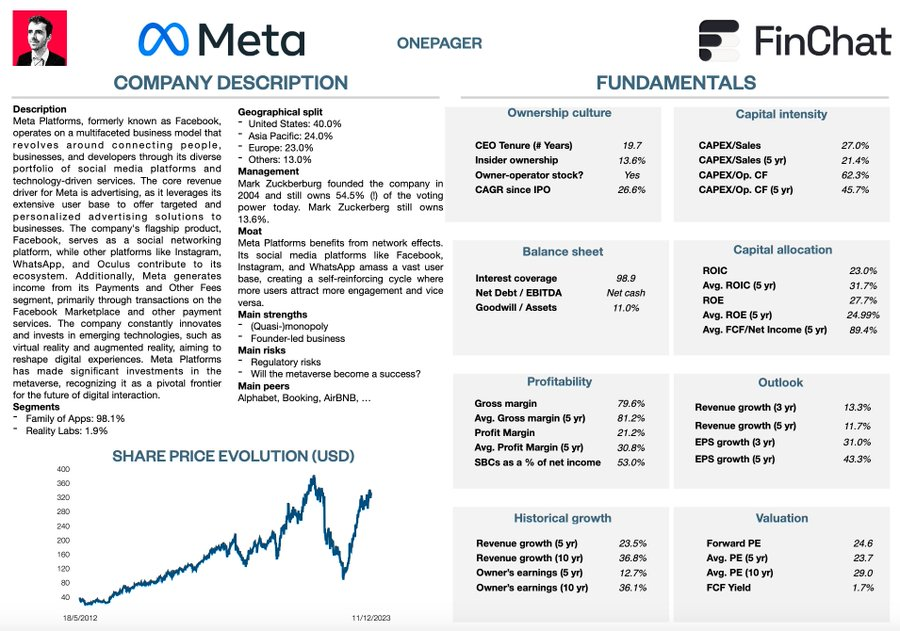
Vuodesta 2009 lähtien Meta on kasvattanut liikevaihtoaan 777 miljoonasta $:stä peräti 135 miljardiin, mikä tarkoittaa annualisoituna n. +41 % kasvua. Viime vuoden tuloksella myös 10 vuoden osakekohtaisen tuloksen annualisoiduksi kasvuksi saadaan lähes +39%. Ei siis ihme, että näillä luvuilla yhtiö on kasvanut nykyiseen kokoluokkaansa ja ottanut asemansa yhdysvaltalaisten teknologiajättien rinnalla.

Arvostus
Meta oli ensimmäisten viiden yhdysvaltalaisen yhtiön joukossa, kun se korkkasi 1 biljoonan usd markkina-arvon vuonna 2021. Tätä juhlaa ei kuitenkaan kestänyt kauaa, sillä osake lähti pian tämän jälkeen ATH-lukemista peräti 77%:n syöksyyn vuoden 2022 loppuun mennessä. Yhtiö ei kuitenkaan jäänyt maahan makaamaan, vaan ryhtyi kulusäästötoimiin samalla kun se sai käännettyä mainosmyynnin takaisin kasvu-uralle. Tämä palkittiin lähes +200% nousuna viime vuonna, jääden S&P 500-yhtiöistä jälkeen ainoastaan Nvidian AI-hypen sinkoamasta +250% kuumatkasta.
Viime vuoden toteutuneella tuloksella laskettuna osake treidaa tällä hetkellä P/E 23.8x, joka on melko lähellä Metan viime vuosien keskiarvoa. Tällä mittarilla ei siis erityisen kallis, muttei halpakaan.


 Sijoittajat ilmeisestikin pelästyivät CFO:n kommentteja siitä, miten Metasta halutaan maailman johtava AI-firma ja tämä taas tarkoittaa myös kiihtyviä investointeja.