Alla olevasta tviistä näkee, että MeLi luo tänä vuonna yli 28 000 uutta työpaikkaa ja määrä ylittää tänä vuonna 112 000 työntekijän määrän Latinalaisessa Amerikassa.
Maakohtaisesti Brasilia on lisännyt 13 800 työpaikkaa (yhteensä 50 400), Meksiko 10 100 (yhteensä 35 800) ja Argentiina 2 000 (yhteensä 14 300). Yhtiö panostaa tälläkin “mittarilla” merkittävästi kasvuun alueella.
Tässä alla olevassa artikkelissa on juttua mm. siitä, miten MercadoLibren toimitusjohtaja Marcos Galperin uskoo, että Yhdysvaltojen ja Kiinan kauppasota tarjoaa suuria mahdollisuuksia Latinalle Amerikalle. Hän korostaa, että jos alue hyödyntää tilannetta oikein niin se voi hyötyä Yhdysvaltojen ja Kiinan välisten jännitteiden vuoksi. Erityisesti Meksiko voi hyötyä, koska monet amerikkalaiset yritykset ovat siirtäneet tuotantonsa Kiinasta sinne. Galperin myös uskoo, että Yhdysvaltojen ja Kiinan kauppasuhteet ovat muuttumassa pysyvästi.
Tviitissä on noin minuutin klippi MeLin toimarin höpinöistä. CEO:n mukaan Latinalaisella Amerikalla, erityisesti Meksikolla on suuri mahdollisuus hyötyä ns. lähituotannosta, kun valmistusta siirtyy pois Kiinasta Yhdysvaltojen “läheisyyteen”.
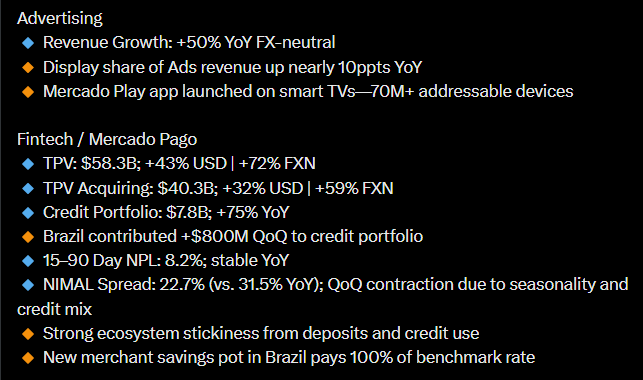
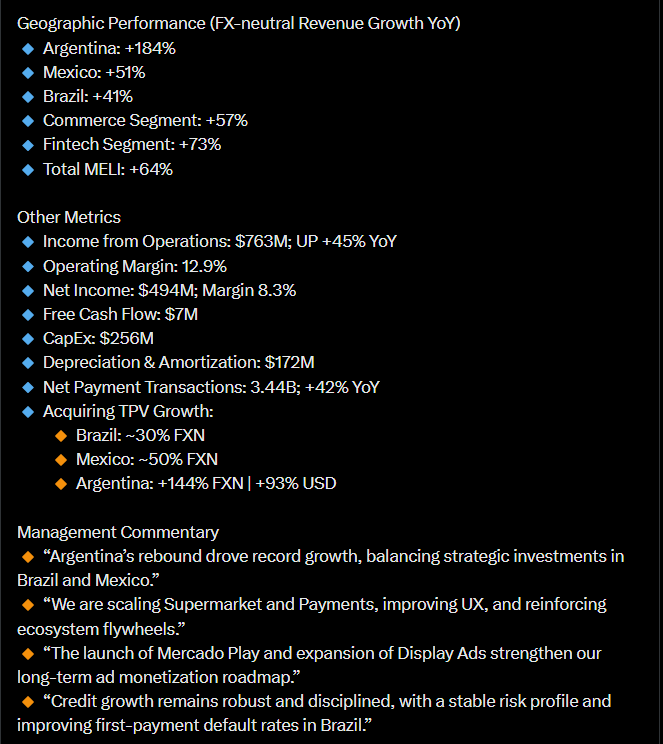
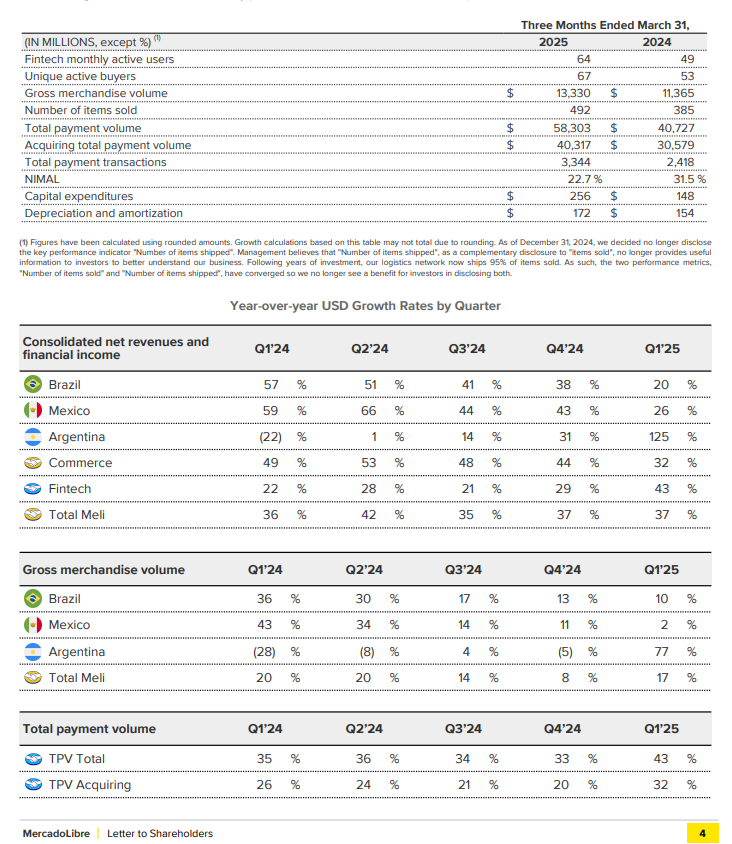
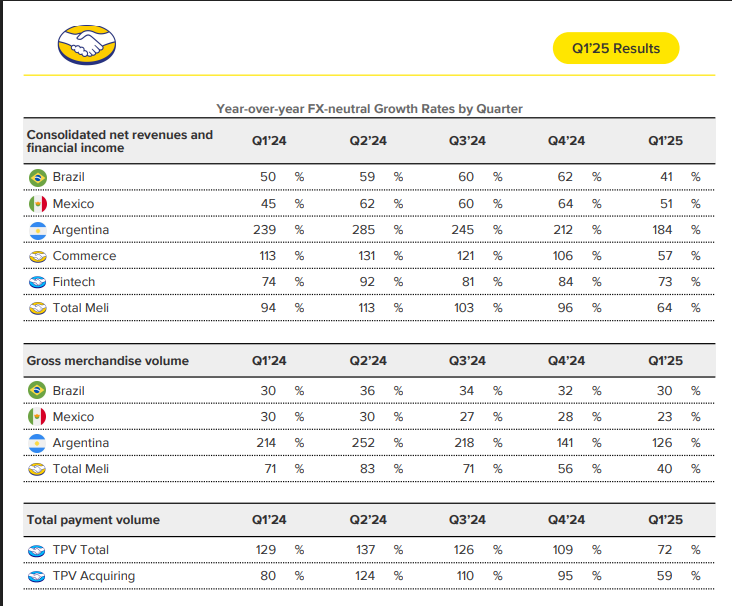
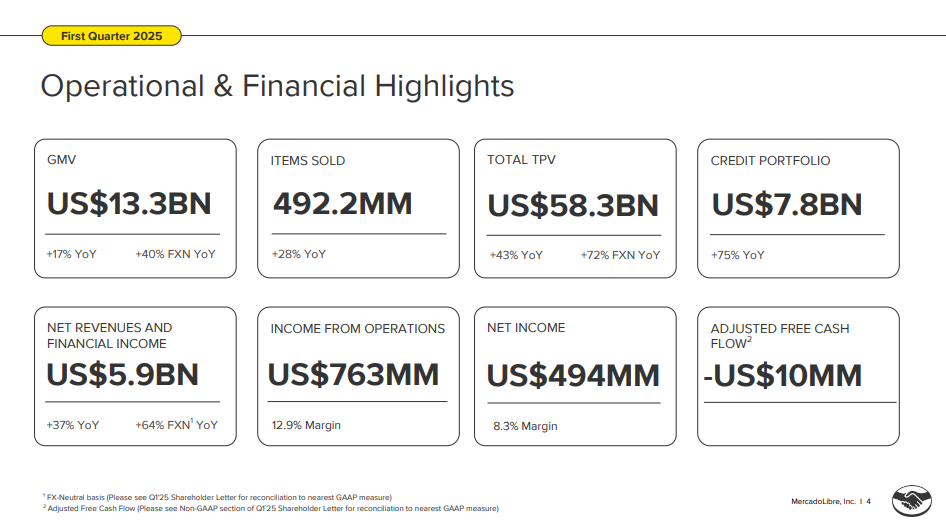
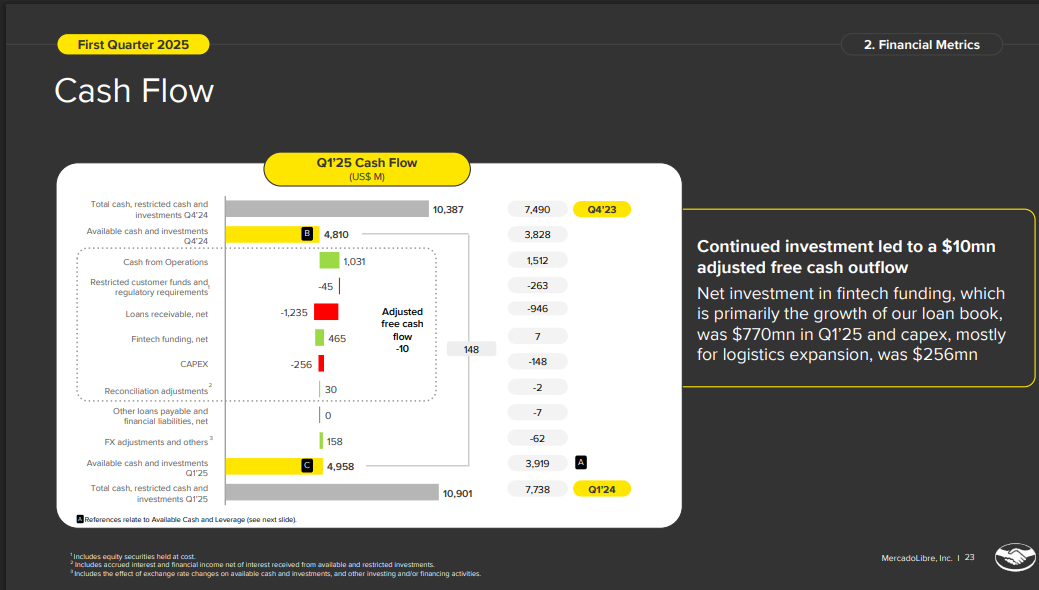
MeLi tosiaan aloitti vuoden vahvasti jatkaen edellisvuoden kasvuvauhtia.
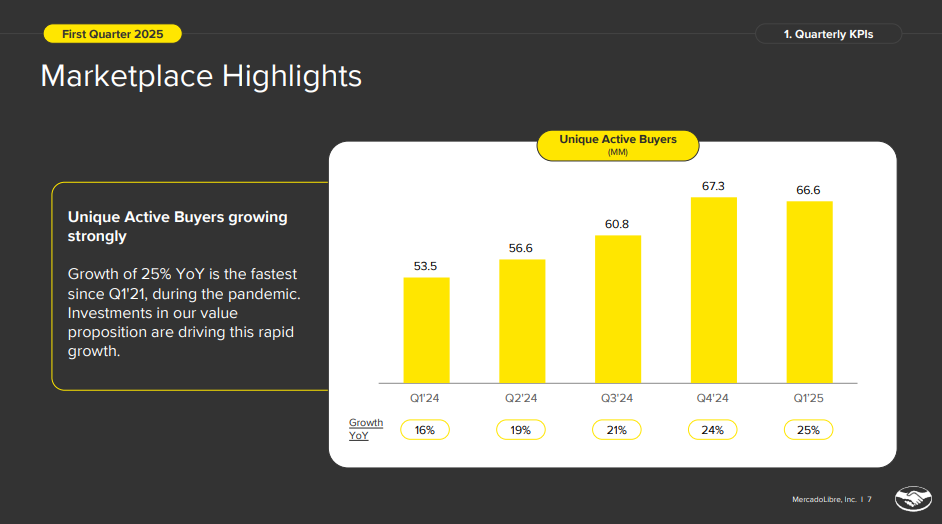
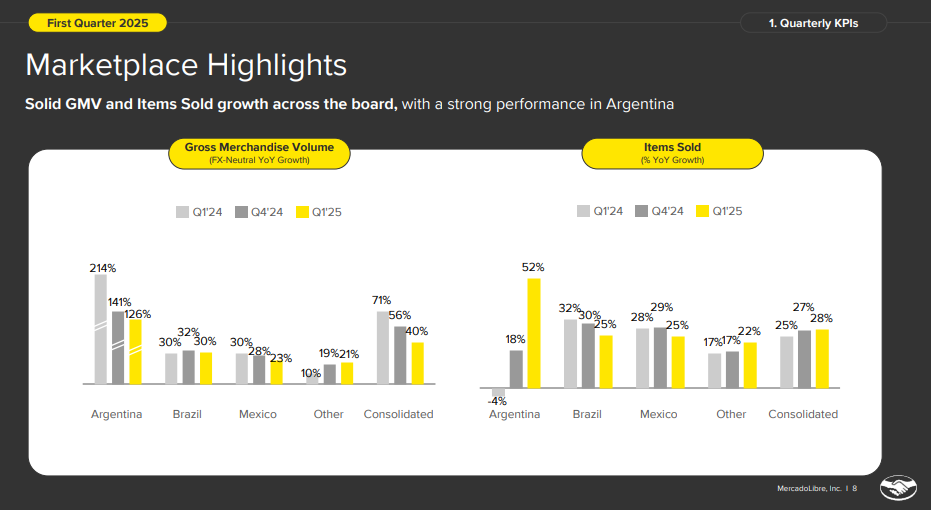
Yhtiön liiketoiminta kasvoi laajasti eri osa-alueilla ja tärkeimpien mittarien osalta asiat menivät hyvin. Myynnit ja tulos kasvoivat merkittävästi, mikä kertoo hyvästä toteutuksesta ja jatkuvasti uudistuvasta asiakaslähtöisestä toimintamallista.
Erityisesti Argentiina erottui edukseen, kun kysynnän palautuminen jatkui aiempaa voimakkaampana. Tämä tasapainotti investointeja, joita tehtiin reippaasti mm. Brasilian ja Meksikon markkinoilla. Operatiivinen tulos parani selvästi, mikä kertoo, että kannattavuus- ja kasvuasiat ovat kondiksessa.
Johto korostaa edelleen sitoutumistaan kestävään ja kannattavaan kasvuun. Innovatiivinen ja jatkuvasti paraneva asiakastarjonta nähdään jatkossakin keskeisenä kilpailuetuna, jonka avulla pyritään hyödyntämään tulevat kasvualueet tehokkaasti. AI:ta ei juuri mainittu. (sitä mainitaan liian usein siis turhas mieles )
Latinalaisessa Amerikassa tuulee! Ensin NU:n COO, nyt Melin CEO.
Okei, pikku happi tähän väliin. Marcos Galperin on johtanut Meliä 26 vuotta ja tehnyt siitä maailmanluokan jättiyhtiön. Miehen lienee sallittua myös hengähtää ja nauttia saavutuksistaan ja pienestä omaisuudesta, jonka on kasvattanut.
Vaihto tapahtuu 1. tammikuuta 2026, ja pestiin hyppää Ariel Szarfsztejn, nykyisen Commerce- segmentin pääjehu.
Citin analyysin mukaan MeLi näyttää olevan uuden kasvusyklin alussa, erityisesti Argentiinassa, jossa sen vahva asema ja laajeneva luottokorttitarjonta tukevat kasvua.
Lyysissä ennustetaan liikevaihdon ja käyttökatteen kasvua. Yhtiön osakkeen tavoitehinta nostettiin 3 000 dollariin.
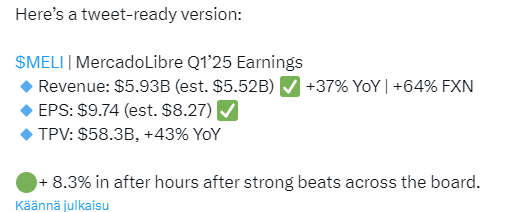
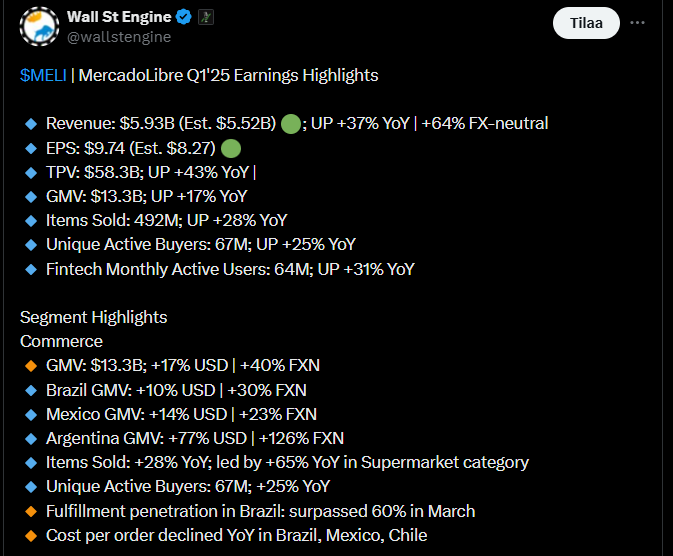
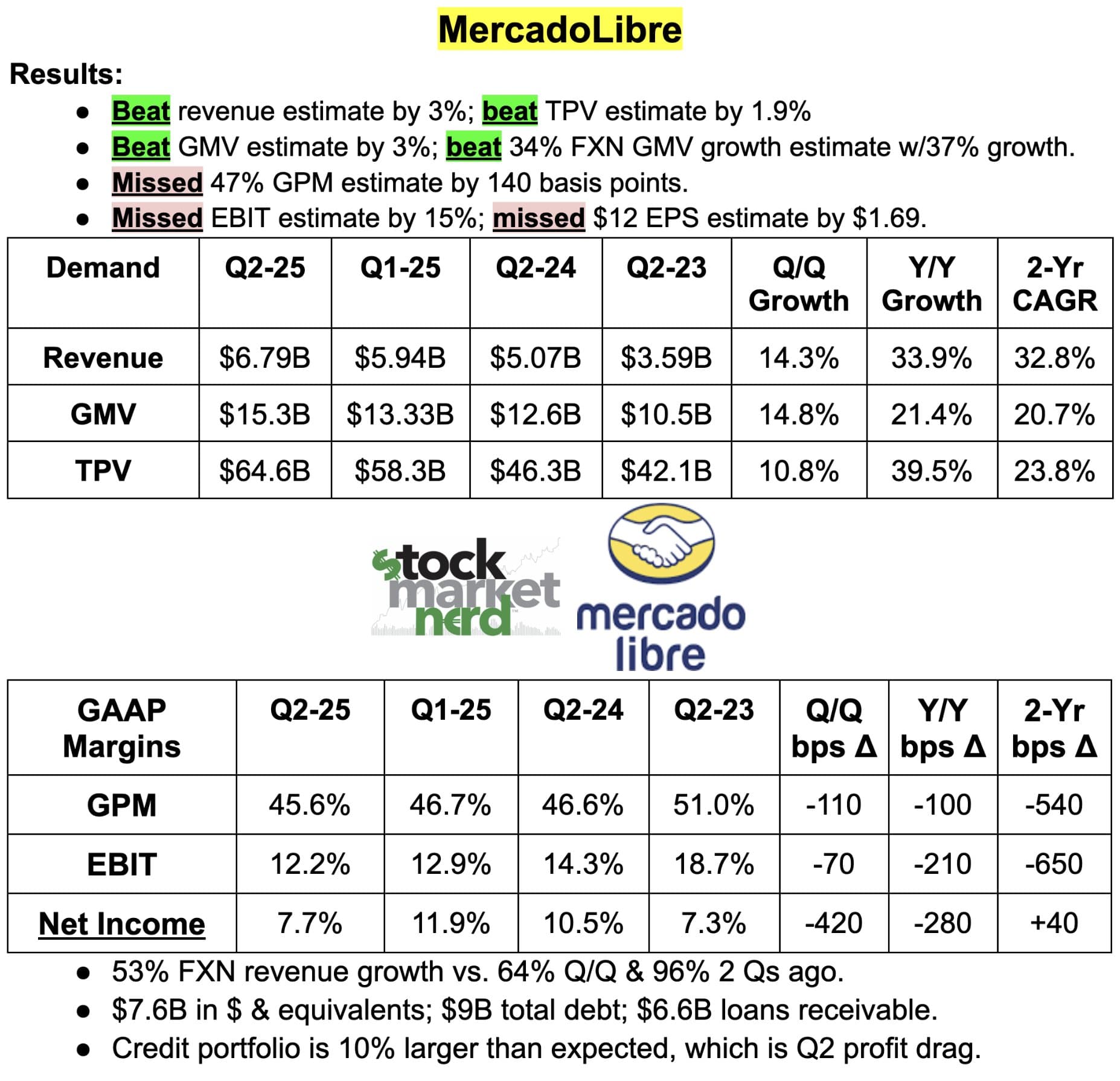
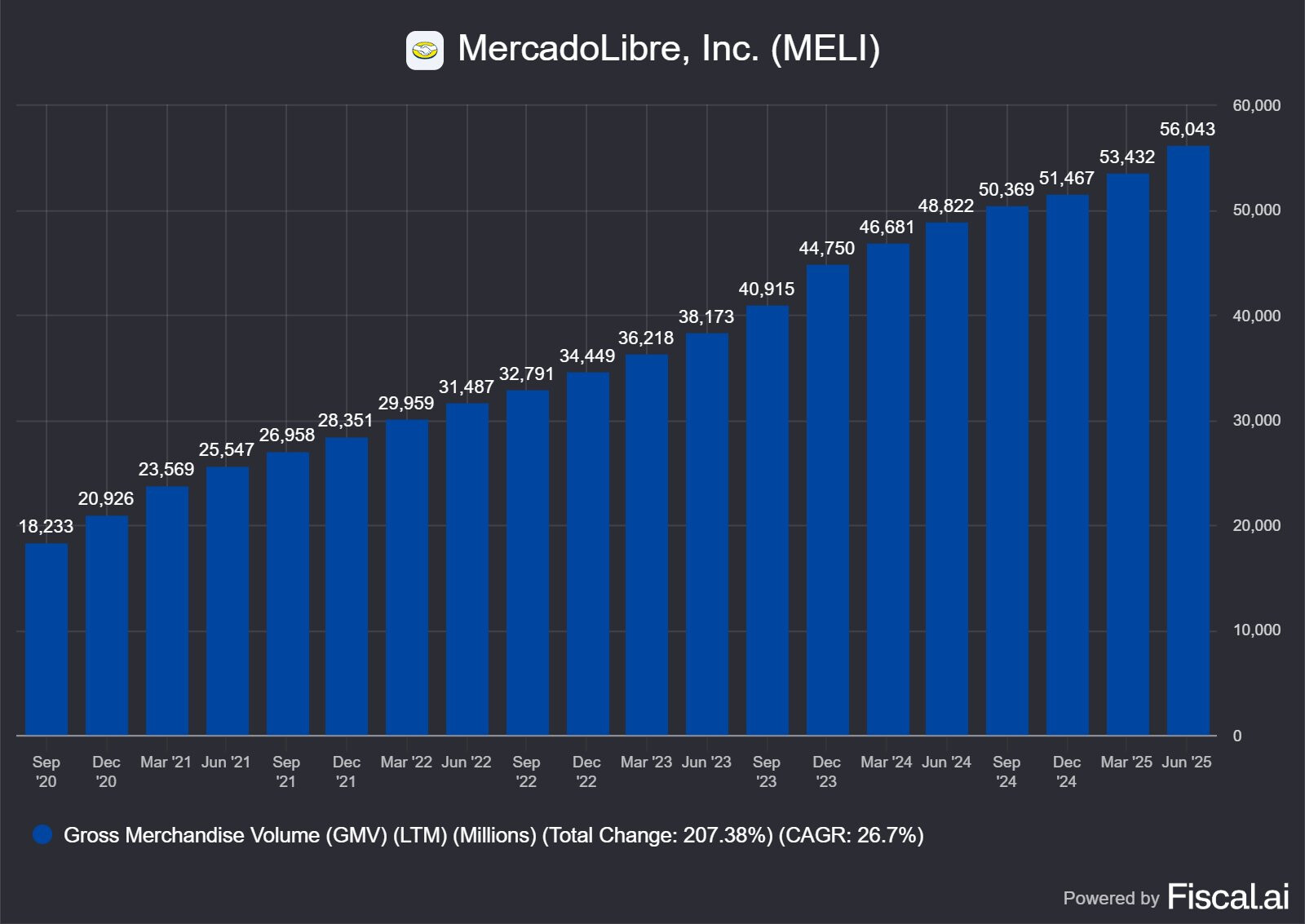
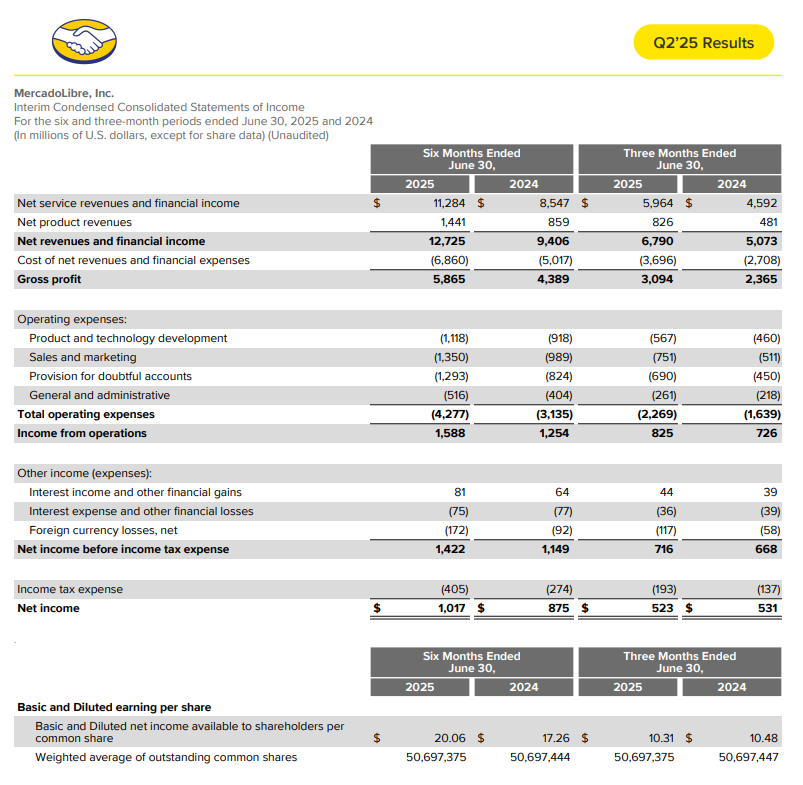
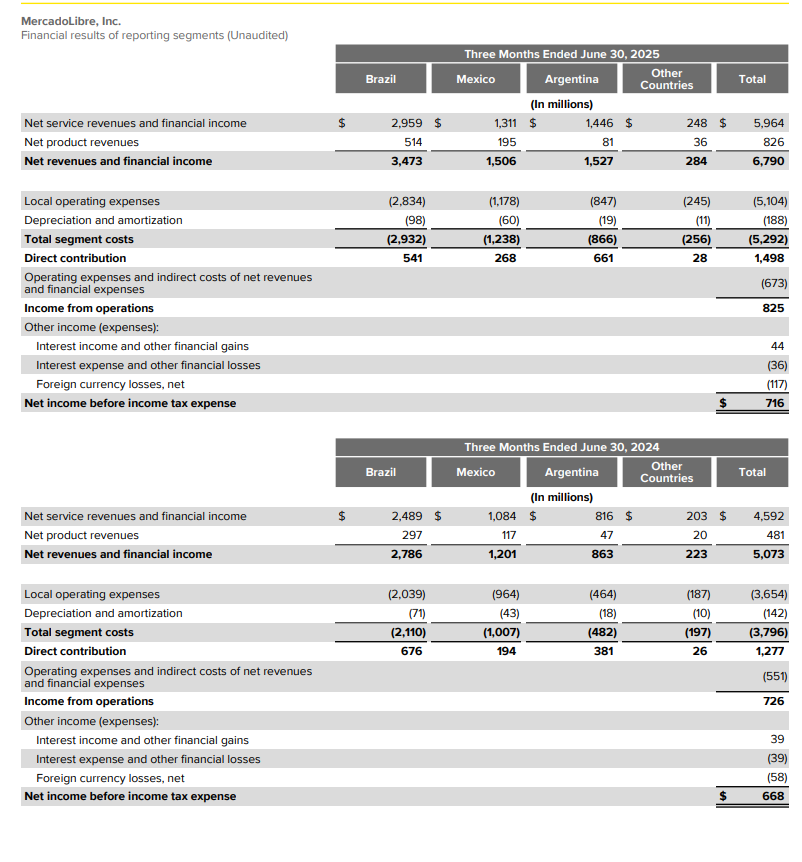
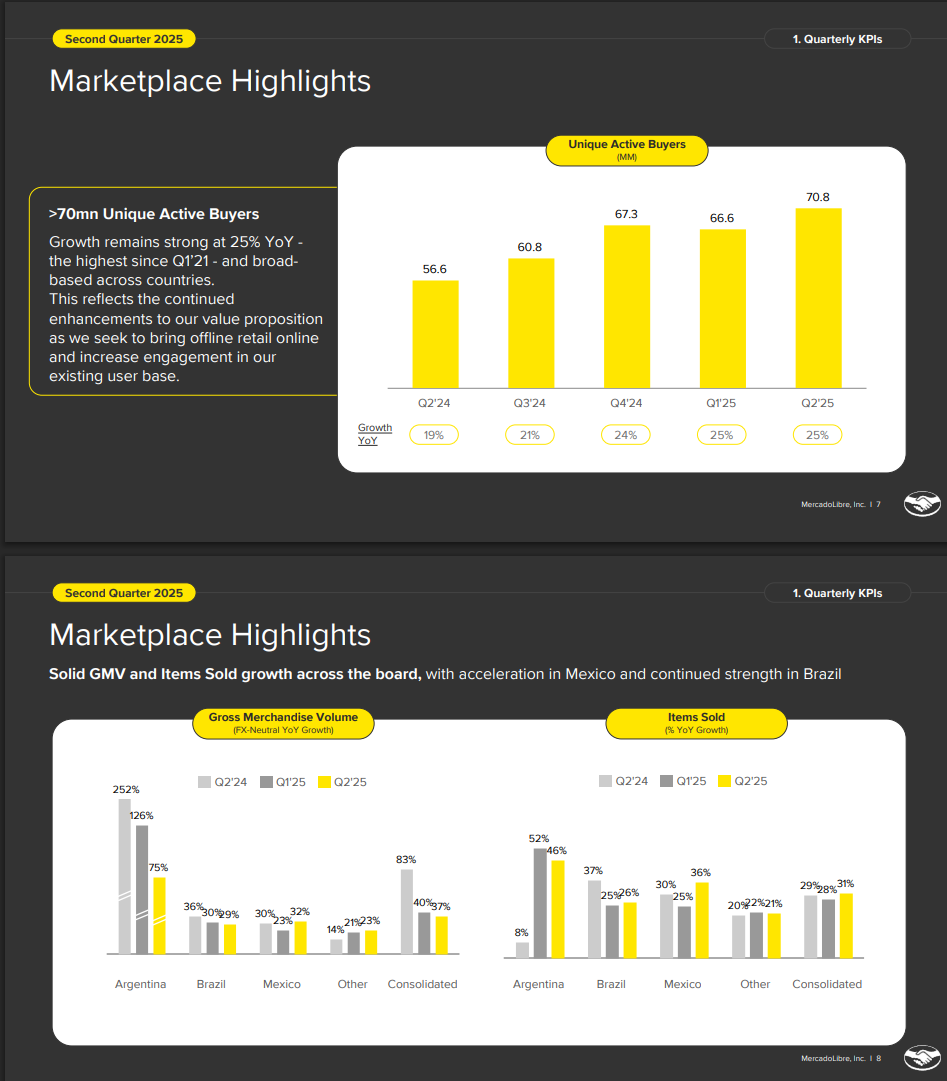
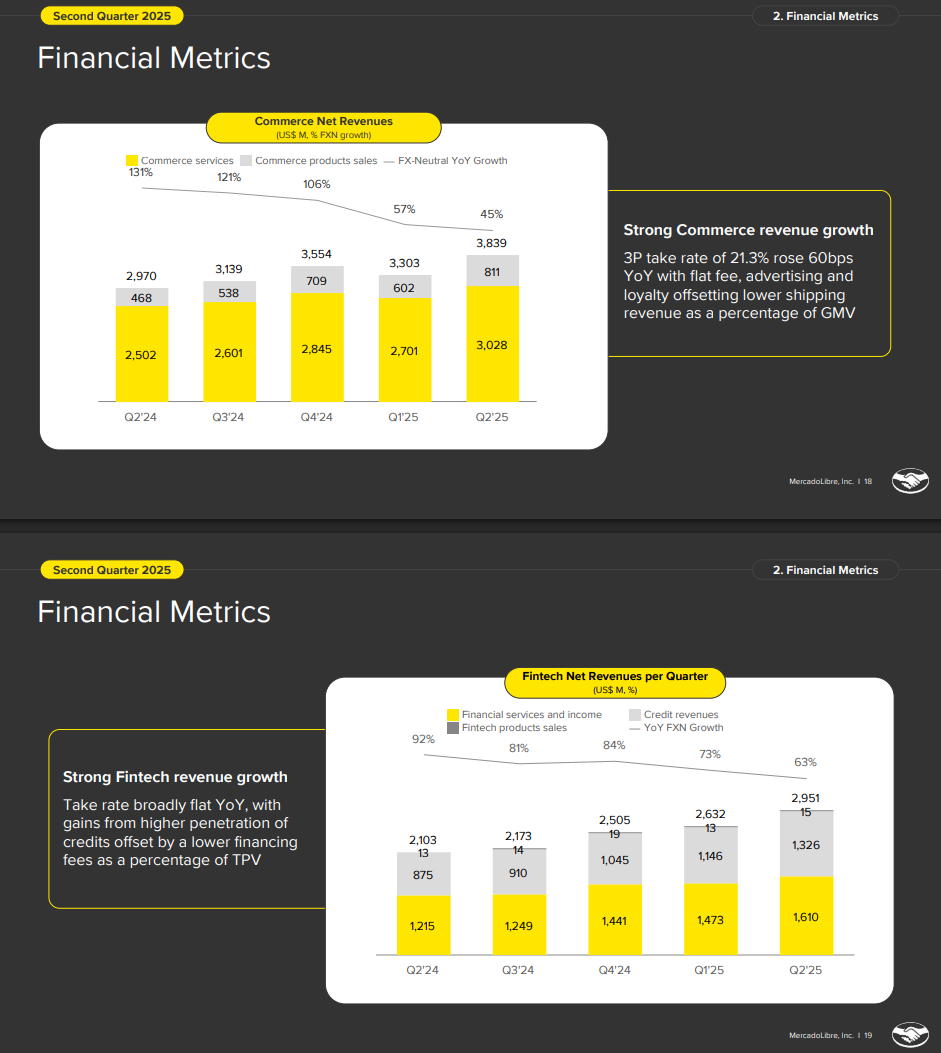
MeLi jatkoi vahvaa kasvua tokal kvartaalil vuosineljänneksellä esim. liikevaihto ja rahoitustuotot kasvoivat selvästi. Nettotulos vahvistui ja maksuvolyymi nousi myös merkittävästi.
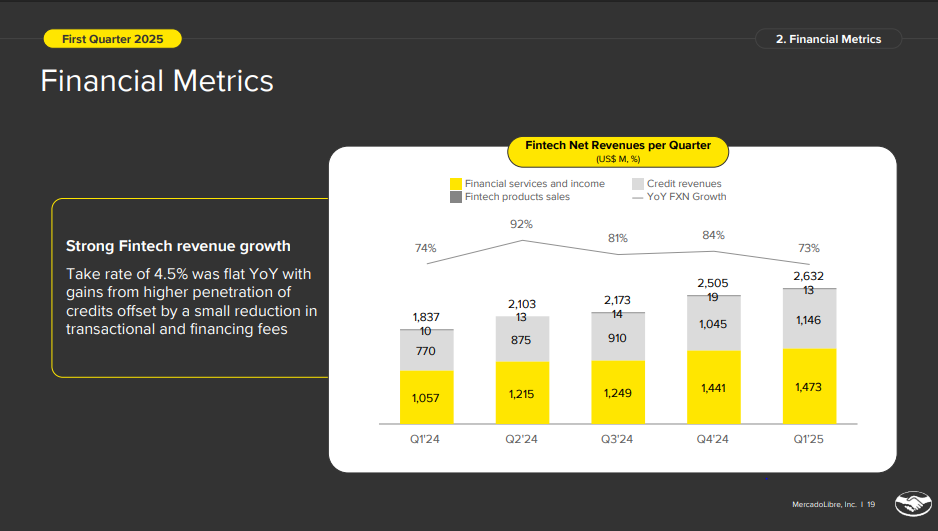
Yhtiön kaupankäyntialusta kasvatti volyymiaan tasaisen varmasti ja finanssipalveluiden kasvu oli erityisen nopeaa. Latinalaisen Amerikan markkinat jatkoivat digitaalista vahvistumistaan tämän yhtiön johdolla, vai miten se joku yhtiöstä ilmaisi(?).
Johto korosti edistystä erityisesti verkkokaupassa, fintechissä ja mainonnassa. Näillä alueilla otetut askeleet vahvistavat asemaa markkinajohtajana ja tukevat yhtiön pitkän aikavälin kasvutavoitteita.
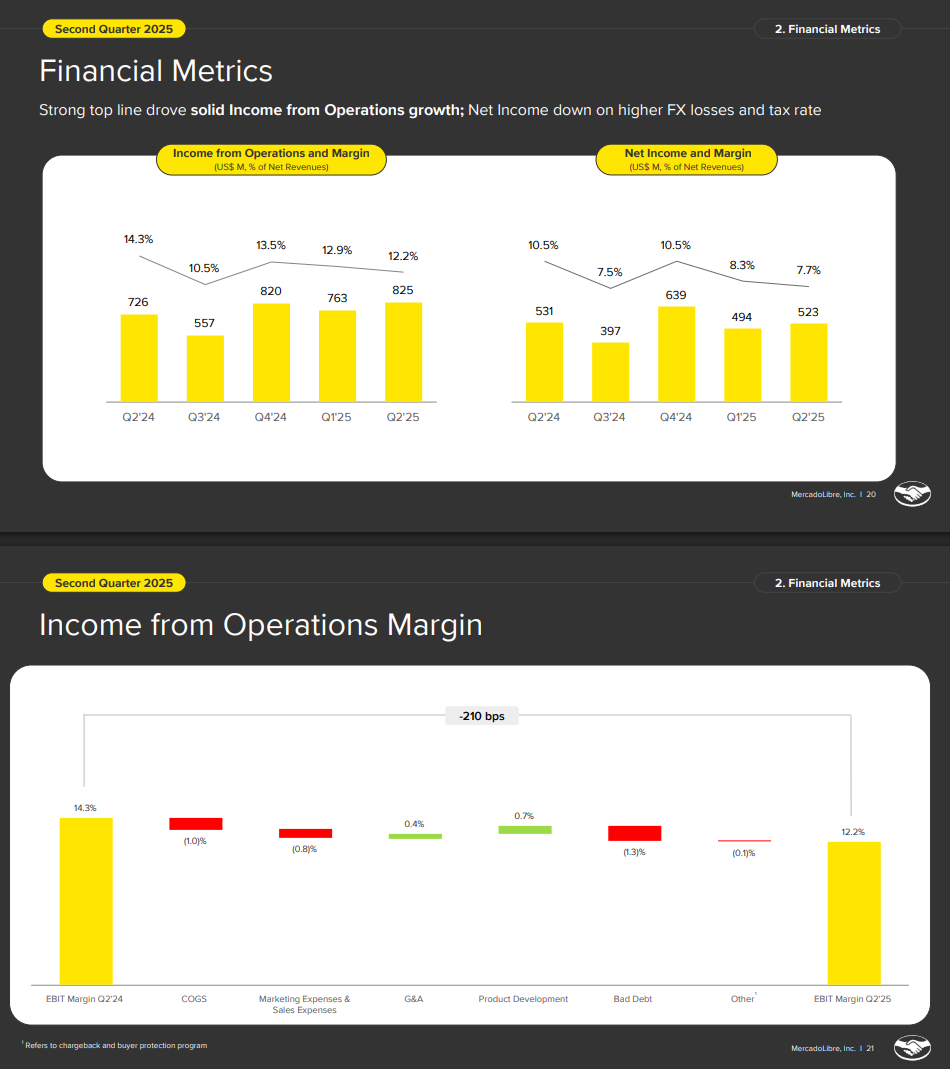
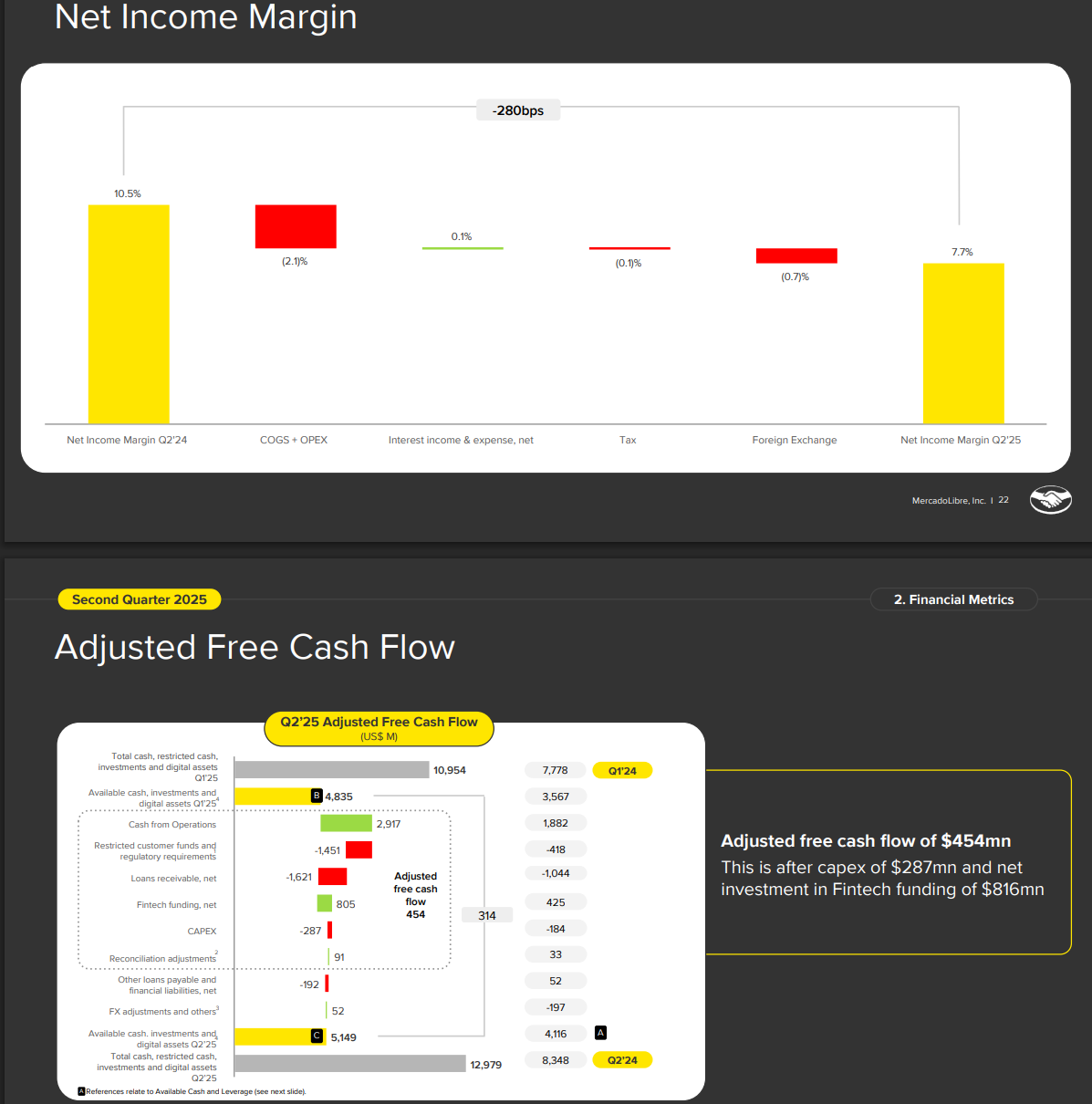
EPS jäi odotuksista kai pääosin valuuttatappioiden ja korkeampien verojen vuoksi. Kai. Yhtiön Q2-rapsasta: “Strong top line drove solid Income from Operations growth; Net Income down on higher FX losses and tax rate”
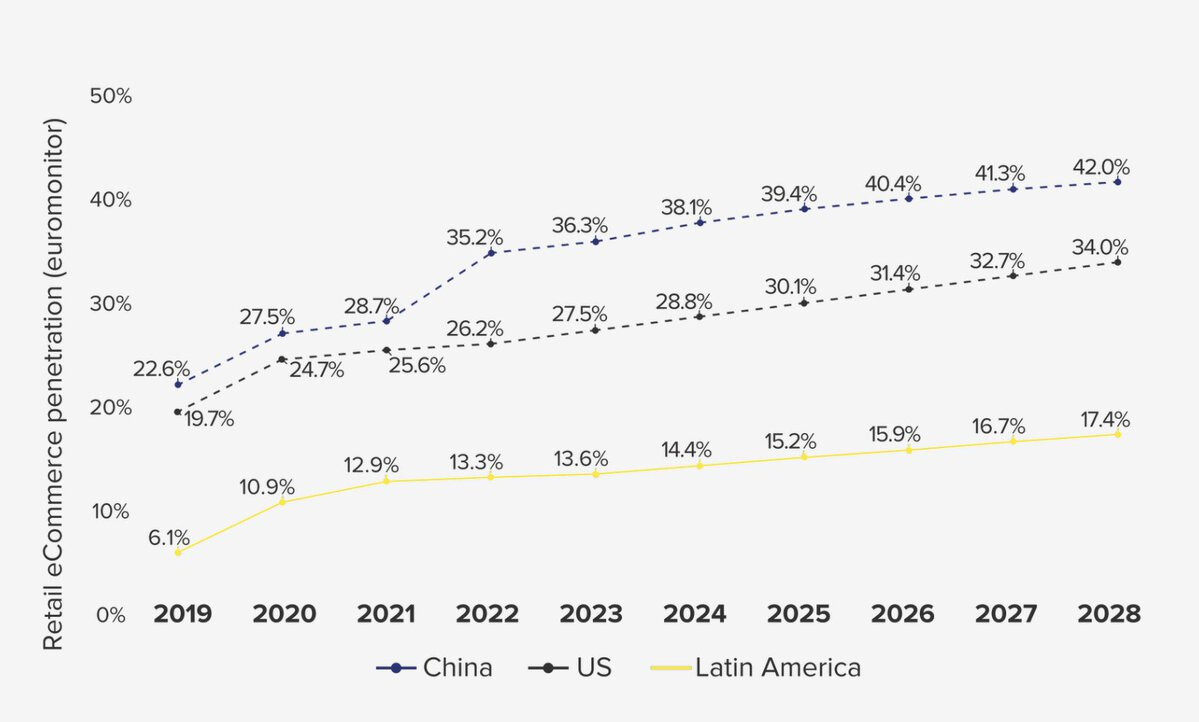
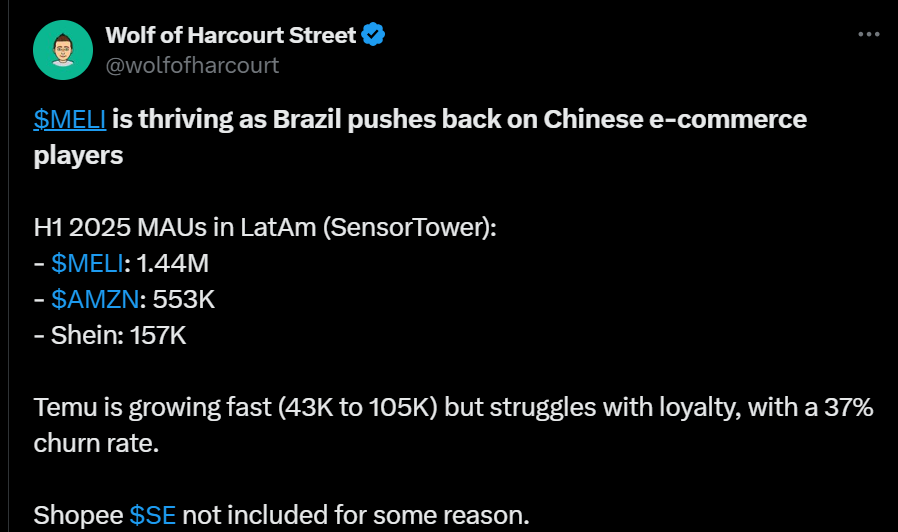
Tviitin pointti on kai se, että Melillä on yhä paljon kasvupotentiaalia verrattuna Amazoniin, kun asiaa katsoo vähänkään tarkemmin.
Alueet ja taloudet ovat erilaisia, mutta kasvupotentiaali suhteessa kokoon Melillä on edelleen valtava eikä Melin tarvitse yrittää edes valloittavaa maailmaa.
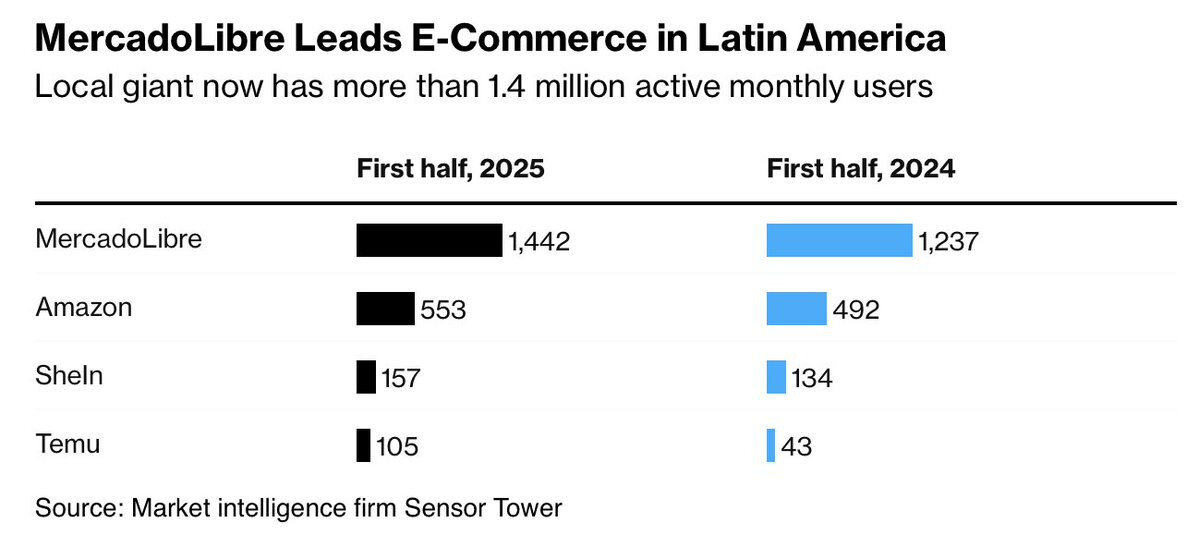
Alla olevasta tviitistä näkee, miten MeLi dominoi Latinalaisen Amerikan verkkokauppaa, kun taas Amazon ja kiinalaiset kilpailijat jäävät selvästi jälkeen.
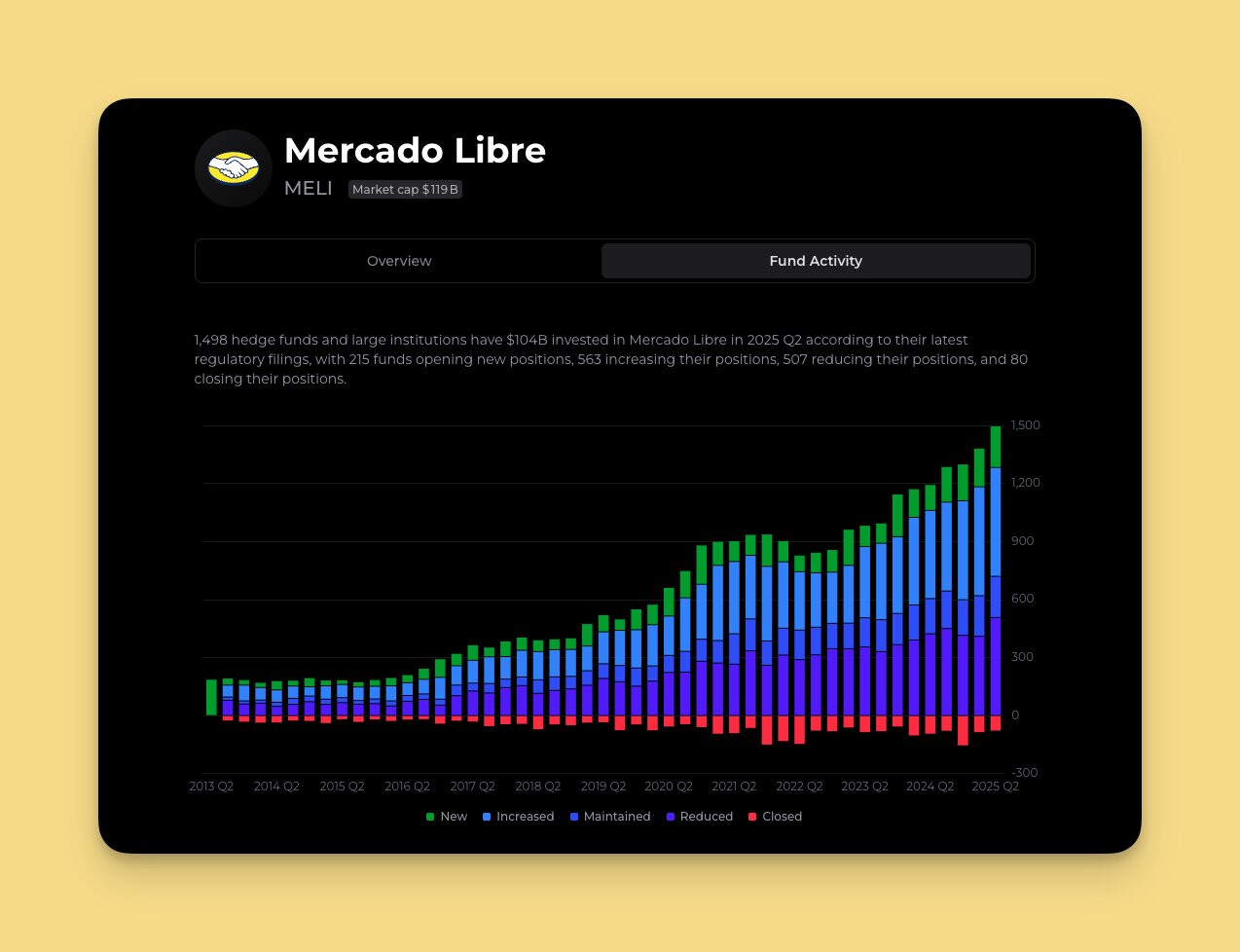
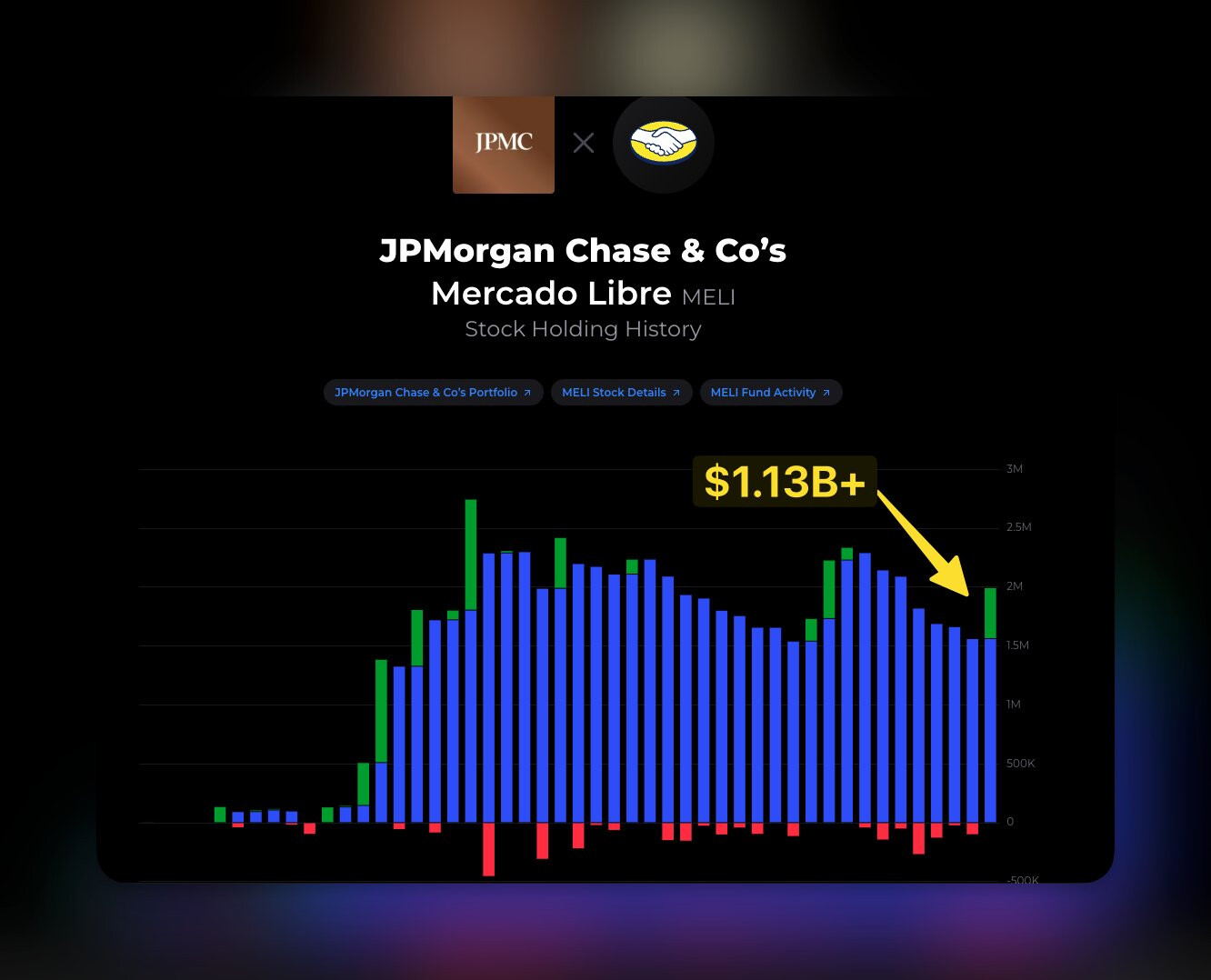
Tviittaajan mukaan hedge-rahastojen ja instituutioiden kiinnostus on huipussaan MELIä kohtaan, esimerkiksi JPMorgan teki viime neljänneksellä yli 1,13 miljardin dollarin lisäsijoituksen yhtiöön.
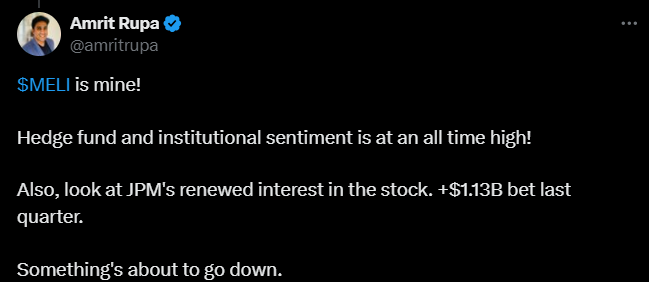
Tviittaajan mukaan jotain merkittävää on tapahtumassa.
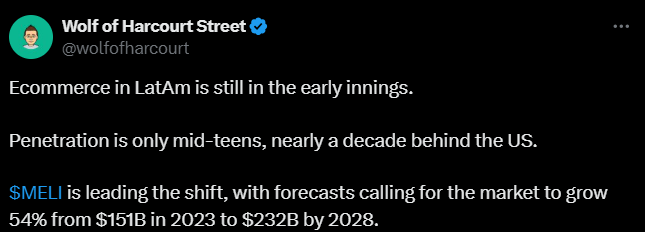
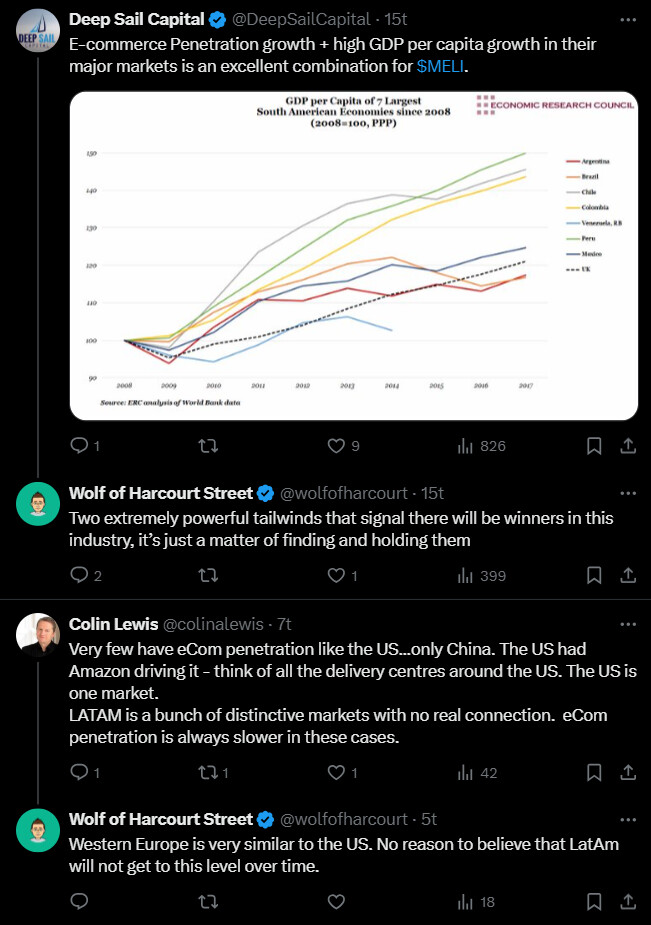
Tässä tviittailijat käsittelevät verkkokaupan kasvua Latinalaisessa Amerikassa. Allla nostetaankin esille, että alueen verkkokauppa on vielä “alkuvaiheessa”, eli potentiaalia riittää, siten yksi tviittaajista ennustaakin markkinan kasvavan yli 50 prosenttia vuoteen 2028 mennessä.
Toisaalta toinen tviittaaja kyseenalaistaa tämän näkemyksen ja huomauttaa, että alueen maat ovat erillisiä markkinoita, mikä hidastanee kasvua.
Näissä tulee ilmi se, mitä olen aiemmin kuullut; on paljon potentiaalia, mutta paljon riskejäkin.
Tässä kiinnostava englanninkielinen kirjoitus, joka kertoo Mercado Libren matkasta. Teksti nostaa esiin sekä MELI:lle ominaisia kasvun ja kilpailuedun tekijöitä että yleisiä liiketoiminnan oppeja, mutta on muutenkin hyvä ymmärtää yhtiön historiaa.
Mukana on mm. rohkeita päätöksiä, kuten mm. koko alustan uudelleenrakennus, Amazonin haastamisesta saatu hyöty sekä verkostovaikutusten merkitys. Artikkeli korostaa myös kulttuuria, jossa suositaan jatkuvaa innovointia, lahjakkuuksien kasvattamista ja sopeutumista uusiin erilaisiin liiketoiminta-alueisiin.
Yleiset opit liittyvät pakkomielteiseen tekemiseen sekä myös suorasukaiseen viestintään ettää fokusoituun johtamiseen ja eksponentiaaliseen ajatteluun.
Itse podia en ole itse kuunnellut, olen lukenut vain tekstin.
*"The climbers & scalers podcast highlights how Mercado Libre’s success comes from principles that challenge conventional business wisdom. Their emphasis on long-term thinking over quarterly optimisation, obsessive improvement over outcome celebration, and systematic paranoia over comfort offers a blueprint for enduring competitive advantage.
For investors, this suggests MELI’s premium valuation reflects more than financials, it represents systematic advantages in decision-making, talent, and strategy that compound over time. For business leaders, it offers practical frameworks for building cultures that sustain growth over decades."*
Tässä on toinen kattava ja hyvin tehty juttu MELI:stä, jossa todetaan yhtiön olevan edelleen Latinalaisen Amerikan ykkönen verkkokaupassa ja fintechissä. Jutussa puhutaan myös yhtiöön kuuluvista maksupalvelu Mercado Pagosta, logistiikkaketju Mercado Envioksesta ja sitten vielä myös kasvavasta luottoliiketoiminnasta.
Jutussa nostetaan esille, liikevaihdon kova kasvu, joka kasvoi yli 33 prosenttia vuodessa, erityisesti Argentiina ja Meksiko vetävät hyvin.
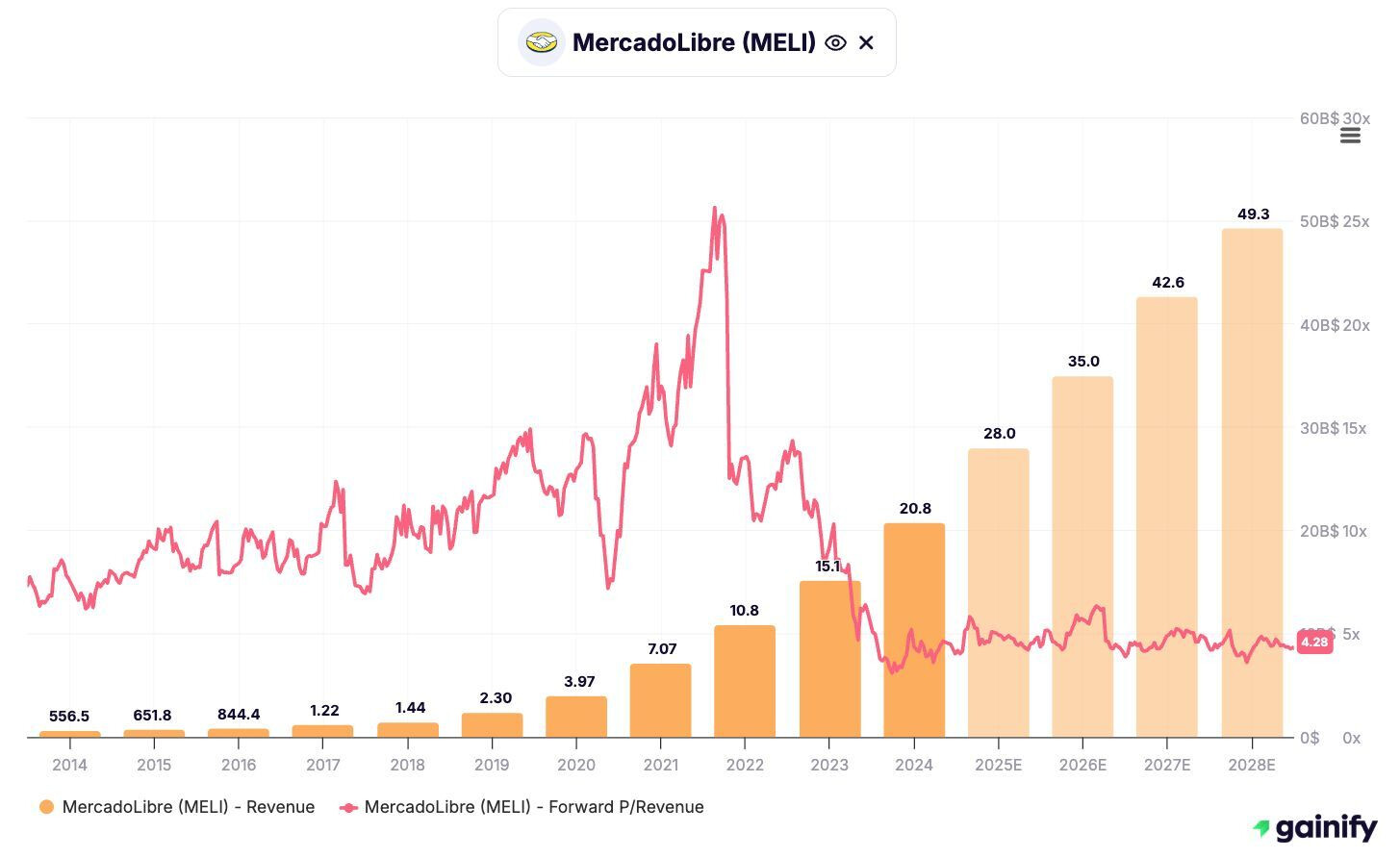
Yhtiön arvostus on houkutteleva: forward P/E on noin 40 ja EV/SS 3,6, mikä on alle alan keskiarvon. Tämä viittannee jutun mukaan siihen, että osake on aliarvostettu suhteessa kasvuunsa. Taloudellinen pohja on vahva ja velkaa on vähemmän kuin kassavaroja.
Kirjoittaja tuo esille myös, miten eri liiketoiminta-alueet tukevat toisiaan. Verkkokauppa kasvaa tasaisesti, kun taas fintech-segmentti vetää vauhdilla, lisäksi kirjoituksessa nostetaan myös maksutapahtumien määrä ja se, miten käyttäjämäärät jatkavat nousua. Maksuviiveet ovat laskussa, mikä kertoo terveestä “luottosalkusta”.
MercadoLibre panostaa vahvasti logistiikkaan, teknologiaan ja brändiinsä, vaikka kilpailu esimerkiksi Amazonin kanssa kiristyy niin jutun mukaan yhtiö pitää asemansa markkinajohtajana. Pitkällä tähtäimellä sen kasvu Latinalaisessa Amerikassa näyttää vakaalta ja lupaavalta.
MercadoLibre $MELI remains Latin America’s dominant e-commerce + fintech platform, compounding scale through Mercado Envios , Pago , and an expanding credit portfolio . Execution is visible in Q2 revenue +33.8% YoY , Argentina +77% YoY now 22% of revenue, and Mexico’s efficient scale via fulfillment and cross-border. Valuation looks appealing with Forward EV/Sales ~3.6 and Forward P/E ~40 , supported by a durable moat, rising user growth, and improving short-term NPL trends. The setup favors long-term compounding. Read on.


 CEO:n mukaan Latinalaisella Amerikalla, erityisesti Meksikolla on suuri mahdollisuus hyötyä ns. lähituotannosta, kun valmistusta siirtyy pois Kiinasta Yhdysvaltojen “läheisyyteen”.



 (sitä mainitaan liian usein siis turhas mieles
  )
)


 vs. est. $6.66B
 vs. est. $11.94
 Yhtiön Q2-rapsasta: “Strong top line drove solid Income from Operations growth; Net Income down on higher FX losses and tax rate”







 (jonka nyt korjasin, P/E tuli niin automaattisesti