The article below might interest those interested in LVMH. The piece was written on November 6, 2023.
– Another interesting example is LVMH, whose share price has risen by an average of about 20 percent per year, including dividends, over the last 10 years. At the same time, the company’s P/E ratio has remained quite steady, unlike typical growth companies where valuation multiples tend to inflate. This indicates that the rise in the share price has been based purely on the fact that the company is making more money. Now that the price has come down about twenty percent this year, there could be a quite interesting perspective here regarding timing as well, Lindholm continues.
I’m tempted to buy LVMH, but the withholding tax on French dividends is making me think twice. As I understand it, they take 25%, so is it better to just forget the whole thing? Any low-cost ETFs or similar where it has a heavy weight?
“The new treaty also changes the taxation of portfolio dividends. Under the new treaty, the source state of the dividend income is granted the right to levy a 15 percent withholding tax on portfolio dividends. The method used to eliminate double taxation also changes from the exemption method to the credit method, in accordance with Finland’s current tax treaty policy.”
Could someone explain in plain language what that means? As I understand it, the problem with these is often that the treaty is not necessarily followed even if one exists.
I would consider it more of a growth stock. Dividend yield is under 2%. If you invest millions, you can claim back the excess tax withheld (the portion exceeding 15%): Accueil | La France au Royaume-Uni
Hi,
What are the thoughts on buying LVMH through Dior shares? This was discussed a while ago in the Sijoituskästi episode with Peter Seligson, where he mentioned the possibility of buying LVMH at a discount through Dior; apparently some kind of holding company setup is at play you can find a few articles on the topic by googling. Trading volumes at least seemed to be really low for the Dior stock, and it otherwise seems a bit confusing for a beginner investor. Has anyone looked into this in more detail or does it spark any thoughts?
And do you buy LVMH in an OST (Equity Savings Account) as a cyclical/growth stock or in an AOT (Book-entry Account)?
Thanks!
Expectedly strong performance, pure quality
The only weaker segment is Wines and Spirits, but this reflects global challenges and I wouldn’t be at all worried in the long run. The products are very well-known and high-quality in this segment as well.
Before the earnings release, BoF published an article (link below, free), which considers the potential benefits of breaking up the LVMH empire. “LVMH suffers from a conglomerate discount.” Does anyone have any thoughts on this?
The current model has an excellent track record. I wouldn’t fix anything that isn’t broken.
The model in question has enabled and continues to enable acquisitions without excessive financial risks for the group as a whole.
Of course, it is an option if separating business segments, for example, creates value. On the other hand, Vuitton also has watches and Dior has cosmetics, etc.
This company interests many… and fortunately @Aili has written a great piece about it.
Most of the company’s fabulous profits have been generated by its wildest racehorses, which Arnault hopes to restrain rather than whip. Not all have reached the targets set for them by the company. Despite the success, the company’s valuation suffers from a conglomerate discount.
Other brands might perhaps be better showcased through a breakup.
In reality, LVMH’s business is surprisingly concentrated. 75% of the operating profit comes from the fashion and leather segment, and as I understand it, the lion’s share of this is specifically from the sale of Louis Vuitton bags. If demand for these in Asia ever dries up, the impact would be significant.
That, plus what I understand to be a somewhat unclear succession plan at the moment, are risks because of which it is not in my portfolio yet.
Of course, a decline in demand might not be expected right away – as global wealth increases, luxury is a very nice segment to be in. However, I find fashion trends quite challenging to predict.
I could have written more on this topic, but at some point, you always have to hit the publish button.
The situation is indeed that not all brands have been able to achieve the Christian Dior and Louis Vuitton phenomenon.
Although the brands are under the same group, they are their own siloed companies and don’t really share their expertise. For example, Louis Vuitton just changed its CEO.
The same old story.
They have efforts underway to spread knowledge. A basic challenge in probably all companies.
They have also started making watches, for example, under the Louis Vuitton brand name. The style is familiar from many others. This was specifically asked in the investor call questions—whether there are plans to expand otherwise to other brands and products. The CEO was a bit tight-lipped and said it is confidential, and when such things are done, the operations are marginal (again, a limited quantity strategy).
Regarding the unlocking of hidden value. I don’t believe Bernard Arnault himself will do anything. I wouldn’t be surprised if, in a Buffett-like manner, he remained the company’s figurehead until the very end. It’s funny how the press calls him a patriarch. But we’ll see what the next generation is like.
Once all the children are sitting on the board, it will be interesting to see if they run the empire into the ground.
Yeah. It will be interesting to see what happens when Arnault leaves the company, whether due to natural causes or otherwise. Will his successors have the same strong desire to hold onto the empire, or will they be more open to changing the structure?

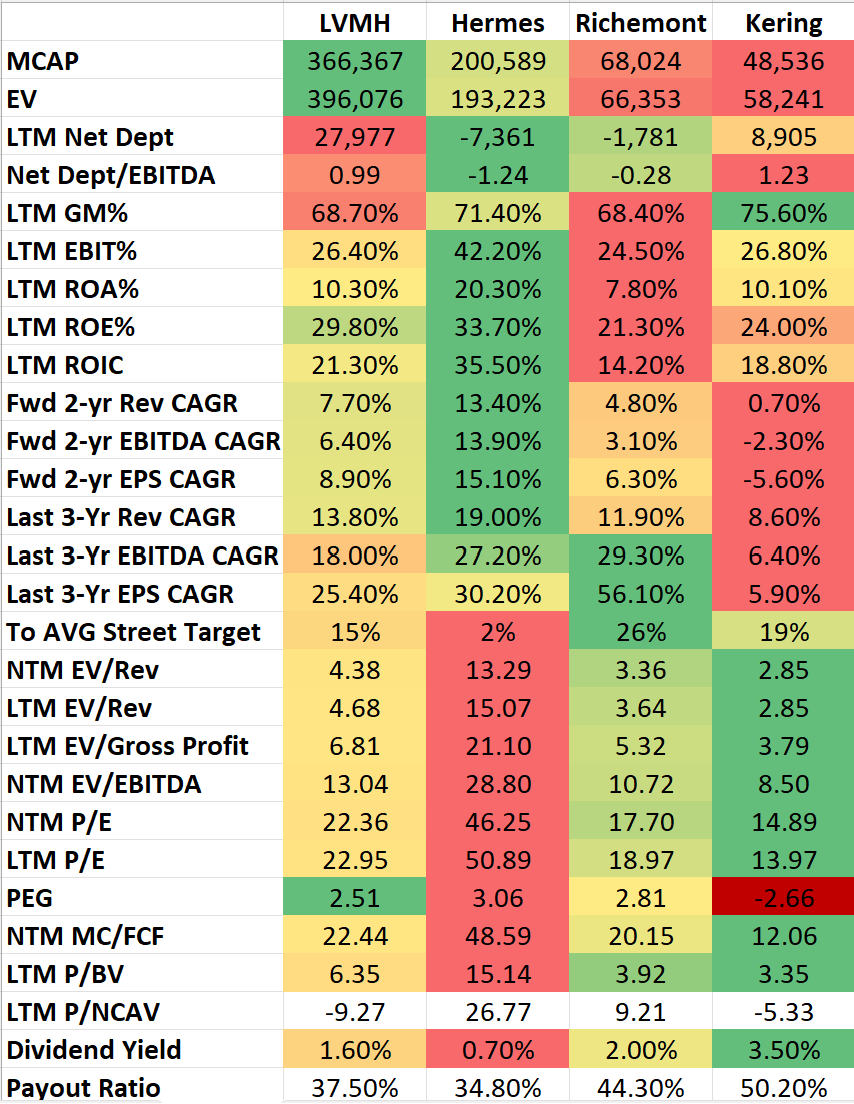
 I know it’s a lot to ask, but it’s always worth a try. Thanks for the excellent comparison!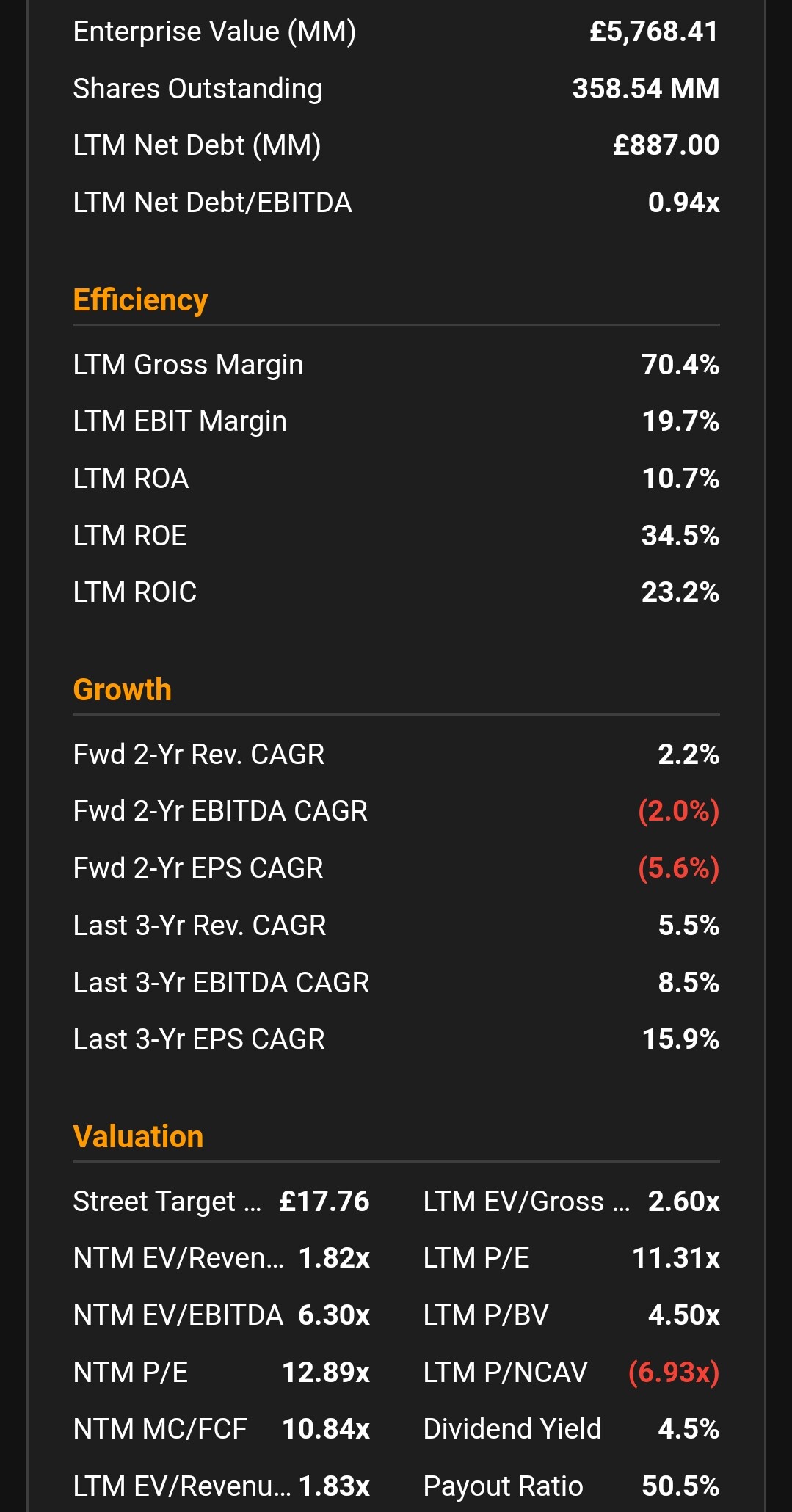
 you can find a few articles on the topic by googling. Trading volumes at least seemed to be really low for the Dior stock, and it otherwise seems a bit confusing for a beginner investor. Has anyone looked into this in more detail or does it spark any thoughts?

