First, I’d like to thank all the forum members for their useful advice, which has helped me get started on my investing journey, which only began this spring.
Since the chain starter’s description of a person skeptical about investing resonates well with me, I decided to open up a bit about my own thinking at this point.
Before the corona spring, investing didn’t even cross my mind, as I considered it a dubious activity in many ways. I still believe I’m the only person in my strongly left-leaning circle of friends who engages in investing.
Over the years, banks and a few investment service companies approached me to offer their services, but the short discussions I had with them didn’t change my perceptions. When I tried to ask them about opportunities for ethical investing, the answers were vague, and “ethics” seemed like greenwashing disguised as a sales pitch. At that time, I don’t recall hearing about ESG or responsible investing, which now seem to be on the lips of almost all marketers.
With the advent of corona, investing became a more common topic in mainstream media, which sparked my interest in the ongoing transformation of the energy sector and the opportunities for small investors to contribute to combating climate change. My skepticism towards investing hasn’t completely vanished, as many aspects of it still conflict with my worldview. I still subscribe to some of the arguments against investing mentioned in this thread, especially that investing in stocks increases inequality between people. I also don’t want Finland to become an American-style society where people are forced to accumulate wealth for the future, and social security or public healthcare cannot be relied upon.
I know I am privileged to be able to invest my spare money in renewable energy stocks, the best of which have yielded me a 400 percent increase in value in half a year. At the same time, I encounter people weekly who have to get their food from a breadline. I know that we have lived through very exceptional times due to corona, and the stock market will not continue in the same way, but admittedly, I have found making such “easy” money somewhat embarrassing. Investing is certainly not a primary topic of conversation with friends who are struggling with their daily livelihoods.
However, the biggest reason that ultimately made me invest was that if I had kept my money in a bank account, someone else would have invested it, and even in targets that I wouldn’t fully approve of.
I strive to consider climate change mitigation in all my stock selections to some extent. Although the investment world has changed in this regard with its new ESG criteria, selecting stocks is still challenging for a beginner like me. I want to promote the revolution of renewable energy forms, wind, solar, and hydrogen, but I haven’t found enough information about the tax planning or employee treatment of large companies. I also want to promote vegetarianism and reduce meat consumption, which is why I invest in “junk food” producing meat substitute companies as a kind of compromise. I have also noticed that many “ESG-screened” companies engage in aggressive tax planning.
Overall, however, I believe that new climate-friendly thinking will gradually break through in the investment world as well, and I assume that today no company can completely ignore ESG aspects. By investing in the future of the planet also on the stock market, I feel I can do something, and in my understanding, many others have started to think similarly with corona.
Perhaps all of the above already indicates that I aim to invest only in long-term, sustainable development targets. However, if any activity of the company contradicts my values, I am prepared to divest regardless of the stock’s expected returns.
My investment strategy may sound naive, but so far, it has significantly exceeded my expected returns. While studying the basics of investing over the past year, a new interesting world has opened up to me.
I actually disagree with this a bit. It is true that investing increases income disparities between the middle class (and above) and the lowest income brackets. However, company ownership is a zero-sum game. If ordinary people didn’t invest, only the already rich and institutions would, and income disparities would grow between everyone else and the one percent.
Inequality might decrease if everyone were equally miserable, but it certainly wouldn’t increase well-being.
Isn’t stock investing one of the most egalitarian things in the world? Anyone can start it anytime, as long as they have a bank account and some income. Not even an envious neighbor can prevent it. And you can invest exactly where your own values guide you. Inequality has already arisen before that; it still matters where on this planet the stork drops you, and thus the starting points for beginning to invest are different. But that’s a different story then.
I strongly disagree with that. Almost everyone has the opportunity for at least some kind of investment; it’s a choice. If you give a thousand to a group of people, one will use it for daily living, another will replace home appliances, one will put it in the bank for a rainy day, someone will invest, someone will travel, and someone will drink it away. Each has certainly made a choice they believe is justified. It’s ironic to then be envious of someone who made a different choice.
In my opinion, it is inconsistent to characterize investing, or at least all forms of investing, as a zero-sum game and risky at the same time. Or, alternatively, risky without boundary conditions.
If it is known that “in the sufficiently long term” markets on average yield a profit, can investing in a broad market index over such a period be characterized as a risk? If so, then trading should theoretically be able to become permanently unprofitable on average. Is spinning the roulette wheel with a sufficiently low stake cap and a large enough number of players a risk for the casino?
Most of the claims are still not true, in my opinion. However, I don’t know about real estate investing, and the support system and its effects are not even a matter of opinion. The single-minded pursuit of profit by a publicly listed company is a real problem, but it is more related to the company form or human activity than to their ownership structure. Laws exist because of people’s tendency to behave badly.
A person living without working is a slightly more complicated question, and that too is probably separate from the stock market. Living off capital income does not automatically mean the same as living without earnings. (Although capital-rich people are rarely interested in the earnings side when it comes to inheritances.)
Those other arguments begin to verge on factual errors.
{“content”:“Simple, I don’t talk about investing to people who aren’t interested or have a negative attitude towards it. To quote Eppu Normaali: "Just let all the flowers bloom". This isn’t for everyone, so why force the topic.”,“target_locale”:“en”}
It’s interesting to get to read the thoughts of people who think differently. It just feels alien that “Investing increases inequality.” Well, it does. So does studying, reading, exercising, eating healthy, or generally practicing anything or developing oneself. I understand and acknowledge the problems of increasing inequality, but it somehow feels like the phrase has become another meaningless phrase used to label whatever. Practically speaking, if we really start looking at things, there are no things that don’t cause inequality.
Many justify the usefulness of investing by saying that company profits stay in Finland and don’t leak abroad. This is true, but couldn’t it also be seen as quite selfish and nationalistic? Is Finland such an important place in the world that it’s better if the money is with us (creating well-being), and not somewhere else?
This is why justifying investing with values sounds a bit off to me, because it inevitably leads to absurd contradictions. As a pragmatic person, I think investing is sensible, a functioning capital market promotes overall economic well-being, and it’s completely voluntary, so it doesn’t take anything away from anyone. I’m not claiming this is the right or best way to think, and of course I realize that many people approach things more emotionally, and preaching this gospel of rationalism only causes irritation on both sides.
So perhaps for those who shy away from investing for ideological reasons, it’s best to indeed bring up stories about the possibilities of ethical investing. Like some ETFs that invest in “responsible and equal” companies, the trade union movement’s Kojamo, or other similar ones. For many, a listed company probably means multinational megacorporations, and it might come as a surprise that a company of 50 people making solar panels can also be a listed company.
Isn’t this a very strong value-based justification though? There’s nothing wrong with value-based justifications; in fact, they’re even necessary. That is, that you consider some things worth promoting. And so they should be.
True, pragmatism and rationality are values just like any others. I used some poorly chosen terms.
When I’ve talked to others about investing, I’ve met four different types of people. Political stance hasn’t affected it at all in my experience; you find all types across the spectrum in each category.
First, there are those who think the stock market is gambling and you only lose money there. Second are those (middle-class people) who don’t think they can save enough to even bother starting. Or that it’s “too late” to start in the middle of their career. Then there are the curious ones, to whom I’ve told directly to put their money into index funds. Knowing that their time/interest isn’t enough for analyzing companies. The result will be better. Finally, the few with whom the discussion immediately shifts to company selections, even if I haven’t met the person before.
I don’t bother preaching about investing to anyone; either you get it or you don’t. I just tell them the outcome if they initiate a discussion about their own finances. I don’t start talking about stocks to anyone on my own initiative.
{“content”:“Well, I myself would distance myself from those on the left, but if that’s not an option, then I don’t know. All isms and religions are evil, and a believer cannot be converted by reason.”,“target_locale”:“en”}
In many situations, the interests of investors and employees or society cross. From that perspective, I do understand the criticism. But I still have nothing against investing, as I invest myself. Not everything should be done on investors’ terms, and I myself don’t want to invest in all companies.
But I do this for the money, not out of the goodness of my heart to advance Finland’s interests or environmental issues. Money in this world buys things and freedom. Politics and charity are for other goals.
I have a very small minority invested in domestic stocks. Still, if people invested more and welfare and economic good were distributed more evenly, perhaps through the Helsinki index, it would certainly be more balanced. Not to mention that people would learn to buy domestic products and not always need to get everything produced for free in China.
My key to this lock is quite simple: sell stock investing from a Marxist perspective, where employees own their labor contribution in the form of shares. In this case, you naturally own another employee’s contribution in another sector (unless you work for a publicly traded company and buy its shares), but possibly this ownership could be expanded through political decisions so that employees can buy shares of their own unlisted company. It’s not quite the same as Soviet kolkhozes, but we’re not turning a sheet metal worker into a cloudberry picker; instead, the sheet metal worker gets to choose what they own, and that’s good.
Another trump card in stock ownership is that by investing, one can support, for example, the fight against climate change, because by investing in company X, its stock price rises (possibly), which means it’s easier for this company to grow, for example, by selling its owned shares at a better price or getting a cheaper loan, which can then reinvest in growth.
We don’t know if the stock market will generate profits in the long run in the future. Currently, stocks are very popular, but fixed-income bonds could just as easily be popular, which gentlemen once owned when stocks were ridiculously risky. Benjamin Graham’s Security Analysis focuses mainly on debt securities. Stocks also involve macroeconomic risk, such as increased competition or regulation in the casino example.
I am neutral towards stock investing myself. Stock enthusiasm loses its edge when simple discount questions are asked: would you rather have 1000 euros today or 50 euros a year into the distant future, when the market value of your 1000 euro investment could be between 500-2000 within a year?
When people talk about making money with stocks, they often mean these market value changes, and that’s where the criticism of casino economics comes from. When a stock in someone’s portfolio multiplies tenfold, doesn’t this evoke feelings of shame? Do I deserve a worker’s annual salary by pressing buy and sell buttons? Heavens forbid when the media still characterizes stock investing as “smart,” meaning that a smart person skips supporting a coffee shop entrepreneur and puts their money into a fund. I understand those who criticize stock investing.
The national economic significance of stock investing is to support companies with equity financing. When Finnair faced difficulties due to a collapse in passenger numbers, the losses were covered by a rights issue, i.e., with shareholders’ money. Thanks to this, the company has not gone bankrupt, at least for now, and can continue to offer its services. This, to me, is the best argument for stock investing. Banks and other parties focus purely on profit, forgetting that not everyone is greedy for money. Society needs balance. If the middle class’s income goes to buying stocks instead of consumption, the markets will drift into a bubble.
Print these out and put them in front of your face, and then next week we’ll talk about stocks over coffee. Maybe it’ll start to interest you?
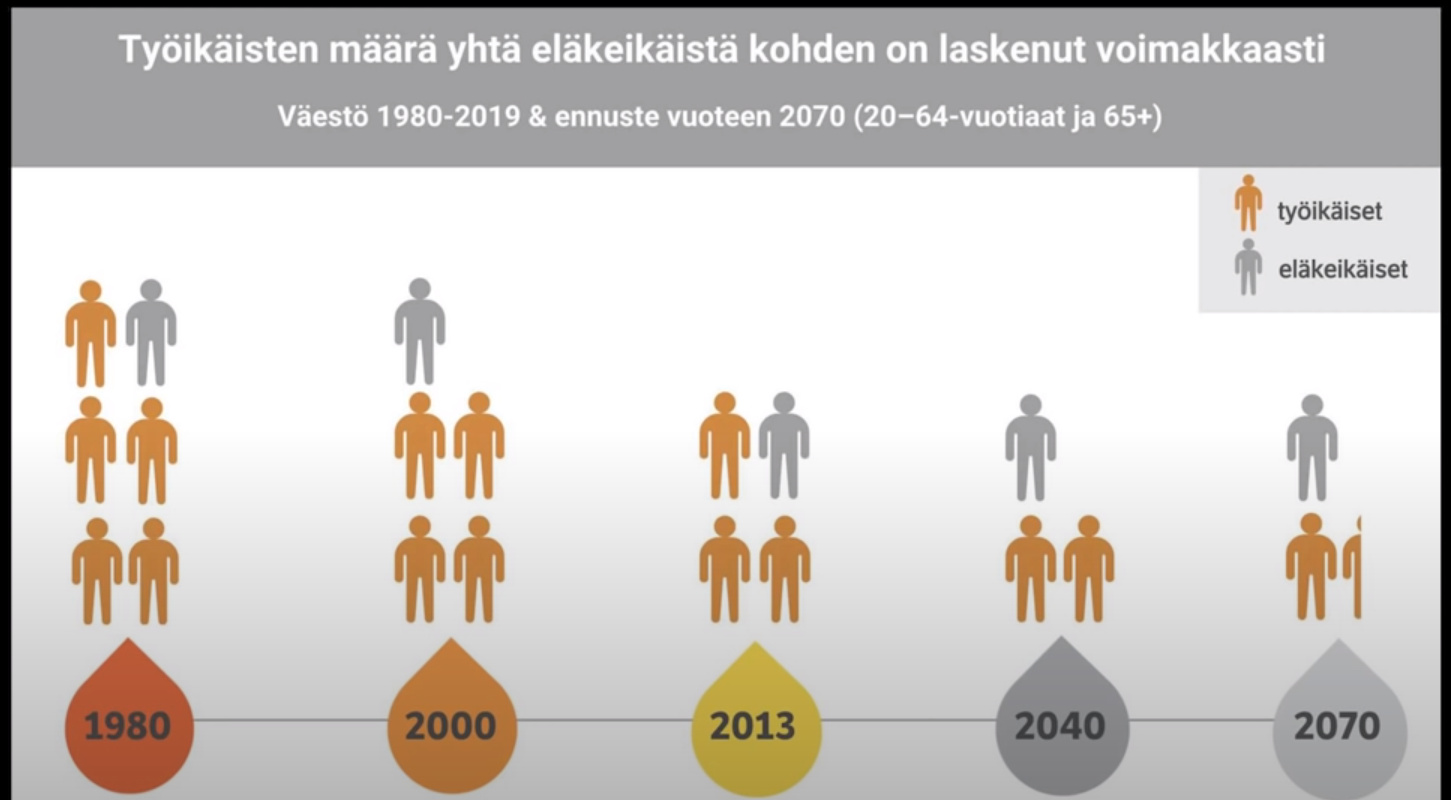
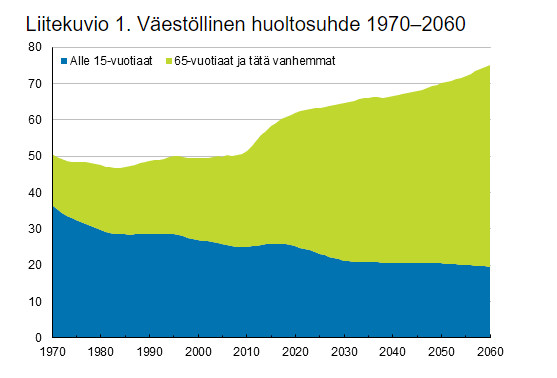
I guess we don’t know for sure. However, that message is about whether the stock market can be a positive-sum game and risky without boundary conditions at the same time. In my opinion, it cannot, because in a positive-sum game, every average player (index investor) eventually wins, and certain victory does not involve risk.
At most, we can say that it is risky under certain conditions. Or it is not a positive-sum game.
Let’s start from the very basics of the discussion. When someone receives money, for example, as a salary, the first thing to decide is whether to spend it or save it, and in what proportion. In principle, all quickly used purchases are consumption, while the rest are savings. For example, durable consumer goods — home appliances and vehicles — are household factors of production aimed at saving time, effort, and money, compared to, for instance, laundry services, and the rationality of acquiring them is case-specific.
For example, buying a home is saving; its estimated benefit includes, for instance, estimated lower living costs in the long term, an increase in value, and living in a desired location. Managing loans related to the home is a form of saving in hindsight.
If there’s “loose cash” left after expenses deemed necessary, it can be spent on something fun or saved. For example, a bank deposit is investing, regardless of whether it yields interest or not; it’s quite risk-free. By investing in bonds, the return might be higher, but so is the risk. Money can also be invested in other assets, such as paintings, books, forests, or stocks. These can be sold if desired, fetching a better or worse price than when purchased. When buying stocks, one buys a piece of a company and its business, which either generates profit or not. The risk of losing the invested sum is the price of the benefit it generates (dividends and change in value). In all cases, someone always owns any asset; it could be you or someone else.
In my opening post, by “plus-sum game” I meant that one investor’s profit doesn’t automatically mean a loss for anyone else, unlike, for example, at a poker table. And through capital taxation, the rest of society also benefits. From an individual investor’s perspective, the situation is, of course, more complicated, as one can also lose money with stocks. Of course, if the time horizon is long enough and diversification and other risk management are in order, staying in the black is practically certain.
After the war, and especially from the 1960s onwards, the Finnish welfare society was created, which has since been based on equality, honesty, respect for others, and so on.
Income distribution in Finland has also been globally equitable. It has been a time of happiness for too long. One cannot say that without saying that happiness would be greater if one understood the worse.
It is no wonder if Finland’s wealth has also been distributed among the happy middle class. The working class in Finland is already mostly upper middle class, as a new proletariat has been created: young people and other precarious workers.
It is concerning that values may not have been passed down from generation to generation, as young people are offered either an easy life without responsibility, precarious poverty, or just general uncertainty.
It’s easy. A young person understands that a share is part of a company. Buying and selling them is speculation. Do you find it contemptible? Ask a young person.