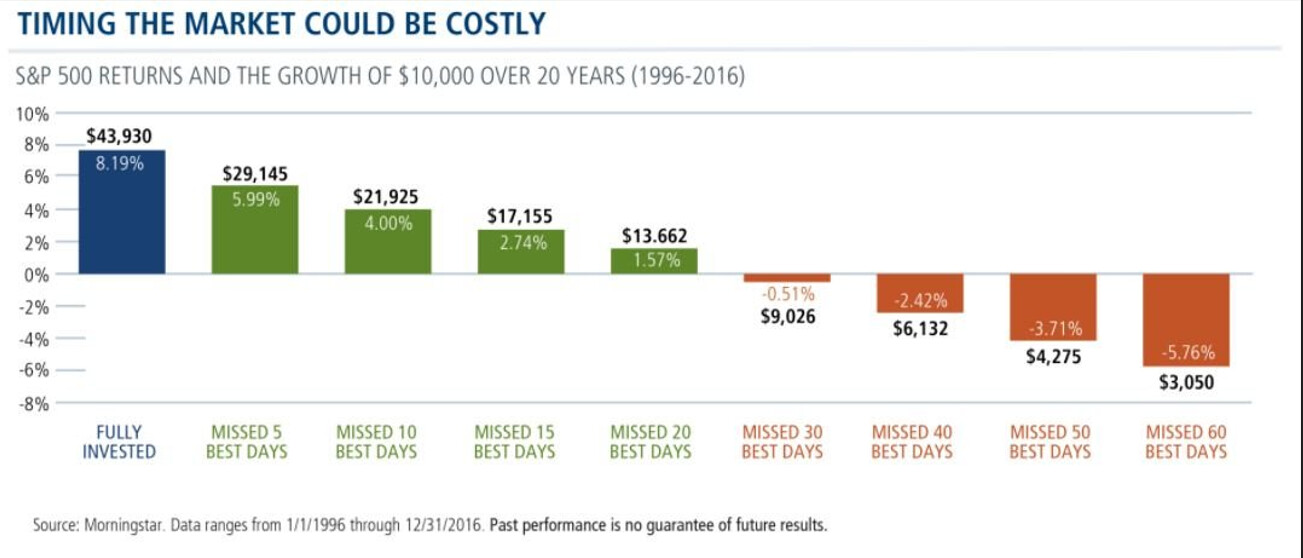
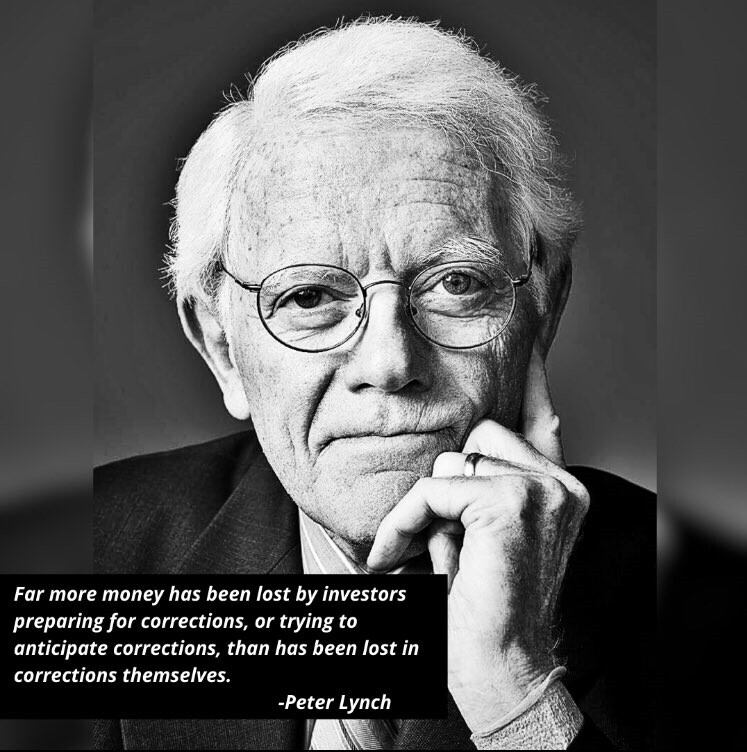
The amount of cash in a portfolio is something I’ve been thinking about. Many people traditionally stash cash for good buying opportunities. It is also common to sell stocks with the intention of buying them back later at a lower price. However, people often fail at the timing. Then again, one could argue that you should always put your cash to work—meaning being 100% in stocks—and any necessary moves are made from one stock to another rather than by holding cash reserves.
Of course, a buffer for living expenses is a separate matter and everyone knows what they need for that; I don’t mean that every last euro should be invested.
It would be interesting to hear your opinions on this. Naturally, if a larger sum of cash comes in, timing its investment is a separate issue altogether.
Personally, I view cash as an investment in a depreciating security issued by the ECB. In my personal “war economy,” I hold enough cash to get by without forced sales of stocks. I’ll gladly leave market timing to the experts.
I’ve learned about myself that it’s very difficult for me to hold onto cash reserved for investing (whereas in everyday life, it’s very easy). Cash triggers a terrible sense of FOMO, and I eventually find an excuse to buy something. Perhaps, with the era of zero interest rates hopefully over, cash can be put into short-term bonds and viewed as being “invested,” so I don’t have to feel anxious about unproductive capital sitting idle.
As a largely safety-oriented dividend investor myself, holding cash is frustrating when it isn’t even generating that modest 5% annual return. I should dare to be almost all-in if I’m settling for a strategy as safe as dividends.
I personally keep a fixed sum as an emergency fund for a so-called “rainy day,” and it is completely separate from my investment activities. On the investment side, I usually have very little cash because I don’t know how to time the market. I have practically been at full equity weight for a long time.
The problem with cash in long-term investing is indeed that it doesn’t yield any return.
I used to be the “meticulous money manager” you described; if I sold, I moved into a new investment immediately. Then uncertain times arrived; fortunately, I switched fund companies right at the start of the downturn and had a bit more cash available. I waited for the bottom and then started investing in a diversified way every month, but six months later there was another small dip, and 10% was gone. I waited, but uncertainty grew; my stock portfolio remained unchanged, while my fund portfolios were in cash. I gained confidence from an investment advisor and achieved a total return of just under 40% over three years. Now we are in a new crisis again; the previous gains were almost wiped out, and I am now holding 15% of my wealth in cash.
Personally, I have aimed to maintain about a 5–15% share of my portfolio in cash. During times of “clear” overvaluation, I try to raise the cash weight to the upper end of that range, closer to 15% and sometimes even above it, and when prices drop, I gradually start buying stocks through time-diversification and lower the cash weight closer to 5%. At the moment, my cash weight is near that 15%, and around the turn of the year, I am beginning to more actively scout for potential buying opportunities in case we get a “dip” early in the year similar to the one we had in the autumn. My approach to cash is that since it doesn’t generate any yield (except for deposit interest), I aim not to sit on a cash position that is outsized relative to the market situation for longer than a year.
I currently have about 13% of my portfolio in cash. Previously, I was “All In”, meaning my equity weighting was nearly 100%. I feel much more relaxed now that I can easily react to price movements. I plan to keep it at around 10–15%. Occasionally, the cash weighting is lower if I have a short-term trade open. It’s nice to be able to do those as well when you keep a bit more cash on hand. Before, when all my money was “at work”, it was quite terrifying when the market crashed and prices dropped, and I had no room to react.
And then there is a separate betting bankroll. The money reserved for both investing and betting is, of course, kept separate from my other household finances. I grow the cash reserve from my monthly salary and from the betting bankroll if enough winnings accumulate there. Every month, a small slice also goes automatically into one fund.
A very topical subject in my opinion! I’m speaking specifically about investment assets and the cash held within them.
Cash is also a position, and in my view, this is undervalued. It can be a choice just like holding assets. In the current situation, inflation is obviously a nasty factor as it eats away at purchasing power, but if the alternative is the erosion of capital through falling share prices, then inflation may be the lesser of two evils.
For the past few years, I was all-in and invested every penny I could scrape together; I think there was even some minor leverage involved at times. Last autumn, I started moving into cash, and by the spring of this year, my cash position was already approaching 70%. My biggest point of contemplation is when to start buying and what to buy. Gradually, most likely, and according to my current plan, I will spread my purchases over the next 1–1.5 years. So, I am still very much in bear mode. It’s possible that the bottom has already been reached and I won’t capture all the returns even with time diversification, but there is so much uncertainty in the air. My own strategy is also evolving from pure growth stock investing towards a different kind of portfolio.
In summary: I have accepted that I’ll take a hit equal to inflation for about a year and miss potential bottoms, but this is a calculated risk.
An experienced investor knows that there will almost certainly be good and even better buying opportunities in the coming years (with the exception of certain skyrocketing companies that truly conquer the world and never return to lower levels in your lifetime, say, after a 500% surge in share price).
Despite this, even I have an almost compulsive need to put cash to work. When dividends hit the account in the spring, rarely is any of it left as cash 365 days later; all the money has been used to buy more shares. Psychologically, it is very difficult to wait for a better buying opportunity for, say, five years. The wait feels long.
Example:
A year ago, someone basically told me that I’m stupid for keeping cash in a 0% interest checking account—why not take a 4% dividend yield from company X? The valuation is modest… Now, looking at the price development, the stock is down 40%. In other words, roughly 10 years’ worth of dividends have vanished from the share price.
At certain points in time, it’s worth holding a cash reserve; in other situations, it’s not. In hindsight, one can always act wise and claim they were right in their guess when trying to time the market. Those who guessed wrong, on the other hand, keep their mouths shut and hope that family members don’t ask for details on how their stock investing is going.
My current situation: 0 euros cash in the investment account and less than 10% leverage of the portfolio value in use. Do I wish I had plenty of cash right now? Absolutely. I bought more at high prices too early, and using leverage too soon is a cause for regret based on current information. Waiting for next spring’s dividends to get back to shopping, if there’s anything cheap to buy then.
The problem with cash is that holding it for a long enough time becomes incredibly expensive.
At least for an average Joe like me, who doesn’t believe they can time the market well enough to offset the opportunity cost of cash (let’s say the average market return, even though I aim for more). Then, in the same breath, I’ve always thought that there’s no obligation to buy if you can’t find anything good to buy—is that market timing, laziness in searching for good cases, or something else? I still consider avoiding mistakes to be very important, and if I haven’t had time to properly research anything, then of course you can sit on cash for a while. It’s also nice to put a bit more into an initial position at once if that’s how things have turned out. On average, though, I don’t tend to hoard much extra cash.
It feels dorky to share these images at the end of such a “rough beating” of a year, when 100% cash would have wiped the floor with the portfolio. In the long game, however, building wealth through investing comes from just hanging in there, through both the ups and the downs.
In practice, I’ve noticed that I adjust my leverage a bit, much like a more cautious person adjusts their cash weighting (at the end of last year there was hardly any leverage, this year it has been increased quite a bit). Would a more rational person just ride with a chosen leverage year after year?
Since I am none of the above, my attitude toward cash in a brokerage account is at the level of an ordinary mortal: I put it to work based on my own discretion and dart throwing. Generally, cash doesn’t sit at the bottom of my portfolio for more than a few months. And usually, those few months are because I need to gather a large enough pot, as Nordnet’s “lovely” trading fees are relatively steep for me.
A slice of cash in the portfolio is like a few old and stale cookies at the back of the cupboard: over time it has lost its value, but in a moment of despair, it provides a strange amount of comfort on a gloomy Monday morning when even the Juhla Mokka has run out and you have to try and maintain your zest for life with decaf ground coffee
Cash currently makes up about 40% of the portfolio. Cash is not useless, contrary to what bank advisors claim; instead, it has value as an option. I succeeded with cash when I entered the COVID crisis with a nearly full cash allocation. As a result of the crisis, my wealth hardly decreased, and thanks to the cash, I was able to buy a significant amount of stocks at the bottom, which have since multiplied in value. This is a successful use of the cash option. I didn’t “time” the market; the cash allocation was due to the fact that I hadn’t found investment targets that met my criteria.
On the other hand, poker players know that a decision can be right even if the outcome is not pleasant. Cash has the same logic as insurance: you pay a sum of money (inflation) so that a financial loss in a certain adversity is offset. Insurance can be useful even if you never have to file a claim. In the market, there are situations where you can be practically certain that there will be a time in the future when a stock can be bought cheaper than it is today. If you expand this idea further, it can be said that in the future, there will be some stock that is a better deal than the deal you are thinking about now. Too often, people get stuck fixating on a single company whose share price is expected to drop. That doesn’t necessarily happen.
Inflation and the subsequent interest rate hikes, however, are not a problem specific to cash positions; they affect the economy and consumption decisions generally. Have you noticed in the retail sector how results have been quite good, but the values of goods in inventory have grown exponentially over the past year? At what gross margin will these be sold in the near future? When cash flows weaken, companies’ financial positions deteriorate.
Almost all stock selections have been successful. In hindsight, I should have invested more heavily—not because prices have risen, but because my analysis of the companies’ quality was correct, and yet I didn still didn’t make the investment decision. The doomsday vision of some market commentators is too perfect—in practice, doomsday would require all efforts by companies to avoid it to fail. The financial crisis was such an exceptional failure. Extreme views rarely correspond to reality.
It would be interesting to hear views from Inderes’ model portfolio team on this, as they typically have that 10-20% in a cash position. I would be particularly interested to know if this is mainly due to buy/sell restrictions and whether the portfolio would almost always be fully invested in a hypothetical situation where trades could be made regardless of Inderes’ recommendations? In other words, when a buying opportunity arises, money could simply be reallocated from a less attractive investment. Currently, the model portfolio always starts at a disadvantage compared to the index since a portion of the portfolio is held in cash.
I personally find it very difficult to allocate cash for investing, which is why I’ve decided not to even try. Fortunately, a reasonable amount of money comes in every month for new purchases (about 0.8% of the stock portfolio’s size), so in that sense, I can still buy stocks to some extent when they are cheap. I used to use more leverage as well, but now that interest rates have risen, I’ve been tempted to pay it down faster, even though the rates were mostly hedged during the period of low interest rates.
This topic was touched upon in a recent investment school article “Model Portfolio Investment Strategy”. Here is the section concerning the cash weight:
Without trading restrictions, the Model Portfolio’s investment strategy and cash weight could certainly be somewhat different, as taking advantage of short-term special situations, for example, would be more feasible. The cash weight likely wouldn’t be at zero even then, but this is getting into hypothetical speculation, as real-life constraints are what they are
I usually keep cash at 5–10% of the total portfolio value. Of course, it’s not meant solely for investing, but also partly as a buffer for unexpected expenses.
When it comes to market timing, my faith in my own abilities is limited enough that I haven’t held a larger cash position for that purpose. Perhaps with the exception that in July–August, stock purchases were put on hold to wait for autumn, as it didn’t feel right to buy into prices that, in my opinion, had risen too sharply. Then, in the gloom of autumn, there was a bit more room to maneuver and make purchases. And on the other hand, I had exhausted my extra cash in the first half of June during a nice dip in prices; of course, knowing that my holiday bonus was coming in helped mentally with that move.
There was some benefit to having a larger cash reserve here, at least in the short term, but I don’t trust my luck enough for this to be sustainable in the long run. Until I become a better and better-informed investor, I’m sticking to my plan.