IQM - a Finnish quantum company

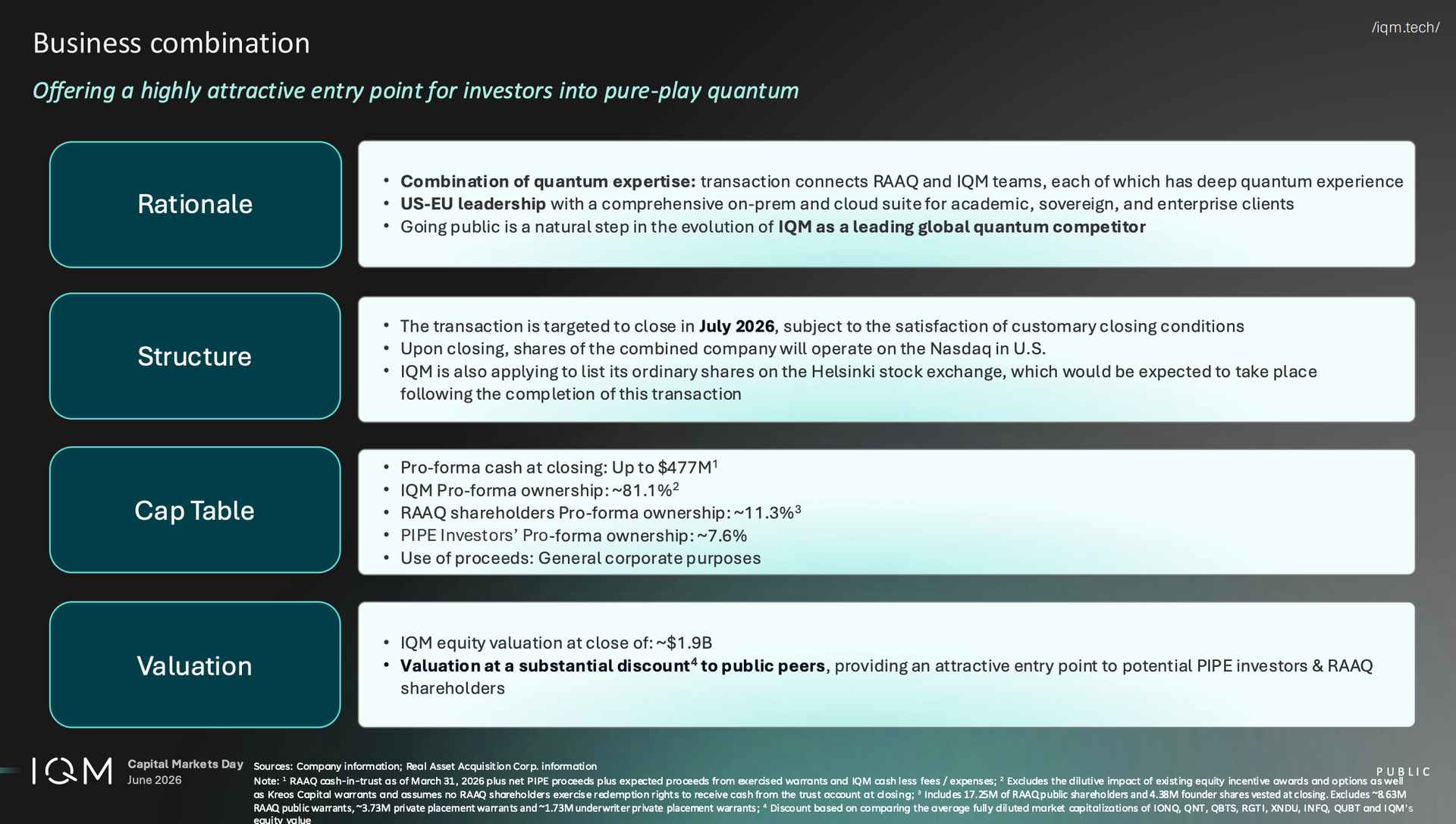
Let’s open a thread for the Finnish quantum company IQM, which is entering the New York Stock Exchange through a SPAC arrangement. The listed shell company Real Asset Acquisition Corp is merging with IQM, providing IQM access to the US stock market. The company is also planning a dual listing on the Helsinki Stock Exchange.

IQM held a Capital Markets Day a week ago, and the presentation slides can be viewed on their website here: Investor Relations - IQM Quantum Computers

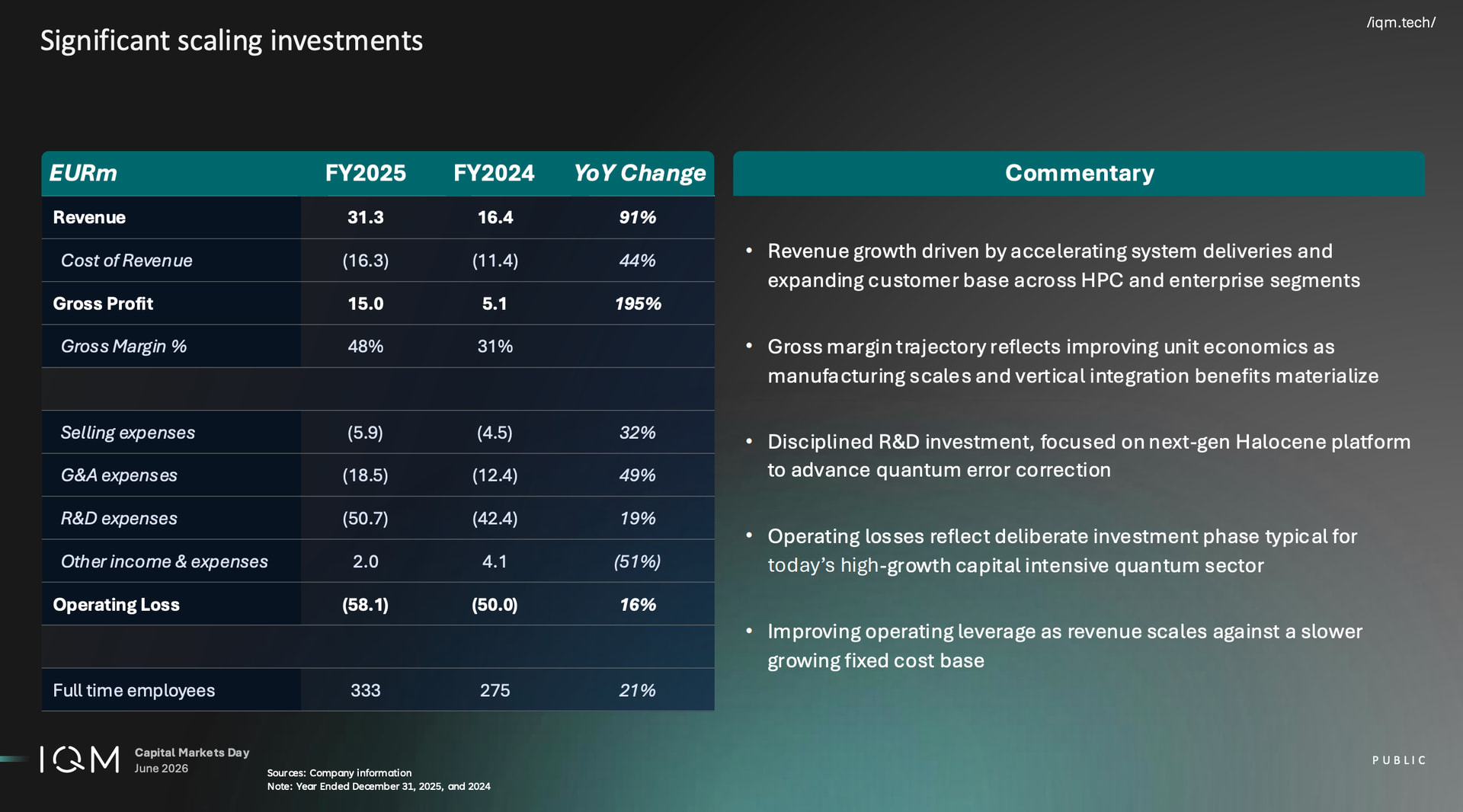
Here are a couple of slides from the presentation:

Apparently, the merger with the SPAC company is intended to take place in July.

Here is a short article on what a SPAC is in general: SPAC – vaihtoehtoinen tie pörssiin - Inderes

A SPAC, or Special Purpose Acquisition Company, is a way for a company to go public outside of a traditional initial public offering (IPO). The end result is the same as in a regular IPO. The company’s shares become subject to public trading, but the route there goes via a detour through a shell company.

38 Likes

I’m linking a post that may or may not be of interest

9 Likes

Jussi Halme has made a video about IQM :slight_smile:

AI hype has a challenger: is quantum computing the next megatrend that will change the world? Finnish quantum computer company IQM is listing on Nasdaq through a SPAC merger and is simultaneously aiming for the European quantum crown. But does a $1.8 billion valuation justify the current business, or are we paying for a mere promise of the future?

$1.8 billion valuation: How does a $30 million revenue bend to this price tag, and what does over $450 million in additional capital mean for the company’s growth?

On-premise vs. cloud services: Why does IQM want to build quantum computers on customers’ own premises, and how does this strategy differ from competitors?

The reality of quantum computing: Will quantum computers pulse alongside current data centers in the future, or will they replace traditional computers entirely?

Competition against giants: How can an Espoo-based company compete against players like IBM, Google, and Microsoft in the long run?

IQM is not yet a finished profit machine, but it offers an exceptional opportunity to get in on an early-stage technological disruption through a Finnish company. The question is: are you ready to wait for real results into the next decade?

11 Likes

IQM is seeking to list its shares on the Helsinki Stock Exchange IQM hakee osakkeidensa listausta Helsingin pörssiin | Kauppalehti

IQM expects trading to begin on the Helsinki Stock Exchange on Friday, July 3rd

16 Likes

One of the co-founders of IQM, Juha Vartiainen, visited us to comment on IQM’s listing.

15 Likes

If I buy RAAQ from the Nasdaq now, I wonder how the valuation will react; RAAQ’s value is currently $250M.

At a $10 share price, RAAQ is actually worth 1.8 billion dollars. Not all shares are listed on the exchange, which distorts the market cap.

7 Likes

Are you planning to buy IQM fairly early in its stock market journey?

  • Yes, this summer
  • Yes, perhaps in the autumn after the initial hype settles
  • I wouldn’t touch it with a barge pole
  • Not in the coming months, maybe next year
0 äänestäjää
1 Like

A question for those better informed:

Can a Finn buy IQM shares from the U.S. stock exchange after the IPO? I remember reading somewhere that you aren’t allowed to buy Nokia shares as American Depositary Receipts (ADRs) from the U.S., but instead must buy them directly from the Helsinki Stock Exchange.

You cannot buy the US-listed version if the headquarters is in Finland / it is a Finnish company. There are several Finnish companies listed in Sweden that Finns cannot own through any channel. Conversely, Sotkamo Silver can be bought from Sweden or Finland because the company’s headquarters is in Stockholm.

4 Likes

What if you already bought RAAQ shares, do you have to sell them after the listing and buy new ones from the Helsinki Stock Exchange? :thinking:

EDIT: A Nordnet customer had inquired about this from their customer service:

6 Likes

Unlikely you’ll have to sell. Since practically all major stockbrokers in Finland allow for the purchase of ADSs available in the US, my understanding is that in a merger via a SPAC like this, a Finnish investor will receive the US-listed IQM shares (ADSs) in their portfolio.

At the very least, the investor hasn’t done anything “illegal” by purchasing shares of a company called Real Asset Acquisition, which are now converting into IQM ADS shares following the merger. It should work smoothly at least on book-entry accounts (AO-tili). I’m not sure if there are any restrictions regarding ADSs on equity savings accounts (osakesäästötili)?

I bought a bundle of RAAQ for my own portfolio a while ago, so they will soon appear in the portfolio under the Nasdaq ticker IQMX. Later on, I’ll have to see whether I’ll make additional purchases in euros from the Helsinki Stock Exchange (Hesuli).

1 Like

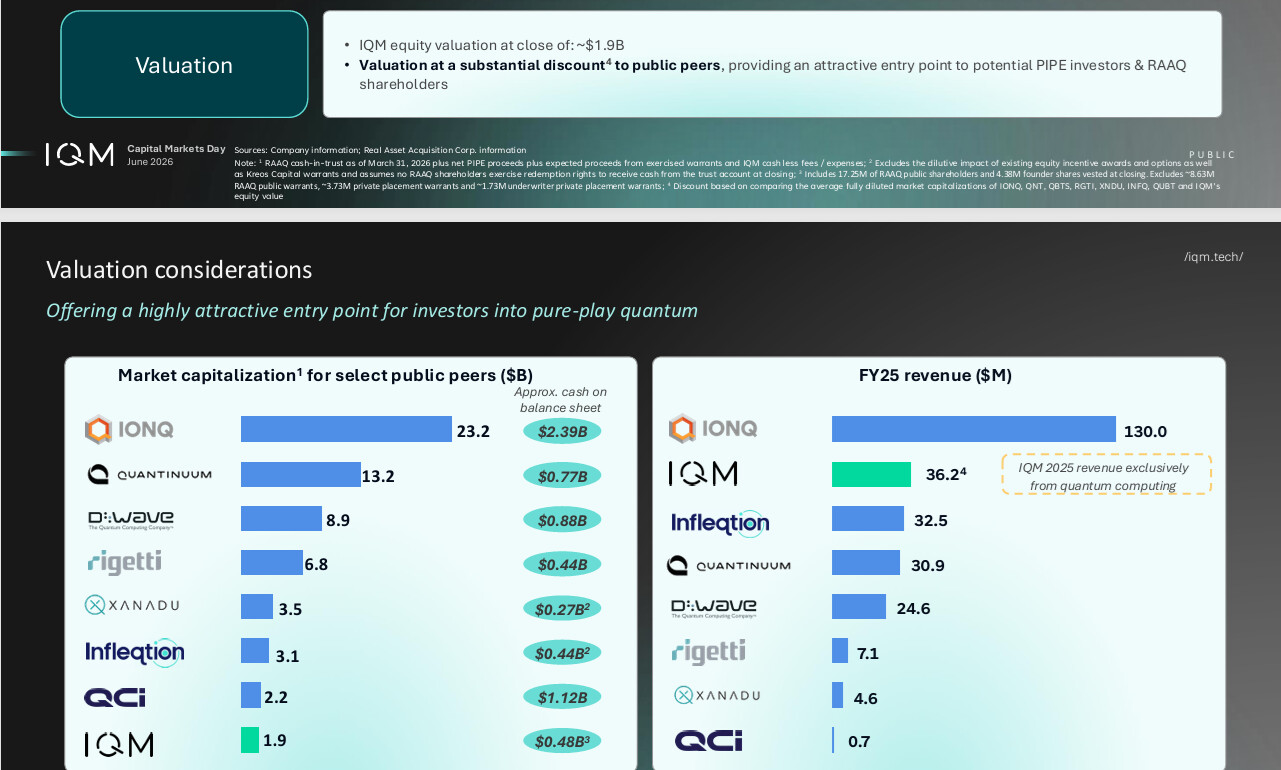
A few thoughts ahead of the listing. Images from the Capital Markets Day materials.

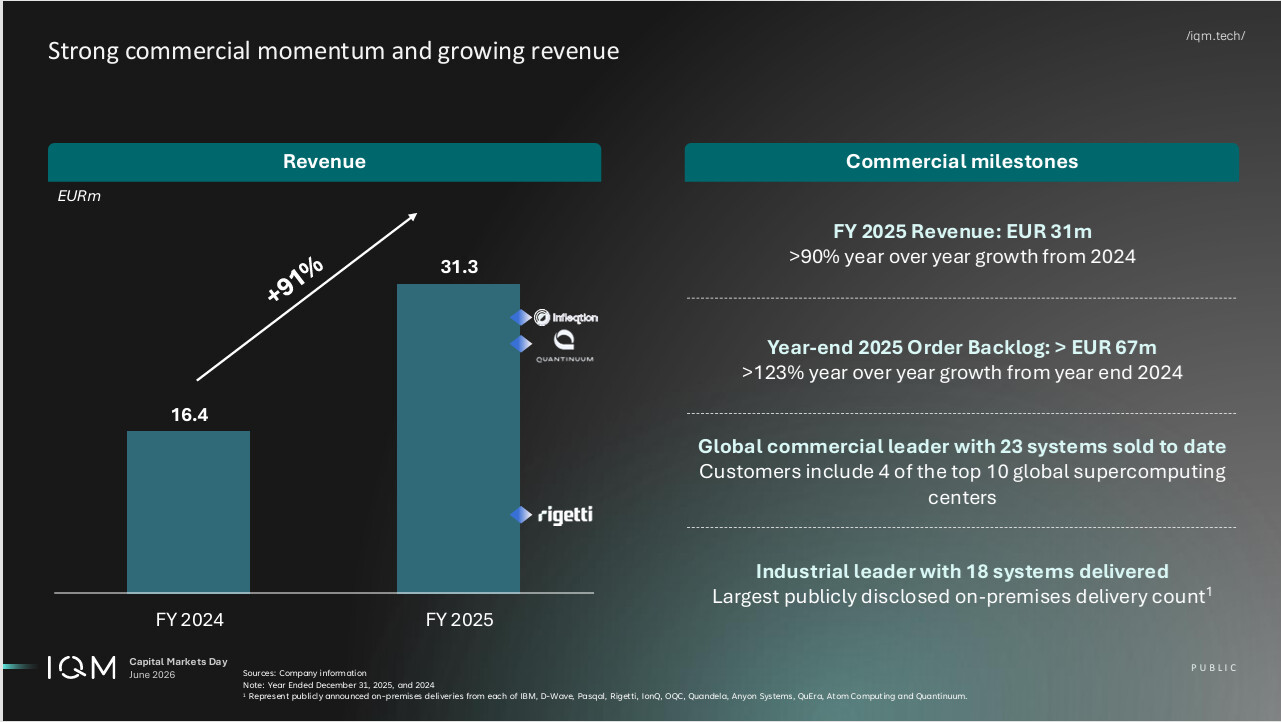
I agree with IQM’s slides that IQM’s valuation of approximately 1.9 billion is priced below the reference group. For example, the American company Rigetti (same superconducting technology as IQM) is a good point of comparison. It has roughly the same cash position, but revenue is only 1/3 of IQM’s. Rigetti’s headcount is about half of IQM’s, as is the operating loss. In my opinion, growing revenue, a large cash balance, a high number of employees, and a large loss (a large loss is a good thing!) are key metrics at this stage of development for quantum companies—revenue must be on a growth curve, and the cash position must be large enough to withstand significant annual losses. Also, there needs to be a lot of staff in R&D. A large loss is simply a necessary consequence of investing in product development.

IQM’s growth and order backlog profile is similar to IonQ’s. That means nearly 100% annual growth and a backlog that supports continued strong growth. The revenues for Rigetti, Quantinuum, and Infleqtion are shown on the right side of the FY2025 bar. IQM is valued at 1.9 billion before the market opens; Rigetti’s value is currently 6 billion, Infleqtion 3 billion, and Quantinuum is 19 billion today.

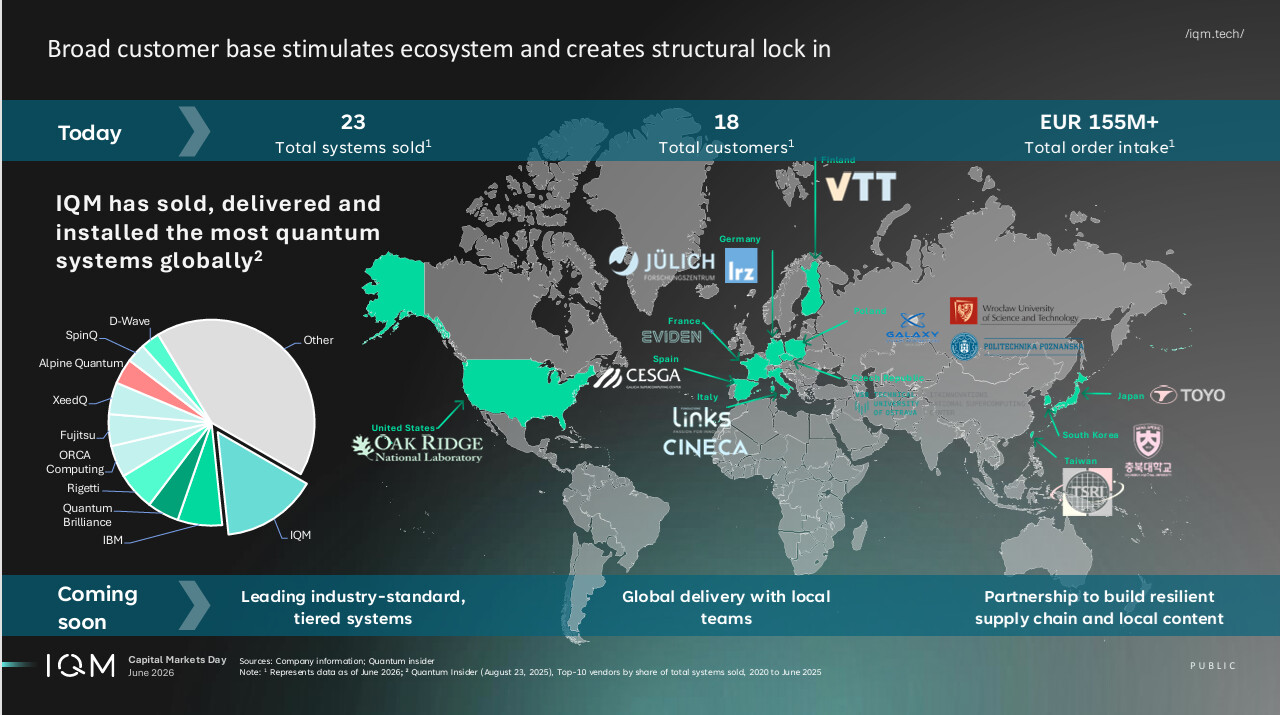
IQM appears to be one of the leading quantum houses relying on superconducting chips. Reference customers are nicely distributed around the world. Because of this, I believe growth is on a stable foundation. I would specifically highlight Oak Ridge in the USA, to which companies like IonQ also provide services. Oak Ridge is the federal agency that solves the world’s most difficult problems.

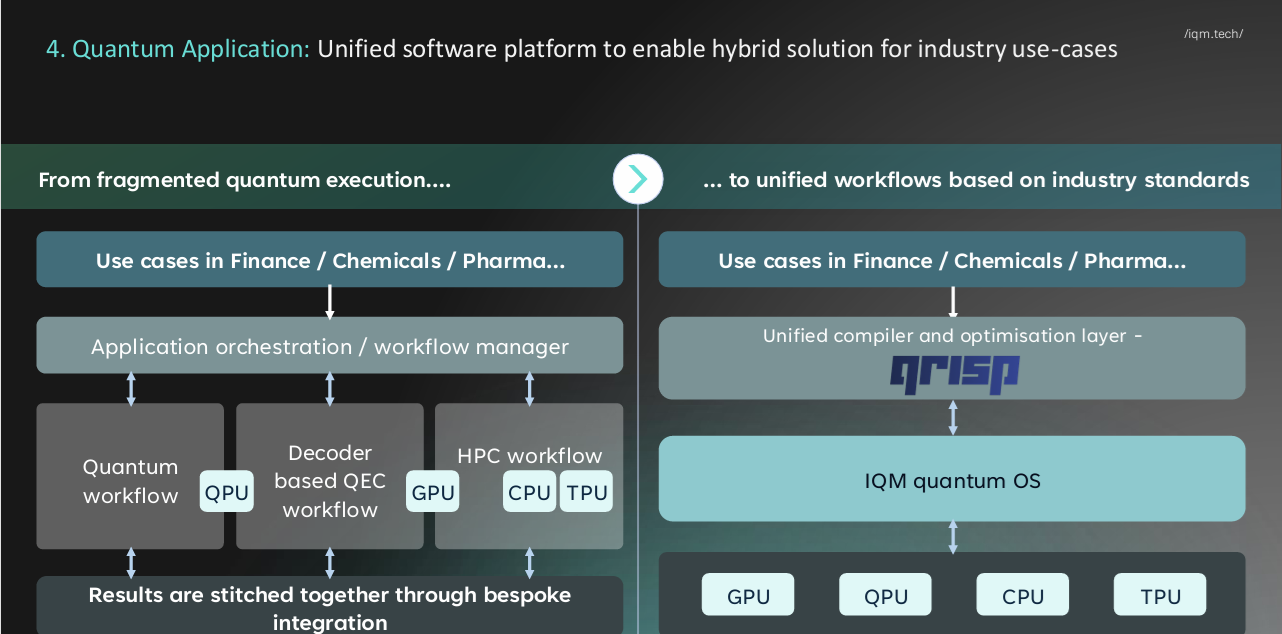
The slide above is perhaps the most important of all. IQM’s superconducting chip means that the technology has certain limitations in scalability and error rates, and the chips require significant cooling. Therefore, a traditional data center is the operating environment for IQM’s quantum computer. But at least at this stage of the quantum computing lifecycle, that is perfectly fine. This is because governments are open-handedly funding research labs, which are IQM’s main clientele. In an Inderes interview, IQM’s founder mentioned that IQM is much—was it 1000x?—faster than, for example, neutral atom solutions. Well, a superconducting gate is fast, but challenges arise in error rates. My point, however, is that governments will acquire these superconducting solutions, and they are good platforms for researching how quantum processors (QPUs), GPUs, CPUs, and TPUs are combined into a functional overall solution. Significant software development is done simultaneously. In the coming years, various technologies will be used in quantum computers worldwide (superconducting, ion trap, neutral atom, and then there are various quantum simulations performed via software, e.g., D-Wave). I personally think that if so-called “natural” techniques (ion trap and neutral atom) are eventually selected as the primary options for quantum chips, it is by no means the end for IQM. IQM, like all other quantum houses, is developing much more than just the chip. From the image above, you can pick out, for example, a quantum operating system and various software platforms for orchestrating and managing QPU, GPU, CPU, and TPU farms.

Among superconducting companies, IQM is clearly the most interesting to me. There is very little buzz about the company on X. The company is practically unknown to the general investing public. Hopefully, the company won’t jump 2x - 3x immediately on Friday. I see 1 billion as a kind of absolute floor for the market cap, as I estimate the 450 million cash balance will hold the market value at least at a billion. The company looks very good for the stock market right now. Good luck to IQM—Europe’s leading company in this industry.

47 Likes

At least the purchase on the equity savings account (OST) was successful on Tuesday. We’ll see how the selling goes when the time comes to sell those. It will probably take a moment at least for the ticker to change etc.

6 Likes

So why shouldn’t one be allowed to buy IQM listed in the US instead of having to buy it from the Finnish stock exchange? Everyone is free to buy their shares from wherever they want, and no one can force you to own Finnish shares. I know numerous people who own Nokia via the US listings rather than the Finnish exchange, and there haven’t been any problems.

1 Like

A Finn is not allowed to own Finnish companies through a nominee registration (hallintarekisteri). Try buying Nokia from the US via Nordnet, for example, and it won’t work for this very reason.

2 Likes

Currently, my RAAQ shares in Nordnet have an unlisted status, which means no actions can be taken with them…

1 Like

A little final stretch press release regarding tomorrow. Since we’re finally getting a new high-grade tech company into the mix here, is “Hesuli” (Helsinki Stock Exchange) going to shout Hosanna?

5 Likes

This likely only applies to Finnish brokers with custody in Finland; it should work through IBKR. And probably through Degiro as well.

1 Like

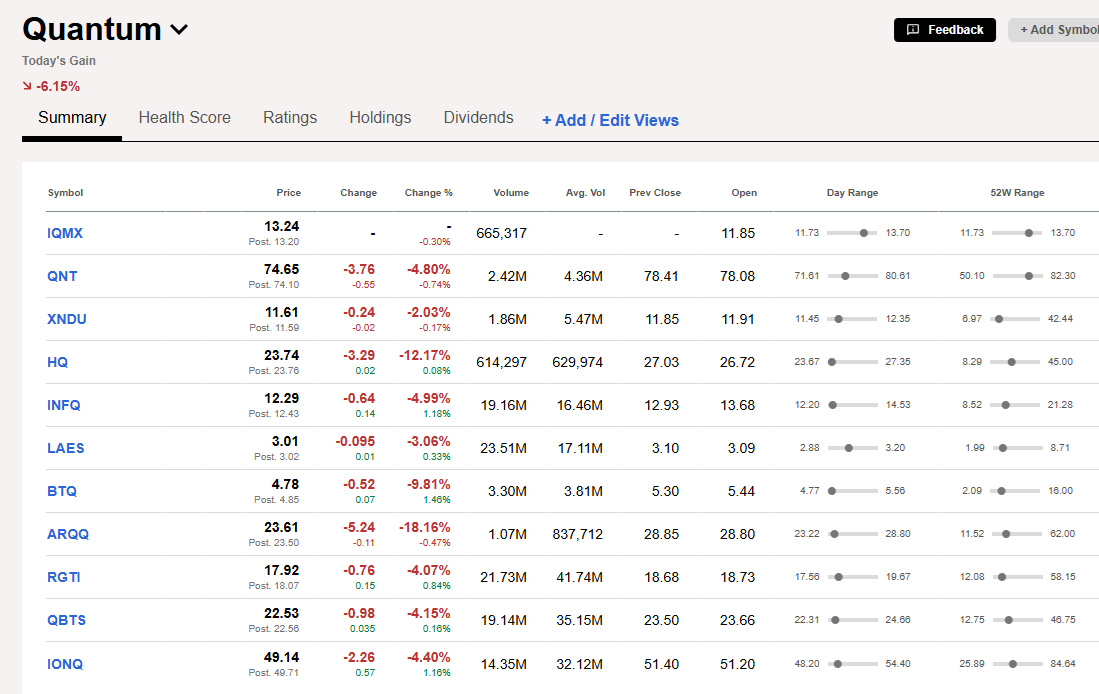
IQM had an expectedly calm opening on the New York Stock Exchange. Trading volume is still low. IQMX’s volume was the second lowest on my list below, at 665 thousand shares. In practice, it had clearly the lowest volume among quantum companies generating revenue. Personally, I suspect that in six months, the volume will rise to millions per day—I’m guessing around the 10 million level daily; Rigetti currently has 21 million shares changing hands per day. An increase in volume means high volatility for the stock. I am looking forward to the Helsinki opening on Friday with interest. The New York Stock Exchange is closed on Friday, so all trades will take place in Helsinki. Volume may remain very low. Will Finns find good entry points into the stock now, or will some European ETF or fund drive the price up with large purchases? Friday, July 3rd, will be quite a unique trading day for IQM. Let’s see what happens.

10 Likes