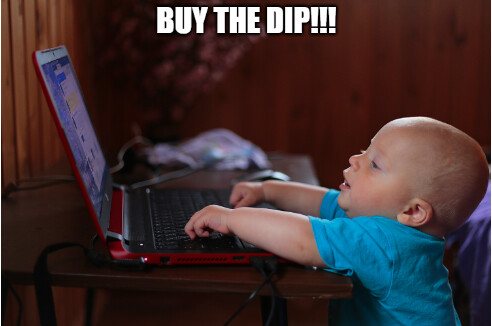
Yep, and that’s why I tried above, through humor, to save at least a few people from this dangerous shortcut. ;D
16 Likes
This is precisely why there’s an arrow symbol after the recommendation. You don’t necessarily have to be able to read. 
14 Likes
In addition, there are traders who trade according to the expected movement of the lemming pack. Not because the company is good, but because it is expected that within the next day or two, the lemmings will pile up on a certain side of the order book due to a given recommendation change… And when the fun is over, positions are unwound. A classic example is an increase in recommendation and target price → traders rush in at the open, the lemming pack drives the price up until the momentum fades, and then the traders dump their shares and the price cools down until the recommendation followers with a fox’s tail in their armpit start buying with a slightly wrinkled face, “ugh, it’s so expensive” 
5 Likes
Doesn’t the forum constantly remind us of Lynch’s words, “volatility is great”? Why wouldn’t an analyst take advantage of/encourage taking advantage of this volatility? Especially when it wasn’t some end-of-day auction dip or anything like that…
It would be a different matter, of course, if one believed that the analyst himself intentionally caused this volatility.
2 Likes
Verneri could comment here in the coffee room after each company update, what the unofficial recommendation read between the lines is 

12 Likes
For me, “sell - reduce - add - buy” are quite irrelevant, and I don’t pay much attention to them. I’m more interested in the analysis itself, from which I form an overall picture of the case. I look at the target price to reflect on what kind of numbers and expectations the analyst has baked into their forecasts, and I compare that to my own calculations. If someone buys or sells based solely on an “add/sell” or similar recommendation and target price, and it goes wrong, they can’t blame anyone but themselves. It just shows a lack of interest in delving into the case at all, and then your “investment” could be compared to playing the lottery, where insight and skill have little significance, and it’s all about luck.
10 Likes
When will Gofore turn to the plus side in a similar way? The situation there is probably quite similar. Or Siili?
1 Like
Hopefully, not until there’s actual new information related to the companies.
3 Likes
But it would be nice if it had an effect like we see with Efecte. Additionally, the price is roughly as much below the recommendation as Efecte’s was. Wouldn’t the fundamentals be the same?
1 Like
I’m following the thread and appreciate everyone’s contribution who keeps posting. However, a few sentences after the charts would be nice so that we mere mortals would also understand. 
Edit: Thank you very much, a truly great explanation. Even a dumber person understood now 
4 Likes
The Inderes effect… I don’t think even Efecte will go up for long. It will just fall from a higher point if everything else is also falling. There’s a strong pull in market sentiment.
1 Like
Moving this here, that comment didn’t bring much new to the Kumpu thread. ;D
3 Likes
To put it briefly and simply:
Sometimes I’ve noticed that the price of a stock I own is a bit too high, and then a fresh analysis comes out with a “reduce” rating. Shortly after this announcement, some kind of spiral effect starts within a few days, causing the stock price to plummet to a level perhaps very interesting for buyers, at which point I consider whether to add more.
So, within a week, my mindset can go from sell, reduce, add, and buy. 
7 Likes
I’ll reply here. The Kamux shares should still be there.  Do you have the wrong portfolio open?
7 Likes
Everyone, read the most flagged discussion in the Efecte thread. It’s entertainment you don’t have to pay for. Unless you trade at the wrong time 
People must have some responsibility. If Efecte is at “reduce” - recommended prices that are too high, and the price drops, it’s a wonder if people can’t calculate that the stock can fall to purchase prices for no reason at all in the company. Well, yeah, options were probably sold from there, but that’s no reason to give up one’s shares.
For example, I don’t think QT is at buying prices yet, even though there’s probably already 20% room to rise to recommendations. Efecte isn’t either, for that matter, but I’m trying to time the markets with my limited money.
5 Likes
What is the name of Verneri’s portfolio?
“.. notification in accordance with Chapter 9, Section 5 of the Securities Markets Act ..” Couldn’t there be some kind of hysteresis limit in these flagging notifications? The return to below would be 4.95% and going above would be 5.05%.
1 Like
… notification in accordance with chapter 9, section 5 of the Securities Markets Act …". Couldn’t there be some kind of hysteresis limit in these flagging notifications? A return below would be 4.95% and going over would be 5.05%.
What do you think about this, @Mirko_Sampo_IR?
Flagging notifications | Sampo.com
2 Likes
Are you trying to imply that continuous reporting of a single entity’s five percent overages and underages doesn’t add value to the investor? 
Admittedly, some kind of update to the Securities Markets Act might be in order regarding that.
27 Likes