Tomi and Miksu have written an interesting article about order backlogs
The most interesting figures for engineering companies are often not found on the last line of the income statement. While revenue and profit largely tell us about the past, new orders provide the first clues as to what kind of development can be expected in the future. In this article, we examine what the Q2 order backlogs and order intake of major engineering companies tell us about the current demand situation.
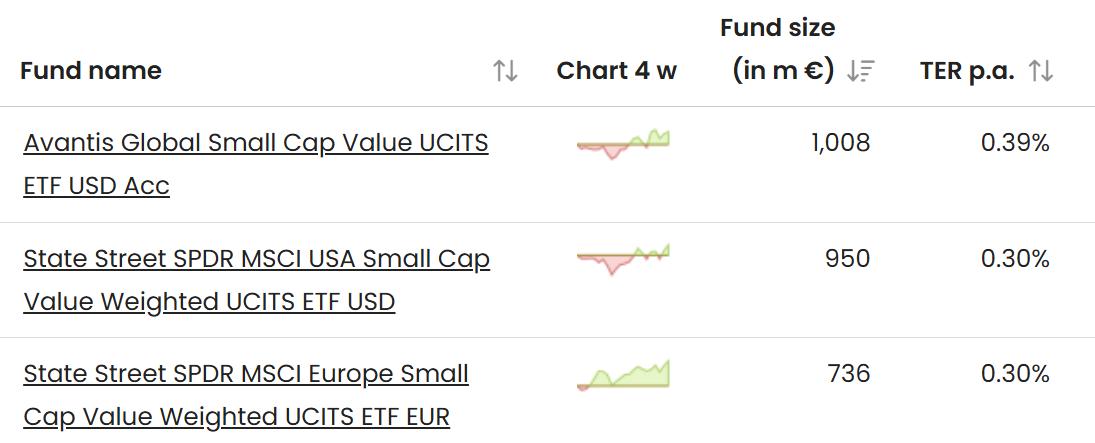
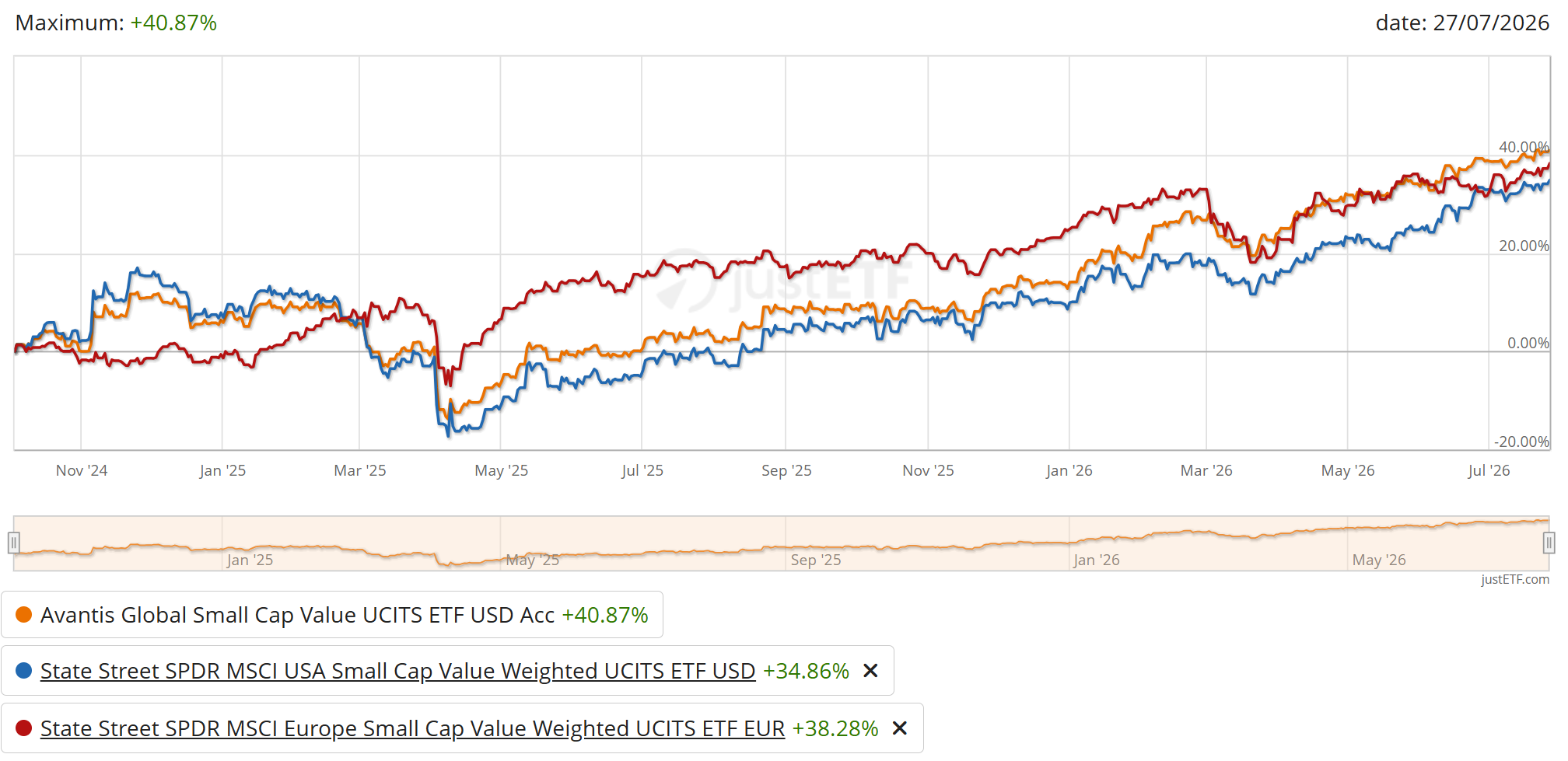
The Avantis Global Small Cap Value ETF has already sucked in a billion in capital. Established in 9/2024, it has already surpassed the small cap & value strategy dinosaurs ZPRV and ZPRX, which were established in 2/2015, in size.
I first thought about posting this in the ETF thread, but then I remembered the First North investors and figured they might need a bit more faith in small caps. Hope you appreciate it.
Regarding this, I really have to say that beginner investors today have it so good compared to the past that it’s a great time to start investing! You can choose not just a small-cap index, but even a value option. The amount of choice is insane.
Back when I started investing, there were no index funds at all, let alone the ability to take a more specific position on asset classes. Soon after I started, Seligson brought their Finland, Europe, and Japan index funds to the market, but I don’t understand why they didn’t bring a US index fund at the same time. Well, I saved up capital bit by bit using those (Europe and Japan) and a few active funds.
Paradoxically, my absolute best investment back then was actually Seligson’s actively managed Russia fund, the value of which multiplied tenfold in a relatively short time. So, inefficient markets beat efficient ones in that instance. Or high returns with high risk, depending on how you look at it.
Anyway, this was just a nostalgic trip down memory lane to nearly 30 years ago, and I can definitely say that things were not better back in the day.
I have a sizeable portion of my wealth in this. Why? I want to achieve financial independence as young as possible. Others can gamble on Nasdaq. For me, that’s just way too small-time.
That is indeed how it ended up, with the political risk materializing. I divested from my holdings quite a long time ago, when it started to feel like things were heading in the wrong direction and political risk was increasing. The country clearly began to change for the worse; I’m not the only one who noticed this—for example, Ville Haapasalo talked about the same thing back in the day. Fortunately, things developed very slowly, so it was possible to get rid of the holdings at a good price.
Statistically, when you buy cheap, you are hoping (betting) that someone else will pay more for it than what you paid earlier. This is not in the hands of the company, but depends on the market psychology & behavior of other people, and that is what you are betting on.
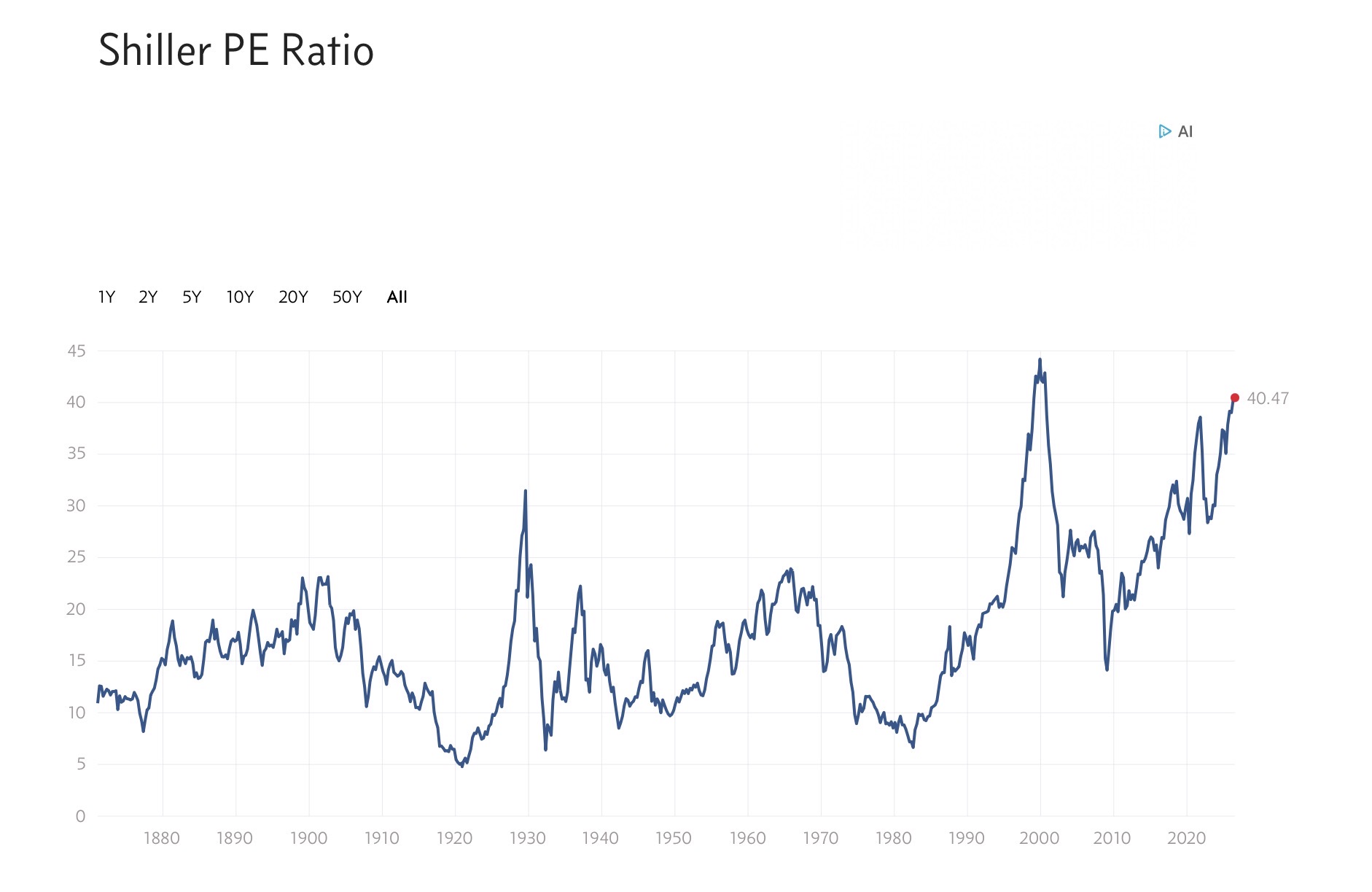
Even if the CAPE were 500, it wouldn’t eliminate this.
When buying SCV (Small-Cap Value) companies, you get more than just hopes for the future (compare to growth stocks). Furthermore, AVWS uses profitability filtering, which helps to more likely avoid value traps. The companies are making a profit Today, rather than perhaps in the distant future.
Is it time to give a shout yet? It’s starting to sound to me like the music is stopping, and we’re heading back down to earth from the AI bubble. Congratulations to everyone who managed to rake in wild profits over the last couple of crazy years! Now would be a perfect time for a small global bear market in between
Needless to say, this is not investment advice, and generally speaking, the long-term track record of those who predict market tops is exceptionally poor.
Is there more detailed information on how that profitability filtering works?
Value investing is, after all, quite an active investment strategy. The concept of a value trap was mentioned. Value investing is largely about buying at a low price and being prepared to buy more if the undervaluation increases. Then, one waits patiently for the undervaluation to resolve. However, the most hardcore value investors have also considered what the catalyst for that resolution will be. Furthermore, when the undervaluation has resolved, one typically sells and reinvests the money into a new, more undervalued asset. Because of this, I believe it is essential to understand how these value ETFs function.
I’m so skilled at timing things that I end up having to change my baby’s poop diaper three times in half an hour. Maybe index investing would be more my speed after all.
I hope not! It would be bad news for me; I have such a big bet on it that I don’t even want to say how much.
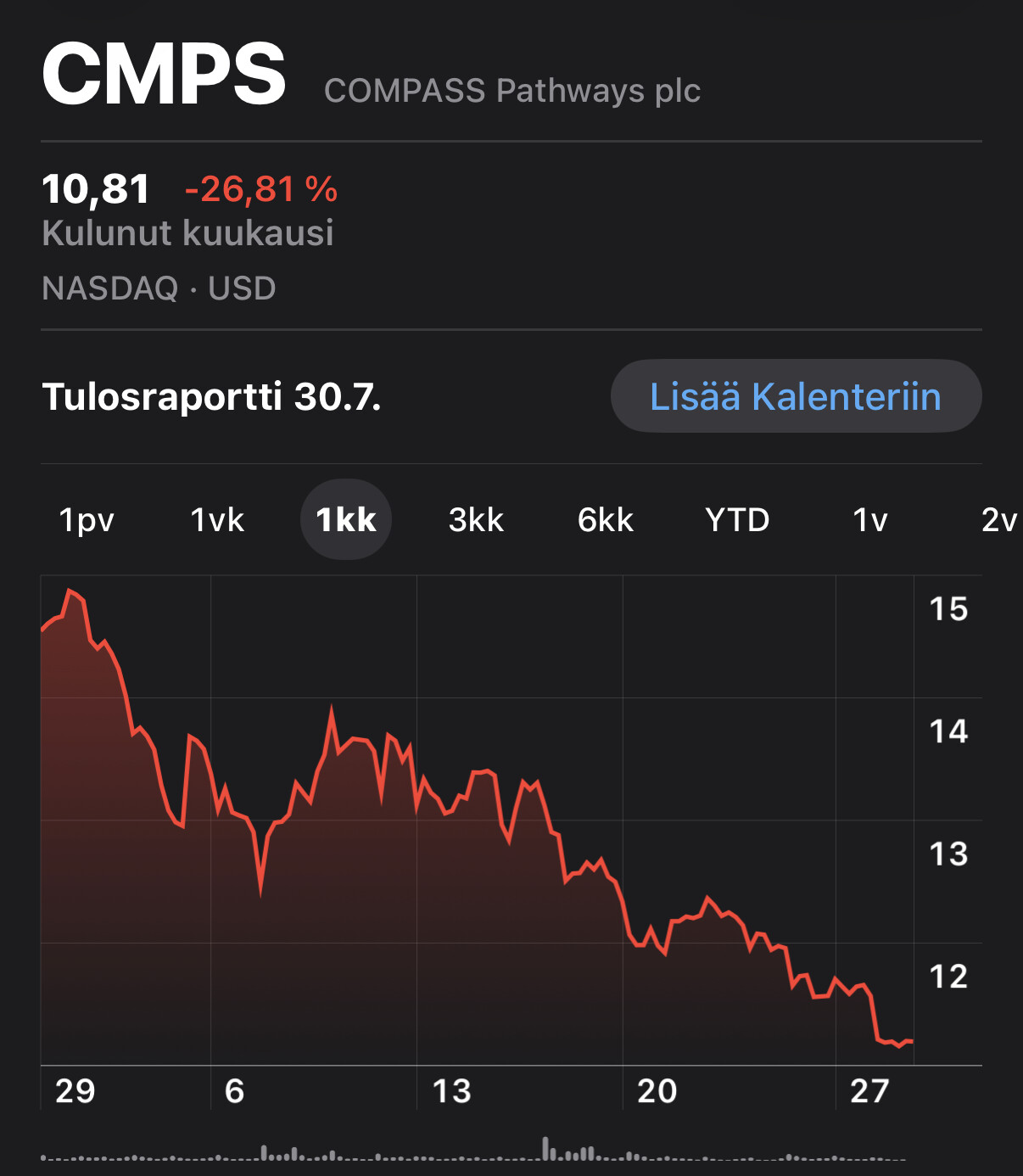
CMPS has been volatile before. At least during the time I’ve been investing, it’s been quite typical to see drops of even thirty percent from the peak (on low volume, just like now) before the next climb is steep again and the peak is higher than the previous one. You just have to have faith (and you’d have to know when that peak is ). It’ll come back! It has to.
There is a discussion in the luxury goods thread about luxury product piracy and brand durability more generally. A few words on piracy and legal copying, and some broader reflections on brands:
…
At this point, I have to say that when I was considering luxury products for my portfolio, piracy was one reason why I ended up with Ferrari rather than clothing/handbag manufacturers or the like, which are easier to counterfeit than a sports car. Though, it wasn’t a very major reason. The more essential reason was the following:
Broadly speaking, I see it as easier to create a new luxury product if the product itself is simple versus complex. I am referring to the legal copying of an idea into a competing product. (It’s still not easy, though.) The barrier to entry is different if you have to manufacture a sports car versus, say, a leather handbag. In a way, it’s an additional moat.
Having said all this, one must still return to brands (not just luxury)—for example, the brands of Coca-Cola and Pepsi are incredibly durable in an industry where almost any small company can copy the product itself almost identically, and there are a vast number of manufacturers and soft drink brands globally. And competing cola can usually be bought in stores at a cheaper price, so even though brand giants enjoy economies of scale, smaller players have to settle for a lower price point.
In other words, in principle, there is no barrier to entry in soft drinks; with very little capital, you can set up a soft drink factory and start growing from there.
Strong brands have allowed for some pretty hard-hitting returns. Seligson, for instance, has a “brand fund” (brändirahasto) that includes companies for which a strong brand is a very important part of their business. The fund has performed really well; the portfolio companies have been able to monetize their strong brands into profitable business over the long term.
This reflection has gradually shifted my portfolio’s focus toward companies for which brands are more important than average. For some companies, the entire business operates under brands (e.g., Alphabet, Assa Abloy, Harvia, Ferrari), while others also have “brandless bulk business” in addition to brands (e.g., Berkshire Hathaway, which has a large energy business, as do Japanese conglomerates). But there are no pure bulk producers in my portfolio.
It will be interesting to follow over time how these develop, both in absolute terms and relative to the market. “Brand companies” don’t beat the market at all times and in all conditions, but in the long run, I believe these will be at least an objectively good investment.
French DJ/artist Kavinsky has died at the age of 50. Kavinsky has died
The dark, 80s-pulse inspired track Nightcall is featured in, among others, the movie Drive
I’m giving you a night call to tell you how I feel I want to drive you through the night, down the hills I’m gonna tell you something you don’t want to hear I’m gonna show you where it’s dark, but have no fear
There’s something inside you It’s hard to explain They’re talking about you boy But you’re still the same




 ). It’ll come back! It has to.