Share-based incentives and share buybacks actually have nothing to do with each other, even though they are often discussed in the same context. Shares held by the company are out of circulation, and an owner shouldn’t include them when considering their own ownership stake. When a company grants share-based incentives, it can either use treasury shares or print new ones—both are identical events from the shareholder’s perspective: the number of outstanding shares changes.
2 Likes
Wait until you visit Don Quijote a bit too often 
I have my sixth trip coming up in October. Last time was in January I’ve already spent 50 days there and there will be 14 more in the autumn. I wonder how many are needed for a residence permit 
7 Likes
Aah, thanks for the reminder! 



5 Likes
I browsed through the coffee room after a few days’ break. Coffee this, coffee that. Good coffee, bad coffee.
Shall we talk about Baltic herring and potatoes for a change? As I understand it, Finland lived on Baltic herring in the 70s and 80s. These days it seems to be quite out. I can’t remember the last time I fried some up. But then again, I am a boomer, but I make banger food 
I recall there was a news story back in the day about Baltic herring glowing in the fridge. There was so much phosphorus in the sea. Or maybe it was an urban legend.
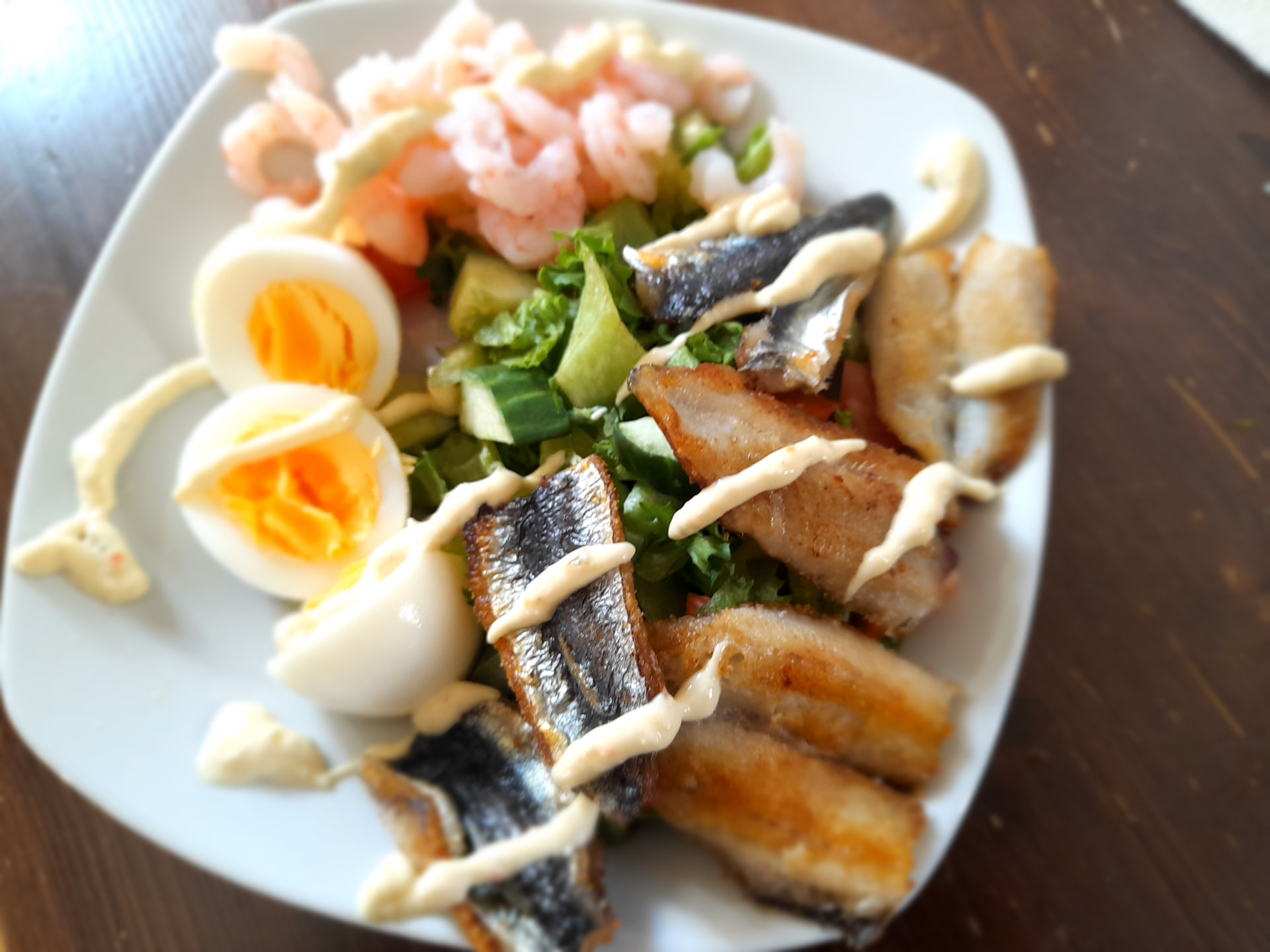
But anyway. At the store, some gutted fresh Baltic herring caught my eye. When you fry those in a butter-oil mix, oh boy  they were so good. And not a bad-looking dish I whipped up for myself, right?
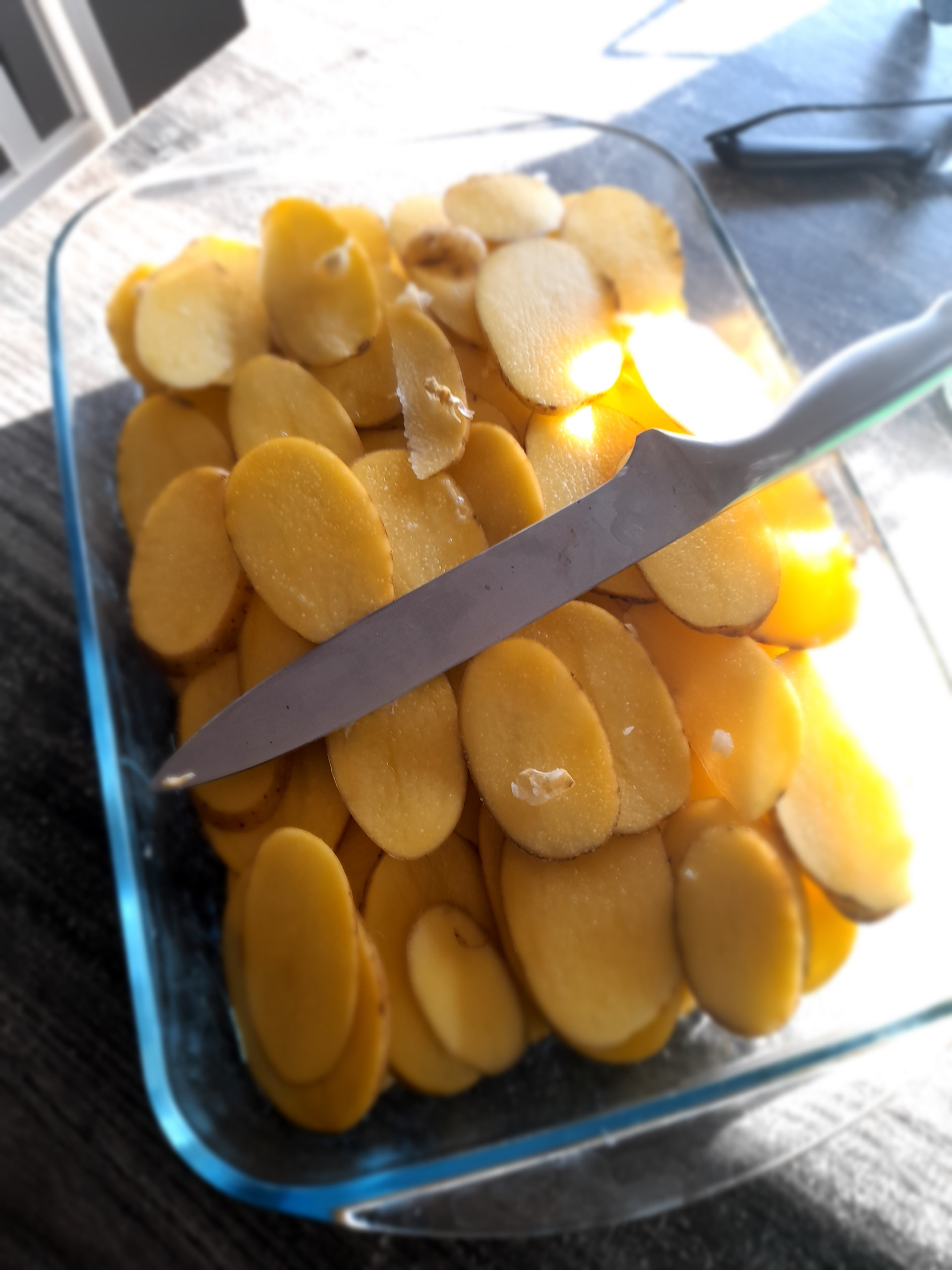
And about potatoes. I eat them quite rarely these days. Finland used to live on potatoes too. Nowadays we (too) eat a lot of rice, pasta, and other things. Lidl’s instant mashed potatoes are a lifesaver during the week, and I probably make them weekly. But tomorrow we’re having garlic cream potatoes. The place smells great, by the way.
40 Likes
I’m reading a condition report and there’s a phrase: “The inspection was carried out by sensory means…”
I’m thinking of borrowing that for investing too. The next time someone asks me why I’ve invested in stock X, I’ll answer: “I have researched the stock by sensory means. It is good.”
50 Likes
Me researching stocks by sensory means:

44 Likes
Yesterday at least, I noticed while cycling that fishermen were pulling up buckets of herring from both the Karhusalmi bridge on Länsiväylä and the Lauttasaari bridge.  In Ruoholahti, I also saw a seal pup in the sea out catching herring.
6 Likes
Baltic herring fillets coated in breadcrumbs and fried in butter. It’s so good! I treat myself every now and then. Simple and tasty!
11 Likes

Inderes documentary: How investing in the Helsinki Stock Exchange (Hesuli) made me appreciate Harri Holkeri’s kitchen.
5 Likes
At the time, Baltic herring fishers were disgruntled with Holkeri. Sales completely tanked because people didn’t dare buy herring for fear of being thought of as poor. Nowadays, that fear is gone, and even though my money is mostly tied up in cod, I still have to buy herring from time to time; they’re just that good.
5 Likes
Are there any mead enthusiasts here? I’m interested in tried and tested honey mead recipes! I personally prefer dry over sweet mead.
I’ve previously made regular sugar mead, but I just bottled a couple of liters of honey mead a moment ago. There’s enough time before May Day that if the result is to my liking, I can make a larger batch for the May Day party. This is the recipe I started with:
2l water
150g honey
50g brown sugar
1 cinnamon stick
1 large organic lemon with its zest, pulp, and juice
10g ginger
2.5g fresh yeast
Sugar and raisins for bottling.
12 Likes
Rice cooks faster than potatoes and doesn’t need peeling. Baltic herring is also more laborious to prepare than, for example, minced meat. I would see these as reasons for this change.
You don’t have to peel potatoes. The skins have the best nutrients, I eat the potatoes skins and all myself
34 Likes
The question wasn’t actually from the perspective of the shareholder, i.e., the owners, but rather where the money for those reward shares comes from?
Of course, if more are printed, then it’s just the printing costs.
If they are bought from the market, is the money taken from the profit or from some other accounting line item?
I’m not a finance professional, so my terminology might not be precise, but hopefully the idea is understandable.
Objection! No, it’s not. Especially if they’re already gutted. Oil and/or butter in the pan, a few minutes, and a sprinkle of salt on top.
3 Likes
Ah, exactly! See the “Cash flow statement” in the financial statements: Group annual reports | Nordea
There, buybacks of own shares are neatly on a single line; the intended use doesn’t matter. If a company buys back its own shares, it is a transaction completely independent of whether the firm later distributes shares as rewards or not.
Share buyback programs can change, an acquisition changes the nature of the shares, or share rewards are only distributed if the firm makes enough profit. All these variables make it completely impossible to earmark which euro was used for a share that will be given out as a reward with 100% certainty.
EDIT: Why then do companies report how many shares were bought for capital structure optimization and how many for incentive schemes? Well… Apparently, they feel it’s less effort to keep investors who received their education in the 1880s happy and maintain a “transparent” breakdown, than to later wonder what to do when there is an acquisition target and the shares on the balance sheet are categorized into imaginary baskets.
1 Like
Baltic herring is my childhood trauma food? What’s yours?
I’m supposed to go to Japan for the first time next year. Which season do you recommend?
2 Likes
For example, in Tokyo or the Kansai region (Osaka-Kyoto-Kobe, etc.), spring and autumn are good times if you like Finnish summer-like temperatures. In the summer it’s really hot and humid, and in the winter it’s chilly (but rarely freezing), but you can visit perfectly well during those times too. The country is quite diverse geographically and climatically; for example, in the north and in the mountains, winters are very snowy and freezing, while on southern islands like Okinawa, temperatures are around 15-20°C even in the coldest winter months, and much warmer for the rest of the year.
5 Likes
Very good point. This is exactly where serial consolidators and investment companies are a good alternative. If researching and picking stocks has started to bore you, losses are frustrating, or you want to diversify. And does it even negatively affect the investor’s self-image if they invest through the same company as the Wallenbergs, the Agnelli family, or even Prem Watza?  In that case, you feel like you’re in esteemed company.
6 Likes
Buttermilk. Viili. Meat with fat and various bits and pieces. It was in childhood, and it still is 
1 Like