If someone wearing an Inderes cap and the tracksuit of the year is bragging on a terrace about being one of the owners of Nordea and Fortum while slurring slightly, there is a small chance that it is me. 
32 Likes

Late morning laughs from this as you reminded me of this legendary video 
11 Likes
I didn’t intend to address Eka’s message specifically, but rather the framing of the whole question. I suppose there’s no need to keep any sum in the account; just keep all spare pennies in circulation. Let the Visa sing if an unexpected expense arises. Instead, it would be worth keeping some cold hard cash tucked under your mattress for a month or two’s worth of mandatory expenses. As long as you remember to check, say every ten years, that the currency is still valid as a means of payment. With a stack of *Sibeliuses (old 100 FIM banknotes), you won’t get anything more than a fire started in the fireplace, if you’re so helpless that a knife and birch bark aren’t enough.
9 Likes
I suppose this again comes down to the fact that in Italy, people drink their coffee at a cafe, and in Finland, at home. Cultural differences. 
2 Likes
I have to jump into the coffee discussion myself. I don’t remember exactly when I started getting more into the “hi-fi” side of things, but I think it was about ten years ago at an old workplace. There, I became familiar with small roastery coffees and noticed that my own taste in coffee leans towards light roasts. Especially natural-processed beans, which still have a bit of the berry-like flavor of the coffee cherry, are a treat. But in all honesty, a certain absolute strictness in quality requirements has also worn off – perhaps with age. 
So, as I wrote above, they don’t taste good to me. But if you really want to test if you like dark roast, you should try something like Kaffa Roastery’s India Monsoon Malabar. I remember how the apartment smelled like a yak’s rear end for several days after brewing one pot.
My own brewing has been done with a Moccamaster for 10+ years. A carefree machine. Regarding grinders, I can honestly say that the Wilfa Svart, which you can get from the shop for about a hundred bucks, is a quite decent piece of equipment for its price. Its biggest problem is that it’s not the most durable device. In 10 years, I’ve had three Svarts in my household. Only once did it break while under warranty… In all cases, it was the motor dying.
Earlier this year, I bought a Baratza Virtuoso+, which is about 2–2.5 times more expensive than the Svart. These Baratza machines are made to be user-serviceable, meaning if a part fails, you can order a new one from Baratza and there are clear instructions online on how to replace the part. Cleaning is also made easy. The grind quality is significantly more consistent than with the Wilfa device, and the machine feels higher quality overall. I definitely recommend a Baratza grinder if you’re planning to buy one.
You always have to experiment a bit with the grind, and every grinder grinds a little differently. A good rule of thumb is not so coarse that the coffee water doesn’t make a divot in the filter bag, but not so fine that the water stays standing in the filter bag for too long.
If it’s good coffee, it doesn’t need anything. Among small roastery coffees, Good Life Coffee is award-winning for a reason, but man, those are some damn expensive beans. After moving to Kaarina, I found the local Turun Kahvipaahtimo (whose roastery is located in Kaarina, despite the name), and these have been a fantastic find. However, as an everyday coffee, Lidl’s Bellarom Crema serves well for the price (medium roast, but an okay basic coffee), and as a newcomer, the relatively affordable Kulta Katriina Vivahteikas vaalea (Vibrant Light), which has just the right amount of that berry-like flavor I like.
11 Likes
I read the article several times, but it wasn’t clear what these drastic measures are. A traditional buzzing alarm clock, shaking, or perhaps slapping the cheeks. In any case, constant lying and covering things up surely drains your energy, especially when a large part of the population knows you’re talking shit, to put it mildly. No wonder even the bourbon praised here starts to taste good.
6 Likes
Credit card travel insurance is often a rip-off, only paying out if at least 50% of the total costs of the trip in question have been paid with that specific credit card. All expenses include debit card and cash usage, and I’m sure insurance companies have all kinds of tricks up their sleeves, where they might even include things like car depreciation or compensation for lost earnings during the trip in the final calculation, which then serves as the basis for a rejection that you’ll have to start fighting against.
1 Like
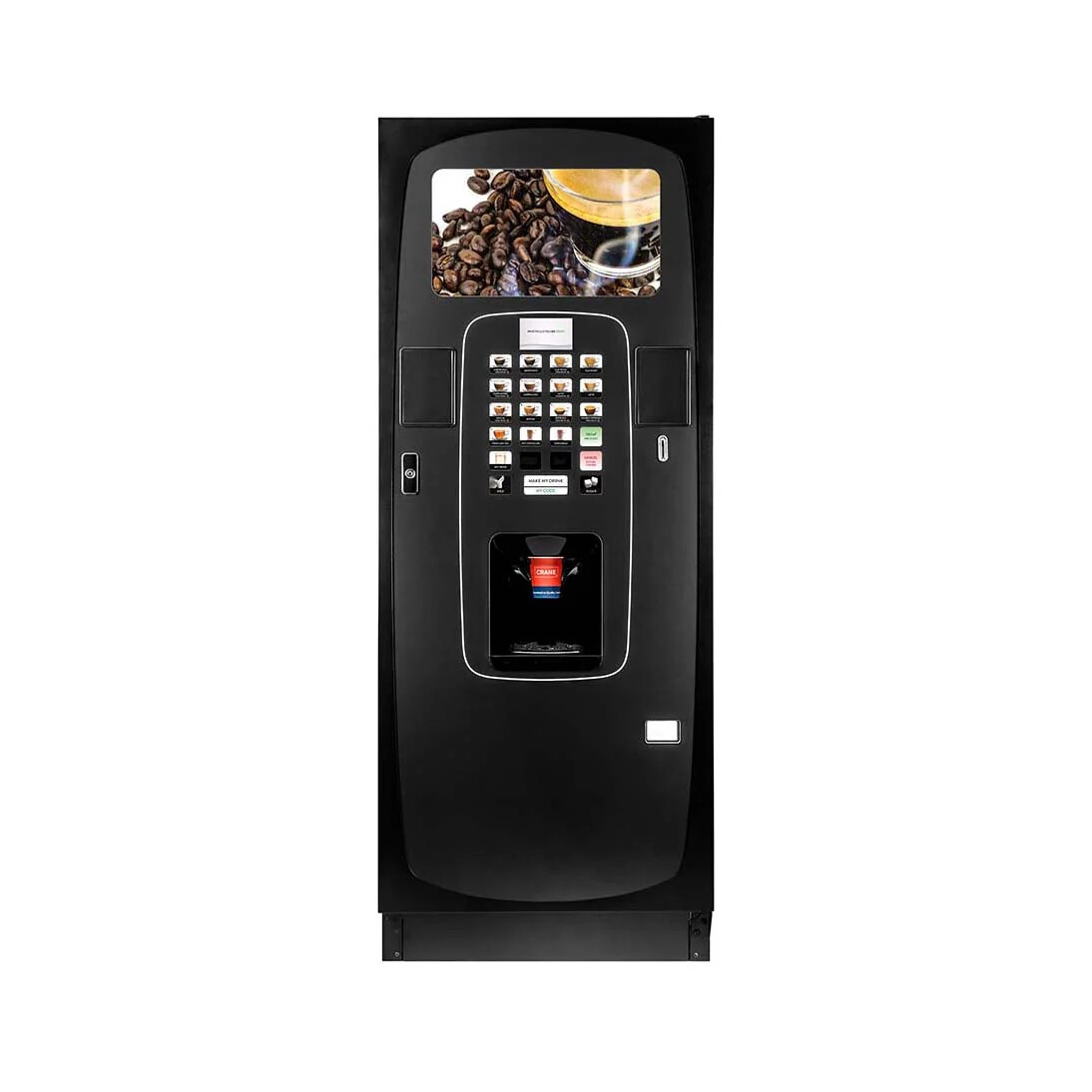
What kind of coffee machines do you have at your workplaces? I mean the kind of giant coffee machines like in the picture, my friend’s workplace had a machine from some better “coffee brand” (I don’t remember the brand now) and the coffee was pretty good - although I’m not very picky. 
2 Likes
At least the travel insurance on Norwegian and Nordea credit cards has worked well over the past 10+ years, both abroad and domestically. I believe I’ve had 4 or 5 claims during this time. Most of them were related to flight or baggage delays, but there was also one domestic hiking trip where that 50% requirement was met through fuel costs alone.
Of course, as with insurance in general, there are many differences in the terms and conditions, and it’s worth scrutinizing them carefully so you know which card to use to pay for a particular type of trip.
10 Likes
This is a home machine, but I’m happy to recommend it. It makes great coffee for the price, and the features are solid. For example, the two separate bean containers add a surprising amount of variety. It’s a bit ugly, but if you can get past that, then…
2 Likes
For those following UAP / USO discussions (there probably aren’t many of us here), this list of videos requested by Luna, Burchett, & co. from the DoD is interesting. One has to hope that after Trump’s comments on Friday, at least these materials will be made public. It would be a start.
Interesting picks include No. 10, apparently filmed from a satellite, and No. 19… some might remember the “Chinese spy balloons over America” in 2023.
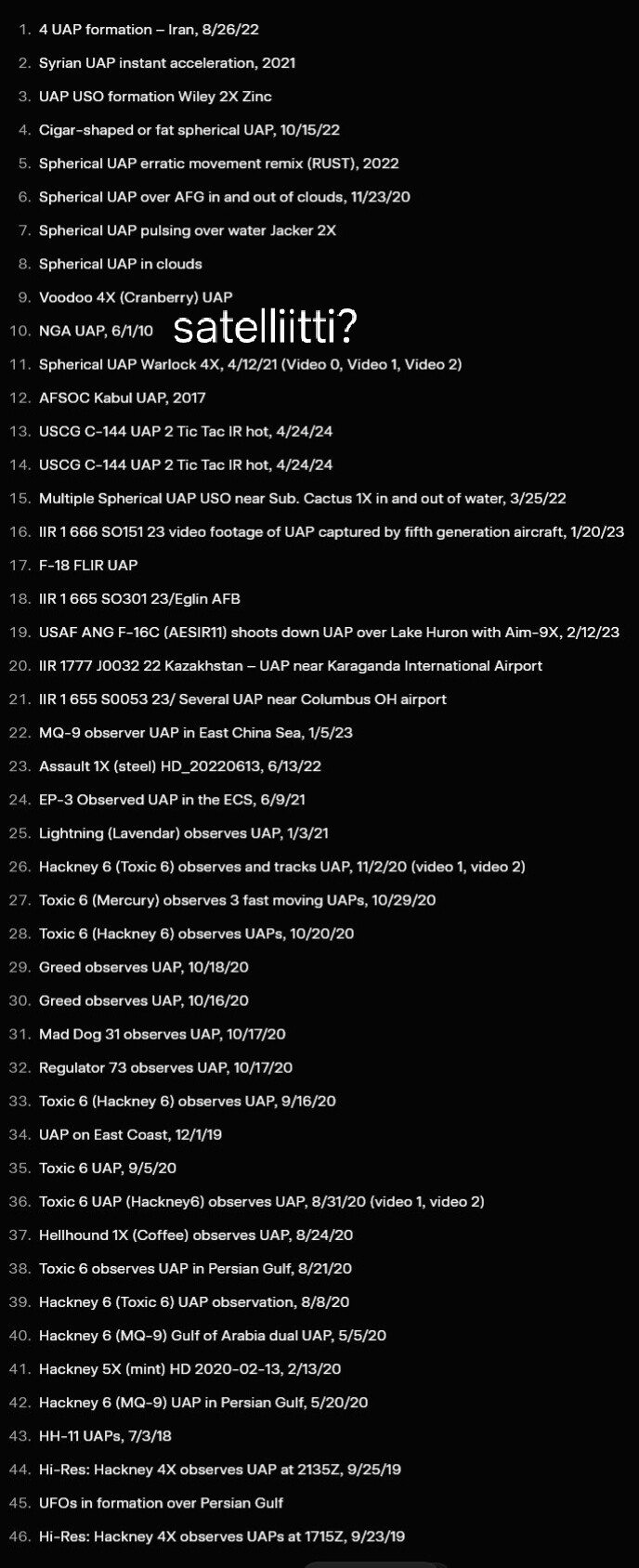
I’m not holding my breath, but disclosure is likely closer than it has ever been. Whatever it’s all about.

2 Likes
You really make life difficult for yourself that way, and you lose as much electricity to fixed charging losses as the price of a Type 2 charger in just a few years.
Case: savings. The Hyundai Ioniq 5 was delivered with a standard charger that charges the car at about 1.3% per hour in summer and 1% per hour in winter. The charger seems to have a 6A limit and the energy flows at a rate of 1.38kW. From this, many might imagine that a 74kWh battery would gain about 2% per hour. But, but—certain charging losses are fixed, not proportional! In winter, the BMS that monitors the charging and the battery heating take about 600W per hour, meaning only 0.78kWh per hour actually makes it into the battery, which matches my observed 1% per hour charging rate.
I was on a work trip in Oulu during the winter where I had free electricity from a socket at my accommodation. I arrived Tuesday evening pretty much on fumes, with about 10% battery left. I started the socket charging, and in the morning, a staggering 20% was waiting for me. Fortunately, the workstation was nearby, so I left the car charging and walked to the grind. After twenty-four hours, on Wednesday evening, it was at 33%. Since I intended to drive back south early Thursday afternoon, the battery would have been only half full at that point. There was no choice but to move the car on Thursday morning to a paid Type 2 charger, which pumped 10.8kW into the battery, or about 13-14% per hour. This way, the return journey could begin with a full battery.
About those savings. If you charge at 1.38kW power and only 0.78kW goes into the battery, the fixed charging loss is a massive 43%, or 0.6kW per hour. With 10.8kW power, the fixed 0.6kW charging loss drops to only 5.6%. If you drive 100,000 km with an average consumption of 20kWh/100km, the energy used is 20,000kWh.
- From a socket, you need 35,385 kWh = 20,000kWh × (1 + 0.6/0.78)
- With Type 2 3-phase, you need 21,176kWh = 20,000kWh × (1 + 0.6/10.2)
- The loss from a socket is 14,208kWh, and if you pay, say, 12 cents/kWh for electricity including transmission, that amounts to €1,704.
- This doesn’t even account for the fact that with Type 2, you can pick the cheap hours from the spot market, whereas with a socket, you pay the spot market average because the car is practically charging all the time. Plus the times you’re forced to use fast charging to get the battery full in time. An additional 20% in costs from those brings the difference to well over €2,000.
A charger with dynamic load management installed 5 years ago cost €1,489 including labor. I think I got a €150 household deduction (kotitalousvähennys). So, the net cost to me was €1,339.
The result: 1. I would have lost my mind many times already with a regular socket. 2. I would be over 600 euros poorer. Based on these calculations, the claims of a charging scam are nonsense.
36 Likes
I personally bought a €250 Type 2 industrial outlet charger with load management just over 5 years ago, but it’s not really needed because the Tesla app handles everything. It comes with me to the summer cottage and elsewhere; otherwise, at home, it’s in the carport protected from the weather in an industrial outlet.
I personally don’t understand this fixed home charging station installation scam when the same thing is handled by an industrial outlet (voimavirtapistorasia), which an electrician can install for a few hundred if one isn’t already in a suitable spot.
9 Likes
If you re-read the passage you quoted, you’ll surely notice you’re shadowboxing with a strawman, as your mathematically creative text has nothing to do with it. Of course, investing in better chargers is beneficial for convenience reasons alone. A better charger is better than an inferior one. This is a tautology.
As I stated in my text, the “scam” lies in claiming that investing in those more expensive chargers is mandatory, which also significantly raises the barrier to purchasing an EV. For example, people are afraid to charge an EV in a garage when there is only a “standard” outlet and permission hasn’t been granted by the housing association to install a more heavy-duty station. EV charging has been turned into a massive bogeyman in people’s minds, even though there are plenty of outlets in Finland to electrify the entire current car fleet.
Sure, slow charging might not be the best option if you drive significantly more than average or constantly need to travel to Oulu in sub-zero temperatures, but for the average driver, it’s a perfectly adequate solution.
12 Likes
Platinum cards usually have continuous travel insurance with no deductible, which also covers accompanying family members. Those “50% rules” usually apply to Gold card travel insurance. OP Platinum worked flawlessly for my spouse when we had to claim compensation for a cancelled trip, but it is under Pohjola Insurance (Pohjola-vakuutus) nowadays. Nordea’s Platinum is apparently under Tryg, which is presumably Norwegian. I don’t have any experience with that one yet.
3 Likes
We all hope that the talking heads of the investment world would reveal their own investment returns. Today, in Kauppalehti’s Pörssiklubi column, Kim Lindström did just that:
“I reinvest dividends, but apart from a small amount of debt, I have hardly used any new money for investments, as my pension or earned income has been needed for living expenses. Since 1986, I have kept records of the family’s stock portfolios on a computer. Although there have been some disappointments along the way, the value of the portfolios has grown more than 150-fold over 40 years. The annual return is over 13 percent, despite taxes paid on dividends and capital gains. The figures speak in favor of long-term stock investing.”
31 Likes
But the difference is that the companies themselves haven’t really built this story; they have focused on their own strengths. The track record speaks for itself. Instead, investors have largely built the stories around them themselves. As I wrote above, people force stories onto everything. It’s our way of making sense of the world.
12 Likes
How does it work in this case, when trips are often handled so that one party buys the flights on credit and the other buys the hotels on their own credit? Same credit cards but different credit accounts. The costs are split roughly 50/50%, but one always ends up paying slightly more (say 45/55%). All expenses are on credit anyway, roughly half-and-half always, but does the credit company now have the opportunity to claim that only the party who paid 55% of the trip is entitled to travel insurance, or is the other party’s insurance also dependent only on the portion paid by the person who paid that 55%, and paying that 45% from the other card is just stupid? So 100% of the whole trip is paid on credit (identical cards obtained at the same time in connection with a mortgage), as is sensible.
Well, what about a situation where 80% of the trip was paid on credit in a 40/40% ratio, and because some payment recipient is some guesthouse owner living at the bottom of a mud pit, 20% of the costs had to be paid in cash, for example? In this case, 80% of the total trip costs have been paid with credit from the same company, but neither person individually meets the 50% requirement.
1 Like
Yeah.. You can tell it’s valuable stuff when every single coffee package has a security tag on it
2 Likes
This is exactly what I meant when I said that for trips, it’s worth paying attention to whose card is used to pay for expenses, and for example, putting both the flights and hotel on the same card.
Usually, the accompanying family is covered by the insurance, but check the terms. As for that 80% example, the expenses paid are calculated and the 50% is based on those. I can’t comment on their calculation formulas in more detail, as more specific expense breakdowns have never actually been requested. I suppose they’ve seen from the card transactions that significant travel expenses were paid, and that has been enough.
5 Likes