There are beautiful Northern Lights right now, if you’re interested. Visible even despite the city’s light pollution.
And if you’re more interested in the Northern Lights, you should download the Aurora app from the Play Store and turn on notifications. It will beep whenever there’s a chance to see them.
Regarding the Northern Lights. This was a really interesting documentary. They predict that it’s very possible that during our lifetime we will experience some challenging times, when power disappears from the Nordic countries for days, or even weeks.
\u003e A powerful solar storm hits Earth. What happens when electricity goes out and satellites stop working? Can anything good come of it?
I discussed investing abroad, about which I have a few thoughts to share.
The most important advantage of diversifying abroad for a stock picker is the enlargement of the network: if you’re looking for stocks from a list of 40,000 companies instead of fewer than 200 (Finnish listed companies), you’ll probably find more suitable stocks for yourself in a dating sense.
In addition, it brings perspective. Finnish engineering companies look good, but take a look at Swedish ones. Or if you want to own technology, perhaps America offers a broader selection than Finland.
Thirdly, in my opinion, the home field advantage is often an illusion. There are only a few consumer companies in Finland, and investors tend to exaggerate their own observations and overgeneralize. Thus, the illusion of an advantage brought by “lynching” can turn net negative because it distorts thinking!
I find it strange that one has to write separately about “investing abroad,” as if in a country the size of Finland, that wouldn’t be the default, and the tiny domestic market were some kind of side note. To me, at least, it’s self-evident that the largest indices (S&P 500) are the default target, as is the case almost everywhere else in the world.
In many cases, investors and companies would benefit from an “outside view” in decision-making; instead of considering investments, investments, and projects from their own starting points, one considers what has statistically happened on average for similar investments, etc.
For example, with Remedy’s Firebreak, as far as I understand, a game that has already flopped from the start in the gaming industry very rarely gets back on its feet. There are exceptions, but… the odds speak against it. It’s great that a listed company dares to take risks, but the probabilities are heavily against success, especially now.
I tried Firebreak yesterday when I downloaded it and wanted to get the settings right for tomorrow’s gaming session with Ate, and the first taste was… mmm!
In addition to Finland-centricity, our other problem is here. In public discourse, money is still either in an account or it is spent. If there is money in an account, (even in the article) people ask why you don’t eat in a restaurant or buy an apartment. Why isn’t it asked why you don’t want an average annual return of 6-8% on
Note: the mega-savings of Finnish households can also be considered as a counterbalance to an almost equivalent amount of housing loans and other debt. And savings are concentrated among the older population, whose willingness and ability to take risks are somewhat different from twenty-somethings YOLOing with student loans, like I once was. ;-D
So, I believe that Finns could invest more in stocks, but I also wanted to bring up this relevant perspective for the overall picture.
Imagine Virpi, on the verge of retirement, who has a 100k EUR housing loan, a 10k EUR car loan, 40k EUR in stocks, and 100k EUR in cash in interest-bearing accounts. Virpi’s pension isn’t amazing, and in fact, the value of her home is more likely to decrease because she lives on the outskirts of a small town. Virpi wants security, not stress. How many stocks should Virpi have?
If you look at Finnish debt, cash, and assets on the websites of the Bank of Finland and Statistics Finland, you’ll notice that Virpi is Finnish households in a nutshell.
Virpi should not have any direct shares. Instead, perhaps half of that 100k EUR interest account portfolio could be in a world-ETF or even in two different products. Roughly estimated, with this move, Virpi would pay the interest on her mortgage.
But: The investment degree (or risk level) is recommended to be gradually reduced as one ages precisely so that long-accumulated work does not go to waste with a last-minute collapse, with the upside being practically non-existent due to a short horizon. And of course, it also depends on what Virpi wants to start doing as a hobby when she retires, i.e., how important liquidity is.
Edit: If, instead of retiree Virpi, we take Matti as an example case, a 40-year-old plumber-entrepreneur who earns 100k EUR a year, enjoys trips to Thailand and alcohol consumption, and doesn’t invest “because it’s so complicated,” then what should be done?
Imagine Virpi, on the verge of retirement, who has a 100k EUR mortgage, a 10k EUR car loan, 40k EUR in stocks, and 100k EUR in cash in interest-bearing accounts.
Many probably wonder why a (nearly) retired person would still have a mortgage, but I think this is not very uncommon. The actual mortgage is typically paid off long ago, but nowadays, so-called pipe renovations are so incredibly expensive that if one occurs, even the owner of a small two-room apartment in Helsinki easily gets over 100k EUR in financing charges.
You are late on this, Verneri, because one has already been published. No video production will ever surpass this documentary created by @SijoitusSeppo in its expressiveness regarding the general sentiment of the 2021 stock market frenzy:
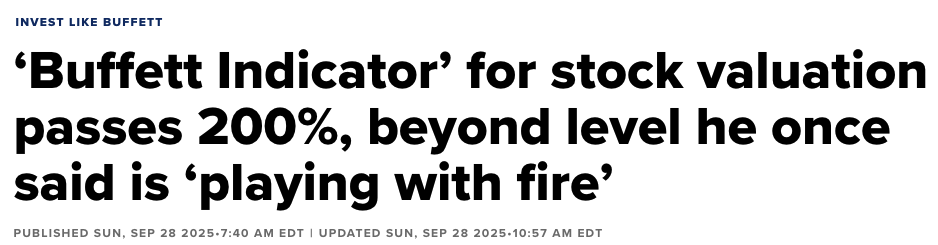
I would also argue that everyone is so hyper-tuned to watch for a repeat of the 2021 bubble market that a completely normal bull market like the current one, for some reason, generates a huge amount of bubble talk across the investment landscape. It can’t be a bubble right away when stocks rise a bit and companies are doing quite well overall. Let’s revisit the bubble market when Taylor Swift starts selling pictures of crypto apes and a large part of the crowd thinks it’s a legitimate alternative investment
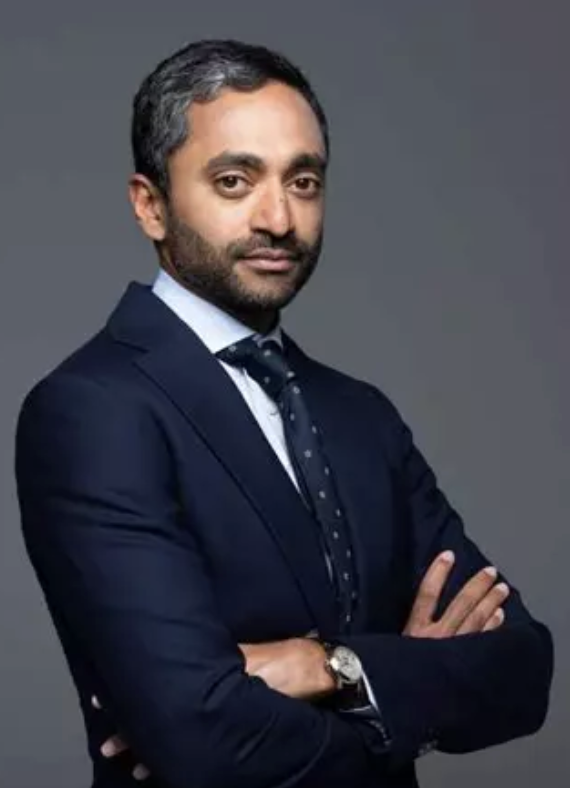
To me, Chamath’s return is already an alarming sign. But you are also right, and Chamath’s return doesn’t mean we aren’t just at the beginning of a rocket ascent. In the previous round, he managed to set up six SPACs.. Now only the first one is underway.
This is how it generally seems to go. After 2009, every little tremor was a new financial crisis, and that shouting culminated in the Euro crisis, which was supposed to destroy the entire continent. Then, when that new giant collapse never came and after recovering from the Euro crisis’s squabbles, the opposing forces started shouting ‘BTFD’, because central banks have invented a permanent way to prevent stock market crashes:
This worked until we entered such a severe bubble that no matter how much buying pressure was added, ‘the dip just keeps dipping’. Now we are in some kind of ‘Every ATH is a bubble’ market:
If one didn’t fear enough in 2021, they will likely overreact now by fearing too much in 2025. This is due to a calibration error in investor instincts, which causes one to let the prevailing sentiment affect their investment thinking excessively. Now, courage is needed to own stocks instead of missing out on profits and exiting the markets merely due to a bubble-fearing sentiment:
In my view, the low birth rate is primarily due to three factors:
Young people study for a long time. The proportion of highly educated people is constantly growing, getting into a desired school can take years, and studies often extend beyond the target time. Because of this, the average 25-year-old lives on student loans, and in that situation, they don’t feel like having children.
Too few people get directly onto a good career path from school. Many have to start with fixed-term contracts and/or jobs outside their field. This causes financial uncertainty.
The increase in mental health problems.
All of these together cause many people’s lives to “stabilize” sufficiently only in their thirties, which radically lowers the average number of children. So yes, economic factors are a significant reason for the low birth rate, but I don’t believe that public support can significantly influence it. If we genuinely want to increase the birth rate, we must somehow address the duration of studies, accelerate the start of careers, and prevent mental health problems.
Nothing will come of it. At the conference, Hegseth complained that there are too many fat generals. And Trump chuckled that whoever doesn’t want to listen can walk out, but their career and ranks will be gone. It must have been a jovial atmosphere.
Trump hates individuals who serve their country. The Orange one cannot understand why anyone would give anything to anyone, or give up anything.
This is the core of the matter. In Finland, there is, in my opinion, a strange assumption that university studies automatically mean a bachelor’s + master’s degree package. The fact that one spends two (often even more years, including the undersigned…) at the university after graduating with a bachelor’s degree does not produce such significant added value for most in their future career that it would need to be an assumption. In many countries, it is customary to graduate with a bachelor’s degree from university and then enter working life and start a family. The master’s degree is returned to at some point if there is interest in the matter. It is not an assumption.
In Finland, on the other hand, students are kept in limbo, where as a bachelor, on the one hand, you are already fully competent in your field (with certain exceptions) to move into working life and leave student life behind, but on the other hand, you are not ready to move forward in life because that master’s degree is still missing from your back pocket. Because of this, jobs are often precisely fixed-term, or one settles for part-time jobs at a store checkout or similar, as part-time jobs in the field are not really available.
It’s no wonder that many don’t even think about starting a family in such a situation.