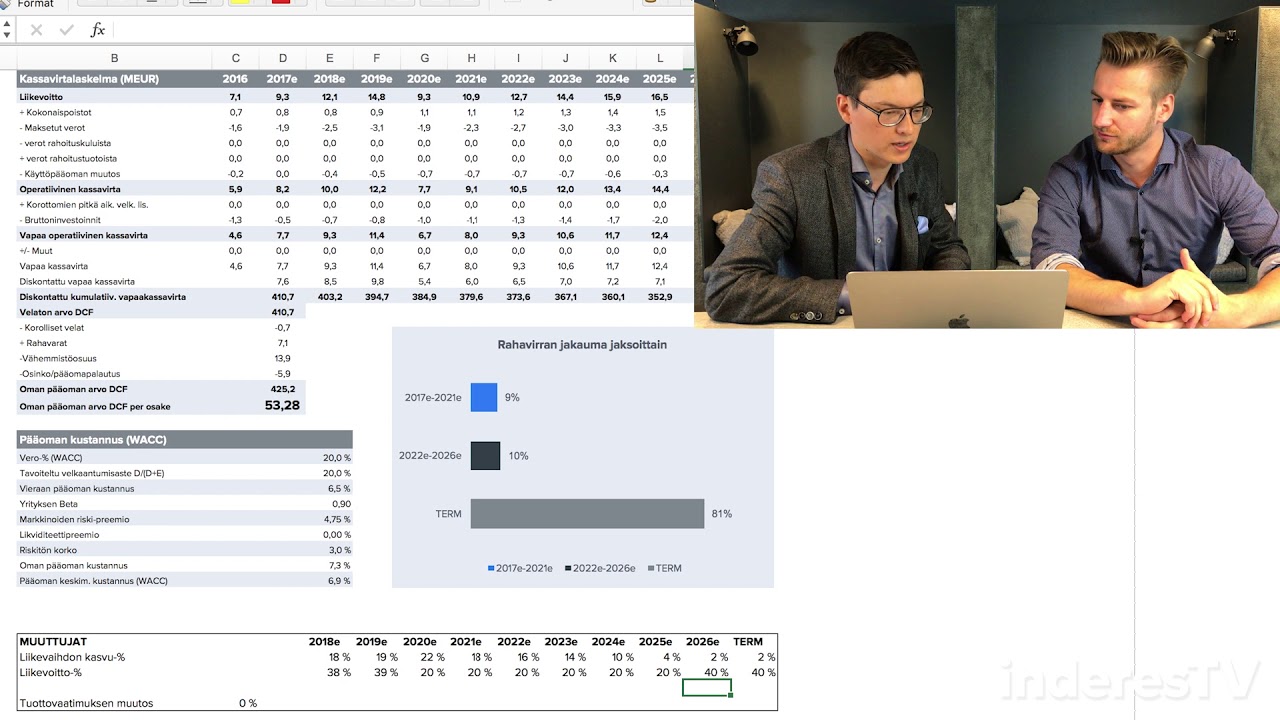
Good material to support Damodaran’s models can be found on his YouTube channel and in the books he has written. I have never independently built a DCF model myself, but my understanding of valuation has grown tremendously thanks to Damodaran’s materials. In my opinion, this is much more important for an investor than being able to technically create a DCF model with decimal precision😄
Tested a workday for half the time, sick leave continues until Wednesday. Damn, I wish I could get back to normal everyday life, completely healthy! Nothing to do but rest more, luckily inflammation values are decreasing and I feel relatively normal even without the doping effect of painkillers. But I can’t help but wonder that I’ve never been sick in the summers before, and now it’s something every summer. Before, I got sick most often perhaps in autumn-winter, now largely in summer.
Trucks have been made from various bases; even a Rolls-Royce has been sold as a truck in Finland. The benefits are indeed car tax exemption and not having to modify the passenger compartment’s seating capacity. In van conversions, the number of seats is limited if one wants tax benefits.
Almost all of them have a switch for the speed limiter, and even exceeding the vehicle class-specific speed limit (with a G-Wagen at 140km/h on the highway) does not, under current legislation, lead to a vehicle class reclassification or payment of car tax. Small fines and the journey continues.
At that time, from 1979-1998, the S&P 500 yielded a real return of 12.09%. This does not account for expenses and withholding taxes. But it’s important to remember that the IT bubble was inflating then. The real return for the period 1979-2004 (i.e., 25 years) was only 9.44%. And worst of all, in 1979, the S&P 500’s Shiller CAPE was 9, whereas in 1998 it was 34, and in 2004 it was 27. Currently, that figure is 38.84. A considerable feat would be required for real returns to be 10% over the next couple of decades. I say it’s practically impossible. What remains is stock picking, which research shows is almost entirely dependent on luck for most people. Few beat the index even with luck over a 20-year period. Luck is a bad strategy IMO.
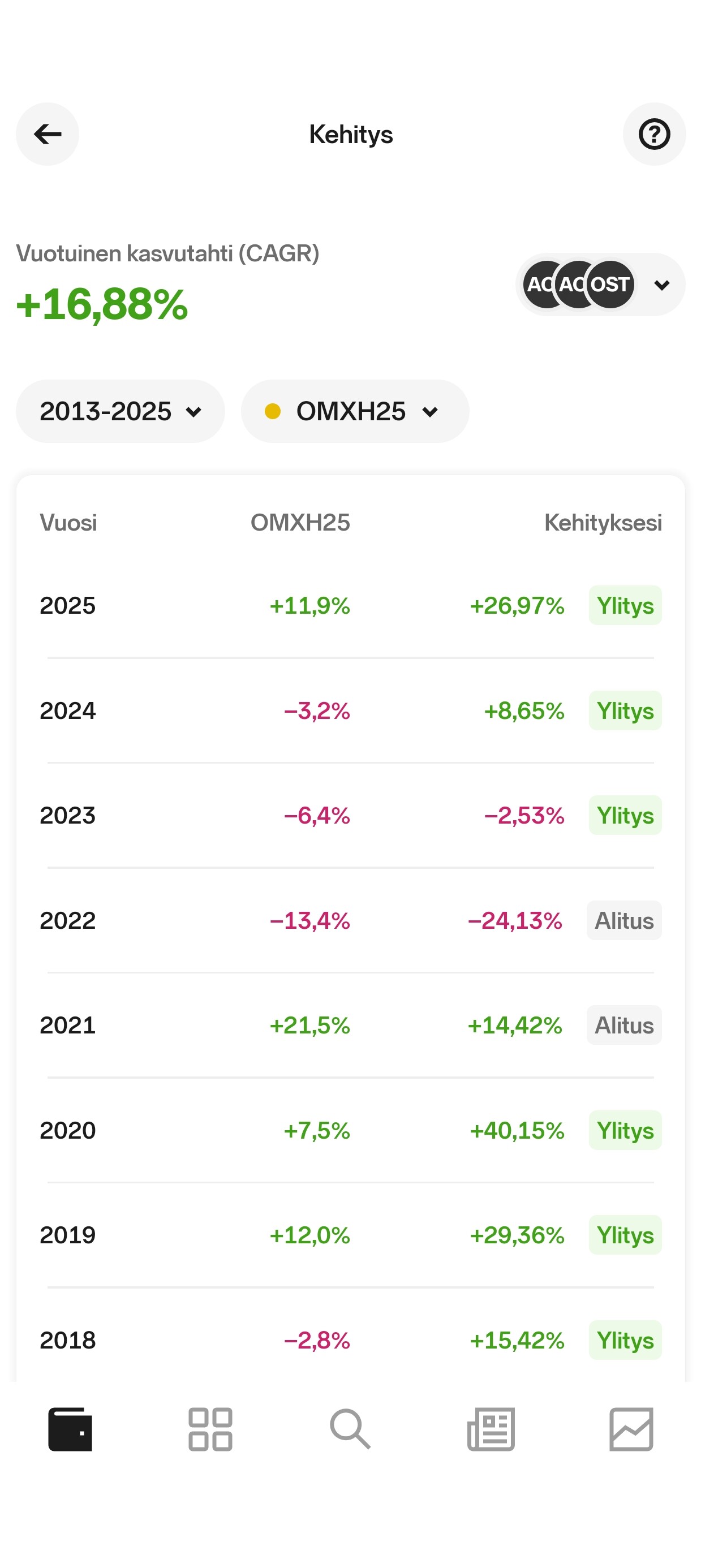
My Nordnet history shows a nominal return of 14% over 10 years (the time my investments have been in Nordnet). There has been leverage all the time, but not unreasonable amounts. Investment assets have accumulated quite well, but not yet so much that I would want to try to live off them. Luck or skill, I don’t know, but I don’t believe I am any special exception.
Now Trump could show the world that America is truly a superpower and rein in Putin by imposing proper sanctions on Russia. Take that Nobel. If he doesn’t, then the Nobel should go to Stubb, for example, even though I don’t appreciate him yet. Now it’s his turn to prove that a small country can have a loud voice. Zelenskyy has already proven himself to be a great man. And yes, Zelenskyy also looks good in a suit, but what a sense of humor. This old woman likes it a lot.
Hopefully, the world will be a little better place tomorrow.
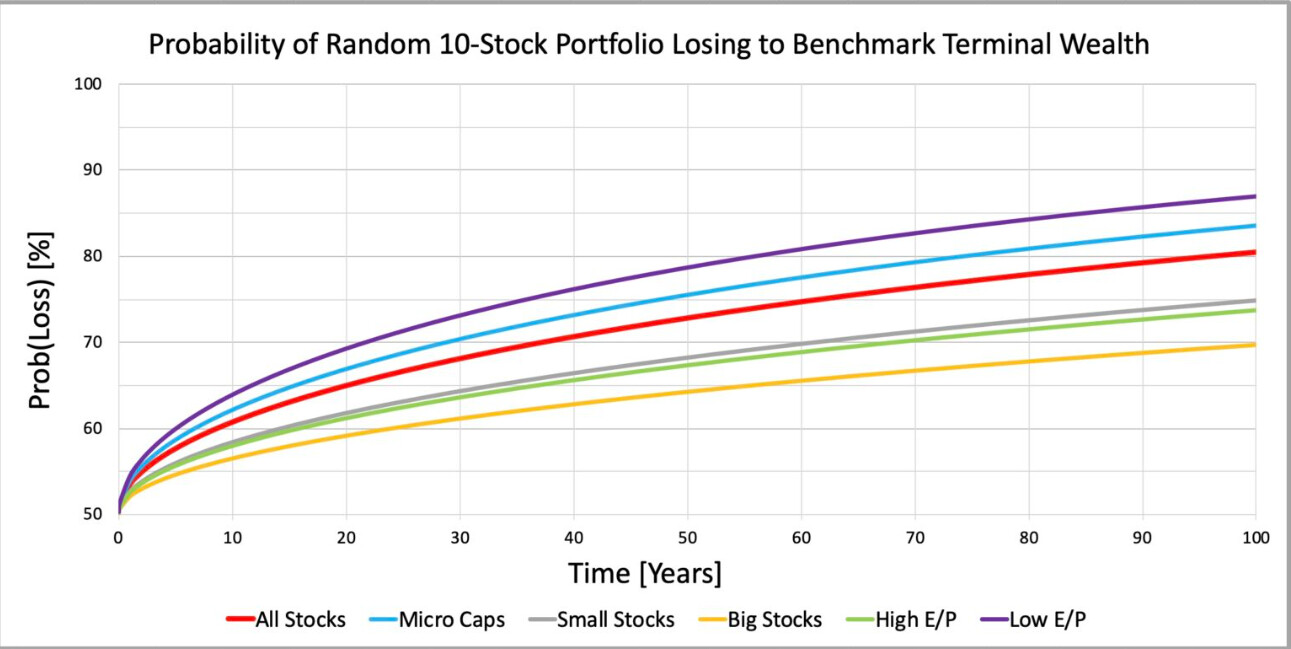
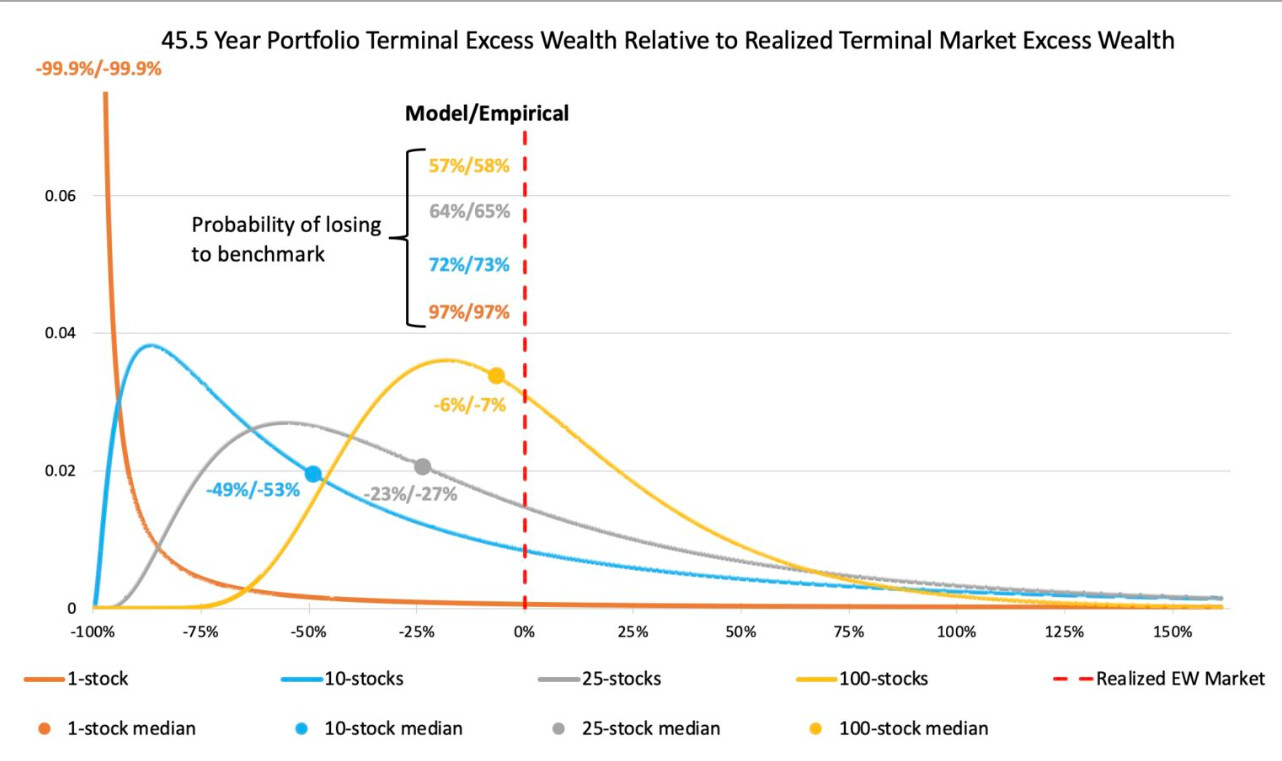
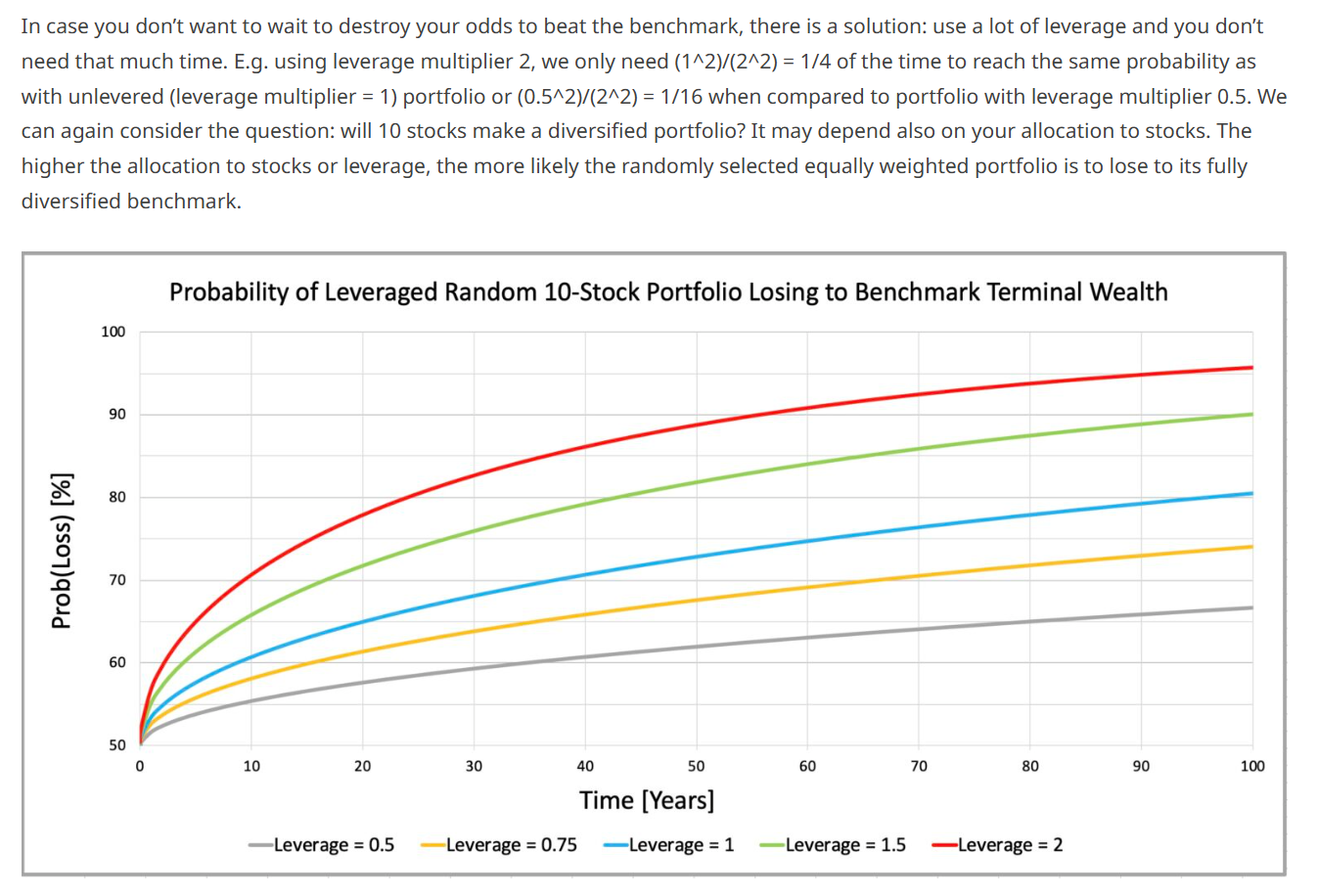
Beating the index is not so difficult that it should be compared to the lottery, even though the odds are against the stock picker. Even with a poorly diversified 10-stock portfolio and a 20-year horizon, there is about a 42% chance of beating the index if large stocks are picked randomly. We are not very far from a coin toss. The probabilities naturally improve with better diversification and decrease as the investment horizon grows.
Yeah. The odds of beating the index return are mathematically against the stock picker. But it’s worth remembering that the average return of stock investors picking random stocks is mathematically the same as the index return. This is because you can “only” lose 100 percent to the index, but you can beat it by over 1000 percent. This leads to stock pickers who beat the index beating it more significantly than the index beats stock pickers who lose to it.
This is undeniably a true paradox, that in principle Inderes tries to make investing easier and more equitable for everyone in terms of information availability, but one of Inderes’ core products, the company analysis itself, rather makes life more difficult. But from that analysis, a lot of life-simplifying videos, forum comments, podcasts, and robo-comments emerge..
Exactly, stock investing can be pursued in many ways. Patriotism is not a bad starting point, even though talking heads constantly advise geographical diversification. Few of us are professional investors, so there’s no compelling need to seek an optimal investment portfolio across different continents. It’s not always necessary to prioritize returns; it’s enough to look for sufficiently good, stable Finnish companies for one’s portfolio. Dividends will indeed guarantee an excellent outcome for anyone, as long as the investment horizon is long enough.
I myself strayed a bit from the path, as I currently own Novo Nordisk, although it won’t be a very long-term investment. Nothing connects me to the Danish mindset, but much more so to the Finnish one🙂.
I’m stirring up a hornet’s nest, but I assume that by ‘the right’, the tax-raising National Coalition Party (Kokoomus) is meant. It’s sad to say, but Kokoomus in its current form is not a right-wing party, and they have no interest in stopping the state’s indebtedness. They would have the opportunity to fix the YEL reform, but it hasn’t been fixed. VAT was raised as a panic solution. State funding cannot be removed from organizations that should operate on membership fees, because it would cut off friends’ gravy trains… Individual representatives want more regulation and to ban things.
The Finns Party (Persut), on the other hand, are, well, a bit incorrect, so they don’t fare well in political arenas.
I don’t know who a right-winger in Finland should vote for, and that is a real problem for this country.


 But from that analysis, a lot of life-simplifying videos, forum comments, podcasts, and robo-comments emerge..