Nowadays, Chrome has a password manager. I don’t know if it’s safe.
Quite an expensive fund; in the long run, they will have to do a lot of work to be able to generate alpha compared to an inexpensive health sector index fund or a suitable ETF. The fund’s fee level is about ten times that of, for example, iShares’ health sector ETF. That’s a big difference to make up year after year in the future.
The predictive accuracy of historical returns and the Sharpe ratio for future returns is not great, nor is Morningstar’s rating. Otherwise, ratings would hardly change, as good funds would constantly be good, mediocre ones mediocre, and so on.
However, if you do end up with an active fund, you should carefully consider why that particular fund has been good, and once you figure out those reasons, consider whether they will still hold true in the future. A slightly exaggerated example: the fund has been managed by a competent portfolio manager. Just as you are about to buy the fund, that portfolio manager moves to manage another fund, and a new portfolio manager comes in. Do you still trust that the fund will generate alpha?
Portfolio managers tend to change quite often. A good track record is mainly found with those who have a lot (millions) of their own money invested in their fund and therefore don’t change, but manage assets for decades (the most well-known being Petri Deryng’s PYN Elite, which he has managed for 21 years straight with a good track record). When choosing an active fund, I place a lot of weight on the portfolio manager having a large portion of their own financial wealth invested in the fund – it’s just a different matter to manage your own large assets at the same time as doing portfolio management as a regular salaried job without a large personal financial stake. In addition, such portfolio managers usually own a share of their fund company, and through that, continuity is better than, for example, in brick-and-mortar bank funds.
A long answer to a short question 
8 Likes
Here are a few papers you’ll definitely want to read through before choosing an actively managed fund.
You’ll also want to listen to Professor Lubos Pastor’s opinion on how to choose an active fund if you decide to go that route. I’m not knocking actively managed funds, but you have to be extremely precise when choosing them. As you surely know, fees quickly eat into any excess returns. Hopefully, the link is to the correct part. The interesting section starts at 47 minutes.
2 Likes
Well, I’ll challenge a bit, as I’ve been considering buying a Healthcare fund myself. I haven’t decided on anything yet though.
-
iShares Healthcare Innovation UCITS ETF USD https://www.morningstar.fi/fi/etf/snapshot/snapshot.aspx?id=0P00018WV4&tab=2&InvestmentType=FE
has performed slightly better on average and significantly better over the last year. This ETF also has lower fees. -
Handelsbanken Hälsovård Tema (Healthcare Theme) has lost a few percentage points to the Handelsbanken USA Index fund over the last five years, even though Hälsovård Tema should be full of “corona winners.” So, is it even worth investing in medicine separately through a fund when historical returns haven’t been better than an ESG-screened index fund?
2 Likes
This principle also seems to work based on research. For example, Morningstar has studied the significance of a portfolio manager’s own ownership:
https://www.morningstar.com/articles/680232/does-manager-ownership-lead-to-better-fund-performance
“So, Funds where managers invest over $1 million had a success rate of 48% versus [funds where managers invest] zero dollars, which was about 32%. And then all the levels in between pretty much went consistently stair-step up along the way, which indicates we’re on to something.”
Another Morningstar article on the topic: www.morningstar.com/articles/690600/article
The personal qualities of the portfolio manager also matter. For example, portfolio manager Ernst Grönblom has listed the qualities of a portfolio manager: http://www.hcp.fi/wp-content/uploads/2013/04/Choosing-Managers.pdf
They should have suitable education, business experience, portfolio management experience, independent rational thinking, patience, passion for investing, good nerves, and creativity.
5 Likes

Good challenge and interesting links. I will delve into the links and research the background in more detail, then get back to you.
Thank you. @xlat @JarnoM @Contrafun
However, a quick comment.
I looked into this but excluded it because most of the return came this year. Healthcare Innovation also loses out to Handelsbanken’s active funds in returns when looking at a longer period of 3 years or since the ETF’s inception date. Its short history, uneven returns, and high volatility also led me to rule it out early on.
Handelsbanken’s USA Index has indeed beaten Hälsovård Tema by pretty much all metrics in the long run. This certainly makes one think. However, over a 10-year period, no healthcare sector fund or ETF has performed as well as it has. I do own the said index and intend to continue doing so. Handelsbanken has many good funds, such as Sustainable Energy or China. Good performance across the board.
4 Likes
@Passiivinen_Indeksim
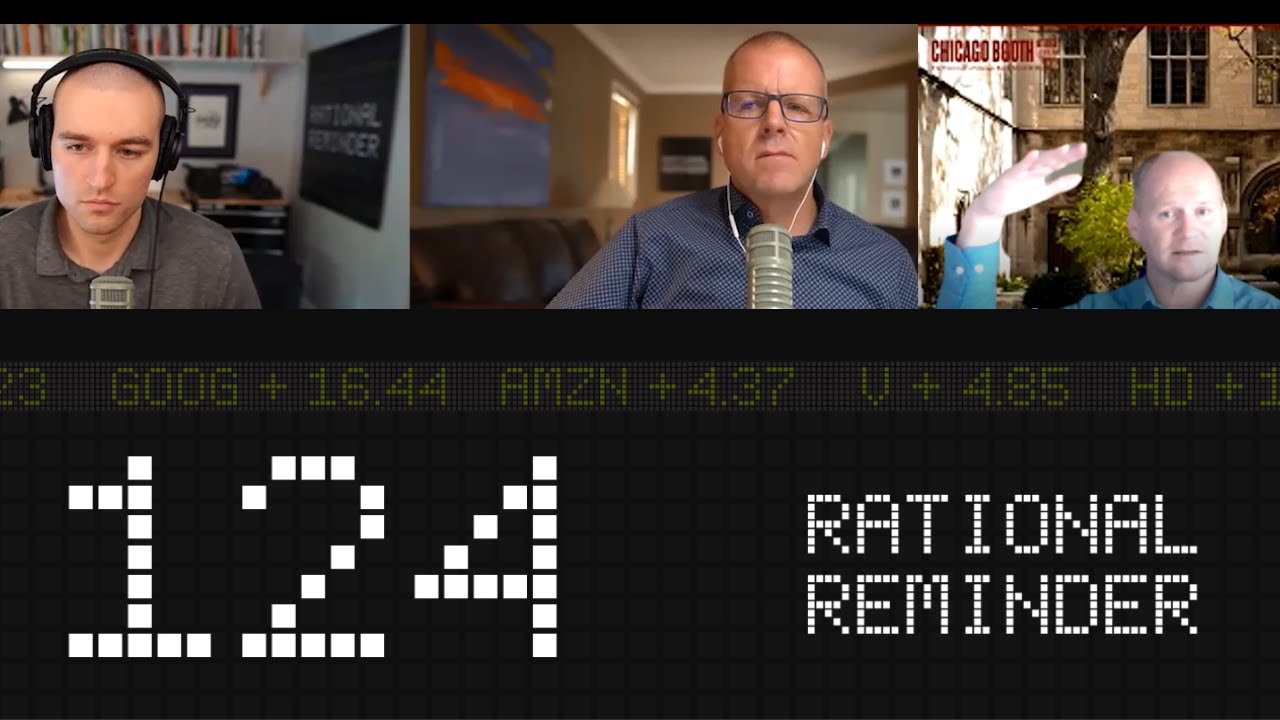
An interesting discussion on how active funds should start generating alpha when too much money has flowed into passive funds. And how that alpha then disappears when money returns to active funds.
1 Like
Did you mean this? https://www.morningstar.fi/fi/etf/snapshot/snapshot.aspx?id=0P000173HT&tab=2&InvestmentType=FE
I did a historical comparison. Since the ETF’s inception date, it has generated approximately 54% returns after fees. In the same period, Handelsbanken’s Hälsovård Tema has generated approximately 65% returns after fees. So, at least historically, it has performed very well in comparison.
I have a relatively large portion of my portfolio in funds (passive, active, and exchange-traded). I’ve tried to develop a more systematic way to select these, but there’s still room for improvement. I’ve created some rules for myself. Funds must meet certain minimum criteria for me to even consider them.
- Costs: Maximum 2% per year, preferably less, of course. No significant redemption, subscription, or performance-based fees.
- Historical returns must be good and from the current fund manager’s tenure. Preferably the same fund manager for the last 5+ years.
- As consistent returns as possible. This is more of a psychological thing. I consider it from the perspective of whether I would have stayed invested if I had been saving monthly into the fund for years, or if I would have jumped ship during a multi-year period of stagnation. This is also important because I use leverage of about 20% on average, and I absolutely do not want to redeem funds during bad times.
- High lending rate.
- Reputable firm behind the fund. I don’t want to take unnecessary risks, however small they might be.
Can you provide some good links for this?
1 Like
Upon closer inspection, this is not true. Handelsbanken USA Index has yielded ~+334% throughout its history (just over 9 years), while Hälsovård Tema (Healthcare Theme) has yielded ~+360% over the same period.
My mind has not been changed yet, at least.
It’s also good to note that among the healthcare ETFs in Nordnet, only the healthcare innovation ETFs W311 and 2B78 invest truly globally. The rest invest in the US or according to a “world” index that ends at the Iron Curtain. Handelsbanken Hälsovård Tema (Handelsbanken Healthcare Theme) offers genuinely global diversification. This might not be of great significance at the moment, but in the long run, developing countries might catch up with Western countries in the field of medicine.
The same factor has driven me towards active funds before. Passive sector funds simply often don’t offer a truly global alternative.
4 Likes
This is a significant point for me. I don’t believe in the eternal domination of the US, but I don’t dare to be out of this market either. I already have a sufficiently large USA weighting and I don’t want to increase it intentionally.
2 Likes
Historical returns: 200006607 - Ilta-Sanomat
Sharpe: http://www.fplcapital.com/wp-content/uploads/2014/06/Can-Sharpe-Ratios-Predict-Returns.pdf
Morningstar: http://www.investori.com/b/index.php/2017/04/02/rahastotahdet_eivat_takaa_tulevaa_menest
This, of course, does not mean that an actively managed fund that has performed well so far cannot continue to perform well in the future. It just means that past returns have practically no predictive value. The costs of the fund, on the other hand, are known; the higher they are, the more the portfolio has to generate excess returns. That’s why, in the long run, active funds start to lag behind indices. Research has been done on the topic, and their message is so clear that the conclusion of the research must now be written in fund prospectuses:
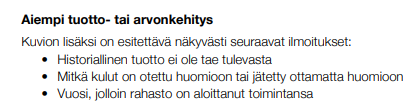
https://www.porssisaatio.fi/wp-content/uploads/2015/05/sijoitus_rahasto_opas_2015_b.pdf
1 Like
I’m sure many forum members are more informed than you assume  Still, an admirable speech.
1 Like
Note:
Strong electronic identification means that identity is verified by more than one method. Bank IDs are (at least in Finland) a strong authentication method, but not because the bank is an external authenticator. The strength comes from logging in with bank IDs using a password, and then taking a confirmation key from a key code list/device or phone, i.e., from an item in possession. According to our Finnish Transport and Communications Agency (Liikenne- ja viestintävirasto), this is probably a sufficiently official source.
Nordnet’s use of just a password + username is therefore not “strong”. Although the term “weak authentication” does not seem to be in use. It does not mean that a well-crafted password or passphrase is in any way exceptionally weak. But this type of authentication is common globally. For example, PayPal probably accepts just a password + username combo.
If anyone now realizes they are using a password for Nordnet or PayPal that is used anywhere else, they should change it immediately.
This brings additional security. For example, Nordea cannot yet be accessed by a successful fake login site scam, because the attacker lacks the owner’s phone or similar.
2 Likes
Where in the Premium subscription process can I enter my OSKL customer number for a discount? There didn’t seem to be a specific field for it.
It works at least in a way that you go to the OSKL (Finnish Association of Student Business Owners) website, logged in, to the section where member benefits are, and from there you’ll find a link to the Inderes benefit, which activates that benefit.
2 Likes
Lepikko and Saxena have generally held very similar views. Now, however, Saxena is advocating for a young bull market and even shorting the VIX, while Lepikko is more bearish.
https://twitter.com/saxena_puru/status/1327237933397524480?s=19
Saxena’s YTD return at the end of October was +221%, so he has certainly demonstrated insight before.
He always publishes his portfolio moves at the end of the month, which are interesting to follow. In the same thread, he provides justifications for his sales/purchases and discusses his thoughts on market movements for the coming weeks. For example:
https://twitter.com/saxena_puru/status/1322471818934935552?s=19
15 Likes
Tomorrow, emerging market stocks seem to be on the rise 
5 Likes
Here’s a psychologist’s verdict on your future as an investor! There’s something for every investment strategy practitioner. I guess I’m a neurotic and worried bear! It’s a shame that this valuable analysis lacks investment recommendations 

6 Likes