Disclaimer: I’m a spoilsport. Perhaps a bitter one.
I’ve been following this crypto craze with my hair standing on end. There are amazing millionaire stories, and I’d be lying if I said it wouldn’t have been nice to be a Bitcoin owner for the past 10 years. But. Always that But… I’m still on the same page as Krugman. 12 years in IT…
Bitcoin, the first and biggest cryptocurrency, was introduced in 2009
… is on the scale of tectonic eras. Currently, the main use of Bitcoin (and other cryptocurrencies) is by extortionists who demand payment for decrypting hard drives and by criminals who transfer large sums of money outside conventional channels. All other uses of cryptocurrencies are completely marginal. Due to high volatility (the value of crypto compared to money created by central banks), it is not a tool for normal commerce. A product could cost 1 or 2 bitcoins tomorrow, depending on the exchange rate. Zimbabwe and the Weimar Republic are examples of what happens when the value of money fluctuates wildly day by day.
Twelve years is an eon in information technology time. Venmo, which I can use to share restaurant bills, buy fresh fruit at sidewalk kiosks, and much more, was also introduced in 2009. Apple unveiled its first-generation iPad in 2010. Zoom came into use in 2012. By the time a technology gets as old as cryptocurrency, we expect it either to have become part of the fabric of everyday life or to have been given up as a nonstarter.
If cryptocurrencies are compared to any other technological innovation that can be easily replicated, others have found good use in the world. Cryptos are still only a tool for speculation, with no real-world connection to guarantee their value.
But I’ve been in numerous meetings with enthusiasts for cryptocurrency and/or blockchain, the concept that underlies it. In such meetings I and others always ask, as politely as we can: “What problem does this technology solve? What does it do that other, much cheaper and easier-to-use technologies can’t do just as well or better?” I still haven’t heard a clear answer.
It’s entirely possible that cryptocurrencies just need to “mature” and spread sufficiently to solve some real existing problem. But for now, I don’t see what their added value is compared to existing currencies. That’s why I’m staying away from them… and perhaps a little poorer than crypto investors whose asses can handle the high volatility of the asset, I admit.
The full article from which the above quotes were taken.
https://www.nytimes.com/2021/05/20/opinion/cryptocurrency-bitcoin.html
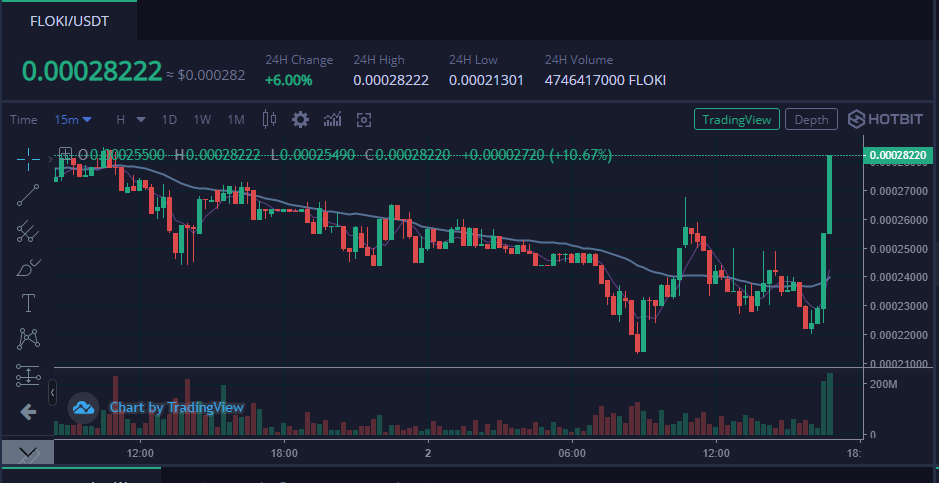
 On the other hand, if it were to rise closer to Doge / Shiba market cap, I could upgrade to a new boat next summer